Results by title
183 books match the query 'Feminist' and 41 start with t
Telling Narratives
Secrets in African American LiteratureLeslie W. Lewis
University of Illinois Press, 2007
Telling Narratives analyzes key texts from nineteenth- and early twentieth-century African American literature to demonstrate how secrets and their many tellings have become slavery's legacy. By focusing on the ways secrets are told in texts by Jessie Fauset, Charles W. Chesnutt, Pauline Hopkins, Frederick Douglass, and others, Leslie W. Lewis suggests an alternative model to the feminist dichotomy of "breaking silence" in response to sexual violence. This fascinating study also suggests that masculine bias problematically ignores female experience in order to equate slavery with social death. In calling attention to the sexual behavior of slave masters in African American literature, Lewis highlights its importance to slavery’s legacy and offers a new understanding of the origins of self-consciousness within African American experience.
The Barbara Johnson Collective
Edited by Devin M. Garofalo and Nathan K. Hensley
Northwestern University Press, 2027
Collaboratively reassesses Barbara Johnson’s legacy as a reader and thinker with an eye to contemporary conditions
Across an archive of essays on abortion and race, Mallarmé and Melville, feminist philosophy, rhetorical device, and pedagogical method, Barbara Johnson built a legacy of thought whose energies reverberate into the present. This collected volume gathers writers and critics from a range of North American higher educational settings to engage with this essential but still often underappreciated critic in a time of renewed and deepening crisis.
In Zoom meetings and shared essays, across a virtualized map of today’s academic and para-academic worlds, the group assessed how the rolling catastrophes of late neoliberalism continue to stage the sort of analogy Johnson herself would highlight between patriarchy, capitalism, ecocide, and other forms of structural violence. Emerging from that assemblage, this experimental collection tracks Johnson’s efforts to link literary reading with concrete matters of personhood and care at a moment when the very system of higher education that enabled Johnson’s work in the 1980s and 1990s faces existential threat. The frozen record of a live experience, the book is an impure procedure, tangled in the idiom of its own unfolding: a temporary culmination of an ongoing collaborative undertaking that will always remain unfinished.
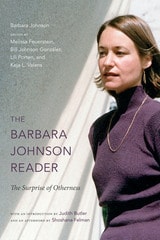
The Barbara Johnson Reader
The Surprise of OthernessBarbara Johnson
Duke University Press, 2014
Along with the classic essays that established her place in literary scholarship, this Reader makes available a selection of Johnson's later essays, brilliantly lucid and politically trenchant works exploring multilingualism and translation, materiality, ethics, subjectivity, and sexuality. The Barbara Johnson Reader offers a historical guide through the metamorphoses and tumultuous debates that have defined literary study in recent decades, as viewed by one of critical theory's most astute thinkers.
The Bitch is Back
Wicked Women in LiteratureSarah Appleton Aguiar
Southern Illinois University Press, 2001
Although the “bitch” has always commanded a prominent spot in popular culture—television, movies, art—she virtually disappeared from the work of the second wave of feminist writers in the late 1960s and early 1970s. Now, announces Sarah Appleton Aguiar, the bitch is back, returned once more to cultural center stage in the world of serious literature.
Feminist writers such as Mary Gordon and Alice Walker, to name only two, felt obligated to subvert literary misrepresentations of females as dimensionless, to refute preconceptions of objectified characters, and, of paramount importance, to create memorable women full of complexity and character. They wanted to create a subjective reality for their protagonists. And they succeeded admirably.
But along the road to subjectivity, that vital woman, empowered with anger, with ruthless survival instincts—the bitch—was banished from the pages of feminist fiction. The village gossips, calculating gold-diggers, merciless backstabbers, sinful sirens, evil stepmothers, deadly daughters, twisted sisters, hags, bags, and crones—all had vanished from the fiction written by women. Ubiquitous in other forms of media, the bitch was noticeably absent from the feminist literary canon.
Aguiar, however, points to indications in contemporary culture that the season of the bitch is fast approaching. Contemporary feminist writers and theorists are making substantial reevaluations of the archetypal bitch. Focusing on the traits and the types of guises usually associated with this vital character, Aguiar discusses such characters as Zenia in Margaret Atwood’s The Robber Bride, Ruth Patchett in Fay Weldon’s The Life and Loves of a She-Devil, Sula in Toni Morrison’s Sula, and Ginny in Jane Smiley’s A Thousand Acres.
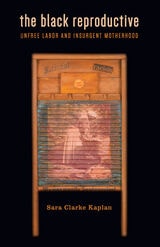
The Black Reproductive
Unfree Labor and Insurgent MotherhoodSara Clarke Kaplan
University of Minnesota Press, 2021
How Black women’s reproduction became integral to white supremacy, capitalism, and heteropatriarchy—and remains key to their dismantling
In the United States, slavery relied on the reproduction and other labors of unfree Black women. Nearly four centuries later, Black reproductivity remains a vital technology for the creation, negotiation, and transformation of sexualized and gendered racial categories. Yet even as Black reproduction has been deployed to resolve the conflicting demands of white supremacy, capitalism, and heteropatriarchy, Sara Clarke Kaplan argues that it also holds the potential to destabilize the oppressive systems it is supposed to maintain.
The Black Reproductive convenes Black literary and cultural studies with feminist and queer theory to read twentieth- and twenty-first-century texts and images alongside their pre-emancipation counterparts. These provocative, unexpected couplings include how Toni Morrison’s depiction of infanticide regenders Orlando Patterson’s theory of social death, and how Mary Prince’s eighteenth-century fugitive slave narrative is resignified through the representational paradoxes of Gayl Jones’s blues novel Corregidora. Throughout, Kaplan offers new perspectives on Black motherhood and gendered labor, from debates over the relationship between President Thomas Jefferson and Sally Hemings, to the demise of racist icon Aunt Jemima, to discussions of Black reproductive freedom and abortion.
The Black Reproductive gives vital insight into the historic and ongoing conditions of Black unfreedom, and points to the possibilities for a Black feminist practice of individual and collective freedom.
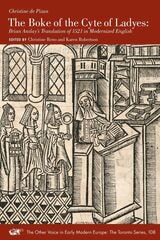
The Boke of the Cyte of Ladyes
Brian Anslay's Translation of 1521 in Modernized EnglishChristine de Pizan
Iter Press, 2025
Christine de Pizan's defense of women against centuries of misogyny, Cité des dames, was the only work of literature translated into English by Brian Anslay, an administrator in the household of King Henry VII. While numerous manuscripts were held in royal and aristocratic libraries, Anslay’s printed translation enabled a broader range of readers to appreciate the arguments for female rule crucial to the reigns of Mary I and Elizabeth I. Anslay’s translation also played a key role in the late-nineteenth-century revival of interest in Christine. This modernization of Anslay’s Tudor English makes his translation accessible to contemporary readers while preserving the rhythms of early Tudor prose. It includes an extensive introduction and notes highlighting both the history of the language and the cultural references embodied in the text.
The Book of Mating
StoriesLaksmi Pamuntjak, Annie Tucker
Northwestern University Press, 2027
Winner of the Humanities in Translation Prize
The Book of Mating is a masterfully translated collection of stories in which Indonesian women explore the full spectrum of mating: marital, sexual, and spiritual; forced and free; transcendent, ruinous, and mundane. Laksmi Pamuntjak portrays both the constraints and opportunities facing women caught between the enduring restrictions of local norms and hierarchies and the tantalizing promises of globalized modern life, between internalized myths and social realities.
An experimental melding of Pamuntjak’s creative, journalistic, and activist work, these stories read as urgent dispatches from the Indonesian archipelago and diaspora—and as universal narratives of women’s lived experiences. Annie Tucker’s nuanced translation takes us from the prison island of Buru and the Bogor Botanical Gardens to Paris’s Left Bank, offering a polyphonic testament to the universal fight for women’s autonomy over their bodies and their lives.
The Capacity Contract
Intellectual Disability and the Question of CitizenshipStacy Clifford Simplican
University of Minnesota Press, 2015
In the first sustained examination of disability through the lens of political theory, The Capacity Contract shows how the exclusion of disabled people has shaped democratic politics. Stacy Clifford Simplican demonstrates how disability buttresses systems of domination based on race, sex, and gender. She exposes how democratic theory and politics have long blocked from political citizenship anyone whose cognitive capacity falls below a threshold level⎯marginalization with real-world repercussions on the implementation of disability rights today.
Simplican’s compelling ethnographic analysis of the self-advocacy movement describes the obstacles it faces. From the outside, the movement must confront stiff budget cuts and dwindling memberships; internally, self-advocates must find ways to demand political standing without reinforcing entrenched stigma against people with profound cognitive disabilities. And yet Simplican’s investigation also offers democratic theorists and disability activists a more emancipatory vision of democracy as it relates to disability⎯one that focuses on enabling people to engage in public and spontaneous action to disrupt exclusion and stigma.
Taking seriously democratic promises of equality and inclusion, The Capacity Contract rejects conceptions of political citizenship that privilege cognitive capacity and, instead, centers such citizenship on action that is accessible to all people.
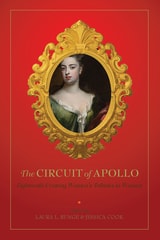
The Circuit of Apollo
Eighteenth-Century Women’s Tributes to WomenLaura Runge
University of Delaware Press, 2019
Published by University of Delaware Press. Distributed worldwide by Rutgers University Press.
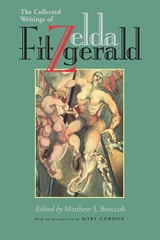
The Collected Writings of Zelda Fitzgerald
Zelda Fitzgerald
University of Alabama Press, 1997
The voice behind the legend—Zelda Fitzgerald in her own words.
Zelda Sayre Fitzgerald has long been perceived as the tragic "other half" of the Scott and Zelda legend. Born in Montgomery, Alabama, the high-spirited tomboy turned flapper was talented in dance, painting, and writing but lived in the shadow of her husband's success. Her writing can be experienced on its own terms in Matthew Bruccoli's meticulously edited The Collected Writings of Zelda Fitzgerald.
The collection includes Zelda's only published novel, Save Me the Waltz, an autobiographical account of the Fitzgeralds' adventures in Paris and on the Riviera; her celebrated farce, Scandalabra; eleven short stories; twelve articles; and a selection of letters to her husband, written over the span of their marriage, that reveals the couple's loving and turbulent relationship.
Zelda Sayre Fitzgerald has long been an American cultural icon. The Collected Writings affirms her place as a writer and as a symbol not only of the Lost Generation but of all generations as she struggled to define herself through her art.
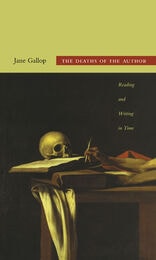
The Deaths of the Author
Reading and Writing in TimeJane Gallop
Duke University Press, 2011
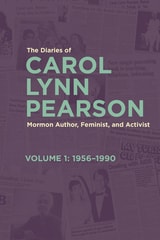
The Diaries of Carol Lynn Pearson—Mormon Author, Feminist, and Activist
Volume 1: 1956–1990Pearson, Carol Lynn
Signature Books, 2025
“I feel somehow that of all the writing I am doing, my diary is the most important.” So wrote the beloved and bestselling author, poet, and playwright Carol Lynn Pearson in her 1979 diary. Several years before, she recorded, “I feel the imperative of history. . . . Add that to my being a household word to many and I cannot escape the feeling that in many years there might be a number of people interested in these pages.” That time has now come.
Unbeknownst to almost everyone but herself, Pearson kept a near-daily diary since she was a teenager, recording her remarkable story in the context of twentieth- and twenty-first-century Mormon America. In this first of a four-volume series, Pearson chronicles her love for her church but also her troubling experiences and concerns with its patriarchy, historic doctrine of polygamy, omission of a feminine divine, and homophobia. Readers will rejoice with her as her first book of poetry, Beginnings, sells an astonishing 150,000+ copies and puts her on the map in the 1960s, empathize with her as she watches her church help kill the Equal Rights Amendment in the 1970s, and mourn with her as her mixed-orientation marriage ends and she cares for her former husband in her home as he dies of AIDS in the 1980s. The sensitive-girl-turned-strong-woman who emerges in these diaries insists that we move from patriarchy into partnership, change our destructive policies towards Queer people, and invite God the Mother back into our heavenly family.
The Diaries of Carol Lynn Pearson—Mormon Author, Feminist, and Activist
Volume 2: 1990–2002Pearson, Carol Lynn
Signature Books, 2026
Of these years of her life, poet, writer, and feminist Carol Lynn Pearson says, “The plot thickens, as all good plots do. My life and your life—if we are brave enough—move into areas that we had not anticipated. We feel sometimes that we want to run back to safer ground, but life has decided otherwise and so we take those next steps. Volume two of my diaries gives us a closeup of the years 1990 to 2002, bringing us an abundance of both joy and distress.”
Throughout the 1990s, Pearson records and laments her church’s efforts to punish scholars and activists while celebrating the success of her books and one-woman play, Mother Wove the Morning. Along the way, she comforts the suffering, endures terrible personal loss, and witnesses the fall of the Twin Towers on 9/11. “Bless everyone who fights for what is right,” she writes. Few have fought harder than Carol Lynn Pearson.
The Diaries of Carol Lynn Pearson—Mormon Author, Feminist, and Activist
Volume 3: 2003–2014Pearson, Carol Lynn
Signature Books, 2026
Proposition 8, the 2008 California ballot initiative that overturned the state’s legalization of same-sex marriage, looms large in volume 3 of Carol Lynn Pearson’s diaries. The intense lobbying in favor of the measure by the Church of Jesus Christ of Latter-day Saints caused widespread protests against the church and rifts within congregations, families, and friendships that felt like they might never heal. Pearson documented it all.
When she learned through friends close to church leaders that members of the First Presidency and Quorum of Twelve Apostles were shocked by the backlash, she wondered, “How do 15 prophets, seers, and revelators not see this coming when the rest of us did?”
A lifelong feminist, Pearson’s diaries also reveal her concerns for gender equality. She chronicles her observations of Ordain Women, a movement by a group of Latter-day Saint feminists who lobbied to change the church’s all-male priesthood. At the end of this volume, Pearson takes on yet another issue: the ongoing Mormon doctrine that polygamy is practiced in the eternities. Pearson heard from thousands of women who feared that they would be forced to share their husbands in the afterlife. The pain of these women propelled her forward into her next book project, challenging the doctrine of “eternal polygamy.”
Even as she faced her own struggles, Pearson buoyed up those around her. She took phone calls, answered letters, and comforted visitors who were hurting because of the church’s policies. She was, for many, a symbol of hope.
The Diaries of Carol Lynn Pearson—Mormon Author, Feminist, and Activist
Volume 4: 2014–2024Pearson, Carol Lynn
Signature Books, 2026
This fourth and final volume of The Diaries of Carol Lynn Pearson is full of contradictions as it covers turbulent world events and intimate details in her life. Pearson remains a beacon of light and hope for many, even as she struggles with her own sorrows.
She embarks on a new project that consumes her: the Latter-day Saint doctrine that polygamy will exist in the afterlife. Pearson also continues to document contemporaneous events in the modern history of the Church of Jesus Christ of Latter-day Saints, including the church’s November 2015 policy that discriminated against LGBTQ+ members and their children. She has both a grassroots perspective as a member of a California congregation and special insight into the decisions of LDS leadership, thanks to friends who keep her informed of what’s happening at the highest levels of the church.
Through it all, Pearson mourns when she says goodbye to longtime friends who die. In July 2026, after she completed her diary project, death finally came for Carol Lynn Pearson after 86 years. Her unique voice cannot be replicated.
The Erotic Life of Racism
Sharon Patricia Holland
Duke University Press, 2012
Reemphasizing the black/white binary, Holland reinvigorates critical engagement with race and racism. She argues that only by bringing critical race theory, queer theory, and black feminist thought into conversation with each other can we fully envision the relationship between racism and the personal and political dimensions of our desire. The Erotic Life of Racism provocatively redirects our attention to a desire no longer independent of racism but rather embedded within it.
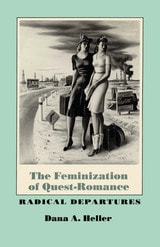
The Feminization of Quest-Romance
Radical DeparturesBy Dana A. Heller
University of Texas Press, 1990
What happens when a woman dares to imagine herself a hero? Questing, she sets out for unknown regions. Lighting a torch, she elicits from the darkness stories never told or heard before. The woman hero sails against the tides of great legends that recount the adventures of heroic men, legends deemed universal, timeless, and essential to our understanding of the natural order that holds us and completes us in its spiral. Yet these myths and rituals do not fulfill her need for an empowering self-image nor do they grant her the mobility she requires to imagine, enact, and represent her quest for authentic self-knowledge.
The Feminization of Quest-Romance proposes that a female quest is a revolutionary step in both literary and cultural terms. Indeed, despite the difficulty that women writers face in challenging myths, rituals, psychological theories, and literary conventions deemed universal by a culture that exalts masculine ideals and universalizes male experience, a number of revolutionary texts have come into existence in the second half of the twentieth century by such American women writers as Jean Stafford, Mary McCarthy, Anne Moody, Marilynne Robinson, and Mona Simpson, all of them working to redefine the literary portrayal of American women's quests. They work, in part, by presenting questing female characters who refuse to accept the roles accorded them by restrictive social norms, even if it means sacrificing themselves in the name of rebellion. In later texts, female heroes survive their "lighting out" experiences to explore diverse alternatives to the limiting roles that have circumscribed female development.
This study of The Mountain Lion, Memories of a Catholic Girlhood, Coming of Age in Mississippi, Housekeeping, and Anywhere but Here identifies transformations of the quest-romance that support a viable theory of female development and offer literary patterns that challenge the male monopoly on transformative knowledge and heroic action.

The Flat Woman
A NovelVanessa Saunders
University of Alabama Press, 2025
Asks who gets the right to call themselves a good person in a morally bankrupt world
In The Flat Woman, women exclusively are blamed for the climate crisis. Seagulls drop dead from the sky, and the government, instead of taking responsibility, scapegoats a group of female ecoterrorists. When a girl’s mother is incarcerated for climate crimes, she is forced to raise herself alone. As a young woman, she begins a romance with an environmental activist whose passion makes her question her own role in the world. By turns hilarious, deadly serious, and completely absurd, The Flat Woman asks who gets the right to call themselves a good person in a world ripe with disaster.
Driven by complex academic and moral questions, The Flat Woman is certain to appeal to fans of feminist and experimental literature, as well as fans of Margaret Atwood, Renee Gladman, Bhanu Kapil, Maggie Nelson, Kelly Link, and Anne Carson.
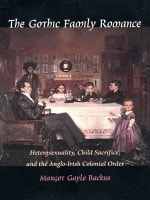
The Gothic Family Romance
Heterosexuality, Child Sacrifice, and the Anglo-Irish Colonial OrderMargot Gayle Backus
Duke University Press, 1999
Backus uses contemporary theory, including that of Michel Foucault and Eve Kosofsky Sedgwick, to analyze texts by authors ranging from Richardson, Swift, Burke, Edgeworth, Stoker, and Wilde to contemporary Irish novelists and playwrights.
By charting the changing relations between the family and the British state, she shows how these authors dramatized a legacy of violence within the family cell and discusses how disturbing themes of child sacrifice and colonial repression are portrayed through irony, satire, “paranoid” fantasy, and gothic romance. In a reconceptualization of the Freudian family romance, Backus argues that the figures of the Anglo-Irish gothic embody the particular residue of childhood experiences within a settler colonial society in which biological reproduction represented an economic and political imperative.
Backus’s bold positioning of the nuclear family at the center of post-Enlightenment class and colonial power relations in England and Ireland will challenge and provoke scholars in the fields of Irish literature and British and postcolonial studies. The book will also interest students and scholars of women’s studies, and it has important implications for understanding contemporary conflicts in Ireland.
The Hidden Hand
Or, Capitola the Madcap by E. D. E. N. SouthworthDobson, Joanne
Rutgers University Press, 1988
E.D.E.N. Southworth was one of the most popular and prolific writers of the nineteenth century and her Capitola Black, or Black Cap - a cross-dressing, adventure-seeking girl-woman - was so well-loved that the book was serialized three times between 1859 and 1888 and was dramatized in forty different versions.
When we first meet sharp and witty Capitola she is living among beggars and street urchins, and dressed as a boy because a boy can get work and be safe, whereas a girl is left to starve for want of "proper" employment. Unknown to her, Capitola has a very rich elderly guardian who finds her at a providential moment and takes her back to his palatial mansion where she finds herself "decomposing above ground for want of having my blood stirred." But not to fear. There are bandits, true-loves, evil men, long-lost mothers, and sweet women friends in Capitola's future - not to mention thunder storms, kidnap attempts, and duels.
The pace is fast, the action wonderfully unbelievable. This is escape literature at its nineteenth-century best, with a woman at its center who makes you feel strong, daring, and reckless.
The Hidden Hand
Or, Capitola the Madcap by E. D. E. N. SouthworthDobson, Joanne
Rutgers University Press, 1988
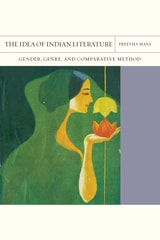
The Idea of Indian Literature
Gender, Genre, and Comparative MethodPreetha Mani
Northwestern University Press, 2022
Indian literature is not a corpus of texts or literary concepts from India, argues Preetha Mani, but a provocation that seeks to resolve the relationship between language and literature, written in as well as against English. Examining canonical Hindi and Tamil short stories from the crucial decades surrounding decolonization, Mani contends that Indian literature must be understood as indeterminate, propositional, and reflective of changing dynamics between local, regional, national, and global readerships. In The Idea of Indian Literature, she explores the paradox that a single canon can be written in multiple languages, each with their own evolving relationships to one another and to English.
Hindi, representing national aspirations, and Tamil, epitomizing the secessionist propensities of the region, are conventionally viewed as poles of the multilingual continuum within Indian literature. Mani shows, however, that during the twentieth century, these literatures were coconstitutive of one another and of the idea of Indian literature itself. The writers discussed here—from short-story forefathers Premchand and Pudumaippittan to women trailblazers Mannu Bhandari and R. Chudamani—imagined a pan-Indian literature based on literary, rather than linguistic, norms, even as their aims were profoundly shaped by discussions of belonging unique to regional identity. Tracing representations of gender and the uses of genre in the shifting thematic and aesthetic practices of short vernacular prose writing, the book offers a view of the Indian literary landscape as itself a field for comparative literature.
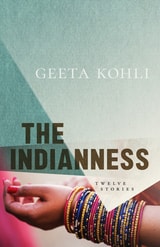
The Indianness
Twelve StoriesGeeta Kohli
University of Massachusetts Press, 2027
A bold debut story collection about first- and second-generation South Asian Americans coming of age—and coming undone
From Ivy League dormitories and Delhi wedding stages to Roman balconies and North Carolina motels, the twelve stories of The Indianness map the distance between the life a person is expected to build and the one they actually inhabit.
Women anchor the collection: a mother alone in Rome with three young daughters tests the edges of her marriage; a college student arrives at NYU with one rule—save her virginity for an Indian husband—and breaks it before the week is out; a woman manages an abortion alone in a Manhattan clinic, too afraid to tell her husband she was ever pregnant; a former lawyer in Manhattan keeps a diary of a marriage she cannot bring herself to leave. But the men are equally undone: a Harvard-educated lawyer raised in a North Carolina motel confronts a past he can never quite verify; a history teacher in suburban Massachusetts assigns a racist essay, loses his wife, and isn't certain which failure came first; a man raised as a girl until the age of twelve sits with all he has inherited.
The collection challenges the model minority narrative not by dismissing success but by exposing what it costs, moving openly through sex, abortion, marital dissatisfaction, mental health, and sexual violence, and through the silences that live inside families. The Indianness offers a portrait of a community rarely rendered with such interior depth, insisting that South Asian Americans—women and men alike—deserve the same moral complexity, desire, and contradiction long afforded to others in American literary fiction.
The Jacqueline Rose Reader
Jacqueline Rose
Duke University Press, 2011
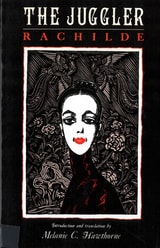
The Juggler
RachildeHawthorne, Melanie C
Rutgers University Press, 1990
The Juggler (La Jongleuse) is a "decadent" novel that was first published in 1900. Its author, Marguerite Vallette-Eymery (1860-1953), who used the pseudonym Rachilde, was a prolific novelist (over sixty works of fiction), playwright, literary critic and reviewer, and a forceful presence in French literary society of her time.
The protagonist of the novel, Eliante Donalger, is in some sense an exaggerated double for her creator--bizarre in appearance, clothing, and interests. Instinctively grasping a medical and psychological truth that the turn-of-the-century scientific world was only beginning to understand, Eliante maintains that there is nothing "natural" about human sexual expression. She claims to be in love with an inanimate (though anthropomorphic and sexually ambiguous) object, a Greek amphora, and the novel traces the rivalry between this faithful partner and an ardent human suitor, a young medical student. It is only through juggling, both literally and metaphorically, that Eliante is able to use her seductive power to maintain desire. The surprise ending challenges the limits of such power in a controversial and surprising twist.
Although Rachilde's work has been neglected in the past, the women's movement and feminist criticism have stimulated renewed interest in her fiction. The Juggler is a major rediscovery.
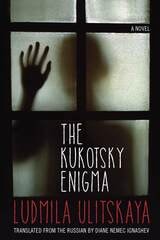
The Kukotsky Enigma
A NovelLudmila Ulitskaya; Translated from the Russian by Diane Nemec Ignashev
Northwestern University Press, 2016
Translated from the Russian by Diane Nemec Ignashev
The central character in Ludmila Ulitskaya’s celebrated novel The Kukotsky Enigma is a gynecologist contending with Stalin’s prohibition of abortions in 1936. But, in the tradition of Russia’s great family novels, the story encompasses the history of two families and unfolds in Moscow, St. Petersburg, and the ruins of ancient civilizations on the Black Sea. Their lives raise profound questions about family heritage and genetics, nurture and nature, and life and death. In his struggle to maintain his professional integrity and to keep his work from dividing his family, Kukotsky confronts the moral complexity of reproductive science. Winner of the 2001 Russian Booker Prize and the basis for a blockbuster television miniseries, The Kukotsky Enigma is an engrossing, searching novel by one of contemporary literature’s most brilliant writers.
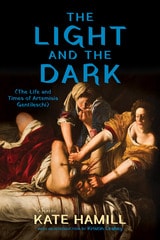
The Light and the Dark
(The Life and Times of Artemisia Gentileschi)Kate Hamill, Kristin Leahey
Northwestern University Press, 2026
A play from the inimitable Kate Hamill, based on the true story of the groundbreaking Italian painter Artemisia Gentileschi
During the seventeenth century, Italian artists strove to reshape the very image of humanity. Artemisia Gentileschi—the daughter of a painter—dreams of making her mark at a time when a woman is not thought capable of being an artist, let alone one of the greats. Just as her career begins to gain unexpected momentum, a series of devastating betrayals crack the foundation of her work—and her life. In electrifying verse and gorgeous artwork, The Light and The Dark depicts the deeply moving true story of a young woman who changed the very image of women in society . . . weaving a magnetic and empowering tapestry of ambition, rage, and resilience across the ages.
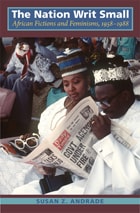
The Nation Writ Small
African Fictions and Feminisms, 1958-1988Susan Z. Andrade
Duke University Press, 2011
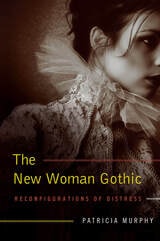
The New Woman Gothic
Reconfigurations of DistressPatricia Murphy
University of Missouri Press, 2026
The controversial and compelling figure of the New Woman in late Victorian fiction has garnered extensive scholarly attention, but rarely has she been investigated through the fascinating lens of the Gothic. Yet the presence of sinister Gothic elements is so widespread in the generally realisitic British novels that the term "New Woman Gothic" readily comes to mind. Drawing from and reworking Gothic conventions of Romantic and later literature, the New Woman version is marshaled during this tumultuous cultural moment of gender anxieties either to defend or revile the complex individual who sought improvements in educational, marital, and professional realms.
The New Woman
Literary Modernism, Queer Theory, and the Trans Feminine AllegoryEmma Heaney
Northwestern University Press, 2017
The book is the first to identify the process by which medical sources simplified the diversity of trans feminine experience into a single diagnostic narrative. It then demonstrates that this medical figure became an archetype for the "sexual anarchy" of the Modernist period in works by Aldous Huxley, James Joyce, Djuna Barnes, T. S. Eliot, and Jean Genet.
Thus illuminating the trans feminine's Modernist provenance, the book examines foundational works of Queer Theory that resuscitated the trans feminine allegory at the end of the twentieth century. Insightful and seminal, The New Woman debunks the pervasive reflex beginning in the 1990s to connect trans experience to a late twentieth-century collapse of sexual differences by revealing the Modernist roots of that very formulation.
The Poetry of American Women from 1632 to 1945
By Emily Stipes Watts
University of Texas Press, 1977
American women have created an especially vigorous and innovative poetry, beginning in 1632 when Anne Bradstreet set aside her needle and picked up her "poet's pen." The topics of American women poets have been various, their images their own, and their modes of expression original.
Emily Stipes Watts does not imply that the work of American men and that of American women are two different kinds of poetry, although they have been treated as such in the past. It is her aim, rather, to delineate and define the poetic tradition of women as crucial to the understanding of American poetry as a whole.
By 1850, American women of all colors, religions, and social classes were writing and publishing poetry. Within the critical category of "female poetry," developed from 1800 to 1850, these women experimented boldly and prepared the way for the achievement of such women as Emily Dickinson in the second half of the nineteenth century. Indeed at times—for example from 1860 through 1910—it was women who were at the outer edge of prosodic experimentation and innovation in American poetry.
Moving chronologically, Professor Watts broadly characterizes the state of American poetry for each period, citing the dominant male poets; she then focuses on women contemporaries, singling out and analyzing their best work. This volume not only brings to light several important women poets but also represents the discovery of a tradition of women writers. This is a unique and invaluable contribution to the history of American literature.
The Religion of Empire
Political Theology in Blake's Prophetic SymbolismG. A. Rosso
The Ohio State University Press, 2016
The Religion of Empire also reevaluates Blake’s relationship with Milton, whose influence Blake both affirms and contests in a unique appropriation of Milton’s prophetic legacy. In this context, Rosso challenges recent views of Blake as complicit with the nationalism and sexism of his time, expanding the religion-empire nexus to include Blake’s esoteric understanding of gender. Foregrounding the role of female characters in the longer prophecies, Rosso discloses the variegated and progressive nature of Blake’s apocalyptic humanism.
The Social Life of Criticism
Gender, Critical Writing, and the Politics of BelongingKimberly J. Stern
University of Michigan Press, 2016
This engaging study begins by looking at the eighteenth century, when critical writing started to assume the institutional and generic structures we associate with it today, and examines a series of case studies that illuminate how women writers engaged with the forms of intellectual sociability that defined nineteenth-century criticism—including critical dialogue, the club, the salon, and the publishing firm. In doing so, it clarifies the fascinating rhetorical and political debates surrounding the figure of the female critic and charts how women writers worked both within and against professional communities. Ultimately, Stern contends that gender was a formative influence on critical practice from the very beginning, presenting the history of criticism as a history of gender politics.
While firmly grounded in literary studies, The Social Life of Criticism combines an attention to historical context with a deep investment in feminist scholarship, social theory, and print culture. The book promises to be of interest not only to professional academics and graduate students in nineteenth-century literature but also to scholars in a wide range of disciplines, including literature, intellectual history, cultural studies, gender theory, and sociology.

The Tangled Roots of Feminism, Environmentalism, and Appalachian Literature
Elizabeth S. D. Engelhardt
Ohio University Press, 2003
Contemporaries were shocked when author Mary Noailles Murfree revealed she was a woman, but modern readers may be more surprised by her cogent discussion of community responses to unwanted development. Effie Waller Smith, an African American woman writing of her love for the Appalachian mountains, wove discussions of women's rights, racial tension, and cultural difference into her Appalachian poetry. Grace MacGowan Cooke participated in avant-garde writers' colonies with the era's literary lights and applied their progressive ideals to her fiction about the Appalachia of her youth. Emma Bell Miles, witness to poverty, industrialization, and violence against women, wrote poignant and insightful critiques of her Appalachian home.
In The Tangled Roots of Feminism, Environmentalism, and Appalachian Literature Elizabeth Engelhardt finds in all four women's writings the origins of what we recognize today as ecological feminism—a wide-reaching philosophy that values the connections between humans and nonhumans and works for social and environmental justice.
People and the land in Appalachia were also the subject of women authors with radically different approaches to mountains and their residents. Authors with progressive ideas about women's rights did not always respect the Appalachian places they were writing about or apply their ideas to all of the women in those places—but they did create hundreds of short stories, novels, letters, diaries, photographs, sketches, and poems about the mountains.
While The Tangled Roots of Feminism, Environmentalism, and Appalachian Literature ascribes much that is noble to the beginnings of the ecological feminism movement as it developed in Appalachia, it is also unyielding in its assessment of the literatures of the voyeur, tourist, and social crusader who supported status quo systems of oppression in Appalachia.
The Theorist's Mother
Andrew Parker
Duke University Press, 2012
The Third Shore
Women's Fiction from East Central EuropeAgatha Schwartz
Northwestern University Press, 2006
A rich compendium of fiction by twenty-five women from eighteen different nations ranging from Lithuania to Ukraine to Poland, the Czech Republic, Romania, Albania, and Slovenia, The Third Shore brings to light a whole spectrum of women's literary accomplishment and experience virtually unknown in the West. Gracefully translated, and with an introduction that establishes their political, historical, and literary context, these stories written in the decade after the fall of the Iron Curtain are tales of the familiar-of illness and death, love and desire, motherhood and war, feminism, and patriarchy-reconceived and turned into something altogether new by the distinctive experience they reflect.
The Virginal Mother in German Culture
From Sophie von La Roche and Goethe to MetropolisLauren Nossett
Northwestern University Press, 2019
Examining the virginal mother in the first novel by a German woman (Sophie von La Roche), canonical texts by Goethe, nineteenth-century popular fiction, autobiographical works, and Thea von Harbou’s novel Metropolis and Fritz Lang’s film by the same name, this book highlights the virginal mother at pivotal moments in German history and cultural development: the entrance of women into the literary market, the Goethezeit, the foundation of the German Empire, and the volatile Weimar Republic. The Virginal Mother in German Culture will be of interest to students and scholars of German literature, history, cultural and social studies, and women’s studies.
The Visionary Queen
Justice, Reform, and the Labyrinth in Marguerite de NavarreTheresa Brock
University of Delaware Press, 2024
This Book Is an Action
Feminist Print Culture and Activist AestheticsEdited by Jaime Harker and Cecilia Konchar Farr
University of Illinois Press, 2016
Touching Feeling
Affect, Pedagogy, PerformativityEve Kosofsky Sedgwick
Duke University Press, 2003
In prose sometimes somber, often high-spirited, and always accessible and moving, Touching Feeling interrogates—through virtuoso readings of works by Henry James, J. L. Austin, Judith Butler, the psychologist Silvan Tomkins and others—emotion in many forms. What links the work of teaching to the experience of illness? How can shame become an engine for queer politics, performance, and pleasure? Is sexuality more like an affect or a drive? Is paranoia the only realistic epistemology for modern intellectuals? Ultimately, Sedgwick's unfashionable commitment to the truth of happiness propels a book as open-hearted as it is intellectually daring.
Two Women
A NovelBarbara F. Ichiishi
Bucknell University Press, 2022
This first English translation of the novel captures the lyrical romanticism of its prose and includes a scholarly introduction to the work and its author, Gertrudis Gómez de Avellaneda, a pioneering feminist and anti-slavery activist who based the character of Catalina on her own experience. Two Women is a searing indictment of the stern laws and customs governing marriage in the Hispanic world, brought to life in a spellbinding, tragic love story.