Results by title
3388 books match the query 'Fiction' and 1041 start with t
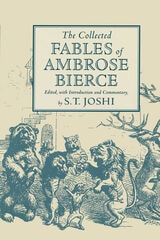
THE COLLECTED FABLES OF AMBROSE BIERCE
Ambrose Bierce, Edited with introduction and commentary by S. T. Joshi
The Ohio State University Press, 2000
Ambrose Bierce was a well-known and highly admired journalist, short story writer, and satirist. After distinguished Civil War service, Bierce became a journalist, and in 1887 he became a columnist for William Randolph Hearst’s Sunday Examiner. His work for the San Francisco Examiner made his reputation, especially on the West Coast. In 1914 he vanished on a trip to Mexico.
The work for which he is best know, The Devil’s Dictionary, was first published in 1906. Bierce also published volumes of short stories. His Tales of Soldiers and Civilians (1891) represents some of the finest writing to come out of the Civil War. Bierce’s stories of the supernatural, collected in Can Such Things Be? (1893), established him as one of the leading American authors of supernatural fiction.
This volume gathers together for the first time the 850 fables written by Bierce over his forty-year career, including more than 400 fables never reprinted from the magazines and newspapers in which they originally appeared.
Bierce’s fables are distinguished for their biting wit and their cynical reflection of the political and social events of his time. Local and national political figures; corrupt lawyers, judges, and clergymen; and even incidents in the Spanish-American War are all mercilessly lampooned. The fables not only testify to Bierce’s hatred of “hypocrisy, cant, and all sham” but provide a window into late nineteenth-century American society. S. T. Joshi has provided extensive commentary explaining historical and literary references in the fables.
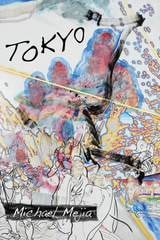
TOKYO
Michael Mejia
University of Alabama Press, 2018
TOKYO is an incisive, shape-shifting tour de force, a genre-bending mix of lyric prose, science fiction, horror, and visual collage exploring the erotic undercurrents of American perceptions of Japanese culture and identity.
By turns noir, surreal, and clinical in its language and style, TOKYO employs metaphors of consumption, disease, theater, gender fluidity, monstrousness, and ecological disaster in intertwined accounts touching on matters of cultural appropriation, fiction's powerful capacity to produce immersive realities, and the culturally corrupting late capitalist excesses that entangle both the United States and Japan.
The novel opens with a fantastic, slyly comic report written by a Japanese executive, describing the anomalous bluefin tuna his company purchased at Tokyo’s iconic fish market, as well as the dissolution of the executive’s marriage to his Japanese-American, or Sansei, wife. But when an American writer—whose own Sansei wife was previously married to a Japanese executive—begins investigating the report’s author and his claims, assisted by a mysterious Japanese correspondent the American suspects may once have been his wife’s lover, identities begin to scramble until it’s uncertain who is imagining who, and who is and isn’t Japanese. Meanwhile, a secret plot to establish pure Japaneseness through the global distribution of genetically engineered bluefin tuna seems to be rushing toward its conclusion like a great wave.
TRIAL OF EBENEZER SCROOGE
Bruce Bueno de Mesquita
The Ohio State University Press, 2001
What happened to Ebenezer Scrooge after the night he was visited by the three spirits?
When we left Ebenezer Scrooge at the end of A Christmas Carol, he appeared to be a man transformed. But did he sincerely repent and earn admission to heaven? The Trial of Ebenezer Scrooge, written in Dickensian style and with tongue firmly lodged in cheek, follows Scrooge through the Court of Heavenly Justice, where his soul’s fate is to be determined. In this courtroom drama, using frequent flashbacks, the author uncovers startling evidence, much of it directly from Dickens’s classic, that reveals Scrooge to have lived a saintly life before being confronted by three Christmas ghosts. Evidence mounts that Mr. Scrooge struck a Faustian bargain with the Ghost of Christmas Yet to Come, a deal to extend his own mortality in exchange for yielding his soul as a tool for the forces of darkness to infiltrate heaven. Readers will enjoy the remaking of some of Dickens’s best-known characters. Tiny Tim emerges as a villain, while little Eppie, borrowed from George Eliot’s Silas Marner, is Scrooge’s protector and source of salvation. This new novel provides the much-needed redemption of Ebenezer Scrooge’s reputation and offers a welcome departure from the standard saccharine fare at Christmastime. Dickens buffs will have a merry time trying to find where Dickens’s voice ends and the author’s begins. All readers will puzzle over how we could have so misjudged Ebenezer Scrooge, or whether we judged Scrooge aright from the start.
Take It or Leave It
Raymond Federman
University of Alabama Press, 1976
Moving freely from past to present (and Vice Versa), and from place to place leap-frogging from digression to digression, Take It or Leave It explores new possibilities of narrative technique. Whie the story of Frenchy is being told, the narrator involves his listeners in digressive arguments about politics, sex, America, literature, laughter, death, and the telling of the story itself. Consequently, as this "exaggerated second-hand tale to be read aloud either standing or sitting" progresses, it also deviates from its course, and eventually cancels itself as the voices of the fiction multiply. Take It or Leave It, the ultimate postmodern novel, makes a shamble of traditional fiction and conventional modes of writing, and does so with effrontery and laughter.
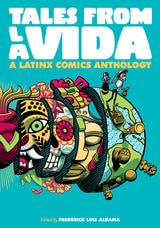
Tales from la Vida
A Latinx Comics AnthologyEdited by Frederick Luis Aldama
The Ohio State University Press, 2018
In the Latinx comics community, there is much to celebrate today, with more Latinx comic book artists than ever before. The resplendent visual-verbal storyworlds of these artists reach into and radically transform so many visual and storytelling genres. Tales from la Vida celebrates this space by bringing together more than eighty contributions by extraordinary Latinx creators. Their short visual-verbal narratives spring from autobiographical experience as situated within the language, culture, and history that inform Latinx identity and life. Tales from la Vida showcases the huge variety of styles and worldviews of today’s Latinx comic book and visual creators.
Whether it’s detailing the complexities of growing up—mono- or multilingual, bicultural, straight, queer, or feminist Latinx—or focusing on aspects of pop culture, these graphic vignettes demonstrate the expansive complexity of Latinx identities. Taken individually and together, these creators—including such legendary artists as Jaime and Gilbert Hernandez, Roberta Gregory, and Kat Fajardo, to name a few—and their works show the world that when it comes to Latinx comics, there are no limits to matters of content and form. As we travel from one story to the next and experience the unique ways that each creator chooses to craft his or her story, our hearts and minds wake to the complex ways that Latinxs live within and actively transform the world.
Tales from the Kingdom of Lailonia and The Key to Heaven
Leszek Kolakowski
University of Chicago Press, 1989
Tales from the Prince of Storytellers
Robert Louis Stevenson
Northwestern University Press, 1993
Included in this volume for the first time are versions of the stories "Markheim" and "The Isle of Voices" as they appear in Stevenson' s holograph manuscripts, plus his classics The Suicide Club, The Rajah's Diamond, "The Bottle Imp," "The Pavilion on the Links," "A Lodging for the Night," "The Merry Men," and "Thrawn Janet."
Tales of Ancient India
Edited by J. A. B. van Buitenen
University of Chicago Press, 1959
"Fourteen tales from India, newly translated with a terse and vibrant effectiveness. These tales will appeal to any reader who enjoys action, suspense, characterization, and suspension of disbelief in the supernatural."—The Personalist
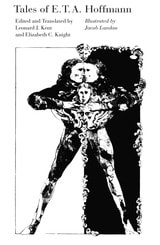
Tales of E. T. A. Hoffmann
E. T. A. Hoffmann
University of Chicago Press, 1972
"The editors have made an excellent selection, and the result is a book of great distinction."—Denis Donoghue, New York Review of Books
"The translators have proved fully equal to all the challenges of Hoffmann's romantic irony and his richly allusive prose, giving us an accurate and idiomatic rendering that also retains much of the original flavor."—Harry Zohn, Saturday Review
Tales of Times Now Past
Sixty-Two Stories from a Medieval Japanese CollectionMarian Ury
University of Michigan Press, 1993
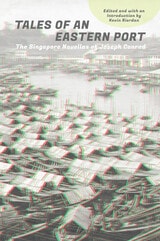
Tales of an Eastern Port
The Singapore Novellas of Joseph ConradJoseph Conrad
National University of Singapore Press, 2023
In the 1880s, Joseph Conrad spent three extended stints in the colonial port city of Singapore, while working on ships around the region. Over the next thirty years, he would return to this place many times in his writing. Singapore is the principal, if sometimes obscured, port of call in Conrad’s fiction; it is the center of overlapping networks, colonial and commercial, religious and literary. His characters travel to upriver Borneo and to Bangkok, to Shanghai and to Sydney, and yet they tend to return to Singapore.
This volume pairs for the first time two Conrad novellas that start in Singapore: The End of the Tether and The Shadow-Line.Together they provide a fleeting portrait of the developing city, through narrators who are uneasy with the trappings and workings of the colonial enterprise. These stories have renewed relevance as part of global modernist and oceanic literatures, and reading them now helps recall one chapter in Singapore’s long history as a vital site of cultural exchange, one that harbors and inspires distinctive storytelling traditions.
Tales of the Metric System
A NovelImraan Coovadia
Ohio University Press, 2016

Tales of the Prague Ghetto
Siegfried Kapper
Karolinum Press, 2022
Trained in philosophy and medicine, the writer, translator, scholar, and political and cultural activist Siegfried Kapper (1821–1879) devoted significant effort to the advancement of Jewish culture in Bohemia, Jewish emancipation, and to the commitment of Jews to contemporary Czech society. The three stories in this collection, which first appeared in the press in the 1840s and were posthumously published as a collection at the end of the century, offer a Romantic and folkloric vision of Jewish culture in Prague.
The first story, “Genenda,” displays Kapper’s operatic eye for detail and drama with its account of a dutiful rabbi’s daughter being swept away by a dashing young man, a Christian nobleman disguised as a Jew. “The Curious Guest” is an intricate tale of a quest for wisdom and power. The final story, “Glowing Coals,” is a supernatural tale of romantic desire and revenge, displaying Kapper’s skill at deploying the tropes of folklore for dramatic literary effect. The collection not only provides a colorful snapshot of nineteenth-century Czech-Jewish culture but also resonates with universal human themes that transcend a single national experience.
Talking about Detective Fiction
P. D. James
Bodleian Library Publishing, 2009

Tamangur
Leta Semadeni
Seagull Books, 2025
Romansh poet Leta Semadeni’s debut novel, Tamangur, is a multifaceted gem that delves into the shadowed depths of a remote valley in the Engadin Alps. More than a setting, the ancient stone pine forest of Tamangur serves as a mystical realm, a Valhalla for hunters and their kin, where the living brush against the world of the dead.
A richly woven narrative, Tamangur unfolds through eighty-four interlocking vignettes. We follow an unnamed young girl, referred to only as “the child,” and her grandmother as they navigate their shared grief. The loss of the girl’s beloved grandfather and younger brother casts a long shadow, with the child believing she is to blame for her brother’s death—a burden that has led her parents to abandon her. The small village they inhabit is populated by a cast of quirky characters: Elsa, who passionately loves the absent Elvis; a seamstress who steals others’ memories; a brooding chimney sweep; and a rude goat. Amidst the sorrow, these oddballs form a patchwork family, softening the harsh edges of fate with their peculiar charm.
Semadeni’s prose is crystalline and evocative, blending the poignant with the absurd in a way that captures the heart and imagination. Tamangur is a haunting exploration of loss, memory, and the fragile connections that bind us.
Tamarack River Ghost
A NovelJerry Apps
University of Wisconsin Press, 2012
Josh’s big story is that a corporation that plans to establish an enormous hog farm has bought a lot of land along the Tamarack River in bucolic Ames County. Some of the local residents and officials are excited about the jobs and tax revenues that the big farm will bring, while others worry about truck traffic, porcine aromas, and manure runoff polluting the river. And how would the arrival of a large agribusiness affect life and traditions in this tightly knit rural community of family farmers? Josh strives to provide impartial agricultural reporting, even as his newspaper is replaced by a new Internet-only version owned by a former New York investment banker. And it seems that there may be another force in play: the vengeful ghost of a drowned logger who locals say haunts the valley of the Tamarack River.
Tamiami Trail
Miami StoriesJennifer Bannan
Carnegie Mellon University Press, 2025
The Tamiami Trail cuts through the contradictions of Miami: a city shaped by swamps and skyscrapers, violence and desire. In Tamiami Trail: Miami Stories, Jennifer Bannan brings us eighteen vivid portraits of women navigating this teeming, volatile landscape.
An adolescent trapped in a toxic relationship. A middle-aged woman entangled with a reckless boy. A marketing executive profiting off the chaos of hurricanes. These women—mothers, daughters, lovers—take their chances in a world where environmental and personal disasters collide, where the ocean’s expanse mirrors the risks they take with their own lives.
Steamy, sharp, and deeply human, Tamiami Trail depicts the beauty and brutality of Miami, evoking its lush landscapes and relentless energy. With wit and sharp insight, Bannan maps the unruly desires that drive her unforgettable characters and the city that shapes them.
Tampico
A NovelBy Toby Olson
University of Texas Press, 2008
Four old men—John, Gino, Larry, and Frank—have been warehoused at "the Manor," a long-eroded home for the forgotten. The men take turns telling stories, stalling death as they relive pivotal parts of their pasts. Outside, the cliff crumbles and a lighthouse slips toward the sea.
John, in particular, enthralls the others with his tale of Tampico, Mexico, where he met an Indian woman named Chepa who owned a house at the edge of a mountain wilderness. She was his first love—and his first lesson in the dangers of foreign intrigue. But his is not the only memory haunted by mysteries born in Mexico. Sick of waiting for death, stirred by the shifting ground beneath their feet, the Manor's residents finally resolve to quit that place and head out for Tampico.
With inexorable pull, and exquisite scenes that could only come from Toby Olson, Tampico celebrates a sublime band of calaveras, "those skeleton messengers of mortality," who seek self-discovery even as their lives are ending.
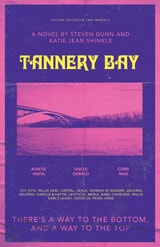
Tannery Bay
A NovelSteven Dunn and Katie Jean Shinkle
University of Alabama Press, 2024
In a town trapped in endless July, love, resistance, and imagination break the loop
Enter a world where time stands still and summer never ends. In the enchanted town of Tannery Bay, it’s July 37, and then July 2 again, but the year is a mystery. Trapped in an eternal loop, the residents embark on an extraordinary journey of self-discovery, unity, and defiance against the forces that seek to divide them.
Otis and Joy, intrepid siblings, work with their family and friends to oppose a formidable adversary: The Owners. These cunning and ruthless old men, driven by insatiable greed, hold the town hostage, exploiting its resources and dividing its people. In this powerful #OwnVoices narrative, Tannery Bay is a captivating tale of Black Joy and Queer Joy and the ways in which family is both biological and chosen, where love transcends boundaries, and where art is a vehicle for change.
Tasker Street
Mark Halliday
University of Massachusetts Press, 1992
Tasker Street, winner of the Juniper Prize for poetry, is the second collection of poems by the acclaimed American poet Mark Halliday. Following his debut, Little Star (1987), which was selected for the National Poetry Series, Tasker Street confirmed Halliday as one of the most distinctive and engaging voices in contemporary American poetry.
Halliday's poems are marked by a restless, probing intelligence and a distinctly conversational energy. The poems in Tasker Street are personal in tone, narrative in impulse, and unafraid to range widely across the textures of everyday life: relationships, memory, desire, self-doubt, ambition, and the comic absurdities of being alive. These are poems that think out loud, circling back on themselves with a self-awareness that is at once disarming and deeply serious, even as they entertain with wit, verbal dexterity, and a refusal to settle for easy resolutions.
Drawing on the traditions of Frank O'Hara's personism and the narrative directness of the New York School, yet infused with a philosophical attentiveness honed by Halliday's scholarly engagement with the poetry of Wallace Stevens, the poems in Tasker Street balance accessibility with intellectual ambition. They invite readers into a voice that is simultaneously intimate and performative, one that embraces digression, self-interrogation, and the pleasures of language even while confronting questions of mortality, meaning, and the stubborn persistence of the self.
Teach the Free Man
StoriesPeter Nathaniel Malae
Ohio University Press, 2007
The twelve stories in Teach the Free Man mark the impressive debut of Peter Nathaniel Malae. The subject of incarceration thematically links the stories, yet their range extends beyond the prison’s barbed wire and iron bars. Avoiding sensationalism, Malae exposes the heart and soul in those dark, seemingly inaccessible corridors of the human experience.
The stories, often raw and startlingly honest, are distinguished by the colloquial voices of California’s prison inmates, who, despite their physical and cultural isolation, confront dilemmas with which we can all identify: the choice to show courage against peer pressure; the search for individual rights within a bureaucracy; and the desperate desire for honor in the face of great sacrifice. These stories present polished and poetic examples of finding something redemptive in the least among us.
The book’s epigraph by W. H. Auden, from which the book takes its title, exemplifies the spirit of these dynamic stories:
In the deserts of the heart
Let the healing fountain start.
In the prison of his days
Teach the free man how to praise.
Tear Here
a NovelMatthew Pitt
Carnegie Mellon University Press, 2026
Matthew Pitt’s first novel draws from characters introduced in his debut story collection. The rock band Some Assault—comprised of dropouts and hedonists—flails from gig to gig, directed by their volatile drummer Liddy, who careens between foster homes and addictions. She and the band strike up a surprise friendship with Charlie Shales, their remedial algebra teacher. At first, this link is transactional, with Shales seeking drugs and the band seeking a customer. Before long, an odd and meaningful bond is formed.
When Charlie later passes, Liddy orchestrates an elaborate sonic empire, dismissing her own health woes. She recruits new members with targeted zeal, including Oliv, heiress to twin fortunes in condiment packaging and shortbread cookies. Deploying Oliv’s funds to buy a shuttered women’s prison, Some Assault converts the acreage into a farm collective and a massive recording studio dubbed The Hive.
Misfits continue to swell Some Assault’s roster, lured by The Hive’s promise of security and rabid praise: Andy Warhol’s Factory in an Instagram age. However, once the band’s fifteen minutes of fame threaten to expire, territorial violence rises, driven by dark desires to command the public eye at all costs. Chronicled by a member who managed to flee The Hive, Tear Here surveys the fierce fallout of cravings for celebrity that warp into cultish conduct.
Techniques for Living
Fiction and Theory in the Work of Christine Brooke-RoseKaren R. Lawrence
The Ohio State University Press, 2010

Tell Everyone I Said Hi
Chad Simpson
University of Iowa Press, 2012
Poignant, fresh, and convincing, these are stories of women who smell of hairspray and beer and of landscapers who worry about their livers, of flooded basements and loud trucks, of bad exes and horrible jobs, of people who remain loyal to sports teams that always lose. Displaced by circumstances both in and out of their control, the characters who populate Tell Everyone I Said Hi are lost in their own surroundings, thwarted by misguided aspirations and long-buried disappointments, but fully open to the possibility that they will again find their way.
Tell Me
StoriesJoe Baumann
Northwestern University Press, 2024
Queer stories about love, loneliness, the surreal, and the self
The stories in Tell Me feature queer men of various ages reckoning with loneliness, selfishness, and the struggle for self-discovery and identity. In “The Vanisher,” a young bisexual man struggling with his own desire to be seen receives a bandana that allows him to become invisible. In “Retreat,” a widower travels to an artists’ colony to seek an audience with his recently deceased husband. And in “We Are Rendered Silent,” people lose their ability to speak when a man they love dies. Through Baumann’s inventive employment of the strange and surreal, these stories set out to explore the bizarre and often confounding experience of navigating modern-day queerness. With his unique voice and magnificent imagination, Baumann fully immerses readers in the queer experience.

Tell the World You're a Wildflower
StoriesJennifer Horne
University of Alabama Press, 2014
In Tell the World You’re a Wildflower, each character must decide what to tell, whether to tell it, and to whom to tell it. Each struggles with questions of identity and truth, trying to understand who she is and what holds true for her. Some tell their stories plainly, directly, others more obliquely, nesting one within another. Anchored in the tradition of southern storytelling, these women contend with loss, change, and growth while going to church, school, and prison, navigating love and sex, and worrying too much about what people might think.
Yet these women generally refuse to behave, and they wander in and out of each other’s stories just like people do in small towns across the South. Small town lives are always interconnected: your third-grade teacher is your new neighbor’s aunt and the boy you dated your senior year falls from political grace after being caught in a hot tub with your second cousin. Though they may have had little say in where they were planted, Horne’s protagonists nevertheless do their best to bloom.
Rich, multifaceted, and unforgettable, Tell the World You’re a Wildflower is the work of a veteran explorer of the twentieth and twenty-first century South. Horne’s quest to understand her culture through decades of reading and observing has now yielded these narratives that imaginatively and insightfully enter the hearts and minds of southern women.
Tellin' It Like It Is
Selected Works of Adrian C. LouisAdrian C. Louis
University of Nevada Press, 2026
Tellin’ It Like It Is offers a powerful introduction to Adrian C. Louis (1946–2018), one of the most unflinching Native American literary voices of the twentieth century. Drawing from a half-century of published writing—and including a few previously unpublished pieces—this collection captures the evolution of Louis’s voice, worldview, and craft.
Editor David Pichaske, a close friend of Louis in his later years, curates this volume with deep insight into both the public figure and the private man. Selections are arranged chronologically to trace Louis’s transformation from a Nevada reservation teenager to a California hippie, a sixties hitchhiker, a Boston academic, a South Dakota reservation journalist, and finally, a Midwestern college professor.
Louis’s work immerses readers in reservation life, yet its critique reaches the broadest dimensions of American and human experience. To enrich understanding, the book includes literary reviews, scholarly essays (including one by a noted Polish critic), an interview with Louis, and his own reflections on literature and identity. A foreword by poet Bojan Louis provides further context for this essential collection.
Telling It Like It Wasn’t
The Counterfactual Imagination in History and FictionCatherine Gallagher
University of Chicago Press, 2018
Gallagher locates the origins of contemporary counterfactual history in eighteenth-century Europe, where the idea of other possible historical worlds first took hold in philosophical disputes about Providence before being repurposed by military theorists as a tool for improving the art of war. In the next century, counterfactualism became a legal device for deciding liability, and lengthy alternate-history fictions appeared, illustrating struggles for historical justice. These early motivations—for philosophical understanding, military improvement, and historical justice—are still evident today in our fondness for counterfactual tales. Alternate histories of the Civil War and WWII abound, but here, Gallagher shows how the counterfactual habit of replaying the recent past often shapes our understanding of the actual events themselves. The counterfactual mode lets us continue to envision our future by reconsidering the range of previous alternatives. Throughout this engaging and eye-opening book, Gallagher encourages readers to ask important questions about our obsession with counterfactual history and the roots of our tendency to ask “What if…?”
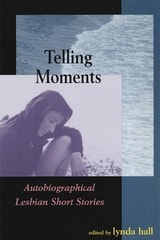
Telling Moments
Autobiographical Lesbian Short StoriesEdited by Lynda Hall
University of Wisconsin Press, 2003
The stories are by well-known contemporary writers—Gloria Anzaldúa, Mary Cappello, Emma Donoghue, Jewelle Gomez, Karla Jay, Anna Livia, Valerie Miner, Lesléa Newman, Minnie Bruce Pratt, Ruthann Robson, Sarah Schulman, and Jess Wells—and exciting newer voices, such as Donna Allegra and Marion Douglas. There are also stories from performance artists Carmelita Tropicana, Peggy Shaw, and Maya Chowdhry. Anna Livia’s protagonist appreciates her mother’s artful garden creation. Ruthann Robson tells of a survivor of the health care system. In Marion Douglas’s story a teenager dances with an alluring classmate. Donna Allegra’s strong construction worker copes with the death of her mother. And Karla Jay sets her character forth to swim with sharks. Most of the stories are accompanied by an author photo, biographical sketch, and—a most significant feature—a commentary from the author on her writing process and the autobiographical nature of her story, illustrating the truth behind the fiction.
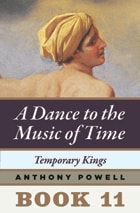
Temporary Kings
Book 11 of A Dance to the Music of TimeAnthony Powell
University of Chicago Press, 1995
Anthony Powell’s universally acclaimed epic A Dance to the Music of Time offers a matchless panorama of twentieth-century London. Now, for the first time in decades, readers in the United States can read the books of Dance as they were originally published—as twelve individual novels—but with a twenty-first-century twist: they’re available only as e-books.
In this penultimate volume, Temporary Kings (1973), Nick and his contemporaries are at the height of their various careers in the arts, business, and politics. X. Trapnel is dead, but his mystery continues to draw ghoulish interest from readers and academics alike—as well as from his lover, Pamela Widmerpool. Kenneth Widmerpool, meanwhile, is an MP with mysterious connections beyond the newly dropped Iron Curtain, but he continues to be tormented by Pamela; a spectacular explosion, Nick can’t help but realize, is imminent.
"Anthony Powell is the best living English novelist by far. His admirers are addicts, let us face it, held in thrall by a magician."--Chicago Tribune
"A book which creates a world and explores it in depth, which ponders changing relationships and values, which creates brilliantly living and diverse characters and then watches them grow and change in their milieu. . . . Powell's world is as large and as complex as Proust's."--Elizabeth Janeway, New York Times
"One of the most important works of fiction since the Second World War. . . . The novel looked, as it began, something like a comedy of manners; then, for a while, like a tragedy of manners; now like a vastly entertaining, deeply melancholy, yet somehow courageous statement about human experience."--Naomi Bliven, New Yorker
“The most brilliant and penetrating novelist we have.”--Kingsley Amis
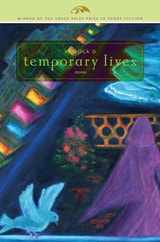
Temporary Lives
StoriesRamola Dharmaraj
University of Massachusetts Press, 2010
In the title story, Rose Ammal, who married young and bore numerous children, survives her husband's betrayal and religious conversion by creating her own private redemptions and conversions. "The Next Corpse Collector" chronicles significant moments in the lives of two young brothers, Anwar and Amir, who seek to escape the destiny of corpse
collector, the job their father is determined to bequeath to them. "What the Watchman Saw" offers a glimpse into the life of Venkatesh, a longtime watchman who is faced with the dilemma of whether to report the theft of stolen antiquities from the house of his new neighbor.
"Esther" is a tale of the haunting, troubled spirit of Leeza's grandmother, who lingers in Leeza's childhood home and unexpectedly helps her during the summer her grandfather dies as she wakes to an adolescent infatuation with a neighbor boy. In "The Couple in the Park," a young middle-class wife, Laura, in a constrictive arranged marriage, finds comfort in watching a couple in the park who remind her of her own grandparents as she tips over the edge into schizophrenia. "The Man on the Veranda" traces a significant day in the life of retired government-worker Parameswaran—the day his wife finally leaves him.
Tense and Narrativity
From Medieval Performance to Modern FictionBy Suzanne Fleischman
University of Texas Press, 1990
In this pathfinding study, Suzanne Fleischman brings together theory and methodology from various quarters to shed important new light on the linguistic structure of narrative, a primary and universal device for translating our experiences into language.
Fleischman sees linguistics as laying the foundation for all narratological study, since it offers insight into how narratives are constructed in their most primary context: everyday speech. She uses a linguistic model designed for "natural" narrative to explicate the organizational structure of "artificial" narrative texts, primarily from the Middle Ages and the postmodern period, whose seemingly idiosyncratic use of tenses has long perplexed those who study them. Fleischman develops a functional theory of tense and aspect in narrative that accounts for the wide variety of functions—pragmatic as well as grammatical—that these two categories of grammar are called upon to perform in the linguistic economy of a narration.
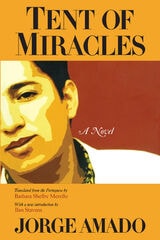
Tent of Miracles
Jorge Amado; translated by Barbara Shelby Merello
University of Wisconsin Press, 2003
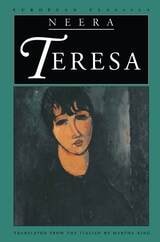
Teresa
Neera, translated by Martha King
Northwestern University Press, 1999
Through Teresa and other women characters, Neera addressed the injustice of such societal restrictions in nineteenth-century Italy. Neera's narratives are noted for their subtle psychoanalytical presentation of feminine states of mind as well as for an unflinching examination of society.
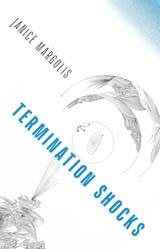
Termination Shocks
Janice Margolis
University of Massachusetts Press, 2019
In astronomy, the termination shock is the boundary that marks the outer limits of the sun's influence—the ripple outward of our solar wind and its collision with the interstellar medium. This debut collection of stories evokes those moments when lives are unpredictably shaken and reset by forces beyond their grasp.
Making use of a diverse array of narrative modes, settings, and voices, these stories traverse space and time, moving from Egypt during the Second World War to modern-day Liberia and an unfamiliar Los Angeles. The title story, “Termination Shock,” offers a lyrical exploration of two traumatic moments in a woman's life that occur decades apart and continue to reverberate in humorous and poignant ways. Janice Margolis shows us characters on the precipice of change—including a narrator in fevered quarantine following the death of her mother from Ebola, a cross-cultural love in a swiftly transforming Syria, and the desolation of the Berlin Wall, which from its various sectors and coordinates, confesses its crimes and mourns its destruction.
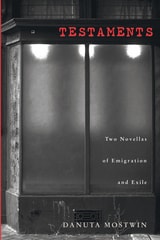
Testaments
Two Novellas of Emigration and ExileDanuta Mostwin
Ohio University Press, 2005
Translated from Polish by Marta Erdman and Nina Dyke.
Polish émigrés have written poignantly about the pain of exile in letters, diaries, and essays; others, more recently, have recreated Polish-American communities in works of fiction. But it is Danuta Mostwin’s fiction, until now unavailable in English translation, that bridges the divide between Poland and America, exile and emigration.
Mostwin and her husband survived the ravages of World War II, traveled to Britain, and then emigrated to the United States. Mostwin devoted her scholarly career to the study of immigrants trapped between cultural worlds. Winner of international awards for her fiction, Danuta Mostwin here offers two novellas, translated by the late Marta Erdman, which are the first of her works published in English in the United States.
Deeply melancholic and moving in its unsentimental depiction of ordinary people trying to make sense of their uprooted lives, Testaments presents two powerful vignettes of life in immigrant America, The Last Will of Blaise Twardowski and Jocasta. This timely publication provides an introduction to Mostwin’s work that will ensure that she is recognized as the creator of one of the most nuanced and deeply moving pictures of emigration and exile in Polish-American literature.
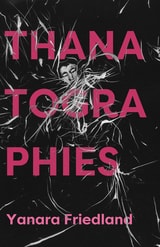
Thanatographies
Yanara Friedland
University of Alabama Press, 2026
A haunting, poetic excavation of memory, the nocturnal imagination, and a search for new forms of language to act upon legacies of violence and erasure.
Thanatographies is a genre-defying meditation on disappearance, memory, and the porous boundaries between the living and the dead. In poetic prose, Yanara Friedland weaves together dreamscapes, historical fragments, personal recollections, and philosophical inquiry to explore the afterlives of loss and survival. Moving through rooms, cities, forests, and archives, the text becomes a living document of insomnia, exile, and the spectral presence of women across time, including artists, revolutionaries, caretakers, and ghosts.
Structured in four sections titled Room, Night, Medusas, and Burials, the book traverses inner and outer landscapes, from Berlin’s haunted streets to the intimate terrain of the body. Friedland’s voice is both lyrical and incisive, drawing on figures such as Unica Zürn, Rosa Luxemburg, and Else Lasker-Schüler to illuminate the intersections of gender, violence, and historical erasure. The result is a deeply embodied poetics of wakefulness, where hidden life remembers and speaks.
Thanatographies is written for readers of experimental literature, feminist theory, and contemporary poetics. The book resonates with artists, scholars, and seekers who are compelled by the aesthetics of mourning, the politics of memory, and the radical potential of language to hold what is otherwise unspeakable.
Thank You for Being Concerned and Sensitive
Jim Henry
University of Iowa Press, 1997
Jim Henry's stories defy convention. There are no easy answers, no quick fixes. Although the plots vary—from a corpse returning to visit his family weeks after his burial, to the musings of a congressman grappling with the weight of history, to a wealthy family's elaborate plot to cheer their mysteriously wounded mother—all express a sense of the extraordinary in the ordinary, the absurd in the everyday.
Henry's characters are for the most part misfits, outsiders looking in on a world whose seemingly natural order is turned upside down. In a throw-away culture obsessed with sex and drugs, money and God, they struggle to connect with what is real while trying to convince themselves that anything is. And yet in the midst of their existential searching there remains always Henry's quirky sense of humor. As one character says, “Anything is possible,” and in this collection anything and everything happens.
Thanos Vlekas
A NovelPavlos Kalligas, Translated from the Greek by Thomas Doulis
Northwestern University Press, 2001
Thanos is a young farmer struggling to improve himself despite the derision of his mother, who considers him incapable of bearing arms for his country. She prefers instead her more "heroic" son, the brave and ambitious brigand Tassos, whose courage and resistance to authority embodying the virtues that helped Greece drive out the Turks. While Thanos works his land, his ruthless brother uses the political machinery and wealth gained from robbery and murder to replace the old Ottoman landowners and subjugate the villagers.
That Affair Next Door and Lost Man's Lane
Anna Katharine Green
Duke University Press, 2003
That Constant Coyote
California StoriesGerald W. Haslam
University of Nevada Press, 1990
That Constant Coyote contains twenty-five stories in all, nineteen selections previously published and six new pieces. The stories included in this anthology tell us what life is like in the regions of California and the West where drudgery characterizes each day, where menudo para desayuno or biscuits and gravy replace champagne brunch. Delve into these pages and you will quickly find a set of fascinating characters who inhabit "the other California"—a place Haslam knows well and so deftly describes. Foreword by Ann Ronald. Western Literature Series.
That Guy Wolf Dancing
Elizabeth Cook-Lynn
Michigan State University Press, 2014
That May Not Mean What You Think
StoriesElizabeth Crane
Northwestern University Press, 2026
A visionary and profound new collection from innovative author Elizabeth Crane
Throughout her body of work, Elizabeth Crane’s literary vision has always been singular and innovative, twisting form and bending reality into new universes. Her latest collection, That May Not Mean What You Think, explores themes of aging and youth, gender and discrimination, and sex and love. In “Training Module,” Crane takes the structure and protocol of workplace harassment prevention training and turns it on its head; “The Box” tells the story of a woman trying to recover from divorce with the help of a literal unicorn; and “The Youngs” follows a group of teenagers experiencing loss for the first time, clinging to the belief that they’ll live forever. Across these delightfully weird and disarmingly truthful stories, American culture is refracted through humor and heart, asking readers to consider their complicity and to imagine new possibilities of participating in a better future.

The 13th Tablet
Alex Mitchell
Haus Publishing, 0
The Abolition of Species
Dietmar Dath
Seagull Books, 2012
Cyrus the Lion sends the wolf Dmitri Stepanovich on a diplomatic mission, and in the course of his journey he discovers truths about natural history, war, and politics for which he was unprepared. The subsequent war that breaks out in The Abolition of Species will come to span three planets and thousands of years—encompassing treachery and massacres, music and mathematics, savagery and decadence, as well as the terraformation of Mars and Venus and the manipulation of time itself. By turns grandiose, horrific, erotic, scathing, and visionary, The Abolition of Species is a tale of love and war after the fall of man and an epic meditation on the theory of evolution unlike any other.
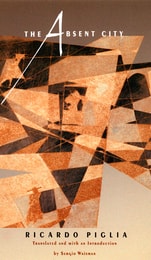
The Absent City
Ricardo Piglia
Duke University Press, 2000
The novel follows Junior, a reporter for a daily Buenos Aires newspaper, as he attempts to locate a secret machine that contains the mind and the memory of a woman named Elena. While Elena produces stories that reflect on actual events in Argentina, the police are seeking her destruction because of the revelations of atrocities that she—the machine—is disseminating through texts and taped recordings. The book thus portrays the race to recover the history and memory of a city and a country where history has largely been obliterated by political repression. Its narratives—all part of a detective story, all part of something more—multiply as they intersect with each other, like the streets and avenues of Buenos Aires itself.
The second of Piglia’s novels to be translated by Duke University Press—the first was Artifical Respiration—this book continues the author’s quest to portray the abuses and atrocities that characterize dictatorships as well as the difficulties associated with making the transition to democracy. Translated and with an introduction by Sergio Waisman, it includes a new afterword by the author.
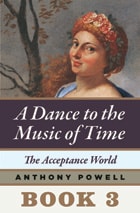
The Acceptance World
Book 3 of A Dance to the Music of TimeAnthony Powell
University of Chicago Press, 1995
Anthony Powell’s universally acclaimed epic A Dance to the Music of Time offers a matchless panorama of twentieth-century London . Now, for the first time in decades, readers in the United States can read the books of Dance as they were originally published—as twelve individual novels—but with a twenty-first-century twist: they’re available only as e-books.
The third volume, The Acceptance World (1955), opens with Nick Jenkins, in his late twenties, beginning to make his way in the world of letters: working for a publisher, writing on his own, and establishing connections across the literary landscape. At the same time, he is making his way in love, as a surprise meeting with an old friend’s sister blossoms into an affair. Meanwhile, friends are diving into marriage and careers, and the patterns of life’s dance are starting to take shape—even as the future steps remain shadowy.
"Anthony Powell is the best living English novelist by far. His admirers are addicts, let us face it, held in thrall by a magician."--Chicago Tribune
"A book which creates a world and explores it in depth, which ponders changing relationships and values, which creates brilliantly living and diverse characters and then watches them grow and change in their milieu. . . . Powell's world is as large and as complex as Proust's."--Elizabeth Janeway, New York Times
"One of the most important works of fiction since the Second World War. . . . The novel looked, as it began, something like a comedy of manners; then, for a while, like a tragedy of manners; now like a vastly entertaining, deeply melancholy, yet somehow courageous statement about human experience."--Naomi Bliven, New Yorker
“The most brilliant and penetrating novelist we have.”--Kingsley Amis
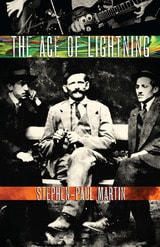
The Ace of Lightning
Stephen-Paul Martin
University of Alabama Press, 2017
Stephen-Paul Martin’s The Ace of Lightning is a series of interconnected stories focused on a turning point in Western history: the assassination in Sarajevo of Archduke Franz Ferdinand of Austria which triggered World War I, and the mysterious circumstances that led Gavrilo Princip to shoot and kill the heir apparent to one of Europe’s most powerful empires.
Far from being a conventional work of historical fiction, Martin’s collection asks readers to think about what truly constitutes history. What would the past look like if history was written under the influence of Mad Magazine and The Twilight Zone? What happens when the assassination in Sarajevo becomes “the assassination in Sarajevo,” when Gavrilo Princip becomes “Gavrilo Princip,” when the past and the present shape a textual future that looks suspiciously like a past that never was and a present that never is?
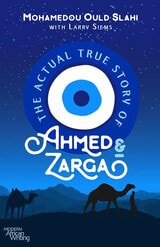
The Actual True Story of Ahmed and Zarga
Mohamedou Ould Slahi
Ohio University Press, 2021
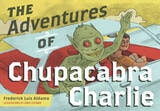
The Adventures of Chupacabra Charlie
Written by Frederick Luis AldamaIllustrated by Chris Escobar
The Ohio State University Press, 2020
With magical realism, allegory, and gentle humor, Aldama and Escobar have created a story that will resonate with young and old readers alike as it incorporates folklore into its subtle take on the current humanitarian crisis at the border.