Results by title
279 books match the query 'Film & Video' and 37 start with t

Taking Place
Location and the Moving ImageJohn David Rhodes
University of Minnesota Press, 2011
Taking Place argues that the relation between geographical location and the moving image is fundamental and that place grounds our experience of film and media. Its original essays analyze film, television, video, and installation art from diverse national and transnational contexts to rethink both the study of moving images and the theorization of place. Through its unprecedented—and at times even obsessive— attention to actual places, this volume traces the tensions between the global and the local, the universal and the particular, that inhere in contemporary debates on global cinema, television, art, and media.
Contributors: Rosalind Galt, U of Sussex; Frances Guerin, U of Kent; Ji-hoon Kim; Hugh S. Manon, Clark U; Ara Osterweil, McGill U; Brian Price, U of Toronto; Linda Robinson, U of Wisconsin–Whitewater; Michael Siegel; Noa Steimatsky, U of Chicago; Meghan Sutherland, U of Toronto; Mark W. Turner, Kings College London; Aurora Wallace, New York U; Charles Wolfe, U of California, Santa Barbara.

Tech-Noir Film
A Theory of the Development of Popular GenresEmily E. Auger
Intellect Books, 2011
From the postapocalyptic world of Blade Runner to theJames Cameron mega-hit Terminator, tech-noir has emerged as a distinct genre, with roots in both the Promethean myth and the earlier popular traditions of gothic, detective, and science fiction. In this new volume, many well-known film and literary works—including The Matrix, RoboCop, and Mary Shelley’s Frankenstein—are discussed with reference to their relationship to tech-noir and one another. Featuring an extensive, clearly indexed filmography, Tech-Noir Film will be of great interest to anyone wishing to learn more about the development of this new and highly innovative genre.

Televising Taste
Performing Classical Music on American ScreensBy Evelyn Kreutzer
Lever Press, 2027
Televising Taste: Performing Classical Music on American Screens explores how American television portrayed canonical European classical music in the Cold War era. Situating mid-century TV culture within a history of music visualization efforts, it complicates narratives about the postwar decades as a peak moment of polarity between “high” and “low” cultures, and between ideologies of consensus and rebellion. Drawing on discourse analysis, archival research, and the medium of videographic analysis, Evelyn Kreutzer suggests that the legacies of European classical music played an important part in the formation of an American national identity and that they were interwoven with and negotiated through popular media. Conjunctions of classical music and television occurred in dialogue with aspirations for cultural capital, which were attached to European classical music and inscribed into visions of American cultural literacy and citizenship. Simultaneously, these conjunctions responded to anxieties that popular culture and mass media would diminish “serious” music appreciation and turn audiences into passive consumers.
Through musical mediations on television, Televising Taste addresses larger ideological and historical implications of taste and canon politics, contributing a new interdisciplinary perspective on the interdependence of music and media cultures.
Tender Comrades
A Backstory of the Hollywood BlacklistPatrick McGilligan
University of Minnesota Press, 2012
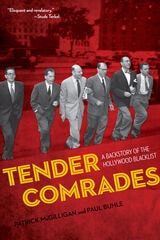
More than sixty years ago, McCarthyism silenced Hollywood. In the pages of Tender Comrades, those who were suppressed, whose lives and careers were ruined, finally have their say. A unique collection of profiles in cinematic courage, this extraordinary oral history brings to light the voices of thirty-six blacklist survivors (including two members of the Hollywood Ten), seminal directors of film noir and other genres, starring actresses and memorable supporting players, top screenwriters, and many less known to the public, who are rescued from obscurity by the stories they offer here that, beyond politics, open a rich window into moviemaking during the Golden Age of Hollywood.
The Anarchist Cinema
James Newton
Intellect Books, 2019
The Channeled Image
Art and Media Politics after TelevisionErica Levin
University of Chicago Press, 2022
Following the integration of television into the fabric of American life in the 1950s, experimental artists of the 1960s began to appropriate this novel medium toward new aesthetic and political ends. As Erica Levin details in The Channeled Image, groundbreaking artists like Carolee Schneemann, Bruce Conner, Stan VanDerBeek, and Aldo Tambellini developed a new formal language that foregrounded television’s mediation of a social order defined by the interests of the state, capital, and cultural elites. The resulting works introduced immersive projection environments, live screening events, videographic distortion, and televised happenings, among other forms. For Levin, “the channeled image” names a constellation of practices that mimic, simulate, or disrupt the appearance of televised images. This formal experimentation influenced new modes of installation, which took shape as multi-channel displays and mobile or split-screen projections, or in some cases, experimental work produced for broadcast. Above all, this book asks how artistic experimentation with televisual forms was shaped by events that challenged television broadcasters’ claims to authority, events that set the stage for struggles over how access to the airwaves would be negotiated in the future.
The Children’s Republic of Gaudiopolis
The History and Memory of a Children’s Home for Holocaust and War Orphans (1945–1950)Gergely Kunt
Central European University Press, 2022
Gaudiopolis (The City of Joy) was a pedagogical experiment that operated in a post–World War II orphanage in Budapest. This book tells the story of this children’s republic that sought to heal the wounds of wartime trauma, address prejudice and expose the children to a firsthand experience of democracy. The children were educated in freely voicing their opinions, questioning authority, and debating ideas.
The account begins with the saving of hundreds of Jewish children during the Siege of Budapest by the Lutheran minister Gábor Sztehlo together with the International Red Cross. After describing the everyday life and practices of self-rule in the orphanage that emerged from this rescue operation, the book tells how the operation of the independent children’s home was stifled after the communist takeover and how Gaudiopolis was disbanded in 1950.
The book then discusses how this attempt of democratization was erased from collective memory. The erasure began with the banning of a film inspired by Gaudiopolis. The Communist Party financed Somewhere in Europe in 1947 as propaganda about the construction of a new society, but the film’s director conveyed a message of democracy and tolerance instead of adhering to the tenets of socialist realism. The book breaks the subsequent silence on “The City of Joy,” which lasted until the fall of the Iron Curtain and beyond.
The Cinema and Its Shadow
Race and Technology in Early CinemaAlice Maurice
University of Minnesota Press, 2013
The Cinema and Its Shadow argues that race has defined the cinematic apparatus since the earliest motion pictures, especially at times of technological transition. In particular, this work explores how racial difference became central to the resolving of cinematic problems: the stationary camera, narrative form, realism, the synchronization of image and sound, and, perhaps most fundamentally, the immaterial image—the cinema’s “shadow,” which figures both the material reality of the screen image and its racist past.
Discussing early “race subjects,” Alice Maurice demonstrates that these films influenced cinematic narrative in lasting ways by helping to determine the relation between stillness and motion, spectacle and narrative drive. The book examines how motion picture technology related to race, embodiment, and authenticity at specific junctures in cinema’s development, including the advent of narratives, feature films, and sound. In close readings of such films as The Cheat, Shadows, and Hallelujah!, Maurice reveals how the rhetoric of race repeatedly embodies film technology, endowing it with a powerful mix of authenticity and magic. In this way, the racialized subject became the perfect medium for showing off, shoring up, and reintroducing the cinematic apparatus at various points in the history of American film.
Moving beyond analyzing race in purely thematic or ideological terms, Maurice traces how it shaped the formal and technological means of the cinema.
The Cinema of Mika Kaurismäki
Transvergent Cinescapes, Emergent IdentitiesPietari Kääpä
Intellect Books, 2011
A PDF version of this book is available for free in open access via the OAPEN Library platform, www.oapen.org It has been made available under a Creative Commons Attribution 4.0 International Public License and is part of Knowledge Unlatched.
The Cinema of Yakov Protazanov
F. Booth Wilson
Rutgers University Press, 2024
The Danish Directors 3
Dialogues on the New Danish Documentary CinemaEdited by Mette Hjort, Ib Bondebjerg, and Eva Novrup Redvall
Intellect Books, 2014
The Disney Animation Renaissance
Behind the Glass at the Florida StudioMary E. Lescher
University of Illinois Press, 2023
A ground-level look at the entertainment giant, The Disney Animation Renaissance profiles the people and purpose behind a little-known studio during a historic era.
The Empathic Lens
Art, Animism, and Ecology in Contemporary Southeast AsiaBrianne Cohen
University of Minnesota Press, 2026
How lens-based art from Southeast Asia offers alternative visions for ecological sustainability
A new paradigm of ecologically minded artistic practices is taking shape in Southeast Asia—one that at once tracks ecological destruction and works specifically to cultivate deeper feelings of empathy toward the environment. Examining a range of photography and video work, The Empathic Lens explores how these lens-based projects respond to increasingly urgent concerns related to climate disaster and capitalist acceleration.
In this analysis of work produced across Cambodia, Vietnam, and Singapore, Brianne Cohen highlights artists for whom rampant urban development, resource extraction, and environmental toxicity are close at hand. As each artist takes their lens to these realities, Cohen shows, they draw on Indigenous knowledge and local traditions that have long recognized the kinship of humans and nonhumans. Engaging often-censored discourses of Indigenous land relations and environmental justice in a region with a long history of colonial and neocolonial development, Cohen traces genealogies of empathy and animism to demonstrate how these works develop sustainable visions for the future coexistence of planetary life.
The first critical account of marginalized artworks that depict the centrality of the more-than-human in Southeast Asian Indigenous worldviews, The Empathic Lens makes a powerful case for the relevance of Southeast Asian lens-based art in contemporary media practice and the art of the Anthropocene.
Retail e-book files for this title are screen-reader friendly with images accompanied by short alt text and/or extended descriptions.
The Extraordinary Image
Orson Welles, Alfred Hitchcock, Stanley Kubrick, and the Reimagining of CinemaKolker, Robert P
Rutgers University Press, 2016
The Genius of the System
Hollywood Filmmaking in the Studio EraThomas Schatz
University of Minnesota Press, 2010
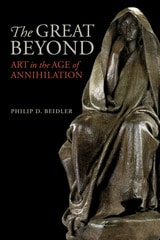
The Great Beyond
Art in the Age of AnnihilationPhilip D. Beidler
University of Alabama Press, 2022
Essays mapping how modern art confronts mortality in an age of war and annihilation.
While much about modernism remains up for debate, there can be no dispute about the connection between modernist art and death. The long modern moment was and is an age of war, genocide, and annihilation. Two world wars killed perhaps as many as 100 million people, through combat, famine, holocaust, and ghastly attacks on civilians. The ongoing COVID-19 pandemic is the fifth global pandemic since 1918, with more than a half-million American deaths and counting.
It can hardly come as a surprise, then, that many of the touchstones of modernism reflect on death and devastation. In Philip D. Beidler’s exploration of the modernist canon, he illuminates how these singular voices looked extinction in the eye and tried to reckon with our finitude—and their own. The Great Beyond: Art in the Age of Annihilation catalogs through lively prose an eclectic selection of artists, writers, and thinkers. In 16 essays, Beidler takes nuanced and surprising approaches to well-studied figures—the haunting sculpture by Saint-Gaudens commissioned by Henry Adams for his late wife; Luchino Visconti’s adaptation of Mann’s Death in Venice; and the author’s own long fascination with Beckett’s Waiting for Godot.
The threads and recurring motifs that emerge through Beidler’s analysis bridge the different media, genres, and timeframes of the works under consideration. Protomodernists Crane and Twain connect with near-contemporary voices like Sebald and Morrison. Robert MacFarlane’s 21st-century nonfiction about what lies underneath the earth echoes the Furerbunker and the poetry of Gertrud Kolmar. Learned but lively, somber but not grim, The Great Beyond is not a comfortable read, but it is in a way comforting. In tracing how his subjects confronted nothingness, be it personal or global, Beidler draws a brilliant map of how we see the end of the road.
The Heretical Archive
Digital Memory at the End of FilmDomietta Torlasco
University of Minnesota Press, 2013
The Heretical Archive examines the relationship between memory and creation in contemporary artworks that use digital technology while appropriating film materials. Domietta Torlasco argues that these digital films and multimedia installations radically transform our memory of cinema and our understanding of the archive. Indeed, such works define a notion of archiving not as the passive preservation of audiovisual signs but as an intervention and the creative rearticulation of cinema’s perceptual and political textures.
Connecting psychoanalysis, phenomenology, and feminist theory in innovative ways, Torlasco analyzes cutting-edge digital works that engage with the past of European cinema and visual culture, including video installations by Monica Bonvicini (Destroy She Said) and Pierre Huyghe (The Ellipsis), Agnès Varda’s film The Gleaners and I, Marco Poloni’s multimedia installation The Desert Room, and Chris Marker’s CD-ROM Immemory.
Torlasco’s central claim is that if the archives of psychoanalysis and cinema have long privileged the lineage that runs from Oedipus to Freud, the archives of the digital age—what she calls the “heretical archive”—can help us imagine an unruly, porous, multifaceted legacy, one in which marginal figures return to speak of lost life as much as of life that demands to be lived.
The Intellect Handbook of Documentary
Edited by Kate Nash and Deane Williams
Intellect Books, 2025
The Intellect Handbook of Documentary is an important go-to resource for practitioners, scholars, and students in this burgeoning field. It tackles key topics and debates including the role of documentary in post-truth culture, the rise of streaming giants, and the implications for national documentary cultures, as well as the shifting, increasingly hybrid, practices of documentary activism and the professionalization of impact. Featuring work by key figures in international documentary scholarship and talented emerging scholars, the Handbook is a landmark publication for documentary studies in the twenty-first century.
The Handbook is broad in its scope, incorporating historical, theoretical, empirical, and practical scholarship. It is organized around ten key themes and debates: What and where is documentary (studies); documentary in an age of epistemic uncertainty; documentary histories; documentary and the archive; audio and visualities; documentary relationalities; beyond the Anthropocene; digital and documentary practices; documentary and (new) politics; and a golden age of documentary distribution and funding. Importantly, the Handbook incorporates the voices and practices of practitioners from the Global South, challenging the dominance of Western voices in documentary scholarship.
The Limits of Auteurism
Case Studies in the Critically Constructed New HollywoodGodfrey, Nicholas
Rutgers University Press, 2018
The book explores the role that contemporary critics played in determining how the movies of this period were understood and how, in turn, strategies of distribution influenced critical responses and dictated the conditions of entry into the rapidly codifying New Hollywood canon. Focusing on a small number of industrially significant films, this new history advances our understanding of this important moment of transition from Classical to contemporary modes of production.
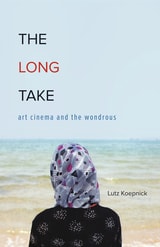
The Long Take
Art Cinema and the WondrousLutz Koepnick
University of Minnesota Press, 2017
In The Long Take, Lutz Koepnick posits extended shot durations as a powerful medium for exploring different modes of perception and attention in our fast-paced world of mediated stimulations. Grounding his inquiry in the long takes of international filmmakers such as Béla Tarr, Tsai Ming-liang, Abbas Kiarostami, Apichatpong Weerasethakul, and Michael Haneke, Koepnick reveals how their films evoke wondrous experiences of surprise, disruption, enchantment, and reorientation. He proceeds to show how the long take has come to thrive in diverse artistic practices across different media platforms: from the work of photographer Hiroshi Sugimoto to the screen-based installations of Sophie Calle and Tacita Dean, from experimental work by Francis Alÿs and Janet Cardiff to durational images in contemporary video games.
Deeply informed by film and media theory, yet written in a fluid and often poetic style, The Long Take goes far beyond recent writing about slow cinema. In Koepnick’s account, the long take serves as a critical hallmark of international art cinema in the twenty-first century. It invites viewers to probe the aesthetics of moving images and to recalibrate their sense of time. Long takes unlock windows toward the new and unexpected amid the ever-mounting pressures of 24/7 self-management.
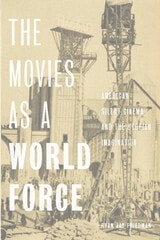
The Movies as a World Force
American Silent Cinema and the Utopian ImaginationFriedman, Ryan J
Rutgers University Press, 2019
The Multisensory Film Experience
A Cognitive Model of Experiental Film AestheticsLuis Rocha Antunes
Intellect Books, 2016
The Poetics of Poetry Film
Film Poetry, Videopoetry, Lyric Voice, ReflectionEdited by Sarah Tremlett
Intellect Books, 2020
Set to generate discussions in the field for years to come, The Poetics of Poetry Film is an encyclopedic work on the ever-evolving art of the poetry film. Poetry films are a genre of short film usually involving three main elements: the poem as verbal message, the moving film image and diegetic sounds, and additional non-diegetic sounds or music, which create a soundscape. In this book, Sarah Tremlett examines the formal characteristics of the poetic in poetry film, film poetry, and videopoetry, particularly in relation to lyric voice and time.
Tremlett sets the emergence and history of poetry film in its proper global context, defining and debating terms both philosophically and materially. Showcasing the work of an international array of practitioners, The Poetics of Poetry Film includes interviews, analysis, and a rigorous investigation of the history of the genre, from its origins to the present. This is an industry bible for anyone interested in poetry, digital media, filmmaking, art, and creative writing, as well as poetry filmmakers.
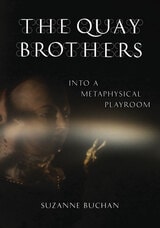
The Quay Brothers
Into a Metaphysical PlayroomSuzanne Buchan
University of Minnesota Press, 2010
Buchan's aesthetic investigation stems from extensive access to the Quay Brothers' artistic practices and work, which spans animation and live-action film, stage design and illustration. She also draws on a long acquaintance with them and on interviews with collaborators essential to their productions, as well as archival sources. Discussions of their films' literary origins, space, puppets, montage, and the often-overlooked world of sound and music in animation shed new light on the expressive world that the Quay Brothers generate out of their materials to create the poetic alchemy of their films.
At once a biography of the Quays' artistic trajectory and a detailed examination of one of their best-known films, Street of Crocodiles, this book goes further and provides interdisciplinary methodologies and tools for the analysis of animation.
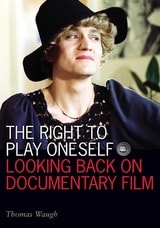
The Right to Play Oneself
Looking Back on Documentary FilmThomas Waugh
University of Minnesota Press, 2010
Waugh analyzes an eclectic international selection of films and issues from the 1920s to the present day. The essays provide a transcultural focus, moving from documentaries of the industrialized societies of North America and Europe to those of 1980s India and addressing such canonical directors as Dziga Vertov, Emile de Antonio, Barbara Hammer, Rosa von Praunheim, and Anand Patwardhan. Woven through the volume is the relationship of the documentary with the history of the Left, including discussions of LGBT documentary pioneers and the firebrand collectives that changed the history of documentary, such as Challenge for Change and ACT UP’s Women’s Collective.
Together with the introduction by the author, Waugh’s essays advance a defiantly and persuasively personal point of view on the history and significance of documentary film.
The Roots of Modern Hollywood
The Persistence of Values in American Cinema, from the New Deal to the PresentNick Smedley
Intellect Books, 2014
The Sensible Stage
Staging and the Moving ImageEdited by Bridget Crone
Intellect Books, 2017
This revised and expanded edition includes two new chapters that offer an updated look at how these ideas continue to develop in contemporary art practice.
The Silent Film Companion
A Recovered and Expanded HistoryLiz Clarke
Rutgers University Press, 2027
Silent film is more than just a cinema of firsts, greats, or classics. It is a cinema of experimentation, ambition, and connection. To watch a silent film is to be transported into another world. The Silent Film Companion seeks to broaden the silent film canon by focusing on compelling non-canonical films from around the globe, providing a fresh perspective and new view of silent cinema. With over fifty films discussed, this volume captures just a sliver of the many delights silent cinema has to offer. It encourages discovery, and rediscovery, of the world of silent cinema: one where the movies were still young, full of possibility, and eager to entice others to take part in a wonderful adventure.
Films covered are from fourteen countries, including Brazil, Mexico, China, Cuba, India, Italy, and Russia, and represent a diversity of subjects. Each chapter provides historical and cultural context to the film, the filmmakers, and a concise analysis of each film. The Silent Film Companion is a must-read for students and fans of silent cinema interested in seeing a side of silent cinema that is rarely explored.
The South Korean Film Industry
Sangjoon Lee, Dal Yong Jin, And Junhyoung Cho, Editors
University of Michigan Press, 2024
The South Korean Film Industry is the first detailed scholarly overview of the South Korean film industry. The thirteen chapters discuss topics from short films to popular television series that have engaged global audiences. Contributors explore the major changes in South Korean film making, marketing, and in the international growth and popularity of South Korean films. By bringing together a wide range of academic specialists, The South Korean Film Industry situates the current scholarship on South Korean cinema within the ongoing theoretical debates in contemporary global film studies. This volume will be widely read in undergraduate and graduate classes related to Korean and East Asian studies, cinema and media studies, cultural studies, and communication studies. Moreover, many institutions offer dedicated modules on South Korean cinema, media, and popular culture, for which The South Korean Film Industry will be ideal.
The Surrealism Reader
An Anthology of IdeasEdited by Dawn Ades, Michael Richardson, and Krzysztof Fijalkowski
University of Chicago Press, 2016
Including essays by leading surrealists and other major writers on the movement, the volume addresses the key themes of identity, otherness, freedom and morality, and poetry. The texts uncover, among other things, the significance of surrealism for the antifascist and anticolonialist movements and the various manifestations of surrealism in the years after World War II. Giving space to the many different voices that made up the movement, and placing them for the first time within a clear and coherent historical framework, The Surrealism Reader radically revises the popular understanding of what, and when, surrealism was—making this book an essential reference for students, scholars, and all those interested in the central place of surrealism within twentieth-century thought and culture.
The Swedish Porn Scene
Exhibition Contexts, 8mm Pornography and the Sex FilmMariah Larsson
Intellect Books, 2016
Combining contemporary case studies with comprehensive analyses of advertisements, critical responses, and censorship records, Larsson deconstructs the complexities and paradoxes of the Swedish porn scene. Looking as closely at the exhibition spaces where porn was seen as at the productions themselves and their audiences, Larsson reveals the conditions and social changes that allowed pornography in Sweden to flourish in the period.
The Visceral Screen
Between the Cinemas of John Cassavetes and David CronenbergRobert Furze
Intellect Books, 2015
The Visceral Screen sets out to articulate alternative ways of appreciating film aesthetics outside the narrative/spectacle continuum. Cassavetes and Cronenberg are established auteurs, but the elements of their films that appear to be barriers to their artistic status—for example, slipshod method and lingering violence or pre-digital special effects—are reassessed here as other indicators of creativity. In this way, Furze encourages debates of what makes a film good or bad—beyond how much it is seen to adhere to particular, established models of filmmaking.

Thinking in English, Speaking in Hindi
Translation, Creativity, and Value in Bollywood and BeyondTejaswini Ganti
Duke University Press, 2027
This Is Called Moving
A Critical Poetics of FilmAbigail Child, with a foreword by Tom Gunning
University of Alabama Press, 2005
A pioneering exploration of how poetry and experimental cinema intersect to reconstruct meaning across visual and linguistic forms.
As the writer, director, producer, and cinematographer of almost all her 30 films, videos, and shorts, Abigail Child has been recognized as a major and influential practitioner of experimental cinema since the early 1970s. Hallmarks of her style are the appropriation and reassembly of found footage and fragments from disparate visual sources, ranging from industrial films and documentaries to home movies, vacation photography, and snippets of old B movies.
The resulting collages and montages are cinematic narratives that have been consistently praised for their beauty and sense of wonder and delight in the purely visual. At the same time, Child's films are noted for their incisive political commentary on issues such as gender and sexuality, class, voyeurism, poverty, and the subversive nature of propaganda.
In the essays of This Is Called Moving, Child draws on her long career as a practicing poet as well as a filmmaker to explore how these two language systems inform and cross-fertilize her work. For Child, poetry and film are both potent means of representation, and by examining the parallels between them—words and frames, lines and shots, stanzas and scenes—she discovers how the two art forms re-construct and re-present social meaning, both private and collective.
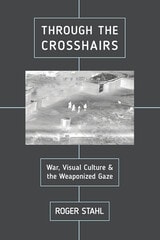
Through the Crosshairs
War, Visual Culture, and the Weaponized GazeStahl, Roger
Rutgers University Press, 2018
Through the Crosshairs traces the genealogy of this weapon’s-eye view across a wide range of genres, including news reports, military public relations images, action movies, video games, and social media posts. As he tracks how gun-camera footage has spilled from the battlefield onto the screens of everyday civilian life, Roger Stahl exposes how this raw video is carefully curated and edited to promote identification with military weaponry, rather than with the targeted victims. He reveals how the weaponized gaze is not only a powerful propagandistic frame, but also a prime site of struggle over the representation of state violence.
Touring the Screen
Tourism and New Zealand Film GeographiesAlfio Leotta
Intellect Books, 2011
Following the success of prominent feature films shot on location, including Tolkien’s wildly popular The Lord of the Rings, New Zealand boasts an impressive film tourism industry. This book examines the relationship between New Zealand’s cinematic representation—as both a vast expanse of natural beauty and a magical world of fantasy on screen—and its tourism imagery, including the ways in which savvy local tourism boards have in recent decades used the country’s film representations to sell New Zealand as a premiere travel destination. Focusing on the films that have had a strong impact on marketing strategies by local tourist boards, Touring the Screen will be of interest to all those working and studying in the fields of cinema, postcolonial history, and tourism studies.
Twin Peaks
Unwrapping the PlasticFranck Boulègue
Intellect Books, 2016