Results by title
129 books match the query 'God' and 33 start with t
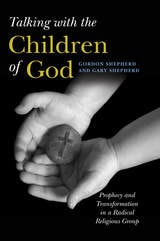
Talking with the Children of God
Prophecy and Transformation in a Radical Religious GroupGordon Shepherd and Gary Shepherd
University of Illinois Press, 2010
Grounded in direct, systematic observation by neutral observers, Talking with the Children of God is a unique study of the radical religious movement now known as The Family International. The book draws on extraordinarily candid interviews with the group's leaders and administrative staff. In revealing new information about the organization's history, beliefs, and use of prophecy, Gordon Shepherd and Gary Shepherd offer a highly detailed case study that is both an antidote to sensationalized coverage of the group and a means for understanding the transformational practices of new religious movements in general.
One of the most controversial groups emerging from the Jesus People movement of the 1960s, the Family originally was known as The Children of God. Under leader David Berg, members proclaimed an apocalyptic "Endtime," shunned secular occupations, lived communally, and adopted unusual sexual practices that led to abuse scandals in the 1970s and 1980s. Following Berg's death in 1994, the organization began to dramatically alter its evangelization efforts and decision-making processes.
Talking with the Children of God builds a picture of a complex organization with ten thousand core members worldwide, including details on the lives, careers, and responsibilities of the second generation and their efforts to defend their faith. The authors summarize the Family's history and beliefs as well as its controversial past. In particular, they analyze the organization's use of prophecy--or channeled revelations from Jesus and other spiritual beings--for making decisions and setting policy, revealing how this essentially democratic process works and how it shapes Family life and culture.
These remarkable insights are the result of sixteen years of surveys and field observations conducted in Family member homes in sixteen countries, plus four days of face-to-face interviews with Family leaders and organizational staff. The volume also includes condensed transcripts of the interviews with analysis by Shepherd and Shepherd.
The Children of God
"The Family": Studies in Contemporary ReligionsJ. Gordon Melton
Signature Books, 1997
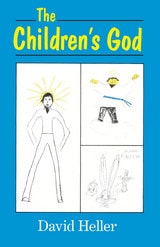
The Children's God
David Heller
University of Chicago Press, 1986
The Church of God in Jesus Christ
A Catholic EcclesiologyRoch A. Kereszty
Catholic University of America Press, 2019
The City of God, Books I–VII
Saint Augustine
Catholic University of America Press, 1952
The City of God, Books VIII–XVI
Saint Augustine
Catholic University of America Press, 1952
The City of God, Books XVII–XXII
Saint Augustine
Catholic University of America Press, 1954

The Disappearance of God
FIVE NINETEENTH-CENTURY WRITERSJ. Hillis Miller
University of Illinois Press, 1963
interpreters of nineteenth-century England, The Disappearance of God confronts the consciousness of an absent (though perhaps still existent) God in the writings of Thomas De Quincey, Robert Browning, Emily Brontë, Matthew Arnold, and Gerard Manley Hopkins. J. Hillis Miller surveys the intellectual and material developments that conspired to cut man off from God--among other factors the city, developments within Christianity, subjectivism, and the emergence of the modern historical sense--and shows how each writer's body of work reflects a sustained response to the experience of God's disappearance.
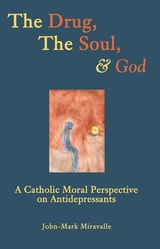
The Drug, the Soul, and God
A Catholic Moral Perspective on AntidepressantsJohn-Mark Miravalle
University of Scranton Press, 2010
With The Drug, the Soul, and God, John-Mark Miravelle examines the stance of the Catholic Church regarding the prescription and consumption of antidepressants. After a careful investigation of Catholic moral theology and philosophy, Miravelle argues that treating depression with medication alone fails to address the underlying causes of the depression and does not facilitate the cognitive, interpersonal, and environmental changes necessary for a patient’s long-term health. In addition, he suggests that such medication may deprive sufferers of providential opportunities for personal and communal conversion and sanctification. This controversial volume will engage theologians and medical professionals alike.
The First Apology, The Second Apology, Dialogue with Trypho, Exhortation to the Greeks, Discourse to the Greeks, The Monarchy or The Rule of God
Saint Justin Martyr
Catholic University of America Press, 1965
The Garden of God
Pope Benedict XVI
Catholic University of America Press, 2014
The God of Faith and Reason
Robert Sokolowski
Catholic University of America Press, 1995
The God of Indeterminacy
POEMSSandra McPherson
University of Illinois Press, 1993
"I count Sandra McPherson as one of the dozen or so truly outstanding
American poets who write brilliantly in the Romantic tradition. . . .
The God of Indeterminacy brings together a group of exciting poems
showing the vital influence of her interest in the blues tradition and
in African-American quiltmaking. They are brilliant testimonials to this
fruitful wedding of the musical, the visual, and the literary."
-- Clarance Major
The Identity of Israel’s God in Christian Scripture
Don Collett
SBL Press, 2021
A broad, sweeping volume that breaches the walls separating biblical and theological disciplines
Biblical scholars and theologians engage an important question: Who is Israel’s God for Christian readers of the Old Testament? For Christians, Scripture is the Old and New Testament bound together in a single legacy. Contributors approach the question from multiple disciplinary vantage points. Essays on both Testaments focus on figural exegesis, critical exegesis, and the value of diachronic understandings of the Old Testament’s compositional history for the sake of a richer synchronic reading. This collection is offered in celebration of the life and work of Christopher R. Seitz. His rich and wide-ranging scholarly efforts have provided scholars and students alike a treasure trove of resources related to this critical question.
The Kingdom of God in Luke’s Gospel
A Cognitive ApproachKarl C. H. Leung
SBL Press, 2026
The Last Superstition
A Refutation of the New AtheismEdward Feser
St. Augustine's Press, 2010
The central contention of the “New Atheism” of Richard Dawkins, Daniel Dennett, Sam Harris, and Christopher Hitchens is that there has for several centuries been a war between science and religion, that religion has been steadily losing that war, and that at this point in human history a completely secular scientific account of the world has been worked out in such thorough and convincing detail that there is no longer any reason why a rational and educated person should find the claims of any religion the least bit worthy of attention.
But as Edward Feser argues inThe Last Superstition, in fact there is not, and never has been, any war between science and religion at all. There has instead been a conflict between two entirely philosophical conceptions of the natural order: on the one hand, the classical “teleological” vision of Plato, Aristotle, Augustine, and Aquinas, on which purpose or goal-directedness is as inherent a feature of the physical world as mass or electric charge; and the modern “mechanical” vision of Descartes, Hobbes, Locke, and Hume, according to which the physical world is comprised of nothing more than purposeless, meaningless particles in motion. As it happens, on the classical teleological picture, the existence of God, the immortality of the soul, and the natural-law conception of morality are rationally unavoidable. Modern atheism and secularism have thus always crucially depended for their rational credentials on the insinuation that the modern, mechanical picture of the world has somehow been established by science. Yet this modern “mechanical” picture has never been established by science, and cannot be, for it is not a scientific theory in the first place but merely a philosophical interpretation of science. Moreover, as Feser shows, the philosophical arguments in its favor given by the early modern philosophers were notable only for being surprisingly weak. The true reasons for its popularity were then, and are now, primarily political: It was a tool by which the intellectual foundations of ecclesiastical authority could be undermined and the way opened toward a new secular and liberal social order oriented toward commerce and technology. So as to further these political ends, it was simply stipulated, by fiat as it were, that no theory inconsistent with the mechanical picture of the world would be allowed to count as “scientific.” As the centuries have worn on and historical memory has dimmed, this act of dogmatic stipulation has falsely come to be remembered as a “discovery.”
However, not only is this modern philosophical picture rationally unfounded, it is demonstrably false. For the “mechanical” conception of the natural world, when worked out consistently, absurdly entails that rationality, and indeed the human mind itself, are illusory. The so-called “scientific worldview” championed by the New Atheists thus inevitably undermines its own rational foundations; and into the bargain (and contrary to the moralistic posturing of the New Atheists) it undermines the foundations of any possible morality as well. By contrast, and as The Last Superstition demonstrates, the classical teleological picture of nature can be seen to find powerful confirmation in developments from contemporary philosophy, biology, and physics; moreover, morality and reason itself cannot possibly be made sense of apart from it. The teleological vision of the ancients and medievals is thereby rationally vindicated – and with it the religious worldview they based upon it.
The Law of God
The Philosophical History of an IdeaRémi Brague
University of Chicago Press, 2007
The Life of God (as Told by Himself)
Franco Ferrucci
University of Chicago Press, 1996
When a new arrival emerges from the apes, God believes he has finally found the companion he needs to help him make sense of his unruly creation. Yet, as the centuries pass, God feels more and more out of place in the world he has created; by the close of his memoir, he is packing his bags.
Highly praised and widely reviewed, The Life of God is a playful, wondrous, and irresistible book, recounting thousands of years of religious and philosophical thought.
"A supreme but imperfect entity, the protagonist of this religiously enlightened and orthodoxically heretical novel is possessed by a raving love for his skewed, unbalanced world. . . . Blessed are the readers, for this tale of God's long insomnia will keep them happily awake. . . . Extraordinary." —Umberto Eco
"The Life of God is, in truth, the synthesis of a charming writer's . . . expression of his boundless hopes for, and poignant disappointments in, his own human kind." —Jack Miles, New York Times Book Review
"Rather endearing. . . . This exceedingly amusing novel . . . is a continuous provocation and delight; there isn't a dull page in it." —Kirkus Reviews
"A smart and charming knitting of secular and ecclesiastic views of the world. . . . The character of God is likable—sweet, utterly human. . . . The prose is delightful . . . the writing is consistently witty and intelligent and periodically hilarious." —Allison Stark Draper, Boston Review
"'God's only excuse is that he does not exist,' wrote Stendhal, but now Franco Ferrucci has provided the Supreme Being with another sort of alibi." —James Morrow, Washington Post Book World
The Mystery of Union with God
Bernhard Blankenhorn
Catholic University of America Press, 2015
The Philosophy of Hegel as a Doctrine of the Concreteness of God and Humanity
Volume One: The Doctrine of GodI. A. Il’in, Translated by Philip T. Grier
Northwestern University Press, 2010
This landmark two-volume translation from Russian of The Philosophy of Hegel as a Doctrine of the Concreteness of God and Humanity marks the first appearance in English of any of the works of Russian philosopher Ivan Aleksandrovich Il’in (Ilyin). Originally published in 1918, on the eve of the Russian civil war, Il'in's commentary on Hegel marked both an apogee of Russian Silver Age philosophy and a significant manifestation of the resurgence of interest in Hegel that began in the early twentieth century.
A. F. Losev accurately observed in the same year it appeared: “Neither the study of Hegel nor the study of contemporary Russian philosophical thought is any longer thinkable without this book of I. A. Il’in’s.” Some Hegel scholars may know this work through the abridged translation into German that Il’in produced himself in 1946. However, that edition omitted most of the original volume two. Noted Hegel scholar Philip T. Grier’s edition—with an introduction setting Il’in’s work in its proper historical, cultural, and philosophical contexts and annotation throughout—represents the first opportunity for non-Russian-speaking readers to acquaint themselves with the full scope of Il’in’s still provocative interpretation of Hegel.
Volume 1 is "The Doctrine of God." Volume 2 is "The Doctrine of Humanity."
The Philosophy of Hegel as a Doctrine of the Concreteness of God and Humanity
Volume Two: The Doctrine of HumanityI. A. Il’in, Translated by Philip T. Grier
Northwestern University Press, 2011
The publication of volume 2 of Philip T. Grier’s translation of The Philosophy of Hegel as a Doctrine of the Concreteness of God and Humanity completes the first appearance in English of any of the works of Russian philosopher I. A. Il’in (Ilyin).
Most of the contents of volume 2 will be unknown even to those who have read the 1946 German version prepared by Il’in, because in that version he omitted eight of the original ten chapters. These omitted chapters provide an extended reflection on the central categories of Hegel’s moral, legal, and political philosophies, as well as of the philosophy of history. The topics examined are, in order: freedom, humanity, will, right, morality, ethical life, personhood and its virtue, and the state. Contained within these chapters are some notably insightful expositions of core doctrines in Hegel’s philosophy.
Il’in’s colleague A. F. Losev accurately observed in the same year the text first appeared: “Neither the study of Hegel nor the study of contemporary Russian philosophical thought is any longer thinkable without this book of I. A. Il’in’s.”
The Power of God
Dynamis in Gregory of Nyssa's Trinitarian TheologyMichel René Barnes
Catholic University of America Press, 2001

The Presence of God and Union with God
Creation, Divine Indwelling Through Grace, Incarnation and the Blessed Vision According to Saint Thomas AquinasGilles Emery, OP
Catholic University of America Press, 2027
The Question of God in Heidegger's Phenomenology
George Kovacs
Northwestern University Press, 1990
The Rise to Respectability
Race, Religion, and the Church of God in ChristCalvin White
University of Arkansas Press, 2015
The Rope of God
James T. Siegel
University of Michigan Press, 2000
The Shadow of God and the Hidden Imam
Religion, Political Order, and Societal Change in Shi'ite Iran from the Beginning to 1890Said Amir Arjomand
University of Chicago Press, 1984
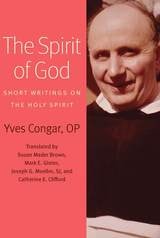
The Spirit of God
Short Writings on the Holy SpiritYves Congar
Catholic University of America Press, 2017
The Spirit of God brings together for the first time eight of Yves Congar’s previously untranslated writings on the Holy Spirit composed after Vatican II (from 1969 to 1985). Two of these selections offer general overviews of Congar’s pneumatology, a pneumatology based upon Scripture and the Tradition of the Church, but articulated in conversation with philosophers, ecumenical partners and non-believers. Other articles make clear the historical context of Vatican II’s pneumatology and the Holy Spirit’s crucial influence upon the unfolding of history and upon the moral life, the efficacy of the sacraments and, especially, upon ecclesial life.
The writings in The Spirit of God have been translated and edited by a team of scholars familiar with the work of the French Dominican theologian. An introduction situates each of the writings historically and highlights its theological significance. A bibliography lists Congar’s publications on the Holy Spirit, the major articles and books written about his pneumatology, and the major scholarly resources to which Congar made reference in the notes that accompanied these writings. An index of biblical references and of personal names is also included.
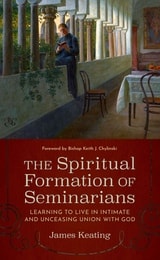
The Spiritual Formation of Seminarians
Learning to Live in Intimate and Unceasing Union with GodJames Keating
Catholic University of America Press, 2025
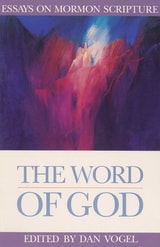
The Word of God
Essays on Mormon ScriptureDan Vogel
Signature Books, 1990
Editor’s Introduction
by Dan Vogel
[p.vii]Belief in continuing revelation and an open canon of scripture distinguishes Mormonism from mainstream Christianity. That the church founded by Joseph Smith would proceed on grounds of continuing revelation was established at the outset. The day the church was organized, 6 April 1830, Joseph Smith dictated a revelation commanding the church to “give heed unto all his words and commandments which he shall give unto you as he receiveth them,… for his words ye shall receive, as if from mine own mouth, in all patience and faith” (LDS D&C 21:4-5; RLDS D&C 19:2). Another revelation declared that the Lord had “given him the keys of the mysteries, and the revelations which are sealed” (LDS D&C 28:7; RLDS D&C 27:12). The principle of continuing revelation insured a gradual unfolding and canonization of various doctrines.
In addition to the Bible, the official canon of the Utah-based Church of Jesus Christ of Latter-day Saints includes the Book of Mormon (first published in Palymra, New York, in 1830), the Doctrine and Covenants (issued in 1833 as A Book of Commandments [incomplete] and in 1835 in Kirtland, Ohio), and the Pearl of Great Price (first published in England in 1851 and republished with changes in Salt Lake City in 1880). This latter volume of scripture contains selections from Joseph Smith’s writings including the Book of Moses (extracted from Smith’s “inspired version” or “translation” of the Bible) and the Book of Abraham (taken from Smith’s interpretation of an ancient Egyptian papyrus). The Reorganized Church of Jesus Christ of Latter Day Saints, headquartered in Independence, [p.viii] Missouri, the second largest institution tracing its origins to Joseph Smith, publishes its own editions of the Book of Mormon and Doctrine and Covenants, as well as Smith’s revision of the Bible, but has not canonized the Book of Abraham.
All but one of the following fifteen essays chosen for inclusion in The Word of God: Essays on Mormon Scripture were written by Mormons from either the LDS or RLDS tradition. (The exception is Susan Curtis.) However, rather than being guided by institutional imperatives, each author has attempted to understand Mormon scripture on its own terms. Additionally, each essay wrestles with the problem of the human and the divine in scripture.
Because one’s belief about revelation affects how one approaches scripture, debate about scriptural interpretation often centers on the nature of revelation. The written “word of God” does not come to us direct but rather through human intermediaries. In the words of J. R. Dummelow, writing in A Commentary on The Holy Bible (New York) in 1908, “It is as sunlight through a painted window—the light must come to us coloured by the medium… It is foolish to ignore the existence of the human medium through which the light has come” (p. cxxxv). Book of Mormon prophets, for instance, repeatedly express anxiety over human limitations to convey in language their spiritual teachings. Nephi prays that “the words which I have written in weakness will be made strong” (LDS 2 Ne. 33:4; RLDS 2 Ne. 15:5), and Moroni writes, “if there are faults they are the mistakes of men; wherefore, condemn not the things of God” (Title Page); A position which does not account for the human in revelation will undoubtedly produce disillusionment or distortion.
To consider the human aspects of prophets, revelation, or scripture does not detract from religion, as some traditionalists fear. On the contrary, what cultural and environmental studies challenge are simplistic assumptions about the nature of revelation. Again, Dummelow notes, “Because of our false theory of Verbal Inspiration we are puzzled when the divine is mingled with the human. We must learn that the divine is mingled with the human” (ibid.). We must seek a definition of revelation which accounts for the spectrum of characteristics we encounter in scripture.
Even when we acknowledge the human in revelation and scripture, what exactly is its role and influence? These are not easy [p.ix] questions to answer. But the more precise our identification of human influence on scripture, the more refined our definition of revelation will become. It is hoped that this collection of essays will contribute to that process of understanding.
An awareness of revelation and scripture is an ongoing process and there are differing positions. Readers should therefore understand that neither the authors nor the editor necessarily agree with the views and conclusions reached in all of the essays that follow.
Appreciation is extended to the following authors and publications for permission to reproduce, sometimes in a different format and/or under a different title, many of the essays appearing here: to Dialogue: A Journal of Mormon Thought for essays by Kevin L. Barney, Lester E. Bush, A. Bruce Lindgren, William D. Russell, and George D. Smith; to Sunstone for essays by Anthony A. Hutchinson, Melodie Moench Charles, and Mark D. Thomas; to the John Whitmer Historical Association Journal for essays by Susan Curtis and James E. Lancaster; to Courage for the essay by Richard P. Howard; and to University Bulletin (RLDS) for the essay by Geoffrey F. Spencer. Three of the essays—”Joseph Smith’s Scriptural Cosmology,” by Dan Vogel and Brent Lee Metcalfe; and “Reducing Dissonance: The Book of Abraham as a Case Study” and “Making the Scriptures ‘Indeed One in Our Hands,'” both by Edward H. Ashment—are published here for the first time.
Throughout the essays standardized parenthetical scriptural references are provided for the most recent editions published by both the LDS and RLDS churches. Thus LDS D&C 76:1 refers to the most recent edition of the Doctrine and Covenants published by the LDS church, section 76, verse 1. RLDS 1 Ne. 2:4 refers to the Book of First Nephi, chapter 2, verse 4, in the most recent edition of the Book of Mormon published by the RLDS church. JST means the Joseph Smith translation of the King James Bible published by the RLDS church; Moses to the Book of Moses and Abr. to the Book of Abraham as found in current editions of the Pearl of Great Price (PGP) published by the LDS church.[p.1]
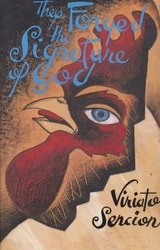
They Forged the Signature of God
A NovelViriato Sención
Northwestern University Press, 1995
Sención's novel follows the lives of three seminary students who suffer from church-state oppression. The book also gives a chilling portrait of Dr. Ramos, a sinister autocrat, who manages to survive six terms as president of his country through manipulation and tyranny. This finely textured novel gives a vivid picture of the internal politics of the Dominican Republic.
Thomistic Existentialism and Cosmological Reasoning
John F. X. Knasas
Catholic University of America Press, 2019
Tycho Brahe's Path to God
A NovelMax Brod
Northwestern University Press, 2007