Results by title
54 books match the query 'Grief' and 7 start with t

The Back Bench
Margaret Hope Bacon
QuakerPress, 2007

The Faulkes Chronicle
David Huddle
Tupelo Press, 2015
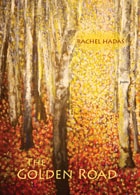
The Golden Road
PoemsRachel Hadas
Northwestern University Press, 2012
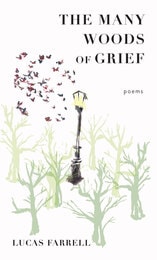
The Many Woods of Grief
PoemsLucas Farrell
University of Massachusetts Press, 2011
In this striking debut volume, Lucas Farrell offers a lyrical and illuminating field guide to the flora and fauna of “worlds just out of reach.” With the precision and detail of an Audubon sketch, he turns his naturalist's eye to the vast landscape of human emotion—all the while affirming “how real this world we live in / must be to live in.”
Journeying ever outward, from the achingly ordinary to the mysterious “land where there is no land,” the narrator of this collection, equal parts pastoralist and surrealist, explores the vivid in-betweens—between love and loss, hilarity and despair, wild and domestic, real and imagined. Hungry, expressive, and original, these poems glean light from even the darkest of fields.
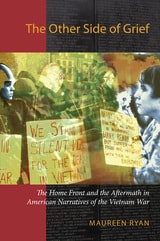
The Other Side of Grief
The Home Front and the Aftermath in American Narratives of the Vietnam WarMaureen Ryan
University of Massachusetts Press, 2008
The lingering aftereffects of the Vietnam War resonate to this day throughout American society: in foreign policy, in attitudes about the military and war generally, and in the contemporary lives of members of the so-called baby boom generation who came of age during the 1960s and early 1970s. While the best-known personal accounts of the war tend to center on the experience of combat, Maureen Ryan's The Other Side of Grief examines the often overlooked narratives—novels, short stories, memoirs, and films—that document the war's impact on the home front.
In analyzing the accounts of Vietnam veterans, women as well as men, Ryan focuses on the process of readjustment, on how the war continued to insinuate itself into their lives, their families, and their communities long after they returned home. She looks at the writings of women whose husbands, lovers, brothers, and sons served in Vietnam and whose own lives were transformed as a result. She also appraises the experiences of the POWs who came to be embraced as the war's only heroes; the ordeal of Vietnamese refugees who fled their “American War” to new lives in the United States; and the influential movement created by those who committed themselves to protesting the war.
The end result of Ryan's investigations is a cogent synthesis of the vast narrative literature generated by the Vietnam War and its aftermath. Together those stories powerfully demonstrate how deeply the legacies of the war penetrated American culture and continue to reverberate still.
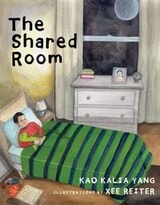
The Shared Room
Kao Kalia Yang
University of Minnesota Press, 2020
A family gradually moves forward after the loss of a child—a story for readers of all ages
When someone you love dies, you know what doesn’t die? Love. On the hot beach, among colorful umbrellas blooming beneath a bright sun, no one saw a little girl walk into the water. Now, many months later, her bedroom remains empty, her drawers hold her clothes, her pillows and sheets still have her scent, and her mother and father, brothers and sister carry her in their hearts, along with their grief, which takes up so much space. Then one snowy day, the mother and father ask the girl’s older brother, “Would you like a room of your own?” He wants to know, “Whose?” They say, “Your sister’s.”
Tenderly, and with refreshing authenticity, beloved Minnesota writer Kao Kalia Yang tells the story of a Hmong American family living with loss and tremendous love. Her direct and poignant words are accompanied by the evocative and expressive drawings of Hmong American artist Xee Reiter. The Shared Room brings a message of comfort and hope to readers young and old.

The Wendys
Allison Benis White
Four Way Books, 2020