Results by title
218 books match the query 'Handbooks, manuals, etc' and 66 start with t

Technology for Results
American Library Association, 2005
Technology for Small and One-Person Libraries
A LITA GuideRene J. Erlandson
American Library Association, 2013

Texas Cemeteries
The Resting Places of Famous, Infamous, and Just Plain Interesting TexansBy Bill Harvey
University of Texas Press, 2003
Winner, Journalistic Achievement Award, Texas Historical Foundation, 2004
From the simplest slab of weathered stone to the most imposing mausoleum, every marker in a Texas cemetery bears witness to a life that—in ways small or large—helped shape the history and culture of the state. Telling the stories of some of these significant lives is the purpose of this book. Within its pages, you'll meet not only the heroes of the Texas Revolution, for example, but also one of the great African American cowboys of the traildriving era (Bose Ikard) and the first woman in Texas elected to statewide office (Annie Webb Blanton). Visiting cemeteries from every era and all regions of the state, Bill Harvey recounts the histories of famous, infamous, and just plain interesting Texans who lie at rest in Texas cemeteries.
The book is organized alphabetically by city for easy reference. For each city, Harvey lists one or more cemeteries, giving their location and history, if significant. At the heart of the book are his profiles of the noteworthy people buried in each cemetery. They include not only famous but also lesser-known and even unknown Texans who made important contributions to the state in the arts, sports, business, military service, politics—truly every area of communal life. For those who want to visit these resting places, Harvey also includes tips on finding cemeteries, locating gravesites, and taking good photographs. Spend time with him in the graveyards of Texas, and you'll soon appreciate what fascinating stories the silent stones can tell.
The Academic Library Administrator's Field Guide
Bryce Nelson
American Library Association, 2014
The Almanac of American Politics 2014
Michael Barone, Chuck McCutcheon, Sean Trende, and Josh Kraushaar
University of Chicago Press, 2013
Like every edition since the almanac first appeared in 1972, the 2014 edition is helmed by veteran political analyst Michael Barone. Together with Chuck McCutcheon, collaborator since 2012, and two new editors, Sean Trende, senior elections analyst for RealClearPolitics, and Josh Kraushaar, managing editor at National Journal, Barone offers an unparalleled perspective on contemporary politics.
Full of maps, census data, and detailed information about the American political landscape, the 2014 Almanac of American Politics remains the most comprehensive resource for journalists, politicos, business people, and academics.
The Black Belt Librarian
Real-World Safety & SecurityWarren Graham
American Library Association, 2011
The CSE Manual, Ninth Edition
Scientific Style and Format for Authors, Editors, and PublishersCouncil of Science Editors
University of Chicago Press, 2024
The CSE Manual: Scientific Style and Format for Authors, Editors, and Publishers delivers complete coverage of rules and best practices in scientific publishing. Since 1960, the esteemed Council of Science Editors has offered authoritative guidance on presenting scientific writing more clearly and effectively. In the ninth edition of The CSE Manual, this leading international association offers its most comprehensive recommendations yet, continuing to guide writers and editors through the ever-evolving world of scientific publishing. Available in print and by subscription online.
The Chicago Guide for Freelance Editors
How to Take Care of Your Business, Your Clients, and Yourself from Start-Up to SustainabilityErin Brenner
University of Chicago Press, 2024
You’ve been thinking about shifting into the world of freelance editing, but you don’t know where to start. In a time when editors are seeking greater flexibility in their work arrangements and schedules, freelancing is an increasingly common career option. But deciding to go it alone means balancing the risks with the rewards. From the publisher of The Chicago Manual of Style comes The Chicago Guide for Freelance Editors, the definitive guide to running your business and finding greater control and freedom in your work life.
In this book, Erin Brenner—an industry leader and expert on the business of editorial freelancing—gathers everything you need to know into a single resource. Brenner has run her own successful editing business for over two decades and has helped hundreds of editors launch or improve their businesses through her teaching, blog writing, and coaching.
The Chicago Guide for Freelance Editors will walk you through the entire process of conceiving, launching, and working in a freelance editing business, from deciding on services and rates to choosing the best business structure to thinking through branding and marketing strategies and beyond. This book is ideal for beginning freelancers looking to get set up and land their first clients, but it’s equally valuable to those who have already been freelancing, with detailed coverage of such issues as handling difficult clients and continuing professional development. You’ll find a collection of advice from other successful freelance editors in this guide, as well as an extensive list of resources and tools. In the final and perhaps most important chapter, Brenner teaches you how to care for the key component of the business: yourself.
The Chicago Guide to Fact-Checking
Brooke Borel
University of Chicago Press, 2016
Corrections such as this one from the Miami Herald have become a familiar sight for readers, especially as news cycles demand faster and faster publication. While some factual errors can be humorous, they nonetheless erode the credibility of the writer and the organization. And the pressure for accuracy and accountability is increasing at the same time as in-house resources for fact-checking are dwindling. Anyone who needs or wants to learn how to verify names, numbers, quotations, and facts is largely on their own.
Enter The Chicago Guide to Fact-Checking, an accessible, one-stop guide to the why, what, and how of contemporary fact-checking. Brooke Borel, an experienced fact-checker, draws on the expertise of more than 200 writers, editors, and fellow checkers representing the New Yorker, Popular Science, This American Life, Vogue, and many other outlets. She covers best practices for fact-checking in a variety of media—from magazine articles, both print and online, to books and documentaries—and from the perspective of both in-house and freelance checkers. She also offers advice on navigating relationships with writers, editors, and sources; considers the realities of fact-checking on a budget and checking one’s own work; and reflects on the place of fact-checking in today’s media landscape.
“If journalism is a cornerstone of democracy, then fact-checking is its building inspector,” Borel writes. The Chicago Guide to Fact-Checking is the practical—and thoroughly vetted—guide that writers, editors, and publishers need to maintain their credibility and solidify their readers’ trust.
The Chicago Guide to Fact-Checking, Second Edition
Brooke Borel
University of Chicago Press, 2023
- Recognize what information to fact-check
- Identify the quality and ranking of source materials
- Learn to fact-check a variety of media types: newspaper; magazine; social media; public and commercial radio and television, books, films, etc.
- Navigate relationships with editors, writers, and producers
- Recognize plagiarism and fabrication
- Discern conflicting facts, gray areas, and litigious materials
- Learn record keeping best practices for tracking sources
- Test your own fact-checking skills
Over the past few years, fact-checking has been widely touted as a corrective to the spread of misinformation, disinformation, conspiracy theories, and propaganda through the media. “If journalism is a cornerstone of democracy,” says author Brooke Borel, “then fact-checking is its building inspector.”
In The Chicago Guide to Fact-Checking, Borel, an experienced fact-checker, draws on the expertise of more than 200 writers, editors, and fellow checkers representing the New Yorker, Popular Science, This American Life, Vogue, and many other outlets. She covers best practices for editorial fact-checking in a variety of media—from magazine and news articles, both print and online, to books and podcasts—and the perspectives of both in-house and freelance checkers.
In this second edition, Borel covers the evolving media landscape, with new guidance on checking audio and video sources, polling data, and sensitive subjects such as trauma and abuse. The sections on working with writers, editors, and producers have been expanded, and new material includes fresh exercises and advice on getting fact-checking gigs. Borel also addresses the challenges of fact-checking in a world where social media, artificial intelligence, and the metaverse may make it increasingly difficult for everyone—including fact-checkers—to identify false information. The answer, she says, is for everyone to approach information with skepticism—to learn to think like a fact-checker.
The Chicago Guide to Fact-Checking is the practical—and thoroughly vetted—guide that writers, editors, and publishers continue to consult to maintain their credibility and solidify their readers’ trust.
The Chicago Guide to Grammar, Usage, and Punctuation
Bryan A. Garner
University of Chicago Press, 2016
Throughout the book Garner describes standard literary English—the forms that mark writers and speakers as educated users of the language. He also offers historical context for understanding the development of these forms. The section on grammar explains how the canonical parts of speech came to be identified, while the section on syntax covers the nuances of sentence patterns as well as both traditional sentence diagramming and transformational grammar. The usage section provides an unprecedented trove of empirical evidence in the form of Google Ngrams, diagrams that illustrate the changing prevalence of specific terms over decades and even centuries of English literature. Garner also treats punctuation and word formation, and concludes the book with an exhaustive glossary of grammatical terms and a bibliography of suggested further reading and references.
The Chicago Guide to Grammar, Usage, and Punctuation is a magisterial work, the culmination of Garner’s lifelong study of the English language. The result is a landmark resource that will offer clear guidelines to students, writers, and editors alike.
The Chicago Handbook for Teachers, Second Edition
A Practical Guide to the College ClassroomAlan Brinkley, Esam El-Fakahany, Betty Dessants, Michael Flamm, Charles B. Forcey, Jr., Mathew L. Ouellett, and Eric Rothschild
University of Chicago Press, 2011
Those who teach college students have extensive training in their disciplines, but unlike their counterparts at the high school or elementary school level, they often have surprisingly little instruction in the craft of teaching itself. The Chicago Handbook for Teachers, Second Edition, is an extraordinarily helpful guide for anyone facing the daunting challenge of putting together a course and delivering it successfully.
Representing teachers at all stages of their careers, the authors, including distinguished historian Alan Brinkley, offer practical advice for almost any situation a new teacher might face, from preparing a syllabus to managing classroom dynamics. Beginning with a nuts and bolts plan for designing a course, the handbook also explains how to lead a discussion, evaluate your own teaching, give an effective lecture, supervise students' writing and research, create and grade exams, and more.
This new edition is thoroughly revised for contemporary concerns, with updated coverage on the use of electronic resources and on the challenge of creating and sustaining an inclusive classroom. A new chapter on science education and new coverage of the distinctive issues faced by adjunct faculty broaden the book’s audience considerably. The addition of sample teaching materials in the appendixes enhances the practical, hands-on focus of the second edition. Its broad scope and wealth of specific tips will make The Chicago Handbook for Teachers useful both as a comprehensive guide for beginning educators and a reference manual for experienced instructors.

The Chicago Handbook for Teachers
A Practical Guide to the College ClassroomAlan Brinkley, Betty Dessants, Michael Flamm, Cynthia Fleming, Charles Forcey, and Eric Rothschild
University of Chicago Press, 1999
The Chicago Handbook for Teachers is an extraordinarily helpful guide for all those who face the challenge of putting together material for a course and then making it work. Representing teachers at all stages of their careers, the authors, including distinguished historian Alan Brinkley, offer practical advice for almost any situation a new teacher might face, from preparing a syllabus to managing classroom dynamics. Beginning with a nuts and bolts plan for designing a course, the handbook also explains how to lead a discussion, evaluate your own teaching, deliver an effective lecture, supervise students' writing and research, create and grade exams, and more. Other sections address the less straightforward aspects of teaching, such as dealing with "diversity issues" and knowing where to draw the line in relationships with students. Particularly timely is an up-to-date discussion of when and how best to incorporate the Internet and other electronic resources into your teaching.
Indispensable for graduate students and new teachers, The Chicago Handbook for Teachers is also a useful refresher for the experienced professionals.
The Chicago Manual of Style, 17th Edition
The University of Chicago Press Editorial Staff
University of Chicago Press, 2017
In the seven years since the previous edition debuted, we have seen an extraordinary evolution in the way we create and share knowledge. This seventeenth edition of The Chicago Manual of Style has been prepared with an eye toward how we find, create, and cite information that readers are as likely to access from their pockets as from a bookshelf. It offers updated guidelines on electronic workflows and publication formats, tools for PDF annotation and citation management, web accessibility standards, and effective use of metadata, abstracts, and keywords. It recognizes the needs of those who are self-publishing or following open access or Creative Commons publishing models. The citation chapters reflect the ever-expanding universe of electronic sources—including social media posts and comments, private messages, and app content—and also offer updated guidelines on such issues as DOIs, time stamps, and e-book locators.
Other improvements are independent of technological change. The chapter on grammar and usage includes an expanded glossary of problematic words and phrases and a new section on syntax as well as updated guidance on gender-neutral pronouns and bias-free language. Key sections on punctuation and basic citation style have been reorganized and clarified. To facilitate navigation, headings and paragraph titles have been revised and clarified throughout. And the bibliography has been updated and expanded to include the latest and best resources available.
This edition continues to reflect expert insights gathered from Chicago’s own staff and from an advisory board of publishing experts from across the profession. It also includes suggestions inspired by emails, calls, and even tweets from readers. No matter how much the means of communication change, The Chicago Manual of Style remains the ultimate resource for those who care about getting the details right.
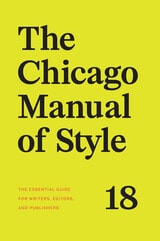
The Chicago Manual of Style, 18th Edition
The University of Chicago Press Editorial Staff
University of Chicago Press, 2024
Much has happened in the years since the publication of the seventeenth edition of The Chicago Manual of Style. The world has transformed, and the Manual has risen to meet the moment. The eighteenth edition of this classic guide for writers, editors, and publishers is the most extensive revision in two decades.
Every chapter has been reexamined with diversity and accessibility in mind, and major changes include updated and expanded coverage of pronoun use and inclusive language, revised guidelines on capitalization, a broader range of examples, new coverage of Indigenous languages, and expanded advice on making publications accessible to people with disabilities. The Manual’s traditional focus on nonfiction has been expanded to include fiction and other creative genres in coverage of topics such as punctuation and dialogue, and the needs of self-published authors receive wider attention.
The citation chapters have been thoroughly reorganized for the benefit of new and experienced users alike, and the key concepts for editing mathematics have been integrated into the chapters where they will be most useful to generalists. Evolving technologies—from open-access publishing models to AI—are covered throughout. And naturally, there are some well-considered updates to familiar rules, including changes intended to align the Manual’s recommendations more closely with real-world usage.
As with every new edition, devotees of the Manual will find much to discover and ponder.
The Complete Library Trustee Handbook
Jillian Kalonick
American Library Association, 2010
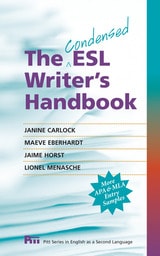
The Condensed ESL Writer's Handbook
Janine Carlock, Maeve Eberhardt, Jaime Horst, Lionel Menasche
University of Michigan Press, 2013
The CondensedESL Writer’s Handbook is a reference work for ESL students who are taking college-level courses. Because its purpose is to provide help with the broad variety of writing questions students may have when working on school assignments, the text focuses on English for Academic Purposes. Unlike other handbooks on the market, this book’s sole purpose is to address the issues of primary importance to language learners.
The Condensed Handbook complements a student writer’s dictionary, thesaurus, and grammar reference book. It would be suitable as a text for an advanced ESL writing course.
The Condensed Handbook is concise and easily navigated; is accessible, with clear and direct explanatory language; and limits its focus to the grammatical and style aspects of writing and reference material.
Included as special features in the Condensed Handbook are:
• The explanatory language is appropriate for ESL students, in contrast to the more complex and idiomatic language of other English handbooks.
• The level of detail is more manageable for ESL students, compared to what is in other English handbooks.
• Many of the examples of paragraphs and exercise sentences were written by ESL students; this encourages users of this Handbook to realize that they too can also become effective writers.
• Additional samples of MLA and APA reference entries.
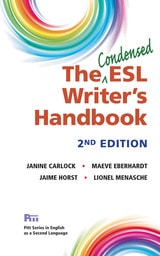
The Condensed ESL Writer's Handbook, 2nd Ed.
Janine Carlock, Maeve Eberhardt, Jaime Horst, and Lionel Menasche
University of Michigan Press, 2018
The Condensed version is concise and easily navigated; is accessible with clear and direct explanatory language; and limits its focus to the grammatical and style aspects of writing and reference material.
The 2nd Edition of The Condensed ESL Writer’s Handbook has been revised to better align with the exercises in Workbook for The ESL Writer’s Handbook, 2nd Ed.(978-0-472-03726-1). It also features an expanded Section 1 (to include more on pre-writing, drafting, revising, and editing), updated exercise items, and completely revised APA and MLA style guides (featuring MLA, 8th Edition). Overall, this handbook has these special features:
- The topic selection is based on ESL writers’ needs as observed by the authors over many years.
- The coverage of topics is more complete than the limited amount usually provided for ESL writers in first language or L1 handbooks.
- The explanatory language is appropriate for ESL students, in contrast to the more complex and idiomatic language of other English handbooks.
- Many of the text examples and exercise sentences were written by ESL students to help users realize that they too can become effective writers.
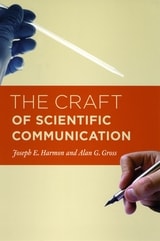
The Craft of Scientific Communication
Joseph E. Harmon and Alan G. Gross
University of Chicago Press, 2010
The ability to communicate in print and person is essential to the life of a successful scientist. But since writing is often secondary in scientific education and teaching, there remains a significant need for guides that teach scientists how best to convey their research to general and professional audiences. The Craft of Scientific Communication will teach science students and scientists alike how to improve the clarity, cogency, and communicative power of their words and images.
In this remarkable guide, Joseph E. Harmon and Alan G. Gross have combined their many years of experience in the art of science writing to analyze published examples of how the best scientists communicate. Organized topically with information on the structural elements and the style of scientific communications, each chapter draws on models of past successes and failures to show students and practitioners how best to negotiate the world of print, online publication, and oral presentation.
The Creative Writer's Survival Guide
Advice from an Unrepentant NovelistJohn McNally
University of Iowa Press, 2010
Beginning with “The Writer’s Wonderland—Or: A Warning” and ending with “You’ve Published a Book—Now What?” The Creative Writer’s Survival Guide is a must-read for creative-writing students and teachers, conference participants, and aspiring writers of every stamp. Directed primarily at fiction writers but suitable for writers of all genres, John McNally’s guide is a comprehensive, take-no-prisoners blunt, highly idiosyncratic, and delightfully subjective take on the writing life.
McNally has earned the right to dispense advice on this subject. He has published three novels, two collections of short fiction, and hundreds of individual stories and essays. He has edited six anthologies and worked with editors at university presses, commercial houses, and small presses. He has earned three degrees, including an MFA from the Iowa Writers’ Workshop, and taught writing to thousands of students at nine different universities. But he has received far more rejections than acceptances, has endured years of underpaid adjunct work, and is presently hard at work on a novel for which he has no guarantee of publication. In other words, he’s been at the writing game long enough to rack up plenty of the highs and lows that translate into an invaluable guide for anyone who wants to become a writer or anyone who is already a writer but doesn’t know how to take the next step toward the writing life.
In the sections The Decision to Become a Writer, Education and the Writer, Getting Published, Publicity, Employment for Writers, and The Writer’s Life, McNally wrestles with writing degrees and graduate programs, the nuts and bolts of agents and query letters and critics, book signings and other ways to promote your book, alcohol and other home remedies, and jobs for writers from adjunct to tenure-track. Chapters such as “What Have You Ever Done That’s Worth Writing About?” “Can Writing Be Taught?” “Rejection: Putting It in Perspective,” “Writing as a Competitive Sport,” “Seven Types of MLA Interview Committees,” “Money and the Writer,” and the all-important “Talking about Writing vs. Writing” cover a vast range of writerly topics from learning your craft to making a living at it. McNally acts as the writer’s friendly drill sergeant, relentlessly honest but bracingly cheerful as he issues his curmudgeonly marching orders. Alternately cranky and philosophical, full of to-the-point anecdotes and honest advice instead of wonkish facts and figures, The Creative Writer’s Survival Guide is a snarky, truthful, and immensely helpful map to being a writer in today’s complex world.

The Critical Thinking About Sources Cookbook
Sarah E. Morris
Assoc of College & Research Libraries, 2020
The Dramatic Writer's Companion, Second Edition
Tools to Develop Characters, Cause Scenes, and Build StoriesWill Dunne
University of Chicago Press, 2017
Having spent decades working with dramatists to refine and expand their existing plays and screenplays, Dunne effortlessly blends condensed dramatic theory with specific action steps—over sixty workshop-tested exercises that can be adapted to virtually any individual writing process and dramatic script. Dunne’s in-depth method is both instinctual and intellectual, allowing writers to discover new actions for their characters and new directions for their stories. The exercises can be used by those just starting the writing process and by those who have scripts already in development. With each exercise rooted in real-life issues from Dunne’s workshops, readers of this companion will find the combined experiences of more than fifteen hundred workshops in a single guide.
This second edition is fully aligned with a brand-new companion book, Character, Scene, and Story, which offers forty-two additional activities to help writers more fully develop their scripts. The two books include cross-references between related exercises, though each volume can also stand alone.
No ordinary guide to plotting, this handbook centers on the principle that character is key. “The character is not something added to the scene or to the story,” writes Dunne. “Rather, the character is the scene. The character is the story.” With this new edition, Dunne’s remarkable creative method will continue to be the go-to source for anyone hoping to take their story to the stage.
The Dramatic Writer's Companion
Tools to Develop Characters, Cause Scenes, and Build StoriesWill Dunne
University of Chicago Press, 2009
Moss Hart once said that you never really learn how to write a play; you only learn how to write this play. Crafted with that adage in mind, The Dramatic Writer’s Companion is designed to help writers explore their own ideas in order to develop the script in front of them. No ordinary guide to plotting, this handbook starts with the principle that character is key. “The character is not something added to the scene or to the story,” writes author Will Dunne. “Rather, the character is the scene. The character is the story.”
Having spent decades working with dramatists to refine and expand their existing plays and screenplays, Dunne effortlessly blends condensed dramatic theory with specific action steps—over sixty workshop-tested exercises that can be adapted to virtually any individual writing process and dramatic script. Dunne’s in-depth method is both instinctual and intellectual, allowing writers to discover new actions for their characters and new directions for their stories.
Dunne’s own experience is a crucial element of this guide. His plays have been selected by the Eugene O’Neill Theatre Center for three U.S. National Playwrights Conferences and have earned numerous honors, including a Charles MacArthur Fellowship, four Bay Area Theatre Critics Circle Awards, and two Drama-Logue Playwriting Awards. Thousands of individuals have already benefited from his workshops, and The Dramatic Writer’s Companion promises to bring his remarkable creative method to an even wider audience.
The ESL Writer's Handbook
Janine Carlock, Maeve Eberhardt, Jaime Horst, Lionel Menasche
University of Michigan Press, 2010
The ESL Writer’s Handbook is a reference work for ESL students who are taking college-level courses. Because its purpose is to provide help with the broad variety of writing questions students may have when working on school assignments, the text focuses on
English for Academic Purposes. Unlike other handbooks on the market, this book’s sole purpose is to address the issues of second language learners.
This spiral-bound Handbook complements a student writer’s dictionary, thesaurus, and grammar reference book. It would be suitable as a text for an advanced ESL writing course when used together with the companion Workbook (978-0-472-03404-8). The Handbook is concise and easily navigated; is accessible, with clear and direct explanatory language; features information on both APA and MLA styles (including a sample paper for each); and includes many examples from ESL student writers to provide realistic models.
Included as special features in the Handbook are:
• The topic selection is based on ESL writers’ needs as observed by the authors over many years.
• The coverage of topics is more complete than the limited amount usually provided for ESL writers in first language or L1 handbooks.
• The explanatory language is appropriate for ESL students, in contrast to the more complex and idiomatic language of other English handbooks.
• The level of detail is more manageable for ESL students, compared to what is in other English handbooks.
- Many of the examples of paragraphs, essays, research papers, and exercise sentences were written by ESL students; this encourages users of this Handbook to realize that they can also become effective writers.
The Essential Guide to Rocky Mountain Mushrooms by Habitat
Cathy Cripps, Vera Evenson, and Michael Kuo
University of Illinois Press, 2016
The Good, the Great, and the Unfriendly
A Librarian's Guide to Working with Friends GroupsSally Gardner Reed
American Library Association, 2017
The Graduate Advisor Handbook
A Student-Centered ApproachBruce M. Shore
University of Chicago Press, 2014
One of the first books to approach advising from the advisor’s point of view, the handbook highlights the importance of a partnership in which both parties need to be invested. Shore emphasizes the interpersonal relationships at the heart of advising and reveals how advisors can draw on their own strengths to create a rewarding rapport.
The Graduate Advisor Handbook moves chronologically through the advising process, from the first knock on the door to the last reference letter. Along the way it covers transparent communication, effective motivation, and cooperative troubleshooting. Its clear-eyed approach also tackles touchy subjects, including what to do when personal boundaries are crossed and how to deliver difficult news. Sample scripts help advisors find the right words for even the toughest situations.
With resources dwindling and student and advising loads increasing, graduate advisors need all the resources they can find to give their students the help they need. The Graduate Advisor Handbook has the cool-headed advice and comprehensive coverage that advisors need to make the advising relationship not just effective but also enjoyable.
The Handbook for Storytellers
Judy Freeman
American Library Association, 2015
The Handbook for Storytime Programs
Judy Freeman
American Library Association, 2015
The Handbook of Electrical Resistivity
New materials and pressure effectsGordon Dyos
The Institution of Engineering and Technology, 2012
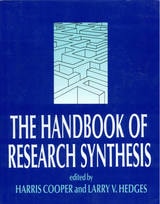
The Handbook of Research Synthesis
Harris Cooper
Russell Sage Foundation, 1994
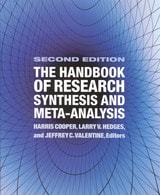
The Handbook of Research Synthesis and Meta-Analysis
Harris Cooper
Russell Sage Foundation, 2009
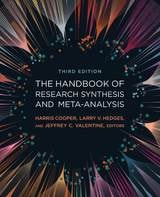
The Handbook of Research Synthesis and Meta-Analysis
Harris Cooper
Russell Sage Foundation, 2019
The Handbook of Research Synthesis and Meta-Analysis draws upon groundbreaking advances that have transformed research synthesis from a narrative craft into an important scientific process in its own right. The editors and leading scholars guide the reader through every stage of the research synthesis process—problem formulation, literature search and evaluation, statistical integration, and report preparation. The Handbook incorporates state-of-the-art techniques from all quantitative synthesis traditions and distills a vast literature to explain the most effective solutions to the problems of quantitative data integration. Among the statistical issues addressed are the synthesis of non-independent data sets, fixed and random effects methods, the performance of sensitivity analyses and model assessments, the development of machine-based abstract screening, the increased use of meta-regression and the problems of missing data. The Handbook also addresses the non-statistical aspects of research synthesis, including searching the literature and developing schemes for gathering information from study reports. Those engaged in research synthesis will find useful advice on how tables, graphs, and narration can foster communication of the results of research syntheses.
The third edition of the Handbook provides comprehensive instruction in the skills necessary to conduct research syntheses and represents the premier text on research synthesis.
Praise for the first edition: "The Handbook is a comprehensive treatment of literature synthesis and provides practical advice for anyone deep in the throes of, just teetering on the brink of, or attempting to decipher a meta-analysis. Given the expanding application and importance of literature synthesis, understanding both its strengths and weaknesses is essential for its practitioners and consumers. This volume is a good beginning for those who wish to gain that understanding." —Chance "Meta-analysis, as the statistical analysis of a large collection of results from individual studies is called, has now achieved a status of respectability in medicine. This respectability, when combined with the slight hint of mystique that sometimes surrounds meta-analysis, ensures that results of studies that use it are treated with the respect they deserve….The Handbook of Research Synthesis is one of the most important publications in this subject both as a definitive reference book and a practical manual."—British Medical Journal When the first edition of The Handbook of Research Synthesis was published in 1994, it quickly became the definitive reference for researchers conducting meta-analyses of existing research in both the social and biological sciences. In this fully revised second edition, editors Harris Cooper, Larry Hedges, and Jeff Valentine present updated versions of the Handbook's classic chapters, as well as entirely new sections reporting on the most recent, cutting-edge developments in the field. Research synthesis is the practice of systematically distilling and integrating data from a variety of sources in order to draw more reliable conclusions about a given question or topic. The Handbook of Research Synthesis and Meta-Analysis draws upon years of groundbreaking advances that have transformed research synthesis from a narrative craft into an important scientific process in its own right. Cooper, Hedges, and Valentine have assembled leading authorities in the field to guide the reader through every stage of the research synthesis process—problem formulation, literature search and evaluation, statistical integration, and report preparation. The Handbook of Research Synthesis and Meta-Analysis incorporates state-of-the-art techniques from all quantitative synthesis traditions. Distilling a vast technical literature and many informal sources, the Handbook provides a portfolio of the most effective solutions to the problems of quantitative data integration. Among the statistical issues addressed by the authors are the synthesis of non-independent data sets, fixed and random effects methods, the performance of sensitivity analyses and model assessments, and the problem of missing data. The Handbook of Research Synthesis and Meta-Analysis also provides a rich treatment of the non-statistical aspects of research synthesis. Topics include searching the literature, and developing schemes for gathering information from study reports. Those engaged in research synthesis will also find useful advice on how tables, graphs, and narration can be used to provide the most meaningful communication of the results of research synthesis. In addition, the editors address the potentials and limitations of research synthesis, and its future directions. The past decade has been a period of enormous growth in the field of research synthesis. The second edition Handbook thoroughly revises original chapters to assure that the volume remains the most authoritative source of information for researchers undertaking meta-analysis today. In response to the increasing use of research synthesis in the formation of public policy, the second edition includes a new chapter on both the strengths and limitations of research synthesis in policy debates
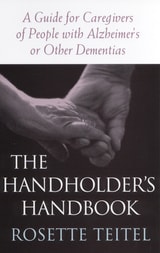
The Handholder's Handbook
A Guide for Caregivers of People with Alzheimer's or Other DementiasTeitel, Rosette
Rutgers University Press, 2001
The Holiday Handbook
700+ Storytime Activities from Arbor Day to Yom Kippur…from Diwali to Kwanzaa to RamadanBarbara A. Scott
American Library Association, 2012

The Inclusive Corporation
A Disability Handbook for Business ProfessionalsGriff Hogan
Ohio University Press, 2003
The Inclusive Corporation succinctly presents disability-related information and resources that business managers need, and does so in a way that is highly readable and easy to use. The book is respectful and understanding of business requirements, while at the same time conveying a comprehensive knowledge of disability issues.
Matters of legal compliance, social responsibility, recruitment, diversity, employee supervision, customer service, product design and marketing — all are dealt with in The Inclusive Corporation. The result of the author's many years of experience working with businesses to improve their ability to include disabled people both as customers and employees, The Inclusive Corporation will be welcomed by people with disabilities and by business professionals nationwide.
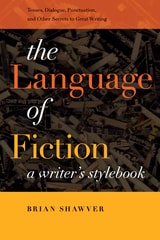
The Language of Fiction
A Writer’s StylebookBrian Shawver
University Press of New England, 2013
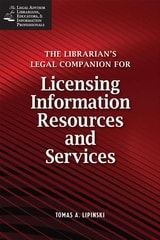
The Librarian's Legal Companion for Licensing Information Resources and Services
Tomas A. Lipinski
American Library Association, 2013
Legal expert Lipinski offers a definitive sourcebook for information licensing in libraries, including copyright and contract matters, general contract law concepts, developments in online and information contracting; and the advantages and disadvantages of licensing. Readers will find clear guidance on deciphering the legalese in agreements, advice on negotiating or countering provisions with library-friendly alternatives, and detailed explanations of specific licenses as well as a discussion of issues regarding online and information contracting. Additionally, three special sections provide valuable information in an easy-to-reference format:
- Deconstructions of four common license agreements: Access Newspaper Archive, BioOne, Nature Academic, and Amazon.com Kindle
- Answers to 126 questions about specific licensing agreements, plus a glossary, checklist and review tool for evaluating a license agreement
- 20 key issues in licensing agreements, accompanied by sample clauses
You'll save time, money, and unnecessary stress by putting the law on your side with this all-in-one guide to buying and licensing agreements.
The Librarian’s Guide to Book Programs and Author Events
Brad Hooper
American Library Association, 2016
The Library Assessment Cookbook
Aaron W. Dobbs
Assoc of College & Research Libraries, 2017
The Library Liaison's Training Guide to Collection Management
Alison M. Armstrong
American Library Association, 2020
Library liaisons often have primary jobs that do not involve collection development, but their familiarity with collection practices makes all the difference in faculty relations. And time pressures mean that on-boarding needs to be as streamlined as possible. This concise, field-tested training manual will put your liaison on solid footing. Plus, end of the chapter prompts make it easy to tailor your approach to local practices. With the help of this resource, your new liaison will get up to speed on such topics as
- tracking budget balances in assigned departments;
- differentiating between the needs of an individual faculty member and their department;
- how to say no to monograph requests;
- benchmarking titles with peer institutions or coordinating within a consortium;
- 17 questions to ask when evaluating a database;
- considerations when making weeding decisions;
- four key conversations to have annually between liaisons and collection development librarians; and
- gathering data for program accreditation reports.
The Medical Library Association Guide to Health Literacy at the Library
American Library Association, 2008
The Practical Handbook of Library Architecture
Creating Building Spaces that WorkFred Schlipf
American Library Association, 2018
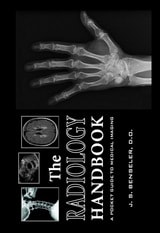
The Radiology Handbook
A Pocket Guide to Medical ImagingJ. S. Benseler
Ohio University Press, 2006
Designed for busy medical students, The Radiology Handbook is a quick and easy reference for any practitioner who needs information on ordering or interpreting images.
The book is divided into three parts:
- Part I presents a table, organized from head to toe, with recommended imaging tests for common clinical conditions.
- Part II is organized in a question and answer format that covers the following topics: how each major imaging modality works to create an image; what the basic precepts of image interpretation in each body system are; and where to find information and resources for continued learning.
- Part III is an imaging quiz beginning at the head and ending at the foot. Sixty images are provided to self-test knowledge about normal imaging anatomy and common imaging pathology.
Published in collaboration with the Ohio University College of Osteopathic Medicine, The Radiology Handbook is a convenient pocket-sized resource designed for medical students and non radiologists.
The Reference Guide to Data Sources
Julia Bauder
American Library Association, 2014
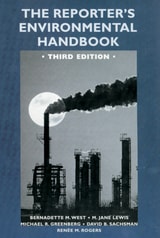
The Reporter's Environmental Handbook
Third EditionBernadette M West, M. Jane Lewis, Michael R Greenberg, David B. Sachsman, and Renee M. Rogers
Rutgers University Press, 2003
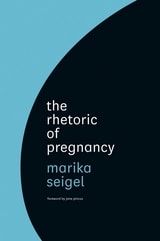
The Rhetoric of Pregnancy
Marika Seigel
University of Chicago Press, 2013
Using a sophisticated rhetorical analysis, Marika Seigel works to deconstruct pregnancy manuals while also identifying ways to improve communication about pregnancy and healthcare. She traces the manuals’ evolution from early twentieth-century tomes that instructed readers to unquestioningly turn their pregnancy management over to doctors, to those of the women’s health movement that encouraged readers to engage more critically with their care, to modern online sources that sometimes serve commercial interests as much as the mother’s.
The first book-length study of its kind, The Rhetoric of Pregnancy is a must-read for both users and designers of our prenatal systems—doctors and doulas, scholars and activists, and anyone interested in encouraging active, effective engagement.
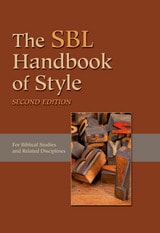
The SBL Handbook of Style
SBL Press, 2014
The definitive source for how to write and publish in the field of biblical studies
The long-awaited second edition of the essential style manual for writing and publishing in biblical studies and related fields includes key style changes, updated and expanded abbreviation and spelling-sample lists, a list of archaeological site names, material on qur’anic sources, detailed information on citing electronic sources, and expanded guidelines for the transliteration and transcription of seventeen ancient languages.
Features:
- Expanded lists of abbreviations for use in ancient Near Eastern, biblical, and early Christian studies
- Information for transliterating seventeen ancient languages
- Exhaustive examples for citing print and electronic sources
The Student's Survival Guide to Research
Monty L. McAdoo
American Library Association, 2015
The Successful Library Trustee Handbook
Mary Y. Moore
American Library Association, 2010