Results by title
332 books match the query 'Health & Fitness' and 66 start with t
Taking Care of Time
Cortney Davis
Michigan State University Press, 2018
Teaching the Practitioners of Care
New Pedagogies for the Health ProfessionsEdited by Nancy L. Diekelmann
University of Wisconsin Press, 2003
Nancy L. Diekelmann
Karin Dahlberg
Margaretha Ekebergh
Pamela M. Ironside
Kathryn Hopkins Kavanagh
Melinda M. Swenson
Sharon L. Sims
Rosemary A. McEldowney
Jan D. Sinnott

TennCare, One State's Experiment with Medicaid Expansion
Christina Juris Bennett
Vanderbilt University Press, 2014
While many states cut back on their Medicaid enrollments from 1993 to 2001, TennCare grew from 750,000 to 1.47 million enrollees. The state was less successful in controlling costs, however. Each major stakeholder group (the state, the managed care organizations, the providers, and the enrollees and their advocates) pushed back against parts of the state's strategy that adversely affected their interests, and they eventually dismantled the mechanisms of cost constraint.
The author lays out the four stakeholder perspectives for each period in the history of TennCare and provides a link to difficult-to-access primary documents.
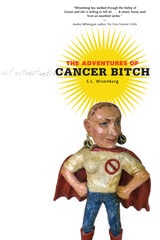
The Adventures of Cancer Bitch
S. L. Wisenberg
University of Iowa Press, 2009
Wisenberg’s writing has been compared to a mix of Leon Wieseltier and Fran Lebowitz, and in this book, she has Wieseltier’s erudition and Lebowitz’s self-deprecating cleverness: “If anybody ever offers you the choice between suffering and depression, take the suffering. And I don't mean physical suffering. I mean emotional suffering. I am hereby endorsing psychic suffering over depression.”
From The Adventures of Cancer Bitch:
I found that when you invite people to a pre-mastectomy party, they show up. Even those with small children. The kids were so young that they didn't notice that most of the food had nipples. . . . I talked to everyone—about what I'm not sure. Probably about my surgery. Everyone told me how well I looked. I felt giddy. I was going to go under, but not yet; I was going to be cut, but not yet; I was going to be bald, but not yet. As my friend who had bladder cancer says: The thing about cancer is you feel great until they start treating you for it.
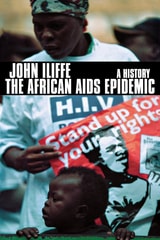
The African AIDS Epidemic
A HistoryJohn Iliffe
Ohio University Press, 2006
A Choice Significant University Press Titles for Undergraduates, 2005–2006
This history of the African AIDS epidemic is a much-needed, accessibly written historical account of the most serious epidemiological catastrophe of modern times. The African AIDS Epidemic: A History answers President Thabo Mbeki’s provocative question as to why Africa has suffered this terrible epidemic.
While Mbeki attributed the causes to poverty and exploitation, others have looked to distinctive sexual systems practiced in African cultures and communities. John Iliffe stresses historical sequence. He argues that Africa has had the worst epidemic because the disease was established in the general population before anyone knew the disease existed. HIV evolved with extraordinary speed and complexity, and because that evolution took place under the eyes of modern medical research scientists, Iliffe has been able to write a history of the virus itself that is probably unique among accounts of human epidemic diseases. In giving the African experience a historical shape, Iliffe has written one of the most important books of our time.
The African experience of AIDS has taught the world much of what it knows about HIV/AIDS, and this fascinating book brings into focus many aspects of the epidemic in the longer context of massive demographic growth, urbanization, and social change in Africa during the latter half of the twentieth century. The African AIDS Epidemic: A History is a brilliant introduction to the many aspects of the epidemic and the distinctive character of the virus.

The Baneberry Disaster
A Generation of Atomic FalloutLarry C. Johns
University of Nevada Press, 2017
The authors are attorneys from Las Vegas who spent 25 years pursuing a lawsuit for the victims at Baneberry. The story begins in 1971, just after the Baneberry test vented, and takes the reader through the years leading up to the trial, the 41-day trial in 1979, and the multiple appeals following the trial. It discusses the claims and lawsuits filed by others exposed to atomic testing, and the congressional investigations that led to the enactment of the Radiation Exposure Compensation Act in 1990.
The Beautiful Cure
The Revolution in Immunology and What It Means for Your HealthDaniel M. Davis
University of Chicago Press, 2018
The immune system holds the key to human health. In The Beautiful Cure, leading immunologist Daniel M. Davis describes how the scientific quest to understand how the immune system works—and how it is affected by stress, sleep, age, and our state of mind—is now unlocking a revolutionary new approach to medicine and well-being.
The body’s ability to fight disease and heal itself is one of the great mysteries and marvels of nature. But in recent years, painstaking research has resulted in major advances in our grasp of this breathtakingly beautiful inner world: a vast and intricate network of specialist cells, regulatory proteins, and dedicated genes that are continually protecting our bodies. Far more powerful than any medicine ever invented, the immune system plays a crucial role in our daily lives. We have found ways to harness these natural defenses to create breakthrough drugs and so-called immunotherapies that help us fight cancer, diabetes, arthritis, and many age-related diseases, and we are starting to understand whether activities such as mindfulness might play a role in enhancing our physical resilience.
Written by a researcher at the forefront of this adventure, The Beautiful Cure tells a dramatic story of scientific detective work and discovery, of puzzles solved and mysteries that linger, of lives sacrificed and saved. With expertise and eloquence, Davis introduces us to this revelatory new understanding of the human body and what it takes to be healthy.
The Biopolitics of Breast Cancer
Changing Cultures of Disease and ActivismMaren Klawiter
University of Minnesota Press, 2008
For nearly forty years, feminists and patient activists have argued that medicine is a deeply individualizing and depoliticizing institution. According to this view, medical practices are incidental to people’s transformation from patients to patient activists. The Biopolitics of Breast Cancer turns this understanding upside down.
Maren Klawiter analyzes the evolution of the breast cancer movement to show the broad social impact of how diseases come to be medically managed and publicly administered. Examining surgical procedures, adjuvant therapies, early detection campaigns, and the rise in discourses of risk, Klawiter demonstrates that these practices created a change in the social relations-if not the mortality rate-of breast cancer that initially inhibited, but later enabled, collective action. Her research focuses on the emergence and development of new forms of activism that range from grassroots patient empowerment to environmental activism and corporate-funded breast cancer awareness.
The Biopolitics of Breast Cancer opens a window onto a larger set of changes currently transforming medically advanced societies and ultimately challenges our understanding of the origins, politics, and future of the breast cancer movement.
Maren Klawiter holds a PhD in sociology from the University of California, Berkeley. She is currently pursuing a law degree at Yale University.
The Body Alone
A Lyrical Articulation of Chronic PainNina Lohman
University of Iowa Press, 2024
In both form and content, The Body Alone represents boundary-pressing work that subverts the traditional narrative by putting pressure on the medical, cultural, and political systems that impact women’s access to fair and equal healthcare. This is more than an illness narrative, it is a battle cry demanding change.

The Body Soviet
Propaganda, Hygiene, and the Revolutionary StateTricia Starks
University of Wisconsin Press, 2008
Health, though essential to the revolutionary vision and crucial to Soviet plans for utopia, has been neglected by traditional histories caught up in Cold War debates. The Body Soviet recovers this significant aspect of Soviet thought by providing a cross-disciplinary, comparative history of Soviet health programs that draws upon rich sources of health care propaganda, including posters, plays, museum displays, films, and mock trials. The analysis of propaganda makes The Body Soviet more than an institutional history; it is also an insightful critique of the ideologies of the body fabricated by health organizations.
"A masterpiece that will thoroughly fascinate and delight readers. Starks's understanding of propaganda and hygiene in the early Soviet state is second to none. She tells the stories of Soviet efforts in this field with tremendous insight and ingenuity, providing a rich picture of Soviet life as it was actually lived."— Elizabeth Wood, author of From Baba to Comrade: Gender and Politics in Revolutionary Russia
The Boundaries of Blackness
AIDS and the Breakdown of Black PoliticsCathy Cohen
University of Chicago Press, 1999
The Boundaries of Blackness is the first full-scale exploration of the social, political, and cultural impact of AIDS on the African-American community. Informed by interviews with activists, ministers, public officials, and people with AIDS, Cathy Cohen unflinchingly brings to light how the epidemic fractured, rather than united, the black community. She traces how the disease separated blacks along different fault lines and analyzes the ensuing struggles and debates.
More broadly, Cohen analyzes how other cross-cutting issues—of class, gender, and sexuality—challenge accepted ideas of who belongs in the community. Such issues, she predicts, will increasingly occupy the political agendas of black organizations and institutions and can lead to either greater inclusiveness or further divisiveness.
The Boundaries of Blackness, by examining the response of a changing community to an issue laced with stigma, has much to teach us about oppression, resistance, and marginalization. It also offers valuable insight into how the politics of the African-American community—and other marginal groups—will evolve in the twenty-first century.
The Children Of Africa Confront AIDS
From Vulnerability To PossibilityArvind Singhal
Ohio University Press, 2003

The Complete Vegetarian
The Essential Guide to Good HealthEdited by Peggy Carlson M.D.
University of Illinois Press, 2009
Essential and in-depth The Complete Vegetarian is an invaluable guide for health professionals and the growing number of people who have adopted or want to adopt a vegetarian lifestyle.
The Dance of Everyday Movement
A Developmental Framework for Whole-Body IntegrationLuc Vanier, Rebecca Nettl-Fiol, and Elizabeth Johnson
University of Illinois Press, 2026
Everyone can have their own movement practice. Building on Dance and the Alexander Technique, Luc Vanier, Rebecca Nettl-Fiol, and Elizabeth Johnson present an innovative method for observing and analyzing movement in daily life, the performing arts, and therapeutic contexts.
The authors’ Framework for Integration is a multifaceted approach to understanding and refining human movement. Core principles—such as psychophysical unity, developmental movement, and attention to breath—reveal how small changes in awareness and intent transform activities ranging from yoga and Tai Chi to sitting meditation, from gardening and sports to playing a musical instrument. Real-world applications highlight how individuals of all abilities and ages can reduce pain, improve coordination, and discover more efficient, joyful movement. Guest contributors detail how these concepts enhance artistic expression, interventions for trauma or chronic pain, and everyday tasks like driving and housework.
Engaging and aimed at non-specialists, The Dance of Everyday Movement invites practitioners from all walks of life to embrace ongoing development, resilience, and a more embodied way of living.

The Diary of Vaslav Nijinsky
Vaslav Nijinsky
University of Illinois Press, 2006
A uniquely personal record of a great artist’s experience of mental illness
In his prime, Vaslav Nijinsky (1889-1950) was the most celebrated man in Western ballet--a virtuoso and a dramatic dancer such as European and American audiences had never seen before. After his triumphs in such works as The Specter of the Rose and Petrouchka, he set out to make ballets of his own, and with his Afternoon of a Faun and The Rite of Spring, created within a year of each other, he became ballet’s first modernist choreographer.
For six weeks in early 1919, as his tie to reality was giving way, Nijinsky kept a diary--the only sustained daily record we have, by a major artist, of the experience of entering psychosis. In some entries he is filled with hope. He is God; he will save the world. In other entries, he falls into a black despair. He is dogged by sexual obsessions and grief over World War I. Furthermore, he is afraid that he is going insane.
The diary was first published in 1936, in a version heavily bowdlerized by Nijinsky’s wife. The new edition, translated by Kyril FitzLyon, is the first complete and accurate English rendering of this searing document. In her introduction, noted dance critic Joan Acocella tells Nijinsky’s story and places it in the context of early European modernism.
The Discovery of Insulin
Michael Bliss
University of Chicago Press, 1982
The Discovery of Insulin
Twenty-fifth Anniversary EditionMichael Bliss
University of Chicago Press, 2007
The Elephant in the Room
How to Stop Making Ourselves and Other Animals SickLiz Kalaugher
University of Chicago Press, 2025
When new diseases spread, news reports often focus on wildlife culprits—rodents, monkeys and mpox; bats and COVID-19; waterfowl and avian flu; or mosquitoes and Zika. But, in this urgent and engaging book, we see it often works the other way around—humans have caused diseases in other animals countless times, through travel and transport, the changes we impose on our environment, and global warming. With science journalist Liz Kalaugher as our guide, we meet the wildlife we have harmed and the experts now studying the crosscurrents between humans, other animals, and health.
Herds of buffalo in Kenya, cloned ferrets in Colorado, and frogs shipped worldwide as living pregnancy tests for humans, all help Kalaugher dive into the murky backstories behind wildlife epidemics past and present. We learn that military conflict likely contributed to the spread of rinderpest, or cattle plague, throughout Africa, devastating pastoral communities. That crowded poultry farms may create virulent new forms of bird flu that spill back into the wild. And that West Nile virus—which affects not only birds and humans, but other animals, including horses, skunks, and squirrels—is spreading as global temperatures rise.
Expanding today’s discussions of environmental protection to include illness and its impact, Kalaugher both sounds the alarm and explores ways to stop the emergence and spread of wildlife diseases. These solutions start with a simple lesson: when we protect other animals, we protect ourselves.
The Emotional Journey of the Alzheimer's Family
Robert B. Santulli and Kesstan Blandin
Dartmouth College Press, 2015

The English Physician
Nicholas Culpeper
University of Alabama Press, 2007
A foundational text in Western herbal medicine bridging botany, astrology, and early modern healing practices.
The English Physician is a humble vest-pocket-sized 94-page medical guide for the common person, by the prolific herbalist and author Nicholas Culpeper. It was a staple in 17th-century England, as it was short, written in accessible prose, and inexpensive; and perhaps as attractive, it took a decidedly skeptical view of "official" medicine, relying instead on popular remedies. Culpeper’s philosophy was to teach the common folk to minister to themselves by providing them with the tools and knowledge for self-help.
Published in Boston in 1708 by Nicholas Boone, the American version of The English Physician was widely cited and used at the time. Today only five copies are known to exist. The rarity of this vade mecum of colonial America is wrapped in mystery: Who really wrote this book and when, where, and how did it originate?
The editor illuminates these mysteries while adding an informative historical introduction on the state of medical knowledge and practice at the time, exploring Culpeper’s position among competing medical writers, and glossing the medical and botanical terms, providing contemporary equivalents. Modern readers will discover the meaning behind the strangely named brews and concoctions of the 17th century and will learn how this Boston printing literally transformed the American landscape with herbs brought from the British colonists’ homeland.
The Essential Eldercare Handbook for Nevada
Kim Boyer
University of Nevada Press, 2014
Boyer and Shapiro provide Nevada-specific information\--medical, legal, and financial\--on the wide range of problems that arise during the elder years. Case studies show how a typical family copes with troubles such as failing health or financial cares and what options they have. This guide will help any Nevada resident plan for their own senior years and take care of aging parents, spouses, and other loved ones.
The Essential Guide to Aging in the Twenty-First Century
Mind, Body, and BehaviorDonald H. Kausler, Barry C. Kausler & Jill A. Krupsaw
University of Missouri Press, 2007
For more than a decade, The Graying of America has helped thousands of middle-aged and senior citizens find their way through the thickets and thorns of growing old. Now greatly revised and expanded to include information gleaned from studies of the past five years, this third edition has been retitled to stress its ongoing purpose: conveying a wealth of commonsense information for general readers in nontechnical language.
The book is a storehouse of concise, useful information on the effects of aging on health, the mind, and behavior. Its 588 entries (including 172 new and 150 substantially revised) cover a broad spectrum of topics—from adjusting to retirement to grandparenting, sleep disorders to Alzheimer’s disease. All are directed to the average reader; all stress successful aging and how to accomplish it.
New entries cover such topics as the incidence and causes of frailty, the cognitive benefits of diversified activity, and findings of the Women’s Health Initiative. There is new information on matters like the effects of untreated hearing impairment on spouses and the impact of insufficient exposure to sunlight on sleep, plus new insight into what to look for in searching for a quality nursing home for a loved one.
Also included are results of recent studies on interventions that help to reduce age-related declines in mental and physical health, among them revelations that reports on age-related declines in memory have been skewed by testing errors. And with memory a concern for seniors fearful of declining mental agility, the book tells how to bypass memory problems—such as how to remember where you parked your car—and how physical exercise and challenging mental games can help reduce the risk of dementia. Other “how to avoid” entries offer ways to protect against eye fatigue in computer use, hip fractures when falling, and back injuries while lifting heavy objects.
No other book is so specifically geared to the challenges of how to reduce or even eliminate many of the problems associated with growing old. Aging in the Twenty-First Century can help seniors come to grips with their own aging process—and help younger adults understand what is happening to older family members.

The Examined Illness
A Philosopher's Confrontation with Deadly DiseaseDarrel Moellendorf
Intellect Books, 2026
A visceral personal memoir of being seriously unwell—and the consolations of philosophy during sickness.
Being a patient is part of being alive. Disease and serious illness often strike randomly, and when they do, we quickly become subject to the impersonal forces of biochemistry and pharmacology. We rarely think about sickness beforehand and are often totally unprepared for it when it happens. Suddenly, there we are, subject to a standard treatment protocol.
Darrel Noellendorf learned this by experience during a month confined to a solitary and sterile hospital room where he received a life-saving stem cell transplant. His room was somebody’s workspace, his schedule was somebody’s work routine, his immune system was systematically crushed, and his prognosis was out of his hands. There was no assurance that it would all work out.
Having spent thirty years teaching philosophy to college students, He was facing the biggest test of all—perhaps the final exam. These are his reflections before, during, and after his cancer treatment, written in real time. He writes, “My brain was sometimes addled by the chemotherapy that sapped my energy and destroyed my immune system, but I wrote out of the conviction that living well includes living well with disease, and eventually living well facing death.” This memoir expresses the conviction that the virtues of patience, courage, trust, and hope serve us well. A measure of good humor also can’t hurt.
The Gold Standard
The Challenge Of Evidence-Based MedicineStefan Timmermans and Marc Berg
Temple University Press, 2003

The Graying of America
An Encyclopedia of Aging, Health, Mind, and Behavior (2d ed.)Donald H. Kausler and Barry C. Kausler
University of Illinois Press, 2001
Featuring nontechnical language, user-friendly indexes, and more than 150 new entries, the second edition covers new topics such as acupuncture, wheelchairs, adjusting to bifocals, preparing for traveling, improving communication with physicians, and avoiding eye strain in computer use. Among other updates are more detailed coverage of health problems including arthritis, diabetes, osteoporosis, and various kinds of cancer, as well as advice on reducing the stress of caring for a family member with Alzheimer's disease. In addition to discussing hundreds of common ailments and conditions, Kausler and Kausler provide constructive guidance on regular physical activity, mental stimulation, and other behaviors that promote "successful aging."
The Hand Book
Surviving in a Germ-Filled WorldMiryam Z. Wahrman
Brandeis University Press, 2016
The Handholder's Handbook
A Guide for Caregivers of People with Alzheimer's or Other DementiasTeitel, Rosette
Rutgers University Press, 2001
The Histories of HIVs
The Emergence of the Multiple Viruses That Caused the AIDS EpidemicsWilliam H. Schneider
Ohio University Press, 2021
This new collection of essays on HIV viruses spans disciplines to topple popular narratives about the origins of the AIDS pandemic and the impact of the disease on public health policy.
With a death toll in the tens of millions, the AIDS pandemic was one of the worst medical disasters of the past century. The disease was identified in 1981, at the height of miraculous postwar medical achievements, including effective antibiotics, breakthrough advances in heart surgery and transplantations, and cheap, safe vaccines—smallpox had been eradicated just a few years earlier. Arriving as they did during this era of confidence in modern medicine, the HIV epidemics shook the public’s faith in health science. Despite subsequent success in identifying, testing, and treating AIDS, the emergence of epidemics and outbreaks of Ebola, Zika, and the novel coronaviruses (SARS and COVID-19) are stark reminders that such confidence in modern medicine is not likely to be restored until the emergence of these viruses is better understood.
This collection combines the work of major social science and humanities scholars with that of virologists and epidemiologists to provide a broader understanding of the historical, social, and cultural circumstances that produced the pandemic. The authors argue that the emergence of the HIV viruses and their epidemic spread were not the result of a random mutation but rather broader new influences whose impact depended upon a combination of specific circumstances at different places and times. The viruses emerged and were transmitted according to population movement and urbanization, changes in sexual relations, new medical procedures, and war. In this way, the AIDS pandemic was not a chance natural occurrence, but a human-made disaster.
Essays by: Ernest M. Drucker, Tamara Giles-Vernick, Ch. Didier Gondola, Guillaume Lachenal, Amandine Lauro, Preston A. Marx, Stephanie Rupp, François Simon, Jorge Varanda
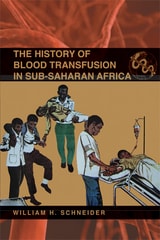
The History of Blood Transfusion in Sub-Saharan Africa
William H. Schneider
Ohio University Press, 2013
This first extensive study of the practice of blood transfusion in Africa traces the history of one of the most important therapies in modern medicine from the period of colonial rule to independence and the AIDS epidemic. The introduction of transfusion held great promise for improving health, but like most new medical practices, transfusion needed to be adapted to the needs of sub-Saharan Africa, for which there was no analogous treatment in traditional African medicine.
This otherwise beneficent medical procedure also created a “royal road” for microorganisms, and thus played a central part in the emergence of human immune viruses in epidemic form. As with more developed health care systems, blood transfusion practices in sub-Saharan Africa were incapable of detecting the emergence of HIV. As a result, given the wide use of transfusion, it became an important pathway for the initial spread of AIDS. Yet African health officials were not without means to understand and respond to the new danger, thanks to forty years of experience and a framework of appreciating long-standing health risks. The response to this risk, detailed in this book, yields important insight into the history of epidemics and HIV/AIDS.
Drawing on research from colonial-era governments, European Red Cross societies, independent African governments, and directly from health officers themselves, this book is the only historical study of the practice of blood transfusion in Africa.
The Human Drama of Abortion
A Global Search for ConsensusAnibal Faundes
Vanderbilt University Press, 2006
Deeply touched by the tragedies of botched abortions that they witnessed as medical students and young physicians in Chile in the 1940s and later around the world, the authors have attempted in their professional lives and now in this book to establish a framework for dialogue to replace the polarization that exists today.
Doctors Faundes and Barzelatto use their decades of international work to document the personal experiences of different classes of women in different countries and those countries' policies and practices. No other book provides such a comprehensive and reasoned examination of the entire topic of abortion, from the medical to the religious and ethical and from the psychological to the legal, in plain language understandable by non-specialists.
The central thesis is that there are too many induced abortions in the world today, that most are preventable and should be prevented--a middle ground that both pro-life and pro-choice advocates can accept. The first part of the book reviews why women have abortions, as well as the magnitude and consequences. The second part examines values. The third part discusses effective interventions. The final part states conclusions about what can be done to reach a necessary social consensus.
The Portuguese edition of this book was issued at the very end of 2004. The Spanish edition, launched in mid-2005, is already in a second printing. The authors are making presentations at special events sponsored by universities, professional associations, and feminist networks in Argentina, Chile, Mexico, Peru, Uruguay, Colombia, the Dominican Republic, and the United States.
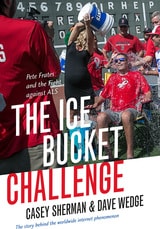
The Ice Bucket Challenge
Pete Frates and the Fight against ALSCasey Sherman and Dave Wedge
University Press of New England, 2017
The Impotence Epidemic
Men's Medicine and Sexual Desire in Contemporary ChinaEverett Yuehong Zhang
Duke University Press, 2015
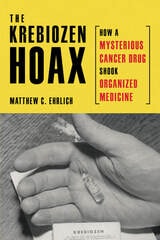
The Krebiozen Hoax
How a Mysterious Cancer Drug Shook Organized MedicineMatthew C. Ehrlich
University of Illinois Press, 2024
The brainchild of an obscure Yugoslav physician, Krebiozen emerged in 1951 as an alleged cancer treatment. Andrew Ivy, a University of Illinois vice president and a famed physiologist dubbed “the conscience of U.S. science,” wholeheartedly embraced Krebiozen. Ivy’s impeccable credentials and reputation made the treatment seem like another midcentury medical miracle. But after years of controversy, the improbable saga ended with Krebiozen proved a sham, its inventor fleeing the country, and Ivy’s reputation and legacy in ruins.
Matthew C. Ehrlich’s history of Krebiozen tells a quintessential story of quackery. Though most experts dismissed the treatment, it found passionate public support not only among cancer patients but also people in good health. The treatment’s rise and fall took place against the backdrop of America’s never-ending suspicion of educational, scientific, and medical expertise. In addition, Ehrlich examines why people readily believe misinformation and struggle to maintain hope in the face of grave threats to well-being.
A dramatic account of fraud and misplaced trust, The Krebiozen Hoax shines a light on a forgotten medical scandal and its all-too-familiar relevance in the twenty-first century.
The Last of His Mind, Second Edition
A Year in the Shadow of Alzheimer’sJohn Thorndike
Ohio University Press, 2021
The Light That Endures
Stories of Courage, Compassion, and Resilience at Dana-Farber Cancer InstituteTodd Weissman
University of Massachusetts Press, 2026
Showing that everyday people offer the deepest, most relatable lessons in grace
Offering an intimate glimpse into the lives of individuals connected to one of the world’s foremost centers for cancer care and research, The Light That Endures reveals how ordinary people at Boston’s Dana-Farber Cancer Institute demonstrate extraordinary resilience in the face of life’s most challenging moments. Through eight captivating profiles, readers meet a world-renowned pediatric oncologist who rode on horseback at Eisenhower’s inauguration, delivered a secret message in Soviet-controlled Czechoslovakia, and hosted the future King of England; a florist-turned-nurse-turned-teacher whose life changed drastically after a chance encounter on a train; an administrator who has faced adversity his entire life, from a violent father, to confronting his own identity, to being held up at gunpoint; a teenage patient whose battle with cancer was just one of many challenges he has navigated; and a woman who, despite spending her life bringing comfort to others, wonders whether she’s been enough as she reflects after a terminal diagnosis.
These remarkable people, diverse in their backgrounds, share a common bond through cancer and Dana-Farber, that much is obvious. However, it is their quiet acts of grace and service—woven into both their professional paths and personal journeys—that more deeply unite them. Their stories reveal a deeper truth: despite hardship and loss, the arc of life bends toward goodness. Fractured childhoods, family estrangement, mental health strains, winding career paths, and the ever-present shadow of self-doubt are not just obstacles but catalysts. The individuals profiled have found hope and meaning in community and their work, shaping lives of purpose, service, and gratitude. More than a recounting of lives touched by cancer, The Light That Endures is a celebration of the profound impact of compassion and human connection. It captures the essence of Dana-Farber’s ethos, where a shared mission of care fosters an environment of empathy and hope.
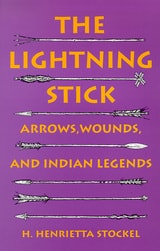
The Lightning Stick
Arrows, Wounds, And Indian LegendsH. Henrietta Stockel
University of Nevada Press, 1995
More than simply a history of the bow and arrow, The Lightening Stick brings together a broad range of significant people and events, spiritual usages, medicinal treatments, and an unusual array of subject matter related to the weapon itself. Henrietta Stockel conveys a host of information derived from primary documents and provides readers with a fascinating book. Her descriptive storytelling—serious, humorous, and even gory at times—takes the reader from modern uses of bows and arrows (including a previously little-known incident in the atomic city of Los Alamos, New Mexico) to an early era of western history, before guns changed the frontier forever.

The Lion's Share
Scientific Nutrition and the British World SystemAlma Igra
University of Chicago Press, 2026
Reveals how nutrition science emerged from Britain’s attempts to mold the food chain to its imperial interests.
The Lion’s Share offers a biography of nutrition as a scientific discipline, from its imperial birth, through its rise to fame, to its integration into an environmental and political global order. Even though medical knowledge involved food since ancient times, at the beginning of the twentieth century, nutrition was not yet a scientific discipline in an institutional or practical sense. Nevertheless, by the 1930s, it was one of the most politically influential scientific fields, with nutritionists operating as medical diplomats within national, international, and imperial organizations. As historian Alma Igra explains, it is through the global networks of British power that a decidedly marginal field of technical knowledge concerned with agricultural productivity and animal feeding evolved into an area of expertise governing the human diet and related issues of public health, economic development, and humanitarian aid.
The Lion’s Share visits five pivotal moments that prompted new nutritional research at transnational meetings in Scotland, Iraq, Vienna, Geneva, and the Netherlands. Through the eyes of the experts, Igra tracks how nutrition became an international science, with mobile labs, collaborations among institutions, and a constant clash between local and imperial practices. Standardization of food measurement created new ways for food to be international and allowed politicians to imagine the world as one. Yet tensions remained that shaped international policy in the twentieth century and still affect international land policy today.
The Love Surgeon
A Story of Trust, Harm, and the Limits of Medical RegulationSarah B. Rodriguez
Rutgers University Press, 2020
It would be easy to dismiss Dr. Burt as a monstrous aberration, a modern-day Dr. Frankenstein. Yet as medical historian Sarah Rodriguez reveals, that’s not the whole story. The Love Surgeon asks tough questions about Burt’s heinous acts and what they reveal about the failures of the medical establishment: How was he able to perform an untested surgical procedure? Why wasn’t he obliged to get informed consent from his patients? And why did it take his peers so long to take action?
The Love Surgeon is both a medical horror story and a cautionary tale about the limits of professional self-regulation.
The Male Pill
A Biography of a Technology in the MakingNelly Oudshoorn
Duke University Press, 2003
Oudshoorn emphasizes that the introduction of contraceptives for men depends to a great extent on changing ideas about reproductive responsibility. Initial interest in the male pill, she shows, came from outside the scientific community: from the governments of China and India, which were interested in population control, and from Western feminists, who wanted the responsibilities and health risks associated with contraception shared more equally between the sexes. She documents how in the 1970s, the World Health Organization took the lead in investigating male contraceptives by coordinating an unprecedented, worldwide research network. She chronicles how the search for a male pill required significant reorganization of drug-testing standards and protocols and of the family-planning infrastructure—including founding special clinics for men, creating separate spaces for men within existing clinics, enrolling new professionals, and defining new categories of patients. The Male Pill is ultimately a story as much about the design of masculinities in the last decades of the twentieth century as it is about the development of safe and effective technologies.

The Memory Sessions
Suzanne Farrell Smith
Bucknell University Press, 2019
Published by Bucknell University Press. Distributed worldwide by Rutgers University Press.
The Mythical Bill
A Neurological MemoirJody McAuliffe
University of Iowa Press, 2013

The Opium Debate and Chinese Exclusion Laws in the Nineteenth-Century American West
Diana L. Ahmad
University of Nevada Press, 2011
America’s current "war on drugs" is not the nation’s first. In the mid-nineteenth century, opium-smoking was decried as a major social and public health problem, especially in the West. Although China faced its own epidemic of opium addiction, only a very small minority of Chinese immigrants in America were actually involved in the opium business. It was in Anglo communities that the use of opium soon spread and this growing use was deemed a threat to the nation’s entrepreneurial spirit and to its growing mportance as a world economic and military power. The Opium Debate examines how the spread of opium-smoking fueled racism and created demands for the removal of the Chinese from American life. This meticulously researched study of the nineteenth-century drug-abuse crisis reveals the ways moral crusaders linked their antiopium rhetoric to already active demands for Chinese exclusion. Until this time, anti-Chinese propaganda had been dominated by protests against the economic and political impact of Chinese workers and the alleged role of Chinese women as prostitutes. The use of the drug by Anglos added another reason for demonizing Chinese immigrants. Ahmad describes the disparities between Anglo-American perceptions of Chinese immigrants and the somber realities of these people’s lives, especially the role that opium-smoking came to play in the Anglo-American community, mostly among middle- and upper-class women. The book offers a brilliant analysis of the evolution of the Chinese Exclusion Act of 1882, plus important insights into the social history of the nineteenth-century West, the culture of American Victorianism, and the rhetoric of racism in American politics.
The Outbreak Atlas
Rebecca Katz and Mackenzi S. Moore
Vanderbilt University Press, 2024
For years the Georgetown University Center for Global Health Science and Security has curated an interactive online tool for professionals that identifies the activities involved across all phases of an outbreak. The Georgetown Outbreak Activity Library (GOAL) captures what needs to get done, when, and by whom. Now, in The Outbreak Atlas, Rebecca Katz and Mackenzie S. Moore have translated this complex material into a book designed for a public audience.
This book provides an overview of outbreak activities alongside compelling case studies and visuals to guide readers through the complexity involved in outbreak preparedness, response, and recovery. It lifts the curtain on the rationale and interconnectedness of outbreak responses across different fields and at various levels, presenting accessible information that ensures a shared understanding of the essential activities to control an outbreak.

The People's Porn
A History of Handmade Pornography in AmericaLisa Z. Sigel
Reaktion Books, 2020
Critics tend to focus on mass-produced materials and make claims about pornography as plasticized or commodified. In contrast, eminent historian Lisa Z. Sigel looks at what people made, rather than what they bought, revealing how people thought about sexuality for themselves. She also explores periods when these sexual artifacts were pilloried, ransacked, and destroyed, providing a unique document of rare nineteenth- and twentieth-century objects. Whalers and craftsmen, prisoners and activists, African Americans and feminists—all made their own pornography. Ranging across the full sweep of this output, The People’s Porn challenges preconceptions as it tells a new and fascinating story about American sexual history.
The Political Economy of Stigma
HIV, Memoir, Medicine, and Crip PositionalitiesAlly Day
The Ohio State University Press, 2021
In The Political Economy of Stigma, Ally Day offers a compelling critique of neoliberal medical practices in the US by coupling an analysis of HIV memoir with a critical examination of narrative medicine practice. Using insights from feminist disability studies and crip theory, Day argues that stories of illness and disability—such as HIV memoirs—operate within a political economy of stigma, which she defines as the formal and informal circulation of personal illness and disability narratives that benefits some while hindering others. On the one hand, this system decreases access to appropriate medical care for those with chronic conditions by producing narratives of personal illness that frame one’s relationship to structural inequality as a result of personal failure. On the other hand, the political economy of stigma rewards those who procure such narratives and circulate them for public consumption.
The political economy of stigma is theorized from three primary research sites: a reading group with women living with HIV, a reading group with AIDS service workers, and participant observation research and critical close reading of practices in narrative medicine. Ultimately, it is the women living with HIV who provide an alternative way to understand disability and illness narratives, a practice of differential reading that can challenge stigmatizing tropes and reconceptualize the creation, reception, and circulation of patient memoir.
The Public Librarian's Guide to Answering Health Questions
Bobbi L. Newman and Carolyn Martin
American Library Association, 2026
It often starts with a patron’s simple question. Librarians play a central role in helping people navigate information, evaluate sources, and find answers they can trust. That includes health information, something many people come to the library looking for every day. Maybe they need more information about a diagnosis, a medication, or something they came across online. Perhaps they’re helping a family member with a medical issue or trying to better understand their own health. These are everyday interactions in libraries. And this book is about helping you approach them with confidence, clarity, and a strong sense of your role. You do not need a medical background to provide excellent health information service — just the right frameworks, tools, and reassurance to apply your core skills in a health context. No matter your comfort level or prior experience, you will
- understand why health information work is both practical and people-centered, requiring an approach that combines information skills with communication and care;
- gain an overview of health information and the role libraries play in supporting health literacy;
- learn about evaluating health information and identifying trustworthy, evidence-based sources;
- receive guidance on building and maintaining a relevant, reliable collection;
- walk through health reference interview scenarios, bolstered with strategies for effective and respectful interactions;
- discover reflection prompts to help you consider your own approach, your library’s practices, and the ways you can continue to build confidence over time;
- grasp the ethical and legal considerations related to health information work, such as privacy, boundaries, and professional responsibilities;
- find practical wisdom for sustaining yourself in this work and building practices that support your own long-term well-being; and
- get access to a companion website that provides checklists, tools, and additional resources you can use in your day-to-day work.
The Quest for Sexual Health
How an Elusive Ideal Has Transformed Science, Politics, and Everyday LifeSteven Epstein
University of Chicago Press, 2022
Since the 1970s, health professionals, researchers, governments, advocacy groups, and commercial interests have invested in the pursuit of something called "sexual health." Under this expansive banner, a wide array of programs have been launched, organizations founded, initiatives funded, products sold—and yet, no book before this one asks: What does it mean to be sexually healthy? When did people conceive of a form of health called sexual health? And how did it become the gateway to addressing a host of social harms and the reimagining of private desires and public dreams?
Conjoining "sexual" with "health" changes both terms: it alters how we conceive of sexuality and transforms what it means to be healthy, prompting new expectations of what medicine can provide. Yet the ideal of achieving sexual health remains elusive and open-ended, and the benefits and costs of promoting it are unevenly distributed across genders, races, and sexual identities. Rather than a thing apart, sexual health is intertwined with nearly every conceivable topical debate—from sexual dysfunction to sexual violence, from reproductive freedom to the practicalities of sexual contact in a pandemic. In this book Steven Epstein analyzes the rise, proliferation, uptake, and sprawling consequences of sexual health activities, offering critical tools to assess those consequences, expand capacities for collective decision making, and identify pathways that promote social justice.
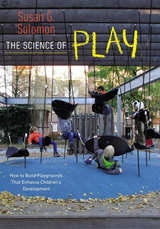
The Science of Play
How to Build Playgrounds That Enhance Children's DevelopmentSusan G. Solomon
University Press of New England, 2014

The Second Part of the Popular Errors
Laurent Joubert
University of Alabama Press, 1995
English translation of the second volume of Laurent Joubert’s 1578 French work Erreurs Populaires
Joubert proposed to dispel folk remedies and folklore still relied on by doctors and care-givers in France. It also challenged medical theories and advice from classical Greek and Latin writers that French doctors followed uncritically.