82 books match the query 'Hermeneutics' and 17 start with t
cover of The Ambuiguity of Being: Lonergan and the Problems of the Supernatural

The Ambuiguity of Being

Lonergan and the Problems of the Supernatural

Jonathan R. Heaps

Catholic University of America Press, 2024
The debate in Catholic theology over the relationship between the natural and the supernatural has only occasionally engaged with Bernard Lonergan’s philosophical and theological contributions on the topic. The Ambiguity of Being argues that more detailed engagement with Lonergan’s work implies an oversight in both the 20th- and 21st-century debates. The Ambiguity of Being argues the controversy has failed to notice how the problem of the natural and the supernatural is, in fact, two problems. The Ambiguity of Being takes both problems in their widest sense to be about action—both divine and human. The first problem asks how God can act in human action. A question for Christians at least since St. Augustine faced the Pelagian controversy, Lonergan retrieved what he understood to be St. Thomas Aquinas’ mature solution. It is a solution gathering together a whole series of theological and philosophical developments into a subtle metaphysical theory of divine and human cooperation. But the recent debates have resituated this problem (and various interpretations of St. Thomas’s solution to it) in a modern world with modern concerns about culture and politics for the sake of answering a second, intrinsically related, but really distinct question: what is God doing in human action? Ambiguity finds that the recent controversy almost always finds participants attempting to deduce an answer to the second, modern problem from the medieval, metaphysical Thomist solution to the first. By contrast, The Ambiguity of Being argues at length the modern problem cannot be reduced to, nor an answer deduced from its medieval, metaphysical partner because the modern problem of the supernatural—what is God doing in human action?—is a hermeneutical problem that calls out for a hermeneutical answer. The Ambiguity of Being sketches a heuristic for what a fully adequate answer to this question would require, suggesting a radical re-conception of modern theology’s scope.
[more]
cover of The Conflict of Interpretations

The Conflict of Interpretations

Paul Ricoeur

Northwestern University Press, 1974
This collection brings together twenty-two essays by Paul Ricoeur under the topics of structuralism, psychoanalysis, hermeneutics, and religion. In dramatic conciseness, the essays illuminate the work of one of the leading philosophers of the day. Those interested in Ricoeur's development of the philosophy of language will find rich and suggestive reading. But the diversity of essays also speaks beyond the confines of philosophy to linguists, theologians, psychologists, and psychoanalysts.
[more]
cover of The Conflict of Interpretations: Essays in Hermeneutics

The Conflict of Interpretations

Essays in Hermeneutics

Paul Ricoeur

Northwestern University Press, 2007
This collection brings together twenty-two essays by Paul Ricoeur under the topics of structuralism, psychoanalysis, hermeneutics, and religion. In dramatic conciseness, the essays illuminate the work of one of the leading philosophers of the day. Those interested in Ricoeur's development of the philosophy of language will find rich and suggestive reading. But the diversity of essays also speaks beyond the confines of philosophy to linguists, theologians, psychologists, and psychoanalysts.
[more]
cover of The Gadamer Reader: A Bouquet of the Later Writings

The Gadamer Reader

A Bouquet of the Later Writings

Hans-Georg Gadamer

Northwestern University Press, 2007
The German volume Gadamer Lesebuch [A Gadamer Reader] (1997), selected and edited by Jean Grondin in consultation with Hans-Georg Gadamer himself, contains a set of essays that present a cross section of writings by one of the twentieth century's greatest philosophers. The volume begins with an autobiographical sketch and culminates in a conversation with Jean Grondin that looks back over a lifetime of productive philosophical work. The essays not already available in English have here been translated by Richard E. Palmer, a respected translator of Gadamer's writings. The sixteen essays contained in the Lesebuch are augmented here by three other essays: Gadamer's last essay on Derrida, "Hermeneutics Tracking the Trace" (1994) and two essays on practical philosophy. The Gadamer Reader: A Bouquet of the Later Writings richly conveys the scope and depth of Gadamer's thought, covering the range of his work in hermeneutics, aesthetics, practical philosophy, and essays on Plato, Hegel, and Heidegger. In addition, Palmer offers introductory remarks before each essay that explain its importance in the context of Gadamer's writings and define its key terms. Throughout, in both his translation and commentary, his aim is to make this critically important philosopher as clear and accessible as possible to an English-speaking audience.
[more]
cover of The Hermeneutics of Original Argument: Demonstration, Dialectic, Rhetoric

The Hermeneutics of Original Argument

Demonstration, Dialectic, Rhetoric

P. Christopher Smith

Northwestern University Press, 1998
What, precisely, does the word hermeneutics mean? And in what sense can one speak of the hermeneutics of original argument? In The Hermeneutics of Original Argument, P. Christopher Smith explores these questions in building upon Heidegger's hermeneutical thought. In applying Heidegger's basic notion that hermeneutics is not a doctrine of interpretation but is its actual execution, Christopher Smith penetrates the abstractions that conceal original argument and explores the structure and nature of argument as it originally occurs.
[more]
cover of The Hermeneutics of Torah: Proverbs 2, Deuteronomy, and the Composition of Proverbs 1–9

The Hermeneutics of Torah

Proverbs 2, Deuteronomy, and the Composition of Proverbs 1–9

Bernd U. Schipper

SBL Press, 2021

This revised and expanded English edition of Bernd U. Schipper’s 2012 Hermeneutik der Tora incorporates the results of his continued research and writings on Proverbs. For nearly a century, many biblical scholars have argued that the main theological traditions, such as the divine law, God’s torah, do not appear in the book of Proverbs. In this volume, however, Schipper demonstrates that Proverbs interacts in a sophisticated way with the concept of the torah. A detailed analysis of Proverbs 2 and other passages from the first part of the book of Proverbs shows that Proverbs engages in a postexilic discourse around “wisdom and torah” concerning the abilities of humans to fulfill the will of YHWH exemplified in the divine torah.
[more]
cover of The Limits of Critique

The Limits of Critique

Rita Felski

University of Chicago Press, 2015

A powerful examination of the very idea of critique and its dominance in literary studies

Why must critics unmask and demystify literary works? Why do they believe that language is always withholding some truth, that the critic’s task is to reveal the unsaid or repressed? In this book, Rita Felski examines critique, the dominant form of interpretation in literary studies, and situates it as but one method among many, a method with strong allure—but also definite limits.

Felski argues that critique is a sensibility best captured by Paul Ricoeur’s phrase “the hermeneutics of suspicion.” She shows how this suspicion toward texts forecloses many potential readings while providing no guarantee of rigorous or radical thought. Instead, she suggests, literary scholars should try what she calls “postcritical reading”: rather than looking behind a text for hidden causes and motives, literary scholars should place themselves in front of it and reflect on what it suggests and makes possible.

By bringing critique down to earth and exploring new modes of interpretation, The Limits of Critique offers a fresh approach to the relationship between artistic works and the social world.
[more]
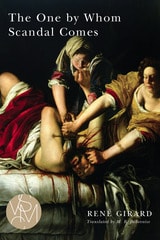
cover of The One by Whom Scandal Comes

The One by Whom Scandal Comes

René Girard (Translated by M. B. DeBevoise)

Michigan State University Press, 2014

“Why is there so much violence in our midst?” René Girard asks. “No question is more debated today. And none produces more disappointing answers.” In Girard’s mimetic theory it is the imitation of someone else’s desire that gives rise to conflict whenever the desired object cannot be shared. This mimetic rivalry, Girard argues, is responsible for the frequency and escalating intensity of human conflict. For Girard, human conflict comes not from the loss of reciprocity between humans but from the transition, imperceptible at first but then ever more rapid, from good to bad reciprocity. In this landmark text, Girard continues his study of violence in light of geopolitical competition, focusing on the roots and outcomes of violence across societies latent in the process of globalization. The volume concludes in a wide-ranging interview with the Sicilian cultural theorist Maria Stella Barberi, where Girard’s twenty-first century emphases on the continuity of all religions, global conflict, and the necessity of apocalyptic thinking emerge.
[more]
cover of The Rhetoric of Interpretation and the Interpretation of Rhetoric

The Rhetoric of Interpretation and the Interpretation of Rhetoric

Paul Hernadi, ed.

Duke University Press, 1989
The essays collected in this volume strongly suggest that the principles and operations of contemporary rhetoric and contemporary interpretation invite being studied in conjunction with each other—that the are, as Paul Hernadi puts it, "siamese twins." Furthermore, a number of the essays suggest that both rhetoric and interpretation ought to be studied in conjunction with the principles and operations characteristic of contemporary descriptions and critiques of ideology.
[more]
cover of The Specter of Relativism: Truth, Dialogue, and Phronesis in Philosophical Hermeneutics

The Specter of Relativism

Truth, Dialogue, and Phronesis in Philosophical Hermeneutics

Lawrence Schmidt

Northwestern University Press, 1995

Specter of Relativism addresses the timely topic of relativism from the perspective of Gadamer's hermeneutics. This collection of essays explores several of the key issues in contemporary philosophy—the nature of truth, the model of conversation, and the possibility of an ethics in postmodern conditions—in the context of the work of Gadamer. Although centered on Gadamer and including the first English translation of one of his essays, the volume does not narrowly define or defend the approach of philosophical hermeneutics; the contributors present a broad range of views, in some cases championing a Gadamerian perspective, in others challenging it. 
[more]
cover of The Tao and the Logos: Literary Hermeneutics, East and West

The Tao and the Logos

Literary Hermeneutics, East and West

Longxi Zhang

Duke University Press, 1992

Questions of the nature of understanding and interpretation—hermeneutics—are fundamental in human life, though historically Westerners have tended to consider these questions within a purely Western context. In this comparative study, Zhang Longxi investigates the metaphorical nature of poetic language, highlighting the central figures of reality and meaning in both Eastern and Western thought: the Tao and the Logos. The author develops a powerful cross-cultural and interdisciplinary hermeneutic analysis that relates individual works of literature not only to their respective cultures, but to a combined worldview where East meets West.
Zhang's book brings together philosophy and literature, theory and practical criticism, the Western and the non-Western in defining common ground on which East and West may come to a mutual understanding. He provides commentary on the rich traditions of poetry and poetics in ancient China; equally illuminating are Zhang's astute analyses of Western poets such as Rilke, Shakespeare, and Mallarmé and his critical engagement with the work of Foucault, Derrida, and de Man, among others.
Wide-ranging and learned, this definitive work in East-West comparative poetics and the hermeneutic tradition will be of interest to specialists in comparative literature, philosophy, literary theory, poetry and poetics, and Chinese literature and history.
[more]
cover of The Tenets of Cognitive Existentialism

The Tenets of Cognitive Existentialism

Dimitri Ginev

Ohio University Press, 2011

In The Tenets of Cognitive Existentialism, Dimitri Ginev draws on developments in hermeneutic phenomenology and other programs in hermeneutic philosophy to inform an interpretative approach to scientific practices. At stake is the question of whether it is possible to integrate forms of reflection upon the ontological difference in the cognitive structure of scientific research. A positive answer would have implied a proof that (pace Heidegger) “science is able to think.” This book is an extended version of such a proof. Against those who claim that modern science is doomed to be exclusively committed to the nexus of objectivism and instrumental rationality, the interpretative theory of scientific practices reveals science’s potentiality of hermeneutic self-reflection. Scientific research that takes into consideration the ontological difference has resources to enter into a dialogue with Nature.

Ginev offers a critique of postmodern tendencies in the philosophy of science, and sets out arguments for a feminist hermeneutics of scientific research.

[more]
cover of The Transcendent Mystery of God's Word: A Critical Synthesis of Antioch and Alexandria

The Transcendent Mystery of God's Word

A Critical Synthesis of Antioch and Alexandria

John W. Martens

Saint Paul Seminary Press, 2024
Historical-critical methods in biblical scholarship are associated with numerous intellectual movements, such as rationalism, positivism, and historical relativism, that minimize or reject the sacred and revealed nature of Scripture. Ben F. Meyer noted, however, as have official Church documents, that modern biblical techniques are essential for locating the literal, that is, the intended sense of the biblical texts. He likened these modern methods to the ancient Antiochene school’s focus on the literal sense. But to focus on “Antioch” alone does not account for Scripture’s theological depth, religious context, or fulfillment of the promises of God. Biblical interpretation associated with ancient “Alexandria” offers a focus on the transcendent mystery of God’s word, often lacking in current biblical scholarship, but Meyer noted that ancient allegorical interpretation cannot simply be borrowed today since it often lacks a sense of historic change and development. This book is not about patristic reception of the Bible in Antioch and Alexandria, but the need to bring together in critical synthesis historical biblical methods that seek to understand the literal sense in all of its fullness and also incorporate methods of interpretation that take seriously the biblical texts as revelatory of God’s word for our salvation. “Antioch” and “Alexandria” are representative in this book of interpretive stances that pay attention to historical context, change, and development and are open to transcendence in order to offer the salvific power of Scripture to readers in our own day.
[more]
cover of The Unchanging Truth of God? Crucial Philosophical Issues for Theology

The Unchanging Truth of God? Crucial Philosophical Issues for Theology

Thomas G. Guarino

Catholic University of America Press, 2021
It has long been a cornerstone of Catholic belief that Christians can be intelligent and creative thinkers—inquisitive seekers after truth—as well as men and women of ardent faith. Catholics are entirely committed, then, to the claim that human rationality and religious faith are complementary realities since they are equally gifts of God. But understanding precisely how faith and reason cohere has not always been a smooth path. At times, theology has allowed philosophy to become the leading (and baleful) partner in the faith-reason relationship, thereby lapsing into rationalism or relativism. At other times, theology has been tempted by fideism, with philosophy now regarded as little more than a pernicious intruder corrupting Christian faith, life and thought. The essays in this volume display how Catholicism understands the proper confluence between philosophy and theology, between human rationality and Christian faith, between the natural order and supernatural grace. To illustrate these points, the book draws on a long line of Christian thinkers: Origen, Augustine, Anselm, Aquinas and, in our own day, Fides et Ratio of John Paul II and the Regensburg Address of Benedict XVI. How is theology always a “Jewgreek” enterprise—to borrow a term from Jacques Derrida—always a combination of the biblical (Hebraic) and philosophical (Hellenic) traditions? Why is one particular element of philosophy, metaphysics, essential for the intelligibility and clarity of Catholic theology? Why is this so much the case that John Paul II could state emphatically: “a philosophy which shuns metaphysics would be radically unsuited to the task of mediation in the understanding of Revelation”? But theology cannot simply be about dialogue with philosophers of yesteryear. Theology must constantly incorporate fresh thinking and remain in lively conversation with an extensive variety of contemporary perspectives. This book displays how reciprocity and absorption has been characteristic of theology’s past and must represent its future as well.
[more]
cover of Theology of the Hebrew Bible, Volume 1: Methodological Studies

Theology of the Hebrew Bible, Volume 1

Methodological Studies

Marvin A. Sweeney

SBL Press, 2019

Diverse approaches to biblical theology

This volume presents a collection of studies on the methodology for conceiving the theological interpretation of the Hebrew Bible among Jews and Christians as well as the treatment of key issues such as creation, the land of Israel, and divine absence. Contributors include Georg Fischer, SJ, David Frankel, Benjamin J. M. Johnson, Soo J. Kim, Wonil Kim, Jacqueline E. Lapsley, Julia M. O’Brien, Dalit Rom-Shiloni, Marvin A. Sweeney, and Andrea L. Weiss.

Features:

  • Examination of metaphor, repentance, and shame in the presence of God
  • Ten essays addressing the nature of biblical theology from a Jewish, Christian, or critical perspective
  • Discussion of the changes that have taken place in the field of biblical theology since World War II
[more]
cover of Theology of the Hebrew Bible, Volume 2: Texts, Readers, and Their Worlds

Theology of the Hebrew Bible, Volume 2

Texts, Readers, and Their Worlds

Soo Kim Sweeney

SBL Press, 2024

This follow-up to Theology of the Hebrew Bible, Volume 1: Methodological Studies, focuses on readers’ engagement with the text and their communities. Part 1 offers fresh interpretations of divine images and theological concepts drawn from various theophanies in the text. Part 2 focuses on how these insights can form new overarching structures, serving as reading strategies or foundations for alternative theologies. Part 3 emphasizes the bond between readers and their communities, highlighting the active participation of both ancient and modern readers through an analysis of past literature. Contributors, each an expert in their field, include Rachel Adelman, Samuel E. Balentine, Shelly L. Birdsong, Ginny Brewer-Boydston, Johanna Etzberger, Frances Flannery, David Frankel, Barry R. Huff, Hyun Chul Paul Kim, Barbara Leung Lai, J. Richard Middleton, Hye Kyung Park, Kris Sonek, Brent A. Strawn, David E. S. Stein, Marvin A. Sweeney, Soo Kim Sweeney, Joseph Sykora, Daniel C. Timmer, and Beat Weber. This collection of essays guides readers, including those well-versed in theology, to explore innovative and unexpected depictions of divine beings and how human characters respond to them.
[more]
cover of Thinking Biblically: Exegetical and Hermeneutical Studies

Thinking Biblically

Exegetical and Hermeneutical Studies

André LaCocque and Paul Ricoeur

University of Chicago Press, 1998

Unparalled in its poetry, richness, and religious and historical significance, the Hebrew Bible has been the site and center of countless commentaries, perhaps none as unique as Thinking Biblically. This remarkable collaboration sets the words of a distinguished biblical scholar, André LaCocque, and those of a leading philosopher, Paul Ricoeur, in dialogue around six crucial passages from the Old Testament: the story of Adam and Eve; the commandment "thou shalt not kill"; the valley of dry bones passage from Ezekiel; Psalm 22; the Song of Songs; and the naming of God in Exodus 3:14. Commenting on these texts, LaCocque and Ricoeur provide a wealth of new insights into the meaning of the different genres of the Old Testament as these made their way into and were transformed by the New Testament.

LaCocque's commentaries employ a historical-critical method that takes into account archaeological, philological, and historical research. LaCocque includes in his essays historical information about the dynamic tradition of reading scripture, opening his exegesis to developments and enrichments subsequent to the production of the original literary text. Ricoeur also takes into account the relation between the texts and the historical communities that read and interpreted them, but he broadens his scope to include philosophical speculation. His commentaries highlight the metaphorical structure of the passages and how they have served as catalysts for philosophical thinking from the Greeks to the modern age.

This extraordinary literary and historical venture reads the Bible through two different but complementary lenses, revealing the familiar texts as vibrant, philosophically consequential, and unceasingly absorbing.
[more]