Results by title
438 books match the query 'Hispanic & Latino' and 82 start with t
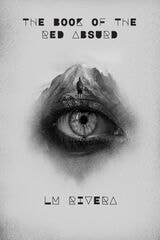
THE BOOK OF THE RED ABSURD
L.M. Rivera
Omnidawn, 2026
LM Rivera’s THE BOOK OF THE RED ABSURD is a poetic autobiography seen through the lens of literature, cinema, theory, history, mythology, and demonology. Presenting themselves in a sort of kinship with academic traditions, these poems move beyond scholarly preciousness to uncover something deeper, stranger, and more honest. This collection is a descent into an absurdist avant-garde performance, immersing the reader in the head of “red” experiences—those with sensations of extremity, despair, amusement, and derision. Here we find a heart laid bare through poetry that aims for the deadliest parts and dances wildly along the way.
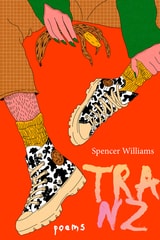
TRANZ
Spencer Williams
Four Way Books, 2024
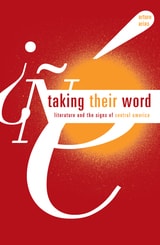
Taking Their Word
Literature and the Signs of Central AmericaArturo Arias
University of Minnesota Press, 2007
Central Americans are one of the largest Latino population groups in the United States. Yet, Arturo Arias argues, the cultural production of Central Americans remains little known to North Americans.
In Taking Their Word, Arias complicates notions of the cultural production of Central America, from Mexico in the North to Panama in the South. He charts the literature of Central America’s liberation struggles of the 1970s and 1980s, its transformation after peace treaties were signed, the emergence of a new Maya literature that decenters Latin American literature written in Spanish, and the rise and fall of testimonio. Arias demonstrates that Central America and its literature are marked by an indigenousness that has never before been fully theorized or critically grasped. Never one to avoid controversy, Arias proffers his views of how the immigration of Central Americans to North America has changed the cultural topography of both zones.
With this groundbreaking work, Arias establishes the importance of Central American literature and provides a frame for future studies of the region’s culture.
Arturo Arias is director of Latin American studies at the University of Redlands. He is the author of six novels in Spanish and editor of The Rigoberta Menchú Controversy (Minnesota, 2001).
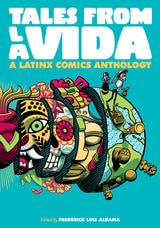
Tales from la Vida
A Latinx Comics AnthologyEdited by Frederick Luis Aldama
The Ohio State University Press, 2018
In the Latinx comics community, there is much to celebrate today, with more Latinx comic book artists than ever before. The resplendent visual-verbal storyworlds of these artists reach into and radically transform so many visual and storytelling genres. Tales from la Vida celebrates this space by bringing together more than eighty contributions by extraordinary Latinx creators. Their short visual-verbal narratives spring from autobiographical experience as situated within the language, culture, and history that inform Latinx identity and life. Tales from la Vida showcases the huge variety of styles and worldviews of today’s Latinx comic book and visual creators.
Whether it’s detailing the complexities of growing up—mono- or multilingual, bicultural, straight, queer, or feminist Latinx—or focusing on aspects of pop culture, these graphic vignettes demonstrate the expansive complexity of Latinx identities. Taken individually and together, these creators—including such legendary artists as Jaime and Gilbert Hernandez, Roberta Gregory, and Kat Fajardo, to name a few—and their works show the world that when it comes to Latinx comics, there are no limits to matters of content and form. As we travel from one story to the next and experience the unique ways that each creator chooses to craft his or her story, our hearts and minds wake to the complex ways that Latinxs live within and actively transform the world.
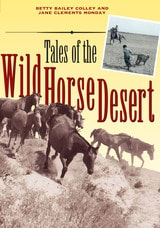
Tales of the Wild Horse Desert
By Betty Bailey Colley and Jane Clements Monday
University of Texas Press, 2001
Highly skilled, hard-working, and loyal to each other and to the ranches that employ them, the Mexican and Mexican American vaqueros who work on the famous King and Kenedy Ranches of South Texas' Wild Horse Desert are some of America's best cowboys. Many of them come from families who have lived and worked on the ranches for over a hundred years. They preserve the memories of ranch life handed down by their grandparents and great-grandparents, even as they use modern technologies to keep the ranches running smoothly in the twenty-first century.
This book tells the stories of the vaqueros of the Wild Horse Desert for fourth- through eighth-grade students. It begins with a brief history of the vaqueros and the King and Kenedy Ranches. Then, using in the words of today's vaqueros and their families, it describes many aspects of past and present life on the ranches. Young readers will learn what it's like to grow up on the ranches and how vaqueros learn their work. They'll also discover how much goes into being a vaquero, from using all the different ropes and equipment, to working a round-up, to showing prize-winning cattle and horses. Teachers and parents will appreciate all the supplemental material in the appendix, including a glossary, lists of related books and websites, hands-on learning activities, and even range and camp house recipes.
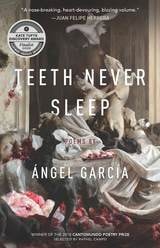
Teeth Never Sleep
PoemsÁngel García
University of Arkansas Press, 2018
Finalist, 2019 PEN Open Book Award
Winner, 2019 American Book Award, Before Columbus Foundation
Drawing on folklore and fantasy, childhood memory and hallucination, and marked by a tone of piercing divulgence, Teeth Never Sleep nimbly negotiates the split consciousness a culture of dominance requires of men (especially men of color), highlighting the fissures in selfhood created by the pressure to seek submission over intimacy while still wanting desperately to be loved, and tracing the contorted route by which emotional pain finds expression in violence. “The night my girlfriend tells my mother I beat her, / I feel betrayed. This was a secret we kept between us. / That night, I was no longer my mother’s loving son,” the speaker in one poem confesses, and later “I never wanted to be this kind of animal.”
And yet, through the lens of Ángel García’s sharp imagining, men frequently appear as beasts (sometimes literally)—as hybrid beings both tender and brutal—that he steadfastly refuses to let off the hook as he obsessively catalogs the origins of toxic masculinity (the first time I made my mother cry, the first time I pitied my father, the first time I saw a girl bleed) and its quiet, lasting effects: “Still a part of me believes a / man shouldn’t cry in front of a woman, even in the dark.”
In a culture of weaponized masculinity, the poems in Teeth Never Sleep make a doorway of a wound, inviting readers to walk through and sit down inside the raw pain they harbor to meditate on two central, urgent questions: what it means to be a man and how, as a man, to love.
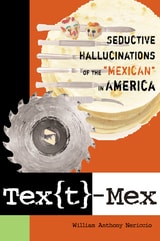
Tex[t]-Mex
Seductive Hallucinations of the "Mexican" in AmericaBy William Anthony Nericcio
University of Texas Press, 2006
A rogues' gallery of Mexican bandits, bombshells, lotharios, and thieves saturates American popular culture. Remember Speedy Gonzalez? "Mexican Spitfire" Lupe Vélez? The Frito Bandito? Familiar and reassuring—at least to Anglos—these Mexican stereotypes are not a people but a text, a carefully woven, articulated, and consumer-ready commodity. In this original, provocative, and highly entertaining book, William Anthony Nericcio deconstructs Tex[t]-Mexicans in films, television, advertising, comic books, toys, literature, and even critical theory, revealing them to be less flesh-and-blood than "seductive hallucinations," less reality than consumer products, a kind of "digital crack."
Nericcio engages in close readings of rogue/icons Rita Hayworth, Speedy Gonzalez, Lupe Vélez, and Frida Kahlo, as well as Orson Welles' film Touch of Evil and the comic artistry of Gilbert Hernandez. He playfully yet devastatingly discloses how American cultural creators have invented and used these and other Tex[t]-Mexicans since the Mexican Revolution of 1910, thereby exposing the stereotypes, agendas, phobias, and intellectual deceits that drive American popular culture. This sophisticated, innovative history of celebrity Latina/o mannequins in the American marketplace takes a quantum leap toward a constructive and deconstructive next-generation figuration/adoration of Latinos in America.
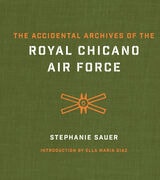
The Accidental Archives of the Royal Chicano Air Force
By Stephanie Sauer
University of Texas Press, 2016
How do you write a history of a group that has been written out of history? In The Accidental Archives of the Royal Chicano Air Force, world-famous archaeologist La Stef and the clandestine Con Sapos Archaeological Collective track down the “facts” about the elusive RCAF, the Rebel Chicano Art Front that, through an understandable mix-up with the Royal Canadian Air Force, became the Royal Chicano Air Force.
La Stef and her fellow archaeologists document the plight and locura que cura of the RCAF, a group renowned for its fleet of adobe airplanes, ongoing subversive performance stance, and key role as poster makers for the United Farm Workers Union during the height of the Chicano civil rights movement. As the Con Sapos team uncovers tensions between fact and fiction in historical consciousness and public memory, they abandon didactic instruction and strive instead to offer a historiography in which various cultural paradigms already intersect seamlessly and on equal ground. That they often fail to navigate the blurred lines between “objective” Western archival sciences and Indigenous/Chicana/o cosmologies reflects the very human predicament of documenting the histories of complicated New Worlds everywhere. Uniquely blending art history, oral history, cultural studies, and anthropology, The Accidental Archives of the Royal Chicano Air Force suspends historical realities and leaps through epochs and between conversations with various historical figures, both dead and alive, to offer readers an intimate experience of RCAF history.
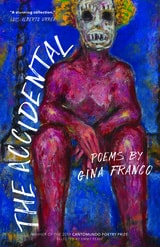
The Accidental
PoemsGina Franco
University of Arkansas Press, 2019
Cascading through each of the poems in Gina Franco’s The Accidental is a question: What does it mean to be human in a world where the soul is exalted but the body brutalized? Franco explores the terrain of the borderlands—not just the physical space of the American southwest, but the spaces where lines are drawn between body and soul, God and self, violence and ecstasy. Unfolding along these borders in a torrent of deep contemplation, Franco’s poems bring the reader to the line between accident and choice, delving into the role each plays in creating the lives we are born into and in determining how those lives end. A body caught in a tree after a flood—an accident—calls to mind deliberate violences: crucifixion and lynching.
Guided, even so, by a stark hopefulness, The Accidental makes a character of the soul and traces its pilgrimage from suffering toward transcendence. “The soul saw,” Franco writes, “that it saw through the wound.” This book tenders a creation myth steeped in existential philosophy and shimmering with the vernacular of the ecstatic.
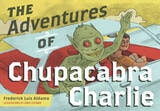
The Adventures of Chupacabra Charlie
Written by Frederick Luis AldamaIllustrated by Chris Escobar
The Ohio State University Press, 2020
With magical realism, allegory, and gentle humor, Aldama and Escobar have created a story that will resonate with young and old readers alike as it incorporates folklore into its subtle take on the current humanitarian crisis at the border.
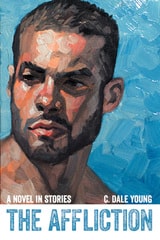
The Affliction
A Novel in StoriesC. Dale Young
Four Way Books, 2018
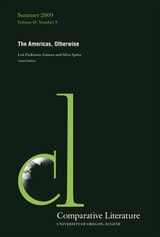
The Americas, Otherwise, Volume 61
Lois Parkinson Zamora and Silvia Spitta, eds.
Duke University Press, 0
These essays foreground the work of important hemispheric writers, artists, and public intellectuals such as Roberto Bolaño, Alejo Carpentier, Aimé Césaire, Gabriel García Márquez, Édouard Glissant, José Martí, Ricardo Piglia, and Leopoldo Zea. Topics include migration to the Americas from Asia, Europe, and Africa; hemispheric exceptionalisms since the establishment of the first colonies; the interdisciplinary foundations of border studies; theories of the neobaroque and their application to Latin American cultural formations; Latino critical theory; and the emergence of a southern theory inclusive of the intellectual work of often-marginalized cultures.
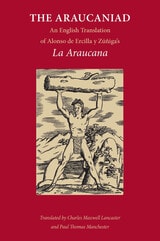
The Araucaniad
Alonso de Ercilla y Zuniga
Vanderbilt University Press, 1945

The Bankruptcy
A NovelJúlia Lopes de Almeida
University College London, 2023
Set in the early years of Brazil’s Old Republic after the abolition of slavery, Júlia Lopes de Almeida's The Bankruptcy depicts the rise and fall of a wealthy coffee exporter against a kaleidoscopic background of glamour, poverty, seduction, and financial speculation. The novel introduces readers to a turbulent period in Brazilian history seething with new ideas about democracy, women’s emancipation, and the role of religion in society. Originally published in 1901, its prescient critiques of financial capitalism and the patriarchal family remain relevant today.
In her lifetime, Júlia Lopes de Almeida was compared to Machado de Assis, the most important Brazilian writer of the nineteenth century. She was also considered for the inaugural list of members of the Brazilian Academy of Letters but was excluded because of her gender. In the decades after her death, her work was largely forgotten. This publication, a winner of the English PEN award, includes an introduction to the novel and a translators' preface and accompanies a general rediscovery of her extraordinary body of work in Brazil.
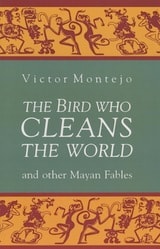
The Bird Who Cleans the World and Other Mayan Fables
Victor Montejo
Northwestern University Press, 1995
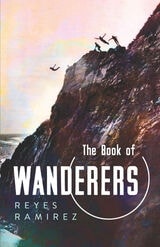
The Book of Wanderers
Reyes Ramirez
University of Arizona Press, 2022
Reyes Ramirez’s dynamic short story collection follows new lineages of Mexican and Salvadoran diasporas traversing life in Houston, across borders, and even on Mars. Themes of wandering weave throughout each story, bringing feelings of unease and liberation as characters navigate cultural, physical, and psychological separation and loss from one generation to the next in a tumultuous nation.
The Book of Wanderers deeply explores Houston, a Gulf Coast metropolis that incorporates Southern, Western, and Southwestern identities near the borderlands with a connection to the cosmos. As such, each story becomes increasingly further removed from our lived reality, engaging numerous genres from emotionally touching realist fiction to action-packed speculative fiction, as well as hallucinatory realism, magical realism, noir, and science fiction.
Fascinating characters and unexpected plots unpack what it means to be Latinx in contemporary—and perhaps future—America. The characters work, love, struggle, and never stop trying to control their reality. They dream of building communities and finding peace. How can they succeed if they must constantly leave one place for another? In a nation that demands assimilation, how can they define themselves when they have to start anew with each generation? The characters in The Book of Wanderers create their own lineages, philosophies for life, and markers for their humanity at the cost of home. So they remain wanderers . . . for now.
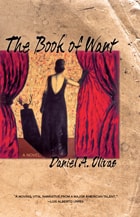
The Book of Want
A NovelDaniel A. Olivas
University of Arizona Press, 2011
Conchita, a voluptuous, headstrong single woman of a certain age, sees nothing wrong with enjoying the company of handsome—and usually much younger—men...that is, until she encounters a widower with unusual gifts and begins to think about what she really wants out of life.
Julieta, Conchita’s younger sister, walks a more traditional path, but she and her husband each harbor secrets that could change their marriage and their lives forever. Their twin sons, both in college, struggle to find fulfillment. Mateo refuses to let anyone stand in the way of his happiness, while Rolando grapples with his sexuality and the family’s expectations. And from time to time, Belén, the family’s late matriarch, pays a visit to advise, scold, or cajole her hapless descendants.
A delightful family tapestry woven with the threads of all those whose lives are touched by Conchita, The Book of Want is an enchanting blend of social and magical realism that tells a charming story about what it means to be fully human.
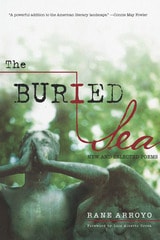
The Buried Sea
New and Selected PoemsRane Arroyo; Foreword by Luis Alberto Urrea
University of Arizona Press, 2008
Reading Rane Arroyo’s poems is a little like watching a movie playing at fastforward speed on the TV in your darkened bedroom. The colors pop and snap, the images leap and recede, the colors seem brighter than life—and you can’t stop watching even long enough to blink. It’s an intimate experience. Even at hyperspeed you can make out the images of friends, family, and lovers (especially lovers) burning rubber across the unblinking screen. And even without a sound track, you can hear the music—a symphony of jazz and samba, salsa and street sounds.
In The Buried Sea, Arroyo has selected poems from his first eleven books—five full-length collections of poems and six chapbooks—and has added nineteen new poems. When asked to describe himself, Arroyo writes that “the answer is easy: I’m a Puerto Rican, gay, Midwestern, educated, former working class, liberal, atheistic, humanist, American, male, ex-Mormon, ex-Catholic, pseudo-Buddhist, teacher, reader, global, and popular culture—informed poet.” Readers will find traces of all of these selves in this collection. And Arroyo does make it “easy” to follow the clues. His poems—vivacious, sexy, shiny, sly, pointed, ambitious—are easy to approach and easy to love. But they come with strings attached—like all affairs of the heart—and therein lies so much of their pleasure.
The Censors
A Bilingual Selection of StoriesLuisa Valenzuela
Northwestern University Press, 1995
The Chasers
Renato Rosaldo
Duke University Press, 2019
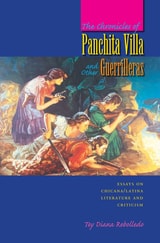
The Chronicles of Panchita Villa and Other Guerrilleras
Essays on Chicana/Latina Literature and CriticismBy Tey Diana Rebolledo
University of Texas Press, 2006
Although there have been substantial contributions to Chicana literature and criticism over the past few decades, Chicanas are still underrepresented and underappreciated in the mainstream literary world and virtually nonexistent in the canon. Writers like Sandra Cisneros, Ana Castillo, and Gloria Anzaldúa have managed to find larger audiences and critical respect, but there are legions of Chicana writers and artists who have been marginalized and ignored despite their talent. Even in Chicano anthologies, the focus has tended to be more on male writers. Chicanas have often found themselves without a real home in the academic world.
Tey Diana Rebolledo has been writing about Chicana/Latina identity, literature, discrimination, and feminism for more than two decades. In this collection of essays, she brings together both old and new works to give a state-of-the-moment look at the still largely unanswered questions raised by vigilant women of color throughout the last half of the twentieth century. An intimate introductory essay about Rebolledo's personal experiences as the daughter of a Mexican mother and a Peruvian father serves to lay the groundwork for the rest of the volume. The essays delve into the historical development of Chicana writing and its early narratives, the representation of Chicanas as seen on book covers, Chicana feminism, being a Chicana critic in the academy, Chicana art history, and Chicana creativity. Rebolledo encourages "guerrillera" warfare against academia in order to open up the literary canon to Chicana/Latina writers who deserve validation.
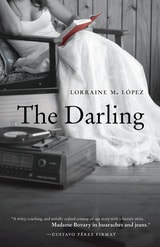
The Darling
Lorraine M. López
University of Arizona Press, 2015
Though set in Los Angeles from the mid-1970s to the mid-1980s, the narrative reinscribes Anton Chekhov’s short story, “The Darling,” first published in 1899. Like Chekhov’s protagonist, Caridad engages in various relationships in her search for love and fulfillment. Rather than absorbing beliefs held by the men in her life, as does Chekhov’s heroine, Caridad instead draws on her lovers’ resources in attempting to improve and educate herself. Apart from Chekhov, various authors of classic literature further guide Caridad’s quest to find herself and to find love, inspiring her longing for love, while also enabling her to disentangle herself from unsatisfying to disastrous relationships by encouraging her to strive for an ideal.
In a moment of clarity, Caridad compares herself to a trapeze artist near the top of a striped tent as she flies from one man to the next, expecting to be caught and held until she is ready to leap again. Flying, she wonders—or is she falling?
The Day's Hard Edge
PoemsJose A. Rodriguez
Northwestern University Press, 2024
In his fourth poetry collection, José Antonio Rodríguez investigates how one constructs a relationship to the self, to community, and to poetry itself. The Day's Hard Edge is composed of three sections, the first of which situates the reader in the speaker’s world, one marked by multiple forms of trauma. Here are the contours of the Texas/Mexico borderlands where the speaker’s initial sense of self and community emerges. The second section broadens in scope and considers the potential and limitations of poetry as a site for meaning-making. The third section brings the speaker to a new understanding of the poem as it relates to the transformative and destabilizing experience of trauma. Ultimately this book lays bare an individual and, in doing so, shows how poetry acts as a place of succor and vulnerability for one’s very identity. Together these poems explore what it means to be queer, immigrant, and Chicano.
The Devil's Workshop
PoemsDemetria Martínez
University of Arizona Press, 2002
Don't believe it for a minute. In this collection of fifty-three poems, the author of the award-winning novel Mother Tongue explores the themes that have long characterized her writing: the creative and destructive powers of romantic love, the failure of political systems, the spiritual life, and the need to forgive oneself in order to move on with the work of transformation, both social and personal. Through poems that confront mortality even as they demand social justice, Martínez writes of surviving in a culture where traditional values often get lost in the complexities of everyday life. Of nurturing relationships with nieces, nephews, and parents while pondering questions of life and death, love and loss. Of caring for one's own body when "each cough is an underground nuclear explosion, / Unraveling your body’s hard-won peace accord." Martínez cauterizes old wounds inflicted by various agents: death, political repression, betrayal, and of course failed romance: "Don’t bother, I did it / First. Broke my own / Damn heart." Here are "kernels of loneliness too stubborn to grind / Down to blue meal," and the struggle for a renewed sense of self as middle age approaches:
At this age you touch what little sanctity you can muster.
The yearning burns to do more, to do more by hand.
To thread your very life through a needle's eye.
Martínez serves up a heady blend of political and sensual imagery. Her keen observations and compassionate voice lead the reader on a journey of self-exploration, of coping with life's mundanities as well as its heartaches: "I could use a loving word, / A loaf of bread, a rose, / Help with the laundry." Through her unquenchable passion for life, Demetria Martínez leaves the devil’s workshop and brings us closer to an understanding of what is real.
The Dialectics of Our America
Genealogy, Cultural Critique, and Literary HistoryJosé David Saldívar
Duke University Press, 1991
Saldívar pursues this goal through an array of oppositional critical and creative practices. He analyzes a range of North American writers of color (Rolando Hinojosa, Gloria Anzaldúa, Arturo Islas, Ntozake Shange, and others) and Latin American authors (José Martí, Roberto Fernández Retamar, Gabriel García Márquez, and others), whose work forms a radical critique of the dominant culture, its politics, and its restrictive modes of expression. By doing so, Saldívar opens the traditional American canon to a dialog with other voices, not just the voices of national minorities, but those of regional cultures different from the prevalent anglocentric model.
The Dialectics of Our America, in its project to expand the “canon” and define a pan-American literary tradition, will make a critical difference in ongoing attempts to reconceptualize American literary history.
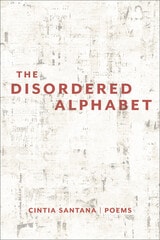
The Disordered Alphabet
Cintia Santana
Four Way Books, 0
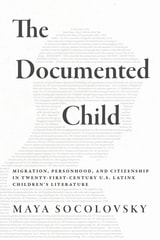
The Documented Child
Migration, Personhood, and Citizenship in Twenty-First-Century U.S. Latinx Children's LiteratureMaya Socolovsky
University of Arizona Press, 2025
Immigration is at once a personal, immediate, and urgent issue that plays a central role in the United States’ perception of itself. In The Documented Child, scholar Maya Socolovsky demonstrates how the portrayal of Latinx children has shifted over the first two decades of the twenty-first century in literary texts aimed at children and young adults and looks at how these shifts map onto broader changes in immigration policy and discourse.
Through a critical inquiry into picture books and middle-grade and young adult literature, Socolovsky argues that the literary documentations of—and for—U.S. Latinx children have shifted over the decades, from an emphasis on hybrid transnationalism to that of a more American-oriented self. Socolovsky delves into texts written from 1997 to 2020, a period marked by tremendous changes in U.S. immigration policies, amplified discourses around nationhood, and an increasingly militarized border. The author shows how children’s and young adult books have shifted their depictions of the border, personal and national identity, and sovereignty.
For students, scholars, and educators of Latinx studies and children’s literature, this work shows how the creators of children’s literature reflect new strategies for representing the undocumented Latinx child protagonist. While earlier books document the child as a transnational (sometimes global) subject, later books document her as both a transnational and U.S. national subject. The Documented Child explores this change as a necessary survival strategy, reflecting current awareness that cultural hybridity and transnational identity are not sufficient stand-ins for the stability and security of legal personhood.
The Eve/Hagar Paradigm in the Fiction of Quince Duncan
Dellite Martin-Ogunsola
University of Missouri Press, 2004
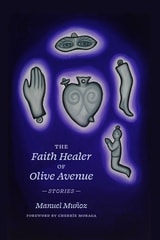
The Faith Healer of Olive Avenue
StoriesManuel Muñoz and Cherríe Moraga
Northwestern University Press, 2025
From the divergent paths of triplet brothers to a grieving father confronting his mistreatment of his son, these stories interweave a recurring cast of neighborhood characters, many of them in search of escape or release. Lauded for its empathetic portrayals of communities often ignored, The Faith Healer of Olive Avenue won a Whiting Award and an O. Henry Award; it was shortlisted for the Frank O’Connor International Short Story Award as one of the best collections published in English worldwide. A new foreword by author and activist Cherríe Moraga gives testament to Muñoz’s status as “the cartographer of a people.”
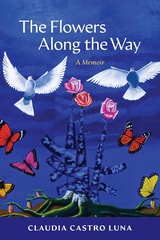
The Flowers Along the Way
A MemoirClaudia Castro Luna
Northwestern University Press, 2026
Passionately demonstrating the dormant trauma of political violence and the redemption waiting beyond it
From El Salvador’s lush countryside to the streets of Oakland, California, a young mother wrestles with the intersecting forces of memory, history, and language in order to chart a new path for herself and her growing family. Fleeing political unrest and civil war violence in El Salvador, fourteen-year-old Claudia Castro Luna arrived in the United States with her family in 1981. Two decades later, holding her two-year-old and pregnant with her second child, she survives a public shooting by hiding behind shrubs in front of her house in Oakland. This event unleashes disorienting and traumatic memories, plunging her into a journey of discovery as she grapples with PTSD, recovers family stories, and begins to make sense of all that was torn asunder within her by the experiences of war and emigration. Beauty, longing, fear, and joy entwine in this powerful story of love, self-determination, and the search for home.
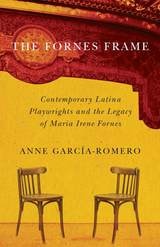
The Fornes Frame
Contemporary Latina Playwrights and the Legacy of Maria Irene FornesAnne García-Romero
University of Arizona Press, 2016
In The Fornes Frame: Contemporary Latina Playwrights and the Legacy of Maria Irene Fornes, Anne García-Romero considers the work of five award-winning Latina playwrights in the early twenty-first century, offering her unique perspective as a theatre studies scholar who is also a professional playwright.
The playwrights in this book include Pulitzer Prize–winner Quiara Alegría Hudes; Obie Award–winner Caridad Svich; Karen Zacarías, resident playwright at Arena Stage in Washington, DC; Elaine Romero, member of the Goodman Theatre Playwrights Unit in Chicago, Illinois; and Cusi Cram, company member of the LAByrinth Theater Company in New York City.
Using four key concepts—cultural multiplicity, supernatural intervention, Latina identity, and theatrical experimentation—García-Romero shows how these playwrights expand past a consideration of a single culture toward broader, simultaneous connections to diverse cultures. The playwrights also experiment with the theatrical form as they redefine what a Latina play can be. Following Fornes’s legacy, these playwrights continue to contest and complicate Latina theatre.
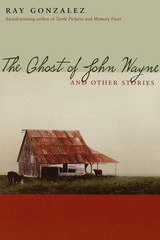
The Ghost of John Wayne
and Other StoriesRay Gonzalez
University of Arizona Press, 2001
The vast Texas borderland is a place divided, a land of legends and lies, sanctification and sinfulness, history and amnesia, haunted by the ghosts of the oppressed and the forgotten, who still stir beneath the parched fields and shimmering blacktops. It is a realm filled with scorpion eaters and mescal drinkers, cowboys and Indians, Anglos and Chicanos, spirit horses and beat-up pickups, brujos and putas, aching passion and seething rage, apparitions of the Virgin and bodies in the Rio Grande.
In his first collection of short fiction, award-winning poet, editor, and anthologist Ray Gonzalez powerfully evokes both the mystery and the reality of the El Paso border country where he came to manhood.
Here, in a riverbed filled with junked cars and old bones, a young boy is given a dark vision of a fiery future. Under the stones of the Alamo, amid the gift shops and tour buses, the wraiths of fallen soldiers cry out to be remembered. By an ancient burial site at the bottom of a hidden canyon, two lovers come face to face with their own dreams and fears.
In these stories, Ray Gonzalez is a literary alchemist, blending contemporary culture with ancient tradition to give a new voice to the peoples of the border.
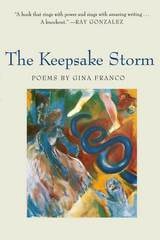
The Keepsake Storm
Gina Franco
University of Arizona Press, 2004
Kathryn is near the end of her life and is losing her memories: travels, husbands, a storm of keepsakes. As Gina Franco unleashes that storm and as Kathryn's flood of memories washes over us, we know at once that we are in the hands of a truly gifted poet. "The Keepsake Storm" is the culmination of a verse cycle that probes the depths of the heart—a meditation on the meaning of life in a difficult world. Drawing on a rich tradition of storytelling in Latino literature, Franco explores the transformative power of compassion as she addresses themes of cultural alienation, lost family roots, and the uncertain resiliency of the self. In writing that blends rapture, vision, and mystery, Franco calls on a multiplicity of voices and a prodigious command of forms to explore the underlying rhythms of life, finding poetry even in the imperfect transmissions of e-mail:
"I was happy to get your letter. I had a rough day.
My step-mom had a breakdown and is in a hospitol.
I don't understand all the why's of it. She has paranoia
scetsafrinia. (and I know that is spelled totally
wrong). I don't blame myself I just didn't see it coming."
By reaffirming the power of self-awareness, history, and place, Franco reaches out to all who struggle to find meaning in times of trouble or self-doubt. The Keepsake Storm is a personal journey through many lives that is nothing less than a celebration—and a reassessment—of American consciousness.
The King of Lighting Fixtures
StoriesDaniel A. Olivas
University of Arizona Press, 2017
The characters here represent all walks of L.A. life—from Satan’s reluctant Craigslist roommate to a young girl coping with trauma at her brother’s wake—and their tales ebb and flow among various styles, including magical realism, social realism, and speculative fiction. Like a jazz album, they glide and bop, tease and illuminate, sadden and hearten as they navigate effortlessly from meta to fabulist, from flash fiction to longer, more complex narratives.
These are literary sketches of a Los Angeles that will surprise, connect, and disrupt readers wherever they may live.
The Last Tortilla
and Other StoriesSergio Troncoso
University of Arizona Press, 1999
Writing in a straightforward, light-handed style reminiscent of Grace Paley and Raymond Carver, he spins charming tales that reflect his experiences in two worlds. Troncoso's El Paso is a normal town where common people who happen to be Mexican eat, sleep, fall in love, and undergo epiphanies just like everyone else. His tales are coming-of-age stories from the Mexican-American border, stories of the working class, stories of those coping with the trials of growing old in a rapidly changing society. He also explores New York with vignettes of life in the big city, capturing its loneliness and danger.
Beginning with Troncoso's widely acclaimed story "Angie Luna," the tale of a feverish love affair in which a young man rediscovers his Mexican heritage and learns how much love can hurt, these stories delve into the many dimensions of the human condition. We watch boys playing a game that begins innocently but takes a dangerous turn. We see an old Anglo woman befriending her Mexican gardener because both are lonely. We witness a man terrorized in his New York apartment, taking solace in memories of lost love. Two new stories will be welcomed by Troncoso's readers. "My Life in the City" relates a transplanted Texan's yearning for companionship in New York, while "The Last Tortilla" returns to the Southwest to explore family strains after a mother's death—and the secret behind that death. Each reflects an insight about the human heart that has already established the author's work in literary circles.
Troncoso sets aside the polemics about social discomfort sometimes found in contemporary Chicano writing and focuses instead on the moral and intellectual lives of his characters. The twelve stories gathered here form a richly textured tapestry that adds to our understanding of what it is to be human.
The Latinx Files
Race, Migration, and Space AliensMatthew David Goodwin
Rutgers University Press, 2021
The Life Assignment
Ricardo Alberto Maldonado
Four Way Books, 2020
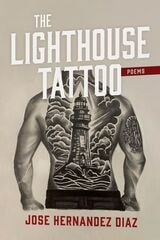
The Lighthouse Tattoo
PoemsJose Hernandez Diaz
Acre Books, 2026
In his fourth full-length collection, Jose Hernandez Diaz explores the first-generation Mexican American experience in nuanced linear verse, avant-garde offerings, and deadpan absurdist prose poems.
The Lighthouse Tattoo features plainspoken pieces that reveal the Latinx experience through the lens of a socially conscious contrarian in work that melds the quotidian and the profound. Also included, of course, are experimental prose poems in the signature style and voice that contributed to the meteoric rise of this unique artist. Invoking James Tate, Gabriel García Márquez, Salvador Dalí, Pablo Picasso, Albert Camus, Marosa di Giorgio, and others, Hernandez Diaz cements his place in both the poetic and surrealist traditions.
Even as it unravels mysteries and explores the strange—zebras in a zoo on the moon or English dragons on the Pacific Coast Highway—The Lighthouse Tattoo shines its light on the complex emotions of a seasoned Latinx poet. In this extraordinary volume, the titular tattoo itself becomes evidence of a trauma survived, an apt metaphor for the book as a whole. As one speaker says, “I’m trapped inside of this prose poem, but I don’t want to get out. It's nice and cozy in here. I’m invincible.”
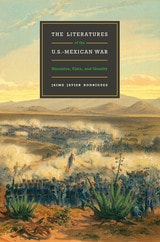
The Literatures of the U.S.-Mexican War
Narrative, Time, and IdentityBy Jaime Javier Rodríguez
University of Texas Press, 2010
The literary archive of the U.S.-Mexican War (1846–1848) opens to view the conflicts and relationships across one of the most contested borders in the Americas. Most studies of this literature focus on the war's nineteenth-century moment of national expansion. In The Literatures of the U.S.-Mexican War, Jaime Javier Rodríguez brings the discussion forward to our own moment by charting a new path into the legacies of a military conflict embedded in the cultural cores of both nations.
Rodríguez's groundbreaking study moves beyond the terms of Manifest Destiny to ask a fundamental question: How do the war's literary expressions shape contemporary tensions and exchanges among Anglo Americans, Mexicans, and Mexican Americans. By probing the war's traumas, anxieties, and consequences with a fresh attention to narrative, Rodríguez shows us the relevance of the U.S.-Mexican War to our own era of demographic and cultural change. Reading across dime novels, frontline battle accounts, Mexican American writings and a wide range of other popular discourse about the war, Rodríguez reveals how historical awareness itself lies at the center of contemporary cultural fears of a Mexican "invasion," and how the displacements caused by the war set key terms for the ways Mexican Americans in subsequent generations would come to understand their own identities. Further, this is also the first major comparative study that analyzes key Mexican war texts and their impact on Mexico's national identity.
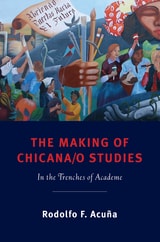
The Making of Chicana/o Studies
In the Trenches of AcademeAcuña, Rodolfo F
Rutgers University Press, 2011
The Making of Chicana/o Studies traces the philosophy and historical development of the field of Chicana/o studies from precursor movements to the Civil Rights era to today, focusing its lens on the political machinations in higher education that sought to destroy the discipline. As a renowned leader, activist, scholar, and founding member of the movement to establish this curriculum in the California State University system, which serves as a model for the rest of the country, Rodolfo F. Acuña has, for more than forty years, battled the trend in academia to deprive this group of its academic presence.
The book assesses the development of Chicana/o studies (an area of studies that has even more value today than at its inception)--myths about its epistemological foundations have remained uncontested. Acuña sets the record straight, challenging those in the academy who would fold the discipline into Latino studies, shadow it under the dubious umbrella of ethnic studies, or eliminate it altogether.
Building the largest Chicana/o studies program in the nation was no easy feat, especially in an atmosphere of academic contention. In this remarkable account, Acuña reveals how California State University, Northridge, was instrumental in developing an area of study that offers more than 166 sections per semester, taught by 26 tenured and 45 part-time instructors. He provides vignettes of successful programs across the country and offers contemporary educators and students a game plan--the mechanics for creating a successful Chicana/o studies discipline--and a comprehensive index of current Chicana/o studies programs nationwide.
Latinas/os, of which Mexican Americans are nearly seventy percent, comprise a complex sector of society projected to be just shy of thirty percent of the nation's population by 2050. The Making of Chicana/o Studies identifies what went wrong in the history of Chicana/o studies and offers tangible solutions for the future.

The Many Deaths of Inocencio Rodriguez
Iliana Rocha
Tupelo Press, 2022
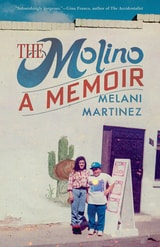
The Molino
A MemoirMelani Martinez
University of Arizona Press, 2024
Set in one of Tucson’s first tamal and tortilla factories, The Molino is a hybrid memoir that reckons with one family’s loss of home, food, and faith.
Weaving together history, culture, and Mexican food traditions, Melani Martinez shares the story of her family’s life and work in the heart of their downtown eatery, El Rapido. Opened by Martinez’s great-grandfather, Aurelio Perez, in 1933, El Rapido served tamales and burritos to residents and visitors to Tucson’s historic Barrio Presidio for nearly seventy years. For the family, the factory that bound them together was known for the giant corn grinder churning behind the scenes—the molino. With clear eyes and warm humor, Martinez documents the work required to prepare food for others, and explores the heartbreaking aftermath of gentrification that forces the multigenerational family business to close its doors.
The Molino is also Martinez’s personal story—that of a young Tucsonense coming of age in the 1980s and ’90s. As a young woman she rejects the work in her father’s popular kitchen, but when the business closes, her world shifts and the family disbands. When she finds her way back home, the tortillería’s iconic mural provides a gateway into history and ruin, ancestry and sacrifice, industrial myth and artistic incarnation—revealing a sacred presence still alive in Tucson.
A must-read for foodies, history lovers, and anyone searching for spiritual truth in the desert, this is a story of belonging and transformation in the borderlands.
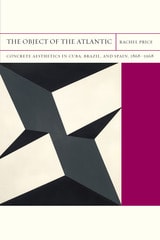
The Object of the Atlantic
Concrete Aesthetics in Cuba, Brazil, and Spain, 1868–1968Rachel Price
Northwestern University Press, 2014
The Object of the Atlantic is a wide-ranging study of the transition from a concern with sovereignty to a concern with things in Iberian Atlantic literature and art produced between 1868 and 1968. Rachel Price uncovers the surprising ways that concrete aesthetics from Cuba, Brazil, and Spain drew not only on global forms of constructivism but also on a history of empire, slavery, and media technologies from the Atlantic world. Analyzing Jose Marti’s notebooks, Joaquim de Sousandrade’s poetry, Ramiro de Maeztu’s essays on things and on slavery, 1920s Cuban literature on economic restructuring, Ferreira Gullar’s theory of the “non-object,” and neoconcrete art, Price shows that the turn to objects—and from these to new media networks—was rooted in the very philosophies of history that helped form the Atlantic world itself.
The Politics of Privacy in Contemporary Native, Latinx, and Asian American Metafictions
Colleen G. Eils
The Ohio State University Press, 2020
Eils breaks strict disciplinary silos by putting visibility/surveillance studies, ethnic studies, and narrative studies in conversation with one another. Eils also puts texts in the Native, Latinx, and Asian American literary canon in conversation with each other. She focuses on texts by Viet Thanh Nguyen, David Treuer, Monique Truong, Rigoberto González, Nam Le, and Stephen Graham Jones that call into question our positions as readers and critics. In deliberately and self-consciously evading readers through the form of their fiction, these writers seize privacy as a political tool for claiming and wielding power in both representational and material registers.
The Real Horse
PoemsFarid Matuk
University of Arizona Press, 2018
Offering a handbook on the possibilities of the verse line, this collection is precise in its figuring, searching in its intellect, and alert in its music. Here lyric energy levitates into constellations that hold their analytic composure, inviting readers into a shared practice of thinking and feeling that interrogates the confounding intersections of gender, race, class, and national status not as abstract concepts but as foundational intimacies.
Matuk’s interrogations of form cut a path through the tangle of a daughter’s position as a natural-born female citizen of the “First World” and of the poet’s position as a once-undocumented immigrant of mixed ethnicity whose paternity is unavoidably implicated in patriarchy. Rejecting nostalgia for homelands, notions of embodied value (self-made or otherwise), and specious ideas of freedom, these luminously multifaceted poem sequences cast their lot with the lyric voice, trusting it to hold a space where we might follow the child’s ongoing revolution against the patrimony of selfhood and citizenship.
The Region of Lost Names
Fred Arroyo
University of Arizona Press, 2008
Ernest is searching for a place where he can live beyond his past. His family has returned to Puerto Rico, and Ernest remains in the States, desiring only distance from his memories of childhood displacement and work, his parents’ tumultuous relationship, and his own love for Magdalene. Magdalene, too, looks to move beyond her memories as she follows Ernest’s family home, seeking resolution to her mother’s hurtful secrets, her father’s unknown identity, and her love for Ernest.
As Ernest moves through the fields of Michigan, as Magdalene traverses the jungles of Puerto Rico and the shores of the Caribbean, they discover that their dreams and identities are linked within the framework of their families and their pasts. Together, Ernest and Magdalene must come to terms with the secrets and mistakes made by the previous generation, the histories of disloyalty and abandonment, of secrecy and sorrow.
Their struggles take place in a region of lost names, where loves and memories are banished and found. Fred Arroyo writes a story in two voices, following Ernest and Magdalene by turns in prose that is elegant and lyrical. His words evoke another world lush with the scent of salt spray, the taste of mangoes, and the rush of leaves, alive with characters whose ardors and pathos are achingly real. Arroyo explores the ebb and flow between past and present and themes that are enduring. Ultimately, Ernest and Magdalene must live with more than their memories; they must rediscover the intimacies of the region of lost names.
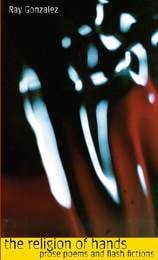
The Religion of Hands
Prose Poems and Flash FictionsRay Gonzalez
University of Arizona Press, 2005
The Religion of Hands does not foster sleep. Look quickly and you will catch the hint of a fox streaking in front of your car’s headlights at night. Look more carefully out your bedroom window and you may see your life going by, lost loved ones waving hello.
"Who were you when the stars were misinterpreted as the fingertips of God?"
Ray Gonzalez blends symbolic play with lyrical beauty as he works from a vast and complex palette to infuse popular culture with myth. The Religion of Hands is imbued with magical realism: a suffocating dream of tamales, mysterious reptilian allusions, a man who "finds God walking down the stairs to hand him an old, tattered phonebook from the year he was born." It offers strange prophecies: "A steady vegetation will grow across the empire as more homeboys are killed in drive-bys. . . . Microscopic scratches on an old vinyl record will form a message discovered in twenty more years when the album is bought at a garage sale." And in 14 flash fictions, it tells of a tiny old man kept in a glass jar, an accordion stored in an old family trunk, tales of sharks and bandits. The religion of hands has its own unspoken sacraments. "The fingers take over, teaching whoever holds the moment that the rapid weight of the open hands is a dangerous way to live."
Seamlessly, effortlessly, multi-dexterously, Ray Gonzalez spins words that speak our very dreams.
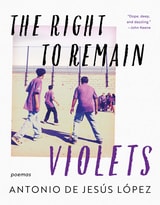
The Right to Remain Violets
poemasAntonio De Jesús López
University of Arizona Press, 2027
The Right to Remain Violets is an electrifying poetry collection that reimagines the language of policing, public education, and state surveillance to illuminate the lived realities of Black and Brown youth in East Palo Alto—a city shaped by redlining, freeway expansion, and decades of over-policing. Blending documentary poetics with hip-hop cadence and Catholic liturgy, Antonio De Jesús López transforms transcripts, municipal documents, and legal language into a powerful form of witness. These poems trace how children are drafted into systems of surveillance and criminalization, even as they search for joy and solidarity amid Silicon Valley’s contrasts of wealth and dispossession.
Inventive and emotionally resonant, the collection spans sonnets, sestinas, hip-hop, and prayer, insisting that language can both indict and heal. López brings his experiences as an award-winning poet, scholar, and former mayor of East Palo Alto to each poem. At once elegy and refusal, The Right to Remain Violets speaks to readers of documentary poetics, social justice literature, and those who believe in the radical importance of protecting childhood in an America reckoning with itself.

The Sanchez Family
Mexican American High School and Collegiate Wrestlers from Cheyenne, WyominJorge Iber
University of Wyoming Press, 2025
The first members of this particular Sanchez clan arrived in Wyoming during the early decades of the twentieth century. The first-generation American grandchildren of these families—Gilbert, David, Arthur, and Ray—used wrestling to radically alter their social and economic status by attending college with athletic scholarships, graduating, and moving on to professional, middle-class careers. Subsequent generations of the family followed their fathers and uncles to the mats at various institutions, also going on to earn degrees and enter professional occupations. Indeed, Iber contends that wrestling became the family’s “business,” the mechanism by which the Sanchezes extricated themselves from Cheyenne’s working class.
Revealing a previously unstudied aspect of Mexican American life in the state, The Sanchez Family sheds light on another vehicle for the educational, social, and economic advancement of Latinos in other parts of the United States. The first book to examine the role of wrestling in the lives of Mexican Americans, it serves as a foundational text for Latino studies of sports and constructing racial counterscripts.
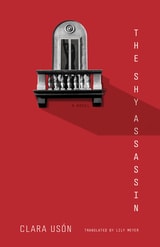
The Shy Assassin
A NovelClara Usón; translated from Spanish by Lily Meyer
Vanderbilt University Press, 2025
In September 1977, Sandra Mozarowsky—a seventeen-year-old Spanish erotic film actress and purported lover of King Juan Carlos I—died after leaping from her fourth-floor balcony in Madrid. The mysterious circumstances surrounding her death drew immediate public interest and generated conspiracy theories. Was her death a suicide? A covert murder? A cry for help? In The Shy Assassin, award-winning Spanish novelist Clara Usón uses the tragic death of Mozarowsky to provide a powerful philosophical meditation on suicide and the turbulent years of the Spanish transition to democracy. Playfully drawing upon the work of philosophers like Ludwig Wittgenstein and Jean-Paul Sartre, Usón weaves together her own experiences as a rebellious teenager with those of Mozarowsky with great power and emotion. Winner of the prestigious Sor Juana Inés de la Cruz Prize, Usón’s novel is a funny, provocative, and deeply entertaining look at Spanish culture during a time of historic political and cultural change.