Results by title
78 books match the query 'Humanism' and 13 start with t
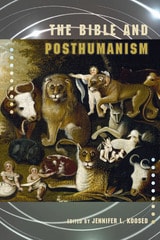
The Bible and Posthumanism
Jennifer L. Koosed
SBL Press, 2014
What does it mean, and what should it mean to be human?
In this collection of essays, scholars place the philosophies and theories of animal studies and posthumanism into conversation with biblical studies. Authors cross and disrupt boundaries and categories through close readings of stories where the human body is invaded, possessed, or driven mad. Articles explore the ethics of the human use of animals and the biblical contributions to the question. Other essays use the image of lions—animals that appear not only in the wild, but also in the Bible, ancient Near Eastern texts, and philosophy—to illustrate the potential these theories present for students of the Bible. Contributors George Aichele, Denise Kimber Buell, Benjamin H. Dunning, Heidi Epstein, Rhiannon Graybill, Jennifer L. Koosed, Eric Daryl Meyer, Stephen D. Moore, Hugh Pyper, Robert Paul Seesengood, Yvonne Sherwood, Ken Stone, and Hannah M. Strømmen present an open invitation for further work in the field of posthumanism.
Features:
- Coverage of texts that explore the boundaries between animal, human, and divinity
- Discussion of the term posthumanism and how it applies to biblical studies
- Essays engage Derrida, Foucault, Wolfe, Lacan, Žižek, Singer, Haraway, and others
The Celebration of Death in Contemporary Culture
Dina Khapaeva
University of Michigan Press, 2017
This book links the mounting demand for images of violent death with dramatic changes in death-related social rituals. It offers a conceptual framework that connects observations of fictional worlds—including The Twilight Saga, The Vampire Diaries, and the Harry Potter series—with real-world sociocultural practices, analyzing the aesthetic, intellectual, and historical underpinnings of the cult of death. It also places the celebration of death in the context of a longstanding critique of humanism and investigates the role played by 20th-century French theory, posthumanism, transhumanism, and the animal rights movement in shaping the current antihumanist atmosphere.
This timely, thought-provoking book will appeal to scholars of culture, film, literature, anthropology, and American and Russian studies, as well as general readers seeking to understand a defining phenomenon of our age.

The Context of Self
A Phenomenological Inquiry Using Medicine as a ClueRichard M. Zaner
Ohio University Press, 1981
This study takes up the challenge presented to philosophy in a dramatic and urgent way by contemporary medicine: the phenomenon of human life. Initiated by a critical appreciation of the work of Hans Jonas, who poses that issue as well, the inquiry is brought to focus on the phenomenon of embodiment, using relevant medical writing to help elicit its concrete dimensions.
The explication of embodiment, aided by critical studies and inquiries into medical phenomena (autism, brain injury, terminal illness) make possible the development of the author’s original phenomenological theory of self, and its concrete relationships with the other self. This study attempts not only to show connections among the works of a number of thinkers in terms of central problems, but to demonstrate the mutual relevance of medicine and philosophy through concrete illustrations and analysis.
The Difference Aesthetics Makes
On the Humanities “After Man”Kandice Chuh
Duke University Press, 2019
The Later Works of John Dewey, Volume 5, 1925 - 1953
1929-1930, Essays, The Sources of a Science of Education, Individualism, Old and New, and Construction and CriticismJohn Dewey. Edited by Jo Ann Boydston
Southern Illinois University Press, 2008
With the exception of The Quest for Certainty (Volume 4) this fifth volume brings together Dewey’s writings for the 1929–1930 period.
During this time Dewey published 4 books and 50 articles on philosophical, educational, political, and social issues. His philosophical essays include “What Humanism Means to Me” and “What I Believe,” both of which express Dewey’s faith in man’s potentialities and intelligence, and a lively Journal of Philosophy exchange with Ernest Nagel, William Ernest Hocking, C. I. Lewis, and F. J. E. Woodbridge. Educational writings include The Sources of a Science of Education. The contents of this volume reflect Dewey’s increasing involvement in social and political problems.

The Legacy of Edward W. Said
William V. Spanos
University of Illinois Press, 2008
With the untimely death of Edward W. Said in 2003, various academic and public intellectuals worldwide have begun to reassess the writings of this powerful oppositional intellectual. Figures on the neoconservative right have already begun to discredit Said’s work as that of a subversive intent on slandering America’s benign global image and undermining its global authority. On the left, a significant number of oppositional intellectuals are eager to counter this neoconservative vilification, proffering a Said who, in marked opposition to the “anti-humanism” of the great poststructuralist thinkers who were his contemporaries--Jacques Derrida, Jean-Francois Lyotard, Jacques Lacan, Louis Althusser, and Michel Foucault--reaffirms humanism and thus rejects poststructuralist theory.
In this provocative assessment of Edward Said’s lifework, William V. Spanos argues that Said’s lifelong anti-imperialist project is actually a fulfillment of the revolutionary possibilities of poststructuralist theory. Spanos examines Said, his legacy, and the various texts he wrote--including Orientalism,Culture and Imperialism, and Humanism and Democratic Criticism--that are now being considered for their lasting political impact.

The Nature of Love, Volume 3
The Modern WorldIrving Singer
University of Chicago Press, 1987
"Irving Singer . . . has developed a method of historical analysis flexible enough to deal with all kinds of love, from Greek homosexual love in Plato, to the philia and agape of the New Testament, to the courtly love of medieval romance, to the Romantics, for whom love was magic. . . . [This] final volume brings us to the present. In 'The Modern World,' Singer offers readings of Freud, Proust, and Sartre, among others. He shows how their work was formed in reaction to the 19th-century ideal of 'merging' of the identities of lover and beloved. More often than not, the great modern writers portray love as impossible, as a field of failure and regret. . . . This masterpiece of critical thinking is a timely, eloquent, and scrupulous account of what, after all, still makes the world go round."—Thomas D'Evelyn, Christian Science Monitor
"This is the third of a three-volume history of the philosophy of love. It begins with Kierkegaard, Tolstoy, and Nietzsche in the nineteenth century and treats Freud, Proust, Bergson, D. H. Lawrence, G. B. Shaw, Santayana, Sartre, and others in the twentieth. Although the author's approach is primarily historical, he intersperses critical remarks throughout. Most of the major themes which are discussed by philosophers of love make their way into this history, including friendship, sexual love, and the distinction between love that is based on the value of the beloved and love that bestows value on the beloved. Singer devotes a number of pages to his own views on falling in love, being in love, and staying in love. . . . Singer's exposition is lucid and organized; his criticisms are insightful."—Ethics
"In this third volume of historical overview of the development of the Western conception of love, Singer uses writers, philosophers, and psychologists to provide the reader with an overview of love in the late 19th and 20th century. . . . Analyzing authors such as Tolstoy, Proust, D. H. Lawrence, and Shaw and philosophers such as Nietzsche, Kierkegaard, Sartre, and Santayana, as well as Freud, Singer . . . links each contributor's thoughts to the influence of previous writers and also provides some psycho-historical insight into their personal lives that might have been either a source or direct result of their views. In this final volume, Singer proceeds to look at not just the 'great men' influence but also provides a chapter overviewing scientific contributions to our understanding of love. . . . Singer's work is a significant contribution to understanding the social construction of important, abstract social and personal values. By tracing love through different historical periods through a variety of voices, Singer has created a rich history of the struggle between the ideal and the real, between the dreams of what love should provide and the reality of what relationships have been in each historical period. By personalizing the voice through psychohistorical analysis, Singer also provides insight into the shaping of ideas through the intimate struggles of the shapers."—Mark V. Chaffee, Contemporary Psychology
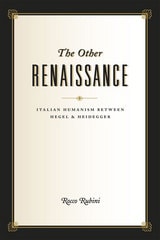
The Other Renaissance
Italian Humanism between Hegel and HeideggerRocco Rubini
University of Chicago Press, 2014
Bookended by Giambattista Vico and Antonio Gramsci, this strand of Renaissance-influenced philosophy rose in reaction to the major revolutions of the time in Italy, such as national unity, fascism, and democracy. Exploring the ways its thinkers critically assimilated the thought of their northern counterparts, Rubini uncovers new possibilities in our intellectual history: that antihumanism could have been forestalled, and that our postmodern condition could have been entirely different. In doing so, he offers an important new way of thinking about the origins of modernity, one that renews a trust in human dignity and the Western legacy as a whole.

The Philosophy of Paul Elmer More
The Ethical Basis of Life and LettersFolke Leander
University of Missouri Press, 2026
Folke Leander (1910-1981) was a prolific and internationally known Swedish philosopher. He is best known in the United States as an explicator of the New Humanism, an informal movement of literary and cultural criticism founded by Paul Elmer More (1864-1937) and Irving Babbitt (1865-1933).
Leander’s manuscript for The Philosophy of Paul Elmer More was completed in the early 1970s, but because of the academic environment at the time and the book’s special philosophical focus, Leander was unable to find a publisher. Since then, the work existed only as a typescript, a copy of which he left with Claes G. Ryn, his former student and collaborator, in the hope that one day in more favorable intellectual circumstances it might be published.
Leander is rare among the scholars of the New Humanism for his first-rate philosophical training, depth of insight, and clarity of expression. In The Philosophy of Paul Elmer More he grapples carefully and precisely with the most fundamental tenets of the New Humanism. Although very supportive of the movement, Leander provides essential critiques of its contentions—and even improves upon some of them in crucial respects. In a series of concise, limpid chapters, he explains and assesses such fundamental—but often hazily understood—Humanist concepts as the “inner check,” “naturalism,” and “the higher will.” The result is a book essential for anyone who wants to understand the New Humanism.
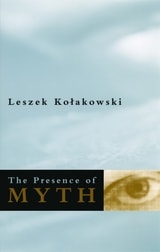
The Presence of Myth
Leszek Kolakowski
University of Chicago Press, 1989
With The Presence of Myth, Kolakowski demonstrates that no matter how hard man strives for purely rational thought, there has always been-and always will be-a reservoir of mythical images that lend "being" and "consciousness" a specifically human meaning.
"Kolakowski undertakes a philosophy of culture which extends to all realms of human intercourse—intellectual, artistic, scientific, and emotional. . . . [His] book has real significance for today, and may well become a classic in the philosophy of culture."—Anglican Theological Review
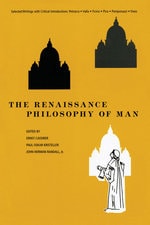
The Renaissance Philosophy of Man
Petrarca, Valla, Ficino, Pico, Pomponazzi, VivesEdited by Ernst Cassirer, Paul Oskar Kristeller, and John Herman Randall Jr.
University of Chicago Press, 1956
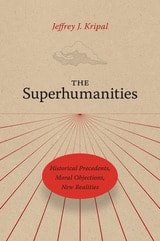
The Superhumanities
Historical Precedents, Moral Objections, New RealitiesJeffrey J. Kripal
University of Chicago Press, 2022
What would happen if we reimagined the humanities as the superhumanities? If we acknowledged and celebrated the undercurrent of the fantastic within our humanistic disciplines, entirely new cultural worlds and meanings would become possible. That is Jeffrey J. Kripal’s vision for the future—to revive the suppressed dimension of the superhumanities, which consists of rare but real altered states of knowledge that have driven the creative processes of many of our most revered authors, artists, and activists. In Kripal’s telling, the history of the humanities is filled with precognitive dreams, evolving superhumans, and doubled selves. The basic idea of the superhuman, for Kripal, is at the core of who and what the human species has tried to become over millennia and around the planet.
After diagnosing the basic malaise of the humanities—that the truth must be depressing—Kripal shows how it can all be done differently. He argues that we have to decolonize reality itself if we are going to take human diversity seriously. Toward this pluralist end, he engages psychoanalytic, Black critical, feminist, postcolonial, queer, and ecocritical theory. He works through objections to the superhumanities while also recognizing the new realities represented by the contemporary sciences. In doing so, he tries to move beyond naysaying practices of critique toward a future that can embrace those critiques within a more holistic view—a view that recognizes the human being as both a social-political animal as well as an evolved cosmic species that understands and experiences itself as something super.
Transhumanism
Evolutionary Futurism and the Human Technologies of UtopiaAndrew Pilsch
University of Minnesota Press, 2017
Transhumanism posits that humanity is on the verge of rapid evolutionary change as a result of emerging technologies and increased global consciousness. However, this insight is dismissed as a naive and controversial reframing of posthumanist thought, having also been vilified as “the most dangerous idea in the world” by Francis Fukuyama. In this book, Andrew Pilsch counters these critiques, arguing instead that transhumanism’s utopian rhetoric actively imagines radical new futures for the species and its habitat.
Pilsch situates contemporary transhumanism within the longer history of a rhetorical mode he calls “evolutionary futurism” that unifies diverse texts, philosophies, and theories of science and technology that anticipate a radical explosion in humanity’s cognitive, physical, and cultural potentialities. By conceptualizing transhumanism as a rhetoric, as opposed to an obscure group of fringe figures, he explores the intersection of three major paradigms shaping contemporary Western intellectual life: cybernetics, evolutionary biology, and spiritualism. In analyzing this collision, his work traces the belief in a digital, evolutionary, and collective future through a broad range of texts written by theologians and mystics, biologists and computer scientists, political philosophers and economic thinkers, conceptual artists and Golden Age science fiction writers. Unearthing the long history of evolutionary futurism, Pilsch concludes, allows us to more clearly see the novel contributions that transhumanism offers for escaping our current geopolitical bind by inspiring radical utopian thought.