69 books match the query 'Indiana' and 15 start with t

cover of The Blue Guide to Indiana

The Blue Guide to Indiana

Michael Martone

University of Alabama Press, 2001

An ersatz travel book for the Hoosier State

The master of the nearly true is back with The Blue Guide to Indiana, an ersatz travel book for the Hoosier State. Michael Martone, whose trademark is the blurring of the lines between fact and fiction, has created an Indiana that almost is, a landscape marked by Lover's Lane franchises and pharmaceutical drug theme parks. Visit the Trans-Indiana Mayonnaise Pipeline and the Field of Lightbulbs. Learn about Our Lady of the Big Hair and Feet or the history of the License Plate Insurrection of 1979. Let Martone guide you through every inch of the amazing state that is home to the Hoosier Infidelity Resort Area, the National Monument for Those Killed by Tornadoes in Trailer Parks and Mobile Home Courts, and the Annual Eyeless Fish Fry. All your questions will be answered, including many you never thought to ask (like: "What's a good recipe for Pork Cake?").

[more]
cover of The Carter Journals: Time Travels in Early U.S. History

The Carter Journals

Time Travels in Early U.S. History

Shane Phipps

Indiana Historical Society Press, 2014

When fourteen-year-old Cody Carter’s grandfather gives him a box of dusty leather journals written by their Carter ancestors, even the history-loving Cody could not have predicted the adventure he was about to take. Journal by journal, Cody is physically transported back in time to experience the lives of Carters on the frontier in North Carolina, Tennessee, and Indiana as the family moved ever westward in the eighteenth and nineteenth centuries. He hunts with Daniel Boone, huddles in a frontier fort under siege, makes friends with Native Americans in the Indiana Territory, operates a lock on the Whitewater Canal, hides slaves on the Underground Railroad, and experiences defeat at the Battle of Corydon. Ultimately, Cody confronts the difficult questions of war, westward expansion, and slavery while living the history of everyday people. Written by an eighth-grade history teacher determined to bring the past to life for his students, The Carter Journals reminds us that history is all around us---and that we daily make history of our own.
[more]
cover of The Geography of Hate: The Great Migration through Small-Town America

The Geography of Hate

The Great Migration through Small-Town America

Jennifer Sdunzik

University of Illinois Press, 2023

The uncomfortable truths that shaped small communities in the midwest

During the Great Migration, Black Americans sought new lives in midwestern small towns only to confront the pervasive efforts of white residents determined to maintain their area’s preferred cultural and racial identity. Jennifer Sdunzik explores this widespread phenomenon by examining how it played out in one midwestern community. Sdunzik merges state and communal histories, interviews and analyses of population data, and spatial and ethnographic materials to create a rich public history that reclaims Black contributions and history. She also explores the conscious and unconscious white actions that all but erased Black Americans--and the terror and exclusion used against them--from the history of many midwestern communities.

An innovative challenge to myth and perceived wisdom, The Geography of Hate reveals the socioeconomic, political, and cultural forces that prevailed in midwestern towns and helps explain the systemic racism and endemic nativism that remain entrenched in American life.

[more]
cover of The History of Indiana Law

The History of Indiana Law

David J. Bodenhamer

Ohio University Press, 2006

Long regarded as a center for middle-American values, Indiana is also a cultural crossroads that has produced a rich and complex legal and constitutional heritage. The History of Indiana Law traces this history through a series of expert articles by identifying the themes that mark the state’s legal development and establish its place within the broader context of the Midwest and nation.

The History of Indiana Law explores the ways in which the state’s legal culture responded to—and at times resisted—the influence of national legal developments, including the tortured history of race relations in Indiana. Legal issues addressed by the contributors include the Indiana constitutional tradition, civil liberties, race, women’s rights, family law, welfare and the poor, education, crime and punishment, juvenile justice, the role of courts and judiciary, and landmark cases. The essays describe how Indiana law has adapted to the needs of an increasingly complex society.

The History of Indiana Law is an indispensable reference and invaluable first source to learn about law and society in Indiana during almost two centuries of statehood.
[more]
cover of The House of the Singing Winds: The Life and Work of T. C. Steele

The House of the Singing Winds

The Life and Work of T. C. Steele

Rachel Berenson Perry

Indiana Historical Society Press, 2016

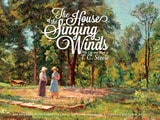
First published in 1966, this account of the life and work of T.C. Steele, one of Indiana's most renowned artists, has become a much-sought-after classic. For this reissue, sixty-two of the book's seventy-six illustrations, including all ten color plates, have been newly photographed and reproduced according to the highest modern standards. The text, unchanged from the first edition, includes a brief biography by the painter's grandson, Theodore L. Steele; a poetic memoir of Steele's last Brown County years by Selma N. Steele; and an appreciation of Steele's work by art historian Wilbur D. Peat.
[more]
cover of The Kimberlins Go to War: A Union Family in Copperhead Country

The Kimberlins Go to War

A Union Family in Copperhead Country

Michael B. Murphy

Indiana Historical Society Press, 2016
As July 7, 1861, dawned, war was in the air in Lexington, Indiana. The county seat of Scott County was abuzz with the latest news of the southern rebellion. The _Madison Daily and Evening Courier_ told of skirmishes between Federal troops and “secesh” forces at Harpers Ferry and Falling Waters, Virginia. Closer to home, word had come that William A. Sanderson had organized a new outfit, the Twenty-Third Indiana, and was recruiting throughout the Second Congressional District for men to join the regiment. Although Scott County had been rife with sympathy and support for the South, answering the call to serve the Union cause from the county were Jacob T. Kimberlin, a twenty-one-year-old farmhand; his older brother, John J.; and his cousins, William H. H. Kimberlin, Benjamin F. Kimberlin, and James Stark. These five young men could not have known at the time that none of them would ever again see their homes. They only knew that the Kimberlins were going to war. This is the story of the Kimberlin family that sent thirty-three fathers and sons, brothers and cousins, to fight for the Union during the Civil War. Ten family members were killed, wounded, or died of battlefield disease, a 30 percent casualty rate that is unmatched in recorded Scott County history. Of the 134 known deaths of Scott County soldiers, ten were members of the Kimberlin clan. Their feelings about the war come from forty letters to and from the battlefield that have survived to this day. The book examines such questions as: Were they fighting to save the Union or to free the slaves? How did they express grief over the loss of a brother? Did they keep up with their business and the women at home? And what did they think about “secesh” neighbors in southern Indiana who tried to undermine the Union?
[more]
cover of The Loyal West: Civil War and Reunion in Middle America

The Loyal West

Civil War and Reunion in Middle America

Matthew E. Stanley

University of Illinois Press, 2017

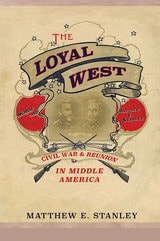
A free region deeply influenced by southern mores, the Lower Middle West represented a true cultural and political median in Civil War–era America. Here grew a Unionism steeped in the mythology of the Loyal West--a myth rooted in regional and racial animosities and the belief that westerners had won the war.

Matthew E. Stanley's intimate study explores the Civil War, Reconstruction, and sectional reunion in this bellwether region. Using the lives of area soldiers and officers as a lens, Stanley reveals a place and a strain of collective memory that was anti-rebel, anti-eastern, and anti-black in its attitudes--one that came to be at the forefront of the northern retreat from Reconstruction and toward white reunion. The Lower Middle West's embrace of black exclusion laws, origination of the Copperhead movement, backlash against liberalizing war measures, and rejection of Reconstruction were all pivotal to broader American politics. And the region's legacies of white supremacy--from racialized labor violence to sundown towns to lynching--found malignant expression nationwide, intersecting with how Loyal Westerners remembered the war.

A daring challenge to traditional narratives of section and commemoration, The Loyal West taps into a powerful and fascinating wellspring of Civil War identity and memory.
[more]
cover of The Miami Indians of Indiana: A Persistent People, 1654-1994

The Miami Indians of Indiana

A Persistent People, 1654-1994

Stewart Rafert

Indiana Historical Society Press, 1996
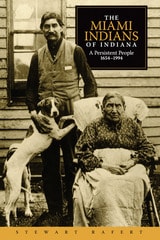
Now scattered in small communities in northern Indiana, the Eastern Miami Indians, once a well-known tribe, have lived in undeserved obscurity since the 1840s. In recent years they have become more visible as they have sought restoration of treaty rights and have revitalized their culture. The post-removal history of the Indiana Miami tribe is a rich texture of social, legal, and economic history, much enhanced by folklore and a rich series of photographic images. In The Miami Indians of Indiana: A Persistent People, 1654–1994, Rafert explores the history and culture of the Miami Indians.
[more]
cover of The Native Americans

The Native Americans

Elizabeth Glenn and Stewart Rafert

Indiana Historical Society Press, 2009

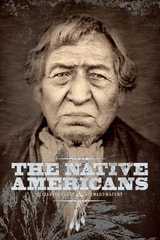
In the second volume of the IHS Press’s Peopling Indiana Series, anthropologist Elizabeth Glenn and ethnohistorian Stewart Rafert put readers in touch with the first people to inhabit the Hoosier state, exploring what it meant historically to be an Indian in this land and discussing the resurgence of native life in the state today. Many natives either assimilated into white culture or hid their Indian identity. World War II dramatically changed this scenario when Native Americans served in the U.S. military and on the home front. Afterward, Indians from many tribal lineages flocked to Indiana to find work. Along with Indiana's Miami and Potawatomi, they are creating a diverse Indian culture that enriches the lives of all Hoosiers.
[more]
cover of The New Politics of Pornography

The New Politics of Pornography

Donald Alexander Downs

University of Chicago Press, 1989

Fresh empirical evidence of pornography's negative effects and the resurgence of feminist and conservative critiques have caused local, state, and federal officials to reassess the pornography issue. In The New Politics of Pornography, Donald Alexander Downs explores the contemporary antipornography movement and addresses difficult questions about the limits of free speech. Drawing on official transcripts and extensive interviews, Downs recreates and analyzes landmark cases in Minneapolis and Indianapolis. He argues persuasively that both conservative and liberal camps are often characterized by extreme intolerance which hampers open policy debate and may ultimately threaten our modern doctrine of free speech. Downs concludes with a balanced and nuanced discussion of what First Amendment protections pornography should be afforded. This provocative and interdisciplinary work will interest students of political science, women's studies, civil liberties, and constitutional law.
[more]
cover of The People's Choice: Congressman Jim Jontz of Indiana

The People's Choice

Congressman Jim Jontz of Indiana

Ray Boomhower

Indiana Historical Society Press, 2012

This first-ever biography of Congressman Jim Jontz examines his remarkable long-shot political career and lifetime involvement in local, state, and national environmental issues. As a liberal Democrat (he preferred the terms progressive or populist) usually running in conservative districts, Jontz had political pundits predicting his defeat in every election only to see him celebrating another victory with his happy supporters, always clad in a scruffy plaid jacket with a hood from high school that he wore for good luck. “I always hope for the best and fight for the worst,” said Jontz. He won five terms as state representative for the Twentieth District (Benton, Newton, Warren, and White Counties), served two years in the Indiana Senate, and captured three terms in the U.S. Congress representing the sprawling Fifth Congressional District in northwestern Indiana that stretched from Lake County in the north to Grant County in the south. Jontz told a reporter that his political career had always “been based on my willingness and role as a spokesman for the average citizen.” In his career Jontz also led an unsuccessful campaign to stop the passage of the North American Free Trade Agreement with the Citizens Trade Campaign, helped protect the Endangered Species Act when it was under attack in the 1990s as director of the Endangered Species Coalition, campaigned to save old-growth forests as executive director of the Western Ancient Forest Campaign, and tried to foster progressive causes as president of the Americans for Democratic Action.
[more]
cover of The Quiet Hero: A Life of Ryan White

The Quiet Hero

A Life of Ryan White

Nelson Price

Indiana Historical Society Press, 2015

In 1985 the eyes of the world turned to the Hoosier State and the attempt by a thirteen-year-old Kokomo, Indiana, teenager to do what seemed to be a simple task—join his fellow classmates at Western Middle School in Russiaville, the school to which his Kokomo neighborhood was assigned. The teenager, Ryan White, however, had been diagnosed with Acquired Immune Deficiency Syndrome from contaminated blood-based products used to treat his hemophilia. “It was my decision,” White said, “to live a normal life, go to school, be with friends, and enjoying day to day activities. It was not going to be easy.” White's words were an understatement, to say the least. His wish to return to school was met with panic by parents and some school officials. The controversy about White and the quiet courage he and his mother, Jeanne, displayed in their battle to have him join his classmates is explored in the eleventh volume in the Indiana Historical Society Press’s Youth Biography Series. The Quiet Hero is written by Nelson Price, who wrote about White’s odyssey during his days as a reporter and columnist for the Indianapolis News. Price goes behind the scenes and brings to light stories and individuals who might have been lost in the media spotlight. After a nine-month court battle, White won the right to return to school, but with concessions. These were not enough for parents of twenty children, who responded by starting their own school. At school, White became the target of slurs and lies, and his locker was vandalized. Although the White family received support from citizens and celebrities around the world, particularly rock singer Elton John, the situation grew so controversial in Kokomo that they moved to Cicero, Indiana—a community that greeted them much differently. In Price’s book, White, who succumbed to his disease in 1990, comes across as a normal teenager who met an impossible situation with uncommon grace, courage, and wisdom. “It was difficult at times, to handle; but I tried to ignore the injustice, because I knew the people were wrong,” White said. “My family and I held no hatred for those people because we realized they were victims of their own ignorance.”
[more]
cover of There I Grew Up: Remembering Abraham Lincoln's Indiana Youth

There I Grew Up

Remembering Abraham Lincoln's Indiana Youth

William E. Bartelt

Indiana Historical Society Press, 2008

In 1859 Abraham Lincoln covered his Indiana years in one paragraph and two sentences of a written autobiographical statement that included the following: "We reached our new home about the time the State came into the union. It was a wild region, with many bears and other wild animals in the woods. There I grew up." William E. Bartelt uses annotation and primary source material to tell the history of Lincoln's Indiana years by those who were there. The book reveals, through the words of those who knew him, Lincoln's humor, compassion, oratorical skills and thirst for knowledge, and it provides an overview of Lincoln's Indiana experiences, his family, the community where the Lincolns settled and southern Indiana from 1816 to 1830.
[more]
cover of Thomas Taggart: Public Servant, Political Boss, 1856-1929

Thomas Taggart

Public Servant, Political Boss, 1856-1929

James Phillip Fadely

Indiana Historical Society Press, 1997

[more]
cover of Two-Moon Journey: The Potawatomi Trail of Death

Two-Moon Journey

The Potawatomi Trail of Death

Peggy King Anderson

Indiana Historical Society Press, 2018

Two Moon Journey tells the story of a young Potawatomi Indian named Simu-quah and her family and friends who were forced from their village at Twin Lakes, near Rochester, Indiana, where they had lived for generations, to beyond the Mississippi River in Kansas. Historically the journey is known as the Potawatomi Trail of Death. Like the real Potawatomi, Simu-quah would live forever with the vision of her home and the rest of the Twin Lakes village being burnt to the ground by the soldiers as she took her first steps to a distant and frightening westward land. She experiences the heat and exhaustion of endless days of walking; helps nurse sick children and the elderly in a covered wagon that was ill-smelling, hot, and airless; sleeps beside strange streams and caves—and turns from hating the soldiers to seeing them as people. In Kansas, as she planted corn seeds she had saved from her Indiana home, she turns away from the bitterness of removal and finds forgiveness, the first step in the journey of her new life in Kansas.
[more]