Results by title
54 books match the query 'Indians in literature' and 10 start with t
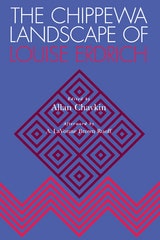
The Chippewa Landscape of Louise Erdrich
Allan Chavkin
University of Alabama Press, 1999
Louise Erdrich is arguably the most prolific and prominent contemporary writer of American Indian descent in North America today. Her novels and short stories have won great critical acclaim and are widely taught in American and world literature courses.
This collection of original ssays focuses on Erdrich's writings rooted in the Chippewa experience. Premier scholars of Native American literature investigate narrative structure, signs of ethnicity, the notions of luck and chance in Erdrich's narrative cosmology, her use of hunting metaphors, her efforts to counter stereotypes of American Indian women, her use of comedy in exploring American Indians' tragic past, her intentions underlying the process of revision in Love Medicine, and other subjects.
Including a variety of theoretical approaches, this book provides a comprehensive examination of Erdrich's work, making it more accessible to new readers and richer to those already familiar with her work.
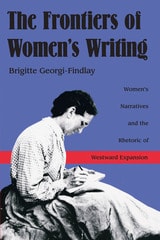
The Frontiers of Women's Writing
Women's Narratives and the Rhetoric of Westward ExpansionBrigitte Georgi-Findlay
University of Arizona Press, 1996
Brigitte Georgi-Findlay presents a range of writings that reflects the diversity of the western experience. Beginning with the narratives of Caroline Kirkland and other women of the early frontier, she reviews the diaries of the overland trails; letters and journals of the wives of army officers during the Indian wars; professional writings, focusing largely on travel, by women such as Caroline Leighton from the regional publishing cultures that emerged in the Far West during the last quarter of the century; and late-nineteenth- and early-twentieth-century accounts of missionaries and teachers on Indian reservations. Most of the writers were white, literate women who asserted their own kind of cultural authority over the lands and people they encountered. Their accounts are not only set in relation to a masculine frontier myth but also investigated for clues about their own involvement with territorial expansion. By exploring the various ways in which women writers actively contributed to and at times rejected the development of a national narrative of territorial expansion based on empire building and colonization, the author shows how their accounts are implicated in expansionist processes at the same time that they formulate positions of innocence and detachment.
Georgi-Findlay has drawn on American studies scholarship, feminist criticism, and studies of colonial discourse to examine the strategies of women's representation in writing about the West in ways that most theorists have not. She critiques generally accepted stereotypes and assumptions--both about women's writing and its difference of view in particular, and about frontier discourse and the rhetoric of westward expansion in general--as she offers a significant contribution to literary studies of the West that will challenge scholars across a wide range of disciplines.
The Heart as a Drum
Continuance and Resistance in American Indian PoetryRobin Riley Fast
University of Michigan Press, 2000
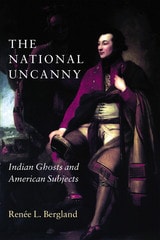
The National Uncanny
Indian Ghosts and American SubjectsRenée L. Bergland
Dartmouth College Press, 2000
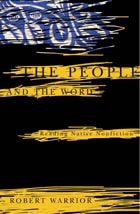
The People and the Word
Reading Native NonfictionRobert Warrior
University of Minnesota Press, 2005
Focusing on autobiographical writings and critical essays, as well as communally authored and political documents, The People and the Word explores how the Native tradition of nonfiction has both encompassed and dissected Native experiences. Warrior begins by tracing a history of American Indian writing from the eighteenth century to the late twentieth century, then considers four particular moments: Pequot intellectual William Apess’s autobiographical writings from the 1820s and 1830s; the Osage Constitution of 1881; narratives from American Indian student experiences, including accounts of boarding school in the late 1880s; and modern Kiowa writer N. Scott Momaday’s essay “The Man Made of Words,” penned during the politically charged 1970s. Warrior’s discussion of Apess’s work looks unflinchingly at his unconventional life and death; he recognizes resistance to assimilation in the products of the student print shop at the Santee Normal Training School; and in the Osage Constitution, as well as in Momaday’s writing, Warrior sees reflections of their turbulent times as well as guidance for our own.
Taking a cue from Momaday’s essay, which gives voice to an imaginary female ancestor, Ko-Sahn, Warrior applies both critical skills and literary imagination to the texts. In doing so, The People and the Word provides a rich foundation for Native intellectuals’ critical work, deeply entwined with their unique experiences.
Robert Warrior is professor of English and Native American studies at the University of Oklahoma. He is author of Tribal Secrets: Recovering American Indian Intellectual Traditions (Minnesota, 1994) and coauthor, with Paul Chaat Smith, of Like a Hurricane: The Indian Movement from Alcatraz to Wounded Knee.
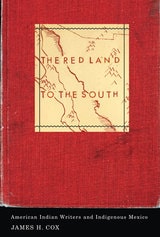
The Red Land to the South
American Indian Writers and Indigenous MexicoJames H. Cox
University of Minnesota Press, 2012
The forty years of American Indian literature taken up by James H. Cox—the decades between 1920 and 1960—have been called politically and intellectually moribund. On the contrary, Cox identifies a group of American Indian writers who share an interest in the revolutionary potential of the indigenous peoples of Mexico—and whose work demonstrates a surprisingly assertive literary politics in the era.
By contextualizing this group of American Indian authors in the work of their contemporaries, Cox reveals how the literary history of this period is far more rich and nuanced than is generally acknowledged. The writers he focuses on—Todd Downing (Choctaw), Lynn Riggs (Cherokee), and D’Arcy McNickle (Confederated Salish and Kootenai)—are shown to be on par with writers of the preceding Progressive and the succeeding Red Power and Native American literary renaissance eras.
Arguing that American Indian literary history of this period actually coheres in exciting ways with the literature of the Native American literary renaissance, Cox repudiates the intellectual and political border that has emerged between the two eras.
The Spiral of Memory
InterviewsJoy Harjo
University of Michigan Press, 1995

The Tutor'd Mind
Indian Missionary-Writers in Antebellum AmericaBernd C. Peyer
University of Massachusetts Press, 1997
In the view of the English colonists and their descendants, Indian converts to Christianity were expected to repudiate native traditions and affirm the superiority of European civilization, to serve as role models, and to spread the gospel far into the wilderness. Yet as Bernd C. Peyer shows, Indian missionaries did not always fulfill the expectations of those who trained them. Once the Indians recognized that conversion alone did not guarantee protection from discrimination, they devised a variety of strategies, theological as well as practical, to resist assimilation into the dominant white culture. Making effective use of their literacy and education, they called attention to the discrepancy between the Protestant ideals they had been taught and the Anglo-American practices to which native people were subjected.
By uncovering this subtext of dissent and resistance, Peyer at once alters and enriches our understanding of the evolution of the American Indian literary tradition.
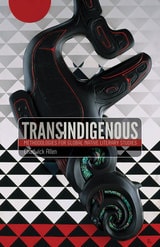
Trans-Indigenous
Methodologies for Global Native Literary StudiesChadwick Allen
University of Minnesota Press, 2012
What might be gained from reading Native literatures from global rather than exclusively local perspectives of Indigenous struggle? In Trans-Indigenous, Chadwick Allen proposes methodologies for a global Native literary studies based on focused comparisons of diverse texts, contexts, and traditions in order to foreground the richness of Indigenous self-representation and the complexity of Indigenous agency.
Through demonstrations of distinct forms of juxtaposition—across historical periods and geographical borders, across tribes and nations, across the Indigenous–settler binary, across genre and media—Allen reclaims aspects of the Indigenous archive from North America, Hawaii, Aotearoa New Zealand, and Australia that have been largely left out of the scholarly conversation. He engages systems of Indigenous aesthetics—such as the pictographic discourse of Plains Indian winter counts, the semiotics of Navajo weaving, and Maori carving traditions, as well as Indigenous technologies like large-scale North American earthworks and Polynesian ocean-voyaging waka—for the interpretation of contemporary Indigenous texts. The result is a provocative reorienting of the call for Native intellectual, artistic, and literary sovereignty that fully prioritizes the global Indigenous.
Tribal Secrets
Recovering American Indian Intellectual TraditionsRobert Allen Warrior
University of Minnesota Press, 1994