Results by title
57 books match the query 'Individual Director' and 12 start with t
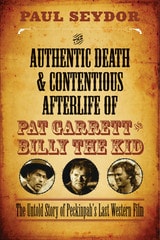
The Authentic Death and Contentious Afterlife of Pat Garrett and Billy the Kid
The Untold Story of Peckinpah's Last Western FilmPaul Seydor
Northwestern University Press, 2015
Long before Sam Peckinpah finished shooting his 1973 Western, Pat Garrett and Billy the Kid, there was open warfare between him and the studio. In this scrupulously researched new book Paul Seydor reconstructs the riveting history of a brilliant director fighting to preserve an artistic vision while wrestling with his own self‑destructive demons. Meticulously comparing the film five extant versions, Seydor documents why none is definitive, including the 2005 Special Edition, for which he served as consultant. Viewing Peckinpah’s last Western from a variety of fresh perspectives, Seydor establishes a nearly direct line from the book Garrett wrote after he killed Billy the Kid to Peckinpah’s film ninety-one years later and shows how, even with directors as singular as this one, filmmaking is a collaborative medium. Art, business, history, genius, and ego all collide in this story of a great director navigating the treacherous waters of collaboration, compromise, and commerce to create a flawed but enduringly powerful masterpiece.
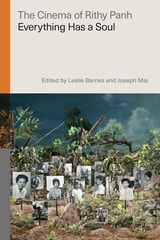
The Cinema of Rithy Panh
Everything Has a SoulLeslie Barnes
Rutgers University Press, 2022
Born in 1964, Cambodian filmmaker Rithy Panh grew up in the midst of the Khmer Rouge’s genocidal reign of terror, which claimed the lives of many of his relatives. After escaping to France, where he attended film school, he returned to his homeland in the late 1980s and began work on the documentaries and fiction films that have made him Cambodia’s most celebrated living director.
The fourteen essays in The Cinema of Rithy Panh explore the filmmaker’s unique aesthetic sensibility, examining the dynamic and sensuous images through which he suggests that “everything has a soul.” They consider how Panh represents Cambodia’s traumatic past, combining forms of individual and collective remembrance, and the implications of this past for Cambodia’s transition into a global present. Covering documentary and feature films, including his literary adaptations of Marguerite Duras and Kenzaburō Ōe, they examine how Panh’s attention to local context leads to a deep understanding of such major themes in global cinema as justice, imperialism, diaspora, gender, and labor.
Offering fresh takes on masterworks like The Missing Picture and S-21 while also shining a light on the director’s lesser-known films, The Cinema of Rithy Panh will give readers a new appreciation for the boundless creativity and ethical sensitivity of one of Southeast Asia’s cinematic visionaries.
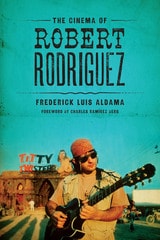
The Cinema of Robert Rodriguez
By Frederick Luis Aldama
University of Texas Press, 2014
Robert Rodriguez stands alone as the most successful U.S. Latino filmmaker today, whose work has single-handedly brought U.S. Latino filmmaking into the mainstream of twenty-first-century global cinema. Rodriguez is a prolific (eighteen films in twenty-one years) and all-encompassing filmmaker who has scripted, directed, shot, edited, and scored nearly all his films since his first breakout success, El Mariachi, in 1992. With new films constantly coming out and the launch of his El Rey Network television channel, he receives unceasing coverage in the entertainment media, but systematic scholarly study of Rodriguez’s films is only just beginning.
The Cinema of Robert Rodriguez offers the first extended investigation of this important filmmaker’s art. Accessibly written for fans as well as scholars, it addresses all of Rodriguez’s feature films through Spy Kids 4 and Machete Kills, and his filmmaking process from initial inspiration, to script, to film (with its myriad visual and auditory elements and choices), to final product, to (usually) critical and commercial success. In addition to his close analysis of Rodriguez’s work, Frederick Luis Aldama presents an original interview with the filmmaker, in which they discuss his career and his relationship to the film industry. This entertaining and much-needed scholarly overview of Rodriguez’s work shines new light on several key topics, including the filmmaker’s creative, low-cost, efficient approach to filmmaking; the acceptance of Latino films and filmmakers in mainstream cinema; and the consumption and reception of film in the twenty-first century.
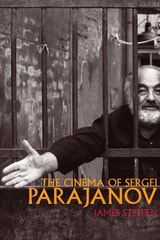
The Cinema of Sergei Parajanov
James Steffen
University of Wisconsin Press, 2013
The Cinema of Sergei Parajanov is the first English-language book on the director's films and the most comprehensive study of his work. James Steffen provides a detailed overview of Parajanov's artistic career: his identity as an Armenian in Georgia and its impact on his aesthetics; his early films in Ukraine; his international breakthrough in 1964 with Shadows of Forgotten Ancestors; his challenging 1969 masterpiece, The Color of Pomegranates, which was reedited against his wishes; his unrealized projects in the 1970s; and his eventual return to international prominence in the mid-to-late 1980s with The Legend of the Surami Fortress and Ashik-Kerib. Steffen also provides a rare, behind-the-scenes view of the Soviet film censorship process and tells the dramatic story of Parajanov's conflicts with the authorities, culminating in his 1973–77 arrest and imprisonment on charges related to homosexuality.
Ultimately, the figure of Parajanov offers a fascinating case study in the complicated dynamics of power, nationality, politics, ethnicity, sexuality, and culture in the republics of the former Soviet Union.
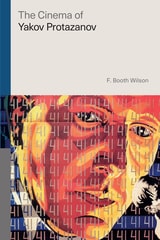
The Cinema of Yakov Protazanov
F. Booth Wilson
Rutgers University Press, 2024

The Films of Aleksandr Rou
Father of Soviet Fairy-Tale CinemaDeborah Allison
Intellect Books, 2026
More than fifty years after his death, the Soviet filmmaker, Aleksandr Rou, remains a cinematic icon in Russia and many other countries of the former Soviet Union and Eastern Europe. Dubbed “King of the Fairy Tales” and “The Main Storyteller of the Country,” he transformed the landscape of Soviet fantasy and fairy-tale cinema during a directorial career that stretched from 1938 to 1972.
From the heights of Stalinist propaganda cinema, through Khrushchev’s Thaw, and into the Brezhnev Stagnation era, Rou’s films celebrated and perpetuated the nation’s folkloric traditions while constantly refreshing them for new generations of young audiences. The book traces the developments of Rou’s work on fairy-tale film, providing cultural and technical contexts of production and analyzing the features that mark Rou’s personal style.
In English-speaking countries, Rou’s work remains relatively little known, having received only limited theatrical distribution in the West. With home entertainment now offering wider opportunities to discover his unique and exhilarating works, this book provides a timely introduction to the work of one of the world’s great masters of fairy-tale cinema.
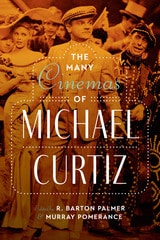
The Many Cinemas of Michael Curtiz
Edited by R. Barton Palmer and Murray Pomerance
University of Texas Press, 2018
Director Michael Curtiz was the mastermind behind some of the most iconic films of classical Hollywood—Casablanca, Yankee Doodle Dandy, The Sea Hawk, White Christmas, and Mildred Pierce, to name only a few. The most prolific and consistently successful Hollywood generalist with an all-embracing interest in different forms of narrative and spectacle, Curtiz made around a hundred films in an astonishing range of genres: action, biopics, melodramas/film noir, musicals, and westerns. But his important contributions to the history of American film have been overlooked because his broadly varied oeuvre does not present the unified vision of filmmaking that canonical criticism demands for the category of “auteur.”
Exploring his films and artistic practice from a variety of angles, including politics, gender, and genre, The Many Cinemas of Michael Curtiz sheds new light on this underappreciated cinematic genius. Leading film studies scholars offer fresh appraisals of many of Curtiz’s most popular films, while also paying attention to neglected releases of substantial historical interest, such as Noah’s Ark , Night and Day, Virginia City, Black Fury, Mystery of the Wax Museum, and Female. Because Curtiz worked for so long and in so many genres, this analysis of his work becomes more than an author study of a notable director. Instead, The Many Cinemas of Michael Curtiz effectively adds a major chapter to the history of Hollywood’s studio era, including its internationalism and the significant contributions of European émigrés.
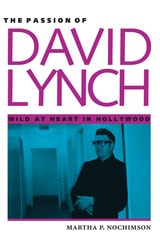
The Passion of David Lynch
Wild at Heart in HollywoodBy Martha P. Nochimson
University of Texas Press, 1997
Filmmaker David Lynch asserts that when he is directing, ninety percent of the time he doesn't know what he is doing. To understand Lynch's films, Martha Nochimson believes, requires a similar method of being open to the subconscious, of resisting the logical reductiveness of language. In this innovative book, she draws on these strategies to offer close readings of Lynch's films, informed by unprecedented, in-depth interviews with Lynch himself.
Nochimson begins with a look at Lynch's visual influences—Jackson Pollock, Francis Bacon, and Edward Hopper—and his links to Alfred Hitchcock and Orson Welles, then moves into the heart of her study, in-depth analyses of Lynch's films and television productions. These include Twin Peaks: Fire Walk with Me, Wild at Heart, Twin Peaks, Blue Velvet, Dune, The Elephant Man, Eraserhead, The Grandmother, The Alphabet, and Lynch's most recent, Lost Highway.
Nochimson's interpretations explode previous misconceptions of Lynch as a deviant filmmaker and misogynist. Instead, she shows how he subverts traditional Hollywood gender roles to offer an optimistic view that love and human connection are really possible.
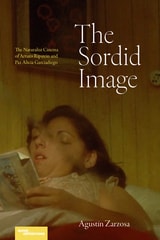
The Sordid Image
The Naturalist Cinema of Arturo Ripstein and Paz Alicia GarciadiegoAgustín Zarzosa
Northwestern University Press, 2026
Drawing on the cinematic oeuvre of Ripstein and Garciadiego to reconceptualize the idea of the sordid
The sordid is not an ideology, an affect, or even a form of taste or sensibility. It is, Agustín Zarzosa argues, an image and an evocation of the process of degradation. The Sordid Image: The Naturalist Cinema of Arturo Ripstein and Paz Alicia Garciadiego offers the first sustained study of this pivotal filmmaker-screenwriter pair, drawing on their multidecade collaborations to reframe an enduring problem of film theory: how to represent marginalized people.
Together, Ripstein and Garciadiego have constructed a recognizable cinematic world filled with social outcasts, characterized by self-degradation and unreason, and set within squalid environments. Inscribing the Ripsteinian universe within the literary and cinematic traditions of naturalism, this book theorizes the notion of the sordid to examine the partners’ unique and epoch-defining films. We can, Zarzosa contends, understand the sordid as a cinematic image, with its specific components and pleasures, recasting questions of authorship, mise-en-scène, spectatorship, genre, and language.
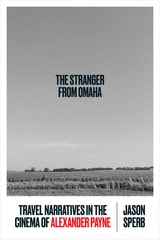
The Stranger from Omaha
Travel Narratives in the Cinema of Alexander PayneJason Sperb
University of Texas Press, 2025
The first in-depth analysis of the films of Alexander Payne through the lenses of authorship, tourism, and leisure.
With the films Election, About Schmidt, Sideways, Nebraska, and The Holdovers, Alexander Payne has carved out an unusual role in American cinema as a bankable auteur. There is something about Payne’s neurotics and searchers, his working stiffs and disillusioned idealists—something funny, moving, and filled with insight.
Jason Sperb dissects Payne’s oeuvre, focusing on the director’s penchant for travel narratives. Payne’s films usually center on male protagonists discontent with the emotional and material realities of the day-to-day and seeking satisfaction in some literal or metaphorical elsewhere. But their attempts to escape wind up perpetuating, rather than alleviating, the imbalance between labor and leisure that structures modern life. In this sense, Sperb argues, Payne’s characters are akin to tourists, searching for fleeting glimpses of the fulfillment they dream about. Examining themes of masculinity, nostalgia, whiteness, and class, The Stranger from Omaha is the first auteur study devoted to Payne’s delicately balanced cinematic world. An outsider even in his own heartland, Payne proves to be an artist working at a clarifying remove—a witness to the American condition, observing from just enough distance.
The Traumatic Screen
The Films of Christopher NolanStuart Joy
Intellect Books, 2020
From 1997’s Doodlebug to 2017’s Dunkirk, Nolan’s films highlight cinema’s ability to probe the nature of human consciousness while commenting on the relationship between spectator and screen. Joy examines Nolan’s treatment of trauma—both individual and collective—through the formal construction, mise-en-scène, and repeated themes of his films. The argument presented is based on close textual analysis and a methodological framework that incorporates the works of Sigmund Freud and Jacques Lacan. The first in-depth, overtly psychoanalytic understanding of trauma in the context of the director’s filmography, this book builds on and challenges existing scholarship in a bold new interpretation of the Nolan canon.
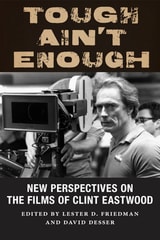
Tough Ain't Enough
New Perspectives on the Films of Clint EastwoodFriedman, Lester D
Rutgers University Press, 2018