Results by title
366 books match the query 'International' and 94 start with t
Taxation in the Global Economy
Edited by Assaf Razin and Joel Slemrod
University of Chicago Press, 1990
Assaf Razin and Joel Slemrod gathered experts from two traditionally distinct specialties, taxation and international economics, to lay the groundwork for understanding these issues, which will require the attention of scholars and policymakers for years to come.
Contributors describe the basic provisions of the U.S. tax code with respect to international transactions, highlighting the changes contained in the U.S. Tax Reform Act of 1986; explore the ways that tax systems influence the decisions of multinationals; examine the effect of taxation on trade patterns and capital flows; and discuss the implications of the opening world economy for the design of optimal international tax policy. The papers will prove valuable not only to scholars and students, but to government economists and international tax lawyers as well.
Taxing Multinational Corporations
Edited by Martin Feldstein, James R. Hines Jr., and R. Glenn Hubbard
University of Chicago Press, 1995
In ten succinct chapters, the book documents the channels through which tax policy in the United States and abroad affects plant and equipment investments, spending on research and development, the cost of debt and equity finance, and dividend repatriations by United States subsidiaries. It also discusses the impact of U.S. firms' outbound foreign investment on domestic and foreign economies. Especially useful to nonspecialists is an appendix that summarizes current United States rules for taxing international income.
The Analysis of Firms and Employees
Quantitative and Qualitative ApproachesEdited by Stefan Bender, Julia Lane, Kathryn L. Shaw, Fredrik Andersson, and Till von Wachter
University of Chicago Press, 2008
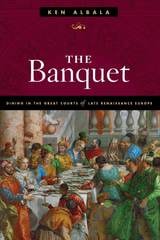
The Banquet
Dining in the Great Courts of Late Renaissance EuropeKen Albala
University of Illinois Press, 2017
In The Banquet, Ken Albala covers the transitional period between the heavily spiced and colored cuisine of the Middle Ages and classical French haute cuisine. This development involved increasing use of dairy products, a move toward lighter meats such as veal and chicken, increasing identification of national food customs, more sweetness and aromatics, and a refined aesthetic sense, surprisingly in line with the late-Renaissance styles found in other arts.

The Bloody Sunday Inquiry
The Families Speak OutEdited by Eamonn McCann
Pluto Press, 2005
Twenty-one wounded survivors and relatives of the dead describe the campaign which led to the establishment of the Inquiry under Lord Saville. They reveal their bitterness at the 'whitewash' of the first inquiry under Lord Chief Justice Widgery, and describe the frustrations and elations of their long struggle to force the British Government to launch a new search for the truth.
The relatives comment sharply on Saville’s performance, and on the attitudes of British and Irish politicians, the media and an array of celebrity lawyers. They reflect on whether soldiers and leading politicians should now be prosecuted for murder, and discuss whether the outcome of the Inquiry is likely to hinder or enhance the peace process. Will the truth about Bloody Sunday raise more ghosts than it sets to rest?
This is the story of the longest legal proceedings in British or Irish history in the raw words of those most intimately involved. What they have to say puts a new focus on the significance of State atrocities in shaping perceptions of the past and aspirations for the future in Ireland.
The Borders of Responsibility
Migration Control in the Mediterranean SeaKiri Olivia Santer
Duke University Press, 2026

The Brazilian Sound
Samba, Bossa Nova, and the Popular Music of BrazilChris McGowan
Temple University Press, 2008
Here is an illustrated guide to the rich music of Brazil—its history, styles, performers, instruments, and impact on musicians around the globe. From the boisterous rhythms of samba to the cool elegance of bossa nova to the hot percussion of Bahian axé music, The Brazilian Sound celebrates a world music phenomenon. This revised and expanded edition includes discussions of developments in samba and other key genres, the rise of female singer-songwriters in recent years, new works by established artists like Milton Nascimento and Marisa Monte, and the mixing of bossa with electronica. This clearly written and lavishly illustrated encyclopedic survey features new entries and photographs, an extensive glossary of Brazilian music terms and more.
This edition of The Brazilian Sound contains new discussions of:
· música sertaneja and música caipira
· Brazilian funk, rap/hip-hop, and electronic dance music
· important new samba and MPB artists
· Plus! An updated bibliography and glossary, and a list of Web resources

The Case for Palestine
An International Law PerspectiveJohn Quigley
Duke University Press, 2005
In this volume, Quigley provides a thorough understanding of both sides of the conflict in the context of international law. He contends that the Palestinians have a stronger legal claim to Jerusalem than do the Israelis; that Palestinian refugees should be repatriated to areas including those within the borders of Israel; and that Israel should withdraw from the territory it occupied in 1967. As in his earlier volume, Quigley provides an extensively documented evaluation of the conflict over the last century, discussing the Zionist movement, the League of Nations’ decision to promote a Jewish homeland in Palestine, the 1948 war and creation of Israel, and Israel’s occupation of the West Bank, Gaza Strip, and Golan Heights during the 1967 war.
The Civic Muse
Music and Musicians in Siena during the Middle Ages and the RenaissanceFrank A. D'Accone
University of Chicago Press, 1997
Based on decades of research in the town's archives, D'Accone's The Civic Muse brilliantly illuminates both the sacred and the secular aspects of more than three centuries of music and music-making in Siena. After detailing the history of music and liturgy at Siena's famous cathedral and of civic music at the Palazzo Pubblico, D'Accone describes the crucial role that music played in the daily life of the town, from public festivities for foreign dignitaries to private musical instruction. Putting Siena squarely on the Renaissance musical map, D'Accone's monumental study will interest both musicologists and historians of the Italian Renaissance.
The Decline of Latin American Economies
Growth, Institutions, and CrisesEditied by Sebastian Edwards, Gerardo Esquivel, and Graciela Márquez
University of Chicago Press, 2007
Latin America’s economic performance is mediocre at best, despite abundant natural resources and flourishing neighbors to the north. The perplexing question of how some of the wealthiest nations in the world in the nineteenth century are now the most crisis-prone has long puzzled economists and historians. The Decline of Latin American Economies examines the reality behind the struggling economies of Argentina, Chile, and Mexico.
A distinguished panel of experts argues here that slow growth, rampant protectionism, and rising inflation plagued Latin America for years, where corrupt institutions and political unrest undermined the financial outlook of already besieged economies. Tracing Latin America’s growth and decline through two centuries, this volume illustrates how a once-prosperous continent now lags behind. Of interest to scholars and policymakers alike, it offers new insight into the relationship between political systems and economic development.

The Derecognition of States
Gëzim Visoka
University of Michigan Press, 2024
Gëzim Visoka argues that state derecognition is a highly controversial and unstable practice that has less to do with the unfulfillment of the conditions of statehood by the claimant than with the advancement of the self-interest of the former base state and derecognizing state. The derecognition of states is not a rule; rather, it is an exception in international diplomacy, driven by political expediency and is incompatible with original rationales for granting recognition. Yet, the derecognition of states is far more important than previously recognized in shaping the reversal dynamics of secession and state creation and in influencing regional peace, geopolitical rivalries, and the international order. By analyzing the withdrawal of recognition, the book offers a window into the reversal politics of unbecoming a sovereign state and how the arbitrary beginning and the end of diplomatic relations between states take place.
The Dilemma of Dominic Ongwen
From Child Soldier to the International Criminal CourtKjell Anderson
Rutgers University Press, 2027
Dominic Ongwen was abducted by Joseph Kony's Lord's Resistance Army while walking to school at the age of nine. He later rose through its ranks committing, and ultimately being convicted by the International Criminal Court (ICC) of, many of the same crimes of which he was once a victim. The Dilemma of Dominic Ongwen tells this extraordinary story through the voices of those who knew him best: family members, fighters, commanders, “wives,” victims, and trial participants. Their testimonies, gathered in Uganda and The Hague, form the backbone of a narrative that interlaces survivor accounts with legal analysis and vivid excerpts from the ICC trial. The book offers a rare, human-centered lens on international justice, illuminating the dilemmas of prosecuting a former child soldier for mass atrocities. It provides indispensable insights for scholars of international criminal law, transitional justice, political violence, trauma, and human rights.
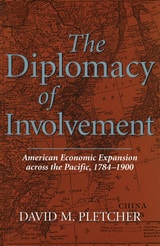
The Diplomacy of Involvement
American Economic Expansion across the Pacific, 1784-1900David M. Pletcher
University of Missouri Press, 2001
Like its predecessor, this important new work is focused on the connection between trade and investment on the one hand and U.S. foreign policy on the other. David Pletcher describes the trade of the United States with the Far East, the islands of the Pacific, and the northwest coast of North America from 1784 (the year of the first American trading expedition to China) to 1844 (the year of the first trade treaty with China, followed immediately by the U.S. acquisition of Oregon and California). He then traces the growth of trade and investment in Alaska, Hawaii, and the South Pacific from 1844 to 1890 and proceeds to do the same for China, Japan, and Korea. In the ensuing chapters, Pletcher covers the 1890s, including the annexation of Hawaii, the Sino-Japanese War, the acquisition of the Philippines, and the Open Door policy in China.
He concludes that the American expansion across the Pacific and into the Far East was not a deliberate, consistent drive for economic hegemony but a halting, experimental, improvised movement, carried out against determined opposition and indifference and dotted with setbacks and failures. Providing his own judgments about the wisdom and effectiveness of America's new endeavors, Pletcher summarizes the problems and handicaps involved, demonstrating that errors of the twentieth century were at least partly the result of poor preparation in the 1880s and 1890s.
Touching on every place where Americans undertook significant economic activity, The Diplomacy of Involvement will be an important aid for seasoned scholars, as well as an excellent introduction for the novice.

The Dynamics of Business-Government Relations
Industry and Exports, 1893-1921William H. Becker
University of Chicago Press, 1982
The Economic Consequences of Demographic Change in East Asia
Edited by Takatoshi Ito and Andrew K. Rose
University of Chicago Press, 2010
Recent studies show that almost all industrial countries have experienced dramatic decreases in both fertility and mortality rates. This situation has led to aging societies with economies that suffer from both a decline in the working population and a rise in fiscal deficits linked to increased government spending. East Asia exemplifies these trends, and this volume offers an in-depth look at how long-term demographic transitions have taken shape there and how they have affected the economy in the region.
The Economic Consequences of Demographic Change in East Asia assembles a group of experts to explore such topics as comparative demographic change, population aging, the rising cost of health care, and specific policy concerns in individual countries. The volume provides an overview of economic growth in East Asia as well as more specific studies on Japan, Korea, China, and Hong Kong. Offering important insights into the causes and consequences of this transition, this book will benefit students, researchers, and policy makers focused on East Asia as well as anyone concerned with similar trends elsewhere in the world.
The Economic Development of Manchuria
The Rise of a Frontier EconomyKang Chao
University of Michigan Press, 1983

The Economics of Crime
Lessons For and From Latin AmericaEdited by Rafael Di Tella, Sebastian Edwards, and Ernesto Schargrodsky
University of Chicago Press, 2010
The Economics of Food Price Volatility
Edited by Jean-Paul Chavas, David Hummels, and Brian D. Wright
University of Chicago Press, 2014
The researchers who contributed to The Economics of Food Price Volatility address these and other questions. They examine the forces driving both recent and historical patterns in food price volatility, as well as the effects of various public policies in affecting this volatility. The chapters include studies of the links between food and energy markets, the impact of biofuel policy on the level and variability of food prices, and the effects of weather-related disruptions in supply. The findings shed light on the way price volatility affects the welfare of farmers, traders, and consumers.
The Effects of Taxation on Capital Accumulation
Edited by Martin Feldstein
University of Chicago Press, 1987
The Effects of Taxation on Multinational Corporations
Edited by Martin Feldstein, James R. Hines Jr., and R. Glenn Hubbard
University of Chicago Press, 1995
In an attempt to quantify the effect of tax policy on international investment choices, this volume presents in-depth analyses of the interaction of international tax rules and the investment decisions of multinational enterprises. Ten papers assess the role played by multinational firms and their investment in the U.S. economy and the design of international tax rules for multinational investment; analyze channels through which international tax rules affect the costs of international business activities; and examine ways in which international tax rules affect financing decisions of multinational firms. As a group, the papers demonstrate that international tax rules have significant effects on firms' investment and other financing decisions.
The End of Cheap Labour?
Industrial Transformation and "Social Upgrading" in ChinaFlorian Butollo
Campus Verlag, 2014
In The End of Cheap Labour?, Florian Butollo investigates the recent transformation of the garment and LED lighting industries in the Pearl River Delta, China’s largest industrial hub. He reveals that industrial upgrading rarely supports improvements in working conditions and the basic employment pattern; and this failure of “social upgrading” threatens to undermine the desired rebalancing of the Chinese economy. Butollo demonstrates that the implementation of collective labor rights remains an important obstacle in the future of the Chinese growth model.
The Evolution of Agrarian Institutions
A Comparative Study of Post-Socialist Hungary and BulgariaMieke Meurs
University of Michigan Press, 2001

The Expert Witness in Islamic Courts
Medicine and Crafts in the Service of LawRon Shaham
University of Chicago Press, 2010
Shaham begins with a history of expert testimony in medieval Islamic culture, analyzing the different roles played by male experts, especially physicians and architects, and females, particularly midwives. From there, he focuses on the case of Egypt, tracing the country’s reform of its traditional legal system along European lines beginning in the late nineteenth century. Returning to a broader perspective, Shaham draws on a variety of legal and historical sources to place the phenomenon of expert testimony in cultural context. A truly comprehensive resource, The Expert Witness in Islamic Courts will be sought out by a broad spectrum of scholars working in history, religion, gender studies, and law.
The Fable of the Keiretsu
Urban Legends of the Japanese EconomyYoshiro Miwa and J. Mark Ramseyer
University of Chicago Press, 2006
In their insightful analysis, the authors show that the very idea of the keiretsu was created and propagated by Marxist scholars in post-war Japan. Western scholars merely repatriated the legend to show the culturally contingent nature of modern economic analysis. Laying waste to the notion of keiretsu, the authors debunk several related “facts” as well: that Japanese firms maintain special arrangements with a “main bank,” that firms are systematically poorly managed, and that the Japanese government guided post-war growth. In demolishing these long-held assumptions, they offer one of the few reliable chronicles of the realities of Japanese business.
The Fair Trade Revolution
Edited by John Bowes
Pluto Press, 2011
Fair Trade is now mainstream, with large companies like Cadbury's and supermarkets such as Sainsbury's producing and stocking many Fair Trade products. The authors of this collection, many of whom were responsible for the initial success of Fair Trade, emphasise the importance of ensuring that farmers and other producers remain the main beneficiaries. Punchy chapters, illustrated with many real-world examples, cover all the important issues including the tensions between large and small operators, the impact of recession, environmental policy and the danger of large operators embracing Fair Trade more in word than in practice.
Written by the leading lights of the Fair Trade movement, including Harriet Lamb (Executive Director of the Fairtrade Foundation) and Bruce Crowther (Establisher of the world's first Fair Trade Town) this book will inspire activists and consumers to keep making the right choices.

The Fair Trade Scandal
Marketing Poverty to Benefit the RichNdongo Sylla
Ohio University Press, 2014
This critical account of the fair trade movement explores the vast gap between the rhetoric of fair trade and its practical results for poor countries, particularly those of Africa. In the Global North, fair trade often is described as a revolutionary tool for transforming the lives of millions across the globe. The growth in sales for fair trade products has been dramatic in recent years, but most of the benefit has accrued to the already wealthy merchandisers at the top of the value chain rather than to the poor producers at the bottom.
Ndongo Sylla has worked for Fairtrade International and offers an insider’s view of how fair trade improves—or doesn’t—the lot of the world’s poorest. His methodological framework first describes the hypotheses on which the fair trade movement is grounded before going on to examine critically the claims made by its proponents. By distinguishing local impact from global impact, Sylla exposes the inequity built into the system and the resulting misallocation of the fair trade premium paid by consumers. The Fair Trade Scandal is an empirically based critique of both fair trade and traditional free trade; it is the more important for exploring the problems of both from the perspective of the peoples of the Global South, the ostensible beneficiaries of the fair trade system.

The Fair Trade Scandal
Marketing Poverty to Benefit the RichNdongo Sylla
Ohio University Press, 0
Ndongo Sylla has worked for Fairtrade International and offers an insider’s view of how fair trade improves?—?or doesn’t?—?the lot of the world’s poorest. His methodological framework first describes the hypotheses on which the fair trade movement is grounded before going on to examine critically the claims made by its proponents. By distinguishing local impact from global impact, Sylla exposes the inequity built into the system and the resulting misallocation of the fair trade premium paid by consumers.
The Fair Trade Scandal is an empirically based critique of both fair trade and traditional free trade; it is the more important for exploring the problems of both from the perspective of the peoples of the Global South, the ostensible beneficiaries of the fair trade system.

The Federal Future of Europe
From the European Community to the European UnionDusan Sidjanski
University of Michigan Press, 2000
The author argues that federalism is the best antidote to the reemergence of nationalism in Europe. It is also the best guarantee for a peaceful community that balances the claims of national, regional, and local identity against the need for large-scale economies that springs from the forces of globalization, competition, and technical change. The Union preserves diversity within a flexible and innovating European system.
This major study of the development of the European project, informed by a thorough knowledge of the Community and Union over the years and by deep understanding of the relevant literatures in political science and political economy is important for all who study the European Union or work with it as officials and business people.
Dusan Sidjanski is founder and Professor Emeritus of the Department of Political Science, University of Geneva and Professor Emeritus, European Institute. He has authored numerous publications, most recently, The ECE in the Age of Change (United Nations Economic Commission for Europe, United Nations).
The First Global Prosecutor
Promise and ConstraintsMartha Minow, C. Cora True-Frost, and Alex Whiting, editors
University of Michigan Press, 2015
The Former “Yugoslavia Tribunal” as Monument of Justice
History, Heritage and Memory of the ICTY and IRMCT in the City of Peace and JusticeRob van der Laarse
Amsterdam University Press, 2025
The Gender Impact of Social Security Reform
Estelle James, Alejandra Cox Edwards, and Rebeca Wong
University of Chicago Press, 2008
The Gender Impact of Social Security Reform compares the gendered outcomes of social security systems in Chile, Argentina, and Mexico, and presents empirical findings from Eastern and Central European transition economies as well as several OECD countries. Women’s positions have improved relative to men in countries where joint pensions have been required, widows who have worked can keep the joint pension in addition to their own benefit, the public benefit has been targeted toward low earners, and women’s retirement age has been raised to equality with that of men. The Gender Impact of Social Security Reform will force economists and policy makers to reexamine the design features that enable social security systems to achieve desirable gender outcomes.
The Geneva Conventions Under Assault
Edited by Sarah Perrigo and Jim Whitman
Pluto Press, 2010
Outrages committed during violent conflict and as part of the 'war on terror' are not only an affront to human dignity -- they also violate the Geneva Conventions.
This book examines recent high-profile cases of repeated and open abuse of the Conventions. The contributors explore why these and related violations of international humanitarian law cannot be viewed as anomalies, but must be regarded as part of a pattern which is set to undermine the Geneva Conventions as a whole.
The contributors argue that an international system in which there is diminishing legal restraint on the use of force means that the world will become less secure and more volatile, even for those in the most powerful countries. Individuals everywhere face the prospect of a horrifying vulnerability.
This is the first scholarly yet accessible work to consider the meanings of outrages such as the normalisation of torture, as well as the worrying new normative, technical and tactical developments that challenge the purpose and standing of the Geneva Conventions.
The Gloss of Harmony
The Politics of Policy-Making in Multilateral OrganisationsBirgit Muller
Pluto Press, 2013
The Gloss of Harmony focuses on agencies of the United Nations, examining the paradox of entrusting relatively powerless and underfunded organisations with the responsibility of tackling some of the essential problems of our time. The book shows how international organisations shape the world in often unexpected and unpredictable ways.
The authors of this collection look not only at the official objectives and unintended consequences of international governance but also at how international organisations involve collective and individual actors in policy making, absorb critique, attempt to neutralise political conflict and create new political fields with local actors and national governments.
The Gloss of Harmony identifies the micro-social processes and complexities within multilateral organisations which have, up to now, been largely invisible. This book will have wide appeal not only to students and academics in anthropology, business studies and sociology but also to all practitioners concerned with international governance.

The Government and Politics of the European Union
Neill Nugent
Duke University Press, 0
There have been many developments within the European Union since the last edition of this volume. In May 2004, the EU increased in size from fifteen to twenty-five member states, and, in so doing, became a pan-European, rather than Western European, organization. The following month, national leaders reached agreement on the contents of the long-discussed and exhaustively negotiated Constitutional Treaty only to see the fruits of their labors rejected in 2005 by voters in France and the Netherlands. These are only the most obvious manifestations of a constantly evolving integration process addressed throughout the book. Every chapter has been extensively revised since the last edition.
The Government and Politics of the European Union also includes reflections on the conceptual and theoretical tools used to analyze the integration process and the EU, as well as on the factors likely to influence the Union’s future development.

The Harmonization of Civil and Commercial Law in Europe
Gian Antonio Benacchio
Central European University Press, 2005

The Holocaust, Corporations, and the Law
Unfinished BusinessLeora Bilsky
University of Michigan Press, 2017
Leora Bilsky argues class action litigation and settlement offer a mode of accountability well suited to addressing the bureaucratic nature of business involvement in atrocities. Prior to these lawsuits, legal treatment of the Holocaust was dominated by criminal law and its individualistic assumptions, consistently failing to relate to the structural aspects of Nazi crimes. Engaging critically with contemporary debates about corporate responsibility for human rights violations and assumptions about “law,” she argues for the need to design processes that make multinational corporations accountable, and examines the implications for transitional justice, the relationship between law and history, and for community and representation in a post-national world. Her novel interpretation of the restitution lawsuits not only adds an important dimension to the study of Holocaust trials, but also makes an innovative contribution to broader and pressing contemporary legal and political debates. In an era when corporations are ever more powerful and international, Bilsky’s arguments will attract attention beyond those interested in the Holocaust and its long shadow.
The Impact of Trade and Domestic Policy Reforms in India
A CGE Modeling ApproachRajesh Chadha, Alan V. Deardorff, Sanjib Pohit, and Robert M. Stern
University of Michigan Press, 1998

The Internationalization of Palace Wars
Lawyers, Economists, and the Contest to Transform Latin American StatesYves Dezalay and Bryant G. Garth
University of Chicago Press, 2002
Based on more than 300 extensive interviews with major players in governments, foundations, law firms, universities, and think tanks, Dezalay and Garth examine both the production of northern exports such as neoliberal economics and international human rights law and the ways they are received south of the United States. They find that the content of what is exported and how it fares are profoundly shaped by domestic struggles for power and influence—"palace wars"—in the nations involved. For instance, challenges to the eastern intellectual establishment influenced the Reagan-era export of University of Chicago-style neoliberal economics to Chile, where it enjoyed a warm reception from Pinochet and his allies because they could use it to discredit the previous regime.
Innovative and sophisticated, The Internationalization of Palace Wars offers much needed concrete information about the transnational processes that shape our world.
The Japanese Automotive Industry
Model and Challenge for the Future?Robert E. Cole, Editor
University of Michigan Press, 1981

The Japanese Television Cartel
A Study Based on "Matsushita v. Zenith"David Schwartzman
University of Michigan Press, 1993
The Liberal Illusion
Does Trade Promote Peace?Katherine Barbieri
University of Michigan Press, 2005
--Nils Petter Gleditsch, Journal of Peace Research
"Barbieri builds on a solid foundation of work on trade and conflict and specifies the conditions under which trade reduces and increases conflict. . . . The bottom line is that this is an important book in the study of trade and conflict because of its comprehensive approach."
--Kathy L. Powers, Perspectives on Politics
"Barbieri's analysis reveals the fundamental and intellectual weaknesses of the various arguments on this topic. [A] solid and timely contribution to the literature"
--Choice
The Liberal Illusion sheds light on an increasingly important question in international relations scholarship and the domain of policy making-whether international trade promotes peace. By examining a broad range of theories about trade's impact on interstate relations and undertaking a set of empirical analyses of the trade-conflict puzzle, Katherine Barbieri provides a comprehensive assessment of the liberal view that trade promotes peace. Barbieri's stunning conclusions depart from conventional wisdom in international relations. Consequently, The Liberal Illusion serves as an important counterargument and a warning call to policymakers who rely upon trade-based strategies to promote peace, strategies that appear to offer little hope of achieving their goals.
The Macroeconomics of Populism in Latin America
Edited by Rudiger Dornbusch and Sebastian Edwards
University of Chicago Press, 1991
Economists and political scientists from the United States and Latin America detail in this volume how and why such programs go wrong and what leads policymakers to repeatedly adopt these policies despite a history of failure. Authors examine this pattern in Argentina, Brazil, Chile, Mexico, Nicaragua, and Peru—and show how Colombia managed to avoid it. Despite differences in how each country implemented its policies, the macroeconomic consequences were remarkably similar.
Scholars of Latin America will find this work a valuable resource, offering a distinctive macroeconomic perspective on the continuing controversy over the dynamics of populism.

The Michigan Guidelines on the International Protection of Refugees
James C. Hathaway
Michigan Publishing Services, 2019
The Guidelines address five of the most difficult issues of refugee status: what is the meaning of a “well-founded fear”; when may refugee status be denied on grounds of an “internal protection alternative”; how is the causal connection to a Convention ground to be assessed; when is a risk fairly said to be for reasons of “political opinion”; and under what circumstances are persons believed to have violated rules of international criminal law to be excluded from refugee status? Additionally, this volume also addresses three critical aspects of refugee rights – when may a refugee be required to seek protection in a country not of his or her choosing; to what extent is a refugee entitled to undertake employment or other economic activity; and what is the scope of a refugee’s right to freedom of movement, both between states and within the asylum country?
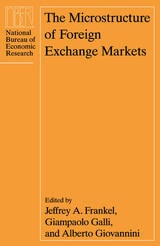
The Microstructure of Foreign Exchange Markets
Edited by Jeffrey A. Frankel, Giampaolo Galli, and Alberto Giovannini
University of Chicago Press, 1996
These nine innovative essays use a microstructure approach to analyze the workings of the foreign exchange market, with special emphasis on institutional aspects and the actual behavior of market participants. They examine the volume of transactions, heterogeneity of traders, the time of day and location of trading, the bid-ask spread, and the high level of exchange rate volatility that has puzzled many observers. They also consider the structure of the market, including such issues as nontransparency, asymmetric information, liquidity trading, the use of automated brokers, the relationship between spot and derivative markets, and the importance of systemic risk in the market.
This timely volume will be essential reading for anyone interested in the economics of international finance.
The Multilateral Trading System
Analysis and Options for ChangeRobert M. Stern, Editor
University of Michigan Press, 1993
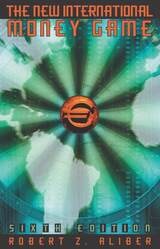
The New International Money Game
Robert Z. Aliber
University of Chicago Press, 2002
With expert knowledge and a wry sense of humor, Aliber demystifies international finance by breaking through the jargon barrier and presenting technical issues in a clear and concise manner. Aliber takes the reader on a tour of a multiplicity of international finance issues, included fixed and floating exchange rates, devaluations, money markets, monetary policy, and the concepts that lie behind the esoteric language of financial economists.
This sixth edition tracks the changes that have taken place in the world economy since the previous editions by exploring financial globalization, postcommunist transition, European integration, and the Asian economic crisis. It is an indispensable and highly readable guide to the complex and increasingly fragile system through which the world's business is financed.
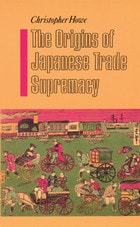
The Origins of Japanese Trade Supremacy
Development and Technology in Asia from 1540 to the Pacific WarChristopher Howe
University of Chicago Press, 1996
"Thoughtful, well-organized, and lucidly written and reflects many years of painstaking research in different literatures."—Business Horizons
"The best analysis yet in English of the role of technology in Japan's emergence as a global economic power."—David J. Jeremy, Technology and Culture
"An important addition to Japanese economic history and the concept of creating relative advantage in trade."—Richard Rice, Journal of Asian Studies
"No other work in English approaches Christopher Howe's combination of a sweeping historical perspective with a comprehensive yet in-depth analysis of factors underlying Japan's pre-1940 economic 'miracle.' . . . [An] illuminating study."—Steven J. Ericson, American Historical Review
The Perils of Global Legalism
Eric A. Posner
University of Chicago Press, 2009
The first months of the Obama administration have led to expectations, both in the United States and abroad, that in the coming years America will increasingly promote the international rule of law—a position that many believe is both ethically necessary and in the nation’s best interests.
With The Perils of Global Legalism, Eric A. Posner explains that such views demonstrate a dangerously naive tendency toward legalism—an idealistic belief that law can be effective even in the absence of legitimate institutions of governance. After tracing the historical roots of the concept, Posner carefully lays out the many illusions—such as universalism, sovereign equality, and the possibility of disinterested judgment by politically unaccountable officials—on which the legalistic view is founded. Drawing on such examples as NATO’s invasion of Serbia, attempts to ban the use of land mines, and the free-trade provisions of the WTO, Posner demonstrates throughout that the weaknesses of international law confound legalist ambitions—and that whatever their professed commitments, all nations stand ready to dispense with international agreements when it suits their short- or long-term interests.
Provocative and sure to be controversial, The Perils of Global Legalism will serve as a wake-up call for those who view global legalism as a panacea—and a reminder that international relations in a brutal world allow no room for illusions.
The Political Economy of American Trade Policy
Edited by Anne O. Krueger
University of Chicago Press, 1995
Eight analytical histories of the automobile, steel, semiconductor, lumber, wheat, and textile and apparel industries demonstrate that trade barriers rarely have unequivocal benefits and may be counterproductive. They show that criteria for awarding protection do not take into account the interests of consumers or other industries and that political influence and an organized lobby are major sources of protection.
Based on these findings, a final essay suggests that current policy fails to consider adequately economic efficiency, the public good, and indirect negative effects. This volume will interest scholars in economics, business, and public policy who deal with trade issues.
The Political Economy of Trade Protection
Edited by Anne O. Krueger
University of Chicago Press, 1995
In case studies of trade barriers imposed during the 1980s to help the steel, semiconductor, automobile, lumber, wheat, and textile and apparel industries, the contributors trace the evolution of efforts to obtain protection, protectionist measures, and their results. A chapter assessing the common themes that emerge from the studies concludes that the focus of current trade law is exclusively on the individual protection-seeking industries, with little regard for indirect effects on using industries or for consumers. Reform could usefully take these effects into account.
This volume will interest policymakers, business executives, and anyone interested in trade policy formulation and practice.