Results by title
167 books match the query 'Iowa' and 37 start with t
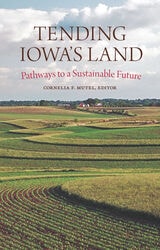
Tending Iowa’s Land
Pathways to a Sustainable FutureCornelia F. Mutel
University of Iowa Press, 2022
In the last 200 years, Iowa’s prairies and other wildlands have been transformed into vast agricultural fields. This massive conversion has provided us with food, fiber, and fuel in abundance. But it has also robbed Iowa’s land of its native resilience and created the environmental problems that today challenge our everyday lives: polluted waters, increasing floods, loss and degradation of rich prairie topsoil, compromised natural systems, and now climate change.
In a straightforward, friendly style, Iowa’s premier scientists and experts consider what has happened to our land and outline viable solutions that benefit agriculture as well as the state’s human and wild residents.

The Archaeological Guide to Iowa
William E. Whittaker, Lynn M. Alex, Mary De La Garza
University of Iowa Press, 2015
Fortunately, there are many sites open to the public where the remnants of the past are visible, either in their original location or in nearby museum exhibits. Few things are more inspiring than walking among the Malchow Mounds, packed so tightly it is hard to tell where one ends and the other begins. Strolling around downtown Des Moines is a lot more interesting when you are aware of the mounds, Indian villages, and the fort that once stood there. And, although you can’t visit the Wanampito site, you can see the splendid seventeenth-century artifacts excavated from it at Heery Woods State Park.
For people who want to experience Iowa’s archaeological heritage first hand, this one-of-a-kind guidebook shows the way to sixty-eight important sites. Many are open to visitors or can be seen from a public location; others, on private land or no longer visible on the landscape, live on through artifact displays. The guide also includes a few important sites that are not open to visitors because these places have unique stories to tell. Sites of every type, from every time period, and in every corner of the state are featured. Whether you have a few hours to indulge your curiosity or are planning a road trip across the state, this guide will take you to places where Iowa’s deep history comes to life.
The Attic
A MemoirHarnack, Curtis
University of Iowa Press, 2011
In The Attic, his sequel to the classic We Have All Gone Away, Curtis Harnack returns to his rural Iowa homeplace to sift through an attic full of the trash and treasures left behind by the thirteen children in two generations who grew up in the big farmhouse.
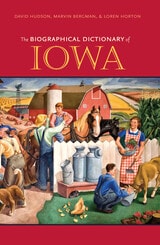
The Biographical Dictionary of Iowa
David Hudson
University of Iowa Press, 2009
Written by an impressive team of more than 150 scholars and writers, the readable narratives include each subject’s name, birth and death dates, place of birth, education, and career and contributions. Many of the names will be instantly recognizable to most Iowans; others are largely forgotten but deserve to be remembered. Beyond the distinctive lives and times captured in the individual biographies, readers of the dictionary will gain an appreciation for how the character of the state has been shaped by the character of the individuals who have inhabited it.
From Dudley Warren Adams, fruit grower and Grange leader, to the Younker brothers, founders of one of Iowa’s most successful department stores, The Biographical Dictionary of Iowa is peopled with the rewarding lives of more than four hundred notable citizens of the Hawkeye State. The histories contained in this essential reference work should be eagerly read by anyone who cares about Iowa and its citizens.
Entries include Cap Anson, Bix Beiderbecke, Black Hawk, Amelia Jenks Bloomer, William Carpenter, Philip Greeley Clapp, Gardner Cowles Sr., Samuel Ryan Curtis, Jay Norwood Darling, Grenville Dodge, Julien Dubuque, August S. Duesenberg, Paul Engle, Phyllis L. Propp Fowle, George Gallup, Hamlin Garland, Susan Glaspell, Josiah Grinnell, Charles Hearst, Josephine Herbst, Herbert Hoover, Inkpaduta, Louis Jolliet, MacKinlay Kantor, Keokuk, Aldo Leopold, John L. Lewis, Marquette, Elmer Maytag, Christian Metz, Bertha Shambaugh, Ruth Suckow, Billy Sunday, Henry Wallace, and Grant Wood.
Excerpt from the entry on:
Gallup, George Horace (November 19, 1901–July 26, 1984)—founder of the American Institute of Public Opinion, better known as the Gallup Poll, whose name was synonymous with public opinion polling around the world—was born in Jefferson, Iowa. . . . . A New Yorker article would later speculate that it was Gallup’s background in “utterly normal Iowa” that enabled him to find “nothing odd in the idea that one man might represent, statistically, ten thousand or more of his own kind.” . . . In 1935 Gallup partnered with Harry Anderson to found the American Institute of Public Opinion, based in Princeton, New Jersey, an opinion polling firm that included a syndicated newspaper column called “America Speaks.” The reputation of the organization was made when Gallup publicly challenged the polling techniques of The Literary Digest, the best-known political straw poll of the day. Calculating that the Digest would wrongly predict that Kansas Republican Alf Landon would win the presidential election, Gallup offered newspapers a money-back guarantee if his prediction that Franklin Delano Roosevelt would win wasn’t more accurate. Gallup believed that public opinion polls served an important function in a democracy: “If govern¬ment is supposed to be based on the will of the people, somebody ought to go and find what that will is,” Gallup explained.
The Book of Famous Iowans
A NovelDouglas Bauer
University of Iowa Press, 2014
But mostly what Will summons up in his intimate remembrance are those few catastrophic days in early June when he was “three months shy of twelve,” more than a decade after his parents have married and returned to the Vaughns’ home place, where Lewis farms his family’s land. For it is during those days that Leanne’s affair with a local man named Bobby Markum becomes known—first to Lewis and then, in a fiercely dramatic public confrontation, to young Will, to his beloved Grandmother Vaughn, and by nightfall to all the citizens of the town. The knowledge of such scandal, in so small a place, sets off a series of highly charged reactions, vivid consequences that surely determine the fates of every member of this unforgettable family.
A tale of memory and hero worship and the restless pulse of longing, The Book of Famous Iowans examines those forces that define not only a state made up of a physical geography, but more important, those states of the wholly human spirit.
The Butterflies of Iowa
Dennis W. Schlicht
University of Iowa Press, 2007
The Depression Dilemmas of Rural Iowa, 1929-1933
Lisa L. Ossian
University of Missouri Press, 2012
The Emerald Horizon
The History of Nature in IowaCornelia F. Mutel
University of Iowa Press, 2008
In The Emerald Horizon, Cornelia Mutel combines lyrical writing with meticulous scientific research to portray the environmental past, present, and future of Iowa. In doing so, she ties all of Iowa's natural features into one comprehensive whole.
Since so much of the tallgrass state has been transformed into an agricultural landscape, Mutel focuses on understanding today's natural environment by understanding yesterday's changes. After summarizing the geological, archaeological, and ecological features that shaped Iowa's modern landscape, she recreates the once-wild native communities that existed prior to Euroamerican settlement. Next she examines the dramatic changes that overtook native plant and animal communities as Iowa's prairies, woodlands, and wetlands were transformed. Finally she presents realistic techniques for restoring native species and ecological processes as well as a broad variety of ways in which Iowans can reconnect with the natural world. Throughout, in addition to the many illustrations commissioned for this book, she offers careful scientific exposition, a strong sense of respect for the land, and encouragement to protect the future by learning from the past.
The "emerald prairie" that "gleamed and shone to the horizon's edge," as botanist Thomas Macbride described it in 1895, has vanished. Cornelia Mutel's passionate dedication to restoring this damaged landscape—and by extension the transformed landscape of the entire Corn Belt—invigorates her blend of natural history and human history. Believing that citizens who are knowledgeable about native species, communities, and ecological processes will better care for them, she gives us hope—and sound suggestions—for the future.
The Farm at Holstein Dip
An Iowa BoyhoodCarroll Engelhardt
University of Iowa Press, 2012
Engelhardt brings us into the world of his fourth-generation farm family, who lived by the family- and faith-based work ethic and concern for respectability they had inherited from their German and Norwegian ancestors. His writing has a particularly Iowa flavor, a style that needs no definition to those who live in the state. Readers will discover the appeal of his wry, humorous, and kind observations and appreciate his well-informed perspective on these transformative American decades.
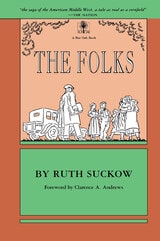
The Folks
Ruth Suckow
University of Iowa Press, 1992
Here is an introspective, poignant portrait of an American family during a time of sweeping changes. Now nearly sixty years after it first appeared, Suckow's finest work still displays a thorough realism in its characters' actions and aspirations; the uneasy compromises they are forced to make still ring true.
Suckow's talent for retrospective analysis comes to life as she examines her own people—Iowans, descendants of early settlers—through the lives of the Ferguson family, living in the fictional small town of Belmond, Iowa. Using her gift of creating three-dimensional, living characters, Suckow focuses on personal differences within the family and each member's separate struggle to make sense of past and present, to confront a pervasive sense of loss as a way of life disappears.

The Follinglo Dog Book
A Norwegian Pioneer Story from IowaPeder Gustav Tjernagel
University of Iowa Press, 1999
The Follinglo Dog Book both is and is not about dogs. The dogs are certainly here: from Milla to Chip the Third, we encounter a procession of heroic if often unfortunate creatures who, along with their immigrant masters, led a hard life on the nineteenth-century American frontier. However, if you pick up this book thinking it will offer a heartwarming read about canine experiences, you will find yourself reinformed by the way it unfolds.
Instead, these are the stories of a Norwegian pioneer family that came in 1860 to settle the Iowa prairie on a homestead called Follinglo Farm in Story County, Iowa. In the Tjernagels' experience one may read a chronicle of the state, the region, and the nation. Arriving in Iowa in what was still the age of wooden equipment and animal power, the Tjernagels witnessed each successive revolution on the land. They built homes and barns, cultivated the land, and encountered every manner of natural disaster from prairie fires to blizzards. Through all the struggles and setbacks, Peder Gustav Tjernagel's stories sparkle with boyhood pranks and adventures, in which the family dogs frequently play a role.
Readers will discover a wonderful cast of Norwegian relatives and neighbors, including a Herculean uncle, Store Per (Big Pete), who could lift a cow by its horns; a mysterious aunt, Stora Fastero (Big Sister), whose arrival signaled that a baby was soon to be born; and Elling Eilson, the walking Lutheran apostle. And, of course, there are the dogs who shepherd, protect, and even baby-sit the residents of Follinglo Farm.
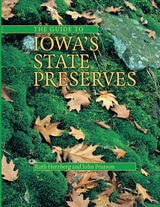
The Guide to Iowa's State Preserves
Herzberg, Ruth & John A. Pearson
University of Iowa Press, 2001
The Iowa state preserves system was created in 1965; a decade later, thirty preserves had been dedicated, including “six native prairies, a native White Pine stand, the state's only Sphagnum bog, a Balsam Fir stand, some of the oldest exposed rock outcrops in the world, an ancient fort, a fen, several Indian mound groups and a historical cemetery.” This new guide to all ninety Iowa state preserves—biological, geological, archaeological, historical, and scenic—describes the state's most treasured prairies and forests, quartzite outcrops and ice caves, and Indian mounds and wetlands as well as such historic sites as Fort Atkinson and Montauk.
Each entry includes two-color, progressively scaled maps giving the location of the preserve within the state, within its county, relative to a nearby town (with a recommended driving route), and on the local landscape (using USGS 7.5-minute topo maps). Also included are written directions (using 911 street names and signs); a description of the preserve's size, features, and history; a list of nearby or similar preserves, parks, natural areas, and other attractions; recommended readings; and contact information. (There are a few exceptions for privately owned or fragile preserves.) For travelers, a map in the introduction numbers all the preserves both geographically and alphabetically by name.
Although the preserves system emphasizes preservation rather than recreation, some preserves do have formal trails; some allow hunting, horseback riding, and canoeing; a few have museums or nature centers. This comprehensive guide allows visitors to plan active and informative visits to sites that highlight Iowa's natural and cultural heritage.
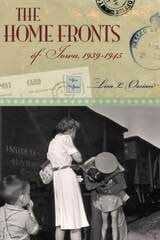
The Home Fronts of Iowa, 1939-1945
Lisa L. Ossian
University of Missouri Press, 2018
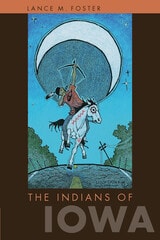
The Indians of Iowa
Foster, Lance M.
University of Iowa Press, 2009
Foster begins with a history of Lewis and Clark’s travels along the Missouri River adjacent to western Iowa. Next, he focuses on the tribes most connected to Iowa from prehistoric times to the present day: the Ioway, Meskwaki, Sauk, Omaha and Ponca, Otoe and Missouria, Pawnee and Arikara, Potawatomi, Illinois Confederacy, Santee and Yankton Sioux, and Winnebago. In between each tribal account, “closer look” essays provide details on Indian women in Iowa, traditional ways of life, Indian history and spirituality, languages and place-names, archaeology, arts and crafts, and houses and landscapes. Finally, Foster brings readers into the present with chapters called “Going to a Powwow,” “Do You Have Indian Blood?” and “Indians in Iowa Today.” The book ends with information about visiting Native American museums, historic sites, and communities in Iowa as well as tribal contacts and a selection of published and online resources.
The story of the Indians of Iowa is long and complicated. Illustrated with maps and stunning original art, Lance Foster’s absorbing, accessible overview of Iowa’s Indian tribes celebrates the rich native legacy of the Hawkeye State. It is essential reading for students, teachers, and everyone who calls Iowa home.

The Iowa Catalog
Historic American Buildings SurveyWesley I. Shank
University of Iowa Press, 1979

The Iowa Lakeside Laboratory
A Century of Discovering the Nature of NatureMichael J. Lannoo
University of Iowa Press, 2012
Today’s huge array of environmental problems can best be solved by people who have learned about nature within nature at a place with a long history of research and observation, people who thoroughly understand and appreciate nature’s cogs and wheels. Lakeside Lab and biological research stations like it have never been more relevant to science and to society at large than they are today. Michael Lannoo convinces us that while Lakeside’s past is commendable, its future, grounded in ecological principles, will help shape a more sustainable society.
The Iowa Precinct Caucuses
The Making of a Media Event, Third EditionHugh Winebrenner
University of Iowa Press, 2010
Although some people

The Iowa State Fair
Kurt Ullrich
University of Iowa Press, 2014
In 2013, Kurt Ullrich set out to chronicle the magic of the Iowa State Fair in words and photographs. Join him as August days and nights blow warm and easy over the fairgrounds, brushing lightly against fellow travelers on this earth, both human and not. He captures precious moments of extreme joy and unbridled delight in these beautiful black-and-white images, celebrating the brash rural energy of the fair, from Big Wheel races to people-watching goats, fair queen contestants to arm wrestlers, Percherons to ponies. Prize pigs, prize sheep, prize apples, and the famous butter cow all have their moment in the limelight. Iowa’s very best ear of corn and old friends reminiscing outside their RVs draw the photographer’s fond eye, as do brightly lit beer stands and the brilliant arc of the Ferris wheel against the night sky.
If you always go to the Iowa State Fair, this book is for you. If you’ve never been, it will show you what you’re missing—and you’ll understand why it’s well past time you dropped by.
The Iowa Writers' Workshop
origins, emergence & growthStephen Wilbers
University of Iowa Press, 1980

The Natural History of the Snakes and Lizards of Iowa
Terry VanDeWalle
University of Iowa Press, 2022
While readers will be able to identify Iowa’s snakes and lizards through its species accounts, identification keys, and beautiful photographs and illustrations, this book is intended to be more than a field guide. What makes it truly unique is the comparison of historic data collected by Iowa herpetologists in the 1930s and 1940s with data collected by the author, along with James L. Christiansen and others, since 1960. Custom maps show the reader how species’ distributions have changed over time.

The Natural History of the Turtles of Iowa
Terry VanDeWalle
University of Iowa Press, 2024
While readers will be able to identify Iowa’s turtles through its species accounts, identification keys, and beautiful photographs and illustrations, this book is intended to be more than a field guide. What makes it truly unique is the comparison of historic data collected by Iowa herpetologists in the 1930s and 1940s with data collected by the authors, along with James L. Christiansen and others, since 1960. Custom maps show the reader how species’ distributions have changed over time. This book contains Iowa-specific data found nowhere else and is essential to all who study turtles in the Midwest.
The Ninth Decade
An Octogenarian’s ChronicleKlaus, Carl H.
University of Iowa Press, 2021
The multi-year scope of his chronicle reveals the numerous physical and mental problems that arise during octogenarian life and how eighty-year-olds have dealt with those challenges. The Ninth Decade is a unique, first-hand source of information for anyone in their sixties, seventies, or eighties, as well as for persons devoted to care of the aged. Though the challenges of octogenarian life often require specialized care, The Ninth Decade also shows the pleasures of it to be so special as to have inspired Lillian Hellman’s paradoxical description of “longer life” as “the happy problem of our time.”
The Plea
The True Story of Young Wesley Elkins and His Struggle for RedemptionPatricia L. Bryan
University of Iowa Press, 2022
On a moonlit night in 1889, Iowa farmer John Elkins and his young wife, Hattie, were brutally murdered in their bed. Eight days later, their son, eleven-year-old Wesley Elkins, was arrested and charged with murder. The community reeled with shock by both the gruesome details of the homicides and the knowledge of the accused perpetrator—a small, quiet boy weighing just 75 pounds.
Accessible and fast-moving, The Plea delivers a complete, complex, and nuanced narrative of this horrific crime, while shedding light on the legal, social, and political environment of Iowa and the country in the late 1800s and early 1900s.
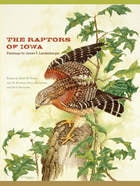
The Raptors of Iowa
James F. Landenberger, Dean M. Roosa, Jon W. Stravers, Bruce Ehresman, Rich Patterson
University of Iowa Press, 2013
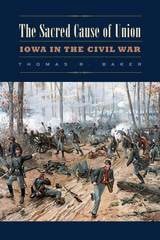
The Sacred Cause of Union
Iowa in the Civil WarThomas R. Baker
University of Iowa Press, 2016
To shed light on how individual Iowans experienced the war, the book profiles six state residents. Three were well-known. Annie Wittenmyer, a divorced woman with roots in Virginia, led the state’s efforts to ship clothing and food to the soldiers. Alexander Clark, a Muscatine businessman and the son of former slaves, eloquently championed the rights of African Americans. Cyrus Carpenter, a Pennsylvania-born land surveyor anxious to make his fortune, served in the army and then headed the state’s Radical Republican faction after the war, ultimately being elected governor.
Three never became famous. Ben Stevens, a young, unemployed carpenter, fought in an Iowa regiment at Shiloh, and then transferred to a Louisiana African American regiment so that he could lead the former slaves into battle. Farm boy Abner Dunham defended the Sunken Road at the Battle of Shiloh, before spending seven grim months in Confederate prison camps. The young Charles Musser faced pressure from his neighbors to enlist and from his parents to remain at home to work on the farm. Soon after he signed on to serve the Union, he discovered that his older brother had joined the Confederate Army. Through the letters and lives of these six Iowans, Thomas Baker shows how the Civil War transformed the state at the same time that Iowans transformed the nation.

The University of Iowa Guide to Campus Architecture
John Beldon Scott
University of Iowa Press, 2006

The University of Iowa Guide to Campus Architecture, Second Edition
John Beldon Scott and Rodney P. Lehnertz
University of Iowa Press, 2016

The University of Iowa in the Twentieth Century
An Institutional HistoryStow Persons
University of Iowa Press, 1990
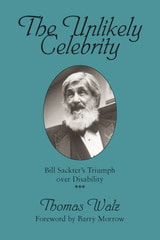
The Unlikely Celebrity
Bill Sackter's Triumph over DisabilityThomas Walz. Foreword by Barry Morrow
Southern Illinois University Press, 1998
Thomas Walz tells the story of Bill Sackter, a man who spent nearly half a century in a Minnesota mental institution and emerged to blossom into a most unlikely celebrity. Bill Sackter was committed to the Faribault State Hospital at the age of seven, there to remain until he was in his fifties. At the time of his commitment, Bill’s father had recently died; thus his sole contact with his family came through rare letters from his mother.
Some years after his discharge from Faribault as a result of the movement to deinstitutionalize the mentally ill in the 1960s, Bill enjoyed a serendipitous encounter with a young college student and part-time musician, Barry Morrow. Bill became part of the Morrow family and a regular in Morrow’s music group. When Morrow accepted a job at the School of Social Work at the University of Iowa, Bill followed him to Iowa City and was put in charge of a small coffee service.
Bill became an important part of the University of Iowa community, and Wild Bill’s Coffeeshop developed into an institution. A cheerful man of great good will who was a harmonica virtuoso, Bill began to inspire affectionate legends, and his life as a celebrity began in earnest. He was named Iowa’s Handicapped Person of the Year in 1977, and two television movies were made about his life—Bill, which earned Emmy awards for cowriter Barry Morrow and Mickey Rooney (as Bill) in 1981, and Bill on His Own in 1983. Years later, Morrow would earn an Oscar for his script of Rain Man.
Through vignettes ranging from hilarious to near tragic. Walz reveals a remarkable human being. An account of Bill's life in an institution is necessarily part of the story, but there is much more: Bill’s role in helping a young child recover from a coma, his menagerie of friends, his love for a pet parakeet, his late-life Bar Mitzvah, his failure as a woodworker, his success as Santa, and his dignified death at the age of seventy.

The Vascular Plants of Iowa
An Annotated Checklist and Natural HistoryLawrence J. Eilers
University of Iowa Press, 1994
Anyone who works with the vascular plants of Iowa—researchers, conservationists, teachers, agricultural specialists, horticulturists, gardeners, and so on—and those who are simply interested in knowing more about the state's plants have long felt a need for a comprehensive flora of Iowa. This meticulously researched volume is a giant first step toward such a flora.
This book consists of an extended essay on the natural history of the vascular plants of Iowa, a discussion of their origins, a description of the state's natural regions, and a painstakingly annotated checklist of Iowa vascular plants. The data, which apply to over 150 years, took more than 15 years to collect.
All known vascular plants that grow and persist in Iowa without cultivation are included in the checklist. These are native plants, primarily, but a large number of introduced species have become established throughout the state. Also included are Iowa's major crop plants and some of its common garden plants. The lengthy checklist provides an accurate and up-to-date listing of species names and common names, synonyms, distribution, habitat, abundance, and origin; county names are given for very rare species, and the most complete information has been provided for all rare plants and troublesome species.
The wealth of information is this well-organized, practical volume—which describes more than two thousand species from Adiantum pedatum, the northern maidenhair fern of moist woods and rocky slopes, to Zannichellia palustris, the horned pondweed of shallow marshes and coldwater streams—makes it possible to identify Iowa plants correctly. All midwesterners will want to own a copy of The Vascular Plants of Iowa.
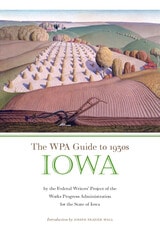
The WPA Guide to 1930s Iowa
Joseph Frazier Federal Writers Project
University of Iowa Press, 1938
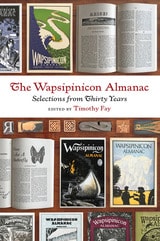
The Wapsipinicon Almanac
Selections from Thirty YearsTimothy Fay
University of Iowa Press, 2023
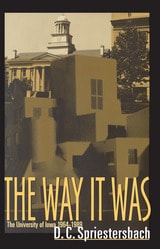
The Way It Was
Duane C. Spriestersbach
University of Iowa Press, 1999
The fall of 1964 was an exciting time at the University of Iowa. Its fourteenth president, Howard Bowen, had just arrived, and on a sunny October afternoon he made his first speech to the faculty. This occasion was note worthy enough—former president Virgil Hancher had held the job for twenty-four years—to attract the attention of a professor of speech pathology who had previously confined his considerable energies to teaching and research. Bowen's vision of what the university could become was so intriguing, so compelling, that this professor wrote and offered to help him achieve his objectives in any way possible. This quixotic offer changed Duane Spriestersbach's life and becomes the starting point for his story of his years as a University of Iowa administrator.
Drawing upon his personal files, the university archives, and interviews with many faculty members and administrators, Spriestersbach has created both an institutional and a personal history of the university. Judged by any standard, these years were tumultuous ones for higher education. Economic pressures from the state legislature, issues surrounding grants from such agencies as the National Institutes of Health and the National Science Foundation, the civil rights movement, student and faculty protests during the Vietnam era, massive changes in the physical and administrative shape of the campus, and the computerization of all parts of campus life had far-reaching consequences. Spriestersbach was at the center of these events at the University of Iowa; his perspective is unique, refreshing, and educational.
Spriestersbach's account of the Vietnam years and of the evolution of computers at Iowa will be particularly interesting to readers. He reported to four presidents, served as acting president, managed hundreds of meetings both dramatic and mundane, and reacted to many administrative restructurings. In this story of his life at the University of Iowa, he reveals the truth behind these words from his 1964 letter to President Bowen: “I think I am an idealist, a person with imagination, and a guy in a hurry. I believe investigation will show that I am a person with competitive administrative and executive abilities.”
The Worlds between Two Rivers
Perspectives on American Indians in IowaGretchen M. Bataille
University of Iowa Press, 2000

There Goes the Neighborhood
Rural School Consolidation at the Grass Roots in Early Twentieth-Century IowaDavid R. Reynolds
University of Iowa Press, 2002

They Don't Want Her There
Fighting Sexual and Racial Harassment in the American UniversityCarolyn Chalmers
University of Iowa Press, 2022
As Jew gained accolades and advanced through the ranks at Iowa, she was met with increasingly vicious attacks on her character by her white male colleagues—implying that her sexuality had opened doors for her. After years of being subjected to demoralizing sexual, racial, and ethnic discrimination, finding herself without any higher-up departmental support, and noting her professional progression beginning to suffer by the hands of hate, Jean Jew decided to fight back. Carolyn Chalmers was her lawyer.
This book tells the inside story of pioneering litigation unfolding during the eight years of a university investigation, a watershed federal trial, and a state court jury trial. In the face of a university determined to defeat them and maintain the status quo, Jew and Chalmers forged an exceptional relationship between a lawyer and a client, each at the top of their game and part of the first generation of women in their fields. They Don’t Want Her There is a brilliant, original work of legal history that is deeply personal and shows today’s professional women just how recently some of our rights have been won—and at what cost.

This State of Wonders
The Letters of an Iowa Frontier Family, 1858-1861John Kent Folmar
University of Iowa Press, 1991
When the John Hugh Williams family immigrated to Homer, Iowa, in the 1850s, they had six children, ranging in age from five to twenty. Suddenly land poor, in debt, and caught in the Panic of '57, they sent their eldest son, James, to Georgia to work and add to the family income.
The seventy-five letters collected here represent the family's correspondence to their absent son and brother. From 1858 to 1861, James' sisters, brothers, mother, and father wrote to him frequently, each with distinct views on their daily life and struggles. While Mr. Williams wrote most often about money, farming, and moral advice (he was minister in the Church of New Jerusalem, as well as a merchant and farmer), Mrs. Williams commented on her daily chores, the family's health, the ever-important weather, and her leisure activities, including the contemporary journals and books she read, such as David Copperfield and Jane Eyre. James' sisters and brothers wrote about many concerns, from schoolwork and housework to games and family celebrations in nearby Webster City.
As the letters continue, the affection for the absent James becomes more pronounced. And, as the years go by, the letters touch on more current national trends, including the Pikes Peak Gold Rush and the growing North/South crisis, on which James and his family strongly disagree. James was never to return to Iowa but married and remained in the South, becoming a lieutenant colonel in the Confederate army.
Complete with voices both young and old, male and female, This State of Wonders offers a wealth of information about the daily life of an ordinary family on the Iowa prairie. It is a book to be treasured by all Iowans interested in the early life of their state and by all historians looking for a complete portrait of family life on the midwestern frontier.