56 books match the query 'Jesus Christ' and 18 start with t
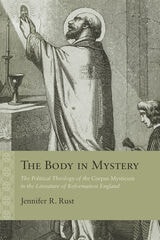
cover of The Body in Mystery: The Political Theology of the Corpus Mysticum in the Literature of Reformation England

The Body in Mystery

The Political Theology of the Corpus Mysticum in the Literature of Reformation England

Jennifer R. Rust

Northwestern University Press, 2013
In The Body in Mystery, Jennifer R. Rust engages the political concept of the mystical body of the commonwealth, the corpus mysticum of the medieval church. Rust argues that the communitarian ideal of sacramental sociality had a far longer afterlife than has been previously assumed. Reviving a critical discussion of the German historian Ernst Kantorowicz’s 1957 masterwork, The King’s Two Bodies: A Study in Mediaeval Political Theology, Rust brings to bear the latest scholarship. Her book expands the representation of the corpus mysticum through a range of literary genres as well as religious polemics and political discourses. Rust reclaims the concept as an essential category of social value and historical understanding for the imaginative life of literature from Reformation England. The Body in Mystery provides new ways of appreciating the always rich and sometimes difficult continuities between the secular and sacred in early modern England, and between the premodern and early modern periods.
[more]
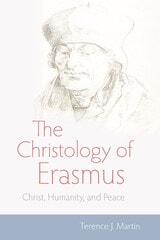
cover of The Christology of Erasmus: Christ, Humanity, and Peace

The Christology of Erasmus

Christ, Humanity, and Peace

Terence J. Martin

Catholic University of America Press, 2024
Nothing is more central to the religious thinking of Erasmus of Rotterdam than the reality of Christ—in his eyes, that supreme revelation of divine mercy embodied in the life of Jesus of Nazareth to which Christian scriptures variously testify, but also the divine presence undergirding that life-centering ethic of love and peace, what Erasmus calls the “philosophy of Christ.” The purpose of this book is to distill the Christological elements from his vast corpus in a manner that shows the range, coherence, and value of Erasmus’ thinking on Christological questions. While Erasmus works within the broad parameters of orthodox teaching, his critical skills with languages, accent on rhetoric in theology, keen sense of irony, appreciation for the limits of human knowledge, incipient sense of history, emphasis on the welfare of humanity, and passionate defense of peace, give his work a distinctive stamp and thereby make a singular contribution to the history of Christology. What Erasmus contributes to discussions of the divinity of Christ is a counsel of restraint in metaphysical speculation, an accent on the revelatory breadth of the eternal Word of God, and an invitation to think of Christ incarnate as the eloquent oration of God. But the central impulse of the Christology of Erasmus is the affirmation of the full incarnation of Christ in human existence, abstaining as much as possible from docetic insulation of the divine from the struggles of human experience, in order to highlight the redemptive capacity of Christ for the transformation of human life. With that, the ethical capstone of Erasmus’ reflections on Christ centers on the responsibility to imitate Christ’s love for others, and thus for advancing the cause of peace in personal and social life. This books adds the voice of this remarkable Catholic humanist to the history of theological discussions in the early modern era, while also restoring its rightful place in the broader history of Christology.
[more]
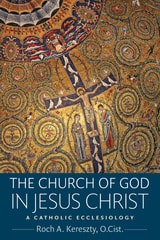
cover of The Church of God in Jesus Christ : A Catholic Ecclesiology

The Church of God in Jesus Christ

A Catholic Ecclesiology

Roch A. Kereszty

Catholic University of America Press, 2019
Investigating Vatican II is a collection of Fr. Jared Wicks’ recent articles on Vatican II, and presents the Second Vatican Council as an event to which theologians contributed in major ways and from which Catholic theology can gain enormous insights. Taken as a whole, the articles take the reader into the theological dynamics of Vatican II at key moments in the Council’s historical unfolding. Wicks promotes a contemporary re-reception of Vatican II’s theologically profound documents, especially as they featured God’s incarnate and saving Word, laid down principles of Catholic ecumenical engagement, and articulated the church’s turn to the modern world with a new “face” of respect and dedication to service. From the original motivations of Pope John XXIII in convoking the Council, Investigating Vatican II goes on to highlight the profound insights offered by theologians who served behind the scenes as Council experts. In its chapters, the book moves through the Council’s working periods, drawing on the published and non-published records, with attention to the Council’s dramas, crises, and breakthroughs. It brings to light the bases of Pope Francis’s call for synodality in a listening church, while highlighting Vatican II’s mandate to all of prayerful biblical reading, for fostering a vibrant “joy in the Gospel.”
[more]
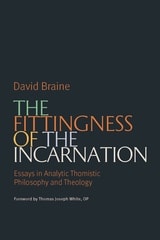
cover of The Fittingness of the Incarnation: Essays in Analytic Thomistic Philosophy and Theology

The Fittingness of the Incarnation

Essays in Analytic Thomistic Philosophy and Theology

David Braine, David

Catholic University of America Press, 2025
The Fittingness of the Incarnation collects David Braine's best unpublished philosophical and theological essays. The essays contained herein are representative of Braine's careful, rich and distinctive work. As one of the more interesting philosophers of his generation, David Braine offered a realist account of the world - God's existence, the human person, and language - through his major works, and these essays help follow through on some of those thoughts, explain underlying metaphysical or epistemological principles, and we see many of these applied in his theological essays. Additionally, the book includes Braine's plans for books on the realism of St. Thomas Aquinas, which helps us see again his vision for a unified philosophical account, and the Incarnation, which shows how Braine's philosophical anthropology informs. Altogether, the book contributes the final papers of David Braine to the fields at large.
[more]
cover of The Incarnate Lord

The Incarnate Lord

Thomas Josepth White, OP

Catholic University of America Press, 2015
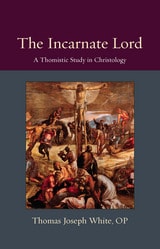
The Incarnate Lord, then, considers central themes in Christology from a metaphysical perspective. Particular attention is given to the hypostatic union, the two natures of Christ, the knowledge and obedience of Jesus, the passion and death of Christ, his descent into hell, and resurrection. A central concern of the book is to argue for the perennial importance of ontological principles of Christology inherited from patristic and scholastic authors. However, the book also seeks to advance an interpretation of Thomistic Christology in a modern context. The teaching Aquinas, then, is central to the study, but it is placed in conversation with various modern theologians, such as Karl Barth, Karl Rahner and Hans Urs von Balthasar. Ultimately the goal of the work is to suggest how traditional Catholic theology might thrive under modern conditions, and also develop fruitfully from engaging in contemporary controversies.
[more]
cover of The Mass: The Presence of the Sacrifice of the Cross

The Mass

The Presence of the Sacrifice of the Cross

Charles Cardinal Journet

St. Augustine's Press, 2008
[more]
cover of The Nocturnal Side of Science in David Friedrich Strauss's Life of Jesus Critically Examined

The Nocturnal Side of Science in David Friedrich Strauss's Life of Jesus Critically Examined

Thomas Fabisiak

SBL Press, 2015

A close look at how Strauss's engagement with popular and scholarly controversies influenced his study of the Gospels

David Friedrich Strauss's Life of Jesus Critically Examined is known as a monumental contribution to the critical, scientific study of religion and Christian origins. It was widely read and influenced literary and historical research on the Bible as well as critical philosophy between Hegel and Nietzsche. Less well-known are Strauss's writings from the same period on "the nocturnal side of nature," paranormal phenomena such as demon possession, animal magnetism, and the ghost-seeing of Frederike Hauffe, the famous "Seeress of Prevorst."

Features:

  • Illuminates unfamiliar features of early nineteenth-century theology, philosophy, and medicine showing how spirituality and science blended together in these fields
  • Demonstrates the importance of Western esotericism and popular religion in the history of modern biblical studies
  • Sheds new light on Strauss’s study of the Gospels as myths, his critique of miracles and his account of the historical Jesus
[more]
cover of The Opuscula and the Dispute with Pyrrhus: The Theological and Polemical Works

The Opuscula and the Dispute with Pyrrhus

The Theological and Polemical Works

Kevin M. St. Maximus the Confessor

Catholic University of America Press, 2026
Maximus the Confessor (d. 662), regarded by certain of his contemporaries as a sword of division, has become a bridge between East and West in our time. He lived at a time of theological and political upheaval, coming under intense scrutiny from imperial authorities in the final decades of his life. His conflict with Constantinople led him to engage in a theological and polemical campaign to equip his associates around the Mediterranean to respond to certain innovative doctrines. Maximus saw these new teachings as disconnected from the thought of the approved Fathers and theologically linked with prior heresies. This volume contains significant theological and polemical works— The Small Theological and Polemical Works, also known as the Opuscula, and the Dispute with Pyrrhus—refuting monenergism and monotheletism, the notions that Christ had only one activity or only one will. The Small Theological and Polemical Works are offered here for the first time in a complete English translation, built upon critical scholarship from the past century with key additions from Sergey Epifanovich included. Regarded as the most iconic work associated with Maximus, the famed Dispute with Pyrrhus, the deposed Patriarch of Constantinople, took place in Carthage in July 645. The record of this dialogue reflects Maximus’s mature Christology, while it is also a noteworthy prelude to his journey to Rome, where he worked with Pope Martin at the 649 Lateran Synod, uniting their voices and sealing their fates.
[more]
cover of The Philosophy of Jesus

The Philosophy of Jesus

Peter Kreeft

St. Augustine's Press, 2007

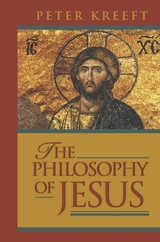
Amazingly, no one ever seems to have looked at Jesus as a philosopher, or his teaching as philosophy. Yet no one in history has ever had a more radically new philosophy, or made more of a difference to philosophy, than Jesus. He divided all human history into two, into "B.C." and "A.D."; and the history of philosophy is crucial to human history, since philosophy is crucial to man; so how could He not also divide philosophy?

This book (1) looks at Jesus as a complete human being (as well as divine), therefore also as a philosopher; (2) looks at philosophy as Jesus' pre-modern contemporaries did, as a wisdom, a world-view, and a way of life rather than as a super-science (Descartes, Hegel) or as a servant-science (Hobbes, Hume); and (3) looks at philosophy in light of Jesus rather than at Jesus in light of philosophy. It explores the consequences of Etienne Gilson's point that when St. John brought Christianity and Greek philosophy into contact and identified the Messiah the Jews had most deeply sought with the logos that the Greeks had most deeply sought, nothing happened to Christ but something happened to the logos.

This book explores the most radical revolution in the history of philosophy, the differences Jesus made to metaphysics (the philosophy of being), to epistemology (the philosophy of knowing), to anthropology (the philosophy of man), and to philosophical ethics and politics.

And, besides, it has the greatest ending of any philosophy book in a century.
[more]
cover of The Real and the Sacred: Picturing Jesus in Nineteenth-Century Fiction

The Real and the Sacred

Picturing Jesus in Nineteenth-Century Fiction

Jefferson J. A. Gatrall

University of Michigan Press, 2014
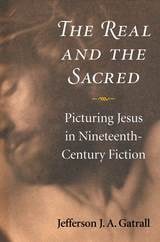
The figure of Jesus appears as a character in dozens of nineteenth-century novels, including works by Balzac, Flaubert, Dickens, Dostoevsky, and others. The Real and the Sacred focuses in particular on two fiction genres: the Jesus redivivus tale and the Jesus novel. In the former, Christ makes surprise visits to earth, from rural Flanders (Balzac) and Muscovy (Turgenev) to the bustling streets of Paris (Flaubert), Seville (Dostoevsky), Berlin, and Boston. In the latter, the historical Jesus wanders through the picturesque towns and plains of first-century Galilee and Judea, attracting followers and enemies. In short, authors subjected Christ, the second person of the Christian trinity, to the realist norms of secular fiction. Thus the Jesus of nineteenth-century fiction was both situated within a specific time and place, whether ancient or modern, and positioned before the gaze of increasingly daring literary portraitists. The highest artistic challenge for authors was to paint, using mere words, a faithful picture of Jesus in all his humanity. The incongruity of a sacred figure inhabiting secular literary forms nevertheless tested the limits of modern realist style no less than the doctrine of Christ’s divinity.

The international “quest of the historical Jesus” has been amply documented within the context of nineteenth-century biblical scholarship. Yet there has been no broad-based comparative study devoted to the depiction of Jesus in prose fiction over the same time period. The Real and the Sacred offers a comprehensive survey of this body of fiction, examining both the range of its Christ types and the varying formal means through which these types were represented. The nineteenth century—despite forecasts of God's death at the time—not only revived older Christ types but also witnessed the rise of new ones, including le Christ proletaire, the Mormon Christ, the Buddhist Christ, and the Tolstoyan Christ. Novelists played a crucial role in the invention and popularization of the historical Jesus in particular, one of modernity's major figures.

These pioneering works of fiction, written by authors of diverse religious and national backgrounds, laid the formal groundwork for an enduring fascination with the historical Jesus in later fiction and film, from Mikhail Bulgakov's Master and Margarita to Mel Gibson's The Passion of the Christ. The book is enhanced by a gallery of illustrations of the historical Jesus as depicted by nineteenth-century artists.
[more]
cover of The Reason of Following: Christology and the Ecstatic I

The Reason of Following

Christology and the Ecstatic I

Robert P. Scharlemann

University of Chicago Press, 1991

In the Reason of Following noted scholar Robert P. Scharlemann takes Christology in a radically new direction, suggesting that Christology itself represents a form of reason and an understanding of selfhood. For the first time, Scharlemann establishes a logical place for Christology in philosophical theology.

Scharlemann presents a christological phenomenology of the self, tracing the connections between the "I am" of the God who spoke to Moses, the "I am" of Christ, and the "I am" of autonomous self-identification. How, he asks, can the self that spontaneously responds to Jesus' "Follow me!" be compared with the everyday, autonomous self? What is the nature of "following" on the part of those who answer the summons of one whose name is "I am"? Pursuing these questions, Scharlemann develops a christological phenomenology of the self—an account in which following means not the expression of the self in action or reflection but rather self-discovery in another person.

With a deep sense of both culture and philosophy, Scharlemann distinguishes the forms of reason involved in "following" from those in ethics, aesthetics, and other modes of religious philosophic thought. His penetrating readings of nineteenth- and twentieth-century German theological and philosophical traditions provide an introduction to lesser-known thinkers such as Hermann and Picht as well as a profound critique of major figures such as Descartes, Heidegger, Fichte, and Kant.

Finally Scharlemann outlines a program for a more systematic and rounded presentation of what Christian doctrine might mean in the contemporary world. His work will be of interest to students of theology and philosophy alike.
[more]
cover of The Roles of Christ's Humanity in Salvation: Insights from Theodore of Mopsuestia

The Roles of Christ's Humanity in Salvation

Insights from Theodore of Mopsuestia

Frederick G. McLeod S.J.

Catholic University of America Press, 2005
This book enables one to judge Theodore's christological statements in the wider context of how he conceives of Christ's roles in salvation.
[more]
cover of The Seven Last Words of Our Lord Upon the Cross

The Seven Last Words of Our Lord Upon the Cross

Mother Catherine Abrikosova, T.O.S.D.

St. Augustine's Press, 2019
[more]
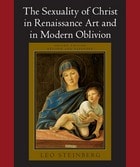
cover of The Sexuality of Christ in Renaissance Art and in Modern Oblivion

The Sexuality of Christ in Renaissance Art and in Modern Oblivion

Leo Steinberg

University of Chicago Press, 1996

Originally published in 1983, Leo Steinberg's classic work has changed the viewing habits of a generation. After centuries of repression and censorship, the sexual component in thousands of revered icons of Christ is restored to visibility. Steinberg's evidence resides in the imagery of the overtly sexed Christ, in Infancy and again after death. Steinberg argues that the artists regarded the deliberate exposure of Christ's genitalia as an affirmation of kinship with the human condition. Christ's lifelong virginity, understood as potency under check, and the first offer of blood in the circumcision, both required acknowledgment of the genital organ. More than exercises in realism, these unabashed images underscore the crucial theological import of the Incarnation. 

This revised and greatly expanded edition not only adduces new visual evidence, but deepens the theological argument and engages the controversy aroused by the book's first publication.
[more]
cover of The Stable Boy: The First Witness Tells His Story

The Stable Boy

The First Witness Tells His Story

Shirley A. Taylor

Parkhurst Brothers, Inc., 2012

In writing a nativity story from the point of view of a boy who lives in the stable, Shirley Taylor has given us a vivid account of Christ’s birth and a motivating experience to readers and hearers, alike.  Likely to become an ‘instant classic’ of Christian literature, this simple story will inspire thousands of retellings by pastors, Christian educators, parents and grandparents.

​"Shirley Taylor's story gives readers and hearers insight into the town of Bethlehem at the time of the birth of Christ. Wendell Hall's illustrations help us imagine that scene wonderfully. The young homeless boy touches our hearts and imaginations. Not just for children, this is a read aloud book for all ages." - Lauretta Phillips, Storyteller, Author, Radio & TV Host
[more]
cover of The Suffering Servant in Aquinas: Isaiah 53 and Thomas's Theology of Christ's Passion

The Suffering Servant in Aquinas

Isaiah 53 and Thomas's Theology of Christ's Passion

Daniel R. Waldow

Catholic University of America Press, 2024

The “Suffering Servant” text of Isaiah 53 is a perennial topic of debate within Jewish and Christian biblical theology. Is the Suffering Servant an individual, a group, or both? How and why did he suffer? What role did God play in his suffering? How is his suffering related to human salvation? The answers to these questions often divide Jewish and Christian readers of Scripture as well as Christians across different denominations. In particular, Isaiah 53 tends to inform different Christian accounts of the origin, nature, and saving value of Christ’s Passion. The Suffering Servant in Aquinas contributes to the debate on the meaning of Isaiah 53 and its bearing upon the Passion of Christ by examining how St. Thomas Aquinas engaged this biblical text. This book examines every explicit reference to Isaiah 53 that Aquinas makes in his biblical commentaries, Commentary on the Sentences, Summa Theologiae, and Opuscula. It analyzes how and why Aquinas interprets Isaiah 53 in the ways that he does. It focuses especially upon how Aquinas draws upon Isaiah 53 to shed light on the saving mystery of Christ’s Passion. Readers will see how Aquinas articulates the relationship between God’s will and Christ’s suffering, the diverse forms of Christ’s pain, the degree to which the Passion can be considered a “punishment,” and the saving functions of the Passion as example, merit, satisfaction, and sacrifice. This book makes an original contribution to the growing field of Biblical Thomism. It examines Aquinas’s exegetical methods as well as the role of Scripture within his speculative theology. And it properly contextualizes Aquinas’s exegesis by considering the differences between his Latin version of Isaiah 53 and contemporary renderings of Hebrew and Greek versions. Readers will see that Aquinas’s Christological interpretations of Isaiah 53 are both exegetically intriguing and theologically rich.
[more]
cover of The Thief, the Cross, and the Wheel: Pain and the Spectacle of Punishment in Medieval and Renaissance Europe

The Thief, the Cross, and the Wheel

Pain and the Spectacle of Punishment in Medieval and Renaissance Europe

Mitchell B. Merback

University of Chicago Press, 1999

Christ's Crucifixion is one of the most recognized images in Western culture, and it has come to stand as a universal symbol of both suffering and salvation. But often overlooked is the fact that ultimately the Crucifixion is a scene of capital punishment. Mitchell Merback reconstructs the religious, legal, and historical context of the Crucifixion and of other images of public torture. The result is a fascinating account of a time when criminal justice and religion were entirely interrelated and punishment was a visual spectacle devoured by a popular audience.

Merback compares the images of Christ's Crucifixion with those of the two thieves who met their fate beside Jesus. In paintings by well-known Northern European masters and provincial painters alike, Merback finds the two thieves subjected to incredible cruelty, cruelty that artists could not depict in their scenes of Christ's Crucifixion because of theological requirements. Through these representations Merback explores the ways audiences in early modern Europe understood images of physical suffering and execution. The frequently shocking works also provide a perspective from which Merback examines the live spectacle of public torture and execution and how audiences were encouraged by the Church and the State to react to the experience. Throughout, Merback traces the intricate and extraordinary connections among religious art, devotional practice, bodily pain, punishment, and judicial spectatorship.

Keenly aware of the difficulties involved in discussing images of atrocious violence but determined to make them historically comprehensible, Merback has written an informed and provocative study that reveals the rituals of medieval criminal justice and the visual experiences they engendered.


[more]
cover of Three Christological Treatises

Three Christological Treatises

Catholic University of America Press, 2014

Twenty-nine in all, these letters cover all but three of Cyril's years as a bishop. The first twelve were published in 2009 (Fathers of the Church 118). The present volume completes the set. Festal letters were used in Alexandria primarily to announce the beginning of Lent and the date of Easter. They also served a catechetical purpose, however, allowing the Patriarch an annual opportunity to write pastorally not just about issues facing the entire see, but also about the theological issues of the day. Thus, in these letters we catch a glimpse of Cyril the pastor writing about complex theology in an uncomplicated way. These letters also illuminate other realities of the ancient church in Alexandria, especially the relationship with the Jewish community and the rising influence of asceticism.
[more]