Results by title
108 books match the query 'Knowledge and learning' and 17 start with t
Telling Wonders
Ethnographic and Political Discourse in the Work of HerodotusRosaria Munson
University of Michigan Press, 2001
As he explores the causes of the East-West conflict from its most remote antecedents, Herodotus includes conflicting traditions about different historical periods as well as apparently tangential descriptions of the customs of faraway peoples. What was his aim in combining such diverse material? Rosaria Vignolo Munson argues that Herodotus' aim was two-fold: to use historical narrative to illuminate the present and to describe barbarian customs so that the Greeks might understand themselves.
Herodotus assumes the role of advisor to his audience, acting as a master of metaphor and oracular speech and as an intellectual fully aware of new philosophical and political trends. By comparing, interpreting, and evaluating facts through time and space or simply by pointing them out as objects of "wonder," he teaches that correct political action is linked to an appropriate approach to foreigners and additional "others." Munson relies on traditional scholarship and modern studies in narratology and related critical fields to distinguish between narrative and metanarrative, providing a framework for analyzing the construction of Herodotus' discourse and his presentation of himself through it.
Munson's work will be useful to classicists and ancient historians and will also engage anthropologists interested in cultural interaction and notions of ethnicity and literary critics interested in narrative constructions.
The Converting Imagination
Linguistic Theory and Swift's Satiric ProseMarilyn Francus
Southern Illinois University Press, 1994
By illuminating Jonathan Swift’s fascination with language, Marilyn Francus shows how the linguistic questions posed by his work are at the forefront of twentieth-century literary criticism: What constitutes meaning in language? How do people respond to language? Who has (or should have) authority over language? Is linguistic value synonymous with literary value?
Francus starts with a detailed analysis of Swift’s linguistic education, which straddled a radical transition in linguistic thought, and its effect on his prose. This compelling beginning includes sometimes surprising historical information about the teaching and learning of linguistics and language theory in the seventeenth and eighteenth centuries. Swift’s academic studies reflected the traditional universalist view that seeks an Adamic language to reverse the fragmentation of Babel and achieve epistemological unity. But Swift’s tutor also exposed him to the contemporary linguistics of the scientific societies and of John Locke, who argued that the assignment of linguistic meaning is arbitrary and subjective, capturing an individual’s understanding at a particular instant. These competing theories, Francus maintains, help explain the Irish writer’s conflicting inclinations toward both linguistic order and freewheeling creativity.
To develop a complete vision of Swiftian linguistics, Francus focuses on A Tale of a Tub as the archetypal linguistic text in the Swift canon, but she also includes evidence from his other famous works, including Gulliver’s Travels, A Modest Proposal, Journal to Stella, and The Bickerstaff Papers, as well as from his lesser known religious and political tracts and his correspondence. In addition, Francus draws on the relevant work of contemporary linguists (such as Wilkins, Watts, Dyche, and Stackhouse), philosophers (Hobbes and Locke), and authors (including Temple, Sprat, Dryden, Pope, Addison, and Defoe).
Francus concludes that Swift occupies a pivotal place in literary history: his conscious emphasis on textuality and extended linguistic play anticipates not only the future of satiric prose but the modern novel as well.
The Game Changed
Essays and Other ProseLawrence Joseph
University of Michigan Press, 2011
Praise for Lawrence Joseph:
"Poetry of great dignity, grace, and unrelenting persuasiveness… Joseph gives us new hope for the resourcefulness of humanity, and of poetry."
---John Ashbery
"Like Henry Adams, Joseph seems to be writing ahead of actual events, and that makes him one of the scariest writers I know."
---David Kirby, The New York Times Book Review
"The most important lawyer-poet of our era."
---David Skeel, Legal Affairs
A volume in the Poets on Poetry series, which collects critical works by contemporary poets, gathering together the articles, interviews, and book reviews by which they have articulated the poetics of a new generation.
Essays on poetry by the most important poet-lawyer of our era
The Game Changed: Essays and Other Prose presents works by prominent poet and lawyer Lawrence Joseph that focus on poetry and poetics, and on what it is to be a poet. Joseph takes the reader through the aesthetics of modernism and postmodernism, a lineage that includes Wallace Stevens, William Carlos Williams, and Gertrude Stein, switching critical tracks to major European poets like Eugenio Montale and Hans Magnus Enzensberger, and back to American masters like James Schuyler and Adrienne Rich.
Always discerning, especially on issues of identity, form, and the pressures of history and politics, Joseph places his own poetry within its critical contexts, presenting narratives of his life in Detroit, where he grew up, and in Manhattan, where he has lived for 30 years. These pieces also portray Joseph’s Lebanese, Syrian, and Catholic heritages, and his life as a lawyer, distinguished law professor, and legal scholar.
The Master and the Dean
The Literary Criticism of Henry James and William Dean HowellsRob Davidson
University of Missouri Press, 2005
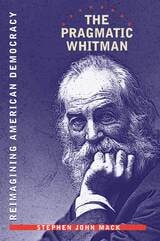
The Pragmatic Whitman
Reimaining American DemocracyStephen John Mack
University of Iowa Press, 2002
In this surprisingly timely book, Stephen Mack examines Whitman’s particular and fascinating brand of patriotism: his far-reaching vision of democracy. For Whitman, loyalty to America was loyalty to democracy. Since the idea that democracy is not just a political process but a social and cultural process as well is associated with American pragmatism, Mack relies on the pragmatic tradition of Emerson, James, Dewey, Mead, and Rorty to demonstrate the ways in which Whitman resides in this tradition.
Mack analyzes Whitman's democratic vision both in its parts and as a whole; he also describes the ways in which Whitman's vision evolved throughout his career. He argues that Whitman initially viewed democratic values such as individual liberty and democratic processes such as collective decision-making as fundamental, organic principles, free and unregulated. But throughout the 1860s and 1870s Whitman came to realize that democracy entailed processes of human agency that are more deliberate and less natural—that human destiny is largely the product of human effort, and a truly humane society can be shaped only by intelligent human efforts to govern the forces that would otherwise govern us.
Mack describes the foundation of Whitman’s democracy as found in the 1855 and 1856 editions of Leaves of Grass, examines the ways in which Whitman’s 1859 sexual crisis and the Civil War transformed his democratic poetics in “Sea-Drift,” “Calamus,” Drum-Taps,and Sequel to Drum-Taps, and explores Whitman’s mature vision in Democratic Vistas, concluding with observations on its moral and political implications today. Throughout, he illuminates Whitman's great achievement—learning that a full appreciation for the complexities of human life meant understanding that liberty can take many different and conflicting forms—and allows us to contemplate the relevance of that achievement at the beginning of the twenty-first century.
The Stuff of Our Forebears
Willa Cather's Southern HeritageJoyce McDonald
University of Alabama Press, 1998
Connecting Cather's work to the southern literary tradition and the South of her youth
A diverse and experimental writer who lived most of her life in New York City, Willa Cather is best known for her depiction of pioneer life on the Nebraska plains. Despite Cather's association with Nebraska, however, the novelist's Virginia childhood and her southern family were deeply influential in shaping her literary imagination.
Joyce McDonald shows evidence, for example, of Cather's southern sensibility in the class consciousness and aesthetic values of her characters and in their sense of place and desire for historical continuity, a sensibility also evident in her narrative technique of weaving stories within stories and in her use of folklore. For McDonald, however, what most links Cather and her work to the South and to the southern literary tradition is her use of pastoral modes.
Beginning with an examination of Cather's Virginia childhood and the southern influences that continued to mold her during the Nebraska years, McDonald traces the effects of those influences in Cather's novels. The patterns that emerge reveal not only Cather's strong ideological connection to the pastoral but also the political position implicit in her choice of that particular mode. Further analysis of Cather's work reveals her preoccupation with hierarchical constructs and with the use and abuse of power and her interest in order, control, and possession. The Willa Cather who emerges from the pages of The Stuff of Our Forebears is not the Cather who claimed to eschew politics but a far more political novelist than has heretofore been perceived.

The Tangled Roots of Feminism, Environmentalism, and Appalachian Literature
Elizabeth S. D. Engelhardt
Ohio University Press, 2003
Contemporaries were shocked when author Mary Noailles Murfree revealed she was a woman, but modern readers may be more surprised by her cogent discussion of community responses to unwanted development. Effie Waller Smith, an African American woman writing of her love for the Appalachian mountains, wove discussions of women's rights, racial tension, and cultural difference into her Appalachian poetry. Grace MacGowan Cooke participated in avant-garde writers' colonies with the era's literary lights and applied their progressive ideals to her fiction about the Appalachia of her youth. Emma Bell Miles, witness to poverty, industrialization, and violence against women, wrote poignant and insightful critiques of her Appalachian home.
In The Tangled Roots of Feminism, Environmentalism, and Appalachian Literature Elizabeth Engelhardt finds in all four women's writings the origins of what we recognize today as ecological feminism—a wide-reaching philosophy that values the connections between humans and nonhumans and works for social and environmental justice.
People and the land in Appalachia were also the subject of women authors with radically different approaches to mountains and their residents. Authors with progressive ideas about women's rights did not always respect the Appalachian places they were writing about or apply their ideas to all of the women in those places—but they did create hundreds of short stories, novels, letters, diaries, photographs, sketches, and poems about the mountains.
While The Tangled Roots of Feminism, Environmentalism, and Appalachian Literature ascribes much that is noble to the beginnings of the ecological feminism movement as it developed in Appalachia, it is also unyielding in its assessment of the literatures of the voyeur, tourist, and social crusader who supported status quo systems of oppression in Appalachia.
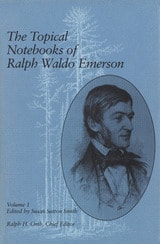
The Topical Notebooks of Ralph Waldo Emerson, Volume 1
Ralph Waldo Emerson, Edited by Susan Sutton Smith
University of Missouri Press, 1990
Published here for the first time are seven of Emerson's topical notebooks, which served as a source for his lectures, essays, and books of the 1850s, 1860s, and 1870s. Concerned primarily with nature, art, philosophy, American culture, and his comtemporaries, the notebooks presented in this first of a three-volume editions afford fascinating insight into Emerson's creative practices. They will offer new perspectives for future readings of his completed works.
The editors provide faithful transcriptions of the notebooks using the highest standards of textual practice. Their detailed annotations describe and comment on erased or revised passages, translate Greek and Latin quotations, and identify books and articles referred to in the texts of the notebooks. References to similar passages in Emerson's journals, lectures, and published works are also provided in the annotations.
Publication of these notebooks will inable scholars to trace ideas that have gone unnoticed previously. The Topical Notebooks of Ralph Waldo Emerson, Volume 1, offers valuable insight into the art and philosophy of one of America's foremost thinkers. These volumes will be an important addition to any personal or institutional library of nine-teenth-century American literature.
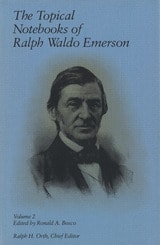
The Topical Notebooks of Ralph Waldo Emerson, Volume 2
Ralph Waldo Emerson; Edited by Ronald A. Bosco; Chief Editor, Ralph H. Orth
University of Missouri Press, 1993
Ralph Waldo Emerson, the magus of of American Transcendentalism, was an inveterate keeper of journals and notebooks, which he used as source and proving ground for his poems, lectures, and essays. This is the second in a three-volume edition that brings twelve of Emerson's topical notebooks and four other notebooks into print for the first time. These notebooks were Emerson's repositories for anecdotes, quotations, reminiscences, drafts of his poems, outlines for lectures, and observations on everything from daily life to profound cultural and philosophical issues.
Among the highlights of the five notebooks in Volume 2, "Orientalist" provides an unusual opportunity to view closely Emerson's adaptation of Eastern thought.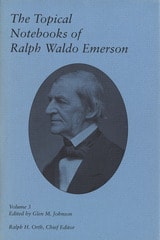
The Topical Notebooks of Ralph Waldo Emerson, Volume 3
Ralph Waldo Emerson; Edited by Glen M. Johnson; Series Editor, Ralph H. Orth
University of Missouri Press, 1994
"Ralph Orth...has been indefatigable in giving us volumes of the highest accuracy and usefulness," said American Renaissance Literary Report. Volume 3 completes the series that brings twelve of Emerson's topical notebooks and four other notebooks into print for the first time. In this final volume, Glen Martin Johnson presents four of the topical notebooks dating from the mid 1840s through the early 1870s, the end of Emerson's productive life. The notebooks include diverse material from which Emerson wrote his lectures, essays, and books.
Each of the four notebooks illustrates some of the many uses Emerson made of these collections of quotations and ideas: OP Gulistan is a compendium of biographical information and anecdotes about dozens of Emerson's acquaintances; S Salvage takes stock of and preserves parts of his earlier writings; ZO was used in preparing the lectures that became "Poetry and Imagination"; and ML was employed for extensive notes on the moral law and religion, and as a resource in preparing lectures and readings during the late 1860s.
The publication of these notebooks renders an invaluable service to the scholarly community and to students of American literature. Collectively, they dipict in great detail the subtle changes that occurred in Emerson's thought from the beginning until the end of his career to give a complete picture of the man and the writer. The younger Emerson, whose writing abounds with enthusiasm, became someone whose darker wisdom about inevitable limitations was expressed in essays such as "Fate" and "Illusions." The notebooks in this volume will allow us to better understand the last three decades of Emerson's career, which have remained less than fully explored.
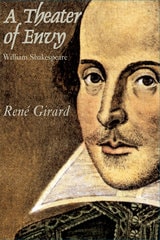
Theater Of Envy
William ShakespeareRene Girard
St. Augustine's Press, 2004
In this ground-breaking work, one of our foremost literary and cultural critics turns to the major figure in English literature, William Shakespeare, and proposes a dramatic new reading of nearly all his plays and poems. The key to A Theater of Envy is Girard's novel reinterpretation of "mimesis." For Girard, people desire objects not for their intrinsic value, but because they are desired by someone else - we mime or imitate their desires. This envy - or "mimetic desire" - he sees as one of the foundations of the human condition.
Bringing such proocative and iconoclastic insights to bear on Shakespeare, Girard reveals the previously overlooked coherence of problem plays like Troilus and Cressida, and makes a convincing argument for elevating A Midsummer Night's Dream from the status of a chaotic comedy to a masterpiece. The book abounds with novel and provocative interpretations: Shakespeare becomes "a prophet of modern advertising," and the threat of nuclear disaster is read in the light of Hamlet. Most intriguing of all, perhaps, is a brief, but brilliant aside in which an entirely new perspective is brought to the chapter on Joyce's Ulysses in which Stephen Dedalus gives a lecture on Shakespeare. In Girard's view only Joyce, perhaps the greatest of twentieth-century novelists, comes close to understanding the greatest of Renaissance playwrights.
Throughout this impressively sustained reading of Shakespeare, Girard's prose is sophisticated, but contemporary, and accessible to the general reader.
Thomas De Quincey
British Rhetoric's Romantic TurnLois Peters Agnew
Southern Illinois University Press, 2012
This wide-ranging volume gives proper attention to the views on rhetoric and style set forth by British literary figure Thomas De Quincey (1785–1859), whose contributions to the history of rhetoric are often overlooked. Lois Peters Agnew presents an overview of this theorist’s life and provides cultural context for his time and place, with particular emphasis on the significance of his rhetoric as both an alternative strain of rhetorical history and a previously unrealized example of rhetoric’s transformation in nineteenth-century Britain.
Agnew presents an extensive discussion of De Quincey’s ideas on rhetoric, his theory and practice of conversation, his theory of style and its role in achieving rhetoric’s dialogic potential, and his strategic use of humor and irony in such works as Confessions of an English Opium Eater. Synthesizing previous treatments of De Quincey’s rhetoric and connecting his unusual perspectives on language to the biographical details of his life, Agnew helps readers understand his intellectual development while bringing to light the cultural contexts that prompted radical changes in the ways nineteenth-century British intellectuals conceived of the role of language and the imagination in public and private discourse.
Agnew presents an alternative vision of rhetoric that departs from many common assumptions about rhetoric’s civic purpose and offers insights into the topic of rhetoric and technological change. The result is an accessible and thorough explanation of De Quincey’s complex ideas on rhetoric and the first work to fully show the reach of his ideas across multiple texts written during his lifetime.
Thomas Hardy's Brains
Psychology, Neurology, and Hardy's ImaginationSuzanne Keen
The Ohio State University Press, 2014
This study reveals how Hardy made sense of diverse sources of an affective human psychology, a discipline that expanded significantly during Hardy’s working life. From the 1870s to the turn of the twentieth century, the tools and techniques for studying the structures and function of the nervous system developed rapidly. Simultaneously, Hardy moved steadily toward realizing a more physiologically accurate rendering of brains and nerves.
Thoreaus Sense of Place
Essays in American Environmental WritingRichard J. Schneider
University of Iowa Press, 2000
The contributors to this stimulating collection address the ways in which Thoreau and his successors attempt to cope with the basic epistemological split between perceiver and place inherent in writing about nature; related discussions involve the kinds of discourse most effective for writing about place. They focus on the impact on Thoreau and his successors of culturally constructed assumptions deriving from science, politics, race, gender, history, and literary conventions. Finally, they explore the implications surrounding a writer's appropriation or even exploitation of places and objects.
Towards Reading Freud
Self-Creation in Milton, Wordsworth, Emerson, and Sigmund FreudMark Edmundson
University of Chicago Press, 2007
“Marvelous. . . . Edmundson’s book offers an extraordinary challenge both to practicing analysts and to a scholarly community which all too uncomplainingly inhabits and reinforces the Freudian paradigm of interpretation. Edmundson reinvents an adventurous and dissident Freud as an antidote to . . . weary psychoanalytic commonplaces.”—Malcolm Bowie, Raritan
“This book takes a distinguished place in the ongoing effort to recontextualize Freud by stressing the literary, rather than the scientific roots and character of his theory.”—Virginia Quarterly Review
Transcendental Wordplay
America’s Romantic Punsters and the Search for the Language of NatureMichael West
Ohio University Press, 2000
Throughout the first half of the nineteenth century, America was captivated by a muddled notion of “etymology.” New England Transcendentalism was only one outcropping of a nationwide movement in which schoolmasters across small-town America taught students the roots of words in ways that dramatized religious issues and sparked wordplay.
Shaped by this ferment, our major romantic authors shared the sensibility that Friedrich Schlegel linked to punning and christened “romantic irony.” Notable punsters or etymologists all, they gleefully set up as sages, creating jocular masterpieces from their zest for oracular wordplay. Their search for a primal language lurking beneath all natural languages provided them with something like a secret language that encodes their meanings. To fathom their essentially comic masterpieces we must decipher it.
Interpreting Thoreau as an ironic moralist, satirist, and social critic rather than a nature-loving mystic, Transcendental Wordplay suggests that the major American Romantics shared a surprising conservatism. In this award-winning study, Professor West rescues the pun from critical contempt and allows readers to enjoy it as a serious form of American humor.
Tribal Secrets
Recovering American Indian Intellectual TraditionsRobert Allen Warrior
University of Minnesota Press, 1994