Results by title
120 books match the query 'Marketing' and 15 start with t
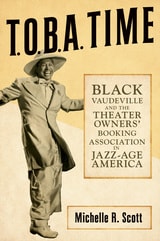
T.O.B.A. Time
Black Vaudeville and the Theater Owners’ Booking Association in Jazz-Age AmericaMichelle R. Scott
University of Illinois Press, 2023
Michelle R. Scott’s institutional history details T.O.B.A.’s origins and practices while telling the little-known stories of the managers, producers, performers, and audience members involved in the circuit. Looking at the organization over its eleven-year existence (1920–1931), Scott places T.O.B.A. against the backdrop of what entrepreneurship and business development meant in black America at the time. Scott also highlights how intellectuals debated the social, economic, and political significance of black entertainment from the early 1900s through T.O.B.A.’s decline during the Great Depression.
Clear-eyed and comprehensive, T.O.B.A. Time is a fascinating account of black entertainment and black business during a formative era.

The Conquest of Cool
Business Culture, Counterculture, and the Rise of Hip ConsumerismThomas Frank
University of Chicago Press, 1997
"[Thomas Frank is] perhaps the most provocative young cultural critic of the moment."—Gerald Marzorati, New York Times Book Review
"An indispensable survival guide for any modern consumer."—Publishers Weekly, starred review
"Frank makes an ironclad case not only that the advertising industry cunningly turned the countercultural rhetoric of revolution into a rallying cry to buy more stuff, but that the process itself actually predated any actual counterculture to exploit."—Geoff Pevere, Toronto Globe and Mail
"The Conquest of Cool helps us understand why, throughout the last third of the twentieth century, Americans have increasingly confused gentility with conformity, irony with protest, and an extended middle finger with a populist manifesto. . . . His voice is an exciting addition to the soporific public discourse of the late twentieth century."—T. J. Jackson Lears, In These Times
"An invaluable argument for anyone who has ever scoffed at hand-me-down counterculture from the '60s. A spirited and exhaustive analysis of the era's advertising."—Brad Wieners, Wired Magazine
"Tom Frank is . . . not only old-fashioned, he's anti-fashion, with a place in his heart for that ultimate social faux pas, leftist politics."—Roger Trilling, Details
The Consumer Trap
BIG BUSINESS MARKETING IN AMERICAN LIFEMichael Dawson
University of Illinois Press, 2003
After revealing why corporate capitalism fuels an ever-increasing marketing race, Dawson provides a step-by-step account of how this behemoth works and expands. Using firsthand evidence, he explains in detail how big business marketing campaigns penetrate and profoundly affect the lives of ordinary Americans.
Dawson argues that if people are to escape the costly consumer trap set by the overclass, they will need to renew class struggle from below, inventing new institutions for democratically governing and implementing major economic decisions. A blueprint for reinventing the study and debate of the sociocultural effects of corporate marketing practices, The Consumer Trap makes big business marketing a target of direct historical and sociological scrutiny.
The Creative Writer's Survival Guide
Advice from an Unrepentant NovelistJohn McNally
University of Iowa Press, 2010
Beginning with “The Writer’s Wonderland—Or: A Warning” and ending with “You’ve Published a Book—Now What?” The Creative Writer’s Survival Guide is a must-read for creative-writing students and teachers, conference participants, and aspiring writers of every stamp. Directed primarily at fiction writers but suitable for writers of all genres, John McNally’s guide is a comprehensive, take-no-prisoners blunt, highly idiosyncratic, and delightfully subjective take on the writing life.
McNally has earned the right to dispense advice on this subject. He has published three novels, two collections of short fiction, and hundreds of individual stories and essays. He has edited six anthologies and worked with editors at university presses, commercial houses, and small presses. He has earned three degrees, including an MFA from the Iowa Writers’ Workshop, and taught writing to thousands of students at nine different universities. But he has received far more rejections than acceptances, has endured years of underpaid adjunct work, and is presently hard at work on a novel for which he has no guarantee of publication. In other words, he’s been at the writing game long enough to rack up plenty of the highs and lows that translate into an invaluable guide for anyone who wants to become a writer or anyone who is already a writer but doesn’t know how to take the next step toward the writing life.
In the sections The Decision to Become a Writer, Education and the Writer, Getting Published, Publicity, Employment for Writers, and The Writer’s Life, McNally wrestles with writing degrees and graduate programs, the nuts and bolts of agents and query letters and critics, book signings and other ways to promote your book, alcohol and other home remedies, and jobs for writers from adjunct to tenure-track. Chapters such as “What Have You Ever Done That’s Worth Writing About?” “Can Writing Be Taught?” “Rejection: Putting It in Perspective,” “Writing as a Competitive Sport,” “Seven Types of MLA Interview Committees,” “Money and the Writer,” and the all-important “Talking about Writing vs. Writing” cover a vast range of writerly topics from learning your craft to making a living at it. McNally acts as the writer’s friendly drill sergeant, relentlessly honest but bracingly cheerful as he issues his curmudgeonly marching orders. Alternately cranky and philosophical, full of to-the-point anecdotes and honest advice instead of wonkish facts and figures, The Creative Writer’s Survival Guide is a snarky, truthful, and immensely helpful map to being a writer in today’s complex world.
The Digital NBA
How the World's Savviest League Brings the Court to Our CouchSteven Secular
University of Illinois Press, 2023
A timely look at a dynamic media landscape, The Digital NBA shows how the games we love became content first and sport a distant second.
The Fair Trade Scandal
Marketing Poverty to Benefit the RichNdongo Sylla
Ohio University Press, 2014
This critical account of the fair trade movement explores the vast gap between the rhetoric of fair trade and its practical results for poor countries, particularly those of Africa. In the Global North, fair trade often is described as a revolutionary tool for transforming the lives of millions across the globe. The growth in sales for fair trade products has been dramatic in recent years, but most of the benefit has accrued to the already wealthy merchandisers at the top of the value chain rather than to the poor producers at the bottom.
Ndongo Sylla has worked for Fairtrade International and offers an insider’s view of how fair trade improves—or doesn’t—the lot of the world’s poorest. His methodological framework first describes the hypotheses on which the fair trade movement is grounded before going on to examine critically the claims made by its proponents. By distinguishing local impact from global impact, Sylla exposes the inequity built into the system and the resulting misallocation of the fair trade premium paid by consumers. The Fair Trade Scandal is an empirically based critique of both fair trade and traditional free trade; it is the more important for exploring the problems of both from the perspective of the peoples of the Global South, the ostensible beneficiaries of the fair trade system.
The Feature Film Distribution Deal
A Critical Analysis of the Single Most Important Film Industry AgreementJohn W. Cones
Southern Illinois University Press, 1997
John W. Cones, whose real goal is to stimulate a long-term film industry reform movement, shows how the financial control of the film industry in the hands of the major studios and distributors actually translates into creative control of the industry.
Cones discusses the pros and cons of the debate relating to the industry’s so-called net profit problem and the way in which the distribution deal plays an integral part in that problem. He then breaks down five major film finance/distribution scenarios, explaining various distribution deals and suggesting ways of negotiating distribution.
Critically examining the specific terms of the distribution deal itself, Cones covers gross receipts exclusions, distributor fees, and distribution expenses. He also investigates the various forms of interest, issues of production costs, matters of creative control, and general contractual provisions.
For handy reference, Cones includes an extensive checklist for negotiating any feature film distribution deal. The list deals with distribution fees, distribution expenses, interest, production costs, creative control issues, general contractual provisions, distributor commitments, and the limits of negotiating. His nine appendixes present a "Motion Picture Industry Overview," "Profit Participation Audit Firms," "ADI (Top 50) Market Rankings," an "AFMA Member List, 1992–1993," a "Production-Financing/Distribution Agreement," a "Negative Pickup Distribution Agreement," a "Distribution Rights Acquisition Agreement," a "Distribution Agreement (Rent-a-Distributor Deal)," and a "Foreign Distribution Agreement."
Cones wrote this book for independent producers, executive and associate producers and their representatives, directors, actors, screenwriters, members of talent guilds, distributors, and entertainment, antitrust, and securities attorneys. Securities issuers and dealers, investment bankers, and money finders, investors, and financiers of every sort also will be interested. In addition, Cones suggests and hopes that the book will interest "Congress, their research staff, government regulators at the Internal Revenue Service, the Securities and Exchange Commission, the Federal Trade Commission, and law enforcement officials such as the Los Angeles District Attorney and the U.S. Justice Department."
The Great Art Hoax
Essays in the Comedy and Insanity of Collectible ArtJon Huer
University of Wisconsin Press, 1990
The High-Impact Digital Library
Innovative Approaches for Outreach and InstructionAnna Neatrour, Jeremy Myntti, Rachel Jane Wittmann, Rebekah Cummings, Jane Monson, and Megan Myres McMillan, in collaboration with Core Publishing
American Library Association, 2025
- discusses the results of a unique survey that provides new and structured information on digital library outreach and instruction;
- presents outreach case studies illustrating uses of social media promotion, integration of digital collections into teaching and instruction activities, partnerships with external campus units or community organizations, and other activities;
- explores many types of instruction, from drop-in class sessions and training to course-integrated instruction and ways that digital library practitioners can contribute to the Open Educational Resources (OER) and open pedagogy movements;
- details the digital humanities and digital scholarship programs developed at the University of Utah by many of the authors through cross-departmental collaboration;
- describes the ways in which the pandemic spurred many institutions to use rapid response collecting to practice community engagement; and
- speculates on future directions for outreach and instruction for digital libraries.

The Librarian's Nitty-Gritty Guide to Content Marketing
Laura Solomon
American Library Association, 2016
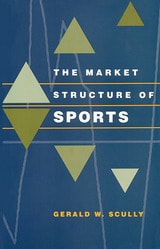
The Market Structure of Sports
Gerald W. Scully
University of Chicago Press, 1994
This book offers technical insights that will interest business economists and professionals in sports management.

The Marketing of Farm Products
Studies in the Organization of the Twin Cities MarketH. Price
University of Minnesota Press, 1927
The Personal Librarian
Richard Moniz
American Library Association, 2022
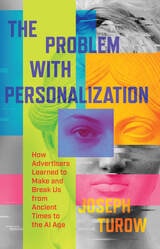
The Problem with Personalization
How Advertisers Learned to Make and Break Us from Ancient Times to the AI AgeJoseph Turow
University of Chicago Press, 2026
A respected voice on technology shows how seemingly simple ads help dismantle democracy and public discourse.
Whether you’re intentionally shopping or casually browsing social media, something is following you: ads. Their creators seem to know your income bracket, politics, age, location, medical conditions, and tastes in clothing, food, and romantic partners. As advertising firms use predictive AI to discover your hot buttons and generative AI to push them, your online world becomes an increasingly bespoke—and isolated—place. The fervid competition around personalization in digital marketing has given rise to an ecosystem of advertisers, media outlets, tech companies, and retailers who monetize your data while threatening the health of our media, discourse, and sense of community. In this urgent book, award-winning author Joseph Turow shows how we got here, and how to change direction.
The Problem with Personalization shatters common beliefs about advertising history by showing that individualized ads are not new. Today’s AI-enabled advertisers draw on past aspirations and assumptions about personalization while weaponizing data in unprecedented ways that drive social fragmentation and the disappearance of shared social reality. Informed by interviews with marketing insiders and covering the latest technology advances, Turow accessibly explains how artificial intelligence sifts through our data to tag and target us wherever we go with personalized videos, pictorial billboards, audio messages, and more. A logical next step for advertiser support is tailored entertainment and news, a shift that further destroys the common ground necessary for a functioning democracy.
A must-read for all who care about the future of public discourse, The Problem with Personalization reveals how targeted advertising has altered how we’re seen and what we see in return.
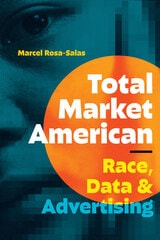
Total Market American
Race, Data, and AdvertisingMarcel Rosa-Salas
Duke University Press, 2025