Results by title
175 books match the query 'Mayas' and 31 start with t
Temporalities in Mesoamerican Ritual Practices
Valentina Vapnarsky
University Press of Colorado, 2024
Based on specific case studies, new analysis of fieldwork data, and long-term collaboration between authors, chapters engage empirically and theoretically with the multiple temporalities of ritual in relation to both the unfolding of ritual performance and its external and symbolic anchors. Taking rituals as a series of specific, formalized actions that produce transitory changes within an initial context, the authors examine activities that generate change linked to artifact production, life cycles, healing, conflict resolution, crisis management, the enthronement of rulers and transfers of responsibilities, and practices relating to the occupation, abandonment, reuse, or conversion of socialized spaces.
Adopting a multidisciplinary approach in archaeology, ethnohistory, anthropology, and linguistic anthropology, Temporalities in Mesoamerican Ritual Practices offers new insights into ritual time approached through multi-semiotic, material, sensorial, and pragmatic perspectives that encourage further interdisciplinary dialogue.
Testimony
Death of a Guatemalan VillageVictor Montejo
Northwestern University Press, 1987
The Adorned Body
Mapping Ancient Maya DressEdited by Nicholas Carter, Stephen D. Houston, and Franco D. Rossi
University of Texas Press, 2020
How we dress our bodies—through clothing, footwear, headgear, jewelry, haircuts, and more—is key to the expression of status and identity. This idea was as true for ancient Maya civilization as it is today, yet few studies have centered on what ancient Maya peoples wore and why. In The Adorned Body, Nicholas Carter, Stephen Houston, and Franco Rossi bring together contributions from a wide range of scholars, leading to the first in-depth study of Maya dress in pre-Columbian times.
Incorporating artistic, hieroglyphic, and archaeological sources, this book explores the clothing and ornaments of ancient Maya peoples, systematically examining who wore what, deducing the varied purposes and meanings of dress items and larger ensembles, and determining the methods and materials with which such items were created. Each essay investigates a category of dress—including headgear, pendants and necklaces, body painting, footwear, and facial ornaments—and considers the variations within each of these categories, as well as popular styles and trends through time. The final chapters reveal broader views and comparisons about costume ensembles and their social roles. Shedding new light on the art and archaeology of the ancient Americas, The Adorned Body offers a thorough map of Maya dress that will be of interest to scholars and fashion enthusiasts alike.
The Ancient Future of the Itza
The Book of Chilam Balam of TiziminTranslated and annotated by Munro S. Edmonson
University of Texas Press, 1982
The title of Edmonson's work refers to the Mayan custom of first predicting their history and then living it, and it may be that no other peoples have ever gone so far in this direction. The Book of Chilam Balam was a sacred text prepared by generations of Mayan priests to record the past and to predict the future. The official prophet of each twenty-year rule was the Chilam Balam, or Spokesman of the Jaguar—the Jaguar being the supreme authority charged with converting the prophet's words into fact.
This is a literal but poetic translation of one of fourteen known manuscripts in Yucatecan Maya on ritual and history. It pictures a world of all but incredible numerological order, slowly yielding to Christianity and Spanish political pressure but never surrendering. In fact, it demonstrates the surprising truth of a secret Mayan government during the Spanish rule, which continued to collect tribute in the names of the ruined Classic cities and preserved the essence of the Mayan calendar as a legacy for the tradition's modern inheritors.
The history of the Yucatecan Maya from the seventh to the nineteenth century is revealed. And this is history as the Maya saw it—of a people concerned with lords and priests, with the cosmology which justified their rule, and with the civil war which they perceived as the real dimension of the colonial period.
A work of both history and literature, the Tizimin presents a great deal of Mayan thought, some of which has been suspected but not previously documented. Edmonson's skillful reordering of the text not only makes perfect historical sense but also resolves the long-standing problem of correlating the two colonial Mayan calendars. The book includes both interpretative and literal translations, as well as the Maya parallel couplets and extensive annotations on each page. The beauty of the sacred text is illuminated by the literal translation, while both versions unveil the magnificent historical, philosophical, and social traditions of the most sophisticated native culture in the New World.
The prophetic history of the Tizimin creates a portrait of the continuity and vitality, of the ancient past and the foreordained future of the Maya.
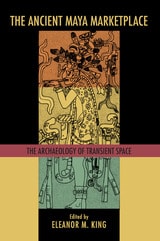
The Ancient Maya Marketplace
The Archaeology of Transient SpaceEdited by Eleanor M. King
University of Arizona Press, 2015
The Ancient Maya Marketplace reviews the debate on Maya markets and offers compelling new evidence for the existence and identification of ancient marketplaces in the Maya Lowlands. Its authors rethink the prevailing views about Maya economic organization and offer new perspectives. They attribute the dearth of Maya market research to two factors: persistent assumptions that Maya society and its rainforest environment lacked complexity, and an absence of physical evidence for marketplaces—a problem that plagues market research around the world.
Many Mayanists now agree that no site was self-sufficient, and that from the earliest times robust local and regional exchange existed alongside long-distance trade. Contributors to this volume suggest that marketplaces, the physical spaces signifying the presence of a market economy, did not exist for purely economic reasons but served to exchange information and create social ties as well.
The Ancient Maya Marketplace offers concrete links between Maya archaeology, ethnohistory, and contemporary cultures. Its in-depth review of current research will help future investigators to recognize and document marketplaces as a long-standing Maya cultural practice. The volume also provides detailed comparative data for premodern societies elsewhere in the world.
The Anxiety of Obsolescence
The American Novel in the Age of TelevisionKathleen Fitzpatrick
Vanderbilt University Press, 2006
It almost goes without saying that the rise in popularity of television has killed the audience for "serious" literature. This is such a given that reading Fitzpatrick's challenge to this notion can be very disconcerting, as she traces the ways in which a small cadre of writers of "serious" literature--DeLillo, Pynchon, and Franzen, for instance--have propagated this myth in order to set themselves up as the last bastions of good writing. Fitzpatrick first explores whether serious literature was ever as all-pervasive as critics of the television culture claim and then asks the obvious question: what, or who, exactly, are these guys defending good writing against?
Fitzpatrick examines the ways in which the anxiety about the supposed death of the novel is built on a myth of the novel's past ubiquity and its present displacement by television. She explores the ways in which this myth plays out in and around contemporary fiction and how it serves as a kind of unacknowledged discourse about race, class, and gender. The declaration constructs a minority status for the "white male author" who needs protecting from television's largely female and increasingly non-white audience. The novel, then, is transformed from a primary means of communication into an ancient, almost forgotten, and thus, treasured form reserved for the well-educated and well-to-do, and the men who practice it are exalted as the practitioners of an almost lost art.
Such positioning serves to further marginalize women writers and writers of color because it makes the novel, by definition, the preserve of the poor endangered white man. If the novel is only a product of a small group of white men, how can the contributions of women and writers of color be recognized? Instead, this positioning abandons women and people of color to television as a creative outlet, and in return, cedes television to them. Fitzpatrick argues that there's a level of unrecognized patronization in assuming that television serves no purpose but to provide dumb entertainment to bored women and others too stupid to understand novels. And, instead, she demonstrates the real positive effects of a televisual culture.
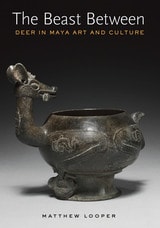
The Beast Between
Deer in Maya Art and CultureBy Matthew Looper
University of Texas Press, 2019
The first book to focus on the multifaceted images of deer and hunting in ancient Maya art, from the award-winning author of To Be Like Gods: Dance in Ancient Maya Civilization.
Winner, CHOICE Outstanding Academic Title, 2019
The white-tailed deer had a prominent status in Maya civilization: it was the most important wild-animal food source at many inland Maya sites and also functioned as a major ceremonial symbol. Offering an in-depth semantic analysis of this imagery, The Beast Between considers iconography, hieroglyphic texts, mythological discourses, and ritual narratives to translate the significance and meaning of the vibrant metaphors expressed in a variety of artifacts depicting deer and hunting.
Charting the importance of deer as a key component of the Maya diet, especially for elites, and analyzing the coupling of deer and maize in the Maya worldview, The Beast Between reveals a close and long-term interdependence between the Maya and these animals. Not only are deer depicted naturalistically in hunting and ritual scenes, but also they are assigned human attributes. This rich imagery reflects the many ways in which deer hunting was linked to status, sexuality, and war as part of a deeper process to ensure the regeneration of both agriculture and ancestry. Drawing on methodologies of art history, archaeology, and ethnology, this illuminating work is poised to become a key resource for multiple fields.
The Blood of Guatemala
A History of Race and NationGreg Grandin
Duke University Press, 2000
Focusing on Mayan elites in the community of Quetzaltenango, Grandin shows how their efforts to maintain authority over the indigenous population and secure political power in relation to non-Indians played a crucial role in the formation of the Guatemalan nation. To explore the close connection between nationalism, state power, ethnic identity, and political violence, Grandin draws on sources as diverse as photographs, public rituals, oral testimony, literature, and a collection of previously untapped documents written during the nineteenth century. He explains how the cultural anxiety brought about by Guatemala’s transition to coffee capitalism during this period led Mayan patriarchs to develop understandings of race and nation that were contrary to Ladino notions of assimilation and progress. This alternative national vision, however, could not take hold in a country plagued by class and ethnic divisions. In the years prior to the 1954 coup, class conflict became impossible to contain as the elites violently opposed land claims made by indigenous peasants.
This “history of power” reconsiders the way scholars understand the history of Guatemala and will be relevant to those studying nation building and indigenous communities across Latin America.
The Brink of Freedom
Improvising Life in the Nineteenth-Century Atlantic WorldDavid Kazanjian
Duke University Press, 2016
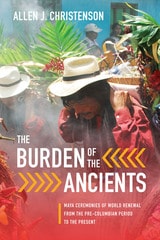
The Burden of the Ancients
Maya Ceremonies of World Renewal from the Pre-columbian Period to the PresentBy Allen J. Christenson
University of Texas Press, 2016
In Maya theology, everything from humans and crops to gods and the world itself passes through endless cycles of birth, maturation, dissolution, death, and rebirth. Traditional Maya believe that human beings perpetuate this cycle through ritual offerings and ceremonies that have the power to rebirth the world at critical points during the calendar year. The most elaborate ceremonies take place during Semana Santa (Holy Week), the days preceding Easter on the Christian calendar, during which traditionalist Maya replicate many of the most important world-renewing rituals that their ancient ancestors practiced at the end of the calendar year in anticipation of the New Year’s rites.
Marshaling a wealth of evidence from Pre-Columbian texts, early colonial Spanish writings, and decades of fieldwork with present-day Maya, The Burden of the Ancients presents a masterfully detailed account of world-renewing ceremonies that spans the Pre-Columbian era through the crisis of the Conquest period and the subsequent colonial occupation all the way to the present. Allen J. Christenson focuses on Santiago Atitlán, a Tz’utujil Maya community in highland Guatemala, and offers the first systematic analysis of how the Maya preserved important elements of their ancient world renewal ceremonies by adopting similar elements of Roman Catholic observances and infusing them with traditional Maya meanings. His extensive description of Holy Week in Santiago Atitlán demonstrates that the community’s contemporary ritual practices and mythic stories bear a remarkable resemblance to similar cultural entities from its Pre-Columbian past.
The Carnegie Maya III
Carnegie Institution of Washington Notes on Middle American Archaeology and Ethnology, 1940-1957John M. Weeks
University Press of Colorado, 2011
The series began in 1940 as an outlet for information that may have been considered too unimportant, brief, or restricted to be submitted for formal publication. However, these notes are often of great interest to the specialists for whom they are designed and to whom their distribution is restricted. The majority of the essays-most of which are on the Maya-are on archaeological subjects, epigraphy, ethnohistory and ethnography, and linguistics. As few original copies of the Notes series are known to exist in U.S. and Canadian libraries, the book will make these essays easily accessible to students, academics, and researchers in the field.
Purchase of the print book comes with free individual access to the Adobe Digital Editions Carnegie Maya Series Ebook, which contains the complete set of The Carnegie Maya, The Carnegie Maya II, The Carnegie Maya III and The Carnegie Maya IV, thus making hundreds of documents from the Carnegie Institution's Maya program available in one source.
The Carnegie Maya IV
Carnegie Institution of Washington Theoretical Approaches to Problems, 1941-1947John M. Weeks
University Press of Colorado, 2012
Only a few sets of these three contributions to the Theoretical Approaches to Problems series are known to have survived, making The Carnegie Maya IV an essential reference and research resource.
The corresponding ebook, for individual download, contains the complete set of The Carnegie Maya, The Carnegie Maya II, The Carnegie Maya III and The Carnegie Maya IV, thus making hundreds of documents from the Carnegie Institution's Maya program available in one source.
The Ceramic Sequence of the Holmul Region, Guatemala
Michael G. Callaghan and Nina Neivens de Estrada
University of Arizona Press, 2016
The Ceramic Sequence of the Holmul Region, Guatemala illustrates the archaeological ceramics of these prehistoric Maya sites in a study that provides a theoretical starting point for answering questions related to mid- and high-level issues of archaeological method and theory in the Maya area and larger Mesoamerica. The researchers’ ceramic sequence, which uses the method of type:variety-mode classification, spans approximately 1,600 years and encompasses nine ceramic complexes and one sub-complex. The highly illustrated book is formatted as a catalog of the types of ceramics in a chronological framework.
The authors undertook this study with three objectives: to create a temporal-spatial framework for archaeological sites in the politically important Holmul region, to relate this framework to other Maya sites, and to use type:variety-mode data to address specific questions of ancient Maya social practice and process during each ceramic complex.
Specific questions addressed in this volume include the adoption of pottery as early as 800 BC at the sites of Holmul and Cival during the Middle Preclassic period, the creation of the first orange polychrome pottery, the ideological and political influence from sites in Mexico during the Early Classic period, and the demographic and political collapse of lowland Maya polities between AD 800 and AD 830.
The Good Road
A K’iche’ Revolutionary TheopoliticsCarlota McAllister
Duke University Press, 2026
The Indian Christ, the Indian King
The Historical Substrate of Maya Myth and RitualBy Victoria Reifler Bricker
University of Texas Press, 1981
Victoria Bricker shows that "history" sometimes rests on mythological foundations and that "myth" can contain valid historical information. Her book, which is a highly original critique of postconquest historiography about the Maya, challenges major assumptions about the relationship between myth and history implicit in structuralist interpretations. The focus of the book is ethnic conflict, a theme that pervades Maya folklore and is also well documented historically.
The book begins with the Spanish conquest of the Maya. In chapters on the postconquest history of the Maya, five ethnic conflicts are treated in depth: the Cancuc revolt of 1712, the Quisteil uprising of 1761, the Totonicapan rebellion of 1820, the Caste War of Yucatan (1847-1901), and the Chamulan uprising in 1869. Analytical chapters consider the relationship between historical events and modern folklore about ethnic conflict. Bricker demonstrates that myths and rituals emphasize structure at the expense of temporal and geographical provenience, treating events separated by centuries or thousands of miles as equivalent and interchangeable.
An unexpected result of Bricker's research is the finding that many seemingly aboriginal elements in Maya folklore are actually of postconquest origin, and she shows that it is possible to determine precisely when and, more important, why they become part of myth and ritual. Furthermore, she finds that the patterning of the accretion of events in folklore over time provides clues to the function, or meaning, of myth and ritual for the Maya.
Bricker has made use of many unpublished documents in Spanish, English, and Maya, as well as standard synthetic historical works. The appendices contain extensive samples of the oral traditions that are explained by her analysis.
The Inscriptions of Calakmul
Royal Marriage at a Maya City in Campeche, MexicoJoyce Marcus
University of Michigan Press, 1987
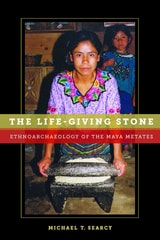
The Life-Giving Stone
Ethnoarchaeology of Maya MetatesMichael T. Searcy
University of Arizona Press, 2011
Although many archaeologists have regarded these artifacts simply as common everyday tools and therefore unremarkable, Searcy’s methodology reveals how, for the ancient Maya, the manufacture and use of grinding stones significantly impacted their physical and economic welfare. In tracing the life cycle of these tools from production to discard for the modern Maya, Searcy discovers rich customs and traditions that indicate how metates and manos have continued to sustain life—not just literally, in terms of food, but also in terms of culture. His research is based on two years of fieldwork among three Mayan groups, in which he documented behaviors associated with these tools during their procurement, production, acquisition, use, discard, and re-use.
Searcy’s investigation documents traditional practices that are rapidly being lost or dramatically modified. In few instances will it be possible in the future to observe metates and manos as central elements in household provisioning or follow their path from hand-manufacture to market distribution and to intergenerational transmission. In this careful inquiry into the cultural significance of a simple tool, Searcy’s ethnographic observations are guided both by an interest in how grinding stone traditions have persisted and how they are changing today, and by the goal of enhancing the archaeological interpretation of these stones, which were so fundamental to pre-Hispanic agriculturalists with corn-based cuisines.
The Lowland Maya Postclassic
Edited by Arlen F. Chase and Prudence M. Rice
University of Texas Press, 1985
This collection represents a major step forward in understanding the era from the end of Classic Maya civilization to the Spanish conquest.
The Maya Art of Speaking Writing
Remediating Indigenous Orality in the Digital AgeTiffany D. Creegan Miller
University of Arizona Press, 2022
Based on nearly a decade of fieldwork in the Guatemalan highlands, Tiffany D. Creegan Miller discusses images that are sonic, pictorial, gestural, and alphabetic. She reveals various forms of creativity and agency that are woven through a rich media landscape in Indigenous Guatemala, as well as Maya diasporas in Mexico and the United States. Miller discusses how technologies of inscription and their mediations are shaped by human editors, translators, communities, and audiences, as well as by voices from the natural world.
These texts push back not just on linear and compartmentalized Western notions of media but also on the idea of the singular author, creator, scholar, or artist removed from their environment. The persistence of orality and the interweaving of media forms combine to offer a challenge to audiences to participate in decolonial actions through language preservation.
The Maya Art of Speaking Writing calls for centering Indigenous epistemologies by doing research in and through Indigenous languages as we engage in debates surrounding Indigenous literatures, anthropology, decoloniality, media studies, orality, and the digital humanities.
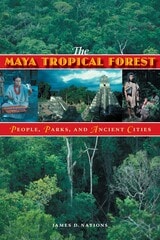
The Maya Tropical Forest
People, Parks, and Ancient CitiesBy James D. Nations
University of Texas Press, 2006
The Maya Tropical Forest, which occupies the lowlands of southern Mexico, Guatemala, and Belize, is the closest rainforest to the United States and one of the most popular tourist destinations in the Western Hemisphere. It has been home to the Maya peoples for nearly four millennia, starting around 1800 BC. Ancient cities in the rainforest such as Palenque, Yaxchilan, Tikal, and Caracol draw thousands of tourists and scholars seeking to learn more about the prehistoric Maya. Their contemporary descendants, the modern Maya, utilize the forest's natural resources in village life and international trade, while striving to protect their homeland from deforestation and environmental degradation.
Writing for both visitors and conservationists, James Nations tells the fascinating story of how ancient and modern Maya peoples have used and guarded the rich natural resources of the Maya Tropical Forest. He opens with a natural history that profiles the forest's significant animals and plants. Nations then describes the Maya peoples, biological preserves, and major archaeological sites in Mexico, Guatemala, and Belize. Drawing on more than twenty-five years of conservation work in the Maya Tropical Forest, Nations tells first-hand stories of the creation of national parks and other protected areas to safeguard the region's natural resources and archaeological heritage. He concludes with an expert assessment of the forest's future in which he calls for expanded archaeological tourism to create an ecologically sustainable economic base for the region.
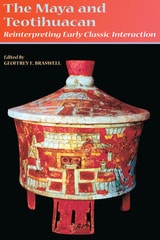
The Maya and Teotihuacan
Reinterpreting Early Classic InteractionEdited by Geoffrey E. Braswell
University of Texas Press, 2003
The contributors to this volume present extensive new evidence from archaeology, iconography, and epigraphy to offer a more nuanced understanding of the interaction between the Early Classic Maya and Teotihuacan.
Winner, Choice Outstanding Academic Book, 2005
Since the 1930s, archaeologists have uncovered startling evidence of interaction between the Early Classic Maya and the great empire of Teotihuacan in Central Mexico. Yet the exact nature of the relationship between these two ancient Mesoamerican civilizations remains to be fully deciphered. Many scholars have assumed that Teotihuacan colonized the Maya region and dominated the political or economic systems of certain key centers—perhaps even giving rise to state-level political organizations. Others argue that Early Classic rulers merely traded with Teotihuacan and skillfully manipulated its imported exotic goods and symbol sets to increase their prestige.
Moving beyond these traditional assumptions, the contributors to this volume present extensive new evidence from archaeology, iconography, and epigraphy to offer a more nuanced understanding of the interaction between the Early Classic Maya and Teotihuacan. Investigating a range of Maya sites, including Kaminaljuyu, Copán, Tikal, Altun Ha, and Oxkintok, they demonstrate that the influence of Teotihuacan on the Maya varied in nature and duration from site to site, requiring a range of models to explain the patterns of interaction. Moreover, they show that the interaction was bidirectional and discuss how the Maya in turn influenced Teotihuacan.
The Nature of an Ancient Maya City
Resources, Interaction, and Power at Blue Creek, BelizeThomas H. Guderjan
University of Alabama Press, 2007
For two millennia, the site now known as Blue Creek in northwestern Belize was a Maya community that became an economic and political center that included some 15,000-20,000 people at its height. Fairly well protected from human destruction, the site offers the full range of city components including monumental ceremonial structures, elite and non-elite residences, ditched agricultural fields, and residential clusters just outside the core. Since 1992, a multi-disciplinary, multi-national research team has intensively investigated Blue Creek in an integrated study of the dynamic structure and functional inter-relationships among the parts of a single Maya city. Documented in coverage by National Geographic, Archaeology magazine, and a documentary film aired on the Discovery Channel, Blue Creek is recognized as a unique site offering the full range of undisturbed architectural construction to reveal the mosaic that was the ancient city. Moving beyond the debate of what constitutes a city, Guderjan’s long-term research reveals what daily Maya life was like.
The Petexbatun Regional Archaeological Project
A Multidisciplinary Study of the Maya CollapseArthur A. Demarest
Vanderbilt University Press, 2006
Then, based on the project's findings, Demarest presents interpretive reconstructions of the linked histories of the Pasion River kingdoms and correlates these interpretations with the variable evidence and culture-histories of other regions of the Classic Maya lowlands. He points out that only through linking such accurate regional culture-histories can we begin to understand the eighth- through tenth-century changes in Classic Maya civilization. The volume describes how the Petexbatun project addressed this challenge in its research design, structure, and large, multicentered zone of study. Building on the previous twenty years of Harvard research in adjacent zones, the Vanderbilt projects succeeded in reconstructing events and processes throughout the Pasion River Valley, the largest single inland trade route of the ancient Maya world.
In its conclusions, this first of the Petexbatun volumes of multidisciplinary studies, evidence, analyses, and interpretations, provides answers to some long-standing questions about the "Classic Maya collapse," as well as a new, preliminary culture-history of the abandonment, decline, or transformation of the Classic Maya kingdoms of the western Peten. It is an exciting preview and summary of a decade of evidence on the debate over the fate of the Classic Maya civilization, one of the great controversies in the history of Pre-Columbian archaeology. VIMA Series #1
The Southern Maya in the Late Preclassic
The Rise and Fall of an Early Mesoamerican CivilizationMichael Love
University Press of Colorado, 2011
Recent research has provided a wealth of broadly based new data that have expanded the understanding of this region and its influence on greater Mesoamerica. In The Southern Maya in the Late Preclassic, prominent contributors debate whether the southern region was indeed "Maya" or instead a region of intense multiethnic interaction, with speakers of many languages and many sources of identity. The chapters address a host of advanced developments to which this area can lay claim--urbanism and city-states, the earliest Maya writing, and the origin of the Maya calendar--as well as additional issues including the construction of social and cultural identities, economic networks of early complex societies, relationships between the Maya and the Olmec, and a comprehensive discussion of the ancient city of Kaminaljuyu and its relationship to other cities in the region.
The Teabo Manuscript
Maya Christian Copybooks, Chilam Balams, and Native Text Production in YucatánBy Mark Z. Christensen
University of Texas Press, 2016
Winner, LASA Mexico Humanities Book Prize, 2017
Among the surviving documents from the colonial period in Mexico are rare Maya-authored manuscript compilations of Christian texts, translated and adapted into the Maya language and worldview, which were used to evangelize the local population. The Morely Manuscript is well known to scholars, and now The Teabo Manuscript introduces an additional example of what Mark Z. Christensen terms a Maya Christian copybook. Recently discovered in the archives of Brigham Young University, the Teabo Manuscript represents a Yucatecan Maya recounting of various aspects of Christian doctrine, including the creation of the world, the Fall of Adam and Eve, and the genealogy of Christ.
The Teabo Manuscript presents the first English translation and analysis of this late colonial Maya-language document, a facsimile and transcription of which are also included in the book. Working through the manuscript section by section, Christensen makes a strong case for its native authorship, as well as its connections with other European and Maya religious texts, including the Morely Manuscript and the Books of Chilam Balam. He uses the Teabo Manuscript as a platform to explore various topics, such as the evangelization of the Maya, their literary compositions, and the aspects of Christianity that they deemed important enough to write about and preserve. This pioneering research offers important new insights into how the Maya negotiated their precontact intellectual traditions within a Spanish and Catholic colonial world.
The Terminal Classic in the Maya Lowlands
Collapse, Transition, and TransformationArthur A. Demarest
University Press of Colorado, 2004
Featuring an impressive roster of scholars, The Terminal Classic presents the most recent data and interpretations pertaining to this perplexing period of cultural transformation in the Maya lowlands. Although the research reveals clear interregional patterns, the contributors resist a single overarching explanation. Rather, this volume's diverse and nuanced interpretations provide a new, more properly grounded beginning for continued debate on the nature of lowland Terminal Classic Maya civilization.
The Value of Things
Prehistoric to Contemporary Commodities in the Maya RegionEdited by Jennifer P. Mathews and Thomas H. Guderjan
University of Arizona Press, 2017
Jade, stone tools, honey and wax, ceramics, rum, land. What gave these commodities value in the Maya world, and how were those values determined? What factors influenced the rise and fall of a commodity’s value? The Value of Things examines the social and ritual value of commodities in Mesoamerica, providing a new and dynamic temporal view of the roles of trade of commodities and elite goods from the prehistoric Maya to the present.
Editors Jennifer P. Mathews and Thomas H. Guderjan begin the volume with a review of the theoretical literature related to the “value of things.” Throughout the volume, well-known scholars offer chapters that examine the value of specific commodities in a broad time frame—from prehistoric, colonial, and historic times to the present. Using cases from the Maya world on both the local level and the macro-regional, contributors look at jade, agricultural products (ancient and contemporary), stone tools, salt, cacao (chocolate), honey and wax, henequen, sugarcane and rum, land, ceramic (ancient and contemporary), and contemporary tourist handicrafts.
Each chapter author looks into what made their specific commodity valuable to ancient, historic, and contemporary peoples in the Maya region. Often a commodity’s worth goes far beyond its financial value; indeed, in some cases, it may not even be viewed as something that can be sold. Other themes include the rise and fall in commodity values based on perceived need, rarity or overproduction, and change in available raw materials; the domestic labor side of commodities, including daily life of the laborers; and relationships between elites and nonelites in production.
Examining, explaining, and theorizing how people ascribe value to what they trade, this scholarly volume provides a rich look at local and regional Maya case studies through centuries of time.
Contributors:
Rani T. Alexander
Dean E. Arnold
Timothy Beach
Briana Bianco
Steven Bozarth
Tiffany C. Cain
Scott L. Fedick
Thomas H. Guderjan
John Gust
Eleanor Harrison-Buck
Brigitte Kovacevich
Samantha Krause
Joshua J. Kwoka
Richard M. Leventhal
Sheryl Luzzadder-Beach
Jennifer P. Mathews
Heather McKillop
Allan D. Meyers
Gary Rayson
Mary Katherine Scott
E. Cory Sills
Thunderweavers/ Tejedoras de rayos
Juan Felipe Herrera
University of Arizona Press, 2000
In the winter of 1997, paramilitary agents ambushed and killed many Mayan villagers in Acteal, Chiapas. Gifted writer Juan Felipe Herrera has composed a stirring poem sequence—published in a bilingual format—written in response and homage to those who died, as well as to all those who call for peace and justice in the Mexican highlands and throughout the Americas.
The sections are written in the voices of four women from a family in Chiapas: Xunka, a lost twelve-year-old girl; Pascuala, the mother; grandmother Maruch; and Makal, an older daughter who is pregnant. Each voice weaves into the others and speaks for still other members of the larger Mayan and Native American family.
Thunderweavers is a story of violent displacements in the lives of the most impoverished residents of southern Mexico.Through these words, readers will learn the meaning of transcendence and continuity in the midst of chaos, suffering, and war.
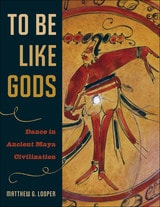
To Be Like Gods
Dance in Ancient Maya CivilizationBy Matthew G. Looper
University of Texas Press, 2009
Winner, Association for Latin American Art Book Award, 2010
The Maya of Mexico and Central America have performed ritual dances for more than two millennia. Dance is still an essential component of religious experience today, serving as a medium for communication with the supernatural. During the Late Classic period (AD 600-900), dance assumed additional importance in Maya royal courts through an association with feasting and gift exchange. These performances allowed rulers to forge political alliances and demonstrate their control of trade in luxury goods. The aesthetic values embodied in these performances were closely tied to Maya social structure, expressing notions of gender, rank, and status. Dance was thus not simply entertainment, but was fundamental to ancient Maya notions of social, religious, and political identity.
Using an innovative interdisciplinary approach, Matthew Looper examines several types of data relevant to ancient Maya dance, including hieroglyphic texts, pictorial images in diverse media, and architecture. A series of case studies illustrates the application of various analytical methodologies and offers interpretations of the form, meaning, and social significance of dance performance. Although the nuances of movement in Maya dances are impossible to recover, Looper demonstrates that a wealth of other data survives which allows a detailed consideration of many aspects of performance. To Be Like Gods thus provides the first comprehensive interpretation of the role of dance in ancient Maya society and also serves as a model for comparative research in the archaeology of performance.
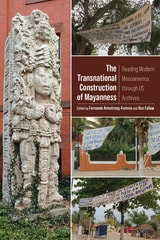
Transnational Construction of Mayanness
Reading Modern Mesoamerica through US ArchivesFernando Armstrong-Fumero
University Press of Colorado, 2023
Contributors tap documentary, ethnographic, and ethnoarchaeological sources from North America to expand established categories of fieldwork and archival research conducted within the national spaces of Mexico and Central America. A particularly rich and diverse set of case studies interrogate the historical processes that remove sources from their place of production in the “field” to the US, challenge the conventional wisdom regarding the geography of data sources that are available for research, and reveal a range of historical relationships that enabled US actors to shape the historical experience of Maya-speaking peoples.
The Transnational Construction of Mayanness offers rich insight into transnational relations and suggests new avenues of research that incorporate an expanded corpus of materials that embody the deep-seated relationship between Maya-speaking peoples and various gringo interlocutors. The work is an important bridge between Mayanist anthropology and historiography and broader literatures in American, Atlantic, and Indigenous studies.
Contributors: David Carey, M. Bianet Castellanos, Matilde Córdoba Azcárate, Lydia Crafts, John Gust, Julio Cesar Hoil Gutierréz, Jennifer Mathews, Matthew Watson
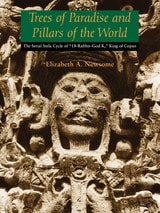
Trees of Paradise and Pillars of the World
The Serial Stelae Cycle of "18-Rabbit–God K," King of CopanBy Elizabeth A. Newsome
University of Texas Press, 2001
Assemblies of rectangular stone pillars, or stelae, fill the plazas and courts of ancient Maya cities throughout the lowlands of southern Mexico, Guatemala, Belize, and western Honduras. Mute testimony to state rituals that linked the king's power to rule with the rhythms and renewal of time, the stelae document the ritual acts of rulers who sacrificed, danced, and experienced visionary ecstasy in connection with celebrations marking the end of major calendrical cycles. The kings' portraits are carved in relief on the main surfaces of the stones, deifying them as incarnations of the mythical trees of life.
Based on a thorough analysis of the imagery and inscriptions of seven stelae erected in the Great Plaza at Copan, Honduras, by the Classic Period ruler "18-Rabbit-God K," this ambitious study argues that stelae were erected not only to support a ruler's temporal claims to power but more importantly to express the fundamental connection in Maya worldview between rulership and the cosmology inherent in their vision of cyclical time. After an overview of the archaeology and history of Copan and the reign and monuments of "18-Rabbit-God K," Elizabeth Newsome interprets the iconography and inscriptions on the stelae, illustrating the way they fulfilled a coordinated vision of the king's ceremonial role in Copan's period-ending rites. She also links their imagery to key Maya concepts about the origin of the universe, expressed in the cosmologies and mythic lore of ancient and living Maya peoples.