Results by title
1488 books match the query 'Media Studies' and 260 start with t
TV Family Values
Gender, Domestic Labor, and 1980s SitcomsAlice Leppert
Rutgers University Press, 2019

TV Format Mogul
Reg Grundy's Transnational CareerAlbert Moran
Intellect Books, 1995
Since the late 1990s, when broadcasters began adapting such television shows as Big Brother, Survivor, and Who Wants to Be a Millionaire? for markets around the world, the global television industry has been struggling to come to grips with the prevalence of program franchising across international borders. In TV Format Mogul, Albert Moran traces the history of this phenomenon through the lens of Australian producer Reg Grundy’s transnational career.
Program copycatting, Moran shows, began long before its most recent rise to prominence. Indeed, he reveals that the practice of cultural and commercial cloning from one place to another, and one time to another, has occurred since the early days of broadcasting. Beginning in the late 1950s, Grundy brought non-Australian shows to Australian audiences, becoming the first person to take local productions to an overseas market. By following Grundy’s career, Moran shows how adaptation and remaking became the billion-dollar business they are today. An exciting new contribution from Australia’s foremost scholar of television, TV Format Mogul will be a definitive history of program franchising.
TV Formats Worldwide
Localizing Global ProgramsEdited by Albert Moran
Intellect Books, 2009
Beginning around 2003, the growth of interest in the genre of reality shows has dominated the field of television studies. However, concentrating on this genre has tended to sideline the even more significant emergence of the program format as a central mode of business and culture in the new television landscape. TV Formats Worldwide redresses this balance and heralds the emergence of an important, exciting, and challenging area of television studies. Topics explored include reality TV, makeover programs, sitcoms, talent shows, and fiction serials, as well as broadcaster management policies, production decision chains, and audience participation processes. This seminal work will be of considerable interest to media scholars worldwide.
TV Museum
Contemporary Art and the Age of TelevisionMaeve Connolly
Intellect Books, 2014
Lavishly illustrated and with in-depth discussion of over fifty canonical and contemporary artworks, TV Museum offers a new approach to the analysis of television’s place within contemporary art and culture.
Tactical Media
Rita Raley
University of Minnesota Press, 2009
In Tactical Media, Rita Raley provides a critical exploration of the new media art activism that has emerged out of, and in direct response to, postindustrialism and neoliberal globalization. Through close readings of projects by the DoEAT group, the Critical Art Ensemble, Electronic Civil Disobedience, and other tactical media groups, she articulates their divergent methods and goals and locates a virtuosity that is also boldly political. Contemporary models of resistance and dissent, she finds, mimic the decentralized and virtual operations of global capital and the post-9/11 security state to exploit and undermine the system from within.
Emphasizing the profound shift from strategy to tactics that informs new media art-activism, Raley assesses the efficacy of its symbolic performances, gamings, visualizations, and hacks. With its cogent analyses of new media art and their social impact, Tactical Media makes a timely and much needed contribution to wider debates about political activism, contemporary art, and digital technology.
Tactics of the Human
Experimental Technics in American FictionLaura Shackelford
University of Michigan Press, 2015
Taking Liberties
Gender, Transgressive Patriotism, and Polish Drama, 1786–1989Halina Filipowicz
Ohio University Press, 2014
As narrow, nationalist views of patriotic allegiance have become widespread and are routinely invoked to justify everything from flag-waving triumphalism to xenophobic bigotry, the concept of a nonnationalist patriotism has vanished from public conversation. Taking Liberties is a study of what may be called patriotism without borders: a nonnational form of loyalty compatible with the universal principles and practices of democracy and human rights, respectful of ethnic and cultural diversity, and, overall, open-minded and inclusive.
Moving beyond a traditional study of Polish dramatic literature, Halina Filipowicz turns to the plays themselves and to archival materials, ranging from parliamentary speeches to polemical pamphlets and verse broadsides, to explore the cultural phenomenon of transgressive patriotism and its implications for society in the twenty-first century.
In addition to recovering lost or forgotten materials, the author builds an innovative conceptual and methodological framework to make sense of those materials. The result is not only a significant contribution to the debate over the meaning and practice of patriotism, but a masterful intellectual history.
Taking Up McLuhan's Cause
Perspectives on Media and Formal CausalityEdited by Corey Anton, Robert K. Logan, and Lance Strate
Intellect Books, 2017
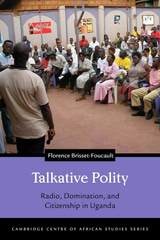
Talkative Polity
Radio, Domination, and Citizenship in UgandaFlorence Brisset-Foucault
Ohio University Press, 2019
For the first decade of the twenty-first century, every weekend, people throughout Uganda converged to participate in ebimeeza, open debates that invited common citizens to share their political and social views. These debates, also called “People’s Parliaments,” were broadcast live on private radio stations until the government banned them in 2009. In Talkative Polity, Florence Brisset-Foucault offers the first major study of ebimeeza, which complicate our understandings of political speech in restrictive contexts and force us to move away from the simplistic binary of an authoritarian state and a liberal civil society.
Brisset-Foucault conducted fieldwork from 2005 to 2013, primarily in Kampala, interviewing some 150 orators, spectators, politicians, state officials, journalists, and NGO staff. The resulting ethnography invigorates the study of political domination and documents a short-lived but highly original sphere of political expression. Brisset-Foucault thus does justice to the richness and depth of Uganda’s complex political and radio culture as well as to the story of ambitious young people who didn’t want to behave the way the state expected them to. Positioned at the intersection of media studies and political science, Talkative Polity will help us all rethink the way in which public life works.

Talkin' With Your Mouth Full
Conversations with the Videos of Steve FaginSteve Fagin, ed.
Duke University Press, 1998
Combining elements of criticism with various modes of artistic expression, these responses take the form of reviews, letters, interviews, and in one case an imaginary TV programming schedule. Interspersed with—and sometimes literally interrupting—the video scripts, these contributions interact with one another on multiple levels and complement Fagin’s scripts. Historical, political, and theoretical issues dovetail, ricochet, and interplay in this book, revealing a multiplicity of voices, concerns, and cultural revelations.
Unique in its structure and intellectual approach, Talkin’ with Your Mouth Full will appeal equally to those who have seen Fagin’s videos and those who have not. Students of art history and cultural critique, and anyone interested in the ongoing dialogue between artists and theorists, will find particular value in this book.
Contributors. Gregg Bordowitz, Constance DeJong, Leslie Dick, Steve Fagin, Barry Gifford, Victoria Gill, Bill Horrigan, Bertha Jottar, Ivone Margulies, Patricia Mellencamp, Margaret Morse, Constance Penley, Vicente L. Rafael, Mark Rappaport, Andrew Ross, Vivian Sobchack, Trinh T. Minh-ha, John Welchman, Peter Wollen
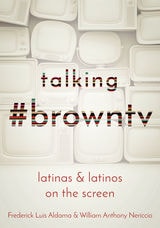
Talking #browntv
Latinas and Latinos on the ScreenFrederick Luis Aldama and William Anthony Nericcio
The Ohio State University Press, 2019
From the subversive critiques embedded in well-loved children’s characters like Speedy Gonzalez to the perpetuation of racial stereotypes in modern-era pornography, from Eva Longoria as ethnic mannequin to J-Lo flipping the sexy Latina music video on its head in “I Luh Ya Papi,” and with more than 150 full-color images, Aldama and Nericcio seek to expose the underlying causes as to why Latina/os constitute only 2 percent of mainstream cultural production when they’re the majority minority in the US. In a moment when anti-Mexican and anti-immigrant rhetoric oozes from TV sets and medias platform, Talking #browntv emerges as a bold antidote, an eloquent rejoinder, and a thoughtful meditation on Latina/os on the American screen and in America today.
Talking Back to the West
How Turkey Uses Counter-Hegemony to Reshape the Global Communication OrderBilge Yesil
University of Illinois Press, 2024
Insightfully exploring the crossroads of communications and authoritarianism, Talking Back to the West illuminates how the Erdogan government and its media allies use history, religion, and identity to pursue complementary agendas and tighten the AKP’s grip on power.
Taylor Swift as Storyteller
Identity, Power, and Digital CultureEdited by Alison Halsall
The Ohio State University Press, 2027
Taylor Swift as Storyteller examines one of the most influential cultural figures of the twenty-first century as both artist and “star text,” arguing that Swift’s global impact is shaped through the dynamic interplay of music, media, fandom, and branding. Bringing together literary scholars, ethnographers, and musicologists, this collection positions Swift as not just a pop figure but a transmedial construct.
Contributors explore how Swift’s carefully curated personae—from girl-next-door to feminist icon to “tortured poet”—generate powerful affective connections with audiences while also functioning as strategic marketing tools. At the same time, contributors retheorize authorship and control in the digital age. By foregrounding the roles of management, branding, and platform circulation, and by interrogating the participatory roles of Swifties as cocreators of meaning, Taylor Swift as Storyteller complicates the idea of singular authorship. Attending to questions of feminism, authorship, nostalgia, and literary adaptation, this collection ultimately reveals how Swift’s enterprise both reflects and reshapes contemporary media culture, illuminating the complex relationship between narrative, identity, and power in the digital age.
Contributors:
Natalie Abbott, Alexander Carpenter, Zixiao Chen, Katie E. Cline, Jennifer Duggan, Rachel M. Friars, Andrea LeMahieu Glaws, Wendy J. Glenn, Alison Halsall, Roxanne Harde, Juliette Holder, Erika Kvistad, Zhimou Li, Sarah E. Maier, Catherine McCarthy, Elly McCausland, Laura Carman McClintock, Adrianna Mirabal, Linh S. Nguy?n, Hazel O’Brien, Anah-Jayne Samuelson, L. M. Schmidt, Katlin Marisol Sweeney-Romero
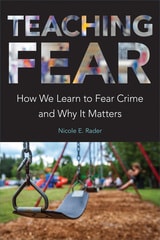
Teaching Fear
How We Learn to Fear Crime and Why It MattersNicole E. Rader
Temple University Press, 2023
Where do lessons of “stranger danger” and safety come from—and do they apply differently for women? A gender-fear paradox shows that although women are less likely to be victims of most crimes (sexual assault aside), their fear of crime is greater. Moreover, girls and women—especially White women—are taught to fear the wrong things and given impossible tools to prevent victimization. In Teaching Fear, Nicole Rader zooms in on the social learning process, tracing the ways that families, schools, and the media have become obsessed with crime myths, especially regarding girls and women.
Based on in-depth research and family studies, Rader reveals the dubious and dangerous origins of many of the most prominent safety guidelines that teach young girls to be more afraid of crime. These guidelines carry over to adulthood, influencing women’s behaviors and the way they order their worlds, with dangerous consequences. As women teach their learned behavior and conditioned fear to others, gendered crime myths are recirculated from generation to generation, making them a staple in our society.
Teaching Fear includes suggestions for taking precautionary measures and crime prevention strategies. Rader also provides guidance for instilling safety values and demonstrating how we can “teach fear better” to break this cycle and truly create greater security.
Teaching History in the Digital Age
T. Mills Kelly
University of Michigan Press, 2013
Teaching History in the Digital Age serves as a guide for practitioners on how to fruitfully employ the transformative changes of digital media in the research, writing, and teaching of history. T. Mills Kelly synthesizes more than two decades of research in digital history, offering practical advice on how to make best use of the results of this synthesis in the classroom and new ways of thinking about pedagogy in the digital humanities.
Technics Improvised
Activating Touch in Global Media ArtTimothy Murray
University of Minnesota Press, 2022
Seeing new media art as an entry point for better understanding of technology and worldmaking futures
In this challenging work, a leading authority on new media art examines that curatorial and aesthetic landscape to explore how art resists and rewires the political and economic structures that govern technology. How do inventive combinations of artistic and theoretical improvisation counter the extent to which media art remains at risk, not just from the quarantines of a global pandemic but also from the very viral and material conditions of technology? How does global media art speak back to the corporate closures of digital euphoria as clothed in strategies of digital surveillance, ecological deprivation, and planned obsolescence? In Technics Improvised, Timothy Murray asks these questions and more.
At the intersection of global media art, curatorial practice, tactical media, and philosophy, Murray reads a wide range of creative performances and critical texts that envelop artistic and digital materials in unstable, political relations of touch, body, archive, exhibition, and technology. From video to net art and interactive performance, he considers both canonical and unheralded examples of activist technics that disturb the hegemony of biopolitical/digital networks by staging the very touch of the unsettling discourse erupting from within. In the process, critical dialogues emerge between a wide range of artists and theorists, from Hito Steyerl, Ricardo Dominguez, Joan Jonas, Isaac Julien, Ryoji Ikeda, and Shadi Nazarian to Gilles Deleuze, Jean-Luc Nancy, Elizabeth Povinelli, Jean-François Lyotard, Erin Manning, Achille Mbembe, and Samuel Weber.
Brilliantly conceived and argued and eloquently written, Technics Improvised points the way to how artistic and theoretical practice can seize on the improvisational accidents of technics to activate creativity, thought, and politics anew.
Techno-Orientalism 2.0
New Intersections and InterventionsDavid S. Roh
Rutgers University Press, 2025
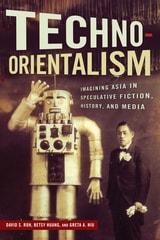
Techno-Orientalism
Imagining Asia in Speculative Fiction, History, and MediaRoh, David S.
Rutgers University Press, 2015
Technocrats of the Imagination
Art, Technology, and the Military-Industrial Avant-GardeJohn Beck and Ryan Bishop
Duke University Press, 2020
Technological Visions
Hopes And Fears That Shape New TechnologiesMarita Sturken
Temple University Press, 2004
Technologies of Public Persuasion
An Accidental Issue, Volume 15Dilip Parameshwar Gaonkar and Elizabeth A. Povinelli, eds.
Duke University Press, 0
The contributors explore topics ranging from the use of cell phones by middle-class Filipinos in the civilian-backed overthrow of President Joseph Estrada to a media reported "hint" from Alan Greenspan that impacted and altered economic reality through speculation. An essay investigates the politics surrounding the formation and use of Indonesian as a self-consciously modern language designed to reconstitute the social and political identities of its speakers. A photo-essay depicts graffiti on abandoned school buildings as a communicative medium. "Crimes of Substitution: Detection in the Late Soviet Society" looks at late-Soviet detective fiction, censorship strategies, and Soviet semiotics to show how Soviet citizens subverted dictated modes of behavior and challenged the symbolic order of Soviet society. One contributor examines how performance and ethnolinguistic practices become techniques for spatially and socially locating identity.
Contributors. Alberta Arthurs, Dilip Parameshwar Gaonkar, Michael Kaplan, Webb Keane, Patrick Mullen, Serguei Oushakine, Elizabeth A. Povinelli, Vicente L. Rafael, Christopher Schneider, Michael Silverstein, Amanda Weidman
Technology and Desire
The Transgressive Art of Moving ImagesEdited by Rania Gaafar and Martin Schulz
Intellect Books, 2014
The spectral realm at the boundaries of images incessantly reveals a desire to see beyond the visible and its medium: screens, frames, public displays, and projection sites in an art context. The impact of new media on art and film has influenced the material histories and performances (be they in theory or practice) of images across the disciplines. Digital technologies have not only shaped post-cinematic media cultures and visual epistemologies, but they are behind a growing shift towards a new realism in theory, art, film, and in the art of the moving image in particular. Technology and Desire examines the performative ontologies of moving images across the genealogies of media and their aesthetic agency in contemporary media and video art, CGI, painting, video games, and installations. Drawing on cultural studies, media and film theory as well as art history to provide exemplary evidence of this shift, this book has as its central theme the question of whether images are predicated upon transgressing the boundaries of their framing—and whether in the course of their existence they develop a life of their own.
Technopharmacology
Joshua Neves
University of Minnesota Press, 2022
Exploring networked technologies and bioeconomy and their links to biotechnologies, pharmacology, and pharmaceuticals
Being on social media, having pornography or an internet addiction, consciousness hacking, and mundane smartness initiatives are practices embodied in a similar manner to the swallowing of a pill. Such close relations of media technologies to pharmaceuticals and pharmacology is the focus of this book. Technopharmacology is a modest call to expand media theoretical inquiry by attending to the biological, neurological, and pharmacological dimensions of media and centers on emergent affinities between big data and big pharma.
Televising Chineseness
Gender, Nation, and SubjectivityGeng Song
University of Michigan Press, 2022

Televising Taste
Performing Classical Music on American ScreensBy Evelyn Kreutzer
Lever Press, 2027
Televising Taste: Performing Classical Music on American Screens explores how American television portrayed canonical European classical music in the Cold War era. Situating mid-century TV culture within a history of music visualization efforts, it complicates narratives about the postwar decades as a peak moment of polarity between “high” and “low” cultures, and between ideologies of consensus and rebellion. Drawing on discourse analysis, archival research, and the medium of videographic analysis, Evelyn Kreutzer suggests that the legacies of European classical music played an important part in the formation of an American national identity and that they were interwoven with and negotiated through popular media. Conjunctions of classical music and television occurred in dialogue with aspirations for cultural capital, which were attached to European classical music and inscribed into visions of American cultural literacy and citizenship. Simultaneously, these conjunctions responded to anxieties that popular culture and mass media would diminish “serious” music appreciation and turn audiences into passive consumers.
Through musical mediations on television, Televising Taste addresses larger ideological and historical implications of taste and canon politics, contributing a new interdisciplinary perspective on the interdependence of music and media cultures.
Television Antiheroines
Women Behaving Badly in Crime and Prison DramaEdited by Milly Buonanno
Intellect Books, 2017
The essays collected in Television Antiheroines are divided into four sections or types of characters: mafia women, drug dealers and aberrant mothers, women in prison, and villainesses. Looking specifically at shows such as Gomorrah, Mafiosa, The Wire, The Sopranos, Sons of Anarchy, Orange is the New Black, and Antimafia Squad, the contributors explore the role of race and sexuality and focus on how many of the characters transgress traditional ideas about femininity and female identity, such as motherhood. They examine the ways in which bad women are portrayed and how these characters undermine gender expectations and reveal the current challenges by women to social and economic norms. Television Antiheroines will be essential reading for anyone with a serious interest in crime and prison drama and the rising prominence of women in nontraditional roles.
Television Cities
Paris, London, BaltimoreCharlotte Brunsdon
Duke University Press, 2018
Television Courtroom Broadcasting
Distraction Effects and Eye-TrackingPaul Lambert
Intellect Books, 2012
Television after TV
Essays on a Medium in TransitionLynn Spigel and Jan Olsson, eds.
Duke University Press, 2004
With historical, critical, and speculative essays by some of the leading television and media scholars, Television after TV examines both commercial and public service traditions and evaluates their dual (and some say merging) fates in our global, digital culture of convergence. The essays explore a broad range of topics, including contemporary programming and advertising strategies, the use of television and the Internet among diasporic and minority populations, the innovations of new technologies like TiVo, the rise of program forms from reality tv to lifestyle programs, television’s changing role in public places and at home, the Internet’s use as a means of social activism, and television’s role in education and the arts. In dialogue with previous media theorists and historians, the contributors collectively rethink the goals of media scholarship, pointing toward new ways of accounting for television’s past, present, and future.
Contributors. William Boddy, Charlotte Brunsdon, John T. Caldwell, Michael Curtin, Julie D’Acci, Anna Everett, Jostein Gripsrud, John Hartley, Anna McCarthy, David Morley, Jan Olsson, Priscilla Peña Ovalle, Lisa Parks, Jeffrey Sconce, Lynn Spigel, William Uricchio
Television and the Afghan Culture Wars
Brought to You by Foreigners, Warlords, and ActivistsWazhmah Osman
University of Illinois Press, 2020
Fieldwork from across Afghanistan allowed Osman to record the voices of many Afghan media producers and people. Afghans offer their own seldom-heard views on the country's cultural progress and belief systems, their understandings of themselves, and the role of international interventions. Osman analyzes the impact of transnational media and foreign funding while keeping the focus on local cultural contestations, productions, and social movements. As a result, she redirects the global dialogue about Afghanistan to Afghans and challenges top-down narratives of humanitarian development.
Television as Digital Media
James Bennett and Niki Strange, eds.
Duke University Press, 2011
Introducing the collection, James Bennett explains how television as digital media is a non-site-specific, hybrid cultural and technological form that spreads across platforms such as mobile phones, games consoles, iPods, and online video services, including YouTube, Hulu and the BBC’s iPlayer. Television as digital media threatens to upset assumptions about television as a mass medium that has helped define the social collective experience, the organization of everyday life, and forms of sociality. As often as we are promised the convenience of the television experience “anytime, anywhere,” we are invited to participate in communities, share television moments, and watch events live. The essays in this collection demonstrate the historical, production, aesthetic, and audience changes and continuities that underpin the emerging meaning of television as digital media.
Contributors. James Bennett, William Boddy, Jean Burgess, John Caldwell, Daniel Chamberlain, Max Dawson, Jason Jacobs, Karen Lury, Roberta Pearson, Jeanette Steemers, Niki Strange, Julian Thomas, Graeme Turner
Televisuality
Style, Crisis, and Authority in American TelevisionJohn T Caldwell
Rutgers University Press, 2020

Tell Me Lies
Propaganda and Media Distortion in the Attack on IraqEdited by David Miller
Pluto Press, 2003
Did the US and UK governments lie about weapons of mass destruction to promote an attack on Iraq?
Did the media hold them to account or act as cheerleaders for war?
Tell me Lies reveals the systematic propaganda used by both the US and UK governments to convince us of the 'threat' from Iraq. It shows how we were deliberately misled into a war that has resulted in a humanitarian disaster in Iraq and threatens to create further instability and resentment of the US and UK throughout the Middle East.
Written by some of the world's leading journalists and commentators, it's a scathing indictment of the role of the mainstream media in legitimising government actions and undermining dissent. Critics, activists and journalists from both sides of the Atlantic explore alternatives such as the internet and Al Jazeera and provide analysis and guidance on resisting the media war.
Contributors include John Pilger, Noam Chomsky, Robert Fisk, Edward Herman, Mark Thomas, Mark Steel, Phillip Knightley, Tim Llewelyn (BBC Middle East Correspondent), Abdul Hadi Jiad (Iraqi journalist sacked by the BBC before the war), David Cromwell and David Edwards (Media Lens), Mark Curtis, John Stauber and Sheldon Rampton (PR Watch, and co-authors of Weapons of Mass Deception and Toxic Sludge is Good For You), Pat Holland, Norman Solomon (columnist and director of the Institute for Public Accuracy), Nancy Snow (California State University, Fullerton, author of Propaganda Inc. and Information War), Doug Kellner (UCLA), Julian Petley, Yvonne Ridley (Aljazeera.net and author of In the Hands of the Taliban), Tim Gopsill (Campaign for Press and Broadcasting Freedom), Faisal Bodi (UK Guardian, Aljazeera.net), Alistair Alexander (Stop the War Coalition), Greg Philo (Glasgow University Media Group), Steve Dorrill, Andy Rowell, Granville Williams and cartoonists Steve Bell, Steve Caplin and Polyp.
Thanks for Watching
An Anthropological Study of Video Sharing on YouTubePatricia G. Lange
University Press of Colorado, 2019
Lange draws on 152 interviews with YouTube participants at gatherings throughout the United States, content analyses of more than 300 videos, observations of interactions on and off the site, and participant-observation. She documents how the introduction of monetization options impacted perceived opportunities for open sharing and creative exploration of personal and social messages. Lange’s book provides new insight into patterns of digital migration, YouTube’s influence on off-site interactions, and the emotional impact of losing control over images. The book also debunks traditional myths about online interaction, such as the supposed online/offline binary, the notion that anonymity always degrades public discourse, and the popular characterization of online participants as over-sharing narcissists.
YouTubers' experiences illustrate fascinating hybrid forms of contemporary sociality that are neither purely mediated nor sufficient when conducted only in person. Combining intensive ethnography, analysis of video artifacts, and Lange’s personal vlogging experiences, the book explores how YouTubers are creating a posthuman collective characterized by interaction, support, and controversy. In analyzing the tensions between YouTubers' idealistic goals of sociality and the site's need for monetization, Thanks for Watching makes crucial contributions to cultural anthropology, digital ethnography, science and technology studies, new media studies, communication, interaction design, and posthumanism.
For its perceptive analysis of video blogging for self-expression and sociality, Thanks for Watching received the Franklyn S. Haiman Award for Distinguished Scholarship in Freedom of Expression (2020), from the National Communication Association.
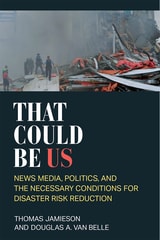
That Could Be Us
News Media, Politics, and the Necessary Conditions for Disaster Risk ReductionThomas Jamieson and Douglas A. Van Belle
University of Michigan Press, 2022
In That Could Be Us, Jamieson and Van Belle find that the news media delivers information to observing communities in a form that enables learning from other disasters. Experimental evidence shows that people react to this information in a way that would punish leaders who do not back DRR efforts. Case studies, interviews, experiments, and illustrative examples suggest that leaders and political entrepreneurs heed this public demand, react to news media coverage, and act accordingly. Taken as a whole, this suggests that the policy and research implications derived from this book’s theoretical model are worthy of further exploration, particularly in terms of how they might resolve the puzzle presented by the variations in DRR policy uptake around the world that do not seem to be driven by developmental differences across communities.
The Aesthetic Character of Blackness
Sounds Like UsJemma DeCristo
Duke University Press, 2025
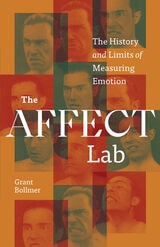
The Affect Lab
The History and Limits of Measuring EmotionGrant Bollmer
University of Minnesota Press, 2023
Examines how our understanding of emotion is shaped by the devices we use to measure it
Since the late nineteenth century, psychologists have used technological forms of media to measure and analyze emotion. In The Affect Lab, Grant Bollmer examines the use of measurement tools such as electrical shocks, photography, video, and the electroencephalograph to argue that research on emotions has confused the physiology of emotion with the tools that define its inscription.
Bollmer shows that the psychological definitions of emotion have long been directly shaped by the physical qualities of the devices used in laboratory research. To investigate these devices, The Affect Lab examines four technologies related to the history of psychology in North America: spiritualist toys at Harvard University, serial photography in early American psychological laboratories, experiments on “psychopaths” performed with an instrument called an Offner Dynograph, and the development of the “electropsychometer,” or “E-Meter,” by Volney Mathison and L. Ron Hubbard.
Challenging the large body of humanities research surrounding affect theory, The Affect Lab identifies an understudied problem in formulations of affect: how affect is a construction inseparable from the techniques and devices used to identify and measure it. Ultimately, Bollmer offers a new critique of affect and affect theory, demonstrating how deferrals to psychology and neuroscience in contemporary theory and philosophy neglect the material of experimental, scientific research.
Retail e-book files for this title are screen-reader friendly with images accompanied by short alt text and/or extended descriptions.
The African American Experience in Cyberspace
A Resource Guide to the Best Web Sites on Black Culture and HistoryAbdul Alkalimat
Pluto Press, 2003
Alkalimat provides an easy to use directory to the very best websites that deal with the African American Experience. The first section covers every aspect of African American history, while a second section deals with a diverse set of topics covering society and culture. Each chapter has a brief essay, extensively annotation on the five best sites for each topic, and then a group of good sites and a short bibliography. This book is designed for a course at the high school or college level. This book should be kept near every home computer that people use to surf the web for Black content.
Most people have found out that the major corporations and governments have been the dominant uploaders of information into cyberspace. This volume is different because it is a serious introduction to the full democratic use of the web. These websites will introduce people to the people who are serious about ending the digital divide because they are busy uploading information about the most excluded and marginalized people, the African American community. Many of these sites are being established by Black Studies academic programmes, as well as community based organizations and institutions.

The American Girl Goes to War
Women and National Identity in U.S. Silent FilmLiz Clarke
Rutgers University Press, 2022
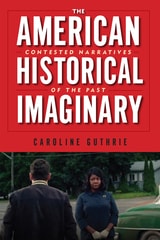
The American Historical Imaginary
Contested Narratives of the PastCaroline Guthrie
Rutgers University Press, 2023
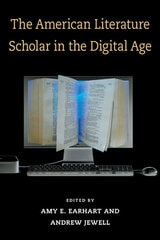
The American Literature Scholar in the Digital Age
Edited by Amy E. Earhart and Andrew Jewell
University of Michigan Press, 2010
"By casting the collection explicitly as an outreach to the larger community of Americanists---not primarily those who self-identify as 'digital scholars'---Earhart and Jewell have made an important choice, and one that will likely make this a landmark publication."
---Andrew Stauffer, University of Virginia
The American Literature Scholar in the Digital Age, which features a wide range of practitioner-scholars, is the first of its kind: a gathering of people who are expert in American literary studies and in digital technologies, scholars uniquely able to draw from experience with building digital resources and to provide theoretical commentary on how the transformation to new technologies alters the way we think about and articulate scholarship in American literature. The volume collects articles from those who are involved in tool development, usability testing, editing and textual scholarship, digital librarianship, and issues of race and ethnicity in digital humanities, while also situating digital humanities work within the larger literary discipline. In addition, the volume examines the traditional structures of the fields, including tenure and promotion criteria, modes of scholarly production, the skill sets required for scholarship, and the training of new scholars.
The American Literature Scholar in the Digital Age will attract practitioners of digital humanities in multiple fields, Americanists who utilize digital materials, and those who are intellectually curious about the new movement and materials.
Amy E. Earhart is Assistant Professor in the Department of English at Texas A&M University.
Andrew Jewell is Associate Professor of Digital Projects, University Libraries, at the University of Nebraska–Lincoln.
Cover art: Book background ©iStockphoto.com/natashika
digitalculturebooks is an imprint of the University of Michigan Press and the Scholarly Publishing Office of the University of Michigan Library dedicated to publishing innovative and accessible work exploring new media and their impact on society, culture, and scholarly communication. Visit the website at www.digitalculture.org.
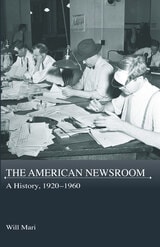
The American Newsroom
A History, 1920-1960Will Mari
University of Missouri Press, 2023
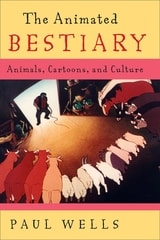
The Animated Bestiary
Animals, Cartoons, and CultureWells, Paul
Rutgers University Press, 2008
The Animated Bestiary critically evaluates the depiction of animals in cartoons and animation more generally. Paul Wells argues that artists use animals to engage with issues that would be more difficult to address directly because of political, religious, or social taboos. Consequently, and principally through anthropomorphism, animation uses animals to play out a performance of gender, sex and sexuality, racial and national traits, and shifting identity, often challenging how we think about ourselves.
Wells draws on a wide range of examples, from the original King Kongto Nick Park's Chicken Run to Disney cartoonsùsuch as Tarzan, The Jungle Book, and Brother Bearùto reflect on people by looking at the ways in which they respond to animals in cartoons and films.
The Anthrobscene
Jussi Parikka
University of Minnesota Press, 2014
Forerunners: Ideas First is a thought-in-process series of breakthrough digital publications. Written between fresh ideas and finished books, Forerunners draws on scholarly work initiated in notable blogs, social media, conference plenaries, journal articles, and the synergy of academic exchange. This is gray literature publishing: where intense thinking, change, and speculation take place in scholarship.

The Archival Afterlives of Philippine Cinema
Bliss Cua Lim
Duke University Press, 2024
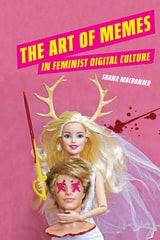
The Art of Memes in Feminist Digital Culture
Shana MacDonald
The Ohio State University Press, 2025
In The Art of Memes in Feminist Digital Culture, Shana MacDonald argues that memes are a unique medium of communication that both respond to and reflect the current cultural moment. The book—the first to treat memes as a unique medium of communication distinct from other internet and digital media—examines feminist and queer activist uses of memes as a form of digital resistance, demonstrating through collage, reenactment, and montage that countercultural meme makers intervene in the status quo and offer cultural critiques with potentially broad circulation. In this way, MacDonald situates memes as part of a lineage of aesthetic resistance, exploring the operational logic of bricolage, intertextuality, and intermediality within contemporary internet meme cultures on the left.
MacDonald examines memes from feminist, queer, antiracist, and anticapitalist accounts on Instagram, as well as how meme genres and themes shift when they travel across different platforms and subcultures. By considering memes as a medium, she sheds light on how they operate within contemporary digital culture as a beacon for online public discourse that pushes against dominant norms.
The Art of Return
The Sixties and Contemporary CultureJames Meyer
University of Chicago Press, 2019
In this innovative work, James Meyer turns to art criticism, theory, memoir, and fiction to examine the fascination with the long sixties and contemporary expressions of these cultural memories across the globe. Meyer draws on a diverse range of cultural objects that reimagine this revolutionary era stretching from the 1950s to the 1970s, including reenactments of civil rights, antiwar, and feminist marches, paintings, sculptures, photographs, novels, and films. Many of these works were created by artists and writers born during the long Sixties who were driven to understand a monumental era that they missed. These cases show us that the past becomes significant only in relation to our present, and our remembered history never perfectly replicates time past. This, Meyer argues, is precisely what makes our contemporary attachment to the past so important: it provides us a critical opportunity to examine our own relationship to history, memory, and nostalgia.
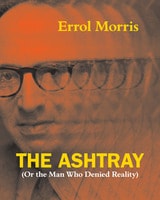
The Ashtray
(Or the Man Who Denied Reality)Errol Morris
University of Chicago Press, 2018
In 1972, philosopher of science Thomas Kuhn threw an ashtray at Errol Morris. This book is the result.
At the time, Morris was a graduate student. Now we know him as one of the most celebrated and restlessly probing filmmakers of our time, the creator of such classics of documentary investigation as The Thin Blue Line and The Fog of War. Kuhn, meanwhile, was—and, posthumously, remains—a star in his field, the author of The Structure of Scientific Revolutions, a landmark book that has sold well over a million copies and introduced the concept of “paradigm shifts” to the larger culture. And Morris thought the idea was bunk.
The Ashtray tells why—and in doing so, it makes a powerful case for Morris’s way of viewing the world, and the centrality to that view of a fundamental conception of the necessity of truth. “For me,” Morris writes, “truth is about the relationship between language and the world: a correspondence idea of truth.” He has no patience for philosophical systems that aim for internal coherence and disdain the world itself. Morris is after bigger game: he wants to establish as clearly as possible what we know and can say about the world, reality, history, our actions and interactions. It’s the fundamental desire that animates his filmmaking, whether he’s probing Robert McNamara about Vietnam or the oddball owner of a pet cemetery. Truth may be slippery, but that doesn’t mean we have to grease its path of escape through philosophical evasions. Rather, Morris argues powerfully, it is our duty to do everything we can to establish and support it.
In a time when truth feels ever more embattled, under siege from political lies and virtual lives alike, The Ashtray is a bracing reminder of its value, delivered by a figure who has, over decades, uniquely earned our trust through his commitment to truth. No Morris fan should miss it.
The Assemblage Brain
Sense Making in NeurocultureTony D. Sampson
University of Minnesota Press, 2016
Once upon a time, neuroscience was born. A dazzling array of neurotechnologies emerged that, according to popular belief, have finally begun to unlock the secrets of the brain. But as the brain sciences now extend into all corners of cultural, social, political, and economic life, a yet newer world has taken shape: “neuroculture,” which goes further than ever before to tackle the profound ethical implications we face in consequence.
The Assemblage Brain unveils a major new concept of sense making, one that challenges conventional scientific and philosophical understandings of the brain. Drawing on Deleuze and Guattari, Tony D. Sampson calls for a radical critical theory that operates in the interferences between philosophy, science, art, and politics. From this novel perspective the book is structured around two questions: “What can be done to a brain?” and “What can a brain do?” Sampson examines the rise of neuroeconomics in informing significant developments in computer work, marketing, and the neuropharmaceutical control of inattentiveness in the classroom. Moving beyond the neurocapitalist framework, he then reestablishes a place for proto-subjectivity in which biological and cultural distinctions are reintegrated in an understanding of the brain as an assemblage.
The Assemblage Brain unravels the conventional image of thought that underpins many scientific and philosophical accounts of how sense is produced, providing a new view of our current time in which capitalism and the neurosciences endeavor to colonize the brain.
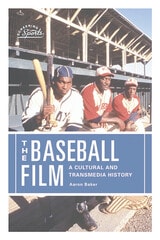
The Baseball Film
A Cultural and Transmedia HistoryAaron Baker
Rutgers University Press, 2022
This study offers an extensive look at nearly one hundred years of baseball-themed movies, documentaries, and TV shows. Film and sports scholar Aaron Baker examines works like A League of their Own (1992) and Sugar (2008), which dramatize the underrepresented contributions of female and immigrant players, alongside classic baseball movies like The Natural that are full of nostalgia for a time when native-born white men could use the game to achieve the American dream. He further explores how biopics have both mythologized and demystified such legendary figures as Ty Cobb, Babe Ruth, Lou Gehrig, Jackie Robinson and Fernando Valenzuela.
The Baseball Film charts the variety of ways that Hollywood presents the game as integral to American life, whether showing little league as a site of parent-child bonding or depicting fans’ lifelong love affairs with their home teams. Covering everything from Bull Durham (1988) to The Bad News Bears (1976), this book offers an essential look at one of the most cinematic of all sports.