Results by title
1415 books match the query 'Medical' and 263 start with t
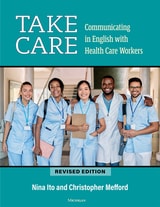
Take Care
Communicating in English with Health Care WorkersNina Ito and Christopher Mefford
University of Michigan Press, 2023
A high level of communicative skills are essential and expected for health care workers. Take Care is designed to give readers the strategies and tools to build, maintain, and repair communication within interactions that take place in health care settings. It is designed for students who are enrolled in health care training as well as nurses or health care workers who are already on the job but may want to improve their English. This text is designed to provide readers with a firm grasp of verbal and non-verbal communication strategies for more successful interactions. It will also help readers develop strategic competence by asking them to practice formulaic phrases needed to get things done. Carefully selected situations will also help readers to understand some of the social situations health care workers need to prepare for, such as apologizing, expressing condolences, or giving advice.
Take Care breaks each unit into the following sections to teach readers new skills:
- Listening for Language
- Dialogue
- Vocabulary
- Communication Strategy
- Pronunciation
- Dialogue Review
- Role Plays
- End-of-Unit Discussion
- Culture Point
This revised edition is updated to include information about pandemics, vaccines, and other medical developments. Audio files for the listening activities are available online.

Take Care
Communicating in English with U.S. Health Care WorkersNina Ito and Christopher Mefford
University of Michigan Press, 2011
Take Care was written to help nursing students and other health care workers communicate better in health care settings, with a focus on improving speaking and listening skills, vocabulary, and pronunciation. The aim was to provide users with the tools and specific communication strategies to build, maintain, or repair interactions that take place on the job. This book is also designed to develop the pragmatic competence necessary to get things done on the job and to understand some of the social situations required by health care workers, like expressing condolences or giving advice.
The individuals most likely to benefit from the material in the book are:
- Nursing students enrolled in community college (e.g., pre-nursing courses or RN students who have a special class)
· ESL students enrolled in specific CNA or medical assistant classes
· ESL students enrolled in U.S. universities who are here to learn more about nursing or health care as profession (they may or may not already have a degree in their own countries)
· Nurses or health care workers who already work in a health care setting but who are not proficient in English and so may be taking an English course sponsored by the hospital or local health system
It is therefore generally assumed that students have some knowledge of common medical and health care terms, so the book does not attempt to teach medical terminology, except in the context of communicating effectively in a health care setting. The various Vocabulary sections in each unit can therefore be used as review or as a new lesson—whatever works best for your students.
Instructors using this book do not need knowledge of the field of nursing or health care because the majority of material covered focuses on the language, not the industry.
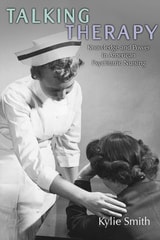
Talking Therapy
Knowledge and Power in American Psychiatric NursingKylie Smith
Rutgers University Press, 2020
Winner of the 2020 Lavinia L. Dock Award from the American Association for the History of Nursing
Talking Therapy traces the rise of modern psychiatric nursing in the United States from the 1930s to the 1970s. Through an analysis of the relationship between nurses and other mental health professions, with an emphasis on nursing scholarship, this book demonstrates the inherently social construction of ‘mental health’, and highlights the role of nurses in challenging, and complying with, modern approaches to psychiatry. After WWII, heightened cultural and political emphasis on mental health for social stability enabled the development of psychiatric nursing as a distinct knowledge project through which nurses aimed to transform institutional approaches to patient care, and to contribute to health and social science beyond the bedside. Nurses now take for granted the ideas that underpin their relationships with patients, but this book demonstrates that these were ideas not easily won, and that nurses in the past fought hard to make mental health nursing what it is today.
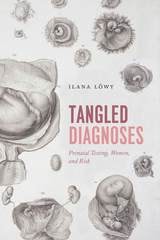
Tangled Diagnoses
Prenatal Testing, Women, and RiskIlana Löwy
University of Chicago Press, 2018
Tangled Diagnoses examines the multiple consequences of the widespread diffusion of this medical innovation. Prenatal testing, Ilana Löwy argues, has become mainly a risk-management technology—the goal of which is to prevent inborn impairments, ideally through the development of efficient therapies but in practice mainly through the prevention of the birth of children with such impairments. Using scholarship, interviews, and direct observation in France and Brazil of two groups of professionals who play an especially important role in the production of knowledge about fetal development—fetopathologists and clinical geneticists—to expose the real-life dilemmas prenatal testing creates, this book will be of interest to anyone concerned with the sociopolitical conditions of biomedical innovation, the politics of women’s bodies, disability, and the ethics of modern medicine.
Technical Knowledge in American Culture
Science, Technology, and Medicine Since the Early 1800sEdited by Hamilton Cravens, Alan I Marcus, and David M. Katzman
University of Alabama Press, 1996
Addresses the relationships between what modern-day experts say to each other and to their constituencies
Technical Knowledge in American Culture is an interdisciplinary volume that brings together leading historians to investigate how science, technology, and medicine have shaped—and been shaped by—American intellectual and cultural traditions since the early nineteenth century. Rather than treating science and technology simply as products of social forces, the contributors examine them as forms of knowledge with their own internal logics, debates, and authority structures. The book asks a central question: how do experts—scientists, engineers, physicians—communicate with one another and with broader audiences, and how does that communication influence American society?
The volume is organized into three major sections, each anchored in a distinct historical moment: Part I: The Rise of Democratic Culture, 1800–1870; Part II: The Age of Hierarchy, 1870–1920; and Part III: Toward an Infinity of Dimensions (20th Century). Across its essays, the book argues that technical knowledge is not just a tool of progress—it is a cultural force shaped by communication, interpretation, and authority. By focusing on case studies rather than sweeping narratives, the volume reveals how expertise operates in practice and how it influences broader debates about science, society, and public trust.
Technological Change in Health Care
A Global Analysis of Heart AttackMark B. McClellan and Daniel P. Kessler, Editors
University of Michigan Press, 2002
The comparisons presented here confirm that the use of medical technology in treatment for heart attack is strongly related to incentives, and that technological change is an important cause of medical expenditure growth in all developed countries. Each participating research team reviewed the economic and regulatory incentives provided by their country's health system, and major changes in those incentives over the 1980s and 1990s, according to a commonly used framework. Such incentives include: the magnitude of out-of-pocket costs to patients, the generosity of reimbursement to physicians and hospitals, regulation of the use of new technologies or the supply of physicians, regulation of competition, and the structure of hospital ownership. Each team also reviewed how care for heart attacks has changed in their country over the past decade.
The book will be of enormous importance to health economists, medical researchers and epidemiologists, and policymakers.
Mark McClellan is Associate Professor of Economics and of Medicine and, by courtesy, of Health Research and Policy, Stanford University. He is a National Fellow, the Hoover Institution. Daniel P. Kessler is Associate Professor of Economics, Law, and Policy in the Graduate School of Business, Stanford University, and a Research Fellow, the Hoover Institution.
Technology in American Health Care
Policy Directions for Effective Evaluation and ManagementAlan B. Cohen and Ruth S. Hanft, with William E. Encinosa, Stephanie M. Spernak, Shirley A. Stewart, and Catherine C. White
University of Michigan Press, 2004
---The World Future Society, Best Books and Reports
"This excellent book provides a broad overview of the development, impact, and evaluation of health technology in the United States. . . .The authors take a well-organized and thorough approach to address these topics, combining reviews of each with case examples of particular technologies. . . .Given the broad scope of the book, it could serve as a text for students, an introduction to the field for healthcare professionals, or a tool for academics and policymakers wishing to fill knowledge gaps outside their disciplines. . . .The book makes a compelling case for the logic and potential benefits of medical technology evaluation as a tool for improving health care."
---Journal of the American Medical Association
"By being comprehensive in their review, the authors chart a clear path to understanding the future of health care technology in America. They clarify the technical methods for evaluation and provide insight into the sociopolitical aspects of development and diffusion. Case studies are informative. Excellent reading for students and health professionals either as a textbook or as an off-the-shelf guide to methods for deciding among alternative technologies."
---Norman W. Weissman, University of Alabama
"Technology today dominates every aspect of health care. This useful book offers a diverse range of perspectives for students, professors, and medical practitioners who wish to understand how to evaluate medical technology."
---Joel Howell, University of Michigan Medical School
Technology in American Health Care is a comprehensive, multidisciplinary guide to understanding how medical advances-new drugs, biological devices, and surgical procedures-are developed, brought to market, evaluated, and adopted into health care.
Cost-effective delivery of evidence-based health care is the sine qua non of American medicine in the twenty-first century. Health care decision makers, providers, payers, policymakers, and consumers all need vital information about the risks, benefits, and costs of new technologies in order to make informed decisions about which ones to adopt and how to use them. Alan B. Cohen and Ruth S. Hanft explore the evolving field of medical technology evaluation (MTE), as well as the current controversies surrounding the evaluation and diffusion of medical technologies, including the methods employed in their assessment and the policies that govern their adoption and use.
The book opens with an introduction that provides basic definitions and the history of technological change in American medicine, and a second chapter that explores critical questions regarding medical technology in health care. Part I discusses biomedical innovation, the development and diffusion of medical technology, and the adoption and use of technology by hospitals, physicians, and other health care organizations and professions under changing health care market conditions. Part II examines the methods of MTE-including randomized controlled trials, meta-analyses, economic evaluation methods (such as cost-benefit, cost-effectiveness, and cost-utility analyses), and clinical decision analysis. Part III focuses on key public policy issues and concerns that affect the organization, financing, and delivery of health care and that relate importantly to medical technology, including safety, efficacy, quality, cost, access, equity, social, ethical, legal, and evaluation concerns. All three parts of the book provide a historical perspective on the relevant issues, methods, and policy concerns and contain examples of technologies whose development, adoption, evaluation, and use have contributed to our understanding of the field.
This book will be invaluable in making MTE more accessible to individuals who are directly involved in the evaluation process and those who are touched by it in their professional lives-policymakers, clinicians, managers, and researchers.
Technopharmacology
Joshua Neves
University of Minnesota Press, 2022
Exploring networked technologies and bioeconomy and their links to biotechnologies, pharmacology, and pharmaceuticals
Being on social media, having pornography or an internet addiction, consciousness hacking, and mundane smartness initiatives are practices embodied in a similar manner to the swallowing of a pill. Such close relations of media technologies to pharmaceuticals and pharmacology is the focus of this book. Technopharmacology is a modest call to expand media theoretical inquiry by attending to the biological, neurological, and pharmacological dimensions of media and centers on emergent affinities between big data and big pharma.
Tell Me Why My Children Died
Rabies, Indigenous Knowledge, and Communicative JusticeCharles L. Briggs and Clara Mantini-Briggs
Duke University Press, 2016
Telling is Risky Business
Mental Health Consumers Confront StigmaWahl, Otto F
Rutgers University Press, 1999
Individuals with a mental illnesses—such as schizophrenia, bipolar disorder, and depression—have a double burden, Otto Wahl writes. Not only must they cope with disabling disorders, but they also must contend with the negative attitudes of the public toward those disorders. To truly understand the full extent of this stigma, we need to hear from the consumers (the term used in this book for people with mental illness) themselves. Telling is Risky Business is the first book to examine what these people have to say about their own experiences of stigma.
The center of Wahl’s research was a nationwide survey in which mental health consumers across the United States were asked, both through questionnaires and interviews, to tell about their experiences of stigma and discrimination. The research comes to life as many of the over 1,300 respondents’ acute observations are reported directly, in their own words.
Telling is Risky Business vividly covers topics such as isolation, rejection, discouragement, and discrimination. Consumers also offer perceptive observations of how our society depicts people with mental illness. The book ends with suggestions for strategies and coping; an invaluable section on resources available for fighting stigma guarantees its place on many bookshelves. As Laura Lee Hall writes, “This book will likely open your eyes to a topic that you probably did not understand.”

TennCare, One State's Experiment with Medicaid Expansion
Christina Juris Bennett
Vanderbilt University Press, 2014
While many states cut back on their Medicaid enrollments from 1993 to 2001, TennCare grew from 750,000 to 1.47 million enrollees. The state was less successful in controlling costs, however. Each major stakeholder group (the state, the managed care organizations, the providers, and the enrollees and their advocates) pushed back against parts of the state's strategy that adversely affected their interests, and they eventually dismantled the mechanisms of cost constraint.
The author lays out the four stakeholder perspectives for each period in the history of TennCare and provides a link to difficult-to-access primary documents.
Tension
Mental Distress and Embodied Inequality in the Western HimalayasNikita Kaur Simpson
Duke University Press, 2026
Testimonios of Care
Feminist Latina/x and Chicana/x Perspectives on Caregiving PraxisEdited by Natalia Deeb-Sossa, Yvette G. Flores, Angie Chabram
University of Arizona Press, 2024
The book opens with an introductory chapter by the three co-editors, and then is divided into three sections exploring the caregiver voice, community caregiving, and reflections that outline a Caregiver Bill of Rights and present a call to action. Throughout, contributors discuss kinship care, including formal and informal adoptions, community care, caregiving in professional health contexts, and the implicit caregiving inherent in teaching BIPOC students, which largely falls upon faculty of color.
Testimonios of Care gives voice to those who often are voiceless in histories of caregiving and is guided by Chicana and Latina feminist principles, which include solidarity between women of color, empathy, willingness to challenge the patriarchal medical health-care systems, questioning traditional gender roles and idealization of familia, and caring for self while caring for loved ones and community.
Contributors
yvonne hurtado allen
Angie Chabram
Natalia Deeb-Sossa
Yvette G. Flores
Inés Hernández-Ávila
ire’ne lara silva
Josie Méndez-Negrete
Maria R. Palacios
Hector Rivera-Lopez
Maria Angelina Soldatenko
Anita Tijerina Revilla
Mónica Torreiro-Casal
Enriqueta Valdez-Curiel

Testing Baby
The Transformation of Newborn Screening, Parenting, and PolicymakingGrob, Rachel
Rutgers University Press, 2011
Within forty-eight hours after birth, the heel of every baby in the United States has been pricked and the blood sent for compulsory screening to detect or rule out a large number of disorders. Newborn screening is expanding rapidly, fueled by the prospect of saving lives. Yet many lives are also changed by it in ways not yet recognized.
Testing Baby is the first book to draw on parents’ experiences with newborn screening in order to examine its far-reaching sociological consequences. Rachel Grob’s cautionary tale also explores the powerful ways that parents’ narratives have shaped this emotionally charged policy arena. Newborn screening occurs almost always without parents’ consent and often without their knowledge or understanding, yet it has the power to alter such things as family dynamics at the household level, the context of parenting, the way we manage disease identity, and how parents’ interests are understood and solicited in policy debates.

Testing Fate
Tay-Sachs Disease and the Right to Be ResponsibleShelley Z. Reuter
University of Minnesota Press, 2016
In today’s world, responsible biocitizenship has become a new way of belonging in society. Individuals are expected to make “responsible” medical choices, including the decision to be screened for genetic disease. Paradoxically, we have even come to see ourselves as having the right to be responsible vis-à-vis the proactive mitigation of genetic risk. At the same time, the concept of genetic disease has become a new and powerful way of defining the boundaries between human groups. Tay-Sachs, an autosomal recessive disorder, is a case in point—with origins in the period of Eastern European Jewish immigration to the United States and United Kingdom that spanned the late nineteenth and early twentieth centuries, it has a long and fraught history as a marker of Jewish racial difference.
In Testing Fate, Shelley Z. Reuter asks: Can the biocitizen, especially one historically defined as a racialized and pathologized Other, be said to be exercising authentic, free choice in deciding whether to undertake genetic screening? Drawing on a range of historical and contemporary examples—doctors’ medical reports of Tay-Sachs since the first case was documented in 1881, the medical field’s construction of Tay-Sachs as a disease of Jewish immigrants, YouTube videos of children with Tay-Sachs that frame the disease as tragic disability avoidable through a simple genetic test, and medical malpractice suits since the test for the disease became available—Reuter shows that true agency in genetic decision-making can be exercised only from a place of cultural inclusion. Choice in this context is in fact a kind of unfreedom—a moral duty to act that is not really agency at all.
Textbook of Plastic and Reconstructive Surgery
Edited by Deepak K. Kalaskar, Peter E. Butler, and Shadi Ghali
University College London, 2016

That’s Gotta Hurt
The Injuries That Changed Sports ForeverDr. David Geier
University Press of New England, 2017

The ABC of Acid-Base Chemistry
The Elements of Physiological Blood-Gas Chemistry for Medical Students and PhysiciansHorace W. Davenport
University of Chicago Press, 1974
This new edition of Horace W. Davenport's standard text takes into account different ways of looking at the problems of acid-base derived from new instrumentation. The exposition has been modified to allow the student to apply his understanding to other systems of description of the acid-base status. Although the pH system has been retained, there is increasing emphasis on the use of hydrogen ion concentration.
Topics discussed include: partial pressure of gases, composition of alveolar gas, transport of oxygen and carbon dioxide in the blood, buffer action of hemoglobin and separated plasma, oxygenated whole blood and reduced blood, concepts of base excess and base deficit, and chemical regulation of respiration.
"Any reader who clearly understands the subject matter of this book will have a firm grounding in the principles of the subject; I find it the clearest text of this type that I have read."—British Journal of Hospital Medicine
"This little book is of great value to chemically trained physicians and medical students who want to get a clearer idea of the physiology of acid base chemistry in the blood."—The Journal of Gastroenterology
The ABC's of the Brachial Plexus
Written by Denise Justice; Edited by Holly Wagner; Illustrated by Alexandra Paquin and Bethany Runyon
Michigan Publishing Services, 2020
Medical terms used in the doctor’s office can be confusing, especially for the condition of Neonatal Brachial Plexus Palsy and/or Peripheral Nerve Injury. This book is written by a highly experienced therapist and formatted effectively for reference, review, or new learning of the medical terms. In addition, the accompanying hand-drawn illustrations offer attractive colorful pictorial representations of the technical concepts.
From the names and anatomy of individual nerves to multiple surgical treatment options, this book will help patients and caretakers decode the words of doctors, starting with every letter of the alphabet. If you are seeking the knowledge help with the diagnosis and treatment of your Brachial Plexus condition, this book is for you!
The ACA at 10 (Part One)
Jonathan Oberlander, special issue editor
Duke University Press, 2020
Contributors. Daniel Béland, Linda Blumberg, Andrea Louise Campbell, Sherry Glied, Sarah Gordon, Scott Greer, Colleen Grogan, Michael Gusmano, Allison Hoffman, Jon Holahan, Nicole Huberfeld, Lawrence Jacobs, Holly Jarman, David Jones, Timothy Stolzfus Jost, Katie Keith, Aryana Khalid, Larry Levitt, John McDonough, Stacey McMorrow, Suzanne Mettler, Jamila Michener, Jonathan Oberlander, Mark Peterson, Philip Rocco, Marilyn Tavenner, Frank Thompson, Carolyn Hughes Tuohy, Alex Waddan
The ACA at 10 (Part Two)
Jonathan Oberlander, special issue editor
Duke University Press, 2020
Contributors. John Benson, Robert Blendon, Lawrence Brown, Marc Cohen, Mary Findling, Erika Franklin Fowler, Austin Frakt, Anuj Gangopadhyaya, Bowen Garrett, Sarah Gollust, Simon Haeder, Paula Lantz, Adrianna McIntyre, Edward Miller, James Morone, Pamela Nadash, Jeff Niederdeppe, Sayeh Nikpay, Jonathan Oberlander, Eric Patashnik, India Pungarcher, Sara Rosenbaum, Eric Schneider, Michael Sparer, Joseph White, Susan Webb Yackee
The Absent Body
Drew Leder
University of Chicago Press, 1990
In part 1, Leder explores a wide range of bodily functions with an eye to structures of concealment and alienation. He discusses not only perception and movement, skills and tools, but a variety of "bodies" that philosophers tend to overlook: the inner body with its anonymous rhythms; the sleeping body into which we nightly lapse; the prenatal body from which we first came to be. Leder thereby seeks to challenge "primacy of perception." In part 2, Leder shows how this phenomenology allows us to rethink traditional concepts of mind and body. Leder argues that Cartesian dualism exhibits an abiding power because it draws upon life-world experiences. Descartes' corpus is filled with disruptive bodies which can only be subdued by exercising "disembodied" reason. Leder explores the origins of this notion of reason as disembodied, focusing upon the hidden corporeality of language and thought. In a final chapter, Leder then proposes a new ethic of embodiment to carry us beyond Cartesianism.
This original, important, and accessible work uses examples from the author's medical training throughout. It will interest all those concerned with phenomenology, the philosophy of mind, or the Cartesian tradition; those working in the health care professions; and all those fascinated by the human body.
The Accidental Teacher
Life Lessons from My Silent SonAnnie Lubliner Lehmann
University of Michigan Press, 2009
"Jonah Lehmann is an accidental teacher of others, including his family and friends. This personal and touching account of Jonah's life is enlightening, especially to those coming to terms with similar challenges with autism and other cognitive disabilities. It was written with love to support research on autism, and I recommend it to anyone and everyone touched by those of us who are different."
---Patricia E. Kefalas Dudek, Legal Advocate for People with Disabilities
"I have never read a book about a disabled person that caught me from page one. I could not put this one down. Lehmann offers a profound perspective on living with the reality of a severely disabled child. This book will be required reading for students who take my class in Special Education Administration."
---Frances LaPlante-Sosnowsky, Associate Professor of Education at Wayne State University
"A story of the astonishing power of human love and family triumph over hardship. Lehmann's story, engaging and at times both heartbreaking and joyful, offers an intimate view of one mother's journey as she works with professionals and a blur of caregivers to assist the ever-changing needs of her son. I highly recommend it to seasoned professionals in the field of autism and students preparing for careers in special education."
---Janet E. Graetz, Assistant Professor of Human Development and Child Studies at Oakland University
A child teaches without intending to . . .
Having severe autism does not stop Annie Lehmann's son Jonah from teaching her some of life's most valuable lessons. The Accidental Teacher, a heartfelt memoir about self-discovery rather than illness, uses insight and humor to weave a tale rich with kitchen-table wisdom. It explains the realities of life with a largely nonverbal son and explores the frustrations and triumphs of the Lehmann family as Jonah grew into a young adult. This book is a must-read for anyone who has been personally touched by a major life challenge.
Annie Lubliner Lehmann, a freelance writer for more than twenty-five years, has published articles in many newspapers and magazines, including the New York Times and Detroit Free Press. She resides in Michigan with her husband and two of her three children. Her eldest son, who inspired this memoir, is now a young adult with autism who lives in a supervised home.
The African Transformation of Western Medicine and the Dynamics of Global Cultural Exchange
David Baronov
Temple University Press, 2010
The book analyzes biomedicine as a complex and dynamic sociocultural form, the conceptual premises of which make it necessarily subject to ongoing change and development as it travels the globe. David Baronov captures the complexities of this cultural exchange by using world-systems analysis in a way that places global cultural processes on equal footing with political and economic processes. In doing so, he both allows the story of Africa’s transformation of “Western” biomedicine to be told and offers new insights into the capitalist world system.
The Afterlife of Images
Translating the Pathological Body between China and the WestAri Larissa Heinrich
Duke University Press, 2008
Combining literary studies, the history of science, and visual culture studies, Heinrich analyzes the rhetoric and iconography through which medical missionaries transmitted to the West an image of China as “sick” or “diseased.” He also examines the absorption of that image back into China through missionary activity, through the earliest translations of Western medical texts into Chinese, and even through the literature of Chinese nationalism. Heinrich argues that over time “scientific” Western representations of the Chinese body and culture accumulated a host of secondary meanings, taking on an afterlife with lasting consequences for conceptions of Chinese identity in China and beyond its borders.
The Age of Immunology
Conceiving a Future in an Alienating WorldA. David Napier
University of Chicago Press, 2003
To illustrate these destructive consequences, Napier likens the current craze for embracing diversity and the use of politically correct speech to a cultural potluck to which we each bring different dishes, but at which no one can eat unless they abide by the same rules. Similarly, loaning money to developing nations serves as a tool both to make the peoples in those nations more like us and to maintain them in the nonthreatening status of distant dependents. To break free of the resulting downward spiral of homogenization and self-focus, Napier suggests that we instead adopt a new defining concept based on embryology, in which development and self-growth take place through a process of incorporation and transformation. In this effort he suggests that we have much to learn from non-Western peoples, such as the Balinese, whose ritual practices require them to take on the considerable risk of injecting into their selves the potential dangers of otherness—and in so doing ultimately strengthen themselves as well as their society.
The Age of Immunology, with its combination of philosophy, history, and cultural inquiry, will be seen as a manifesto for a new age and a new way of thinking about the world and our place in it.
The Agony of Heroes
Medical Care for America's Besieged Legions from Bataan to Khe SanhThomas S. Helling
Westholme Publishing, 2024
Bataan, Anzio, Bastogne, Chosin, Khe Sanh: names that define the American spirit. They are synonymous with courage, resilience, and determination against great odds. At each of these battles American soldiers and Marines weathered desperation and fear to survive, advance, and triumph. Along with these heroes of the battlefield were no less determined and courageous providers of medical care. From the heat and disease-ridden jungles of Bataan, the precarious beachhead of Anzio, the encircled town of Bastogne, the frozen fields of Chosin, and the forsaken plateau of Khe Sanh, doctors and nurses worked under intense conditions with whatever means at hand, to staunch bleeding, repair damage, and resurrect the dying. In so doing they gave a glimmer of hope for the warriors facing possible death or capitulation. Often completely cut off from vital supplies and modern technology, and under the threat of enemy fire, these medical professionals—men and women—never lost sight of their passionate commitment to the sick and wounded. As noncombatants, this took extraordinary resolve to ignore the mortal threats of explosions and gunfire to focus on the mission of relieving pain, dragging from the brink of death damaged soldiers completely dependent on their resourcefulness. Some of these brave men and women would suffer the same fate as their fighting comrades, cut down by enemy fire in the prime of life, many times in the very task of rendering the bottomless compassion that was their hallmark and sometimes their only tonic.
In The Agony of Heroes: Medical Care for America’s Besieged Legions from Bataan to Khe Sanh, distinguished surgeon Thomas S. Helling relates the inspirational and compelling stories of the doctors, nurses, corpsmen, aides, and others who braved the most frightening conditions in order to save lives. Their experiences testify to the indomitable human grit that, when asked, transforms ordinary behavior into extraordinary achievements.
The Ailing City
Health, Tuberculosis, and Culture in Buenos Aires, 1870–1950Diego Armus
Duke University Press, 2011
The Art of Medicine
Over 2,000 Years of Images and ImaginationJulie Anderson, Emm Barnes, and Emma Shackleton
University of Chicago Press, 2011
Since ancient times people have depended on medical practitioners to enhance life, to treat illness and injuries, and to help reduce pain and suffering. The scientifically based discipline that we know today stands beside diverse traditions, belief systems, and bodies of medical knowledge that have evolved in fascinating ways across cultures and continents. Throughout this history, successive generations have created artistic representations of these varied aspects of medicine, illustrating instruction manuals, documenting treatments, and creating works of art that enable individuals to express their feelings and ideas about medicine, health, and illness. From ancient wall paintings and tomb carvings to sculpture, installations, and digitally created artworks, the results are extraordinary and pay tribute to how medicine has affected our lives and the lives of our ancestors.
Drawing on the remarkable holdings of the Wellcome Collection in London, The Art of Medicine offers a unique gallery of rarely seen paintings, artifacts, drawings, prints, and extracts from manuscripts and manuals to provide a fascinating visual insight into our knowledge of the human body and mind, and how both have been treated with medicine. Julie Anderson, Emm Barnes, and Emma Shackleton take readers on a fascinating visual journey through the history of medical practice, exploring contemporary biomedical images, popular art, and caricature alongside venerable Chinese scrolls, prehistoric Mesoamerican drawings, paintings of the European Renaissance, medieval Persian manuscripts, and more. The result is a rare and remarkable visual account of what it was and is to be human in sickness and health.

The Ascent of Affect
Genealogy and CritiqueRuth Leys
University of Chicago Press, 2017
Ruth Leys’s brilliant, much anticipated history, therefore, is a story of controversy and disagreement. The Ascent of Affect focuses on the post–World War II period, when interest in emotions as an object of study began to revive. Leys analyzes the ongoing debate over how to understand emotions, paying particular attention to the continual conflict between camps that argue for the intentionality or meaning of emotions but have trouble explaining their presence in non-human animals and those that argue for the universality of emotions but struggle when the question turns to meaning. Addressing the work of key figures from across the spectrum, considering the potentially misleading appeal of neuroscience for those working in the humanities, and bringing her story fully up to date by taking in the latest debates, Leys presents here the most thorough analysis available of how we have tried to think about how we feel.

The Bacteriology of Tuberculosis
Egons Darzins
University of Minnesota Press, 1958
The Bartonellas and Peruvian Medicine
The Work of Alberto Leonardo BartonAlarcón, Graciela S
Rutgers University Press, 2019
The book is the result of intense bibliographic research and of original documents aimed not just at the examination of Barton’s life and work, but also the examination of today’s perspectives and future work in the field of infectious and “neglected” diseases. The authors address current scientific information on the relevant bacteria Bartonella bacilliformis, besides current research and clinical status of the other Bartonellas, making it a useful and practical text for those studying infectious diseases.
The Beautiful Cure
The Revolution in Immunology and What It Means for Your HealthDaniel M. Davis
University of Chicago Press, 2018
The immune system holds the key to human health. In The Beautiful Cure, leading immunologist Daniel M. Davis describes how the scientific quest to understand how the immune system works—and how it is affected by stress, sleep, age, and our state of mind—is now unlocking a revolutionary new approach to medicine and well-being.
The body’s ability to fight disease and heal itself is one of the great mysteries and marvels of nature. But in recent years, painstaking research has resulted in major advances in our grasp of this breathtakingly beautiful inner world: a vast and intricate network of specialist cells, regulatory proteins, and dedicated genes that are continually protecting our bodies. Far more powerful than any medicine ever invented, the immune system plays a crucial role in our daily lives. We have found ways to harness these natural defenses to create breakthrough drugs and so-called immunotherapies that help us fight cancer, diabetes, arthritis, and many age-related diseases, and we are starting to understand whether activities such as mindfulness might play a role in enhancing our physical resilience.
Written by a researcher at the forefront of this adventure, The Beautiful Cure tells a dramatic story of scientific detective work and discovery, of puzzles solved and mysteries that linger, of lives sacrificed and saved. With expertise and eloquence, Davis introduces us to this revelatory new understanding of the human body and what it takes to be healthy.
The Best Place
Addiction, Intervention, and Living and Dying Young in VancouverDanya Fast
Rutgers University Press, 2024
Winner of the CASCA Labrecque-Lee Book Prize
In both local and international imaginations, Vancouver, Canada, is often celebrated as one of the world’s most beautiful, cosmopolitan, and livable cities. Simultaneously, the city continues to be ground zero for successive waves of public health emergency and intervention, including a recent and unprecedented drug overdose crisis driven by the proliferation of illicitly manufactured fentanyl and related analogs in the local drug supply. In The Best Place: Addiction, Intervention, and Living and Dying Young in Vancouver, Danya Fast explores these politics of place from the perspectives of young people who use drugs. Those who are the subject of this book were in many ways relegated to the social, spatial, and economic margins of the city. Yet, they were also often at the very center of city life and state projects, including the project of protecting life in the context of the current overdose crisis.

The Black Death in Egypt and England
A Comparative StudyBy Stuart J. Borsch
University of Texas Press, 2005
Throughout the fourteenth century AD/eighth century H, waves of plague swept out of Central Asia and decimated populations from China to Iceland. So devastating was the Black Death across the Old World that some historians have compared its effects to those of a nuclear holocaust. As countries began to recover from the plague during the following century, sharp contrasts arose between the East, where societies slumped into long-term economic and social decline, and the West, where technological and social innovation set the stage for Europe's dominance into the twentieth century. Why were there such opposite outcomes from the same catastrophic event?
In contrast to previous studies that have looked to differences between Islam and Christianity for the solution to the puzzle, this pioneering work proposes that a country's system of landholding primarily determined how successfully it recovered from the calamity of the Black Death. Stuart Borsch compares the specific cases of Egypt and England, countries whose economies were based in agriculture and whose pre-plague levels of total and agrarian gross domestic product were roughly equivalent. Undertaking a thorough analysis of medieval economic data, he cogently explains why Egypt's centralized and urban landholding system was unable to adapt to massive depopulation, while England's localized and rural landholding system had fully recovered by the year 1500.

The Black Death
A Chronicle of the PlagueJohannes Nohl
Westholme Publishing, 2005
A History of the Most Catastrophic Plague Through Contemporary Accounts and How Humans Reacted
Hailed by the New York Times as "unusually interesting both as history and sociological study," The Black Death: A Chronicle of the Plague traces the ebb and flow of European pandemics over the course of centuries through translations of contemporary accounts. Originally published in 1926 and now in paperback for the first time, Nohl's volume is unique for its geographical and historical scope as well as its combination of detailed accounts and overarching contemporary views of the history of the plague in Europe, a disease that claimed nearly 40 million people during the fourteenth century alone. With current concerns about pandemics, The Black Death provides lessons on how humans reacted to and survived catastrophic loss of life to disease.
Contents
Preface
1. The Aspect of the Plague
2. The Precursors of the Plague
3. The Medical Profession and the Plague
4. Plague Remedies
5. Administrative Precautions
6. Attitude of the Church
7. The Diabolical Element of the Plague
8. Persecutions of the Jews
9. The Erotic Element of the Plague
10. The Flagellants
11. Choreomania and Children's Pilgrimages
12. Life Victorious
Bibliography
Geographical Index
Index of Persons
The Body Aesthetic
From Fine Art to Body ModificationTobin Siebers, Editor
University of Michigan Press, 2000
Generously and variously illustrated, this volume gathers together the work of literary critics and artists, classicists, art historians, and specialists on the history of the body, who survey the strangeness and variety with which the body has given human beings form. Richard Leppert traces how the representation of little girls responds directly to the cultural anxieties of modernity. René Girard plots how starvation becomes an art form, while Eric Gans surveys the contemporary phenomenon of body modification. Sander Gilman explores aesthetic surgery as a response to human unhappiness. Simon Goldhill discovers in the Roman empire the initial stirrings of institutions that focus on the spectacle of the body, and Cynthia S. Greig provides a glimpse of what the history of photography would look like if male nudes replaced female ones. Marion Jackson details how the different physical existence of the Inuit guides the way they make art. Joseph Grigely transforms aesthetics as usual by focusing on the disabled body, while Tobin Siebers describes the traumatic appeal in both fine art and the media of wounded flesh, whether human or animal.
The Body Aesthetic is a broad exercise in cultural studies and will address a variety of readers, from those interested in detailed, theoretical accounts of the body, to those interested in belles lettres, to those interested in fine art.
Tobin Siebers is Professor of English, University of Michigan.
The Body Multiple
Ontology in Medical PracticeAnnemarie Mol
Duke University Press, 2002
The Body Multiple juxtaposes two distinct texts. Alongside Mol’s analysis of her ethnographic material—interviews with doctors and patients and observations of medical examinations, consultations, and operations—runs a parallel text in which she reflects on the relevant literature. Mol draws on medical anthropology, sociology, feminist theory, philosophy, and science and technology studies to reframe such issues as the disease-illness distinction, subject-object relations, boundaries, difference, situatedness, and ontology. In dialogue with one another, Mol’s two texts meditate on the multiplicity of reality-in-practice.
Presenting philosophical reflections on the body and medical practice through vivid storytelling, The Body Multiple will be important to those in medical anthropology, philosophy, and the social study of science, technology, and medicine.

The Body Soviet
Propaganda, Hygiene, and the Revolutionary StateTricia Starks
University of Wisconsin Press, 2008
Health, though essential to the revolutionary vision and crucial to Soviet plans for utopia, has been neglected by traditional histories caught up in Cold War debates. The Body Soviet recovers this significant aspect of Soviet thought by providing a cross-disciplinary, comparative history of Soviet health programs that draws upon rich sources of health care propaganda, including posters, plays, museum displays, films, and mock trials. The analysis of propaganda makes The Body Soviet more than an institutional history; it is also an insightful critique of the ideologies of the body fabricated by health organizations.
"A masterpiece that will thoroughly fascinate and delight readers. Starks's understanding of propaganda and hygiene in the early Soviet state is second to none. She tells the stories of Soviet efforts in this field with tremendous insight and ingenuity, providing a rich picture of Soviet life as it was actually lived."— Elizabeth Wood, author of From Baba to Comrade: Gender and Politics in Revolutionary Russia
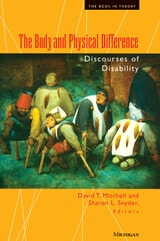
The Body and Physical Difference
Discourses of DisabilityDavid T. Mitchell and Sharon L. Snyder, Editors
University of Michigan Press, 1997
The book provides a provocative range of topics and perspectives: the absence of physical "otherness" in Ancient Greece, the depiction of the female invalid in Victorian literature, the production of tragic innocence in British and American telethons, the reconstruction of Civil War amputees, and disability as the aesthetic basis for definitions of expendable life within the modern eugenics movement. With this new, secure anchoring in the humanities, disability studies now emerges as a significant strain in contemporary theories of identity and social marginality.
Moving beyond the oversimplication that disabled people are marginalized and made invisible by able-ist assumptions and practices, the contributors demonstrate that representation is founded upon the perpetual exhibition of human anomalies. In this sense, all art can be said to migrate toward the "freakish" and the "grotesque." Such a project paradoxically makes disability the exception and the rule of the desire to represent that which has been traditionally out-of-bounds in polite discourse.
The Body and Physical Difference has relevance across a wide range of academic specialties such as cultural studies, the sociology of medicine, history, literature and medicine, the allied health professions, rehabilitation, aesthetics, philosophical discourses of the body, literary and film studies, and narrative theory.
David T. Mitchell is Assistant Professor of English, Northern Michigan University. Sharon L. Snyder teaches film and literature at Northern Michigan University.
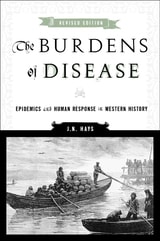
The Burdens of Disease
Epidemics and Human Response in Western HistoryJ.N. Hays
Rutgers University Press, 2009
In this updated volume, with revisions and additions to the original content, including the evolution of drug-resistant diseases and expanded coverage of HIV/AIDS, along with recent data on mortality figures and other relevant statistics, J. N. Hays chronicles perceptions and responses to plague and pestilence over two thousand years of western history. Disease is framed as a multidimensional construct, situated at the intersection of history, politics, culture, and medicine, and rooted in mentalities and social relations as much as in biological conditions of pathology. This revised edition of The Burdens of Disease also studies the victims of epidemics, paying close attention to the relationships among poverty, power, and disease.

The Burdens of Disease
Epidemics and Human Response in Western HistoryHays, J. N
Rutgers University Press, 1998
In this sweeping approach to the history of disease, historian J. N. Hays chronicles perceptions and responses to plague and pestilence over two thousand years of western history. Hays frames disease as a multi-dimensional construct, situated at the intersection of history, politics, culture, and medicine, and rooted in mentalities and social relations as much as in biological conditions of pathology. He shows how diseases affect social and political change, reveal social tensions, and are mediated both within and outside the realm of scientific medicine.
Beginning with the legacy of Greek, Roman, and early Christian ideas about disease, the book then discusses many of the dramatic epidemics from the fourteenth through the twentieth centuries, moving from leprosy and bubonic plague through syphilis, smallpox, cholera, tuberculosis, influenza, and poliomyelitis to AIDS. Hays examines the devastating exchange of diseases between cultures and continents that ensued during the age of exploration. He also describes disease through the lenses of medical theory, public health, folk traditions, and government response. The history of epidemics is also the history of their victims. Hays pays close attention to the relationships between poverty and power and disease, using contemporary case studies to support his argument that diseases concentrate their pathological effects on the poor, while elites associate the cause of disease with the culture and habits of the poor.

The Business of Dentistry
Outside the Ivory TowerJames Satovsky
Michigan Publishing Services, 2027
Focusing on the essential management skills rarely taught in school, Dr. James Satovsky offers pearls of wisdom to those entering the field. The Business of Dentistry: Outside the Ivory Tower fills in knowledge missing from most 2-year graduate programs with an emphasis beyond the technical material taught in classes. Rather than treating dentistry students as simply medical professionals, Dr. Satovsky acknowledges the reality of their roles as future small business owners, gladly sharing his over 50 years of experience. By identifying potential stumbling blocks, The Business of Dentistry is an indispensable guide to post-graduation success for any dental professional navigating the transition into private practice with confidence.
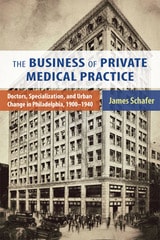
The Business of Private Medical Practice
Doctors, Specialization, and Urban Change in Philadelphia, 1900-1940James A. Schafer Jr.
Rutgers University Press, 2013
Unevenly distributed resources and rising costs have become enduring problems in the American health care system. Health care is more expensive in the United States than in other wealthy nations, and access varies significantly across space and social classes. James A. Schafer Jr. shows that these problems are not inevitable features of modern medicine, but instead reflect the informal organization of health care in a free market system in which profit and demand, rather than social welfare and public health needs, direct the distribution and cost of crucial resources.
The Business of Private Medical Practice is a case study of how market forces influenced the office locations and career paths of doctors in one early twentieth-century city, Philadelphia, the birthplace of American medicine. Without financial incentives to locate in poor neighborhoods, Philadelphia doctors instead clustered in central business districts and wealthy suburbs. In order to differentiate their services in a competitive marketplace, they also began to limit their practices to particular specialties, thereby further restricting access to primary care. Such trends worsened with ongoing urbanization.
Illustrated with numerous maps of the Philadelphia neighborhoods he studies, Schafer’s work helps underscore the role of economic self-interest in shaping the geography of private medical practice and the growth of medical specialization in the United States.
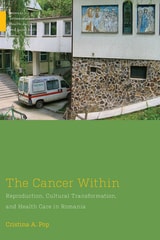
The Cancer Within
Reproduction, Cultural Transformation, and Health Care in RomaniaCristina A. Pop
Rutgers University Press, 2022
The Challenge of Regulating Managed Care
John E. Billi and Gail B. Agrawal, Editors
University of Michigan Press, 2001
The Changing Hospital Industry
Comparing Not-for-Profit and For-Profit InstitutionsEdited by David M. Cutler
University of Chicago Press, 1999
This timely volume provides a factual basis for discussing for-profit versus not-for-profit ownership of hospitals and gives a first look at the evidence about new and important issues in the hospital industry. The Changing Hospital Industry: Comparing Not-for-Profit and For-Profit Institutions will have significant implications for public-policy reforms in this vital industry and will be of great interest to scholars in the fields of health economics, public finance, hospital organization, and management; and to health services researchers.
The Chief Concern of Medicine
The Integration of the Medical Humanities and Narrative Knowledge into Medical PracticesRonald Schleifer and Jerry B. Vannatta
University of Michigan Press, 2013

The Chigi Codex
Sacred Music from Burgundy and France; Vatican City, Biblioteca Apostolica Vaticana, MS Chigi C VIII 234Edited by Edward F. Houghton
University of Chicago Press, 2027
Compiled between 1500 and 1504, The Chigi Codex contains the complete contents of an extraordinary illuminated manuscript, an anthology of forty polyphonic masses and motets associated with the royal courts of France and Burgundy. This edition includes nearly the complete oeuvre of Johannes Ockeghem, five motets by Johannes Regis, and compositions by Josquin des Prez, Henricus Isaac, Antoine Busnoys, Pierre de la Rue, Jean Mouton, Alexander Agricola, and others. Twelve works are unique to The Chigi Codex; seven motets were added by a Spanish scribe after 1515. The complete contents are presented here with transcriptions of the music accessible to musicians today, with a critical commentary on the music and concordant sources. The Codex transmits works that were copied in manuscripts and prints throughout Europe later in the sixteenth century.
In addition to its monumental repertory, The Chigi Codex includes notable works of visual art in the double-folio openings of thirty-six works with miniature paintings, coats of arms, inhabited capitals, family mottos, bizarre creatures, and colorful borders, all in the famed Ghent-Bruges style. Herbert Kellman discusses these as well as the history of the Codex and its long journey from its original patron, the Burgundian seigneur Philippe Bouton, to the Spanish families Folch de Cardona and Fernández de Córdoba, and finally to Rome and to the library of Fabio Chigi, Pope Alexander VII. The Chigi library is now an important part of the Vatican Library.
Making the manuscript accessible to the public and musicians, this edition of The Chigi Codex supports the study, performance, and understanding of its music and art in the musical, cultural, and historical contexts of its creation.
The Children Of Africa Confront AIDS
From Vulnerability To PossibilityArvind Singhal
Ohio University Press, 2003