Results by title
237 books match the query 'Medicine' and 38 start with t
Technical Knowledge in American Culture
Science, Technology, and Medicine Since the Early 1800sEdited by Hamilton Cravens, Alan I Marcus, and David M. Katzman
University of Alabama Press, 1996
Addresses the relationships between what modern-day experts say to each other and to their constituencies
Technical Knowledge in American Culture is an interdisciplinary volume that brings together leading historians to investigate how science, technology, and medicine have shaped—and been shaped by—American intellectual and cultural traditions since the early nineteenth century. Rather than treating science and technology simply as products of social forces, the contributors examine them as forms of knowledge with their own internal logics, debates, and authority structures. The book asks a central question: how do experts—scientists, engineers, physicians—communicate with one another and with broader audiences, and how does that communication influence American society?
The volume is organized into three major sections, each anchored in a distinct historical moment: Part I: The Rise of Democratic Culture, 1800–1870; Part II: The Age of Hierarchy, 1870–1920; and Part III: Toward an Infinity of Dimensions (20th Century). Across its essays, the book argues that technical knowledge is not just a tool of progress—it is a cultural force shaped by communication, interpretation, and authority. By focusing on case studies rather than sweeping narratives, the volume reveals how expertise operates in practice and how it influences broader debates about science, society, and public trust.
The African Transformation of Western Medicine and the Dynamics of Global Cultural Exchange
David Baronov
Temple University Press, 2010
The book analyzes biomedicine as a complex and dynamic sociocultural form, the conceptual premises of which make it necessarily subject to ongoing change and development as it travels the globe. David Baronov captures the complexities of this cultural exchange by using world-systems analysis in a way that places global cultural processes on equal footing with political and economic processes. In doing so, he both allows the story of Africa’s transformation of “Western” biomedicine to be told and offers new insights into the capitalist world system.
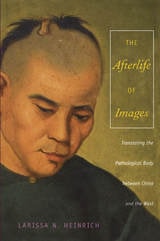
The Afterlife of Images
Translating the Pathological Body between China and the WestAri Larissa Heinrich
Duke University Press, 2008
Combining literary studies, the history of science, and visual culture studies, Heinrich analyzes the rhetoric and iconography through which medical missionaries transmitted to the West an image of China as “sick” or “diseased.” He also examines the absorption of that image back into China through missionary activity, through the earliest translations of Western medical texts into Chinese, and even through the literature of Chinese nationalism. Heinrich argues that over time “scientific” Western representations of the Chinese body and culture accumulated a host of secondary meanings, taking on an afterlife with lasting consequences for conceptions of Chinese identity in China and beyond its borders.
The Afterlives of Specimens
Science, Mourning, and Whitman's Civil WarLindsay Tuggle
University of Iowa Press, 2017
Grounded in archival discoveries, Afterlives traces the origins of nineteenth-century America’s preservation compulsion, illuminating the influences of botanical, medical, spiritualist, and sentimental discourses on Whitman’s work. Tuggle unveils previously unrecognized connections between Whitman and the leading “medical men” of his era, such as the surgeon John H. Brinton, founding curator of the Army Medical Museum, and Silas Weir Mitchell, the neurologist who discovered phantom limb syndrome. Remains from several amputee soldiers whom Whitman nursed in the Washington hospitals became specimens in the Army Medical Museum.
Tuggle is the first scholar to analyze Whitman’s role in medically memorializing the human cadaver and its abandoned parts.
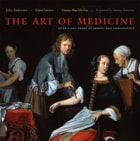
The Art of Medicine
Over 2,000 Years of Images and ImaginationJulie Anderson, Emm Barnes, and Emma Shackleton
University of Chicago Press, 2011
Since ancient times people have depended on medical practitioners to enhance life, to treat illness and injuries, and to help reduce pain and suffering. The scientifically based discipline that we know today stands beside diverse traditions, belief systems, and bodies of medical knowledge that have evolved in fascinating ways across cultures and continents. Throughout this history, successive generations have created artistic representations of these varied aspects of medicine, illustrating instruction manuals, documenting treatments, and creating works of art that enable individuals to express their feelings and ideas about medicine, health, and illness. From ancient wall paintings and tomb carvings to sculpture, installations, and digitally created artworks, the results are extraordinary and pay tribute to how medicine has affected our lives and the lives of our ancestors.
Drawing on the remarkable holdings of the Wellcome Collection in London, The Art of Medicine offers a unique gallery of rarely seen paintings, artifacts, drawings, prints, and extracts from manuscripts and manuals to provide a fascinating visual insight into our knowledge of the human body and mind, and how both have been treated with medicine. Julie Anderson, Emm Barnes, and Emma Shackleton take readers on a fascinating visual journey through the history of medical practice, exploring contemporary biomedical images, popular art, and caricature alongside venerable Chinese scrolls, prehistoric Mesoamerican drawings, paintings of the European Renaissance, medieval Persian manuscripts, and more. The result is a rare and remarkable visual account of what it was and is to be human in sickness and health.
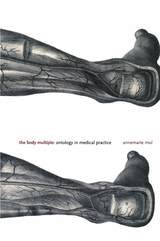
The Body Multiple
Ontology in Medical PracticeAnnemarie Mol
Duke University Press, 2002
The Body Multiple juxtaposes two distinct texts. Alongside Mol’s analysis of her ethnographic material—interviews with doctors and patients and observations of medical examinations, consultations, and operations—runs a parallel text in which she reflects on the relevant literature. Mol draws on medical anthropology, sociology, feminist theory, philosophy, and science and technology studies to reframe such issues as the disease-illness distinction, subject-object relations, boundaries, difference, situatedness, and ontology. In dialogue with one another, Mol’s two texts meditate on the multiplicity of reality-in-practice.
Presenting philosophical reflections on the body and medical practice through vivid storytelling, The Body Multiple will be important to those in medical anthropology, philosophy, and the social study of science, technology, and medicine.
The Chief Concern of Medicine
The Integration of the Medical Humanities and Narrative Knowledge into Medical PracticesRonald Schleifer and Jerry B. Vannatta
University of Michigan Press, 2013
The Discovery of Insulin
Twenty-fifth Anniversary EditionMichael Bliss
University of Chicago Press, 2007
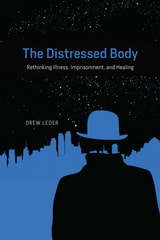
The Distressed Body
Rethinking Illness, Imprisonment, and HealingDrew Leder
University of Chicago Press, 2016
Leder draws on literary examples, clinical and philosophical sources, his medical training, and his own struggle with chronic pain. He levies a challenge to the capitalist and Cartesian models that rule modern medicine. Similarly, he looks at the root paradigms of our penitentiary and factory farm systems and the way these produce distressed bodies, asking how such institutions can be reformed. Writing with coauthors ranging from a prominent cardiologist to long-term inmates, he explores alternative environments that can better humanize—even spiritualize—the way we treat one another, offering a very different vision of medical, criminal justice, and food systems. Ultimately Leder proposes not just new answers to important bioethical questions but new ways of questioning accepted concepts and practices.
The Doctor Who Would Be King
Guillaume Lachenal
Duke University Press, 2022
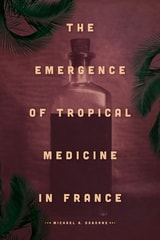
The Emergence of Tropical Medicine in France
Michael A. Osborne
University of Chicago Press, 2014
Osborne argues that physicians formulated localized concepts of diseases according to specific climatic and meteorological conditions, and assessed, diagnosed, and treated patients according to their ethnic and cultural origins. He also demonstrates that regions, more so than a coherent nation, built the empire and specific medical concepts and practices. Thus, by considering tropical medicine’s distinctive history, Osborne brings to light a more comprehensive and nuanced view of French medicine, medical geography, and race theory, all the while acknowledging the navy’s crucial role in combating illness and investigating the racial dimensions of health.

The Empathic Practitioner
Empathy, Gender, and MedicineEdited by Ellen Singer More
Rutgers University Press, 1994
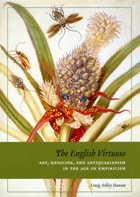
The English Virtuoso
Art, Medicine, and Antiquarianism in the Age of EmpiricismCraig Ashley Hanson
University of Chicago Press, 2009
At the heart of this profoundly interdisciplinary study lies the Royal Society of London for the Improvement of Natural Knowledge, which from its founding in 1660 served as the major professional organization for London’s leading physicians, many of them prominent virtuosi. Craig Ashley Hanson reveals that a vital art audience emerged from the Royal Society—whose members assembled many of the period’s most important nonaristocratic collections—a century before most accounts date the establishment of an institutional base for the arts in England. Unearthing the fascinating stories of an impressive cast of characters, Hanson establishes a new foundation for understanding both the relationship between British art and science and the artistic accomplishments of the late eighteenth and nineteenth centuries.
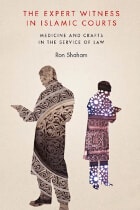
The Expert Witness in Islamic Courts
Medicine and Crafts in the Service of LawRon Shaham
University of Chicago Press, 2010
Shaham begins with a history of expert testimony in medieval Islamic culture, analyzing the different roles played by male experts, especially physicians and architects, and females, particularly midwives. From there, he focuses on the case of Egypt, tracing the country’s reform of its traditional legal system along European lines beginning in the late nineteenth century. Returning to a broader perspective, Shaham draws on a variety of legal and historical sources to place the phenomenon of expert testimony in cultural context. A truly comprehensive resource, The Expert Witness in Islamic Courts will be sought out by a broad spectrum of scholars working in history, religion, gender studies, and law.
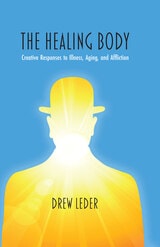
The Healing Body
Creative Responses to Illness, Aging, and AfflictionDrew Leder
Northwestern University Press, 2024
As we grapple with the impacts of an aging population, the millions who struggle with chronic pain and illness, and the unknown number of COVID survivors dealing with long-term impairment, our individual and collective trust in our bodies is shaken. How to adapt? And how to live well, even when medical cure is unavailable? In The Healing Body: Creative Responses to Illness, Aging, and Affliction, philosopher and medical doctor Drew Leder shows how the phenomenology of lived embodiment makes available a variety of existential healing responses to bodily breakdown. Leder also turns to socially marginalized groups—people who have been incarcerated and those deemed “elderly”—to explore how individuals creatively cope with societal as well as physical challenges.
This book forwards current phenomenological research on the body, pain and suffering, disability, and aging. It deeply engages with the legacies of continental philosophy while also drawing insights from the traditions of Hinduism, Buddhism, and Taoism. The Healing Body is a uniquely creative and refreshingly innovative contribution to contemporary philosophy, demonstrating the importance of the philosophical method to the wider culture.
The Health Of The Republic
Epidemics, Medicine, and Moralism as Challenges to DemocracyDan Beauchamp
Temple University Press, 1990
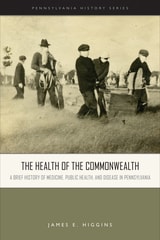
The Health of the Commonwealth
A Brief History of Medicine, Public Health, and Disease in PennsylvaniaJames E. Higgins
Temple University Press, 2020
“The history of medicine in Pennsylvania is no less vital to understanding the state’s past than is its political or industrial history,” writes James Higgins in The Health of the Commonwealth, his overview of medicine and public health in the state. Covering the outbreak of yellow fever in 1793 through the 1976 Legionnaire’s Disease epidemic, and the challenges of the present day, he shows how Pennsylvania has played a central role in humanity’s understanding of—and progress against—disease.
Higgins provides close readings of specific medical advances—for instance, scientists at the University of Pittsburgh discovered the polio vaccine—and of disease outbreaks, like AIDS. He examines sanitation and water purification efforts, allopathic medicine and alternative therapies, and the building of the state’s tuberculosis sanitaria. Higgins also describes Native American and pre-modern European folk medicine, the rise of public health in the state, and women’s roles in both folk and scientific medicine.
The Health of the Commonwealth places Pennsylvania’s unique contribution to the history of public health and medicine in a larger narrative of health and disease throughout the United States and the world.
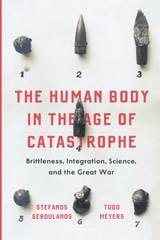
The Human Body in the Age of Catastrophe
Brittleness, Integration, Science, and the Great WarStefanos Geroulanos and Todd Meyers
University of Chicago Press, 2018
In The Human Body in the Age of Catastrophe, Stefanos Geroulanos and Todd Meyers uncover a fascinating story of how medical scientists came to conceptualize the body as an integrated yet brittle whole. Responding to the harrowing experience of the Great War, the medical community sought conceptual frameworks to understand bodily shock, brain injury, and the vast differences in patient responses they occasioned. Geroulanos and Meyers carefully trace how this emerging constellation of ideas became essential for thinking about integration, individuality, fragility, and collapse far beyond medicine: in fields as diverse as anthropology, political economy, psychoanalysis, and cybernetics.
Moving effortlessly between the history of medicine and intellectual history, The Human Body in the Age of Catastrophe is an intriguing look into the conceptual underpinnings of the world the Great War ushered in.
The Last Physician
Walker Percy and the Moral Life of MedicineCarl Elliott and John Lantos, eds.
Duke University Press, 1999
The contributors—physicians, philosophers, and literary critics—examine the relevance of Percy’s work to current dilemmas in medical education and health policy. They reflect upon the role doctors and patients play in his novels, his family legacy of depression, how his medical background influenced his writing style, and his philosophy of psychiatry. They contemplate the private ways in which Percy’s work affected their own lives and analyze the author’s tendency to contrast the medical-scientific worldview with a more spiritual one. Assessing Percy’s stature as an author and elucidating the many ways that reading and writing can combine with diagnosing and treating to offer an antidote to despair, they ask what it means to be a doctor, a writer, and a seeker of cures and truths—not just for the body but for the malaise and diseased spirituality of modern times.
This collection will appeal to lovers of literature as well as medical professionals—indeed, anyone concerned with medical ethics and the human side of doctoring.
Contributors. Robert Coles, Brock Eide, Carl Elliott, John D. Lantos, Ross McElwee, Richard Martinez, Martha Montello, David Schiedermayer, Jay Tolson, Bertram Wyatt-Brown, Laurie Zoloth-Dorfman

The Limits of Medicine
How Science Shapes Our Hope for the CureEdward S. Golub
University of Chicago Press, 1997
major advances in medicine are caused by changes in the way scientists describe disease.
Bleeding, sweating, and other treatments we consider barbaric were standard treatments for
centuries because they conformed to a conception of disease shared by patients and doctors.
Scientific breakthroughs in the understanding of disease in the nineteenth century transformed
treatment and the goals of medicine. Golub argues that the ongoing revolution in molecular
genetics has opened the door to the "biology of complexity," again transforming our view of
disease. This thought-provoking, timely book reveals a crucial but overlooked role of science
in medicine, and offers a new vision for the goals of both science and medicine as we enter the
twenty-first century.
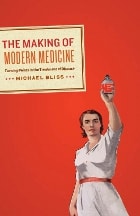
The Making of Modern Medicine
Turning Points in the Treatment of DiseaseMichael Bliss
University of Chicago Press, 2011
At the dawn of the twenty-first century, we have become accustomed to medical breakthroughs and conditioned to assume that, regardless of illnesses, doctors almost certainly will be able to help—not just by diagnosing us and alleviating our pain, but by actually treating or even curing diseases, and significantly improving our lives.
For most of human history, however, that was far from the case, as veteran medical historian Michael Bliss explains in The Making of Modern Medicine. Focusing on a few key moments in the transformation of medical care, Bliss reveals the way that new discoveries and new approaches led doctors and patients alike to discard fatalism and their traditional religious acceptance of suffering in favor of a new faith in health care and in the capacity of doctors to treat disease. He takes readers in his account to three turning points—a devastating smallpox outbreak in Montreal in 1885, the founding of the Johns Hopkins Hospital and Medical School, and the discovery of insulin—and recounts the lives of three crucial figures—researcher Frederick Banting, surgeon Harvey Cushing, and physician William Osler—turning medical history into a fascinating story of dedication and discovery.
Compact and compelling, this searching history vividly depicts and explains the emergence of modern medicine—and, in a provocative epilogue, outlines the paradoxes and confusions underlying our contemporary understanding of disease, death, and life itself.
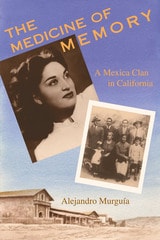
The Medicine of Memory
A Mexica Clan in CaliforniaBy Alejandro Murguía
University of Texas Press, 2002
"People who live in California deny the past," asserts Alejandro Murguía. In a state where "what matters is keeping up with the current trends, fads, or latest computer gizmo," no one has "the time, energy, or desire to reflect on what happened last week, much less what happened ten years ago, or a hundred." From this oblivion of memory, he continues, comes a false sense of history, a deluded belief that the way things are now is the way they have always been.
In this work of creative nonfiction, Murguía draws on memories—his own and his family's reaching back to the eighteenth century—to (re)construct the forgotten Chicano-indigenous history of California. He tells the story through significant moments in California history, including the birth of the mestizo in Mexico, destruction of Indian lifeways under the mission system, violence toward Mexicanos during the Gold Rush, Chicano farm life in the early twentieth century, the Chicano Movement of the 1960s, Chicano-Latino activism in San Francisco in the 1970s, and the current rebirth of Chicano-Indio culture. Rejecting the notion that history is always written by the victors, and refusing to be one of the vanquished, he declares, "This is my California history, my memories, richly subjective and atavistic."
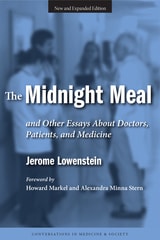
The Midnight Meal and Other Essays About Doctors, Patients, and Medicine
Jerome Lowenstein
University of Michigan Press, 2005
In this expanded edition, an accomplished physician and teacher of medicine discusses the importance of being a caring doctor, especially now that the focus of medicine is increasingly on technological innovation and health care costs.
With wisdom and compassion, Dr. Jerome Lowenstein tells stories about relationships between medical students and their teachers, physicians and their patients. He reflects on what doctors learn from treating chronic illness; how they respond to patients' needs for reassurance; how they bear the burden of treating patients with life-threatening or degenerative disease; whether the distinction between traditional and "alternative" medical treatment is ultimately beneficial or destructive; and many other issues. Dr. Lowenstein's ruminations on humanistic approaches to learning and practicing medicine will be treasured by physicians, medical students, and patients alike.
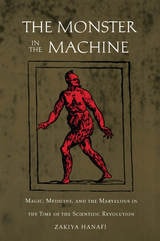
The Monster in the Machine
Magic, Medicine, and the Marvelous in the Time of the Scientific RevolutionZakiya Hanafi
Duke University Press, 2000
Noting that the word “monster” is derived from the Latin for “omen” or “warning,” Hanafi explores the monster’s early identity as a portent or messenger from God. Although monsters have always been considered “whatever we are not,” they gradually were tranformed into mechanical devices when new discoveries in science and medicine revealed the mechanical nature of the human body. In analyzing the historical literature of monstrosity, magic, and museum collections, Hanafi uses contemporary theory and the philosophy of technology to illuminate the timeless significance of the monster theme. She elaborates the association between women and the monstrous in medical literature and sheds new light on the work of Vico—particularly his notion of the conatus—by relating it to Vico’s own health. By explicating obscure and fascinating texts from such disciplines as medicine and poetics, she invites the reader to the piazzas and pulpits of seventeenth-century Naples, where poets, courtiers, and Jesuit preachers used grotesque figures of speech to captivate audiences with their monstrous wit.
Drawing from a variety of texts from medicine, moral philosophy, and poetics, Hanafi’s guided tour through this baroque museum of ideas will interest readers in comparative literature, Italian literature, history of ideas, history of science, art history, poetics, women’s studies, and philosophy.
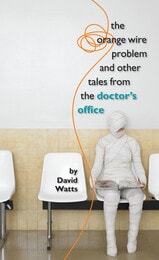
The Orange Wire Problem and Other Tales from the Doctor’s Office
David Watts
University of Iowa Press, 2009
With disarming candor and the audacity to admit that practicing medicine can be a crazy thing, Watts fills each page with riveting details, moving accounts, or belly-laughs. As the stories in this work unfold, we are witness to the moral dilemmas and personal rewards of ministering to the sick. Whether the subject is the potential benefits of therapeutic deception or telling a child about death, Watts’s ear for the right word, the right tone, and the right detail never fails him.
From The Orange Wire Problem and Other Tales from the Doctor’s Office:
We were lingering in the outer office. He mentioned again, no biopsy. I knew that. And I knew there would be no chemotherapy.
Maybe it's like that Orange Wire Problem, I said.
Yes exactly, he said, and four years from now when we're all sitting around the campfire we'll remember the Orange Wire Problem. . .
And I thought to myself, my brother did that. Spoke of the time ahead as he was dying of lung cancer. Six months from now he had said, we'll be glad we did all those drug therapies—as if to speak of the future laid claim to the future.
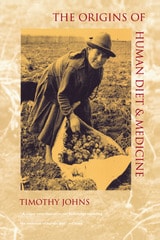
The Origins of Human Diet and Medicine
Chemical EcologyTimothy Johns
University of Arizona Press, 1990
The domestication of the potato serves as the focus of Timothy Johns’s interdisciplinary study, which forges a bold synthesis of ethnobotany and chemical ecology. The Aymara of highland Bolivia have long used varieties of potato containing potentially toxic levels of glycoalkaloids, and Johns proposes that such plants can be eaten without harm owing to human genetic modification and cultural manipulation. Drawing on additional fieldwork in Africa, he considers the evolution of the human use of plants, the ways in which humans obtain foods from among the myriad poisonous and unpalatable plants in the environment, and the consequences of this history for understanding the basis of the human diet. A natural corollary to his investigation is the origin of medicine, since the properties of plants that make them unpalatable and toxic are the same properties that make them useful pharmacologically.
As our species has adapted to the use of plants, plants have become an essential part of our internal ecology. Recovering the ancient wisdom regarding our interaction with the environment preserves a fundamental part of our human heritage.
Originally published in hardcover as With Bitter Herbs They Shall Eat It: Chemical Ecology and the Origins of Human Diet and Medicine
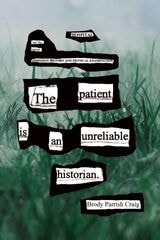
The Patient Is an Unreliable Historian
Brody Parrish Craig
Omnidawn, 2024
The poems of Brody Parrish Craig’s new collection upends narratives around current psychiatric treatment models to focus on the lived experience of survivors and to speak toward liberation, abolition, and disability justice. Titled after the author’s own medical records, The Patient Is an Unreliable Historian questions the prevailing narrative that the medical industry knows stories of disability and madness better than those who have lived them.
Craig uses lyricism to expose the intersection of madness and criminality in contemporary American culture, moving through institutions, community spaces, and loss of kin. Through the course of the collection, the speaker turns toward irreverence and interrogation, carves out their own freedom, and challenges the script of the patient, the mad, and the “criminal.” These poems deconstruct the “patient” to set the person free.
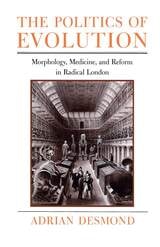
The Politics of Evolution
Morphology, Medicine, and Reform in Radical LondonAdrian Desmond
University of Chicago Press, 1990
"The Politics of Evolution is intellectual dynamite, and certainly one of the most important books in the history of science published during the past decade."—Jim Secord, Times Literary Supplement
"One of those rare books that not only stakes out new territory but demands a radical overhaul of conventional wisdom."—John Hedley Brooke, Times Higher Education Supplement
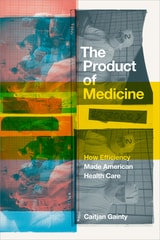
The Product of Medicine
How Efficiency Made American Health CareCaitjan Gainty
Duke University Press, 2025
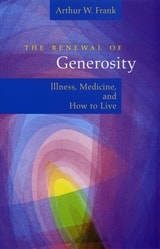
The Renewal of Generosity
Illness, Medicine, and How to LiveArthur W. Frank
University of Chicago Press, 2004
The Renewal of Generosity evokes medicine as the face-to-face encounter that comes before and after diagnostics, pharmaceuticals, and surgeries. Frank calls upon the Roman emperor Marcus Aurelius, philosopher Emmanuel Levinas, and literary critic Mikhail Bakhtin to reflect on stories of ill people, doctors, and nurses who transform demoralized medicine into caring relationships. He presents their stories as a source of consolation for both ill and professional alike and as an impetus to changing medical systems. Frank shows how generosity is being renewed through dialogue that is more than the exchange of information. Dialogue is an ethic and an ideal for people on both sides of the medical encounter who want to offer more to those they meet and who want their own lives enriched in the process.
The Renewal of Generosity views illness and medical work with grace and compassion, making an invaluable contribution to expanding our vision of suffering and healing.
The Right to Die with Dignity
An Argument in Ethics, Medicine, and LawCohen-Almagor, Raphael
Rutgers University Press, 2001
There are few issues more divisive than what has become known as “the right to die.” One camp upholds “death with dignity,” regarding the terminally ill as autonomous beings capable of forming their own judgment on the timing and process of dying. The other camp advocates “sanctity of life,” regarding life as intrinsically valuable, and that should be sustained as long as possible. Is there a right answer?
Raphael Cohen-Almagor takes a balanced approach in analyzing this emotionally charged debate, viewing the dispute from public policy and international perspectives. He offers an interdisciplinary, compelling study in medicine, law, religion, and ethics. It is a comprehensive look at the troubling question of whether physician-assisted suicide should be allowed. Cohen-Almagor delineates a distinction between active and passive euthanasia and discusses legal measures that have been invoked in the United States and abroad. He outlines reasons non-blood relatives should be given a role in deciding a patient’s last wishes. As he examines euthanasia policies in the Netherlands and the 1994 Oregon Death with Dignity Act, the author suggests amendments and finally makes a circumscribed plea for voluntary physician-assisted suicide.
The Slumbering Masses
Sleep, Medicine, and Modern American LifeMatthew J. Wolf-Meyer
University of Minnesota Press, 2016
Americans spend billions of dollars every year on drugs, therapy, and other remedies trying to get a good night’s sleep. Anxieties about not getting enough sleep and the impact of sleeplessness on productivity, health, and happiness pervade medical opinion, the workplace, and popular culture. In The Slumbering Masses, Matthew J. Wolf-Meyer addresses the phenomenon of sleep and sleeplessness in the United States, tracing the influence of medicine and industrial capitalism on the sleeping habits of Americans from the nineteenth century to the present.
Before the introduction of factory shift work, Americans enjoyed a range of sleeping practices, most commonly two nightly periods of rest supplemented by daytime naps. The new sleeping regimen—eight uninterrupted hours of sleep at night—led to the pathologization of other ways of sleeping. Arguing that the current model of sleep is rooted not in biology but in industrial capitalism’s relentless need for productivity, The Slumbering Masses examines so-called Z-drugs that promote sleep, the use of both legal and illicit stimulants to combat sleepiness, and the contemporary politics of time. Wolf-Meyer concludes by exploring the extremes of sleep, from cases of perpetual sleeplessness and the use of the sleepwalking defense in criminal courts to military experiments with ultra-short periods of sleep.
Drawing on untapped archival sources and long-term ethnographic research with people who both experience and treat sleep abnormalities, Wolf-Meyer analyzes and sharply critiques how sleep and its supposed disorders are understood and treated. By recognizing the variety and limits of sleep, he contends, we can establish more flexible expectations about sleep and, ultimately, subvert the damage of sleep pathology and industrial control on our lives.
The Staff and the Serpent
Pertinent and Impertinent Observatioins on the World of MedicineAllen B. Weisse, M.D.
Southern Illinois University Press, 1998
If laughter is good medicine, then the twenty-two essays offered here by Dr. Allen B. Weisse should prove a hearty antidote to a host of ills suffered by doctors, students and would-be students of medicine, amateur and professional medical historians, and, of course, patients, those of us who wonder what the medical profession is all about and how it affects us.
Often humorous and always informative, these essays cover a broad range of medical subjects. Weisse tackles medical ethics, offers advice to medical and premedical students and their families, delves into unusual episodes in medical history, confronts considerations of aging and self-image, and discusses the vagaries of rewards and recognition available from medical research. He also examines honesty in medical thinking, investigates ways of dealing with bureaucracies, and considers ways of learning to live with oneself. Finally, he evaluates the changing nature of medicine and medical research and looks into the roles of minorities and women in medicine.
Weisse knows whereof he speaks, enlivening each essay with personal anecdotes. When he explains past and current medical school admissions policies, for example, he approaches the subject with the combined knowledge of a former premedical student, a medical student, a faculty member, and an admissions chairperson over the past thirty years. As a medical researcher whose chief turned against him, he certainly knows what he is talking about in "Betrayal." He also writes with authority in his humorous account of how he, as a senior physician, struggles to keep on top of the overwhelming onslaught of medical advances ("Confessions of Creeping Obsolescence"). And in an essay to boost all of our spirits, he tells how an ivory tower physician (Weisse himself) gets drawn up in the service of the IRS bureaucracy and winds up tweaking its nose a bit ("In the Service of the IRS").
Perhaps nothing better illustrates the vigor, wit, and élan that characterize Weisse’s essays than his titles. "On Chinese Restaurants" deals with unusual syndromes and the way in which they have evolved and affected the way we look at ourselves. Other titles are "Pneumocystis and Me," "The Vanishing Male," "Say It Isn’t ‘No," "Bats in the Belfry or Bugs in the Belly?: Helicobacter and the Resurrection of Johannes Fibiger," and "PC: Politically Correct or Potentially Corrupting?"
Finally, two words in this book’s subtitle succinctly characterize Weisse’s essays: pertinent and impertinent—germane and irreverent information rakishly presented.
The Teabo Manuscript
Maya Christian Copybooks, Chilam Balams, and Native Text Production in YucatánBy Mark Z. Christensen
University of Texas Press, 2016
Winner, LASA Mexico Humanities Book Prize, 2017
Among the surviving documents from the colonial period in Mexico are rare Maya-authored manuscript compilations of Christian texts, translated and adapted into the Maya language and worldview, which were used to evangelize the local population. The Morely Manuscript is well known to scholars, and now The Teabo Manuscript introduces an additional example of what Mark Z. Christensen terms a Maya Christian copybook. Recently discovered in the archives of Brigham Young University, the Teabo Manuscript represents a Yucatecan Maya recounting of various aspects of Christian doctrine, including the creation of the world, the Fall of Adam and Eve, and the genealogy of Christ.
The Teabo Manuscript presents the first English translation and analysis of this late colonial Maya-language document, a facsimile and transcription of which are also included in the book. Working through the manuscript section by section, Christensen makes a strong case for its native authorship, as well as its connections with other European and Maya religious texts, including the Morely Manuscript and the Books of Chilam Balam. He uses the Teabo Manuscript as a platform to explore various topics, such as the evangelization of the Maya, their literary compositions, and the aspects of Christianity that they deemed important enough to write about and preserve. This pioneering research offers important new insights into how the Maya negotiated their precontact intellectual traditions within a Spanish and Catholic colonial world.
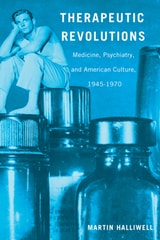
Therapeutic Revolutions
Medicine, Psychiatry, and American Culture, 1945-1970Halliwell, Martin
Rutgers University Press, 2014
Beginning with a discussion of the profound impact of World War II and the Cold War on mental health, Halliwell moves from the influence of work, family, and growing up in the Eisenhower years to the critique of institutional practice and the search for alternative therapeutic communities during the 1960s. Blending a discussion of such influential postwar thinkers as Erich Fromm, William Menninger, Erving Goffman, Erik Erikson, and Herbert Marcuse with perceptive readings of a range of cultural text that illuminate mental health issues--among them Spellbound, Shock Corridor, Revolutionary Road, and I Never Promised You a Rose Garden--this compelling study argues that the postwar therapeutic revolutions closely interlink contrasting discourses of authority and liberation.
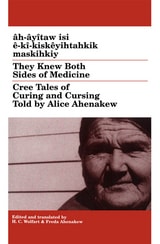
They Knew Both Sides of Medicine
Cree Tales of Curing and Cursing Told by Alice AhenakewH.C. Wolfart
University of Manitoba Press, 2000
Traditional Healers and Childhood in Zimbabwe
Pamela Reynolds
Ohio University Press, 1995
Based on the author’s fieldwork among the people of Zezuru, this study focuses on children as clients and as healers in training. In Reynolds’s ethnographic investigation of possession and healing, she pays particular attention to the way healers are identified and authenticated in communities, and how they are socialized in the use of medicinal plants, dreams, and ritual healing practices. Reynolds examines spiritual interpretation and remediation of children’s problems, including women’s roles in these activities, and the Zezuru concepts of trauma, evil, illness, and death. Because this study was undertaken just after the War of Liberation in Zimbabwe, it also documents the devastating effects of the war.
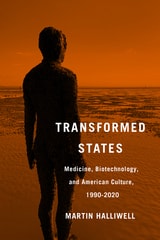
Transformed States
Medicine, Biotechnology, and American Culture, 1990–2020Martin Halliwell
Rutgers University Press, 2025
Transformed States offers a timely history of the politics, ethics, medical applications, and cultural representations of the biotechnological revolution, from the Human Genome Project to the COVID-19 pandemic. In exploring the entanglements of mental and physical health in an age of biotechnology, it views the post–Cold War 1990s as the horizon for understanding the intersection of technoscience and culture in the early twenty-first century.
The book draws on original research spanning the presidencies of George H. W. Bush and Joe Biden to show how the politics of science and technology shape the medical uses of biotechnology. Some of these technologies reveal fierce ideological conflicts in the arenas of cloning, reproduction, artificial intelligence, longevity, gender affirmation, vaccination and environmental health. Interweaving politics and culture, the book illustrates how these health issues are reflected in and challenged by literary and cinematic texts, from Oryx and Crake to Annihilation, and from Gattaca to Avatar.
By assessing the complex relationship between federal politics and the biomedical industry, Transformed States develops an ecological approach to public health that moves beyond tensions between state governance and private enterprise. To that end, Martin Halliwell analyzes thirty years that radically transformed American science, medicine, and policy, positioning biotechnology in dialogue with fears and fantasies about an emerging future in which health is ever more contested.
Along with the two earlier books, Therapeutic Revolutions (2013) and Voices of Mental Health (2017), Transformed States is the final volume of a landmark cultural and intellectual history of mental health in the United States, journeying from the combat zones of World War II to the global emergency of COVID-19.