Results by title
1210 books match the query 'Mexico' and 223 start with t
Taxing Blackness
Free Afromexican Tribute in Bourbon New SpainNorah L. A. Gharala
University of Alabama Press, 2019
A definitive analysis of the most successful tribute system in the Americas as applied to Afromexicans
During the eighteenth century, hundreds of thousands of free descendants of Africans in Mexico faced a highly specific obligation to the Spanish crown, a tax based on their genealogy and status. This royal tribute symbolized imperial loyalties and social hierarchies. As the number of free people of color soared, this tax became a reliable source of revenue for the crown as well as a signal that colonial officials and ordinary people referenced to define and debate the nature of blackness.
Taxing Blackness: Free Afromexican Tribute in Bourbon New Spain examines the experiences of Afromexicans and this tribute to explore the meanings of race, political loyalty, and legal privileges within the Spanish colonial regime. Norah L. A. Gharala focuses on both the mechanisms officials used to define the status of free people of African descent and the responses of free Afromexicans to these categories and strategies. This study spans the eighteenth century and focuses on a single institution to offer readers a closer look at the place of Afromexican individuals in Bourbon New Spain, which was the most profitable and populous colony of the Spanish Atlantic.
As taxable subjects, many Afromexicans were deeply connected to the colonial regime and ongoing debates about how taxpayers should be defined, whether in terms of reputation or physical appearance. Gharala shows the profound ambivalence, and often hostility, that free people of African descent faced as they navigated a regime that simultaneously labeled them sources of tax revenue and dangerous vagabonds. Some free Afromexicans paid tribute to affirm their belonging and community ties. Others contested what they saw as a shameful imposition that could harm their families for generations. The microhistory includes numerous anecdotes from specific cases and people, bringing their history alive, resulting in a wealth of rural and urban, gender, and family insight.
Tell Me the Story of How I Conquered You
Elsewheres and Ethnosuicide in the Colonial Mesoamerican WorldBy José Rabasa
University of Texas Press, 2011
Folio 46r from Codex Telleriano-Remensis was created in the sixteenth century under the supervision of Spanish missionaries in central Mexico. As an artifact of seismic cultural and political shifts, the manuscript painting is a singular document of indigenous response to Spanish conquest. Examining the ways in which the folio's tlacuilo (indigenous painter/writer) creates a pictorial vocabulary, this book embraces the place "outside" history from which this rich document emerged.
Applying contemporary intellectual perspectives, including aspects of gender, modernity, nation, and visual representation itself, José Rabasa reveals new perspectives on colonial order. Folio 46r becomes a metaphor for reading the totality of the codex and for reflecting on the postcolonial theoretical issues now brought to bear on the past. Ambitious and innovative (such as the invention of the concepts of elsewheres and ethnosuicide, and the emphasis on intuition), Tell Me the Story of How I Conquered You embraces the performative force of the native scribe while acknowledging the ineffable traits of 46r—traits that remain untenably foreign to the modern excavator/scholar. Posing provocative questions about the unspoken dialogues between evangelizing friars and their spiritual conquests, this book offers a theoretic-political experiment on the possibility of learning from the tlacuilo ways of seeing the world that dislocate the predominance of the West.
Telling and Being Told
Storytelling and Cultural Control in Contemporary Yucatec Maya LiteraturesPaul M. Worley
University of Arizona Press, 2013
Through performance, storytellers place the past in dynamic relationship with the present, each continually evolving as it is reevaluated and reinterpreted. Yet non-indigenous actors often manipulate the storyteller in their firsthand accounts of the indigenous world. Moreover, by limiting the field of literary study to written texts, Worley argues, critics frequently ignore an important component of Latin America’s history of conquest and colonization: The fact that Europeans consciously set out to destroy indigenous writing systems, making orality a key means of indigenous resistance and cultural continuity.
Given these historical factors, outsiders must approach Yucatec Maya and other indigenous literatures on their own terms rather than applying Western models. Although oral literature has been excluded from many literary studies, Worley persuasively demonstrates that it must be included in contemporary analyses of indigenous literatures as oral texts form a key component of contemporary indigenous literatures, and storytellers and storytelling remain vibrant cultural forces in both Yucatec communities and contemporary Yucatec writing.
Temporalities in Mesoamerican Ritual Practices
Valentina Vapnarsky
University Press of Colorado, 2024
Based on specific case studies, new analysis of fieldwork data, and long-term collaboration between authors, chapters engage empirically and theoretically with the multiple temporalities of ritual in relation to both the unfolding of ritual performance and its external and symbolic anchors. Taking rituals as a series of specific, formalized actions that produce transitory changes within an initial context, the authors examine activities that generate change linked to artifact production, life cycles, healing, conflict resolution, crisis management, the enthronement of rulers and transfers of responsibilities, and practices relating to the occupation, abandonment, reuse, or conversion of socialized spaces.
Adopting a multidisciplinary approach in archaeology, ethnohistory, anthropology, and linguistic anthropology, Temporalities in Mesoamerican Ritual Practices offers new insights into ritual time approached through multi-semiotic, material, sensorial, and pragmatic perspectives that encourage further interdisciplinary dialogue.
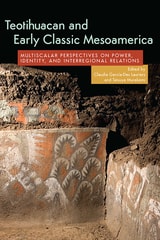
Teotihuacan and Early Classic Mesoamerica
Multiscalar Perspectives on Power, Identity, and Interregional RelationsClaudia García-Des Lauriers
University Press of Colorado, 2021
The volume offers a multiscalar view of power and identity, showing that the spread of Teotihuacan-related material culture may have resulted from direct and indirect state administration, colonization, emulation by local groups, economic transactions, single-event elite interactions, and various kinds of social and political alliances. The contributors explore questions concerning who interacted with whom; what kinds of materials and ideas were exchanged; what role interregional interactions played in the creation, transformation, and contestation of power and identity within the city and among local polities; and how interactions on different scales were articulated. The answers to these questions reveal an Early Classic Mesoamerican world engaged in complex economic exchanges, multidirectional movements of goods and ideas, and a range of material patterns that require local, regional, and macroregional contextualization.
Focusing on the intersecting themes of identity and power, Teotihuacan and Early Classic Mesoamerica makes a strong contribution to the understanding of the role of this important metropolis in the Early Classic history of the region. The volume will be of interest to scholars and graduate students of Mesoamerican archaeology, the archaeology of interaction, and the archaeology of identity.
Contributors: Sarah C. Clayton, Fiorella Fenoglio Limón, Agapi Filini, Julie Gazzola, Sergio Gómez-Chávez, Haley Holt Mehta, Carmen Pérez, Patricia Plunket, Juan Carlos Saint Charles Zetina, Yoko Sugiura, Gabriela Uruñuela, Gustavo Jaimes Vences
Tepoztlán and the Transformation of the Mexican State
The Politics of Loose ConnectionsJoAnn Martin
University of Arizona Press, 2005
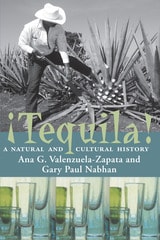
Tequila
A Natural and Cultural HistoryAna G. Valenzuela-Zapata and Gary Paul Nabhan
University of Arizona Press, 2004
The drink is tequila—more properly, mescal de tequila, the first mescal to be codified and recognized by its geographic origin and the only one known internationally by that name. In ¡Tequila! A Natural and Cultural History, Ana G. Valenzuela-Zapata, the leading agronomist in Mexico's tequila industry, and Gary Paul Nabhan, one of America's most respected ethnobotanists, plumb the myth of tequila as they introduce the natural history, economics, and cultural significance of the plants cultivated for its production.
Valenzuela-Zapata and Nabhan take you into the agave fields of Mexico to convey their passion for the century plant and its popular by-product. In the labor-intensive business of producing quality mescal, the cultivation of tequila azul is maintained through traditional techniques passed down over generations. They tell how jimadores seek out the mature agaves, strip the leaves, and remove the heavy heads from the field; then they reveal how the roasting and fermentation process brings out the flavors that cosmopolitan palates crave.
Today in Oaxaca it's not unusual to find small-scale mescal-makers vending their wares in the market plaza, while in Jalisco the scale of distillation facilities found near the town of Tequila would be unrecognizable to old José Cuervo. Valenzuela-Zapata and Nabhan trace tequila's progress from its modest beginnings to one of the world's favored spirits, tell how innovations from cross-cultural exchanges made fortunes for Cuervo and other distillers, and explain how the meteoric rise in tequila prices is due to an epidemic—one they predicted would occur—linked to the industry's cultivation of just one type of agave.
The tequila industry today markets more than four hundred distinct products through a variety of strategies that heighten the liquor's mystique, and this book will educate readers about the grades of tequila, from blanco to añejo, and marks of distinction for connoisseurs who pay up to two thousand dollars for a bottle. ¡Tequila! A Natural and Cultural History will feed anyone's passion for the gift of the blue agave as it heightens their appreciation for its rich heritage.
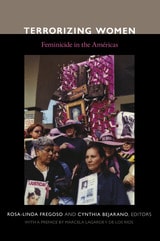
Terrorizing Women
Feminicide in the AmericasRosa-Linda Fregoso and Cynthia L. Bejarano, eds.
Duke University Press, 2010
Terrorizing Women brings together essays by feminist and human rights activists, attorneys, and scholars from Latin America and the United States, as well as testimonios by relatives of women who were disappeared or murdered. In addition to investigating egregious violations of women’s human rights, the contributors consider feminicide in relation to neoliberal economic policies, the violent legacies of military regimes, and the sexual fetishization of women’s bodies. They suggest strategies for confronting feminicide; propose legal, political, and social routes for redressing injustices; and track alternative remedies generated by the communities affected by gender-based violence. In a photo essay portraying the justice movement in Chihuahua, relatives of disappeared and murdered women bear witness to feminicide and demand accountability.
Contributors: Pascha Bueno-Hansen, Adriana Carmona López, Ana Carcedo Cabañas, Jennifer Casey, Lucha Castro Rodríguez , Angélica Cházaro, Rebecca Coplan, Héctor Domínguez-Ruvalcaba, Marta Fontenla, Alma Gomez Caballero, Christina Iturralde, Marcela Lagarde y de los Ríos, Julia Estela Monárrez Fragoso, Hilda Morales Trujillo, Mercedes Olivera, Patricia Ravelo Blancas, Katherine Ruhl, Montserrat Sagot, Rita Laura Segato, Alicia Schmidt Camacho, William Paul Simmons, Deborah M. Weissman, Melissa W. Wright
Texas and Northeastern Mexico, 1630-1690
By Juan Bautista Chapa
University of Texas Press, 1997
An English translation of Chapa's Historia de Nuevo León, the first history of the region that eventually became Texas and northeastern Mexico.
Winner, Presidio La Bahía Award, Sons of the Republic of Texas
In the seventeenth century, South Texas and Northeastern Mexico formed El Nuevo Reino de León, a frontier province of New Spain. In 1690, Juan Bautista Chapa penned a richly detailed history of Nuevo León for the years 1630 to 1690. Although his Historia de Nuevo León was not published until 1909, it has since been acclaimed as the key contemporary document for any historical study of Spanish colonial Texas.
This book offers the only accurate and annotated English translation of Chapa's Historia. In addition to the translation, William C. Foster also summarizes the Discourses of Alonso de León (the elder), which cover the years 1580 to 1649. In the appendix, Foster includes a translation of Alonso (the younger) de León's previously unpublished revised diary of the 1690 expedition to East Texas and an alphabetical listing of over 80 Indian tribes identified in this book.
Chapa was also an authority on the local Indians, and his Historia lists the names and locations of over 300 Indian tribes. This information, together with descriptions of the vegetation, wildlife, and climate in seventeenth-century Texas, make this book essential reading for ethnographers, anthropologists, and biogeographers, as well as students and scholars of Spanish borderlands history.
Texas by Terán
The Diary Kept by General Manuel de Mier y Terán on His 1828 Inspection of TexasEdited by Jack Jackson
University of Texas Press, 2000
Texcoco
Prehispanic and Colonial PerspectivesJongsoo Lee
University Press of Colorado, 2014
Contributors address some of the most pressing issues in Texcocan studies and bring new ones to light: the role of Texcoco in the Aztec empire, the construction and transformation of Prehispanic history in the colonial period, the continuity and transformation of indigenous culture and politics after the conquest, and the nature and importance of iconographic and alphabetic texts that originated in this city-state, such as the Codex Xolotl, the Mapa Quinatzin, and Fernando de Alva Ixtlilxochitl’s chronicles. Multiple scholarly perspectives and methodological approaches offer alternative paradigms of research and open a needed dialogue among disciplines—social, political, literary, and art history, as well as the history of science.
This comprehensive overview of Prehispanic and colonial Texcoco will be of interest to Mesoamerican scholars in the social sciences and humanities.
Textile Traditions of Mesoamerica and the Andes
An AnthologyEdited by Margot Blum Schevill, Janet Catherine Berlo, and Edward B. Dwyer
University of Texas Press, 1996
In this volume, anthropologists, art historians, fiber artists, and technologists come together to explore the meanings, uses, and fabrication of textiles in Mexico, Guatemala, Ecuador, Peru, and Bolivia from Precolumbian times to the present. Originally published in 1991 by Garland Publishing, the book grew out of a 1987 symposium held in conjunction with the exhibit "Costume as Communication: Ethnographic Costumes and Textiles from Middle America and the Central Andes of South America" at the Haffenreffer Museum of Anthropology, Brown University.
The Absent Stone
Mexican Patrimony and the Aftershocks of State TheftSandra Rozental
Duke University Press, 2026
The Adorned Body
Mapping Ancient Maya DressEdited by Nicholas Carter, Stephen D. Houston, and Franco D. Rossi
University of Texas Press, 2020
How we dress our bodies—through clothing, footwear, headgear, jewelry, haircuts, and more—is key to the expression of status and identity. This idea was as true for ancient Maya civilization as it is today, yet few studies have centered on what ancient Maya peoples wore and why. In The Adorned Body, Nicholas Carter, Stephen Houston, and Franco Rossi bring together contributions from a wide range of scholars, leading to the first in-depth study of Maya dress in pre-Columbian times.
Incorporating artistic, hieroglyphic, and archaeological sources, this book explores the clothing and ornaments of ancient Maya peoples, systematically examining who wore what, deducing the varied purposes and meanings of dress items and larger ensembles, and determining the methods and materials with which such items were created. Each essay investigates a category of dress—including headgear, pendants and necklaces, body painting, footwear, and facial ornaments—and considers the variations within each of these categories, as well as popular styles and trends through time. The final chapters reveal broader views and comparisons about costume ensembles and their social roles. Shedding new light on the art and archaeology of the ancient Americas, The Adorned Body offers a thorough map of Maya dress that will be of interest to scholars and fashion enthusiasts alike.
The Adventures of Chupacabra Charlie
Written by Frederick Luis AldamaIllustrated by Chris Escobar
The Ohio State University Press, 2020
With magical realism, allegory, and gentle humor, Aldama and Escobar have created a story that will resonate with young and old readers alike as it incorporates folklore into its subtle take on the current humanitarian crisis at the border.
The Agrarian Dispute
The Expropriation of American-Owned Rural Land in Postrevolutionary MexicoJohn J. Dwyer
Duke University Press, 2008
Dwyer weaves together elite and subaltern history and highlights the intricate relationship between domestic and international affairs. Through detailed studies of land redistribution in Baja California and Sonora, he demonstrates that peasant agency influenced the local application of Cárdenas’s agrarian reform program, his regional state-building projects, and his relations with the United States. Dwyer draws on a broad array of official, popular, and corporate sources to illuminate the motives of those who contributed to the agrarian dispute, including landless fieldworkers, indigenous groups, small landowners, multinational corporations, labor leaders, state-level officials, federal policymakers, and diplomats. Taking all of them into account, Dwyer explores the circumstances that spurred agrarista mobilization, the rationale behind Cárdenas’s rural policies, the Roosevelt administration’s reaction to the loss of American-owned land, and the diplomatic tactics employed by Mexican officials to resolve the international conflict.
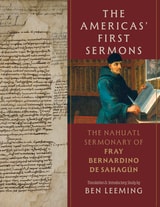
The Americas' First Sermons
The Nahuatl Sermonary of Fray Bernardino de SahagúnTranslation and Introduction study by Ben Leeming
University of Utah Press, 2025
The Americas’ First Sermons presents the first English translation and critical study of the complete set of sermons composed by Franciscan friar Bernardino de Sahagún and his Nahua students at the Imperial College of Santa Cruz in Tlatelolco, Mexico in 1540. The volume represents a crucial moment in the cultural exchange between European and Indigenous civilizations in sixteenth-century colonial Mexico.
With the collaboration of Mario Alberto Sánchez Aguilera, this edition offers unprecedented access to the collaboration between European friars and Nahua scholars in translating Christian concepts into Native languages. It captures Sahagún’s evolving methods across three phases (1530s–1560s) through his extensive annotations, bridging the divide between his ethnographic and doctrinal works. Unique in its analysis of both text and manuscript features—such as rare maguey paper—it highlights Indigenous intellectual contributions at the Colegio de Santa Cruz. This translation provides essential insights into early colonial religious negotiations and makes previously inaccessible material available to scholars across multiple disciplines.
The Anatomy of Eleven Towns in Michoacán
By Dan Stanislawski
University of Texas Press, 1950
In this book, Dan Stanislawski studies the geography of various small towns in one Mexican state. He discusses the factors—landscape, buildings, culture groups, and so forth—that create a unique personality for each of these towns.
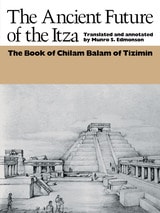
The Ancient Future of the Itza
The Book of Chilam Balam of TiziminTranslated and annotated by Munro S. Edmonson
University of Texas Press, 1982
The title of Edmonson's work refers to the Mayan custom of first predicting their history and then living it, and it may be that no other peoples have ever gone so far in this direction. The Book of Chilam Balam was a sacred text prepared by generations of Mayan priests to record the past and to predict the future. The official prophet of each twenty-year rule was the Chilam Balam, or Spokesman of the Jaguar—the Jaguar being the supreme authority charged with converting the prophet's words into fact.
This is a literal but poetic translation of one of fourteen known manuscripts in Yucatecan Maya on ritual and history. It pictures a world of all but incredible numerological order, slowly yielding to Christianity and Spanish political pressure but never surrendering. In fact, it demonstrates the surprising truth of a secret Mayan government during the Spanish rule, which continued to collect tribute in the names of the ruined Classic cities and preserved the essence of the Mayan calendar as a legacy for the tradition's modern inheritors.
The history of the Yucatecan Maya from the seventh to the nineteenth century is revealed. And this is history as the Maya saw it—of a people concerned with lords and priests, with the cosmology which justified their rule, and with the civil war which they perceived as the real dimension of the colonial period.
A work of both history and literature, the Tizimin presents a great deal of Mayan thought, some of which has been suspected but not previously documented. Edmonson's skillful reordering of the text not only makes perfect historical sense but also resolves the long-standing problem of correlating the two colonial Mayan calendars. The book includes both interpretative and literal translations, as well as the Maya parallel couplets and extensive annotations on each page. The beauty of the sacred text is illuminated by the literal translation, while both versions unveil the magnificent historical, philosophical, and social traditions of the most sophisticated native culture in the New World.
The prophetic history of the Tizimin creates a portrait of the continuity and vitality, of the ancient past and the foreordained future of the Maya.
The Archaeology of La Calsada
A Rockshelter in the Sierra Madre Oriental, MexicoBy C. Roger Nance
University of Texas Press, 1992
On a remote mountainside 2,000 meters above sea level in the northern Sierra Madre Oriental, the rockshelter at La Calsada has yielded basic archaeological data for one of the least understood regions of prehistoric North America, the state of Nuevo León in northern Mexico. This comprehensive site report, with detailed information on artifacts and stratigraphy, provides baseline data for further explorations in the region and comparisons with other North American hunter-gatherer groups.
Radiocarbon dating traces the earliest component at the site to 8600-7500 B.C., giving La Calsada arguably the earliest well-dated lithic complex in Mexico. Nance describes some 1,140 recovered stone tools, with comparisons to the archaeology of southern and southwestern Texas, as well as reported sites in Tamaulipas, Coahuila, and Nuevo León, Mexico.
From the lithic and stratigraphic analysis, Nance deduces occupational patterns at the site, beginning with Paleo-Indian cultures that lived in the area until about 7500 B.C. Through changes in tool technology, he follows the rise of the Abasolo tradition around 3000 B.C. and the appearance of a new culture with a radically different lithic industry around 1000 A.D.
The Archaeology of Meaningful Places
Brenda J Bowser
University of Utah Press, 2009
Diverse spatial and temporal contexts in two culture areas--Mesoamerica and the Greater Southwest--serve as backdrops for nine chapters in which fourteen contributors show how place is an ideal starting point to begin unraveling the human past. Several authors further address the enduring significance of places of the past for contemporary peoples. Among the many strengths of this volume is the careful way in which powerful concepts, diverse lines of thought, and empirical models are integrated to reveal the multiple facets of meaningful places, and to illustrate ways in which places may be approached archaeologically, theoretically, and culturally. Ultimately, the book’s contributors champion the notion that place is a valid and useful analytical unit for describing, reconstructing, interpreting, and explaining the form, structure, and temporality of the meanings humans ascribe to their environment.
The Archaeology, Ethnohistory, and Environment of the Marismas Nacionales
Michael S. Foster
University of Utah Press, 2017
Between 1967 and 1975 archaeologists from SUNY-Buffalo led a multidisciplinary project in the Marismas Nacionales, a vast, resource-rich estuary and mangrove forest of coastal Sinaloa and Nayarit, west Mexico. Michael Foster and fellow archaeologists provide a much-needed synthesis of these investigations, drawing from previously unpublished data and published reports to provide a comprehensive look at the region.
While in the field, the SUNY team recovered a variety of material artifacts and 248 human remains. Their findings, along with the project’s background, history, and analyses, are detailed in this volume’s thirteen chapters and nine appendices. Also included are supporting geomorphic, environmental, and ethnohistoric studies that establish the context for local human settlement and change. Evidence indicates that as the coastal plain grew, ceramic-bearing agriculturalists moved into the area and participated in far-reaching exchanges of goods and resources. This book makes a significant and lasting contribution to our knowledge of what today remains an understudied region of greater Mesoamerica.
Marismas Burial Descriptions, Supplemental Digital Material
The Archive and the Aural City
Sound, Knowledge, and the Politics of ListeningAlejandro L. Madrid
Duke University Press, 2025
The Art of Being In-between
Native Intermediaries, Indian Identity, and Local Rule in Colonial OaxacaYanna Yannakakis
Duke University Press, 2008
Through interpretation of a wide array of historical sources—including descriptions of public rituals, accounts of indigenous rebellions, idolatry trials, legal petitions, court cases, land disputes, and indigenous pictorial histories—Yannakakis weaves together an elegant narrative that illuminates political and cultural struggles over the terms of local rule. As cultural brokers, native intermediaries at times reconciled conflicting interests, and at other times positioned themselves in opposing camps over the outcome of municipal elections, the provision of goods and labor, landholding, community ritual, the meaning of indigenous “custom” in relation to Spanish law, and representations of the past. In the process, they shaped an emergent “Indian” identity in tension with other forms of indigenous identity and a political order characterized by a persistent conflict between local autonomy and colonial control. This innovative study provides fresh insight into colonialism’s disparate cultures and the making of race, ethnicity, and the colonial state and legal system in Spanish America.
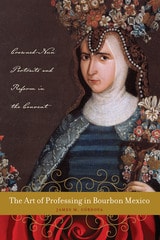
The Art of Professing in Bourbon Mexico
Crowned-Nun Portraits and Reform in the ConventBy James M. Córdova
University of Texas Press, 2014
In the eighteenth century, New Spaniards (colonial Mexicans) so lauded their nuns that they developed a local tradition of visually opulent portraits, called monjas coronadas or “crowned nuns,” that picture their subjects in regal trappings at the moment of their religious profession and in death. This study identifies these portraits as markers of a vibrant and changing society that fused together indigenous and Euro-Christian traditions and ritual practices to construct a new and complex religious identity that was unique to New Spain.
To discover why crowned-nun portraits, and especially the profession portrait, were in such demand in New Spain, this book offers a pioneering interpretation of these works as significant visual contributions to a local counter-colonial discourse. James M. Córdova demonstrates that the portraits were a response to the Spanish crown’s project to modify and modernize colonial society—a series of reforms instituted by the Bourbon monarchs that threatened many nuns’ religious identities in New Spain. His analysis of the portraits’ rhetorical devices, which visually combined Euro-Christian and Mesoamerican notions of the sacred, shows how they promoted local religious and cultural values as well as client-patron relations, all of which were under scrutiny by the colonial Church. Combining visual evidence from images of the “crowned nun” with a discussion of the nuns’ actual roles in society, Córdova reveals that nuns found their greatest agency as Christ’s brides, a title through which they could, and did, challenge the Church’s authority when they found it intolerable.
The Aztec Kings
The Construction of Rulership in Mexican HistorySusan D. Gillespie
University of Arizona Press, 1989
The Aztec Kings is the first major study to take into account the Aztec cyclical conception of time—which required that history constantly be reinterpreted to achieve continuity between past and present—and to treat indigenous historical traditions as symbolic statements in narrative form. Susan Gillespie focuses on the dynastic history of the Mexica of Tenochtitlan, whose stories reveal how the Aztecs used "history" to construct, elaborate, and reify ideas about the nature of rulership and the cyclical nature of the cosmos, and how they projected the Spanish conquest deep into the Aztec past in order to make history accommodate that event.
By demonstrating that most of Aztec history is nonliteral, she sheds new light on Aztec culture and on the function of history in society. By relating the cyclical structure of Aztec dynastic history to similar traditions of African and Polynesian peoples, she introduces a broader perspective on the function of history in society and on how and why history must change.
The Aztec Palimpsest
Mexico in the Modern ImaginationDaniel Cooper Alarcón
University of Arizona Press, 1997
He shows how the Chicano myth of Aztlan was constructed upon earlier Mesoamerican myths, discusses representations of Mexico in texts by nineteenth- and twentieth-century writers, and analyzes the content of tourist literature, thereby revealing the economic, social, and political interests that drive the production of Mexicanness today. This original linking of seemingly incongruous discourses corrects the misconception that Mexicanness is produced only by hegemonic groups. Cooper shows how Mexico has been defined and represented, by both Mexicans and non-Mexicans, as more than a political or geographic entity, and he particularly reveals how Mexicanness has been exploited by Mexicans themselves through the promotion of tourism as a form of neocolonialism.
Cooper's work is valuable both for identifying attempts to revise and control Mexican myth, history, and culture and for defining the intricate relationship between history, historiography, and cultural nationalism. The Aztec Palimpsest extends existing analyses of Mexicanness into new theoretical realms and provides a fresh perspective on the relationship between the United States and Mexico at a time when these two nations are becoming more intimately linked.
The Aztecs at Independence
Nahua Culture Makers in Central Mexico, 1799–1832Miriam Melton-Villanueva
University of Arizona Press, 2016
The Aztecs at Independence offers the first internal ethnographic view of these central Mexican indigenous communities in the critical transitional time of Independence. Miriam Melton-Villanueva uses previously unknown Nahuatl-language sources—primarily last wills and testaments—to provide a comprehensive understanding of indigenous societies during the transition from colonial to postcolonial times. The book describes the cultural life of people now called Nahuas or Mexicas in the nineteenth century—based on their own words, their own written records. The book uses previously unknown, unstudied, and untranslated indigenous texts to bring Nahua society into history, fleshing out glimpses of daily life in the early nineteenth century. Thus, The Aztecs at Independence describes life at the most local level: Nahua lineages of ritual and writing, guilds and societies, the people that take turns administering festivals and attending to the last wishes of the dying.
Interwoven with personal stories and memory, The Aztecs at Independence invites a general audience along on a scholarly journey, where readers are asked to imagine Nahua concepts and their contemporary meanings that give light to modern problems.
The Bajío Revolution
Remaking Capitalism, Community, and Patriarchy in Mexico, North America, and the WorldJohn Tutino
Duke University Press, 2025
The Bear and His Sons
Masculinity in Spanish and Mexican FolktalesBy James M. Taggart
University of Texas Press, 1997
All the world over, people tell stories to express their deepest feelings about such things as what makes a "real" man or woman; what true love, courage, or any other virtue is; what the proper relationships are between people. Often groups of people widely separated by space or time will tell the same basic story, but with differences in the details that reveal much about a particular group's worldview.
This book looks at differences in the telling of several common Hispanic folktales. James Taggart contrasts how two men—a Spaniard and an Aztec-speaking Mexican—tell such tales as "The Bear's Son." He explores how their stories present different ways of being a man in their respective cultures.
Taggart's analysis contributes to a revision of Freud's theory of gender, which was heavily grounded in biological determinism. Taggart focuses instead on how fathers reproduce different forms of masculinity in their sons. In particular, he shows how fathers who care for their infant sons teach them a relational masculinity based on a connected view of human relationships. Thus, The Bear and His Sons will be important reading not only in anthropology and folklore, but also in the growing field of men's studies.
The Beats in Mexico
David Stephen Calonne
Rutgers University Press, 2022
The first book-length study of why the Beats were so fascinated by Mexico and how they represented its culture in their work, this volume examines such canonical figures as Kerouac, Burroughs, Ginsberg, Lamantia, McClure, and Ferlinghetti. It also devotes individual chapters to women such as Margaret Randall, Bonnie Bremser, and Joanne Kyger, who each made Mexico a central setting of their work and interrogated the misogyny they encountered in both American and Mexican culture.
The Beats in Mexico not only considers individual Beat writers, but also places them within a larger history of countercultural figures, from D.H. Lawrence to Antonin Artaud to Jim Morrison, who mythologized Mexico as the land of the Aztecs and Maya, where shamanism and psychotropic drugs could take you on a trip far beyond the limits of the American imagination.
The Birds of Sonora
Stephen M. Russell
University of Arizona Press, 1998
The Birds of Sonora describes all the species known from that state and includes information on distribution, seasonal patterns of occurrence, abundance, and habitats. The first book of its kind in more than half a century to treat birds of this Mexican state immediately south of Arizona, it also contains details of nesting activity for breeding species, provides insight into factors influencing distribution, and notes historical changes in status. Each account is accompanied by a range map depicting the bird's range in Sonora—valuable information not available from any other source and useful to anyone interested in the distribution and ecology of North American birds. Drawings by internationally known wildlife artist Ray Harm enhance many of the entries.
Because other books on Mexican birds don't treat Sonora in detail, The Birds of Sonora is an indispensable resource for birders, and its background descriptions of Sonoran geography, climate, and habitats also make it a key reference for conservation and land use planning. A useful companion to field guides, it is a narrative account that puts readers in touch with birds of this important biogeographic area.
The Borders Within
Encounters Between Mexico and the U.S.Douglas Monroy
University of Arizona Press, 2008
Douglas Monroy, a noted Mexican American historian, has for many years pondered the historical and cultural intertwinings of the two nations. Here, in beautifully crafted essays, he reflects on some of the many ways in which the citizens of the two countries have misunderstood each other.
Putting himself— and his own quest for understanding—directly into his work, he contemplates the missions of California; the differences between “liberal” and “traditional” societies; the meanings of words like Mexican, Chicano, and Latino; and even the significance of avocados and bathing suits. In thought-provoking chapters, he considers why Native Americans didn’t embrace Catholicism, why NAFTA isn’t working the way it was supposed to, and why Mexicans and their neighbors to the north tell themselves different versions of the same historical events.
In his own thoughtful way, Monroy is an explorer. Rather than trying to conquer new lands, however, his goal is to gain new insights. He wants to comprehend two cultures that are bound to each other without fully recognizing their bonds. Along with Monroy, readers will discover that borders, when we stop and really think about it, are drawn more deeply in our minds than on any maps.
The Bracero Program
Interest Groups and Foreign PolicyBy Richard B. Craig
University of Texas Press, 1971
Long before “Cesar Chávez” and “Chicano” became commonly known, the word “bracero” had established itself in the language of American politics. The Mexican Farm Labor Program—or bracero program as it came to be known—was from its inception in 1942 a highly controversial issue. At international, national, and subnational levels, it remained the focal point of an intense interest-group struggle. This struggle and its group combatants provide the central concern of this study.
In the early 1940’s agribusiness interests had sought to contract Mexican laborers (“braceros”) for work on United States farms. With the entry of the United States into World War II, legislation was passed for contracting braceros on a large scale. What was originally a wartime measure soon became an institution. During twenty-two years, 4.2 million braceros were contracted. The United States, at the insistence of the Mexican government, became a partner in the program, ensuring that the braceros were provided housing, set wages, and other benefits.
The program was, however, detrimental to one group in the United States: the native farmworker. Not only was the bracero provided guarantees that the native could not demand, but the bracero also got the native’s job.
During the late forties and fifties, organized labor gathered its forces in Congress to oppose the program. Finally, an administration favorable to the native farmworker threw its support behind the native laborer, and through the Department of labor measures were passed that made it less attractive to hire foreign labor.
In the end, the anti-bracero forces won out in Congress and defeated extension of the Mexican Farm Labor program. At the same time, the United States government, by setting the working standards for foreign workers, brought about an improvement in the working conditions and wages of native farm laborers.
Besides the conflicts between domestic interests, Craig examines the international conflicts and issues involved, as well as the international agreements that were the basis of bracero contracting. He discusses with perception the program’s immediate and long-range effects on Mexico. His study analyzes and clarifies one of the most controversial domestic and international programs of the twentieth century.

The Brink of Freedom
Improvising Life in the Nineteenth-Century Atlantic WorldDavid Kazanjian
Duke University Press, 2016
The Carnegie Maya III
Carnegie Institution of Washington Notes on Middle American Archaeology and Ethnology, 1940-1957John M. Weeks
University Press of Colorado, 2011
The series began in 1940 as an outlet for information that may have been considered too unimportant, brief, or restricted to be submitted for formal publication. However, these notes are often of great interest to the specialists for whom they are designed and to whom their distribution is restricted. The majority of the essays-most of which are on the Maya-are on archaeological subjects, epigraphy, ethnohistory and ethnography, and linguistics. As few original copies of the Notes series are known to exist in U.S. and Canadian libraries, the book will make these essays easily accessible to students, academics, and researchers in the field.
Purchase of the print book comes with free individual access to the Adobe Digital Editions Carnegie Maya Series Ebook, which contains the complete set of The Carnegie Maya, The Carnegie Maya II, The Carnegie Maya III and The Carnegie Maya IV, thus making hundreds of documents from the Carnegie Institution's Maya program available in one source.
The Carnegie Maya IV
Carnegie Institution of Washington Theoretical Approaches to Problems, 1941-1947John M. Weeks
University Press of Colorado, 2012
Only a few sets of these three contributions to the Theoretical Approaches to Problems series are known to have survived, making The Carnegie Maya IV an essential reference and research resource.
The corresponding ebook, for individual download, contains the complete set of The Carnegie Maya, The Carnegie Maya II, The Carnegie Maya III and The Carnegie Maya IV, thus making hundreds of documents from the Carnegie Institution's Maya program available in one source.
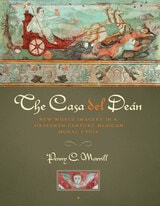
The Casa del Deán
New World Imagery in a Sixteenth-Century Mexican Mural CycleBy Penny C. Morrill
University of Texas Press, 2014
The Casa del Deán in Puebla, Mexico, is one of few surviving sixteenth-century residences in the Americas. Built in 1580 by Tomás de la Plaza, the Dean of the Cathedral, the house was decorated with at least three magnificent murals, two of which survive. Their rediscovery in the 1950s and restoration in 2010 revealed works of art that rival European masterpieces of the early Renaissance, while incorporating indigenous elements that identify them with Amerindian visual traditions.
Extensively illustrated with new color photographs of the murals, The Casa del Deán presents a thorough iconographic analysis of the paintings and an enlightening discussion of the relationship between Tomás de la Plaza and the indigenous artists whom he commissioned. Penny Morrill skillfully traces how native painters, trained by the Franciscans, used images from Classical mythology found in Flemish and Italian prints and illustrated books from France—as well as animal images and glyphic traditions with pre-Columbian origins—to create murals that are reflective of Don Tomás’s erudition and his role in evangelizing among the Amerindians. She demonstrates how the importance given to rhetoric by both the Spaniards and the Nahuas became a bridge of communication between these two distinct and highly evolved cultures. This pioneering study of the Casa del Deán mural cycle adds an important new chapter to the study of colonial Latin American art, as it increases our understanding of the process by which imagery in the New World took on Christian meaning.
The Casas Grandes World
Curtis Schaafsma
University of Utah Press, 1999
The Casas Grandes World focuses on a remarkable prehistoric culture that extended through parts of present-day Chihuahua, Sonora, New Mexico, Texas, and Arizona, centering on the large Mexican site of Casas Grandes. The thousands of prehistoric sites in this vast area have only recently been considered related to each other, yet it now appears that for more than 200 years, from about AD 1200 to 1425, the people of the region traded with each other, made coursed-adobe pueblos in the desert country, manufactured magnificent pottery, and produced some of the most extraordinary rock art in North America. Casas Grandes was recently designated a World Heritage Site by the United Nations.
During is florescence Casas Grandes served as a conduit or nexus between the Anasazi of the ancient American Southwest and the Mexican civilizations to the south. Using the seminal work of Charles Di Peso as a touchstone, and drawing on significant new archaeological work, this volume offers a reevaluation of the extent, history, and meaning of the great site and its far-reaching connections. It also considers influences on the Hohokam of Arizona and the peoples of west Mexico, positing the existence of a vast sphere of Casas Grandes cultural influence.
The Catholic Social Imagination
Activism and the Just Society in Mexico and the United StatesJoseph M. Palacios
University of Chicago Press, 2007
The reach of the Catholic Church is arguably greater than that of any other religion, extending across diverse political, ethnic, class, and cultural boundaries. But what is it about Catholicism that resonates so profoundly with followers who live under disparate conditions? What is it, for instance, that binds parishioners in America with those in Mexico? For Joseph M. Palacios, what unites Catholics is a sense of being Catholic—a social imagination that motivates them to promote justice and build a better world.
In The Catholic Social Imagination, Palacios gives readers a feeling for what it means to be Catholic and put one’s faith into action. Tracing the practices of a group of parishioners in Oakland, California, and another in Guadalajara, Mexico, Palacios reveals parallels—and contrasts—in the ways these ordinary Catholics receive and act on a church doctrine that emphasizes social justice. Whether they are building a supermarket for the low-income elderly or waging protests to promote school reform, these parishioners provide important insights into the construction of the Catholic social imagination. Throughout, Palacios also offers important new cultural and sociological interpretations of Catholic doctrine on issues such as poverty, civil and human rights, political participation, and the natural law.
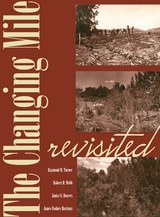
The Changing Mile Revisited
An Ecological Study of Vegetation Change with Time in the Lower Mile of an Arid and Semiarid RegionRaymond M. Turner, Robert H. Webb, Janice E. Bowers, and James Rodney Hastings
University of Arizona Press, 2003
Using nearly two hundred additional triplicate sets of unpublished photographs, The Changing Mile Revisited utilizes repeat photographs selected from almost three hundred stations located in southern Arizona, in the Pinacate region of Mexico, and along the coast of the Gulf of California. Coarse photogrammetric analysis of this enlarged photographic set shows the varied response of the region's major plant species to the forces of change. The images show vegetation across the entire region at sites ranging in elevation from sea level to a mile above sea level. Some sites are truly arid, while others are located above the desert in grassland and woodland. Common names are used for most plants and animals (with Latin equivalents in endnotes) to make the book more accessible to non-technical readers.
The original Changing Mile was based upon a unique set of data that allowed the authors to evaluate the extent and magnitude of vegetation change in a large geographic region. By extending the original landmark study, The Changing Mile Revisited will remain an indispensable reference for all concerned with the fragile desert environment.
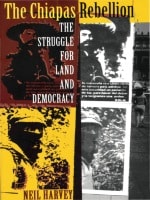
The Chiapas Rebellion
The Struggle for Land and DemocracyNeil Harvey
Duke University Press, 1998
Beginning with an exploration of the history of ethnic and class conflict in Chiapas since the Conquest, Harvey moves specifically to trace the development of peasant and indigenous organizations in Chiapas since the early 1970s. He compares the struggles for agrarian rights of three grassroots movements facing hostility from both local elites and federal bureaucrats. His examination of the complexities of political change in Chiapas includes the impact of neoliberal economic policies, the origins of the Zapatista army of National Liberation (EZLN), and the political impact of the rebellion itself. Engaging with current theoretical debates on the role and significance of social movements in Mexico and Latin America, Harvey focuses on the primacy of political struggle and on the importance of these movements in the construction and meaning of citizenship. While suggesting that the Zapatista revolution has heightened awareness among the people of Chiapas of such democratic issues as ethnicity, gender, and land distribution, he concludes with an analysis of the obstacles to peace in the region today.
This unprecedented study of the Zapatista rebellion will provoke discussion among students and scholars of contemporary Mexico, political science, Latin American studies, history, sociology, and anthropology.
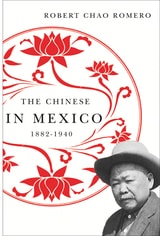
The Chinese in Mexico, 1882-1940
By Robert Chao Romero
University of Arizona Press, 2010
Robert Romero argues that Chinese immigrants turned to Mexico as a new land of economic opportunity after the passage of the U.S. Chinese Exclusion Act of 1882. As a consequence of this legislation, Romero claims, Chinese immigrants journeyed to Mexico in order to gain illicit entry into the United States and in search of employment opportunities within Mexico’s developing economy. Romero details the development, after 1882, of the “Chinese transnational commercial orbit,” a network encompassing China, Latin America, Canada, and the Caribbean, shaped and traveled by entrepreneurial Chinese pursuing commercial opportunities in human smuggling, labor contracting, wholesale merchandising, and small-scale trade.
Romero’s study is based on a wide array of Mexican and U.S. archival sources. It draws from such quantitative and qualitative sources as oral histories, census records, consular reports, INS interviews, and legal documents. Two sources, used for the first time in this kind of study, provide a comprehensive sociological and historical window into the lives of Chinese immigrants in Mexico during these years: the Chinese Exclusion Act case files of the U.S. Immigration and Naturalization Service and the 1930 Mexican municipal census manuscripts. From these documents, Romero crafts a vividly personal and compelling story of individual lives caught in an extensive network of early transnationalism.
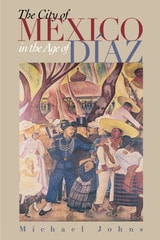
The City of Mexico in the Age of Díaz
By Michael Johns
University of Texas Press, 1997
Mexico City assumed its current character around the turn of the twentieth century, during the dictatorship of Porfirio Díaz (1876-1911). In those years, wealthy Mexicans moved away from the Zócalo, the city's traditional center, to western suburbs where they sought to imitate European and American ways of life. At the same time, poorer Mexicans, many of whom were peasants, crowded into eastern suburbs that lacked such basic amenities as schools, potable water, and adequate sewerage. These slums looked and felt more like rural villages than city neighborhoods. A century—and some twenty million more inhabitants—later, Mexico City retains its divided, robust, and almost labyrinthine character.
In this provocative and beautifully written book, Michael Johns proposes to fathom the character of Mexico City and, through it, the Mexican national character that shaped and was shaped by the capital city. Drawing on sources from government documents to newspapers to literary works, he looks at such things as work, taste, violence, architecture, and political power during the formative Díaz era. From this portrait of daily life in Mexico City, he shows us the qualities that "make a Mexican a Mexican" and have created a culture in which, as the Mexican saying goes, "everything changes so that everything remains the same."
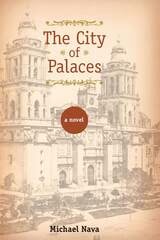
The City of Palaces
A NovelMichael Nava
University of Wisconsin Press, 2014
Against this backdrop, The City of Palaces opens in a Mexico City jail with the meeting of Miguel Sarmiento and Alicia Gavilán. Miguel is a principled young doctor, only recently returned from Europe but wracked by guilt for a crime he committed as a medical student ten years earlier. Alicia is the spinster daughter of an aristocratic family. Disfigured by smallpox, she has devoted herself to working with the city’s destitute. This unlikely pair—he a scientist and atheist and she a committed Christian—will marry. Through their eyes and the eyes of their young son, José, readers follow the collapse of the old order and its bloody aftermath.
The City of Palaces is a sweeping novel of interwoven lives: Miguel and Alicia; José, a boy as beautiful and lonely as a child in a fairy tale; the idealistic Francisco Madero, who overthrows Díaz but is nevertheless destroyed by the tyrant’s political system; and Miguel’s cousin Luis, shunned as a “sodomite.” A glittering mosaic of the colonial past and the wealth of the modern age, The City of Palaces is a story of faith and reason, cathedrals and hovels, barefoot street vendors and frock-coated businessmen, grand opera and silent film, presidents and peasants, the living and the dead.
Winner, International Latino Book Award for Latino Fiction, Latino Literacy Now
Second place, International Latino Book Award for Historical Fiction, Latino Literacy Now
Finalist, Gay Fiction, Lambda Literary Awards
Honorable Mention in Drama, Latino Books into Movies Award, International Latino Book Awards
Best Books for General Audiences, selected by the American Association of School Librarians
Outstanding Book, selected by the Public Library Reviewers
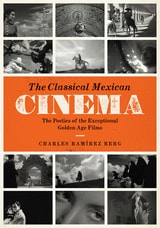
The Classical Mexican Cinema
The Poetics of the Exceptional Golden Age FilmsBy Charles Ramírez Berg
University of Texas Press, 2015
From the mid-1930s to the late 1950s, Mexican cinema became the most successful Latin American cinema and the leading Spanish-language film industry in the world. Many Cine de Oro (Golden Age cinema) films adhered to the dominant Hollywood model, but a small yet formidable filmmaking faction rejected Hollywood’s paradigm outright. Directors Fernando de Fuentes, Emilio Fernández, Luis Buñuel, Juan Bustillo Oro, Adolfo Best Maugard, and Julio Bracho sought to create a unique national cinema that, through the stories it told and the ways it told them, was wholly Mexican. The Classical Mexican Cinema traces the emergence and evolution of this Mexican cinematic aesthetic, a distinctive film form designed to express lo mexicano.
Charles Ramírez Berg begins by locating the classical style’s pre-cinematic roots in the work of popular Mexican artist José Guadalupe Posada at the turn of the twentieth century. He also looks at the dawning of Mexican classicism in the poetics of Enrique Rosas’ El Automóvil Gris, the crowning achievement of Mexico’s silent filmmaking era and the film that set the stage for the Golden Age films. Berg then analyzes mature examples of classical Mexican filmmaking by the predominant Golden Age auteurs of three successive decades. Drawing on neoformalism and neoauteurism within a cultural studies framework, he brilliantly reveals how the poetics of Classical Mexican Cinema deviated from the formal norms of the Golden Age to express a uniquely Mexican sensibility thematically, stylistically, and ideologically.
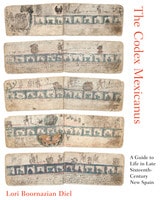
The Codex Mexicanus
A Guide to Life in Late Sixteenth-Century New SpainBy Lori Boornazian Diel
University of Texas Press, 2018
Winner, Roland H. Bainton Book Prize, The Sixteenth Century Society and Conference, 2019
Some sixty years after the Spanish conquest of Mexico, a group of Nahua intellectuals in Mexico City set about compiling an extensive book of miscellanea, which was recorded in pictorial form with alphabetic texts in Nahuatl clarifying some imagery or adding new information altogether. This manuscript, known as the Codex Mexicanus, includes records pertaining to the Aztec and Christian calendars, European medical astrology, a genealogy of the Tenochca royal house, and an annals history of pre-conquest Tenochtitlan and early colonial Mexico City, among other topics. Though filled with intriguing information, the Mexicanus has long defied a comprehensive scholarly analysis, surely due to its disparate contents.
In this pathfinding volume, Lori Boornazian Diel presents the first thorough study of the entire Codex Mexicanus that considers its varied contents in a holistic manner. She provides an authoritative reading of the Mexicanus’s contents and explains what its creation and use reveal about native reactions to and negotiations of colonial rule in Mexico City. Diel makes sense of the codex by revealing how its miscellaneous contents find counterparts in Spanish books called Reportorios de los tiempos. Based on the medieval almanac tradition, Reportorios contain vast assortments of information related to the issue of time, as does the Mexicanus. Diel masterfully demonstrates that, just as Reportorios were used as guides to living in early modern Spain, likewise the Codex Mexicanus provided its Nahua audience a guide to living in colonial New Spain.
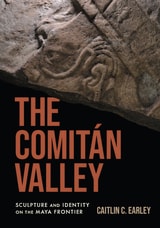
The Comitán Valley
Sculpture and Identity on the Maya FrontierCaitlin C. Earley
University of Texas Press, 2023
A thousand years ago, the Comitán Valley, in the Mexican state of Chiapas, was the western edge of the Maya world. Far from the famous power centers of the Classic period, the valley has been neglected even by specialists. Here, Caitlin C. Earley offers the first comprehensive study of sculpture excavated from the area, showcasing the sophistication and cultural vigor of a region that has largely been ignored.
Supported by the rulers of the valley’s cities, local artists created inventive works that served to construct civic identities. In their depictions of warrior kings, ballgames, rituals, and ancestors, the artists of Comitán made choices that reflected political and religious goals and distinguished the artistic production of the Comitán Valley from that of other Maya locales. After the Maya abandoned their powerful lowland centers, those in Comitán were maintained, a distinction from which Earley draws new insights concerning the Maya collapse. Richly illustrated with never-before-published photographs of sculptures unearthed from key archaeological sites, The Comitán Valley is an illuminating work of art historical recovery and interpretation.
The Community Forests of Mexico
Managing for Sustainable LandscapesEdited by David Barton Bray, Leticia Merino-Pérez, and Deborah Barry
University of Texas Press, 2005
Mexico leads the world in community management of forests for the commercial production of timber. Yet this success story is not widely known, even in Mexico, despite the fact that communities around the globe are increasingly involved in managing their own forest resources. To assess the achievements and shortcomings of Mexico's community forest management programs and to offer approaches that can be applied in other parts of the world, this book collects fourteen articles that explore community forest management from historical, policy, economic, ecological, sociological, and political perspectives.
The contributors to this book are established researchers in the field, as well as many of the important actors in Mexico's nongovernmental organization sector. Some articles are case studies of community forest management programs in the states of Michoacán, Oaxaca, Durango, Quintana Roo, and Guerrero. Others provide broader historical and contemporary overviews of various aspects of community forest management. As a whole, this volume clearly establishes that the community forest sector in Mexico is large, diverse, and has achieved unusual maturity in doing what communities in the rest of the world are only beginning to explore: how to balance community income with forest conservation. In this process, Mexican communities are also managing for sustainable landscapes and livelihoods.
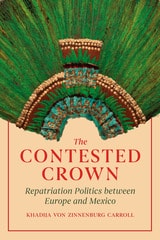
The Contested Crown
Repatriation Politics between Europe and MexicoKhadija von Zinnenburg Carroll
University of Chicago Press, 2022
In The Contested Crown, Khadija von Zinnenburg Carroll meditates on the case of a spectacular feather headdress believed to have belonged to Montezuma, emperor of the Aztecs. This crown has long been the center of political and cultural power struggles, and it is one of the most contested museum claims between Europe and the Americas. Taken to Europe during the conquest of Mexico, it was placed at Ambras Castle, the Habsburg residence of the author’s ancestors, and is now in Vienna’s Welt Museum. Mexico has long requested to have it back, but the Welt Museum uses science to insist it is too fragile to travel.
Both the biography of a cultural object and a history of collecting and colonizing, this book offers an artist’s perspective on the creative potentials of repatriation. Carroll compares Holocaust and colonial ethical claims, and she considers relationships between indigenous people, international law and the museums that amass global treasures, the significance of copies, and how conservation science shapes collections. Illustrated with diagrams and rare archival material, this book brings together global history, European history, and material culture around this fascinating object and the debates about repatriation.