Results by title
683 books match the query 'Middle East' and 139 start with t
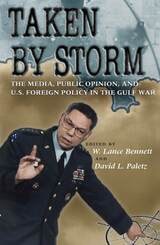
Taken by Storm
The Media, Public Opinion, and U.S. Foreign Policy in the Gulf WarEdited by W. Lance Bennett and David L. Paletz
University of Chicago Press, 1994
Tracing the flow of news, public opinion, and policy decisions from Sadam Hussein's rise to power in 1979, to the Iraqi invasion of Kuwait, through the outbreak and conclusion of the war, the contributors look at how the media have become key players in the foreign policy process. They examine the pre-war media debate, news coverage during and after the war, how the news-gathering process shaped the content of the coverage, and the media's effect on public opinion and decision makers. We see what goes on behind the scenes in the high tech world of political communication, and are confronted by troubling questions about the ways the government managed coverage of the war and captured journalists at their own news game.
Taken by Storm also examines more general patterns in post-Cold war journalism and foreign policy, particularly how contemporary journalistic practices determine whose voices and what views are heard in foreign policy coverage. At stake are the reactions of a vast media audience and the decision of government officials who see both the press and the public and key elements of the policy game.
The first book to fully integrate our understanding of the news business, public opinion, and government action, Taken by Storm transcends the limits of the Gulf War to illuminate the complex relationship between the media, the public, and U.S. foreign policy in the late twentieth century.

Talk of Darkness
By Fatna El Bouih
University of Texas Press, 2008
Fatna El Bouih was first arrested in Casablanca as an 18-year-old student leader with connections to the Marxist movement. Over the next decade she was rearrested, forcibly disappeared, tortured, and transferred between multiple prisons. While imprisoned, she helped organize a hunger strike, completed her undergraduate degree in sociology, and began work on a Master's degree.
Beginning with the harrowing account of her kidnapping during the heightened political tension of the 1970s, Talk of Darkness tells the true story of one woman's struggle to secure political prisoners' rights and defend herself against an unjust imprisonment.
Poetically rendered from Arabic into English by Mustapha Kamal and Susan Slyomovics, Fatna El Bouih's memoir exposes the techniques of state-instigated "disappearance" in Morocco and condemns the lack of laws to protect prisoners' basic human rights.
Talking Back to the West
How Turkey Uses Counter-Hegemony to Reshape the Global Communication OrderBilge Yesil
University of Illinois Press, 2024
Insightfully exploring the crossroads of communications and authoritarianism, Talking Back to the West illuminates how the Erdogan government and its media allies use history, religion, and identity to pursue complementary agendas and tighten the AKP’s grip on power.
Tangled Roots
The Emergence of Israeli CultureIsrael Bartal
SBL Press, 2020
A new interpretation of the roots of Israeli culture
In Tangled Roots: The Emergence of Israeli Culture, Israel Bartal traces the history of modern Hebrew culture prior to the emergence of political Zionism. Bartal examines how traditional and modernist ideals and Western and non-European Jewish cultures merged in an unprecedented encounter between an ancient land (Israel) and a multigenerational people (the Jews). Premodern Jewish traditionalists, Palestinian locals, foreign imperial forces, and Jewish intellectuals, writers, journalists, and party functionaries each affected the Israeli culture that emerged. As this new Hebrew culture was taking shape, the memory of the recent European past played a highly influential role in shaping the image of the New Hebrew, that mythological hero who was meant to supplant the East European exilic Jew.
Features
- A critical revision of most contemporary politicized histories of Jewish nationalism
- An examination of the history of modern Hebrew culture prior to political Zionism
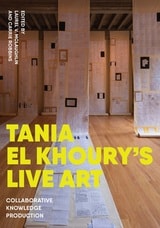
Tania El Khoury's Live Art
Collaborative Knowledge ProductionLaurel V. McLaughlin
Amherst College Press, 2023
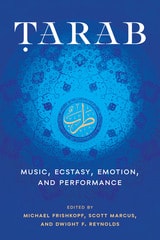
Tarab
Music, Ecstasy, Emotion, and PerformanceEdited by Michael Frishkopf, Scott Marcus, and Dwight F. Reynolds
University of Texas Press, 2025
In Arab culture, at the ineffable point where music meets emotion, lies ṭarab. Often glossed as the ecstasy experienced and expressed when performing or listening to singing, instrumental works, and recitations of poetry, ṭarab is both a practice and an orienting concept central to musical aesthetics and spirituality characteristic of Middle Eastern cultures.
Gathering fifteen essays by scholars of music, affect, literature, religion, and education, Ṭarab extends the study of ṭarab historically, geographically, and sociologically. Historical essays explore ṭarab’s role in the medieval Middle East and the Ottoman Empire. Turning to the modern era, authors examine ṭarab and related concepts in Egypt, Albania, and Iraq, and among Turkish Roma and Lebanese Maronite Christians. The contributors also address contemporary practitioners and the intersections of ṭarab and maqām, belly dancing, music streaming, and university music ensembles. Situating this unique cultural concept in a global context, these studies enrich the story of ṭarab and provide new insight into music’s powerful emotional appeal.

Terracene
A Crude AestheticsSalar Mameni
Duke University Press, 2023
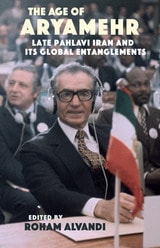
The Age of Aryamehr
Late Pahlavi Iran and Its Global EntanglementsEdited by Roham Alvandi
Gingko, 2025
The reign of the last Shah of Iran, Mohammad Reza Pahlavi (1941–79), marked the high point of Iran’s global interconnectedness. Never before had Iranians felt the impact of global political, social, economic, and cultural forces so intimately in their national and daily lives, nor had Iranian actors played such an important global role – on battlefields, barricades, and in board rooms far beyond Iran’s borders. Iranian intellectuals, technocrats, politicians, workers, artists, and students alike were influenced by the global ideas, movements, markets, and conflicts that they also helped to shape.
From the launch of the Shah’s White Revolution in 1963 to his overthrow in the popular revolution of 1978–79, Iran saw the longest period of sustained economic growth that the country had ever experienced. An entire generation took its cue from the shift from oil consumption to oil production to dream of, and aspire to, a modernized Iran, and the history of Iran in this period has tended to be presented as a prologue to the revolution. Those histories usually locate the political, social, and cultural origins of the revolution firmly within a national context, into which global actors intruded as Iranian actors retreated. While engaging with that national narrative, this volume is concerned with Iran’s place in the global history of the 1960s and ’70s. It examines and highlights the transnational threads that connected Pahlavi Iran to the world, from global traffic in modern art and narcotics to the embrace of American social science by Iranian technocrats and the encounter of European intellectuals with the Iranian Revolution.
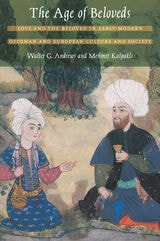
The Age of Beloveds
Love and the Beloved in Early-Modern Ottoman and European Culture and SocietyWalter G. Andrews and Mehmet Kalpakli
Duke University Press, 2005
The authors show that the “age of beloveds” was not just an Ottoman, eastern European, or Islamic phenomenon. It extended into western Europe as well, pervading the cultures of Venice, Florence, Rome, and London during the same period. Andrews and Kalpakli contend that in an age dominated by absolute rulers and troubled by war, cultural change, and religious upheaval, the attachments of dependent courtiers and the longings of anxious commoners aroused an intense interest in love and the beloved. The Age of Beloveds reveals new commonalities in the cultural history of two worlds long seen as radically different.
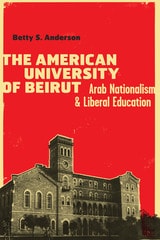
The American University of Beirut
Arab Nationalism and Liberal EducationBy Betty S. Anderson
University of Texas Press, 2011
Since the American University of Beirut opened its doors in 1866, the campus has stood at the intersection of a rapidly changing American educational project for the Middle East and an ongoing student quest for Arab national identity and empowerment. Betty S. Anderson provides a unique and comprehensive analysis of how the school shifted from a missionary institution providing a curriculum in Arabic to one offering an English-language American liberal education extolling freedom of speech and analytical discovery.
Anderson discusses how generations of students demanded that they be considered legitimate voices of authority over their own education; increasingly, these students sought to introduce into their classrooms the real-life political issues raging in the Arab world. The Darwin Affair of 1882, the introduction of coeducation in the 1920s, the Arab nationalist protests of the late 1940s and early 1950s, and the even larger protests of the 1970s all challenged the Americans and Arabs to fashion an educational program relevant to a student body constantly bombarded with political and social change. Anderson reveals that the two groups chose to develop a program that combined American goals for liberal education with an Arab student demand that the educational experience remain relevant to their lives outside the school's walls. As a result, in eras of both cooperation and conflict, the American leaders and the students at the school have made this American institution of the Arab world and of Beirut.
The Armenian Massacres in Ottoman Turkey
A Disputed GenocideGuenter Lewy
University of Utah Press, 2007
In 1915, the Ottoman government, then run by the Young Turks, deported most of its Armenian citizens from their eastern Anatolian lands. According to reliable estimates, close to forty percent of the prewar population perished, many in brutal massacres. Armenians call it the first genocide of the twentieth century. Turks speak of an instance of intercommunal warfare and wartime relocation made necessary by the treasonous conduct of their Armenian minority.
The voluminous literature on this tragic episode of World War I is characterized by acrimony and distortion in which both sides have simplified a complex historical reality and have resorted to partisan special pleading.
The Armenian Massacres in Ottoman Turkey examines the rich historical evidence without political preconceptions. Relying on archival materials as well as eye-witness testimony, Guenter Lewy avoids the sterile “was-it-genocide-or-not” debate and presents a detailed account of what actually happened. The result is a book that will open a new chapter in this contentious controversy and may help achieve a long-overdue reconciliation of Armenians and Turks.
The Armenian Rebellion at Van
McCarthy, Justin
University of Utah Press, 2006
Before World War I, the ancient city of Van in southeastern Anatolia had a population of approximately 100,000 people, while the population of Van Province was about 500,000. Armenians formed a large minority, with Kurdish tribes and Turks in the majority.
The Armenian Rebellion at Van presents a long-overdue examination of Van from the 1870s to 1919. As the authors state, "The Armenian Revolt was an integral part of the great disaster that overcame the people of the Ottoman East. The slaughter of Muslims that accompanied the Armenian revolt in Van Province inexorably led first to Kurdish reprisals on the Armenians, then to a general and mutual massacre of the people of the East."
The actions at Van offer a window into the far-reaching events that soon followed in other parts of Anatolia.
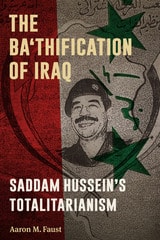
The Ba'thification of Iraq
Saddam Hussein's TotalitarianismBy Aaron M. Faust
University of Texas Press, 2015
Saddam Hussein ruled Iraq as a dictator for nearly a quarter century before the fall of his regime in 2003. Using the Ba’th party as his organ of meta-control, he built a broad base of support throughout Iraqi state and society. Why did millions participate in his government, parrot his propaganda, and otherwise support his regime when doing so often required betraying their families, communities, and beliefs? Why did the “Husseini Ba’thist” system prove so durable through uprisings, two wars, and United Nations sanctions?
Drawing from a wealth of documents discovered at the Ba’th party’s central headquarters in Baghdad following the US-led invasion in 2003, The Ba’thification of Iraq analyzes how Hussein and the party inculcated loyalty in the population. Through a grand strategy of “Ba’thification,” Faust argues that Hussein mixed classic totalitarian means with distinctly Iraqi methods to transform state, social, and cultural institutions into Ba’thist entities, and the public and private choices Iraqis made into tests of their political loyalty. Focusing not only on ways in which Iraqis obeyed, but also how they resisted, and using comparative examples from Hitler’s Germany and Stalin’s Russia, The Ba’thification of Iraq explores fundamental questions about the roles that ideology and culture, institutions and administrative practices, and rewards and punishments play in any political system.
The Balkan Reconquista and Turkey's Forgotten Refugee Crisis
William H. Holt
University of Utah Press, 2019
In this book, William H. Holt tells the story of a people and moment in time that has largely been neglected in modern Turkish and Balkan memory. Holt uncovers the reasons for this mass forgetting, finding context both within the development of the modern Turkish state and the workings of collective memory. Bringing together a wide array of eyewitness accounts, the book provides unprecedented detail on the plight of the Muslim refugees in their flight from Bulgaria, in Istanbul, and in their resettlement in Anatolia. In crisp, clear, and engaging prose, Holt offers an insightful analysis of human suffering and social memory.
The Berber Identity Movement and the Challenge to North African States
By Bruce Maddy-Weitzman
University of Texas Press, 2011
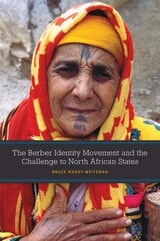
Like many indigenous groups that have endured centuries of subordination, the Berber/Amazigh peoples of North Africa are demanding linguistic and cultural recognition and the redressing of injustices. Indeed, the movement seeks nothing less than a refashioning of the identity of North African states, a rewriting of their history, and a fundamental change in the basis of collective life. In so doing, it poses a challenge to the existing political and sociocultural orders in Morocco and Algeria, while serving as an important counterpoint to the oppositionist Islamist current.
This is the first book-length study to analyze the rise of the modern ethnocultural Berber/Amazigh movement in North Africa and the Berber diaspora. Bruce Maddy-Weitzman begins by tracing North African history from the perspective of its indigenous Berber inhabitants and their interactions with more powerful societies, from Hellenic and Roman times, through a millennium of Islam, to the era of Western colonialism. He then concentrates on the marginalization and eventual reemergence of the Berber question in independent Algeria and Morocco, against a background of the growing crisis of regime legitimacy in each country. His investigation illuminates many issues, including the fashioning of official national narratives and policies aimed at subordinating Berbers in an Arab nationalist and Islamic-centered universe; the emergence of a counter-movement promoting an expansive Berber "imagining" that emphasizes the rights of minority groups and indigenous peoples; and the international aspects of modern Berberism.
The Best School in Jerusalem
Annie Landau’s School for Girls, 1900–1960Laura S. Schor
Brandeis University Press, 2013

The Blood of Abraham
Insights into the Middle EastJimmy Carter
University of Arkansas Press, 2007
The Book of Dede Korkut
A Turkish EpicTranslated and edited by Faruk Sümer, Ahmet E. Uysal, and Warren S. Walker
University of Texas Press, 1972
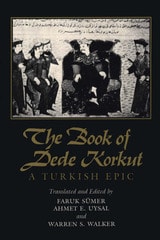
One of the oldest surviving pieces of Turkish literature, The Book of Dede Korkut can be traced to tenth-century origins. Now considered the national epic of Turkey, it is the heritage of the ancient Oghuz Turks and was composed as they migrated westward from their homeland in Central Asia to the Middle East, eventually to settle in Anatolia. Who its primary creator was no one knows, the titular bard, Dede Korkut, being more a symbol of Turkish minstrelsy than a verifiable author. The songs and tales of countless minstrels lay behind The Book of Dede Korkut, and in its oral form the epic was undoubtedly subject to frequent improvisation by individual performers. Partly in prose, partly in verse, these legends were sung or chanted in the courts and camps of political and military leaders. Even after they had been recorded in written form, they remained part of an oral tradition.
The present edition is the first complete text in English. The translators provide an excellent introduction to the language and background of the legends as well as a history of Dede Korkut scholarship. These outstanding tales will be of interest to all students of world mythology and folklore.
The Boom in Contemporary Israeli Fiction
Edited by Alan Mintz
Brandeis University Press, 1997

The Case for Palestine
An International Law PerspectiveJohn Quigley
Duke University Press, 2005
In this volume, Quigley provides a thorough understanding of both sides of the conflict in the context of international law. He contends that the Palestinians have a stronger legal claim to Jerusalem than do the Israelis; that Palestinian refugees should be repatriated to areas including those within the borders of Israel; and that Israel should withdraw from the territory it occupied in 1967. As in his earlier volume, Quigley provides an extensively documented evaluation of the conflict over the last century, discussing the Zionist movement, the League of Nations’ decision to promote a Jewish homeland in Palestine, the 1948 war and creation of Israel, and Israel’s occupation of the West Bank, Gaza Strip, and Golan Heights during the 1967 war.
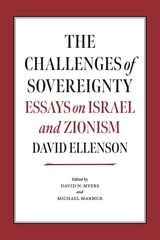
The Challenges of Sovereignty
Essays on Israel and ZionismDavid Ellenson
Brandeis University Press, 2026
Key essays by a notable scholar address some of the most pressing questions facing Israel today.
Over the course of his rich career, David Ellenson—one of the most outstanding Jewish scholars, intellectuals, and thinkers of our time—probed the tension between tradition and modernity, especially as reflected in the ceaseless reinterpretation of liturgical and halakhic texts. Alongside that scholarly interest, largely centered on European Jewry, Ellenson produced an impressive body of work on Zionism and Israel.
This volume follows the arc of this body of work from Ellenson’s early articles on the Zionism of American rabbis to his last essay on the struggle between Jewish and democratic impulses in Israeli society. He draws on familiar sources of inquiry—Jewish prayers and legal sources—to chart changes in Israeli religious life and to excavate its theological-political foundation. What emerges is a profound meditation on some of the most important questions that Israel faces today: what does it mean to be Jewish in the state? What role should Halakhah play in a self-defined Jewish state? How should the state treat its non-Jewish minority? How deeply rooted is democracy in the state and its foundational texts? And can the state ever escape seemingly irrepressible internal and external conflict?
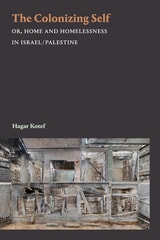
The Colonizing Self
Or, Home and Homelessness in Israel/PalestineHagar Kotef
Duke University Press, 2020
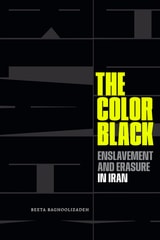
The Color Black
Enslavement and Erasure in IranBeeta Baghoolizadeh
Duke University Press, 2024
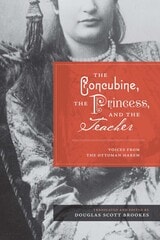
The Concubine, the Princess, and the Teacher
Voices from the Ottoman HaremTranslated and edited by Douglas Scott Brookes
University of Texas Press, 2008
In the Western imagination, the Middle Eastern harem was a place of sex, debauchery, slavery, miscegenation, power, riches, and sheer abandon. But for the women and children who actually inhabited this realm of the imperial palace, the reality was vastly different. In this collection of translated memoirs, three women who lived in the Ottoman imperial harem in Istanbul between 1876 and 1924 offer a fascinating glimpse "behind the veil" into the lives of Muslim palace women of the late nineteenth and early twentieth centuries.
The memoirists are Filizten, concubine to Sultan Murad V; Princess Ayse, daughter of Sultan Abdulhamid II; and Safiye, a schoolteacher who instructed the grandchildren and harem ladies of Sultan Mehmed V. Their recollections of the Ottoman harem reveal the rigid protocol and hierarchy that governed the lives of the imperial family and concubines, as well as the hundreds of slave women and black eunuchs in service to them. The memoirists show that, far from being a place of debauchery, the harem was a family home in which polite and refined behavior prevailed. Douglas Brookes explains the social structure of the nineteenth-century Ottoman palace harem in his introduction.
These three memoirs, written across a half century and by women of differing social classes, offer a fuller and richer portrait of the Ottoman imperial harem than has ever before been available in English.
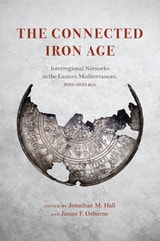
The Connected Iron Age
Interregional Networks in the Eastern Mediterranean, 900-600 BCEEdited by Jonathan M. Hall and James F. Osborne
University of Chicago Press, 2022
The early first millennium BCE marks one of the most culturally diverse periods in the history of the eastern Mediterranean. Surveying the region from Greece to Iraq, one finds a host of cultures and political formations, all distinct, yet all visibly connected in meaningful ways. These include the early polities of Geometric period Greece, the Phrygian kingdom of central Anatolia, the Syro-Anatolian city-states, the seafaring Phoenicians and the biblical Israelites of the southern Levant, Egypt’s Twenty-first through Twenty-fifth Dynasties, the Urartian kingdom of the eastern Anatolian highlands, and the expansionary Neo-Assyrian Empire of northern Mesopotamia. This volume adopts an interdisciplinary approach to understanding the social and political significance of how interregional networks operated within and between Mediterranean cultures during that era.
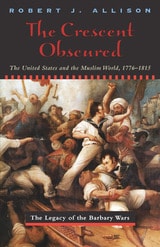
The Crescent Obscured
The United States and the Muslim World, 1776-1815Robert Allison
University of Chicago Press, 2000
"A powerful ending that explains how the experience with the Barbary states compelled many Americans to look inward . . . with increasing doubts about the institution of slavery." —David W. Lesch, Middle East Journal
"Allison's incisive and informative account of the fledgling republic's encounter with the Muslim world is a revelation with a special pertinence to today's international scene." —Richard W. Bulliet, Journal of Interdisciplinary History
"This book should be widely read. . . . Allison's study provides a context for understanding more recent developments, such as America's tendency to demonize figures like Iran's Khumaini, Libya's Qaddafi, and Iraq's Saddam." —Richard M. Eaton, Eighteenth Century Studies

The Cruel Way
Switzerland to Afghanistan in a Ford, 1939Ella K. Maillart
University of Chicago Press, 2013
While the core of the book is the journey itself and their interactions with people oppressed by political conflict and poverty, towards the end of the trip the women’s increasingly troubled relationship takes center stage. By then the glamorous, androgynous Schwarzenbach, whose own account of the trip can be found in All the Roads Are Open, is fighting a losing battle with her own drug addiction, and Maillart’s frustrated attempts to cure her show the profound depth of their relationship.
Complete with thirteen of Maillart’s own photographs from the journey, The Cruel Way is a classic of travel writing, and its protagonists are as gripping and fearless as any in literature.
The Culinary Crescent
A History of Middle Eastern CuisinePeter Heine
Gingko, 2018
In The Culinary Crescent: A History of Middle Eastern Cuisine, Peter Heine combines years of scholarship with a personal passion: his knowledge of the cookery traditions of the Umayyad, Abbasid, Ottoman, Safavid, and Mughal courts is matched only by his love for the tastes and smells produced by the contemporary cooking of these areas today. In addition to offering a fascinating history, Heine presents more than one hundred recipes—from the modest to the extravagant—with dishes ranging from those created by the “celebrity chefs” of the bygone Mughal era, up to gastronomically complex presentations of modern times.
Beautifully produced, designed for both reading and cooking, and lavishly illustrated in color throughout, The Culinary Crescent is sure to provide a delectable window in the history of food in the Middle East.
The Diasporic Condition
Ethnographic Explorations of the Lebanese in the WorldGhassan Hage
University of Chicago Press, 2021
In The Diasporic Condition, Ghassan Hage engages with the diasporic Lebanese community as a shared lifeworld, defining a common cultural milieu that transcends spatial and temporal distance—a collective mode of being here termed the “diasporic condition.” Encompassing a complicated transnational terrain, Hage’s long-term ethnography takes us from Mehj and Jalleh in Lebanon to Europe, Australia, South America, and North America, analyzing how Lebanese migrants and their families have established themselves in their new homes while remaining socially, economically, and politically related to Lebanon and to each other.
At the heart of The Diasporic Condition lies a critical anthropological question: How does the study of a particular sociocultural phenomenon expand our knowledge of modes of existing in the world? As Hage establishes what he terms the “lenticular condition,” he breaks down the boundaries between “us” and “them,” “here” and “there,” showing that this convergent mode of existence increasingly defines everyone’s everyday life.

The Director and Other Stories from Morocco
By Leila Abouzeid
University of Texas Press, 2006
New stories by Leila Abouzeid, the noted Moroccan writer, constitute an event for both East and West, for, as in her critically acclaimed novel, Year of the Elephant, the author cuts across cultural and national boundaries to offer fiction that has meaning for both Western and Middle Eastern readers. The stories in this volume deal with issues both traditional and modern-relations between parents and children, between husbands and wives, and between citizens of newly independent Morocco and its new nationalist representative government.
Independence from French colonial rule has brought many changes to Morocco—some more beneficial than others. Women have entered the work force in great numbers, a development which has brought them new freedoms, but which has also caused problems within the traditional family. Abouzeid shows us how these changes have affected ordinary men and women, how small everyday events loom large in individual lives. To her crisp style, reminiscent of some Western realist novelists, she adds elements of Arabic fiction—the oral story-telling technique, for example.
Abouzeid writes first in Arabic, which she has stated is a political choice. This makes her a literary pioneer in North Africa, where, until recently, most authors wrote in French. Elizabeth Warnock Fernea has written an introduction for this book, setting the stories in historical context.
The Dune's Twisted Edge
Journeys in the LevantGabriel Levin
University of Chicago Press, 2012
The Early History of the Ancient Near East, 9000-2000 B.C.
Hans J. Nissen
University of Chicago Press, 1988
With a unique combination of material culture analysis written data, Nissan traces the emergence of the earliest isolated settlements, the growth of a network of towns, the emergence of city states, and finally the appearance of territorial states. From his synthesis of the prehistoric and literate periods comes a unified picture of the development of Mesopotamian economy, society, and culture. Lavishly illustrated, The Early History of the Ancient Near East, 9000-2000 B.C. is an authoritative work by one of the most insightful observers of the evolution and character of Mesopotamian civilization.
The Early Mubarak Years 1982–1988
The Non-Fiction Writing of Naguib Mahfouz, Volume IIINaguib Mahfouz
Gingko, 2020
The Early Ottoman Peloponnese
A Study in the Light of an Annotated Editio Princeps of the TT10-1/14662 Ottoman Taxation Cadastre (ca. 1460–1463)Georgios C. Liakopoulos
Gingko, 2019
The book is divided into two parts, with part one covering a range of materials through an introduction and three chapters and part two consisting of a diplomatic edition of the transcribed Ottoman text. The introduction offers an orientation to the scope of the book, surveys previous scholarship conducted on the subject, and provides a historical examination of the late Byzantine Peloponnese and its conquest by the Ottomans. Accompanied by topographic and linguistic notes, Liakopoulos presents the historical geography of the Peloponnese, listing all the place-names mentioned in the sequence they appear in the TT10-1/14662 register. This is followed by a set of thirty-eight digital maps of the early Ottoman Peloponnese using GIS (Geographical Information Systems). This is followed by a discussion of the demography of the Peloponnese, including the settlement patterns, the density of population and its categorisation—urban and rural, sedentary and nomadic—concentrating on the influx and settlement of the second largest ethnic group in the peninsula: the Albanians. Liakopoulos explores the administrative and economic structures of the Peloponnese, and provides a detailed presentation their of agricultural production, fully illustrated with tables and charts.
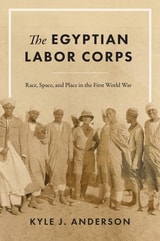
The Egyptian Labor Corps
Race, Space, and Place in the First World WarKyle J. Anderson
University of Texas Press, 2021
During World War I, the British Empire enlisted half a million young men, predominantly from the countryside of Egypt, in the Egyptian Labor Corps (ELC) and put them to work handling military logistics in Europe and the Middle East. British authorities reneged on their promise not to draw Egyptians into the war, and, as Kyle Anderson shows, the ELC was seen by many in Egypt as a form of slavery. The Egyptian Labor Corps tells the forgotten story of these young men, culminating in the essential part they came to play in the 1919 Egyptian Revolution.
Combining sources from archives in four countries, Anderson explores Britain’s role in Egypt during this period and how the ELC came to be, as well as the experiences and hardships these men endured. As he examines the ways they coped—through music, theater, drugs, religion, strikes, and mutiny—he illustrates how Egyptian nationalists, seeing their countrymen in a state akin to slavery, began to grasp that they had been racialized as “people of color.” Documenting the history of the ELC and its work during the First World War, The Egyptian Labor Corps also provides a fascinating reinterpretation of the 1919 revolution through the lens of critical race theory.
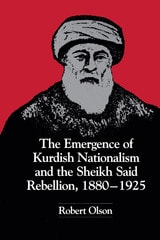
The Emergence of Kurdish Nationalism and the Sheikh Said Rebellion, 1880–1925
By Robert Olson
University of Texas Press, 1989
The last quarter of the nineteenth century was crucial for the development of Kurdish nationalism. It coincided with the reign of Abdulhamid II (1876-1909), who emphasized Pan-Islamic policies in order to strengthen the Ottoman Empire against European and Russian imperialism, The Pan-Islamic doctrines of the Ottoman Empire enabled sheikhs (religious leaders) from Sheikh Ubaydallah of Nehri in the 1870s and 1880s to Sheikh Said in the 1920s-to become the principal nationalist leaders of the Kurds. This represented a new development in Middle Eastern and Islamic history and began an important historical pattern in the Middle East long before the emergence of the religiousnationalist leadership of Ayatollah Khomeini in Iran.
This is the first work in any Western language dealing with the development of Kurdish nationalism during this period and is supported with documentation not previously utilized, principally from the Public Record Office in Great Britain. In addition, the author provides much new material on Turkish, Armenian, Iranian, and Arab history and new insights into Turkish-Armenian relations during the most crucial era of the history of these two peoples.
The Fabric of Classical Islamic Culture
A Cognitivist ApproachHouari Touati
University of Chicago Press, 2027
A sweeping account of the evolution of early Islamic culture.
This book argues that early Islamic literature was influenced less by the Qur’an and more by the bureaucratic culture of the Diwan, the secular political system in place long before a written religious culture emerged. As Houari Touati explains, this secular Arab culture quickly outstripped written religious erudition: first, because of the diverse communities who participated in the scholarly networks of the empire; and second, because of the universalizing influence of the period’s Greco-Arabic translation movement. This process of cross-cultural fertilization, Touati recounts, flourished within Islam until the canonization of the Hadith (the official sayings, actions, and sanctions of Muhammad) began to disrupt this dynamic of interchange after the tenth century, without, however, managing to put a definitive end to it. The Fabric of Classical Islamic Culture is a wide-ranging, comparative account of the parallel development of secular and sacred culture that produced the modern Arabic world.
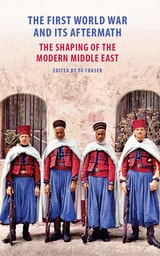
The First World War and Its Aftermath
The Shaping of the Modern Middle EastEdited by T.G. Fraser
Gingko, 2024
In addition to recounting the crucial international politics that drew fierce lines in the sands of the Middle East—a story of intrigue between the British, Russians, Ottomans, North Africans, Americans, and others—the contributors engage topics ranging from the war’s effects on women, the experience of the Kurds, sectarianism, the evolution of Islamism, and the importance of prominent intellectuals like Ziya Gökalp and Michel ‘Aflaq. They examine the dissolution of the Ottoman Empire, the exploitation of notions of Islamic unity and pan-Arabism, the influences of Woodrow Wilson and American ideals on Middle East leaders, and likewise the influence of Vladimir Lenin’s vision of a communist utopia. Altogether, they tell a story of promises made and promises broken, of the struggle between self-determination and international recognition, of centuries-old empires laying in ruin, and of the political poker of the twentieth century that carved up the region, separating communities into the artificial states we know today.
The Genealogical Science
The Search for Jewish Origins and the Politics of EpistemologyNadia Abu El-Haj
University of Chicago Press, 2012
The Great Siege of Malta
The Epic Battle between the Ottoman Empire and the Knights of St. JohnBruce Ware Allen
University Press of New England, 2017
The Great Syrian Revolt and the Rise of Arab Nationalism
By Michael Provence
University of Texas Press, 2005
The Great Syrian Revolt of 1925 was the largest and longest-lasting anti-colonial insurgency in the inter-war Arab East. Mobilizing peasants, workers, and army veterans, rather than urban elites and nationalist intellectuals, it was the first mass movement against colonial rule in the Middle East. The revolt failed to liberate Syria from French occupation, but it provided a model of popular nationalism and resistance that remains potent in the Middle East today. Each subsequent Arab uprising against foreign rule has repeated the language and tactics of the Great Syrian Revolt.
In this work, Michael Provence uses newly released secret colonial intelligence sources, neglected memoirs, and popular memory to tell the story of the revolt from the perspective of its participants. He shows how Ottoman-subsidized military education created a generation of leaders of modest background who came to rebel against both the French Mandate rulers of Syria and the Syrian intellectuals and landowners who helped the colonial regime to function. This new popular nationalism was unprecedented in the Arab world. Provence shows compellingly that the Great Syrian Revolt was a formative event in shaping the modern Middle East.
The Harbour of all this Sea and Realm
Crusader to Venetian FamagustaMichael J.K. Walsh
Central European University Press, 2014
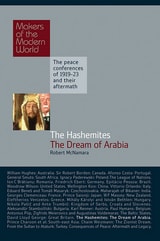
The Hashemites
The Dream of ArabiaRobert McNamara
Haus Publishing, 2010
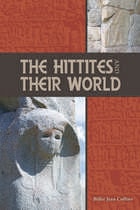
The Hittites and Their World
Billie Jean Collins
SBL Press, 2007
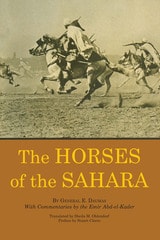
The Horses of the Sahara
By General E. Daumas
University of Texas Press, 1968
The Arabs created one of the world's finest breeds of saddle horses, the Arabian, and they have long possessed an immense store of knowledge regarding the care, training, and breeding of this splendid horse. In the nineteenth century, General Melchior Joseph Eugene Daumas had access to their knowledge even though, as he pointed out, "it requires a great deal of patience and tact for a Christian to obtain from the Mohammedans even the most insignificant of details . . ." General Daumas was, because of his unique relationship with the Arabs, probably the first European to produce a comprehensive study of Arabian horses. And to add even greater value to The Horses of the Sahara, he was able to secure for the ninth edition, here translated, extended commentaries on all aspects of Arabian horsemanship by the Emir Abd-el-Kadar, one of the most important nineteenth-century Arab leaders and certainly one of the foremost authorities on the subject.
The Horses of the Sahara will be of interest not only to equestrians but also to historians and other scholars interested in the customs of the North African desert tribes and in the complex backgrounds of European–North African relations. General Daumas took part in the conquest of Algeria by France, so distinguishing himself that he was named Director of the Bureau of Algerian Affairs in the French Ministry of War. During the campaigns and the occupation that followed, he studied and attempted to understand the native peoples, with an objectivity and sympathy unusual among the colonialists of the period. His book provides fascinating sidelights on many aspects of Arab life, including customs, superstitions, religion, and family life.
Sheila M. Ohlendorf was uniquely suited to translate The Horses of the Sahara. An excellent rider herself, thoroughly experienced with the animals and the techniques being discussed, she also spoke fluent French, having received her B.A. degree in languages from Texas Western University (now the University of Texas at El Paso). As curator of the Hall of the Horsemen, the large collection at the University of Texas at Austin, she had access to a wide variety of supplementary authorities, which enriched both her translation and the notes that accompany the book.
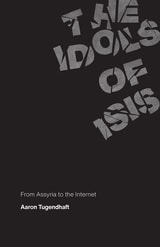
The Idols of ISIS
From Assyria to the InternetAaron Tugendhaft
University of Chicago Press, 2020
Beginning with the Islamic State’s claim that the smashed objects were idols of the “age of ignorance,” Aaron Tugendhaft questions whether there can be any political life without idolatry. He then explores the various roles Mesopotamian sculpture has played in European imperial competition, the development of artistic modernism, and the formation of Iraqi national identity, showing how this history reverberates in the choice of the Mosul Museum as performance stage. Finally, he compares the Islamic State’s production of images to the ways in which images circulated in ancient Assyria and asks how digitization has transformed politics in the age of social media. An elegant and accessibly written introduction to the complexities of such events, The Idols of ISIS is ideal for students and readers seeking a richer cultural perspective than the media usually provides.
The Insecure City
Space, Power, and Mobility in BeirutMonroe, Kristin V
Rutgers University Press, 2016
Download open access ebook here.
The Iranian Diaspora
Challenges, Negotiations, and TransformationsEdited by Mohsen Mostafavi Mobasher
University of Texas Press, 2018
The Iranian revolution of 1978–1979 uprooted and globally dispersed an enormous number of Iranians from all walks of life. Bitter political relations between Iran and the West have since caused those immigrants to be stigmatized, marginalized, and politicized, which, in turn, has discredited and distorted Iranian migrants’ social identity; subjected them to various subtle and overt forms of prejudice, discrimination, and social injustice; and pushed them to the edges of their host societies. The Iranian Diaspora presents the first global overview of Iranian migrants’ experiences since the revolution, highlighting the similarities and differences in their experiences of adjustment and integration in North America, Europe, Australia, and the Middle East.
Written by leading scholars of the Iranian diaspora, the original essays in this volume seek to understand and describe how Iranians in diaspora (re)define and maintain their ethno-national identity and (re)construct and preserve Iranian culture. They also explore the integration challenges the Iranian immigrants experience in a very negative context of reception. Combining theory and case studies, as well as a variety of methodological strategies and disciplinary perspectives, the essays offer needed insights into some of the most urgent and consequential issues and problem areas of immigration studies, including national, ethnic, and racial identity construction; dual citizenship and dual nationality maintenance; familial and religious transformation; politics of citizenship; integration; ethnic and cultural maintenance in diaspora; and the link between politics and the integration of immigrants, particularly Muslim immigrants.
The Islamic Movement in Israel
Tilde Rosmer
University of Texas Press, 2022
Since its establishment in the late 1970s, Israel’s Islamic Movement has grown from a small religious revivalist organization focused on strengthening the faith of Muslim Palestinian citizens of Israel to a countrywide sociopolitical movement with representation in the Israeli legislature. But how did it get here? How does it differ from other Islamic movements in the region? And why does its membership continue to grow?
Tilde Rosmer examines these issues in The Islamic Movement in Israel as she tells the story of the movement, its identity, and its activities. Using interviews with movement leaders and activists, their documents, and media reports from Israel and beyond, she traces the movement’s history from its early days to its 1996 split over the issue of its relationship to the state. She then explores how the two factions have functioned since, revealing that while leaders of the two branches have pursued different approaches to the state, until the outlawing of the Northern Branch in 2015, both remained connected and dedicated to providing needed social, education, and health services in Israel’s Palestinian towns and villages. The first book in English on this group, The Islamic Movement in Israel is a timely study about how an Islamist movement operates within the unique circumstances of the Jewish state.
The Islamic World
Edited by William H. McNeill and Marilyn Robinson Waldman
University of Chicago Press, 1984