Results by title
166 books match the query 'Native American' and 31 start with t
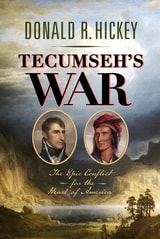
Tecumseh's War
The Epic Conflict for the Heart of AmericaDonald R. Hickey
Westholme Publishing, 2026
The Shawnee leader Tecumseh came to prominence in a war against the United States waged from 1811 to 1815. In 1805, Tecumseh’s younger brother Lalawethika (soon to be known as “the Prophet”) had a vision for an Indian revitalization movement that would restore Native culture and resist American expansion. Tecumseh organized the growing support for this movement, which came from Indigenous peoples across the Old Northwest and parts of the Great Plains, into a loose but powerful military alliance.
In late 1811, while Tecumseh was away on a recruiting mission in the South, General William Henry Harrison led an army to the center of Native resistance at Prophetstown in present-day Indiana. In the early morning hours of November 7, in what came to be known as the Battle of Tippecanoe, Harrison’s men fought off an Indian attack, which marked the beginning of Tecumseh’s War. Seven months later, when the United States declared war on Britain, thus initiating the War of 1812, the British and Tecumseh forged an alliance against the United States. Initially, the Anglo-Indian alliance enjoyed considerable success at Detroit, Chicago, Mackinac, and elsewhere, exposing much of the Old Northwest to border warfare, but the tide turned in 1813 when Harrison invaded Canada. On October 5 the American army defeated a much smaller Anglo-Indian force in the climactic Battle of the Thames. Tecumseh was killed in this battle, and although his confederacy disintegrated, British support ensured that the Indian war would continue for another two years with the Sauk chief Black Hawk now providing the inspiration and leadership. Tecumseh’s War ended only in late 1815 after the British made peace with the United States and abandoned their native allies.
Tecumseh’s War: The Epic Conflict for the Heart of America is the first complete story of this major conflict. Distinguished historian Donald R. Hickey detaches it from the War of 1812, moving Tecumseh’s confederation to center stage to tell the sweeping and engrossing story of this last great Indian War—the last time that Indigenous Peoples had a powerful European ally to oppose United States expansion and thus the lastchance they had of shaping the future of the continent.
The Choctaw Civil War
Women, Justice, and Sovereignty in the Native SouthMatthew J. Sparacio
University of Alabama Press, 2026
Reexamines the contested geopolitical landscape of the lower Mississippi River Valley in 1740s, centering Choctaw perspectives
Matthew J. Sparacio’s comprehensive history, The Choctaw Civil War: Women, Justice, and Sovereignty in the Native South, delivers a rich portrait of eighteenth-century Choctaw life and recasts the Native South as a region shaped by Choctaw decisions.
In the 1730s and 1740s, the Choctaw Nation leveraged competing European imperial agendas while establishing reciprocal diplomatic ties with other tribes, including their neighboring “brothers,” the Chickasaws. Choctaws drew strength from their multifaceted understanding of sovereignty: connections to land, contributions to society through work, generosity, respect, kinship obligations, and justice. A series of attacks on Choctaw women, however, tested the limits of justice and obligation within and between Choctaw communities. Mounting pressures from both Louisiana and South Carolina added to this factionalism, ultimately leading to civil war.
Relying on Chahta anumpa (“Choctaw language”) training and tribal histories, gender theory, and ethnohistorical methods, Sparacio highlights women’s contributions to Choctaw society and governance. Intense eighteenth-century debates over justice, kinship, and responsibility created several Choctaw movements for justice that still inspire efforts in Oklahoma and Mississippi to end the Missing and Murdered Indigenous Persons’ crisis. Tribal and bodily sovereignty shaped the Native South and will shape its future.
The Choctaw Civil War is a major reinterpretation of Choctaw history and the colonial South. This will be a must-read for historians, scholars of the Native South, and anyone interested in sovereignty movements today.

The Creek War of 1813 and 1814
H. S. Halbert and T. H. Ball, edited by Frank L. Owsley, Jr.
University of Alabama Press, 1995
This standard account of one of the most controversial wars in which Americans have fought is again available, with introductory materials and a bibliography revised to reflect the advances in scholarship since the 1969 edition.
The first edition of Halbert and Ball's Creek War was published in 1895, and a new edition containing an introductory essay, supplementary notes, a bibliography, and an index by Frank L. Owsley Jr., was published in 1969. This standard account of one of the most controversial wars in which Americans have fought is again available, with introductory materials and a bibliography revised to reflect the advances in scholarship since the 1969 edition. This facsimile reproduction of the 1895 original provides a full and sympathetic account of the Indians' point of view, from the earliest visit of the great Shawnee chief Tecumseh to the southern tribes in 1811, through the buildup of apprehension and hostilities leading to the fateful battles at Burnt Corn, Fort Mims, and Holy Ground.
The Diné Reader
An Anthology of Navajo LiteratureEdited by Esther G. Belin, Jeff Berglund, Connie A. Jacobs, and Anthony K. Webster; Foreword by Sherwin Bitsui
University of Arizona Press, 2021
The Diné Reader: An Anthology of Navajo Literature is unprecedented. It showcases the breadth, depth, and diversity of Diné creative artists and their poetry, fiction, and nonfiction prose.This wide-ranging anthology brings together writers who offer perspectives that span generations and perspectives on life and Diné history. The collected works display a rich variety of and creativity in themes: home and history; contemporary concerns about identity, historical trauma, and loss of language; and economic and environmental inequalities.
The Diné Reader developed as a way to demonstrate both the power of Diné literary artistry and the persistence of the Navajo people. The volume opens with a foreword by poet Sherwin Bitsui, who offers insight into the importance of writing to the Navajo people. The editors then introduce the volume by detailing the literary history of the Diné people, establishing the context for the tremendous diversity of the works that follow, which includes free verse, sestinas, limericks, haiku, prose poems, creative nonfiction, mixed genres, and oral traditions reshaped into the written word.
This volume combines an array of literature with illuminating interviews, biographies, and photographs of the featured Diné writers and artists. A valuable resource to educators, literature enthusiasts, and beyond, this anthology is a much-needed showcase of Diné writers and their compelling work. The volume also includes a chronology of important dates in Diné history by Jennifer Nez Denetdale, as well as resources for teachers, students, and general readers by Michael Thompson. The Diné Reader is an exciting convergence of Navajo writers and artists with scholars and educators.
The Feathered Heart
Mark Turcotte
Michigan State University Press, 1998
This revised and expanded edition of The Feathered Heart, Mark Turcotte's celebrated collection of Native American poetry, brings traditional oral culture to print. Torn, painful, vibrant, and full of hope, his poetry weaves together the multilayered and textured fabric of contemporary Native American urban and rural existence. Appropriately, each poem in The Feathered Heart possesses a deeply lyrical quality. Raw emotion echoes in Turcotte's voice, in his verse, in the things he sees. "Ten Thousand Thousand Bones," for example, "a poem about the desecration of Native American burial sites and objects by archeologists," is dedicated "to an ancient woman taken from the Earth near New Lenox, Illinois in the winter 1993/94."
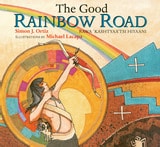
The Good Rainbow Road
Simon J. Ortiz; Illustrations by Michael Lacapa
University of Arizona Press, 2004
Their village is called Haapaahnitse, Oak Place, and it lies at the foot of a mountain. Once there was a lake and a stream nearby, but they have dried up. Once rain and snow came, but no more. Not only did the crops wither and die, even the hardy oak trees have become brittle sticks. The land has become barren and dry.
Two brothers, Tsaiyah-dzehshi, whose name means First One, and Hamahshu-dzehshi, Next One, are chosen for an important mission. They are sent on a westward trek to the home of the Shiwana, the Rain and Snow Spirits, to ask them to bring the gift of water to the village again. The brothers cross deserts and mountains on an arduous journey until they are finally stopped short by a treacherous canyon filled with molten lava.
The Good Rainbow Road tells how the brothers overcome this last challenge and continue on to their destination. Written in the tradition of Native American oral storytelling and accompanied by colorful illustrations from celebrated Native artist Michael Lacapa, it brings the powers of language, memory, and imagery to a tale that will captivate children ages seven and up.
As Simon Ortiz writes, "The Good Rainbow Road is located in the Native American world, but it is not limited to that world. Even considering humankind's many ethnic and racial differences, we are all part of each other as people and the rest of all Creation, and our stories join us together." This is the foundation of The Good Rainbow Road, and on that road young readers will broaden their understanding of humanity's common bonds.
The Good Rainbow Road is presented in Keres, the language of Acoma Pueblo and six other Pueblo communities in New Mexico, and in English, with an additional Spanish translation in the back of the book.

The Intimacy Trials
Aja Couchois Duncan
University of Chicago Press, 2026
Aja Couchois Duncan’s third book of poetry, The Intimacy Trials, explores cycles of violence, loss, and love that arc across history. Composed of intersecting narratives, this collection follows a post-apocalyptic collective of survivors living in a state of gratitude, shame, and awe amid desecrated ecosystems. The present tense of The Intimacy Trials carries the magnitude of a historic past tense filled with land theft, genocide, settler colonialism, and the vicissitudes of romantic love. Couchois Duncan’s lyrical, concomitant stories produce a space that holds in balance the complexities of life—joy, despair, intimacy, and irreconcilable grief.
In language that is prophetic, lush, and unequivocal, The Intimacy Trials is a loving accountability letter to our past, present, and future selves, holding both our yearning for connection and the remembrance of what has driven us apart.
The Island of Lost Luggage
Janet McAdams
University of Arizona Press, 2000
the disappeared, the lost children, the Earharts
of modern life. It's your bad luck to die in the cold
wars of certain nations. But in the line at Unclaimed
Baggage, no one mourns for the sorry world
that sent them here . . ."
The abused. The oppressed. The terrified victims of institutionalized insanity. Making daring connections between the personal and the political, Janet McAdams draws new lines in the conflict between the new and old worlds as she redefines the struggle to remain human.
This award-winning collection of poetry forges surprising links among seemingly unrelated forms of violence and resistance in today's world: war in Central America, abuses against Nature, the battleground of the bedroom. McAdams evokes the absurdity of everyday existence as she sends out a new call for social responsibility.
The Island of Lost Luggage is the poetry winner of the 1999 First Book Awards competition of the Native Writers' Circle of the Americas.
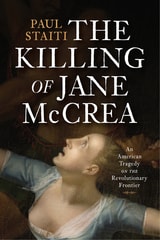
The Killing of Jane McCrea
An American Tragedy on the Revolutionary FrontierPaul Staiti
Westholme Publishing, 2027
FINALIST FOR THE 2026 GEORGE WASHINGTON PRIZE
Winner of the 2026 Book of the Year Award, George Washington American Revolution Round Table, Washington, DC
The killing of Jane McCrea on July 26, 1777, on the outskirts of a village in the northern Hudson Valley, would unexpectedly rupture the British advance from Canada that was meant to crush the American Revolution in one knockout blow. On that day, twenty-five-year-old McCrea, an unremarkable person preparing for an impending marriage, was assaulted, scalped, and killed by a group of Native Americans in the employ of British general John Burgoyne. Though the murder was but one of many civilian deaths in a fierce war zone, McCrea’s killing had far-reaching consequences for each of the three major parties involved in the Northern Campaign of 1777. In America, she became the great cause célèbre of the Revolution, the sympathetic female victim of the war symbolizing the righteousness of The Cause. In Britain, she was a human-rights tragedy that tarnished the polished surface of British honor and galvanized Whig politicians who shouted out her name in Parliament as an example of how low the nation had fallen. For Native peoples, recruited by both the British and the Americans, and caught in the middle of a war staged on ancestral grounds, McCrea’s killing was the opening salvo in a vicious chain of bloody retribution that led to the disintegration of the venerable Iroquois Confederacy and the obliteration of Native homelands. After the war, the nightmarish image of a young Jane McCrea slaughtered on the New York frontier would obsess white Americans who came to fear Native peoples as irredeemable savages. Her murder would help justify the expulsion of Indigenous tribes and open the doors for an expansionary United States that was fully intent on transforming the American continent into its own image.
The Killing of Jane McCrea: An American Tragedy on the Revolutionary Frontier by distinguished historian Paul Staiti undertakes for the first time a comprehensive investigation into McCrea’s life, death, and especially her long and strange afterlife. Using both visual arts and written records, the author reassembles the scattered fragments to illuminate a historical terrain long since shrouded in misinformation, mired in controversy, and relegated to mythology. Coming into view is a major portrait of the persons, cultures, actions, and motives that fatally converged on that hot July morning in 1777.
The Memoire Justificatif of Chevalier Monberaut
Indian Diplomacy in British West Florida, 1763-1765Montault Monberaut
University of Alabama Press, 1965
A rare primary-source account of Indigenous diplomacy and imperial transition in British West Florida, 1763–1765.
Historians of the Gulf Coast have long delighted in the romance of Spanish discovery and French settlement. The period of British occupation was relatively brief, fruitless, and prosaic, if we are to believe the older authorities. Today the availability of materials which were closed to an earlier generation enables us to re-create the story of British West Florida in terms more precise, with details more personal, and with no less dramatic coloration than has long been given-with less accuracy-to the earlier epochs.
In The Memoire Justificatif of Chevalier Monberaut, the translators have undertaken the resurrection of one of those gallant Frenchmen of the ancient regime who remained behind to serve the new Anglo-Saxon masters of West Florida. The Chevalier Montault de Monberaut is not unknown to historians of the colonial scene, but he has never enjoyed a full portrayal of his contribution nor a balanced evaluation of his role. By concentrating our attention upon the man as well as his milieu, we have been able to present in greater detail than before the circumstances and procedure of Indian diplomacy on the Gulf Coast at the beginning of the British period. By placing Monberaut against the backdrop of British colonial government and its problems, we have replaced some of the romantic fallacies with historic realities. The resulting clarity adds to the picture's significance and appeal.
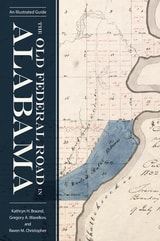
The Old Federal Road in Alabama
An Illustrated GuideKathryn H. Braund, Gregory A. Waselkov, and Raven M. Christopher
University of Alabama Press, 2019
A concise illustrated guidebook for those wishing to explore and know more about the storied gateway that made possible Alabama's development.
Forged through the territory of the Creek Nation by the United States federal government, the Federal Road was developed as a communication artery linking the east coast of the United States with Louisiana. Its creation amplified already tense relationships between the government, settlers, and the Creek Nation, culminating in the devastating Creek War of 1813–1814, and thereafter it became the primary avenue of immigration for thousands of Alabama settlers.
Central to understanding Alabama’s territorial and early statehood years, the Federal Road was both a physical and symbolic thoroughfare that cut a swath of shattering change through the land and cultures it traversed. The road revolutionized Alabama’s expansion, altering the course of its development by playing a significant role in sparking a cataclysmic war, facilitating unprecedented American immigration, and enabling an associated radical transformation of the land itself.
The first half of The Old Federal Road in Alabama: An Illustrated Guide offers a narrative history that includes brief accounts of the construction of the road, the experiences of historic travelers, and descriptions of major changes to the road over time. The authors vividly reconstruct the course of the road in detail and make use of a wealth of well-chosen illustrations. Along the way they give attention to the very terrain it traversed, bringing to life what traveling the road must have been like and illuminating its story in a way few others have ever attempted.
The second half of the volume is divided into three parts—Eastern, Central, and Southern—and serves as a modern traveler’s guide to the Federal Road. This section includes driving tours and maps, highlighting historical sites and surviving portions of the old road and how to visit them.
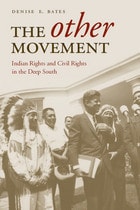
The Other Movement
Indian Rights and Civil Rights in the Deep SouthDenise E. Bates
University of Alabama Press, 2022
Examines the most visible outcome of the Southern Indian Rights Movement: state Indian affairs commissions
In recalling political activism in the post-World War II South, rarely does one consider the political activities of American Indians as they responded to desegregation, the passing of the Civil Rights Acts, and the restructuring of the American political party system. Native leaders and activists across the South created a social and political movement all their own, which drew public attention to the problems of discrimination, poverty, unemployment, low educational attainment, and poor living conditions in tribal communities.
While tribal-state relationships have historically been characterized as tense, most southern tribes—particularly non-federally recognized ones—found that Indian affairs commissions offered them a unique position in which to negotiate power. Although individual tribal leaders experienced isolated victories and generated some support through the 1950s and 1960s, the creation of the inter-tribal state commissions in the 1970s and 1980s elevated the movement to a more prominent political level. Through the formalization of tribal-state relationships, Indian communities forged strong networks with local, state, and national agencies while advocating for cultural preservation and revitalization, economic development, and the implementation of community services.
This book looks specifically at Alabama and Louisiana, places of intensive political activity during the civil rights era and increasing Indian visibility and tribal reorganization in the decades that followed. Between 1960 and 1990, U.S. census records show that Alabama’s Indian population swelled by a factor of twelve and Louisiana’s by a factor of five. Thus, in addition to serving as excellent examples of the national trend of a rising Indian population, the two states make interesting case studies because their Indian commissions brought formerly disconnected groups, each with different goals and needs, together for the first time, creating an assortment of alliances and divisions.
The Reminiscences of George Strother Gaines
Pioneer and Statesman of Early Alabama and Mississippi, 1805–1843George Strother Gaines
University of Alabama Press, 1998
One man’s remarkable account of nation‑building, Native diplomacy, and the making of the early American South.
The Reminiscences of George Strother Gaines: Pioneer and Statesman of Early Alabama and Mississippi, 1805–1843 offers one of the most vivid, irreplaceable firsthand accounts of the American Southeast during its most transformative decades. Edited and expertly contextualized by historian James P. Pate, this volume gathers Gaines’s dictated memoirs, rare letters, early newspaper publications, oral-history interviews, and extensive editorial notes to illuminate a world on the cusp of monumental change.
George Strother Gaines was no ordinary frontier figure. Trusted by U.S. officials and Choctaw leaders alike, he played central roles as federal factor at the Choctaw Trading House, a key intermediary during treaty negotiations, a primary organizer of the first Choctaw removal, a banker and state senator in newly formed Alabama, and later a driving force behind the Mobile & Ohio Railroad. His reminiscences reveal intimate knowledge of the region’s political development, frontier economy, Native diplomacy, and daily life. They are written in a strikingly elegant “Addisonian” style praised even in his own lifetime.
This edition’s special features—including detailed maps, illustrations, genealogical material, and a robust scholarly introduction—make it the most comprehensive and authoritative presentation of Gaines’s writings ever published. It not only preserves his voice but situates him within the broader historical forces reshaping the Gulf South and Native nations in the nineteenth century.
Ideal readers include:
• Historians of Alabama, Mississippi, and the early American South
• Scholars of Native American and Choctaw/Chickasaw history
• Readers of frontier, antebellum, or political history
• Genealogists and local-history enthusiasts
• Anyone seeking an engaging, elegantly written window into the early Southeast
This is a foundational text for understanding the region’s past—and a compelling story told by one of its most influential witnesses.
The Secret Powers of Naming
Sara Littlecrow-Russell; Introduction by Joy Harjo
University of Arizona Press, 2006
As Littlecrow-Russell explores how names imposed by outsiders both collide and merge with the identities that Natives create for themselves, these poems decisively counter the images of Indians as colorful dancers, stoic saints, and defeated warriors. These verses are not constructed of beautiful images, nor are they stories of redemption. Instead, Littlecrow-Russell offers stark and honest witness to urban and reservation life at the beginning of the twenty-first century. In short snaps of honed lyric and voice, she tackles topics ranging from family, love, and spirituality, to welfare, addiction, and the thorny politics of tribal identity. Her work displays tremendous bitterness and anger, but there is also dignity, humor, and plenty of irony.
Candid and compelling, this collection brings fluent verse and human face to the commonly misrepresented experiences of Native Americans.
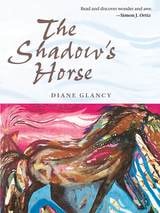
The Shadow’s Horse
Diane Glancy
University of Arizona Press, 2003
The Shadow's Horse is a new collection of poems in which Glancy walks the margin between her white and Indian heritage. In poems that conjure the persistence of fallen leaves or juxtapose images of Christ and the stockyards, she powerfully evokes place and spirit to address with intelligence and beauty issues of family, work, and faith.
In some of these poems Glancy recalls growing up with her Cherokee father, who worked in a stockyard, radically applying Christian theology to the slaughter of non-human creatures: The cattle go up the ramp
dragging their crosses.
Their voices are Gregorian chants
rising to the blue sky,
the cold clouds.
In others she examines the walk of history through the ordinary details of life-history seen from two points of view, early Euro-American and contemporary Native American. She sees her Native heritage as shortlived and fragile, yet as enduring as leaves, and she asks, "If you line up all the leaves that fall / how many times will they go around the earth?"
Writing in a cross-boundaried, fragmented voice—a voice based on the memory of the way language sounded when it was stretched across the cultures or walked in both worlds—Glancy has fashioned a book about speaking oneself into existence. The Shadow's Horse is the story of one culture made to sing the song of another until the Native voice is so erased it is nearly an illusion. Yet as readers of these poems will discover, the shadow of the past is as real as the horse it rides.
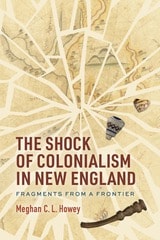
The Shock of Colonialism in New England
Fragments from a FrontierMeghan C. L. Howey
University of Alabama Press, 2025
Explores the untold impacts of colonialism in New England through diverse colonist lives, Indigenous encounters, and environmental legacies.
In The Shock of Colonialism in New England, archaeologist Meghan C. L. Howey uses excavations in the seventeenth-century colonial frontier of the Great Bay Estuary/P8bagok in today’s New Hampshire to trace the connection between European global colonialism and the planetary climate crises. Howey shows how this landscape holds forgotten stories of what it meant to live through the shock of colonialism.
These stories reveal an unexpected diversity and dynamism among English colonists, multifaceted encounters with Indigenous peoples, and lasting environmental damage from labor-intensive industries. Early Euro-American maps and stunning archaeological finds, such as a broken pickaxe embedded in a hearth, and a historical marker for the Oyster River “Massacre” of 1694 complicate our limited views of a shared past.
The reality of English colonialism in the dispossession of Indigenous lands and its wake is not commemorated. Howey’s work is a powerful corrective that traces the rise of intergenerational colonial wealth made possible by land commodified as property, the increased labor required to work newly opened land, the importation of indentured Scots and enslaved Africans to provide that labor, and the resulting degradation of the natural environment. Through Howey’s insights into the stories they tell, these fragments from a frontier can help contemporary readers better understand the past as they seek a more just and sustainable future.
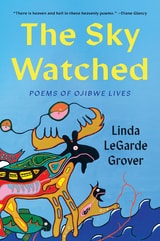
The Sky Watched
Poems of Ojibwe LivesLinda LeGarde Grover
University of Minnesota Press, 2022
A collective memoir in poetry of an Ojibwe family and tribal community, from creation myth to this day, updated with new poems
Reaching from the moment of creation to the cry of a newborn, The Sky Watched gives poetic voice to Ojibwe family life. In English and Ojibwe, those assembled here—voices of history, of memory and experience, of children and elders, Indian boarding school students, tribal storytellers, and the Manidoog, the unseen beings who surround our lives—come together to create a collective memoir in poetry as expansive and particular as the starry sky.
This world unfolds in the manner of traditional Ojibwe storytelling, shaped by the seasons and the stages of life, marking the significance of the number four in the Ojibwe worldview. Summoning spiritual and natural lore, award-winning poet and scholar Linda LeGarde Grover follows the story of a family, a tribe, and a people through historical ruptures and through intimate troubles and joys—from the sundering of Ojibwe people from their land and culture to singular horrors like the massacre at Wounded Knee to personal trauma suffered at Indian boarding schools. Threaded throughout are the tribal traditions and knowledge that sustain a family and a people through hardship and turmoil, passed from generation to generation, coming together in the manifold power and beauty of the poet’s voice.
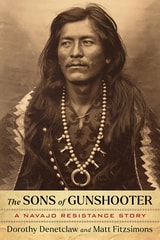
The Sons of Gunshooter
A Navajo Resistance StoryDorothy Denetclaw and Matt Fitzsimons
University of Arizona Press, 2026
In 1919, the brother of one of the West’s most famous Indian traders was shot to death in a remote corner of the Navajo Nation.
Part history, part true crime, The Sons of Gunshooter reexamines the killing and subsequent murder trial, while simultaneously embedding the story in a much larger saga of colonization and resistance. The result is a book that’s sweeping in its scope and surgical in its approach. Rewinding the clock to 1868, the authors follow the intertwining paths of two families to offer a riveting, deeply personal account that has been hailed as “a new way of doing historiography.”
One of the authors is a descendant of participants in the case; the other is an investigative journalist. By merging Diné oral traditions with archival evidence, they succeed in upending one false narrative after another.

The Sound of Thinking
A Listener's Companion to Conceptual MusicCraig Dworkin
University of Chicago Press, 2026
An artist draws two octaves of pitches randomly from a hat, just enough to set each syllable of the dictionary definition of imprimer (to score, to print). Trawling the internet for cute videos of cats “playing” piano, an artist splices together a complete, note-perfect performance of Arnold Schoenberg’s Opus 11. Half a century after the release of Miles Davis’s album Kind of Blue, a jazz quintet spends months of focused practice to reproduce the original exactly. These performances share a common denominator: absolute fidelity to the outcome of a system. From Marcel Duchamp to Yoko Ono, Steve Reich to Sun Ra, The Sound of Thinking brings together a diverse array of musical or sonic works that are algorithmic, automatic, permutational, procedural, or otherwise structured in contrast to the creative expressivity typically associated with artistic production.
In twenty-six short essays, each keyed to a term that begins with a different letter of the alphabet, Dworkin discusses work composed or performed according to a predetermined rule, transforming artistic creation into a system running its course. The pieces detailed here, drawn from more than a century of musical experimentation, offer a fresh perspective on the history of innovative music by decoupling music from expression and by shunting creativity from the level of organizing sounds to the level of devising a system that can do the organizing. Not only does this book spotlight the critical role of music in twentieth-century conceptual art, but it also identifies previously overlooked links among diverse artists and movements.

The Strings Are Lightning and Hold You In
Chee Brossy
Tupelo Press, 2022
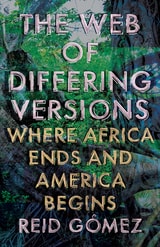
The Web of Differing Versions
Where Africa Ends and America BeginsReid Gómez
University of Minnesota Press, 2026
A visionary reckoning with prophecy, possession, and the grammar of liberation
A bold, experimental intervention in literary and theoretical discourse of colonialism and diaspora, The Web of Differing Versions engages with Leslie Marmon Silko’s 1991 Almanac of the Dead as literature, prophecy, and philosophy. Reid Gómez makes “The Indian Connection” that Silko prophesizes—Land Back!—and offers a prescient response to Silko’s enduring question: who has spiritual possession of the Américas?
Realizing the great capacity of Black and Native studies, Gómez crafts a visionary mode of scholarship that resists acknowledging conceptual, political, spiritual, formal, or linguistic borders. Rather than comparing or separating, she demonstrates how to stop telling things apart: Black|Indian, slavery|colonization, and writing|translation. Gómez shifts focus from racialized identities to the prophesied world itself, working with music, literature, and language to elaborate the connections that exist between racialized bodies, land, and sea as she emphasizes the ubiquity of escape, revolt, and beauty/hózhǫ́.
A theoretical composition, this book enacts a practice of re-visioning that uses Silko’s Almanac to challenge the limits of thought, language, and the very idea of scholarship. Attending the multiplicity of time into times, past into pasts, future into futures, The Web of Differing Versions offers a new grammar for a shared and violent world.
Retail e-book files for this title are screen-reader friendly.
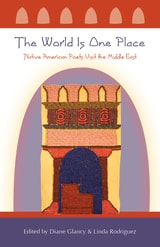
The World Is One Place
Native American Poets Visit the Middle EastDiane Glancy
BkMk Press, 2017
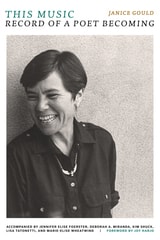
This Music
Record of a Poet BecomingJanice Gould; Edited by Jennifer Elise Foerster, Deborah A. Miranda, Kim Shuck, Lisa Tatonetti, and Marie-Elise Wheatwind; Foreword by Joy Harjo
University of Arizona Press, 2026
This Music is the final, intimate work of celebrated Koyoonk’auwi (Concow) poet and essayist Janice Gould, completed posthumously by a collective of close friends and literary scholars.
Told through lyrical prose poems and personal photographs, this memoir traces Gould’s life as a queer/Two-Spirit California Native coming of age in the late 1960s, navigating family, identity, activism, and art. With reflections on her mixed-blood heritage, her experiences in lesbian feminist circles, and her journey as a poet and musician, Gould’s voice resonates with clarity, tenderness, and fierce honesty.
The book opens with a foreword by Joy Harjo and an introduction from the editorial collective, including an essay by Gould’s spouse, Marie-Elise Wheatwind, framing the memoir as both a literary achievement and a loving tribute.
This Music is a vital contribution to Indigenous and LGBTQ+ literatures, offering readers a rare and powerful account of gender, sexuality, and Native identity in mid-century and contemporary America. As the one hundredth volume in the Sun Tracks series, this work honors Gould’s legacy while expanding the canon of poetic memoir. Ideal for readers of poetry, memoir, and Indigenous literature, this book will resonate deeply with scholars, students, and anyone drawn to stories of resilience, creativity, and the enduring power of memory.
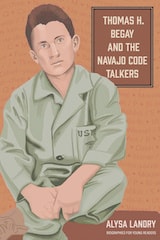
Thomas H. Begay and the Navajo Code Talkers
Alysa Landry
Ohio University Press, 2023

To Think of a Match
PoemsHalee Kirkwood
Northwestern University Press, 2027
A gripping oscillation between the manufactured and the natural, between capitalism and truth
To Think of a Match is a collection of daydreams from behind the eyes of retail clerks, corporate mascots, ghosts of 49ers, and sundry others. Situated in Minnesota’s Twin Cities, home of the Mall of America and the glistening Bde Maka Ska, these poems explore the intimate collisions of class and labor, spiraling out from the recent history of the Gold Rush and into the near future of asteroid mineral mining and beyond. Halee Kirkwood searches for possibilities of a postcapitalist future in our most squirmy, slimy, and wriggly forms of earthly life. What can invertebrates teach us about the ways humanity organizes labor, creativity, and community? What does it mean to have a body caught between economies and ecologies? Contending with subjects ranging from Sappho to Petco and envisioning a new pastoral that is honest about the human and nonhuman domains we are building today, To Think of a Match yearns for a poetics that thrives between shifts.
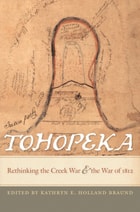
Tohopeka
Rethinking the Creek War and the War of 1812Edited by Kathryn E. Holland Braund
University of Alabama Press, 2012
Reexamining the Creek War, the War of 1812, and the Making of the American South.
Tohopeka contains a variety of perspectives and uses a wide array of evidence and approaches, from scrutiny of cultural and religious practices to literary and linguistic analysis, to illuminate this troubled period. Almost two hundred years ago, the territory that would become Alabama was both ancient homeland and new frontier where a complex network of allegiances and agendas was playing out. The fabric of that network stretched and frayed as the Creek Civil War of 1813-14 pitted a faction of the Creek nation known as Red Sticks against those Creeks who supported the Creek National Council. The war began in July 1813, when Red Stick rebels were attacked near Burnt Corn Creek by Mississippi militia and settlers from the Tensaw area in a vain attempt to keep the Red Sticks’ ammunition from reaching the main body of disaffected warriors. A retaliatory strike against a fortified settlement owned by Samuel Mims, now called Fort Mims, was a Red Stick victory. The brutality of the assault, in which 250 people were killed, outraged the American public and “Remember Fort Mims” became a national rallying cry.
During the American-British War of 1812, Americans quickly joined the war against the Red Sticks, turning the civil war into a military campaign designed to destroy Creek power. The battles of the Red Sticks have become part of Alabama and American legend and include the famous Canoe Fight, the Battle of Holy Ground, and most significantly, the Battle of Tohopeka (also known as Horseshoe Bend)—the final great battle of the war. There, an American army crushed Creek resistance and made a national hero of Andrew Jackson.
New attention to material culture and documentary and archaeological records fills in details, adds new information, and helps disabuse the reader of outdated interpretations.
Contributors
Susan M. Abram / Kathryn E. Holland Braund/Robert P. Collins / Gregory Evans Dowd / John E. Grenier / David S. Heidler / Jeanne T. Heidler / Ted Isham / Ove Jensen / Jay Lamar / Tom Kanon / Marianne Mills / James W. Parker / Craig T. Sheldon Jr. / Robert G. Thrower / Gregory A. Waselkov
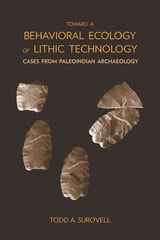
Toward a Behavioral Ecology of Lithic Technology
Cases from Paleoindian ArchaeologyTodd A. Surovell
University of Arizona Press, 2009
Because the fundamental processes of making, using, and discarding stone tools are, at root, exercises in problem solving, Todd Surovell asks what conditions favor certain technological solutions. Whether asking if a biface should be made thick or thin or if a flake should be saved or discarded, Surovell seeks answers that extend beyond a case-by-case analysis. One avenue for addressing these questions theoretically is formal mathematical modeling.
Here Surovell constructs a series of models designed to link environmental variability to human decision making as it pertains to lithic technology. To test the models, Surovell uses data from the analysis of more than 40,000 artifacts from five Rocky Mountain and Northern Plains Folsom and Goshen complex archaeological sites dating to the Younger Dryas stadial (ca. 12,600-11,500 years BP). The primary result is the production of powerful new analytical tools useful to the interpretation of archaeological assemblages.
Surovell's goal is to promote modeling and explore the general issues governing technological decisions. In this light, his models can be applied to any context in which stone tools are made and used.
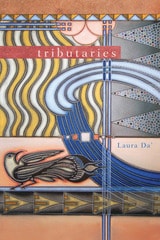
Tributaries
Laura Da'
University of Arizona Press, 2015
Precise images open to piercing meditations of Shawnee history. In the present, a woman watches the approximation of a scalping at a theatrical presentation. Da’ writes, “Soak a toupee with cherry Kool-Aid and mineral oil. / Crack the egg onto the actor’s head. / Red matter will slide down the crown / and egg shell will mimic shards of skull.” This vivid image is paired with a description of the traditional removal path of her own Shawnee ancestors through small towns in Ohio.
These poems range from the Midwestern landscapes of Ohio and Oklahoma to the Pacific Northwest, and the importance of place is apparent. Tributaries simultaneously offers us an extended narrative rumination on the impact of Indian policy and speaks to the contemporary experiences of parenthood and the role of education in passing knowledge from one generation to the next. This collection is composed of four sections that come together to create an important new telling of Shawnee past and present.
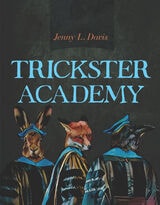
Trickster Academy
Jenny L. Davis
University of Arizona Press, 2022
Trickster Academy is a collection of poems that explore being Native in Academia—from land acknowledgement statements, to mascots, to the histories of using Native American remains in anthropology. Jenny L. Davis’ collection brings humor and uncomfortable realities together in order to challenge the academy and discuss the experience of being Indigenous in university classrooms and campuses. Organized around the premise of the Trickster Academy— a university space run by, and meant for training, Tricksters— this collection moves between the personal dynamics of a Two-Spirit/queer Indigenous woman in spaces where there are few, if any, others and a Trickster’s critique of those same spaces.
Trickster Academy is playful at times, yet more complicated and salient issues are at the heart of these poems. Davis’ Trickster Academy deeply challenges the institutions that still hold Indigenous remains in their archives and storage rooms, and the insincerities of the academy when it comes to acknowledging Indigenous peoples. The realities that the poems in Trickster Academy address are not only relevant to people in academic positions. From leaving home, to being the only Indian in the room, to having to deal with the constant pressures to being a ‘real Indian’, these poems illuminate the shared experiences of Indians across many regions, and all of us who live amongst Tricksters.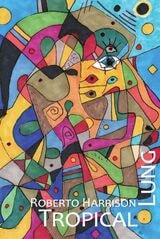
Tropical Lung
exi(s)t(s)Roberto Harrison
Omnidawn, 2021
Tropical Lung shows how apocalypses can give us the keys to new futures and how aloneness and silence can lead us to live multidimensionally, beyond the boundaries of time and space. The screen makes itself known and offers a means of kinship, but it is also removed by song and born in the red of encounter and the dark of seven pupils. These wild visions coalesce into a fantastic vision of a future both technological and communal.

Tséyi' / Deep in the Rock
Reflections on Canyon de ChellyText by Laura Tohe; photographs by Stephen E. Strom
University of Arizona Press, 2005
Diné poet Laura Tohe draws deeply on her heritage to create lyrical writings that are rooted in the canyon but universal in spirit, while photographer Stephen Strom captures images that reveal the very soul of this ancient place. Tohe’s words take readers on a journey from the canyon rim down sheer sandstone walls to its rich bottomlands; from the memory of Kit Carson’s rifle shots and the forced march of the Navajo people to the longings of modern lovers. Her poems view the land through Diné eyes, blending history, tradition, and personal reflection while remaining grounded in Strom’s delicate yet striking images. These photographs are not typical of most southwestern landscapes. Strom’s eye for the subtleties and mysticism of the canyon creates powerful images that linger in the mind long after the pages are turned, compelling us to look at the earth in new ways.
Tséyi' / Deep in the Rock is a unique evocation of Canyon de Chelly and the people whose lives and spirits are connected to it. It is a collaboration that conjures the power of stories and images, inviting us to enter a world of harmony and be touched by its singularly haunting beauty.