Cloth: 978-0-8173-2288-5 | Paper: 978-0-8173-6299-7 | eISBN: 978-0-8173-9637-4
Reexamines the contested geopolitical landscape of the lower Mississippi River Valley in 1740s, centering Choctaw perspectives
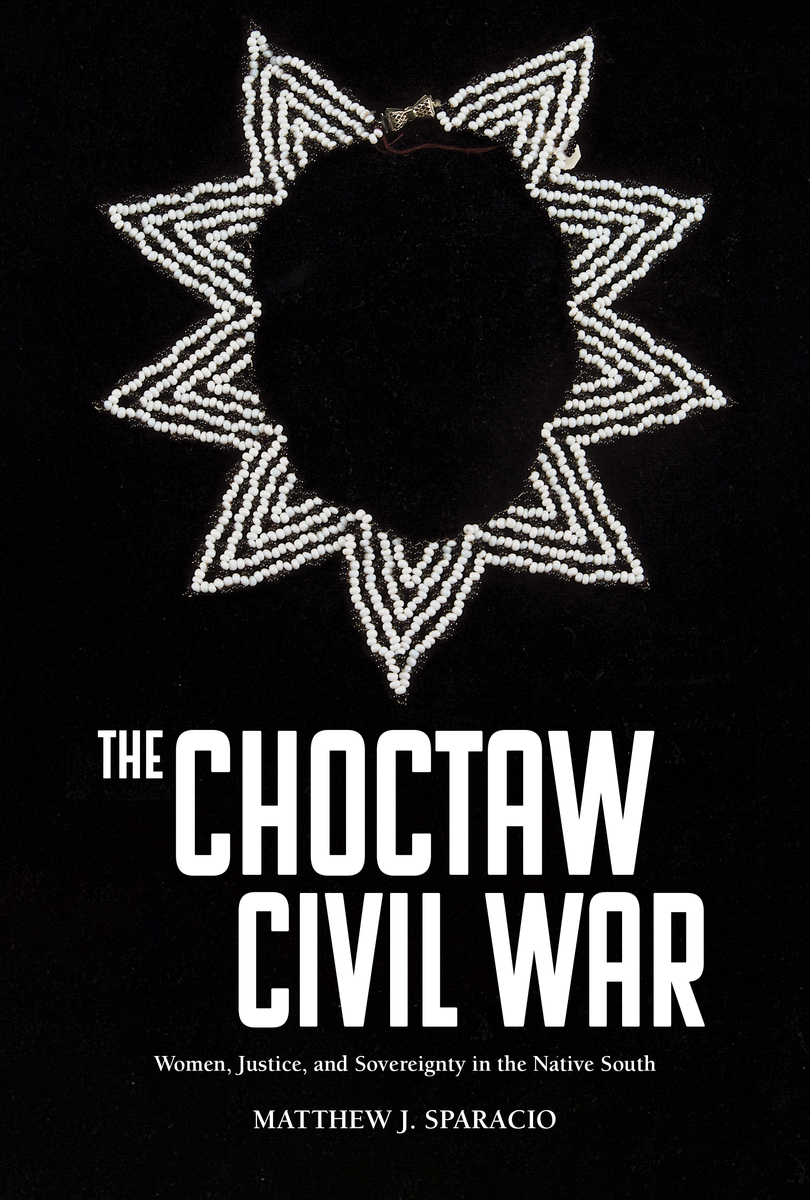
Matthew J. Sparacio’s comprehensive history, The Choctaw Civil War: Women, Justice, and Sovereignty in the Native South, delivers a rich portrait of eighteenth-century Choctaw life and recasts the Native South as a region shaped by Choctaw decisions.
In the 1730s and 1740s, the Choctaw Nation leveraged competing European imperial agendas while establishing reciprocal diplomatic ties with other tribes, including their neighboring “brothers,” the Chickasaws. Choctaws drew strength from their multifaceted understanding of sovereignty: connections to land, contributions to society through work, generosity, respect, kinship obligations, and justice. A series of attacks on Choctaw women, however, tested the limits of justice and obligation within and between Choctaw communities. Mounting pressures from both Louisiana and South Carolina added to this factionalism, ultimately leading to civil war.
Relying on Chahta anumpa (“Choctaw language”) training and tribal histories, gender theory, and ethnohistorical methods, Sparacio highlights women’s contributions to Choctaw society and governance. Intense eighteenth-century debates over justice, kinship, and responsibility created several Choctaw movements for justice that still inspire efforts in Oklahoma and Mississippi to end the Missing and Murdered Indigenous Persons’ crisis. Tribal and bodily sovereignty shaped the Native South and will shape its future.
The Choctaw Civil War is a major reinterpretation of Choctaw history and the colonial South. This will be a must-read for historians, scholars of the Native South, and anyone interested in sovereignty movements today.
See other books on: 18th Century | Civil Wars | Justice | Native American | Sovereignty
See other titles from University of Alabama Press