Results by title
129 books match the query 'Natural resources' and 20 start with t
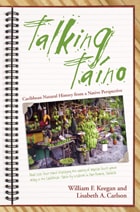
Talking Taino
Caribbean Natural History from a Native PerspectiveWilliam F. Keegan and Lisabeth A. Carlson
University of Alabama Press, 2008
Keegan and Carlson, combined, have spent over 45 years conducting archaeological research in the Caribbean, directing projects in Trinidad, Grenada, St. Lucia, Puerto Rico, the Dominican Republic, Haiti, Cuba, Jamaica, Grand Cayman, the Turks & Caicos Islands, and throughout the Bahamas. Walking hundreds of miles of beaches, working without shade in the Caribbean sun, diving in refreshing and pristine waters, and studying the people and natural environment around them has given them insights into the lifeways of the people who lived in the Caribbean before the arrival of Christopher Columbus. Sadly, harsh treatment extinguished the culture that we today call Taíno or Arawak.
In an effort to repay their debt to the past and the present, the authors have focused on the relationship between the Taínos of the past (revealed through archaeological investigations) and the present natural history of the islands. Bringing the past to life and highlighting commonalities between past and present, they emphasize Taíno words and beliefs about their worldview and culture.
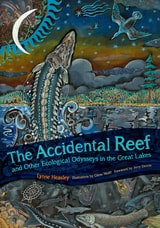
The Accidental Reef and Other Ecological Odysseys in the Great Lakes
Lynne Heasley
Michigan State University Press, 2022
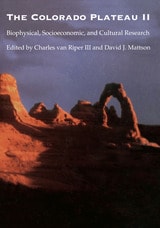
The Colorado Plateau II
Biophysical, Socioeconomic, and Cultural ResearchEdited by Charles van Riper III and David J. Mattson
University of Arizona Press, 2005
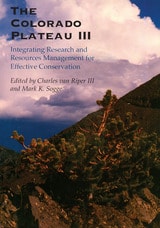
The Colorado Plateau III
Integrating Research and Resources Management for Effective ConservationEdited by Charles van Riper III and Mark K. Sogge
University of Arizona Press, 2008
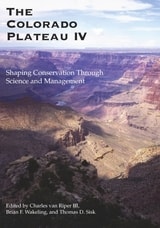
The Colorado Plateau IV
Shaping Conservation Through Science and ManagementCharles van Riper
University of Arizona Press, 2010
This book focuses on the integration of science and resource management issues in this unique and highly varied environment. Broken into three subsections, this volume addresses conservation biology, biophysical resources, and inventory and monitoring concerns. The chapters range in content, addressing conservation issues—past, present, and future—on the Colorado Plateau, measurement of human impacts on resources, grazing and wildland-urban interfaces, and tools and methods for monitoring habitats and species.
An informative read for people interested in the conservation and natural history of the region, the book will also serve as a valuable reference for those people engaged in the management of cultural and biological resources of the Colorado Plateau, as well as scientists interested in methods and tools for land and resource management throughout the West.
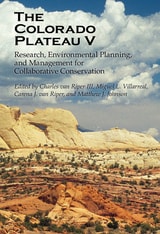
The Colorado Plateau V
Research, Environmental Planning, and Management for Collaborative ConservationEdited by Charles van Riper III, Miguel L. Villarreal, Carena J. van Riper, and Matthew J. Johnson
University of Arizona Press, 2012
This volume, the fifth from the University of Arizona Press and the tenth overall, focuses on adaptation of resource management and conservation to climate change and water scarcity, protecting biodiversity through restructured energy policies, ensuring wildlife habitat connectivity across barriers, building effective conservation networks, and exploring new opportunities for education and leadership in conservation science.
An informative read for people interested in the conservation and natural history of the region, the book will also serve as a valuable reference for those people engaged in the management of cultural and biological resources of the Colorado Plateau, as well as scientists interested in methods and tools for land and resource management throughout the West.
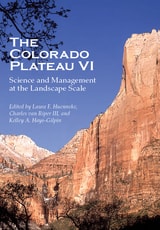
The Colorado Plateau VI
Science and Management at the Landscape ScaleEdited by Laura Foster Huenneke, Charles van Riper, and Kelley Ann Hays-Gilpin
University of Arizona Press, 2015
The Colorado Plateau VI’s contributors show how new technologies for monitoring, spatial analysis, restoration, and collaboration improve our understanding, management, and conservation of outcomes at the appropriate landscape scale for the Colorado Plateau. The volume’s chapters fall into five major themes: monitoring as a key tool for addressing management challenges, restoration approaches to improving ecosystem condition and function, collaboration and organizational innovations to achieve conservation and management objectives, landscape-scale approaches to understanding, and managing key species and ecological communities.
Focusing on the integration of science into resource management issues over the Colorado Plateau, this volume includes contributions from dozens of leading scholars of the region. The Colorado Plateau VI proves a valuable resource to all interested in the conservation management, natural history, and cultural biological resources of the Colorado Plateau.
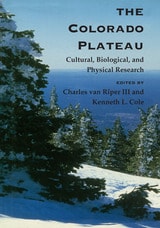
The Colorado Plateau
Cultural, Biological, and Physical ResearchCharles van Riper
University of Arizona Press, 2004
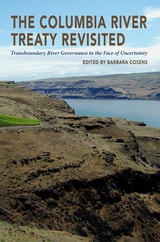
The Columbia River Treaty Revisited
Transboundary River Governance in the Face of UncertaintyEdited by Barbara Cosens
Oregon State University Press, 2012
The Columbia River Treaty Revisited, with contributions from historians, geographers, environmental scientists, and other experts, is intended to facilitate conversation about the impending expiration. It allows the reader, through the close inspection of the Columbia River Basin, to better grasp the uncertainty of water governance. It aids efforts, already underway, to understand changes in the basin since the treaty was passed, to predict future changes, and to determine whether alteration of the treaty is ultimately advisable.
The Columbia River Treaty Revisited will appeal to those interested in water basin management–scholars, stakeholders, and residents of the Columbia River basin alike.
A Project of the Universities Consoritum on Columbia River Governance
The Universities Consortium on Columbia River Governance, with representatives from universities in the U.S. and Canada, formed to offer a nonpartisan platform to facilitate an informed, inclusive, international dialogue among key decision-makers and other interested people and organizations; to connect university research to problems faced within the basin; and to expose students to a complex water resources problem. The Consortium organized the symposium on which this volume is based.
The Earth
Natural Resources and Human InterventionFriedrich Schmidt-Bleek
Haus Publishing, 2009
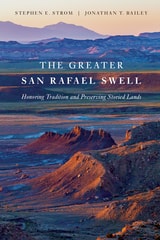
The Greater San Rafael Swell
Honoring Tradition and Preserving Storied LandsStephen E. Strom and Jonathan T. Bailey
University of Arizona Press, 2022
Natural and human history come together in The Greater San Rafael Swell, which spans much of Emery County in Utah. Authors Stephen Strom and Jonathan Bailey paint a multi-faceted picture of a singular place through photographs, along with descriptions of geology, paleontology, archaeology, history, and dozens of interviews with individuals who devoted more than two decades to developing a shared vision of the future of both the Swell and the County. At its core, the book relates the important story of how a coalition of ranchers, miners, off-road enthusiasts, conservationists, recreationists, and Native American tribal nations worked together for nearly 25 years to forge and pass the Emery County Public Lands Management Act in 2019.
This book chronicles hopeful stories for our times: how citizens of Emery and three other counties in the rural West worked to resolve perhaps the most volatile issue in the region – the future of public lands. Both their successes and the processes by which they found common ground serve as beacons in today’s uncertain landscape – beacons that can illuminate paths toward rebuilding our shared democracy from the ground up.
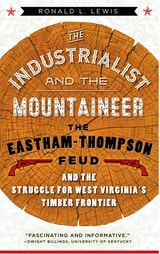
The Industrialist and the Mountaineer
The Eastham-Thompson Feud and the Struggle for West Virginia's Timber FrontierRONALD L. LEWIS
West Virginia University Press, 2017
The Eastham-Thompson feud pitted a former Confederate against a member of the new business elite who was, as a northern Republican, his cultural and political opposite. For Lewis, their clash was one flashpoint in a larger phenomenon central to US history in the second half of the nineteenth century: the often violent imposition of new commercial and legal regimes over holdout areas stretching from Appalachia to the trans-Missouri West. Taking a ground-level view of these so-called “wars of incorporation,” Lewis’s powerful microhistory shows just how strongly local communities guarded traditional relationships to natural resources. Modernizers sought to convict Eastham of murder, but juries drawn from the traditionalist population refused to comply. Although the resisters won the courtroom battle, the modernizers eventually won the war for control of the state’s timber frontier.
The Infinite Resource
The Power of Ideas on a Finite PlanetRamez Naam
University Press of New England, 2013
The People's Forests
Marshall, Robert
University of Iowa Press, 2002
Devoted conservationist, environmentalist, and explorer Robert Marshall (1901-1939) was chief of the Division of Recreation and Lands, U.S. Forest Service, when he died at age thirty-eight. Throughout his short but intense life, Marshall helped catalyze the preservation of millions of wilderness acres in all parts of the U.S., inspired countless wilderness advocates, and was a pioneer in the modern environmental movement: he and seven fellow conservationists founded the Wilderness Society in 1935. First published in 1933, The People's Forests made a passionate case for the public ownership and management of the nation's forests in the face of generations of devastating practices; its republication now is especially timely.
Marshall describes the major values of forests as sources of raw materials, as essential resources for the conservation of soil and water, and as a “precious environment for recreation” and for “the happiness of millions of human beings.” He considers the pros and cons of private and public ownership, deciding that public ownership and large-scale public acquisition are vital in order to save the nation's forests, and sets out ways to intelligently plan for and manage public ownership.
The last words of this book capture Marshall's philosophy perfectly: “The time has come when we must discard the unsocial view that our woods are the lumbermen's and substitute the broader ideal that every acre of woodland in the country is rightly a part of the people's forests.”
The Price of Nuclear Power
Uranium Communities and Environmental JusticeMalin, Stephanie A.
Rutgers University Press, 2015
The Scars of Project 459
The Environmental Story of the Lake of the OzarksTraci Angel
University of Arkansas Press, 2014
The United States and the Global Struggle for Minerals
By Alfred E. Eckes, Jr.
University of Texas Press, 1979
In 1973–1974 soaring commodity prices and an oil embargo alerted Americans to the twin dangers of resource exhaustion and dependence on unreliable foreign materials suppliers. This period seemed to mark a watershed in history as the United States shifted from the era of relative resource abundance to relative materials scarcity.
Alfred E. Eckes’s comprehensive study shows that resource depletion and supply dislocations are not concerns unique to the 1970s. Since 1914, the quest for secure and stable supplies of industrial materials has been an important underlying theme of international relations and American diplomacy.
Although the United States has been blessed with a diversified materials base, it has pursued a minerals strategy designed to exploit low-cost, high-quality ores abroad. Eckes demonstrates how this policy has led to official protection for overseas private investments, involving a role for the Central Intelligence Agency.
Some modern historians have neglected the importance of resources in shaping diplomacy and history. This book, based on a vast variety of unutilized archival collections and recently declassified government documents, helps to correct that imbalance. In the process it illuminates an important and still timely aspect of America’s global interests.
Traces of Gold
California's Natural Resources and the Claim to Realism in Western American LiteratureNicolas Witschi
University of Alabama Press, 2001
Artfully demonstrates the linkage of American literary realism to the texts, myths, and resources of the American West
From Gold Rush romances to cowboy Westerns, from hard-boiled detective thrillers to nature writing, the American West has long been known mainly through hackneyed representations in popular genres. But a close look at the literary history of the West reveals a number of writers who claim that their works represent the “real” West. As Nicolas Witschi shows, writers as varied as Bret Harte, John Muir, Frank Norris, Mary Austin, and Raymond Chandler have used claims of textual realism to engage, replicate, or challenge commonly held assumptions about the West, while historically acknowledged realists like William Dean Howells and Mark Twain have often relied on genre-derived impressions about the region.
The familiar association of the West with nature and the “great outdoors” implies that life in the West affords an unambiguous relationship with an unalloyed, non-human, real nature. But through a combination of textual scholarship, genre criticism, and materialist cultural studies, Witschi complicates this notion of wide-open spaces and unfettered opportunity. The West has been the primary source of raw materials for American industrial and economic expansion, especially between the California Gold Rush and World War II, and Witschi argues that the writers he examines exist within the intersections of cultural and material modes of production. Realistic depictions of Western nature, he concludes, must rely on the representation of the extraction of material resources like minerals, water, and oil.
With its forays into ecocriticism and cultural studies, Traces of Gold will appeal to students and scholars of American literature, American studies, and western history.
Transforming Rural Water Governance
The Road from Resource Management to Political Activism in NicaraguaSarah T. Romano
University of Arizona Press, 2019
In Transforming Rural Water Governance Sarah T. Romano explains the bottom-up development and political impact of community-based water and sanitation committees (CAPS) in Nicaragua. Romano traces the evolution of CAPS from rural resource management associations into a national political force through grassroots organizing and strategic alliances.
Resource management and service provision is inherently political: charging residents fees for service, determining rules for household water shutoffs and reconnections, and negotiating access to water sources with local property owners constitute just a few of the highly political endeavors resource management associations like CAPS undertake as part of their day-to-day work in their communities. Yet, for decades in Nicaragua, this local work did not reflect political activism. In the mid-2000s CAPS’ collective push for social change propelled them onto a national stage and into new roles as they demanded recognition from the government.
Romano argues that the transformation of Nicaragua’s CAPS into political actors is a promising example of the pursuit of sustainable and equitable water governance, particularly in Latin America. Transforming Rural Water Governance demonstrates that when activism informs public policy processes, the outcome is more inclusive governance and the potential for greater social and environmental justice.
Trusteeship in Change
Toward Tribal Autonomy in Resource ManagementRichmond L. Clow
University Press of Colorado, 2001
This book also includes case studies focused on wildlife management, forest preservation, tribal hunting laws, and other specific concerns in management, preservation and utilization of Native American land. An excellent source for scholars in the fields of Native American and environmental studies, Trusteeship in Change is sure to spark debate and to be an important reference book for years to come.