Results by title
83 books match the query 'Northeast' and 24 start with t
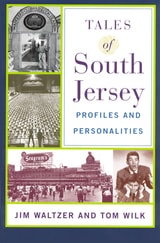
Tales of South Jersey
Profiles and PersonalitiesWaltzer, Jim
Rutgers University Press, 2001
There's much more to southern New Jersey than the Pine Barrens and the Jersey Devil, and this collection by journalists Jim Waltzer and Tom Wilk tells readers all about it. Oceanside and bayside towns offer a box seat from which to observe the regions rich history and the summery lore of the wonders of nature. Landlocked towns boast their own homespun and hell-raising traditions and idiosyncrasies.
Waltzer and Wilk have compiled almost fifty stories about the state's southernmost counties. Although the focus is on Atlantic City and its remarkable people, outsize structures, and quirky events, the storytelling ranges across the wider region to provide an insiders look at history as it was being made. You'll encounter gangsters and gamblers, baseball hitters and hurricanes, famous piers and hotels, landmark theaters and eateries, splashy events and unheralded oddities ¾ in sum, a cross-section of the regions character and characters.
The authors divide their book into six sections: entertainment, famous and infamous events, innovations and innovators, leisure and recreation, room and board, and sports legends. Within each section are the rich and varied stories Waltzer and Wilk have collected for New Jerseyans reading pleasure.
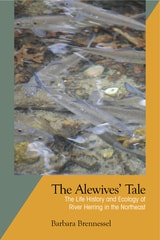
The Alewives' Tale
The Life History and Ecology of River Herring in the NortheastBarbara Brennessel
University of Massachusetts Press, 2014
The Alewives' Tale describes the plight of alewives and blueback herring, two fish species that have similar life histories and are difficult to distinguish by sight. Collectively referred to as river herring, they have been economically important since colonial times as food, fertilizer, and bait. In recent years they have attracted much attention from environmentalists, especially as attempts are being made, on and beyond Cape Cod, to restore the rivers, streams, ponds, lakes, and estuaries that are crucial for their reproduction and survival.
Brennessel provides an overview of the biology of the fish—from fertilized eggs to large schools of adults that migrate in the Atlantic Ocean—while describing the habitats at different stages of their life history. She explores the causes of the dramatic decline of river herring since the mid-twentieth century and the various efforts to restore these iconic fish to the historic populations that treated many onlookers to spectacular inland migrations each spring.
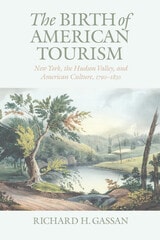
The Birth of American Tourism
New York, the Hudson Valley, and American Culture, 1790-1835Richard H. Gassan
University of Massachusetts Press, 2008
According to Gassan, the origins of American tourism in the Hudson Valley can be traced to a confluence of historical accidents, including the proximity of the region to the most rapidly growing financial and population center in the country, with its expanding middle class, and the remarkable beauty of the valley itself. But other developments also played a role, from the proliferation of hotels to accommodate tourists, to the construction of an efficient transportation network to get them to their destinations, to the creation of a set of cultural attractions that invested their experience with meaning. In the works of Washington Irving and James Fenimore Cooper and the paintings of Thomas Cole and others of the Hudson River School, travelers in the region encountered the nation's first literary and artistic movements. Tourism thus did more than provide an escape from the routines of everyday urban life; it also helped Americans of the early republic shape a sense of national identity.
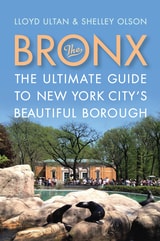
The Bronx
The Ultimate Guide to New York City's Beautiful BoroughUltan, Lloyd
Rutgers University Press, 2015
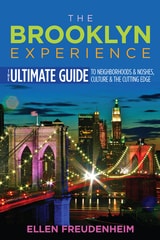
The Brooklyn Experience
The Ultimate Guide to Neighborhoods & Noshes, Culture & the Cutting EdgeFreudenheim, Ellen
Rutgers University Press, 2016
Targeting the independent, curious traveler, The Brooklyn Experience includes a dozen “do-it-yourself” tours, including a visit to Woody Allen’s childhood neighborhood, and amazing Revolutionary and Civil War sites.
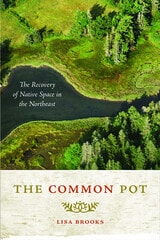
The Common Pot
The Recovery of Native Space in the NortheastLisa Brooks
University of Minnesota Press, 2008
Illuminates the significance of writing to colonial-era Native American resistance
Literary critics frequently portray early Native American writers either as individuals caught between two worlds or as subjects who, even as they defied the colonial world, struggled to exist within it. In striking counterpoint to these analyses, Lisa Brooks demonstrates the ways in which Native leaders—including Samson Occom, Joseph Brant, Hendrick Aupaumut, and William Apess—adopted writing as a tool to reclaim rights and land in the Native networks of what is now the northeastern United States.
“The Common Pot,” a metaphor that appears in Native writings during the eighteenth and nineteenth centuries, embodies land, community, and the shared space of sustenance among relations. Far from being corrupted by forms of writing introduced by European colonizers, Brooks contends, Native people frequently rejected the roles intended for them by their missionary teachers and used the skills they acquired to compose petitions, political tracts, and speeches; to record community councils and histories; and most important, to imagine collectively the routes through which the Common Pot could survive.Reframing the historical landscape of the region, Brooks constructs a provocative new picture of Native space before and after colonization. By recovering and reexamining Algonquian and Iroquoian texts, she shows that writing was not a foreign technology but rather a crucial weapon in the Native Americans’ arsenal as they resisted—and today continue to oppose—colonial domination.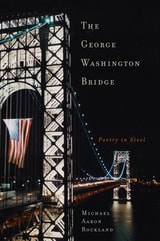
The George Washington Bridge
Poetry in SteelMichael Aaron Rockland
Rutgers University Press, 2008
Intimate and engaging, Michael Rockland's rich narrative presents perspectives on the GWB, as it is often called, that span history, architecture, engineering, transportation, design, the arts, politics, and even post-9/11 mentality. Stunning archival photos, from the late 1920s when the bridge was built through the present, are a powerful complement to the bridge's history. Rockland covers the competition between the GWB and the Brooklyn Bridge that parallels the rivalry between New Jersey and New York City. Readers will learn about the Swiss immigrant Othmar Ammann, an unsung hero who designed and built the GWB, and how a lack of funding during the Depression dictated the iconic, uncovered steel beams of its towers, which we admire today. There are chapters discussing accidents on the bridge, such as an airplane crash landing in the westbound lanes and the sad story of suicides off its span; the appearance of the bridge in media and the arts; and Rockland's personal adventures on the bridge, including scaling its massive towers on a cable.
Movies, television shows, songs, novels, countless images, and even PlayStation 2 games have aided the GWB in becoming a part of the global popular culture. This tribute will captivate residents living in the shadow of the GWB, the millions who walk, jog, bike, skate, or drive across it, as well as tourists and those who will visit it some day.
- First major book on the George Washington Bridge
- Full of amazing facts about the GWB that will surprise even bridge historians
- Includes over 30 spectacular illustrations, ranging from archival photographs of the building of the bridge to those that show it draped in an enormous flag after 9/11
- Includes personal accounts of the author's adventures on the bridge
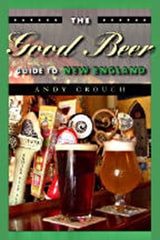
The Good Beer Guide to New England
Andy Crouch
University Press of New England, 2006
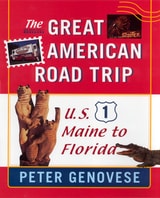
The Great American Road Trip
U.S. 1, Maine to FloridaGenovese, Peter
Rutgers University Press, 1999
Take an unforgettable road trip down one of America’s most fascinating highways, U.S.
On what highway can you find the headquarters of the FBI, Dow Jones Interactive, and the National Enquirer? What road is home to the Bronx Zoo, the Okefenokee Swamp, and Flipper? On the side of what freeway can you find the Super Duper Weenie Wagon, Larry’s Redneck Bar, and the Big Chicken Barn? Peter Genovese found them all, along with about a million other fascinating and bizarre attractions, on U.S. 1, ‘the best damn highway in America,” as he calls it. Join him for the road trip of a lifetime The Great American Road Trip: A Journey Down U.S. 1.
U.S. 1 may not be America’s scenic highway, but it’s certainly the most colorful. It runs through Boston, New York, Baltimore, Washington, D.C., and Miami, in addition to Caribou, Maine, Quonochontaug, Rhode Island, and Alma, Georgia. It zig-zags along the wild and beautiful Maine coast and soars over the Atlantic Ocean as the Overseas Highway, one of the most spectacular stretches of road anywhere. The Star-Spangled Banner is on U.S. 1. Madonna lived on U.S. 1 (until she sold her house to Rosie O'Donnell). U.S. 1 is Main Street and the Miracle Mile, two-lane blacktop and six-lane expressway, straight as an arrow in some places and twistier than a Philadelphia soft pretzel in others.
Genovese spent two years on U.S. 1, talking to everyone from doughnut makers, dolphin trainers, and swamp guides to real Miami vice cops and the keeper of the national parasite collection. His resulting book is the most complete portrait of an American highway ever written. With his unerring eye for detail, sense of humor, and understanding of human nature, Genovese takes readers on a sometimes funny, sometimes sad, always illuminating 2,450-mile journey from Fort Kent, Maine to Key West, Florida.
Ride along with Genovese and grab a drink at the Last Resort Bar or the Last Chance Saloon, then pick up a paperback at the Banned Bookstore. Visit Oscar, the biggest gator in the Okefenokee Swamp, have dinner at Hog Heaven, and take in a Portland Seadogs baseball game. Tour a Budweiser brewery and go into the pit at a NASCAR race. Looking for someplace to stay? How about the world’s only underwater hotel, the Jules’ Undersea Lodge, or in a cabin made entirely from one pine tree at the Maine Idyll Motor Court? If it’s culture you seek, the highway boasts dozens of museums. While you may have heard of the Museum of Natural History and the National Museum of American Art, how about the Blacks in Wax Museum, Tragedy in the United States Museum, and the Mushroom Museum? There’s something for everyone on U.S. 1, and Genovese has written about it all in The Great American Road Trip.
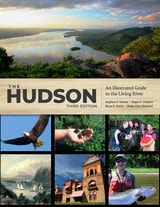
The Hudson
An Illustrated Guide to the Living RiverStephen P. Stanne
Rutgers University Press, 2021
This volume gives a detailed account of the Hudson River’s history, including the geological forces that created it, the various peoples who have lived on its banks, and the great works of art it has inspired. It also showcases the many species making a home on this waterway, including the Atlantic sturgeon, the bald eagle, the invasive zebra mussel, and the herons of New York Harbor. Combining both scientific and historical perspectives, this book demonstrates why the Hudson and its valley have been so central to the environmental movement.
As it charts the progress made towards restoring the river ecosystem and the effects of emerging threats like climate change, The Hudson identifies concrete ways that readers can help. To that end, royalties from the sale of this book will go to the non-profit environmental advocacy group Hudson River Sloop Clearwater, Inc.
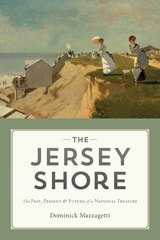
The Jersey Shore
The Past, Present & Future of a National TreasureMazzagetti, Dominick
Rutgers University Press, 2018
Divided into chronological and thematic sections, this book will attract general readers interested in the history of the Shore: how it appeared to early European explorers; how the earliest settlers came to the beaches for the whaling trade; the first attractions for tourists in the nineteenth century; and how the coming of railroads, and ultimately automobiles, transformed the Shore into a major vacation destination over a century later. Mazzagetti also explores how the impact of changing national mores on development, race relations, and the environment, impacted the Shore in recent decades and will into the future. Ultimately, this book is an enthusiastic and comprehensive portrait by a native son, whose passion for the region is shared by millions of beachgoers throughout the Northeast.
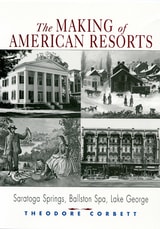
The Making of American Resorts
Saratoga Springs, Ballston Spa, and Lake GeorgeCorbett, Theodore
Rutgers University Press, 2001
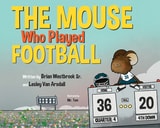
The Mouse Who Played Football
Written by Brian Westbrook Sr. and Lesley Van Arsdall
Temple University Press, 2022
Some folks think Brian the mouse is too small. He may be a tough little fella, but they are not sure Brian has what it takes. The Mouse Who Played Football, by former Philadelphia Eagles running back Brian Westbrook Sr. and sports reporter Lesley Van Arsdall, shows how Brian the mouse proves everyone wrong with unyielding confidence that his small size can be his strength.
This charming children’s book, featuring appealing and dynamic illustrations by Mr. Tom, demonstrates how Brian the mouse overcomes what others see as a “big problem.” His determination—as well as speed and toughness on the gridiron—helps him become a star player in high school, college, and eventually, the MFL, the Mouse Football League.
The Mouse Who Played Football, based on Westbrook’s own experiences,is an inspiring story that encourages young readers to believe in themselves and make their unique differences their strengths.
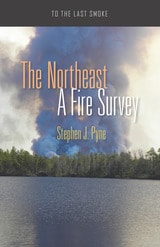
The Northeast
A Fire SurveyStephen J. Pyne
University of Arizona Press, 2019
The Northeast has its roster of great fires, beginning with dark days in the late 18th century, followed by a chronicle of conflagrations continuing as late as 1903 and 1908, with a shocking after-tremor in 1947. It hosted the nation’s first forestry schools. It organized the first interstate (and international) fire compact. And it was the Northeast that pioneered the transition to the true Big Burn—industrial combustion—as America went from burning living landscapes to burning lithic ones.
In this new book in the To the Last Smoke series, renowned fire expert Stephen J. Pyne narrates this history and explains how fire is returning to a place not usually thought of in America’s fire scene. He examines what changes in climate and land use mean for wildfire, what fire ecology means for cultural landscapes, and what experiments are underway to reintroduce fire to habitats that need it. The region’s great fires have gone; its influence on the national scene has not.
The Northeast: A Fire Survey samples the historic and contemporary significance of the region and explains how it fits into a national cartography and narrative of fire.
Included in this volume:
How the region shaped America’s understanding and policy toward fire
How fire fits into the region today and what that means for the country overall
What changes in climate, land use, and institutions may mean for northeastern fire, both wild and tame
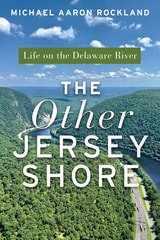
The Other Jersey Shore
Life on the Delaware RiverMichael Aaron Rockland
Rutgers University Press, 2024
The Other Jersey Shore takes readers on a personal tour of the New Jersey portion of the Delaware River and its surroundings. You will learn about the role that the river played in human history, including Washington’s four crossings of the Delaware during the Revolutionary War. And you will also learn about the ecological history of the river itself, once one of the most polluted waterways in the country and now one of the cleanest, providing drinking water for 17 million people. Michael Aaron Rockland, a long-time New Jersey resident, shows readers his very favorite spots along the Delaware, including the pristine waterfalls and wilderness in the Delaware Water Gap recreation area. Along the way, he shares engrossing stories and surprising facts about the river that literally defines western New Jersey.
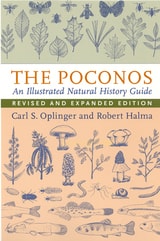
The Poconos
An Illustrated Natural History GuideCarl S. Oplinger and Robert Halma
Rutgers University Press, 2006
The Poconos, a rich plateau nestled in northeastern Pennsylvania between the Delaware River and the Moosic Mountains, encompass a variety of alluring features. The perfect reference for amateur naturalists, outdoor enthusiasts, tourists, and others who wish to explore the area, this classic guide clearly explains the unique geographic characteristics, animal habits and habitats, climate, geology, and vegetation of the area.
The authors trace the region from its beginnings millions of years ago as part of a shallow sea, through the reshaping forces of great glaciers, to today’s roadways and turnpikes. This revised and expanded edition also includes brief profiles of individuals who played significant roles in the preservation or understanding of the area’s ecology. Chapters provide a general survey of the area, including its history and places to be explored and observed, information on forest types, wildlife, and aquatic habitats, updated facts and figures on animal populations, as well as new details on invasive species.
Throughout the book, numerous boxes direct readers to observatory points for specific birds, ecosystems, vegetation types, and geological features, while maps, tables, original pen-and-ink illustrations, and a select list of field guides and other references enhance the book’s appeal. An indispensable companion for visitors as well as residents, The Poconos is a must-read for everyone who wants to discover or better understand the beauty and natural history of this unique region.
The Scandal of Reform
The Grand Failures of New York's Political Crusaders and the Death of NonpartisanshipBarry, Francis S
Rutgers University Press, 2009
The Scandal of Reform pulls the curtain back on New York's reformers past and present, revealing the bonds they have always shared with the bosses they disdain, the policy failures they still refuse to recognize, and the transition they have made from nonpartisan outsiders to ideological insiders.
Francis S. Barry examines the evolution of political reform from the frontlines of New York City's recent reform wars. He offers an insider's account and analysis of the controversial 2003 referendum debate on nonpartisan elections, and he challenges reformersùand members of both partiesùto reconsider their faith in reforms that are no longer serving the public interest.
The Ultimate Guide to the Jersey Shore
Where to Eat, What to Do, and so Much MorePeter Genovese
Rutgers University Press, 2023

The Wildlife of New England
A Viewer's GuideJohn S. Burk
University of New Hampshire Press, 2011
With practical guidance, helpful tips, and informative overviews of each location, The Wildlife of New England invites you to discover more than 80 wildlife-viewing areas around New England.
• Where are you most likely to spot a moose, black bear, or otter in the wild?
• On what hilltop can you see thousands of migrating hawks in a single day?
• Where might you see a basking shark, seal, or sea star?
Experienced nature writer and photographer John S. Burk answers these questions and more in this unique guidebook. Organized by state, each viewing location is discussed in detail, including its natural habitats and their unique features, characteristic species to watch for and when to see them, and recommended trails, auto roads, and driving directions. The Wildlife of New England also offers informative introductions to 60 of the region's iconic animals organized by their natural habitats and shown in stunning photographs, many in color.
Time and the Town
A Provincetown ChronicleAdele Heller
Rutgers University Press, 1991
Time and the Town was the last of Mary Heaton Vorse's books. It is about many things —a town and its people, the author, a certain kind of idyllic life. As much as anything else, it is the biography of the house Vorse bought in 1907 and lived in, off and on, for the next thirty-six years. The moods of the house mirrored her own. "Our houses," she wrote, "are our biographies, the stories of our defeats and victories."
Tinged with nostalgia and disenchantment, the book describes a Provincetown that has changed, a place on the verge of modernity. It is no longer a major fishing port. It has become a place whose business is tourism. Contrasting the old and the new, Vorse celebrates the enduring character of the town itself. She tells stories that are engaging and charming, droll and fabulous. The wrinkled Mrs. Mary Mooncusser who, though drunk and stark naked, conducts herself with great decorum when Vorse pays her a call, might have stepped out of the pages of Sherwood Anderson or Eudora Welty. In another anecdote, the townspeople scour the beaches for cases of booze dumped into the sea by rumrunners and are briefly inflated with the spirit of ancestral smugglers and buccaneers.
Vorse herself remained something of an outsider in Provincetown, despite her evident affection for the place and its inhabitants. They surely regarded her as simply another of those artist-intellectuals--many of whom appear in the pages of this book. The "off-Cape" outsiders put the town in the national limelight but took no interest in local matters. Vorse here ponders local matters exclusively, almost, one suspects, as a way of forgetting the more complex matters that occupied her--her agonies of parental guilt, her resentment of domestic obligations, her third marriage, her depressions and breakdowns. The town is in that sense beyond time.
Trail Running Eastern Massachusetts
Ben Kimball
University of Massachusetts Press, 2022
Eastern Massachusetts offers incredible trail-running opportunities, ranging from popular long-distance routes like the Bay Circuit Trail to lesser-known loops that run through the mountains and forests of the Quabbin watershed and Merrimack Valley region, and trails that pass alongside the shores of Cape Cod. All over the Bay State, there are trails suitable for runners of all levels waiting to be discovered and explored.
Avid trail runner Ben Kimball offers a selection of fifty-one of eastern Massachusetts’s most spectacular trail sites, including detailed trail descriptions, topographic maps, directions, parking information, safety tips, and much more. Both experienced and novice trail runners will find Trail Running Eastern Massachusetts to be an invaluable resource for exploring nature and getting a good workout, in the Boston area and beyond.
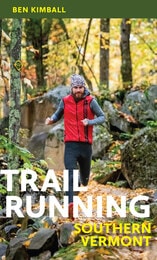
Trail Running Southern Vermont
Ben Kimball
University of Massachusetts Press, 2024
The wild and rural landscape of southern Vermont offers a true bounty of great trail-running opportunities, from out-and-back (or pointtopoint) runs on popular long-distance routes, such as segments of the Long Trail or Appalachian Trail, to quiet, little-known loops hidden away in the woods. This helpful guide is just the resource needed for trip planning or for a spontaneous run in a beautiful place.
Local expert trail runner Ben Kimball offers a range of suggested route options, sometimes even several at the same site, for runners of all skill levels. He also provides important practical information, such as the full distance of the suggested route; a difficulty rating; the trail style and type; the total ascent; and directions, along with a detailed description of the trail itself. There are also scannable codes for downloading trail maps to your smartphone. The trails included vary in difficulty and terrain type, and range from low elevations in the Connecticut River Valley to as high as 4,000 feet at Killington Peak in the Green Mountains. This indispensable book is the perfect companion for adventurous runners and hikers interested in exploring southern Vermont.
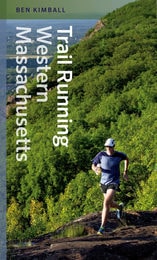
Trail Running Western Massachusetts
Ben Kimball
University Press of New England, 2015
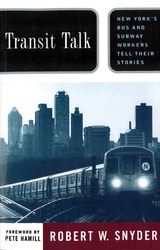
Transit Talk
New York's Bus and Subway Workers Tell Their StoriesRobert W. Snyder
Rutgers University Press, 1998
There are nearly 44,000 transit workers like those you will meet in Transit Talk , and every day they help five million of us travel to work, to school, to weddings, to funerals, to hospitals, to vacations. These workers labor daily on subway tracks inches from high-voltage powerlines, risking their lives for passengers they'U never know. The city can feel large and fragmented, but the transportation system and its workers create common threads in the lives of all New Yorkers, threads we take for granted.
Together, their stories create a human tableau of life and labor in the city within a city that is the MTA New York City Transit. Transit workers find satisfaction in fixing a damaged subway car, gain wisdom from mastering a dangerous workplace, nurse emotional wounds from tending to someone injured in an accident, battle frustration from difficulties with management, and express satisfaction when reflecting on a productive career. They tell of how years spent in the same shop create bonds between workers. They talk of the burden of laboring in a twenty-four-hour system with night shifts and weekend workdays that take them away from families. You'U hear painful tales of informing next-of-kin of a death on the tracks as well as joyous anecdotes of workers delivering a baby in a subway car.