Results by title
58 books match the query 'Novelists, American' and 15 start with t

The Centenary Edition of the Works of Nathaniel Hawthorne
Vol. XIV, The French and Italian NotebooksNathaniel Hawthorne
The Ohio State University Press, 1980
The Centenary Edition of the Works of Nathaniel Hawthorne
Vol. XIX, The Consular Letters, 1853–1855Nathaniel Hawthorne
The Ohio State University Press, 1988
The Centenary Edition of the Works of Nathaniel Hawthorne
Vol. XV, The Letters, 1813-1843Nathaniel Hawthorne
The Ohio State University Press, 1985
The Centenary Edition of the Works of Nathaniel Hawthorne
Vol. XX, The Consular Letters, 1856–1857Nathaniel Hawthorne
The Ohio State University Press, 1988
The Centenary Edition of the Works of Nathaniel Hawthorne
Vol. XXI, the English Notebooks, 1853–1856Nathaniel Hawthorne
The Ohio State University Press, 1997
The Centenary Edition of the Works of Nathaniel Hawthorne
Vol. XXII, The English Notebooks, 1856–1860Nathaniel Hawthorne
The Ohio State University Press, 1997
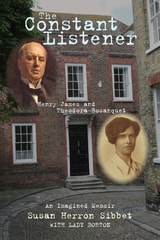
The Constant Listener
Henry James and Theodora Bosanquet—An Imagined MemoirSusan Herron Sibbet
Ohio University Press, 2017
In 1907, in a quiet English village, Theodora Bosanquet answered Henry James’s call for someone to transcribe his edits and additions to his formidable body of work. The aging James had agreed to revise his novels and tales into the twenty-four-volume New York Edition. Enter Bosanquet, a budding writer who would record the dictated revisions and the prefaces that would become a lynchpin of his legacy.
Embracing the role of amanuensis and creative counterpoint cautiously at first, Bosanquet kept a daily diary over the nine years that she worked with James, as their extraordinary partnership evolved. Bosanquet became the first audience for James’s compositions and his closest literary associate—and their relationship ultimately resulted in James’s famed “deathbed dictations.” At the same time, the homosexuality of each was an unspoken but important influence on their mutual support and companionship.
Susan Herron Sibbet’s posthumous novel gifts us with the voice of a young woman writer drawn into the intimate circle of an aging master, and is a moving addition to previous literary treatments of James and Bosanquet, even as it hews closer to fact than other works do. The Constant Listener is itself the work of an accomplished poet, and will speak to fans of James, historical fiction, and themes of art, love, sexuality, and identity.

The Heritage
A Daughter's Memoir Of Louis BromfieldEllen Bromfield Geld
Ohio University Press, 1999
This lively, outspoken, and affectionate memoir preserves all things Louis Bromfield fought for or against in a life marked by surging vitality and gusto. He came from an Ohio family whose roots were in the land before the land was lost. He had his father's love of the land, and from his willful mother a hunger to know the world. From the New York City of theaters, concerts, parties, and novels, and a life in France that his success allowed, he finally returned to Ohio and established a new order for his family and friends, and for his followers, a new orbit into which they were drawn.
Ellen Bromfield Geld wrote a memoir of the man who was Louis Bromfield, father and friend, tyrant and “Boss,” alive always to whatever was worth responding to in people and in places, yet complex and lonely as a writer must essentially be to work at his craft. Now revived in paperback thirty-five years after its first publication, The Heritage remains a moving tribute and the recreation of a remarkable human being.
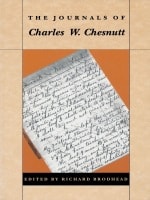
The Journals of Charles W. Chesnutt
Charles W. Chesnutt
Duke University Press, 1993
Though he achieved literary success in his time, Chesnutt has only recently been rediscovered and his contribution to American literature given its due. The only known private diary from a nineteenth-century African American author, these pages offer a fascinating glimpse into Chesnutt's everyday experience as he struggled to win the goods of education in the world of the post-Civil War South. An extraordinary portrait of the self-made man beset by the urgencies and difficulties of self-improvement in a racially discriminatory society, Chesnutt's journals unfold a richly detailed local history of postwar North Carolina. They also show with great force how the world of the postwar South obstructed--and, unexpectedly, assisted--a black man of driving intellectual ambitions.
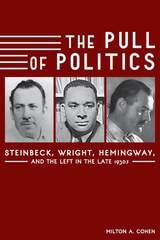
The Pull of Politics
Steinbeck, Wright, Hemingway, and the Left in the Late 1930sMilton A. Cohen
University of Missouri Press, 2018
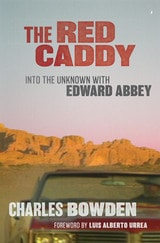
The Red Caddy
Into the Unknown with Edward AbbeyBy Charles Bowden; foreword by Luis Alberto Urrea
University of Texas Press, 2018
A passionate advocate for preserving wilderness and fighting the bureaucratic and business forces that would destroy it, Edward Abbey (1927–1989) wrote fierce, polemical books such as Desert Solitaire and The Monkey Wrench Gang that continue to inspire environmental activists. In this eloquent memoir, his friend and fellow desert rat Charles Bowden reflects on Abbey the man and the writer, offering up thought-provoking, contrarian views of the writing life, literary reputations, and the perverse need of critics to sum up “what he really meant and whether any of it was truly up to snuff.”
The Red Caddy is the first literary biography of Abbey in a generation. Refusing to turn him into a desert guru, Bowden instead recalls the wild man in a red Cadillac convertible for whom liberty was life. He describes how Desert Solitaire paradoxically “launched thousands of maniacs into the empty ground” that Abbey wanted to protect, while sealing his literary reputation and overshadowing the novels that Abbey considered his best books. Bowden also skewers the cottage industry that has grown up around Abbey’s writing, smoothing off its rougher (racist, sexist) edges while seeking “anecdotes, little intimacies . . . pieces of the True Beer Can or True Old Pickup Truck.” Asserting that the real essence of Abbey will always remain unknown and unknowable, The Red Caddy still catches gleams of “the fire that from time to time causes a life to become a conflagration.”
The Splendid Drunken Twenties
Selections from the Daybooks, 1922 - 30Carl Van Vechten
University of Illinois Press, 2002
Between 1922 and 1930, Carl Van Vechten--one of the most significant figures of the Harlem Renaissance--kept a daily record of his activities. The records recount his day-to-day life, as well as the alliances, drinking habits, feuds, and affairs of a wide number of the period's luminaries, providing a rich resource for reconstructing the culture of 1920s New York and the social milieu during Prohibition. Bruce Kellner has provided copious informative notes identifying central figures and clarifying details.

The Stray Bullet
William S. Burroughs in MexicoJorge García-Robles
University of Minnesota Press, 2013
William S. Burroughs arrived in Mexico City in 1949, having slipped out of New Orleans while awaiting trial on drug and weapons charges that would almost certainly have resulted in a lengthy prison sentence. Still uncertain about being a writer, he had left behind a series of failed business ventures—including a scheme to grow marijuana in Texas and sell it in New York—and an already long history of drug use and arrests. He would remain in Mexico for three years, a period that culminated in the defining incident of his life: Burroughs shot his common-law wife, Joan Vollmer, while playing William Tell with a loaded pistol. (He would be tried and convicted of murder in absentia after fleeing Mexico.)
First published in 1995 in Mexico, where it received the Malcolm Lowry literary essay award, The Stray Bullet is an imaginative and riveting account of Burroughs’s formative experiences in Mexico, his fascination with Mexico City’s demimonde, his acquaintances and friendships there, and his contradictory attitudes toward the country and its culture. Mexico, Jorge García-Robles makes clear, was the place in which Burroughs embarked on his “fatal vocation as a writer.”
Through meticulous research and interviews with those who knew Burroughs and his circle in Mexico City, García-Robles brilliantly portrays a time in Burroughs’s life that has been overshadowed by the tragedy of Joan Vollmer’s death. He re-creates the bohemian Roma neighborhood where Burroughs resided with Joan and their children, the streets of postwar Mexico City that Burroughs explored, and such infamous figures as Lola la Chata, queen of the city’s drug trade. This compelling book also offers a contribution by Burroughs himself—an evocative sketch of his shady Mexican attorney, Bernabé Jurado.
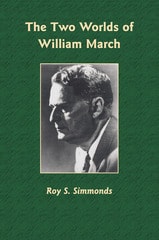
The Two Worlds of William March
Roy S. Simmonds
University of Alabama Press, 1984
In the work of literary resurrection there is always a small act of defiance. The Two Worlds of William March by Roy S. Simmonds restores to view one of the most remarkable and least celebrated American writers of the twentieth century. With intelligence, restraint, and a keen eye for contradiction, Simmonds traces March’s path from Alabama beginnings through war, business success, and literary achievement. The result is more than a biography. It is an inquiry into the making of a writer whose novels continue to unsettle, disturb, and illuminate long after the fashions of his age have passed.
What lingers is the paradox of William March himself. He was a man of outward accomplishment who remained drawn to the hidden regions of experience. He wrote memorably of war without glamorizing it, and of evil without simplifying it. Unlike so many public literary figures, he seemed to cultivate disappearance rather than celebrity. The silence around him became part of the story. Simmonds treats that silence not as a void but as evidence, revealing a complex and deeply observant mind at work beneath an unusually quiet life.
The questions that occupied March remain with us. How well do we know ourselves? What lies beneath ordinary behavior? How does experience become art? For readers of Southern literature, literary biography, American history, war literature, psychology, Alabama culture, and twentieth-century fiction, this book offers both discovery and reconsideration. It will especially appeal to those who suspect that the most revealing stories are often hidden in plain sight.
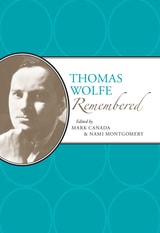
Thomas Wolfe Remembered
Edited by Mark Canada and Nami Montgomery
University of Alabama Press, 2018
A collection of reminiscences captures the private life of a great American writer.
Thomas Wolfe’s life may seem to be an open book. A life that, after all, was the source for his best-known works, including the novels Look Homeward, Angel and Of Time and the River, as well as his numerous short stories and dramas. Since his death in 1938, scholars and admirers of Wolfe have relied largely on these texts to understand the man himself.
Thomas Wolfe Remembered provides something new: a rich, multifaceted portrait painted by those who knew him (casually or intimately), loved him (or didn’t), and saw, heard, and experienced the literary (and literal) giant. This volume gathers in one place for the first time dozens of reminiscences by friends, family members, colleagues, and casual acquaintances, adding color and fine details to the self-portrait the author created in his novels.
Wolfe found plenty to challenge and frustrate him throughout his life, from his boyhood in Asheville, North Carolina, to his education at the University of North Carolina and Harvard University, through his time in New York and Europe, his travels through the American West, and his death in Baltimore. He experienced two distracted parents in a loveless marriage, the premature death of a beloved brother, a minor stutter, and the difficulties of controlling a mercurial temper. Yet Wolfe’s exuberance, perceptiveness, memory, and compulsion to record virtually all that he experienced made for an extravagance of material that sometimes angered the people whose lives he used as source material.
Editors Mark Canada and Nami Montgomery have collected dozens of remembrances, many unpublished or long forgotten, including pieces from Julia Wolfe, Margaret Roberts, Frederick Koch, Maxwell Perkins, Elizabeth Nowell, Edward Aswell, and Martha Dodd. Some are endearing, others are disturbing, and many are comical. All provide glimpses into the vibrant, haunted, boyish, paranoid, disheveled, courteous, captivating, infuriating, and altogether fascinating giant who was Thomas Wolfe.