Results by title
310 books match the query 'Performance' and 55 start with t
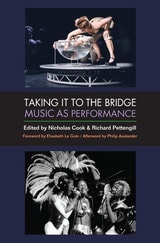
Taking It to the Bridge
Music as PerformanceNicholas Cook and Richard Pettengill
University of Michigan Press, 2013
The overriding aim of this groundbreaking volume—whether the subject is vocal ornamentation in 19th-century opera or the collective improvisation of the Grateful Dead—is to give new recognition to performance as the core of musical culture. The collection brings together renowned scholars from performance studies and musicology (including Philip Auslander, David Borgo, Daphne Brooks, Nicholas Cook, Maria Delgado, Susan Fast, Dana Gooley, Philip Gossett, Jason King, Elisabeth Le Guin, Aida Mbowa, Ingrid Monson, Roger Moseley, Richard Pettengill, Joseph Roach, and Margaret Savilonis), with the intent of sparking a productive new dialogue on music as performance. Taking It to the Bridge is on the one hand a series of in-depth studies of a broad range of performance artists and genres, and on the other a contribution to ongoing methodological developments within the study of music, with the goal of bridging the approaches of musicology and performance studies, to enable a close, interpretive listening that combines the best of each. At the same time, by juxtaposing musical genres that range from pop and soul to the classics, and from world music to games and web-mediated performances, Taking It to the Bridge provides an inventory of contrasted approaches to the study of performance and contributes to its developing centrality within music studies.

Taking Leave
Deborah Kapchan
Duke University Press, 2025
Tarab
Music, Ecstasy, Emotion, and PerformanceEdited by Michael Frishkopf, Scott Marcus, and Dwight F. Reynolds
University of Texas Press, 2025
In Arab culture, at the ineffable point where music meets emotion, lies ṭarab. Often glossed as the ecstasy experienced and expressed when performing or listening to singing, instrumental works, and recitations of poetry, ṭarab is both a practice and an orienting concept central to musical aesthetics and spirituality characteristic of Middle Eastern cultures.
Gathering fifteen essays by scholars of music, affect, literature, religion, and education, Ṭarab extends the study of ṭarab historically, geographically, and sociologically. Historical essays explore ṭarab’s role in the medieval Middle East and the Ottoman Empire. Turning to the modern era, authors examine ṭarab and related concepts in Egypt, Albania, and Iraq, and among Turkish Roma and Lebanese Maronite Christians. The contributors also address contemporary practitioners and the intersections of ṭarab and maqām, belly dancing, music streaming, and university music ensembles. Situating this unique cultural concept in a global context, these studies enrich the story of ṭarab and provide new insight into music’s powerful emotional appeal.
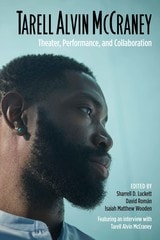
Tarell Alvin McCraney
Theater, Performance, and CollaborationEdited by Sharrell D. Luckett, David Román, and Isaiah Matthew Wooden
Northwestern University Press, 2020
Contributors consider McCraney’s innovations as a playwright, adapter, director, performer, teacher, and collaborator, bringing fresh and diverse perspectives to their observations and analyses. In so doing, they expand and enrich the conversations on his much-celebrated and deeply resonant body of work, which includes the plays Choir Boy, Head of Passes, Ms. Blakk for President, The Breach, Wig Out!, and the critically acclaimed trilogy The Brother/Sister Plays: In the Red and Brown Water, The Brothers Size, and Marcus; Or the Secret of Sweet, as well as the Oscar Award–winning film Moonlight, which was based on his play In Moonlight Black Boys Look Blue.
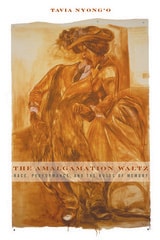
The Amalgamation Waltz
Race, Performance, and the Ruses of MemoryTavia Nyong’o
University of Minnesota Press, 2009
Does racial hybridity offer a future beyond racial difference?
At a time when the idea of a postracial society has entered public discourse, The Amalgamation Waltz investigates the practices that conjoined blackness and whiteness in the nineteenth and twentieth centuries. Scrutinizing widely diverse texts—archival, musical, visual, and theatrical—Tavia Nyong’o traces the genealogy of racial hybridity, analyzing how key events in the nineteenth century spawned a debate about interracialism that lives on today.
Deeply interested in how discussions of racial hybridity have portrayed the hybrid as the recurring hope for a distant raceless future, Nyong’o is concerned with the ways this discourse deploys the figure of the racial hybrid as an alibi for a nationalism that reinvents the racist logics it claims to have broken with. As Nyong’o demonstrates, the rise of a pervasive image of racially anomalous bodies responded to the appearance of an independent black public sphere and organized politics of black uplift. This newfound mobility was apprehended in the political imaginary as a bodily and sexual scandal, and the resultant amalgamation discourse, he argues, must be recognized as one of the earliest and most enduring national dialogues on sex and sexuality. Nyong’o tracks the emergence of the concept of the racial hybrid as an ideological modernization of the older concept of the mongrel and shows how this revision brought race-thinking in line with new understandings of sex and gender, providing a racial context for the shift toward modern heterosexuality, the discourse on which postracial metaphors so frequently rely. A timely rebuttal to our contemporary fascination with racial hybridity, The Amalgamation Waltz questions the vision of a national future without racial difference or conflict.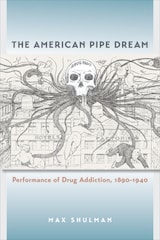
The American Pipe Dream
Performance of Drug Addiction, 1890-1940Max Shulman
University of Iowa Press, 2022
Chapters look at how theatre, film, and popular culture linked the Chinese immigrant and opium smoking; the early attacks on doctors for their part in the creation of addicts; the legislation of addiction as a criminal condition; the comic portrayals of addiction; the intersection of Black, jazz, and drug cultures through cabaret performance; and the linkage between narcotic inebriation and artistic inspiration. The American Pipe Dream creates active connections between these case studies, demonstrating how this history has influenced our contemporary understanding, treatment, and legislation of drug use and addiction.
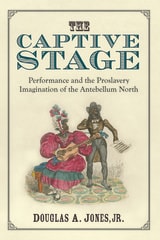
The Captive Stage
Performance and the Proslavery Imagination of the Antebellum NorthDouglas A. Jones, Jr.
University of Michigan Press, 2014
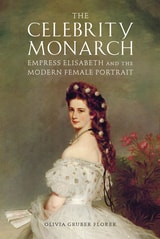
The Celebrity Monarch
Empress Elisabeth and the Modern Female PortraitOlivia Gruber Florek
University of Delaware Press, 2023
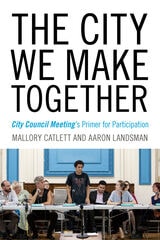
The City We Make Together
City Council Meeting's Primer for ParticipationMallory Catlett
University of Iowa Press, 2022
The City We Make Together looks at how we make art with communities, how we perform power and who gets to play which roles, and how we might use creativity and rigorous inquiry to look at our structures of democracy anew.
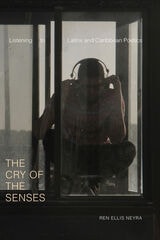
The Cry of the Senses
Listening to Latinx and Caribbean PoeticsRen Ellis Neyra
Duke University Press, 2020

The Cultural Impact of RuPaul's Drag Race
Why Are We All Gagging?Edited by Cameron Crookston
Intellect Books, 2022
This edited volume is an exploration of the social, cultural, political, and commercial implications of the trailblazing reality television series RuPaul’s Drag Race. Going beyond mere analysis of the show itself, the contributors interrogate the ways RuPaul’s Drag Race has affected queer representation in media, examining its audience, economics, branding, queer politics, and every point in between.
Since its groundbreaking and subversive entry into the reality television complex in 2009, the show has had profound effects on drag and the cultures that surround it. Bringing together scholarship across disciplines—including cultural anthropology, media studies, linguistics, sociology, marketing, and theater and performance studies—the collection offers rich academic analysis of Ru Paul’s Drag Race and its lasting influence on fan cultures, queer representation, and the very fabric of drag as an art form in popular cultural consciousness.
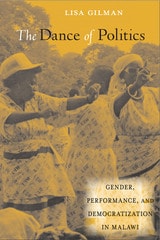
The Dance of Politics
Gender, Performance, and Democratization in MalawiLisa Gilman
Temple University Press, 2011
Election campaigns, political events, and national celebration days in Malawi usually feature groups of women who dance and perform songs of praise for politicians and political parties. These lively performances help to attract and energize throngs of prospective voters. However, as Lisa Gilman explains, “praise performing” is one of the only ways that women are allowed to participate in a male-dominated political system.
Although political performances by women are not unique to Malawi, the case in Malawi is complicated by the fact that until 1994 all Malawianwomen were required to perform on behalf of the long-reigning political party and its self-declared “President for Life,” Dr. Hastings Kamuzu Banda+. This is the first book to examine the present-day situation, where issues of gender, economics and politics collide in surprising ways. Along with its solid grounding in the relevant literature, The Dance of Politics draws strength from Gilman’s first-hand observations and her interviews with a range of participants in the political process, from dancers to politicians.
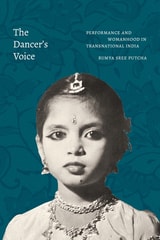
The Dancer's Voice
Performance and Womanhood in Transnational IndiaRumya Sree Putcha
Duke University Press, 2023
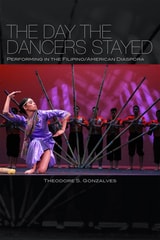
The Day the Dancers Stayed
Performing in the Filipino/American DiasporaTheodore S. Gonzalves
Temple University Press, 2009
Pilipino Cultural Nights at American campuses have been a rite of passage for youth culture and a source of local community pride since the 1980s. Through performances—and parodies of them—these celebrations of national identity through music, dance, and theatrical narratives reemphasize what it means to be Filipino American. In The Day the Dancers Stayed, scholar and performer Theodore Gonzalves uses interviews and participant observer techniques to consider the relationship between the invention of performance repertoire and the development of diasporic identification.
Gonzalves traces a genealogy of performance repertoire from the 1930s to the present. Culture nights serve several functions: as exercises in nostalgia, celebrations of rigid community entertainment, and occasionally forums for political intervention. Taking up more recent parodies of Pilipino Cultural Nights, Gonzalves discusses how the rebellious spirit that enlivened the original seditious performances has been stifled.
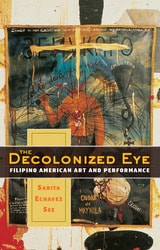
The Decolonized Eye
Filipino American Art and PerformanceSarita Echavez See
University of Minnesota Press, 2009
From the late 1980s to the present, artists of Filipino descent in the United States have produced a challenging and creative movement. In The Decolonized Eye, Sarita Echavez See shows how these artists have engaged with the complex aftermath of U.S. colonialism in the Philippines.
Focusing on artists working in New York and California, See examines the overlapping artistic and aesthetic practices and concerns of filmmaker Angel Shaw, painter Manuel Ocampo, installation artist Paul Pfeiffer, comedian Rex Navarrete, performance artist Nicky Paraiso, and sculptor Reanne Estrada to explain the reasons for their strangely shadowy presence in American culture and scholarship. Offering an interpretation of their creations that accounts for their queer, decolonizing strategies of camp, mimesis, and humor, See reveals the conditions of possibility that constitute this contemporary archive.
By analyzing art, performance, and visual culture, The Decolonized Eye illuminates the unexpected consequences of America's amnesia over its imperial history.
The Eddie Cantor Story
A Jewish Life in Performance and PoliticsDavid Weinstein
Brandeis University Press, 2017
The Fate of the Object
From Modern Object to Postmodern Sign in Performance, Art, and PoetryJon Erickson
University of Michigan Press, 1995
The Fierce Tribe
Masculine Identity and Performance in the CircuitMickey Weems
Utah State University Press, 2008
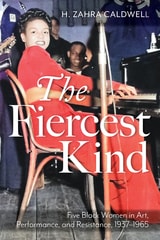
The Fiercest Kind
Five Black Women in Art, Performance, and Resistance, 1937–1965H. Zahra Caldwell
University of Massachusetts Press, 2026
Artists fighting racism and sexism from the end of the Great Depression through the Civil Rights era
In 1943, the production of the Columbia Pictures film The Heat’s On halted for three days due to an on-set protest by featured performer Hazel Scott. Appalled by the racially demeaning and stereotypical depictions of Black women extras and dancers, Scott—one of the top African American performers of the era—forced the studio to relent. But her protest of Hollywood racism angered powerful white men in the industry, and despite her rising career, she was soon banished from American film.
Scott was far from the only Black woman in a creative field to use her professional success as leverage against prejudice. In The Fiercest Kind, cultural historian H. Zahra Caldwell explores the biographical narratives of five Black women at the top of their artistic crafts in the mid-20th century to understand how they pushed back against racism and sexism. From 1937–1965, pianist Hazel Scott, dancer Katherine Dunham, cartoonist Jackie Ormes, multihyphenate fine artist (graphic artist, painter, and sculptor) Elizabeth Catlett, and singer Lena Horne were among the most popular and nationally known Black women in their respective fields, spanning film, television, print media, and fine art. Generating creative works at the end of the Great Depression through the Civil Rights era, they used their professional and personal lives to confront seemingly insurmountable repression through what Caldwell defines as “layered resistance.”
A Black feminist practice, layered resistance consists of four tactics: claiming and adapting cultural spaces for Black women; strategically crafting positive images of Black womanhood that directly challenge white supremacy; combining performance and/or visual representation with social and political activism; and choosing unconventional lifestyles that defy rigid gender and racial norms. These artists also lived in, worked in, and supported important Black spaces such as Harlem and Black Chicago. Using a methodology that combines textual analysis, archival research, and oral history, Caldwell understands this strategy within larger movements for Black freedom and equality that spanned the twentieth century and continue to the present day.
The Ghosts of the Avant-Garde(s)
Exorcising Experimental Theater and PerformanceJames M. Harding
University of Michigan Press, 2015
James M. Harding revisits iconic sites of early 20th-century performance to examine how European avant-gardists attempted—unsuccessfully—to employ that discourse as a strategy for enforcing uniformity among a politically and culturally diverse group of artists. He then takes aim at historical and aesthetic categories that have promoted a restrictive history and theory of the avant-garde and narrow readings of avant-garde performance. Harding reveals the Eurocentric undercurrents that underlie these categories and urges a consideration of the global political dimensions of avant-garde gestures. His book will interest scholars of theater and performance, art history, and literary studies, as well as those interested in the relation of art to politics in various historical periods and cultures.
The Mexican Transpacific
Nikkei Writing, Visual Arts, and PerformanceIgnacio López-Calvo
Vanderbilt University Press, 2022
This book, a continuation of author Ignacio López-Calvo’s previous research on cultural production by Latin American authors of Asian ancestry, focuses mostly on literature, theater, and visual arts produced by Japanese immigrants in Mexico and their descendants, rather than on the Japanese community as a mere object of study. With this interdisciplinary project, López-Calvo aims to bring to the fore this silenced community’s voice and agency to historicize its own experience.
The Monstered Self
Narratives of Death and Performance in Latin American FictionEduardo González
Duke University Press, 1992
What interests González is the signature of authorial selfhood in narrative and performance, which he finds willfully and temptingly disfigured in the works he examines: horrific and erotic, subservient and tyrannical, charismatic and repellent. Searching out the personal image and plot, González uncovers two fundamental types of narrative: one that strips character of moral choice; and another in which characters' choices deprive them of personal autonomy and hold them in ritual bondage to a group. Thus The Monstered Self becomes a study of the conflict between individual autonomy and the stereotypes of solidarity.
Written in a characteristically allusive, elliptical style, and drawing on psychoanalysis, religion, mythology, and comparative literature, The Monstered Self is in itself a remarkable performance, one that will engage readers in anthropology, psychology, and cultural history as well as those specifically interested in Latin American narrative.
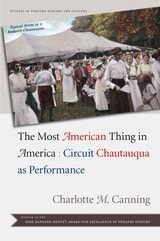
The Most American Thing in America
Circuit Chautauqua as PerformanceCanning, Charlotte M.
University of Iowa Press, 2005
Between 1904 and the Great Depression, Circuit Chautauquas toured the rural United States, reflecting and reinforcing its citizens’ ideas, attitudes, and politics every summer through music (the Jubilee Singers, an African American group, were not always welcome in a time when millions of Americans belonged to the KKK), lectures (“Civic Revivalist” Charles Zueblin speaking on “Militancy and Morals”), elocutionary readers (Lucille Adams reading from Little Lord Fauntleroy), dramas (the Ben Greet Players’ cleaned-up version of She Stoops to Conquer), orations (William Jennings Bryan speaking about the dangers of greed), and special programs for children (parades and mock weddings).
Theatre historians have largely ignored Circuit Chautauquas since they did not meet the conventional conditions of theatrical performance: they were not urban; they produced no innovative performance techniques, stage material, design effects, or dramatic literature. In this beautifully written and illustrated book, Charlotte Canning establishes an analytical framework to reveal the Circuit Chautauquas as unique performances that both created and unified small-town America.
One of the last strongholds of the American traditions of rhetoric and oratory, the Circuits created complex intersections of community, American democracy, and performance. Canning does not celebrate the Circuit Chautauquas wholeheartedly, nor does she describe them with the same cynicism offered by Sinclair Lewis. She acknowledges their goals of community support, informed public thinking, and popular education but also focuses on the reactionary and regressive ideals they sometimes embraced. In the true interdisciplinary spirit of Circuit Chautauquas, she reveals the Circuit platforms as places where Americans performed what it meant to be American.
The Noise Silence Makes
Secularity and Ghana's Drum WarsMariam Goshadze
Duke University Press, 2025
The Object of Performance
The American Avant-Garde since 1970Henry M. Sayre
University of Chicago Press, 1989
"Sayre has written one of the most intelligent, sensible, and readable accounts of the tenents of Postmodern artmaking published to date."—Jeff Abell, New Art Examiner
"No one can read The Object of Performance without gaining a far better idea than before of what has happened to art, and, in some measure, why. . . . I find this book consistently illuminating."—Arthur C. Danto
The Performance of Power
Theatrical Discourse and PoliticsSue-Ellen Case
University of Iowa Press, 1991
Recently in the field of theatre studies there has been an increasing amount of debate and dissonance regarding the borders of its territory, its methodologies, subject matter, and scholarly perspectives. The nature of this debate could be termed "political" and, in fact, concerns "the performance of power"—the struggle over power relations embedded in texts, methodologies, and the academy itself.
This striking new collection of nineteen divergent essays represents this performance of power and the way in which the recent convergence of new critical theories with historical studies has politicized the study of the theatre. Neither play text, performance, nor scholarship and teaching can safely reside any longer in the "free," politically neutral, self-signifying realm of the aesthetic. Politicizing theatrical discourse means that both the hermeneutics and the histories of theatre reveal the role of ideology and power dynamics.
New strategies and concepts—and a vital new phase of awareness—appear in these illuminating essays. A variety of historical periods, from the Renaissance through the Victorian and up to the most contemporary work of the Wooster group, illustrate the ways in which contemporary strategies do not require contemporary texts and performances but can combine with historical methods and subjects to produce new theatrical discourse.
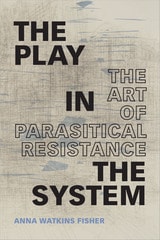
The Play in the System
The Art of Parasitical ResistanceAnna Watkins Fisher
Duke University Press, 2020
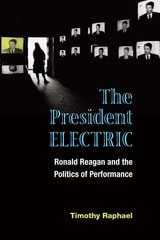
The President Electric
Ronald Reagan and the Politics of PerformanceTimothy Raphael
University of Michigan Press, 2011
"In this illuminating, multi-pronged cultural and performance history of such phenomena as Chautauqua and radio, movies, and electrical technology, Timothy Raphael puts together a compelling and sometimes revelatory narrative of how commandingly Reagan mastered the matrix of performance, technology, media, celebrity, and the 'republic of consumption' he came of age in."
---Dana Nelson, Vanderbilt University
"Garry Wills and others have written well on the phenomenon of Ronald Reagan, the actor-president, but this is the first book by a real authority---trained in performance and fully reflective about it from the inside . . . unquestionably an important contribution to the disciplinary fields of American studies and performance studies, and an important contribution to public affairs."
---Joseph Roach, Yale University
When Ronald Reagan first entered politics in 1965, his public profile as a performer in radio, film, television, and advertising and his experience in public relations proved invaluable political assets. By the time he left office in 1989, the media in which he trained had become the primary source for generating and wielding political power. The President Electric: Ronald Reagan and the Politics of Performance reveals how the systematic employment of the techniques and technologies of mass-media performance contributed to Reagan’s rise to power and defined his style of governance.
The President Electric stands out among books on Reagan as the first to bring the rich insights of the field of performance studies to an understanding of the Reagan phenomenon, connecting Reagan's training in electronic media to the nineteenth-century notion of the "fiat of electricity"---the emerging sociopolitical power of three entities (mechanical science, corporate capitalism, and mass culture) that electric technology made possible. The book describes how this new regime of cultural and political representation shaped the development of the electronic mass media that transformed American culture and politics and educated Ronald Reagan for his future role as president.
Timothy Raphael is Assistant Professor of Visual and Performing Arts and Director of the Center for Immigration at Rutgers University, Newark.
Photo: © David H. Wells/Corbis
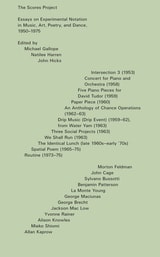
The Scores Project
Essays on Experimental Notation in Music, Art, Poetry, and Dance, 1950–1975Michael Gallope
J. Paul Getty Trust, The, 2025
Individuals working in and across the fields of visual art, music, poetry, theater, and dance in the mid–twentieth century began to use experimental scores in ways that revolutionized artistic practice and opened up new forms of interdisciplinary collaboration. Their experimental methods—associated with the neo-avant-garde, neo-Dadaism, intermedia, Fluxus, and postmodernism—exploded in notoriety during the 1960s in locales from New York to Europe, East Asia, and Latin America, becoming foundational to global trends in contemporary art and performance.
The Scores Project provides an in-depth view of this historical moment. Through expert commentaries from an interdisciplinary team of scholars with accompanying illustrations, this publication examines a series of experimental scores by John Cage, George Brecht, Sylvano Bussotti, Morton Feldman, Allan Kaprow, Alison Knowles, Jackson Mac Low, Benjamin Patterson, Yvonne Rainer, Mieko Shiomi, David Tudor, and La Monte Young. Ambitious, provocative, and playful, The Scores Project is an illuminating resource to scholars and students who seek to understand this innovative and historically complex moment in the history of art.
An expanded edition of this open-access publication is available for free online at www.getty.edu/publications/scores/. It includes more than 2,800 images, audio/video files, and interactive features. Also available are free PDF and EPUB downloads of the book.
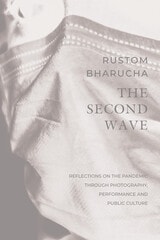
The Second Wave
Reflections on the Pandemic through Photography, Performance and Public CultureRustom Bharucha
Seagull Books, 2022
Focusing on the second wave of the Covid-19 pandemic in India between April and December 2021, Rustom Bharucha’s timely essay reflects on four interconnected realities that haunted this ongoing crisis—death, grief, mourning, and extinction. How do we cope with multiple deaths and the dislocation of rituals when the act of mourning is either postponed or denied? What roles do political surveillance, censorship, the regulation of lockdowns, and the sheer indifference to the lives of people play in the containment of civil liberties? Through vivid examples of photography, theater, dance, visual arts, and the cultures of everyday life, this meditative essay illuminates both the horror of the pandemic as well as its unexpected intimacies and revelations of shared suffering. Against the destruction of nature and the disrespect for the nonhuman, The Second Wave offers lessons in resilience through its reflections on the ethos of waiting and the need to re-envision breath as a vital resource of self-renewal and resistance.
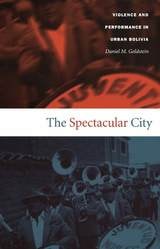
The Spectacular City
Violence and Performance in Urban BoliviaDaniel M. Goldstein
Duke University Press, 2004
During the period of Goldstein’s fieldwork in Villa Pagador in the mid-1990s, residents attempted to lynch several thieves and attacked the police who tried to intervene. Since that time, there have been hundreds of lynchings in the poor barrios surrounding Cochabamba. Goldstein presents the lynchings of thieves as a form of horrific performance, with elements of critique and political action that echo those of local festivals. He explores the consequences and implications of extralegal violence for human rights and the rule of law in the contemporary Andes. In rich detail, he provides an in-depth look at the development of Villa Pagador and of the larger metropolitan area of Cochabamba, illuminating a contemporary Andean city from both microethnographic and macrohistorical perspectives. Focusing on indigenous peoples’ experiences of urban life and their attempts to manage their sociopolitical status within the broader context of neoliberal capitalism and political decentralization, The Spectacular City highlights the deep connections between performance, law, violence, and the state.
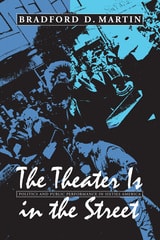
The Theater Is in the Street
Politics and Public Performance in 1960s AmericaBradford D. Martin
University of Massachusetts Press, 2004
During the 1960s, the SNCC Freedom Singers, The Living Theatre, the Diggers, the Art Workers Coalition, and the Guerrilla Art Action Group fused art and politics by staging unexpected and uninvited performances in public spaces. Through their activism and the response it provoked, art, theater, and politics began to converge and assume a new visibility in everyday life. While their specific political visions varied, these groups shared the impulse to stage performances and actions publicly—"in the streets"—eschewing museums, theaters, and other conventional halls of culture. Bradford D. Martin offers detailed portraits of each of these groups and examines why they embraced public performance as a vehicle to express and advance their politics.
At a time when the New Left and the counterculture were on the rise, these artists reflected the decade's political and cultural radicalism and helped to define a new aesthetic. Civil rights activists mobilized singing in the struggle for desegregation, introducing a vibrant musical form into the public space. The Living Theatre culminated an arduous quest to mesh artistic and political goals, leading audiences from theaters into the streets to begin the “beautiful nonviolent anarchist revolution.” The Diggers playfully engaged San Francisco's counterculture in politics with their carnivalesque public actions. The Art Workers Coalition and the Guerrilla Action Art Group sought to disrupt the conventional art world, mounting protests in and around New York City museums.
By questioning the values and assumptions that separated art from politics, these groups not only established public performance as a legitimate aesthetic but also provided a new creative vocabulary for future generations of artists. Their continued involvement with the women's liberation movement, rural communes, and political street theater into the 1970s and beyond challenges the popular myth that activists disengaged from politics after the 1960s.
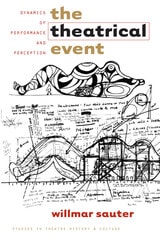
The Theatrical Event
Dynamics of Performance and PerceptionWillmar Sauter
University of Iowa Press, 2000
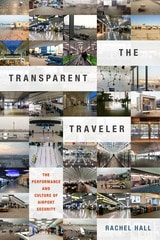
The Transparent Traveler
The Performance and Culture of Airport SecurityRachel Hall
Duke University Press, 2015
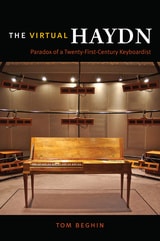
The Virtual Haydn
Paradox of a Twenty-First-Century KeyboardistTom Beghin
University of Chicago Press, 2015
With The Virtual Haydn, Tom Beghin—himself a professional keyboard player—delves deeply into eighteenth-century history and musicology to help us hear a properly complex Haydn. Unusually for a scholarly work, the book is presented in the first person, as Beghin takes us on what is clearly a very personal journey into the past. When a discussion of a group of Viennese sonatas, for example, leads him into an analysis of the contemporary interest in physiognomy, Beghin applies what he learns about the role of facial expressions during his own performance of the music. Elsewhere, he analyzes gesture and gender, changes in keyboard technology, and the role of amateurs in eighteenth-century musical culture.
The resulting book is itself a fascinating, bravura performance, one that partakes of eighteenth-century idiosyncrasy while drawing on a panoply of twenty-first-century knowledge.
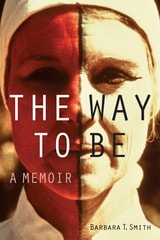
The Way to Be
A MemoirBarbara T. Smith
J. Paul Getty Trust, The, 0
For over fifty years, Barbara T. Smith has been at the forefront of artistic movements in California. Her work across many mediums explores concepts that strike at the core of human nature, including sexuality, physical and spiritual sustenance, technology, and death. In this memoir, Smith weaves together descriptive accounts of her pioneering performances with an intimate narrative of her life.
The Way to Be covers the years 1931 to 1981, up to the artist’s fiftieth birthday, resulting in an exhaustive catalogue of her early work. It reveals the personal stories and events behind her pieces and the challenges she faced in an art world dominated by sexism and machismo. Drawing on Smith’s archive at the Getty Research Institute, this enthralling book presents previously unpublished notes, documents, photographs, and firsthand accounts of her life and practice, as well as her more recent reflections on the past. The Way to Be demonstrates Smith’s lasting contributions to the field of contemporary art and provides an engaging commentary on a recent period of great cultural and political change.
This volume is published to accompany an exhibition on view at the Getty Research Institute at the Getty Center from February 28 to July 16, 2023.
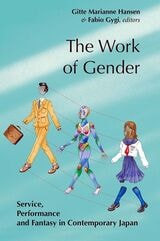
The Work of Gender
Service, Performance and Fantasy in Contemporary JapanEdited by Gitte Marianne Hansen and Fabio Gygi
National University of Singapore Press, 2022
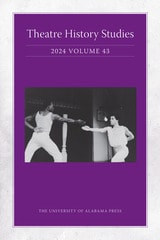
Theatre History Studies 2024, Vol 43
Edited by Jocelyn L. Buckner
University of Alabama Press, 2025
The official journal of the Mid-America Theatre Conference
Where past and performance converge—scholarship that moves the stage forward.
Theatre History Studies (THS) is a peer-reviewed journal of theatre history and scholarship published annually since 1981 by the Mid-America Theatre Conference (MATC), a regional body devoted to theatre scholarship and practice. The conference encompasses the states of Illinois, Iowa, Nebraska, Kansas, Missouri, Minnesota, North Dakota, South Dakota, Wisconsin, Indiana, Michigan, and Ohio. The purpose of the conference is to unite persons and organizations within the region with an interest in theatre and to promote the growth and development of all forms of theatre. THS is a member of the Council of Editors of Learned Journals and is included in the MLA Directory of Periodicals. THS is indexed in Humanities Index, Humanities Abstracts, Book Review Index, MLA International Bibliography, International Bibliography of Theatre, Arts & Humanities Citation Index, IBZ International Bibliography of Periodical Literature, and IBR International Bibliography of Book Reviews. Full texts of essays appear in the databases of both Humanities Abstracts Full Text as well as SIRS.
Along with books reviews on the latest publications from established and emerging voices in the field, this issue of Theatre History Studies contains four sections with two introductions, nine essays, and eleven book reviews total. In the general section, three essays offer an array of insights, methods, and provocations. In the special section titled “Manifestos for Black Theatre, Then and Now,” contributors capture their moment, their ways of working, and their experience as scholars, humans, and citizens in 2023. In part III, Ariel Nereson’s Robert A. Schanke Research Award-winning paper from the 2023 MATC conference examines collective dance histories through the Bill T. Jones/Arnie Zane Dance Company’s Continuous Replay. Taken together, volume 43 captures how this journal serves theatre historians as scholars and laborers as they work to attend and tend to their field.
CONTRIBUTORS
Daniel E. Atkinson / Ashlyn K. Barnett / David Bisaha / Jocelyn L. Buckner / Julie Burrell / Jordana Cox / Jordan Ealey / Eric M. Glover / Adam Goldstein / Chao Guo / Amy B. Huang / Ariel Nereson / Zachary F. Price / Danielle Rosvally / Letica L. Ridley / Bradford G. Sadler / Richard Sautter / Michael Schweikardt / Margo Skornia / Dennis Sloan / Josh Stenberg / Paul Michael Thomson / Scott Venters / Isaiah Matthew Wooden
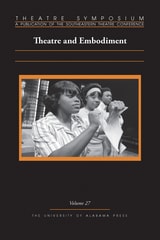
Theatre Symposium, Vol. 27
Theatre and EmbodimentEdited by Sarah McCarroll
University of Alabama Press, 2019
Theatre is inescapably about bodies. By definition, theatre requires the live bodies of performers in the same space and at the same time as the live bodies of an audience. And, yet, it’s hard to talk about bodies. We talk about characters; we talk about actors; we talk about costume and movement. But we often approach these as identities or processes layered onto bodies, rather than as inescapably entwined with them. Bodies on the theatrical stage hold the power of transformation. Theatre practitioners, scholars, and educators must think about what bodies go where onstage and what stories which bodies to tell.
The essays in Theatre Symposium, Volume 27 explore a broad range of issues related to embodiment. The volume begins with Rhonda Blair’s keynote essay, in which she provides an overview of the current cognitive science underpinning our understanding of what it means to be “embodied” and to talk about “embodiment.” She also provides a set of goals and cautions for theatre artists engaging with the available science on embodiment, while issuing a call for the absolute necessity for that engagement, given the primacy of the body to the theatrical act.
The following three essays provide examinations of historical bodies in performance. Timothy Pyles works to shift the common textual focus of Racinian scholarship to a more embodied understanding through his examination of the performances of the young female students of the Saint-Cyr academy in two of Racine’s Biblical plays. Shifting forward in time by three centuries, Travis Stern’s exploration of the auratic celebrity of baseball player Mike Kelly uncovers the ways in which bodies may retain the ghosts of their former selves long after physical ability and wealth are gone. Laurence D. Smith’s investigation of actress Manda Björling’s performances in Miss Julie provides a model for how cognitive science, in this case theories of cognitive blending, can be integrated with archival theatrical research and scholarship.
From scholarship grounded in analysis of historical bodies and embodiment, the volume shifts to pedagogical concerns. Kaja Amado Dunn’s essay on the ways in which careless selection of working texts can inflict embodied harm on students of color issues an imperative call for careful and intentional classroom practice in theatre training programs. Cohen Ambrose’s theorization of pedagogical cognitive ecologies, in which subjects usually taught disparately (acting, theatre history, costume design, for example) could be approached collaboratively and through embodiment, speaks to ways in which this call might be answered.
Tessa Carr’s essay on "The Integration of Tuskegee High School" brings together ideas of historical bodies and embodiment in the academic theatrical context through an examination of the process of creating a documentary theatre production. The final piece in the volume, Bridget Sundin’s exchange with the ghost of Marlene Dietrich, is an imaginative exploration of how it is possible to open the archive, to create new spaces for performance scholarship, via an interaction with the body.
Theatre and Performance in Small Nations
Edited by Steve Blandford
Intellect Books, 2013
Theatre for Lifelong Learning
A Handbook for Instructors, Older Adults, Communities, and ArtistsLinda Lau and Rae Mansfield
Intellect Books, 2024
Theatre for Lifelong Learning is a step-by-step guide for anyone interested in teaching theatre courses and creating theatre with older adults. This book provides instructors with syllabi, discussion questions, classroom management strategies, resource lists, and activities to teach courses from beginning to end. Special topics include playwriting, play development, storytelling, theatre appreciation, theatre criticism, theatre history, and theatre theory.
Older adult theatre courses support emotional well-being and the development of artistic communities and anyone can contribute to lifelong learning as an instructor. If you are new to theatre and theatre education, Theatre for Lifelong Learning offers tips throughout to assist you in creating accessible environments and making courses your own. If you have a background in performing arts, this book enriches your experience with interdisciplinary approaches to share your expertise. If you are an educator, it provides useful strategies to adapt your current skill set for the theatre classroom.
Regardless of your experience, you can help older adults connect, engage, and create. You may find yourself learning, exploring, and experimenting alongside your students. Teaching older adults theatre will contribute to your own enjoyment. In theatre, everyone gets to have fun!
Theatre for Youth Third Space
Performance, Democracy, and Community Cultural DevelopmentStephani Etheridge Woodson
Intellect Books, 2015
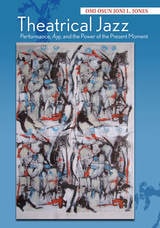
Theatrical Jazz
Performance, À??, and the Power of the Present MomentOmi Osun Joni L. Jones
The Ohio State University Press, 2015
Theatrical Jazz examines how artists are made and how artists make art. In charting their overlapping artistic genealogies, the book also discusses the work of veteran artists Aishah Rahman, Robbie McCauley, Sekou Sundiata, Ntozake Shange, and Erik Ehn, as well as the next generation of theatrical jazz innovators, Grisha Coleman, Walter Kitundu, Florinda Bryant, and Zell Miller III. Using autocritography as a primary methodology, the author draws on her role as performer, collaborator, audience/witness, and dramaturg in theatrical jazz, and her experiences with Yoruba spiritual traditions, to excavate the layers and nuances of this performance form. Jones’s use of performative writing, a blend of intellectual, artistic, and sensory experiences, allows scholars and students not only to read but also to “hear” the principles of theatrical jazz on the page.
Theatrical Reality
Space, Embodiment and Empathy in PerformanceCampbell Edinborough
Intellect Books, 2016
Theatricality Beyond Disciplines
Amin Erfani
Intellect Books, 2025
In Theatricality Beyond Disciplines, Amin Erfani expands the concept of theatricality beyond the stage, tracing its destabilizing power through literature, psychoanalysis, media, and philosophy. Drawing on Artaud’s vision of theater as an unpredictable, contagious force—what he called “the return of the repressed”—the book rejects the Aristotelian idea of theater as a space of healing. Instead, it frames it as an unsettling intervention into systems of power and meaning.
Through close readings of Artaud, Genet, Novarina, Koltès, and theorists like Freud, Barthes, and Derrida, Erfani reveals how theatricality operates primarily in the aural rather than the visual mode, inciting paranoia, psychic contamination, and ruptures in language. A provocative challenge to disciplinary boundaries, this book suits any student or scholar interested in examining the relationship between theater and theoretical discourse, posing theatricality as a site of radical otherness and transformation.
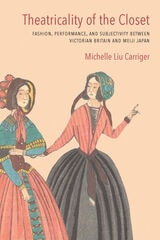
Theatricality of the Closet
Fashion, Performance, and Subjectivity between Victorian Britain and Meiji JapanMichelle Liu Carriger
Northwestern University Press, 2023
Clothing matters. This basic axiom is both common sense and, in another way, radical. It is from this starting point that Michelle Liu Carriger elucidates the interconnected ways in which gender, sexuality, class, and race are created by the everyday act of getting dressed. Theatricality of the Closet: Fashion, Performance, and Subjectivity between Victorian Britain and Meiji Japan examines fashion and clothing controversies of the nineteenth century, drawing on performance theory to reveal how the apparently superficial or frivolous deeply affects the creation of identity.
By interrogating a set of seemingly disparate examples from the same period but widely distant settings—Victorian Britain and Meiji-era Japan—Carriger disentangles how small, local, ordinary practices became enmeshed in a global fabric of cultural and material surfaces following the opening of trade between these nations in 1850. This richly illustrated book presents an array of media, from conservative newspapers and tabloids to ukiyo-e and early photography, that locate dress as a site where the individual and the social are interwoven, whether in the 1860s and 1870s or the twenty-first century.
Theory and Practice in Eighteenth-Century Dance
The German-French ConnectionTilden Russell
University of Delaware Press, 2017
This book is about the intersection of two evolving dance-historical realms—theory and practice—during the first two decades of the eighteenth century. France was the source of works on notation, choreography, and repertoire that dominated European dance practice until the 1780s. While these French inventions were welcomed and used in Germany, German dance writers responded by producing an important body of work on dance theory. This book examines consequences in Germany of this asymmetrical confrontation of dance perspectives.
Between 1703 and 1717 in Germany, a coherent theory of dance was postulated that called itself dance theory, comprehended why it was a theory, and clearly, rationally distinguished itself from practice. This flowering of dance-theoretical writing was contemporaneous with the appearance of Beauchamps-Feuillet notation in the Chorégraphie of Raoul Auger Feuillet (Paris, 1700, 1701). Beauchamps-Feuillet notation was the ideal written representation of the dance style known as la belle danse and practiced in both the ballroom and the theater. Its publication enabled the spread of belle danse to the French provinces and internationally. This spread encouraged the publication of new practical works (manuals, choreographies, recueils) on how to make steps and how to dance current dances, as well as of new dance treatises, in different languages.
The Rechtschaffener Tantzmeister, by Gottfried Taubert (Leipzig, 1717), includes a translated edition of Feuillet’s Chorégraphie. Theory and Practice in Eighteenth-Century Dance addresses how Taubert and his contemporary German authors of dance treatises (Samuel Rudolph Behr, Johann Pasch, Louis Bonin) became familiar with Beauchamps-Feuillet notation and acknowledged the Chorégraphie in their own work, and how Taubert’s translation of the Chorégraphie spread its influence northward and eastward in Europe. This book also examines the personal and literary interrelationships between the German writers on dance between 1703 and 1717 and their invention of a theoria of dance as a counterbalance to dance praxis, comparing their dance-theoretical ideas with those of John Weaver in England, and assimilating them all in a cohesive and inclusive description of dance theory in Europe by 1721.
Published by University of Delaware Press. Distributed worldwide by Rutgers University Press.
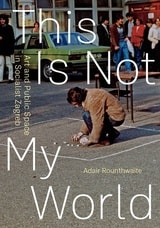
This Is Not My World
Art and Public Space in Socialist ZagrebAdair Rounthwaite
University of Minnesota Press, 2024
A close-up history of the Yugoslav artists who broke down the boundaries between public and private
In the decades leading up to the dissolution of socialist Yugoslavia, a collective of young artists based in Zagreb took to using the city’s public spaces as a platform for radical individual expression. This Is Not My World presents a detailed account of the Group of Six Authors and their circle in the prolific and experimental period from 1975 to 1985, highlighting the friction between public and private that underlied their innovative practices.
Looking to circumvent the rigid bureaucracy of official art institutions, this freewheeling group of conceptual artists and their peers brought artistic activities directly to an unwitting public by staging provocative performances, exhibiting artworks, and interacting with passersby on the streets. Exploring artworks such as Vlasta Delimar’s act of tying herself to a tree in a busy pedestrian area, Željko Jerman’s production of a giant banner declaring “Intimate Inscription” in the city’s central square, and Vlado Martek’s creation of an artwork on a seaside beach using women’s underwear, Adair Rounthwaite examines the work of these artists as a site of tension between the intimacy of artistic expression and the political structure of the public sphere under state socialism.
Whereas many histories of modern and contemporary art in formerly socialist countries tend to be dominated by discussions of ideology and resistance, This Is Not My World focuses its attention on the affective aspects of the group’s activities, using artist interviews and extensive documentation to bring the reader closer to the felt experience of their public interventions. Situating the group’s work within the context of broader developments in conceptualism and theories of the avant-garde, Rounthwaite provides a fresh consideration and newly detailed account of this marginalized episode in global art history.
This Wide and Universal Theater
Shakespeare in Performance, Then and NowDavid Bevington
University of Chicago Press, 2007
Many readers first encounter Shakespeare’s plays in a book rather than a theater. Yet Shakespeare was through and through a man of the stage. So what do we lose when we leave Shakespeare the practitioner behind, and what do we learn when we think about his plays as dramas to be performed?
David Bevington answers these questions with This Wide and Universal Theater, which explores how Shakespeare’s plays were produced both in his own time and in succeeding centuries. Making use of historical documents and the play scripts themselves, Bevington brings Shakespeare’s original stagings to life. He explains how the Elizabethan playhouse conveyed a sense of place using minimal scenery, from the Forest of Arden in As You Like It to the tavern in Henry IV, Part I. Moving beyond Shakespeare’s lifetime, Bevington shows the prodigious lengths to which eighteenth- and nineteenth-century companies went to produce spectacular effects, from flying witches in Macbeth to terrifying storms punctuating King Lear. To bring the book into the present, Bevington considers recent productions on both stage and screen, when character and language have taken precedence over spectacle. This volume brings a lifetime of study to bear on a remarkably underappreciated aspect of Shakespeare’s art.
“An eminent Shakespeare scholar and author, Bevington offers a concise, lucid, and unique overview of the history of Shakespeare in various modes of performance, from stage to film to television.”—Choice
“Even veteran Shakespeareans will profit from the varied reminders of how important performance and staging have always been to the interpretation of the plays.”—Renaissance Quarterly
Touched Bodies
The Performative Turn in Latin American ArtMara Polgovsky Ezcurra
Rutgers University Press, 2019
Winner of the 2019 Art Journal Prize from the College Art Association
What is the role of pleasure and pain in the politics of art? In Touched Bodies, Mara Polgovsky Ezcurra approaches this question as she examines the flourishing of live and intermedial performance in Latin America during times of authoritarianism and its significance during transitions to democracy. Based on original documents and innovative readings, her book brings politics and ethics to the discussion of artistic developments during the “long 1980s”. She describes the rise of performance art in the context of feminism, HIV-activism, and human right movements, taking a close look at the work of Diamela Eltit and Raúl Zurita from Chile, León Ferrari and Liliana Maresca from Argentina, and Marcos Kurtycz, the No Grupo art collective, and Proceso Pentágono from Mexico. The comparative study of the work of these artists attests to a performative turn in Latin American art during the 1980s that, like photography and film before, recast the artistic field as a whole, changing the ways in which we perceive art and understand its role in society.