Results by title
230 books match the query 'Physics' and 46 start with t
The Age of Everything
How Science Explores the PastMatthew Hedman
University of Chicago Press, 2007
Hedman details, for example, how interdisciplinary studies of the Great Pyramids of Egypt can determine exactly when and how these incredible structures were built. He shows how the remains of humble trees can illuminate how the surface of the sun has changed over the past ten millennia. And he also explores how the origins of the earth, solar system, and universe are being discerned with help from rocks that fall from the sky, the light from distant stars, and even the static seen on television sets.
Covering a wide range of time scales, from the Big Bang to human history, The Age of Everything is a provocative and far-ranging look at how science has determined the age of everything from modern mammals to the oldest stars, and will be indispensable for all armchair time travelers.
“We are used to being told confidently of an enormous, measurable past: that some collection of dusty bones is tens of thousands of years old, or that astronomical bodies have an age of some billions. But how exactly do scientists come to know these things? That is the subject of this quite fascinating book. . . . As told by Hedman, an astronomer, each story is a marvel of compressed exegesis that takes into account some of the most modern and intriguing hypotheses.”—Steven Poole, Guardian
The Best of All Possible Worlds
Mathematics and DestinyIvar Ekeland
University of Chicago Press, 2006
Optimists believe this is the best of all possible worlds. And pessimists fear that might really be the case. But what is the best of all possible worlds? How do we define it? Is it the world that operates the most efficiently? Or the one in which most people are comfortable and content? Questions such as these have preoccupied philosophers and theologians for ages, but there was a time, during the seventeenth and eighteenth centuries, when scientists and mathematicians felt they could provide the answer.
This book is their story. Ivar Ekeland here takes the reader on a journey through scientific attempts to envision the best of all possible worlds. He begins with the French physicist Maupertuis, whose least action principle asserted that everything in nature occurs in the way that requires the least possible action. This idea, Ekeland shows, was a pivotal breakthrough in mathematics, because it was the first expression of the concept of optimization, or the creation of systems that are the most efficient or functional. Although the least action principle was later elaborated on and overshadowed by the theories of Leonhard Euler and Gottfried Leibniz, the concept of optimization that emerged from it is an important one that touches virtually every scientific discipline today.
Tracing the profound impact of optimization and the unexpected ways in which it has influenced the study of mathematics, biology, economics, and even politics, Ekeland reveals throughout how the idea of optimization has driven some of our greatest intellectual breakthroughs. The result is a dazzling display of erudition—one that will be essential reading for popular-science buffs and historians of science alike.
The Creation of Scientific Effects
Heinrich Hertz and Electric WavesJed Z. Buchwald
University of Chicago Press, 1994
Drawing on the lab notes, published papers, and unpublished manuscripts of Heinrich Hertz, Buchwald recreates Hertz's 1887 invention of a device that produced electromagnetic waves in wires. The invention itself was serendipitous and the device was quickly transformed, but Hertz's early experiments led to major innovations in electrodynamics. Buchwald explores the difficulty Hertz had in reconciling the theories of other physicists, including Hermann von Helmholtz and James Clerk Maxwell, and he considers the complex and often problematic connections between theory and experiment.
In this first detailed scientific biography of Hertz and his scientific community, Buchwald demonstrates that tacit knowledge can be recovered so that we can begin to identify the unspoken rules that govern scientific practice.
The Dancing Universe
From Creation Myths to the Big BangMarcelo Gleiser
Dartmouth College Press, 2005
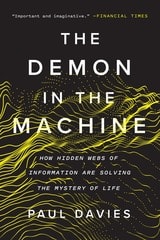
The Demon in the Machine
How Hidden Webs of Information Are Solving the Mystery of LifePaul Davies
University of Chicago Press, 1991
A Financial Times, Sunday Times, and Telegraph Best Science Book of the Year
What is life? For generations, scientists have struggled to make sense of this fundamental question, for life really does look like magic: even a humble bacterium accomplishes things so dazzling that no human engineer can match it. Huge advances in molecular biology over the past few decades have served only to deepen the mystery.
In this penetrating and wide-ranging book, world-renowned physicist and science communicator Paul Davies searches for answers in a field so new and fast-moving that it lacks a name; it is a domain where biology, computing, logic, chemistry, quantum physics, and nanotechnology intersect. At the heart of these diverse fields, Davies explains, is the concept of information: a quantity which has the power to unify biology with physics, transform technology and medicine, and force us to fundamentally reconsider what it means to be alive—even illuminating the age-old question of whether we are alone in the universe.
From life’s murky origins to the microscopic engines that run the cells of our bodies, The Demon in the Machine journeys across an astounding landscape of cutting-edge science. Weaving together cancer and consciousness, two-headed worms and bird navigation, Davies reveals how biological organisms garner and process information to conjure order out of chaos, opening a window onto the secret of life itself.
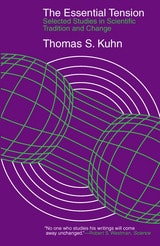
The Essential Tension
Selected Studies in Scientific Tradition and ChangeThomas S. Kuhn
University of Chicago Press, 1977
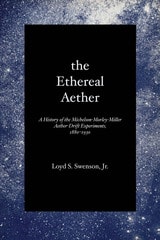
The Ethereal Aether
A History of the Michelson-Morley-Miller Aether-drift Experiments, 1880-1930By Loyd S. Swenson, Jr.
University of Texas Press, 1972
The Ethereal Aether is a historical narrative of one of the great experiments in modern physical science. The fame of the 1887 Michelson-Morley aether-drift test on the relative motion of the earth and the luminiferous aether derives largely from the role it is popularly supposed to have played in the origins, and later in the justification, of Albert Einstein’s first theory of relativity; its importance is its own.
As a case history of the intermittent performance of an experiment in physical optics from 1880 to 1930 and of the men whose work it was, this study describes chronologically the conception, experimental design, first trials, repetitions, influence on physical theory, and eventual climax of the optical experiment. Michelson, Morley, and their colleague Miller were the prime actors in this half-century drama of confrontation between experimental and theoretical physics.
The issue concerned the relative motion of “Spaceship Earth” and the Universe, as measured against the background of a luminiferous medium supposedly filling all interstellar space. At stake, it seemed, were the phenomena of astronomical aberration, the wave theory of light, and the Newtonian concepts of absolute space and time.
James Clerk Maxwell’s suggestion for a test of his electromagnetic theory was translated by Michelson into an experimental design in 1881, redesigned and reaffirmed as a null result with Morley in 1887, thereafter modified and partially repeated by Morley and Miller, finally completed in 1926 by Miller alone, then by Michelson’s team again in the late 1920s.
Meanwhile Helmholtz, Kelvin, Rayleigh, FitzGerald, Lodge, Larmor, Lorentz, and Poincaré—most of the great names in theoretical physics at the turn of the twentieth century—had wrestled with the anomaly presented by Michelson’s experiment. As the relativity and quantum theories matured, wave-particle duality was accepted by a new generation of physicists. The aether-drift tests disproved the old and verified the new theories of light and electromagnetism. By 1930 they seemed to explain Einstein, relativity, and space-time. But in historical fact, the aether died only with its believers.
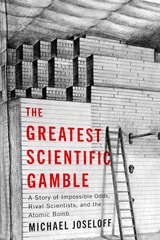
The Greatest Scientific Gamble
A Story of Impossible Odds, Rival Scientists, and the Atomic BombMichael Joseloff
Michigan State University Press, 2026
During World War II, a group of physicists who had once been close friends found themselves on opposite sides of a deadly race. German scientist Werner Heisenberg and American physicists Robert Oppenheimer, Enrico Fermi, and Sam Goudsmit were all leading figures in nuclear research. But after the attack on Pearl Harbor, their shared passion for science turned into a high-stakes competition to build the world’s first atomic bomb—a weapon that could determine the outcome of the war. Heisenberg had a two-year head start, and the possibility that Nazi Germany might beat the Allies to the bomb terrified American scientists. The Manhattan Project, led by U.S. Army General Leslie Groves, became a massive effort to catch up. Fear of Heisenberg haunted Manhattan Project scientists. At one point, Groves even approved plans to bomb Heisenberg’s lab and assassinate him to stop Germany’s progress. Meanwhile, Sam Goudsmit led a secret military unit tasked with tracking down Heisenberg and uncovering the truth about the Nazi nuclear program. What they found would surprise everyone. The Greatest Scientific Gamble tells the dramatic and little-known story of how personal relationships, wartime fear, and scientific ambition collided in the race to unlock the power of the atom.
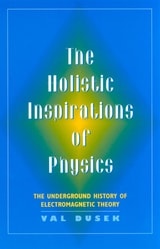
The Holistic Inspiration of Physics
The Underground History of Electromagnetic TheoryDusek, Val
Rutgers University Press, 1999
While many books have claimed parallels between modern physics and Eastern philosophy, none have dealt with the historical influences of both Chinese traditional thought and non-mechanistic, holistic western thought on the philosophies of the scientists who developed electromagnetic field theory. In The Holistic Inspirations of Physics, R. Valentine Dusek asks: to what extent is classical field theory a product of organic and holistic philosophies and frameworks?
Electromagnetic theory has been greatly influenced by holistic worldviews, Dusek posits, and he highlights three alternative scientific systems that made the development of electromagnetic theory possible: medieval Chinese science, Western Renaissance occultism, and the German romantic traditions. He situates these "alternative" approaches in their social context and background, and traces their connection with components of “accepted” physical science in relation to a number of social movements and philosophical theories.
Readers will learn of specific contributions made by these alternative traditions, such as the Chinese inventing the compass and discovering the earth's magnetic field and magnetic declination. Western alchemical ideas of active forces and "occult" influences contributed to Newton's theory of gravitation force as action at a distance, rather as a result of purely mechanical collisions and contact action.
Dusek also describes the extent to which women's culture supplied (often without credit) the philosophical background ideas that were absorbed into mainstream field theory.
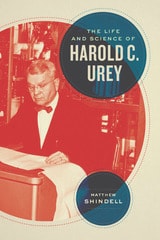
The Life and Science of Harold C. Urey
Matthew Shindell
University of Chicago Press, 2019
From Urey’s orthodox religious upbringing to his death in 1981, Shindell follows the scientist through nearly a century of American history: his discovery of deuterium and heavy water earned him the Nobel Prize in 1934, his work on the Manhattan Project helped usher in the atomic age, he initiated a generation of American scientists into the world of quantum physics and chemistry, and he took on the origin of the Moon in NASA’s lunar exploration program. Despite his success, however, Urey had difficulty navigating the nuclear age. In later years he lived in the shadow of the bomb he helped create, plagued by the uncertainties unleashed by the rise of American science and unable to reconcile the consequences of scientific progress with the morality of religion.
Tracing Urey’s life through two world wars and the Cold War not only conveys the complex historical relationship between science and religion in the twentieth century, but it also illustrates how these complexities spilled over into the early days of space science. More than a life story, this book immerses readers in the trials and triumphs of an extraordinary man and his extraordinary times.
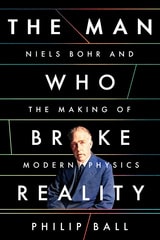
The Man Who Broke Reality
Niels Bohr and the Making of Modern PhysicsPhilip Ball
University of Chicago Press, 2026
From the brilliant Philip Ball, a thrilling biography of Nobel Prize–winning Danish physicist Niels Bohr, the most radical quantum mechanician of all.
In the first half of the twentieth century, the tremendous energy locked up in the nucleus of an atom was discovered and then liberated, bringing both the promise of utopia and the threat of apocalypse. The dawn of the nuclear age is often associated with Albert Einstein, whose iconic equation E = mc2 revealed the staggering energy available from radioactive transformation, or with J. Robert Oppenheimer, who led the project at Los Alamos to build the first nuclear bombs. But the person who arguably did more than any other to shape the Promethean era in which we now live was the Danish physicist Niels Bohr.
In The Man Who Broke Reality, renowned science communicator Philip Ball reveals that it was Bohr who first explained the physics of the nuclear atom, and it was his model of the atom’s dense nucleus that enabled scientists to understand how it could be split apart. Ball also shows how Bohr was the central figure in the development of quantum mechanics, the theory of matter and energy that destabilized centuries of thinking not just about the microscopic nature of the world but about physical reality itself.
Bohr’s story is the story of modern physics and its transformative impact on the world. But The Man Who Broke Reality is not merely an intellectual drama. It chronicles a heroic life lived in turbulent times, across two world wars, the Manhattan Project, and the arms race of the Cold War. And it establishes Bohr as one of the most profound, inventive, and iconoclastic thinkers of the twentieth century.
The Man Who Broke Reality
Niels Bohr and the Making of Modern PhysicsPhilip Ball
University of Chicago Press, 2026
From the brilliant Philip Ball, a thrilling biography of Nobel Prize–winning Danish physicist Niels Bohr, the most radical quantum mechanician of all.
In the first half of the twentieth century, the tremendous energy locked up in the nucleus of an atom was discovered and then liberated, bringing both the promise of utopia and the threat of apocalypse. The dawn of the nuclear age is often associated with Albert Einstein, whose iconic equation E = mc2 revealed the staggering energy available from radioactive transformation, or with J. Robert Oppenheimer, who led the project at Los Alamos to build the first nuclear bombs. But the person who arguably did more than any other to shape the Promethean era in which we now live was the Danish physicist Niels Bohr.
In The Man Who Broke Reality, renowned science communicator Philip Ball reveals that it was Bohr who first explained the physics of the nuclear atom, and it was his model of the atom’s dense nucleus that enabled scientists to understand how it could be split apart. Ball also shows how Bohr was the central figure in the development of quantum mechanics, the theory of matter and energy that destabilized centuries of thinking not just about the microscopic nature of the world but about physical reality itself.
Bohr’s story is the story of modern physics and its transformative impact on the world. But The Man Who Broke Reality is not merely an intellectual drama. It chronicles a heroic life lived in turbulent times, across two world wars, the Manhattan Project, and the arms race of the Cold War. And it establishes Bohr as one of the most profound, inventive, and iconoclastic thinkers of the twentieth century.
The New Flatlanders
A Seeker's Guide to the Theory of EverythingEric Middleton
Templeton Press, 2007
In The New Flatlanders, teacher, scientist, and chaplain Eric Middleton challenges traditional ways of looking at reality by engaging readers in a "voyage of discovery starting with questions." The book engagingly begins with a discussion group embarking on an exploratory conversation about the nature of the universe and the place of human beings in it. Daunting questions emerge, such as "How can there possibly be a tear or hole in three-dimensional space? And if there is a hole, can something fall through it? Where would it fall to?" In short order, students and teacher are on a quest to develop a "working theory of everything" that takes them from stone circles to quarks, superstrings, quantum theory, the anthropic principle, evolution, consciousness, miracles, chaos, and the spiritual universe.
The key to exploring these questions is finding a language with which to talk about the awe and wonder of today's science alongside the joy of experiencing the spiritual. This is done by interweaving into the discussions the philosophy of "Flatland," a nonreligious entry point to Jesus posited by nineteenth-century clergyman and educator Edwin A. Abbott in his classic parable Flatland: A Romance of Many Dimensions.
The Newton Wars and the Beginning of the French Enlightenment
J. B. Shank
University of Chicago Press, 2008
A comprehensive study of public culture, The Newton Wars and the Beginning of the French Enlightenment digsbelow the surface of the commonplace narratives that link Newton with Enlightenment thought to examine the actual historical changes that brought them together in eighteenth-century time and space. Drawing on the full range of early modern scientific sources, from studied scientific treatises and academic papers to book reviews, commentaries, and private correspondence, J. B. Shank challenges the widely accepted claim that Isaac Newton’s solitary genius is the reason for his iconic status as the father of modern physics and the philosophemovement.
The Nuclear Muse
Literature, Physics, and the First Atomic BombsJohn Canaday
University of Wisconsin Press, 2000

The Optics of Ibn al-Haytham Books IV–V
On Reflection and Images Seen by ReflectionAbdelhamid I. Sabra
University of London Press, 2023
Ibn al-Haytham was perhaps the greatest mathematician and physicist of the medieval Arabic/Islamic world. The most famous book in which he applied his scientific method is his Optics, through which he dealt with both the mathematics of rays of light and the physical aspects of the eye in seven comprehensive books. His rethinking of the entire science of optics set the scene for the whole of the subsequent development of the subject, influencing figures such as William of Ockham, Kepler, Descartes, and Christaan Huygens. The immense work of editing, translating into English, and commenting on this work was undertaken by Abdelhamid I. Sabra. This English translation of Books IV–V was completed by Sabra just before his death in 2013 with an introduction and critical analysis. It has been extensively revised by Jan Hogendijk.
The Physics and Technology of Semiconductor Devices
David K. Ferry
The Institution of Engineering and Technology, 2026
The Physics of Extragalactic Radio Sources
David S. De Young
University of Chicago Press, 2002
In The Physics of Extragalactic Radio Sources, David De Young provides a clearly written overview of what is currently known about these objects. A unique feature of the book is De Young's emphasis on the physical processes associated with extragalactic radio sources: their evolution, their environment, and their use as probes to solve other astrophysical problems. He also makes extensive use of the large amount of data now available from observations at x-ray, optical, and radio wavelengths to illustrate his main points.
The Physics of Extragalactic Radio Sources will be a comprehensive introduction to the field for graduate students and a useful summary for astrophysicists.
The Physics of Time Reversal
Robert G. Sachs
University of Chicago Press, 1987
In The Physics of Time Reversal, Robert G. Sachs comprehensively treats the role of the transformation T, both as a tool for analyzing the structure of matter and as a field of fundamental research relating to CP violation. For this purpose he reformulates the definitions of T, P, and C so as to avoid subliminal assumptions of invariance. He summarizes the standard phenomenology of CP violation in the K-meson system and addresses the question of the mysterious origin of CP violation. Using simple examples based on the standard quark model, Sachs summarizes and illustrates how these phenomenological methods can be extended to analysis of future experiments on heavy mesons. He notes that his reformulated approach to conventional quantum field theory leads to new questions about the meaning of the transformations in the context of recent theoretical developments such as non-Abelian gauge theories, and he suggests ways in which these questions may lead to new directions of research.

The Potentials About a Point Electrode and Apparent Resistivity Curves for a Two-, Three-, and Four-Layer Earth
Harold M. Mooney and W. W. Wetzel
University of Minnesota Press, 1956
The Potentials About a Point Electrode and Apparent Resistivity Curves for a Two-, Three-, and Four-Layer Earth was first published in 1956. Minnesota Archive Editions uses digital technology to make long-unavailable books once again accessible, and are published unaltered from the original University of Minnesota Press editions.
This publication will be useful to geophysicists, geologists, and others engaged in exploration for minerals by electrical methods, and may be used in theoretical studies of electrical prospecting. It makes available for the first time a comprehensive collection of 2268 master resistivity curves for a two-, three-, and four-layer earth. All previous collections of curves for Wenner electrode configuration are included, so the user will not need to refer elsewhere to complete his set of working curves. In addition, the basic potential data used in computing the curves is given in tables. Auxiliary tables are provided to reduce the graphic integration procedures to simple arithmetic. The integral in question occurs widely in solutions to Laplace's equation.
The Pursuit of Harmony
Kepler on Cosmos, Confession, and CommunityAviva Rothman
University of Chicago Press, 2017
Harmony, Rothman shows, was both the intellectual bedrock for and the primary goal of Kepler’s disparate endeavors. But it was also an elusive goal amid the deteriorating conditions of his world, as the political order crumbled and religious war raged. In the face of that devastation, Kepler’s hopes for his theories changed: whereas he had originally looked for a unifying approach to truth, he began instead to emphasize harmony as the peaceful coexistence of different views, one that could be fueled by the fundamentally nonpartisan discipline of mathematics.
The Reporter's Handbook on Nuclear Materials, Energy & Waste Management
Michael R. Greenberg
Vanderbilt University Press, 2009
Each "brief" is based on interviews with named scientists, engineers, or administrators in a nuclear specialty, and each has been reviewed by a team of independent experts. The objective is not to make a case for or against nuclear-related technologies, but rather to provide definitive background information. (The approach is based on that of The Reporter's Environmental Handbook, published in 1988, which won a special award for journalism from the Sigma Delta Chi Society of professional journalists.)
Other features of the book include: a glossary of hundreds of terms, an introduction to risk assessment, environmental and economic impacts, and public perceptions, an article by an experienced reporter with recommendations about how to cover nuclear issues, quick guides to the history of nuclear power in the United States, important federal legislation and regulations, nuclear position statements, and key organizations, print and electronic resources.
The Rise of the Wave Theory of Light
Optical Theory and Experiment in the Early Nineteenth CenturyJed Z. Buchwald
University of Chicago Press, 1989
The Science of Energy
A Cultural History of Energy Physics in Victorian BritainCrosbie Smith
University of Chicago Press, 1999
Replacing the language and concepts of classical mechanics with terms such as "actual" and "potential" energy, the North British group conducted their revolution in physics so astutely and vigorously that the concept of "energy"—a valuable commodity in the early days of industrialization—became their intellectual property. Smith skillfully places this revolution in its scientific and cultural context, exploring the actual creation of scientific knowledge during one of the most significant episodes in the history of physics.
The Second Creation
Makers of the Revolution in Twentieth-Century PhysicsCrease, Robert P
Rutgers University Press, 1996
The Second Creation tells the story of some of the most talented and idiosyncratic people in the world--many times in their own words. Crease and Mann conducted hundreds of interviews to capture the thinking and the personalities as well as the science. The authors make this complex subject matter clear and absorbing.
The Shaky Game
Arthur Fine
University of Chicago Press, 1996
"What really led Einstein . . . to renounce the new quantum order? For those interested in this question, this book is compulsory reading."—Harvey R. Brown, American Journal of Physics
"Fine has successfully combined a historical account of Einstein's philosophical views on quantum mechanics and a discussion of some of the philosophical problems associated with the interpretation of quantum theory with a discussion of some of the contemporary questions concerning realism and antirealism. . . . Clear, thoughtful, [and] well-written."—Allan Franklin, Annals of Science
"Attempts, from Einstein's published works and unpublished correspondence, to piece together a coherent picture of 'Einstein realism.' Especially illuminating are the letters between Einstein and fellow realist Schrödinger, as the latter was composing his famous 'Schrödinger-Cat' paper."—Nick Herbert, New Scientist
"Beautifully clear. . . . Fine's analysis is penetrating, his own results original and important. . . . The book is a splendid combination of new ways to think about quantum mechanics, about realism, and about Einstein's views of both."—Nancy Cartwright, Isis
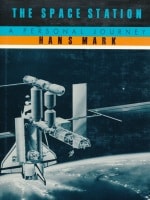
The Space Station
A Personal JourneyHans Mark
Duke University Press, 1987
In The Space Station the story of this debate is told by Hans mark, who had major roles in the development of the space shuttle from its beginnings in the sixties and who bore a primary responsibility for overseeing the space station project during the decisive years from 1981 to 1984. Mark's appointment to the post of deputy administrator of NASA capped a career devoted to the development and management of space technology—he served as director of NASA's Ames Research Center, then as under secretary and later secretary of the U.S. Air Force. Serving under both President Carter and President Reagan, mark is uniquely able to chronicle the intricate process by which the space shuttle became a reality and the space station an acknowledged goal of the American space effort.
A scientist by training, Mark's account of his career in the space program is the story of a personal dream as well as the story of a vast public enterprise whose human side is only now being fully appreciated.

The Spanish Disquiet
The Biblical Natural Philosophy of Benito Arias MontanoMaría M. Portuondo
University of Chicago Press, 2019
Foremost among them was Benito Arias Montano—Spain’s most prominent biblical scholar and exegete of the sixteenth century. He was also a widely read member of the European intellectual community, and his motivation to reform natural philosophy shows that the Spanish Disquiet was a local manifestation of greater concerns about Aristotelian natural philosophy that were overtaking Europe on the eve of the Scientific Revolution. His approach to the study of nature framed the natural world as unfolding from a series of events described in the Book of Genesis, ultimately resulting in a new metaphysics, cosmology, physics, and even a natural history of the world. By bringing Arias Montano’s intellectual and personal biography into conversation with broader themes that inform histories of science of the era, The Spanish Disquiet ensures an appreciation of the variety and richness of Arias Montano’s thought and his influence on early modern science.
The Story of Spin
Sin-itiro Tomonaga
University of Chicago Press, 1998
"This piece of the history of physics will provide excellent and exciting reading. . . . It also provides the personal touch of an expert in the field that is so often lacking in the physics literature. I recommend it very highly."—Fritz Rohrlich, Physics Today
Sin-itiro Tomonaga was awarded the Nobel Prize for Physics in 1965.
The Sun in Time
Edited by C. P. Sonett, M. S. Giampapa, and M. S. Matthews
University of Arizona Press, 1991
The Whale and the Reactor
A Search for Limits in an Age of High Technology, Second EditionLangdon Winner
University of Chicago Press, 2020
First published to great acclaim in 1988, Langdon Winner’s groundbreaking exploration of the political, social, and philosophical implications of technology is timelier than ever. He demonstrates that choices about the kinds of technical systems we build and use are actually choices about who we want to be and what kind of world we want to create—technical decisions are political decisions, and they involve profound choices about power, liberty, order, and justice. A seminal text in the history and philosophy of science, this new edition includes a new chapter, preface, and postscript by the author.
Theoretical Principles in Astrophysics and Relativity
Norman R. Lebovitz, William H. Reid, and Peter O. Vandervoort
University of Chicago Press, 1981
"The book as a whole should be a gift from every research supervisor to every new graduate student in theoretical astronomy."—D. W. Sciama, Science

Theory and Design of Microwave Filters
Ian Hunter
The Institution of Engineering and Technology, 2001

Theory of Neutron Star Magnetospheres
F. Curtis Michel
University of Chicago Press, 1990
F. Curtis Michel, who was among the first theorists to propose a neutron star model for radio pulsars, analyzes competing models of pulsars, radio emission models, winds and jets from pulsars, pulsating X-ray sources, gamma-ray burst sources, and other neutron-star driven phenomena. Although the book places primary emphasis on theoretical essentials, it also provides a considerable introduction to the observational data and its organization. Michel emphasizes the problems and uncertainties that have arisen in the research as well as the considerable progress that has been made to date.

Theory of Nonuniform Waveguides
The cross-section methodB.Z. Katsenelenbaum
The Institution of Engineering and Technology, 1998

Thin Safety Margin
The SEFOR Super-Prompt-Critical Transient Experiments, Ozark Mountains, Arkansas, 1970–71Jerry Havens
Arkansas Scholarly Editions , 2021
Thin Safety Margin charts the history of SEFOR, a twenty-megawatt reactor that operated for three years in the rural Ozark Mountains of Arkansas as part of an internationally sponsored program designed to demonstrate the Doppler effect in plutonium-oxide-fueled fast reactors. Authors Jerry Havens and Collis Geren draw upon this history to assess the accidental explosion risk inherent in using fast reactors to reduce the energy industry’s carbon dioxide emissions.
If a sufficiently powerful fast-neutron explosion were to cause the containment of a reactor such as SEFOR’s to fail, the reactor’s radiotoxic plutonium fuel could vaporize and escape into the surrounding environment, resulting in a miles-wide swath of destruction. The demonstration that the Doppler effect could prevent limited runaway reactivity in the event of an accident or natural disaster proved a critical development in producing safe nuclear technology. But while SEFOR was hailed as a breakthrough in nuclear safety, Havens and Geren’s examination of the project, including the partial SCRAM that occurred in late 1970, confirms experts’ concerns regarding the limits of the Doppler effect and presents a compelling argument for caution in adopting fast reactors like SEFOR to reduce carbon emissions.
Three Steps to the Universe
From the Sun to Black Holes to the Mystery of Dark MatterDavid Garfinkle and Richard Garfinkle
University of Chicago Press, 2008
The authors begin by inviting readers to step away from the Earth and reconsider our Sun. What we can directly observe of this star is limited to its surface, but with the advent of telescopes and spectroscopy, scientists know more than ever about its physical characteristics, origins, and projected lifetime. From the Sun, the authors journey further out into space to explore black holes. The Garfinkle brothers explain that our understanding of these astronomical oddities began in theory, and growing mathematical and physical evidence has unexpectedly supported it. From black holes, the authors lead us further into the unknown, to the dark matter and energy that pervade our universe, where science teeters on the edge of theory and discovery. Returning from the depths of space, the final section of the book brings the reader back down to Earth for a final look at the practice of science, ending with a practical guide to discerning real science from pseudoscience among the cacophony of print and online scientific sources.
Three Steps to the Universe will reward anyone interested in learning more about the universe around us and shows how scientists uncover its mysteries.
Tibetan Buddhism and Modern Physics
Toward a Union of Love and KnowledgeVic Mansfield
Templeton Press, 2008
Tibetan Buddhism and Modern Physics: Toward a Union of Love and Knowledge addresses the complex issues of dialogue and collaboration between Buddhism and science, revealing connections and differences between the two. While assuming no technical background in Buddhism or physics, this book strongly responds to the Dalai Lama’s “heartfelt plea” for genuine collaboration between science and Buddhism. The Dalai Lama has written a foreword to the book and the Office of His Holiness will translate it into both Chinese and Tibetan.
Time Travel and Warp Drives
A Scientific Guide to Shortcuts through Time and SpaceAllen Everett and Thomas Roman
University of Chicago Press, 2011
To see video demonstrations of key concepts from the book, please visit this website: http://www.press.uchicago.edu/sites/timewarp/
Sci-fi makes it look so easy. Receive a distress call from Alpha Centauri? No problem: punch the warp drive and you're there in minutes. Facing a catastrophe that can't be averted? Just pop back in the timestream and stop it before it starts. But for those of us not lucky enough to live in a science-fictional universe, are these ideas merely flights of fancy—or could it really be possible to travel through time or take shortcuts between stars?
Cutting-edge physics may not be able to answer those questions yet, but it does offer up some tantalizing possibilities. In Time Travel and Warp Drives, Allen Everett and Thomas A. Roman take readers on a clear, concise tour of our current understanding of the nature of time and space—and whether or not we might be able to bend them to our will. Using no math beyond high school algebra, the authors lay out an approachable explanation of Einstein's special relativity, then move through the fundamental differences between traveling forward and backward in time and the surprising theoretical connection between going back in time and traveling faster than the speed of light. They survey a variety of possible time machines and warp drives, including wormholes and warp bubbles, and, in a dizzyingly creative chapter, imagine the paradoxes that could plague a world where time travel was possible—killing your own grandfather is only one of them!
Written with a light touch and an irrepressible love of the fun of sci-fi scenarios—but firmly rooted in the most up-to-date science, Time Travel and Warp Drives will be a delightful discovery for any science buff or armchair chrononaut.
Time Warps, String Edits, and Macromolecules
The Theory and Practice of Sequence ComparisionDavid Sankoff and Joseph Kruskal
CSLI, 1983
To Save the Phenomena
An Essay on the Idea of Physical Theory from Plato to GalileoPierre Duhem
University of Chicago Press, 1969
Duhem's 1908 essay questions the relation between physical theory and metaphysics and, more specifically, between astronomy and physics–an issue still of importance today. He critiques the answers given by Greek thought, Arabic science, medieval Christian scholasticism, and, finally, the astronomers of the Renaissance.
Topics in the Foundations of General Relativity and Newtonian Gravitation Theory
David B. Malament
University of Chicago Press, 2012
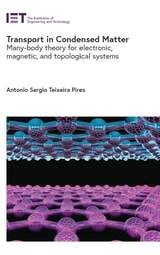
Transport in Condensed Matter
Many-body theory for electronic, magnetic, and topological systemsAntonio Sergio Teixeira Pires
The Institution of Engineering and Technology, 2026
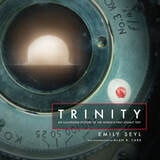
Trinity
An Illustrated History of the World's First Atomic TestEmily Seyl
University of Chicago Press, 2026
Explore the scientific crescendo of the Manhattan Project through newly contextualized and never-before-seen photographs from Los Alamos National Laboratory’s legacy collections—some just declassified.
Twenty-one days before the world learned of the atomic bomb through its wartime use against Japan, a team of scientists led by J. Robert Oppenheimer detonated the first nuclear device on a remote stretch of New Mexico desert, in an operation codenamed Trinity. Both a military proof test and an elaborate, well-documented scientific experiment, the Trinity shot on July 16, 1945, brought under the control of humankind a new fire: the energy of the atom.
In this expertly curated journey through the beginning of the atomic age, hundreds of carefully restored photographs, still frames, and once-secret documents bring new and vivid focus to a watershed moment in science and history. Written for all to understand, Trinity weaves steadily through subplots and surprises set against the evolving, looming backdrop of a world at war. It shadows the humans and hardware at work in the rugged landscape of the test operation; dissects a fiery mushroom cloud unfurling frame by frame, frozen in time; and follows soldiers, scientists, and two atomic bombs across the Pacific Ocean to Tinian Island, onto the strike planes Enola Gay and Bockscar, and to Hiroshima and Nagasaki, the two Japanese cities devastated on August 6 and 9, 1945.
Inviting readers into the clandestine spaces where a new era began—behind the cameras, the bunker doors, the gates and guard posts—Trinity strives, grieves, celebrates, and ponders. It artfully captures that extraordinary summer when scientists invented urgently in the waning months of the “before”—and the tension between violence and progress, hope and fear, that persists into the after.
Truth and Beauty
Aesthetics and Motivations in ScienceS. Chandrasekhar
University of Chicago Press, 1987
The late S. Chandrasekhar was best known for his discovery of the upper
limit to the mass of a white dwarf star, for which he received the Nobel
Prize in Physics in 1983. He was the author of many books, including
The Mathematical Theory of Black Holes and, most recently,
Newton's Principia for the Common Reader.
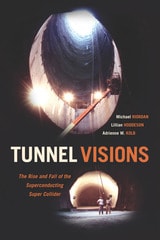
Tunnel Visions
The Rise and Fall of the Superconducting Super ColliderMichael Riordan, Lillian Hoddeson, and Adrienne W. Kolb
University of Chicago Press, 2015
Drawing on extensive archival research, contemporaneous press accounts, and over one hundred interviews with scientists, engineers, government officials, and others involved, Tunnel Visions tells the riveting story of the aborted SSC project. The authors examine the complex, interrelated causes for its demise, including problems of large-project management, continuing cost overruns, and lack of foreign contributions. In doing so, they ask whether Big Science has become too large and expensive, including whether academic scientists and their government overseers can effectively manage such an enormous undertaking.