Results by title
142 books match the query 'Political Advocacy' and 28 start with t
THE INDIRECT EFFECT OF DIRECT LEGISLATION
HOW INSTITUTIONS SHAPE INTEREST GROUP SYSTEMSFREDERICK J BOEHMKE
The Ohio State University Press, 2005
To demonstrate this, the author models the incentives that the initiative process creates for interests to organize and for how they communicate their preferences to policy makers. Interests that represent a broader range of the public are found to gain the most from the option to propose initiatives, implying that the set of organized interests in initiative states should reflect this advantage. Ironically, an effect of direct legislation is to potentially increase the effectiveness of special interest lobbying in state legislatures—in a sense, the opposite of the direct control that gives direct legislation its theoretical appeal. Yet, the clear effect is one of empowering voices that traditionally had very little effect in the legislative process. If greater representation is the goal of direct legislation, it is a clear success, even though that success does not really come in the act of ballot initiatives itself.
The Art of Protest
Culture and Activism from the Civil Rights Movement to the PresentT.V. Reed
University of Minnesota Press, 2019
A second edition of the classic introduction to arts in social movements, fully updated and now including Black Lives Matter, Occupy Wall Street, and new digital and social media forms of cultural resistance
The Art of Protest, first published in 2006, was hailed as an “essential” introduction to progressive social movements in the United States and praised for its “fluid writing style” and “well-informed and insightful” contribution (Choice Magazine). Now thoroughly revised and updated, this new edition of T. V. Reed’s acclaimed work offers engaging accounts of ten key progressive movements in postwar America, from the African American struggle for civil rights beginning in the 1950s to Occupy Wall Street and Black Lives Matter in the twenty-first century.
Reed focuses on the artistic activities of these movements as a lively way to frame progressive social change and its cultural legacies: civil rights freedom songs, the street drama of the Black Panthers, revolutionary murals of the Chicano movement, poetry in women’s movements, the American Indian Movement’s use of film and video, anti-apartheid rock music, ACT UP’s visual art, digital arts in #Occupy, Black Lives Matter rap videos, and more.
Through the kaleidoscopic lens of artistic expression, Reed reveals how activism profoundly shapes popular cultural forms. For students and scholars of social change and those seeking to counter reactionary efforts to turn back the clock on social equality and justice, the new edition of The Art of Protest will be both informative and inspiring.
The Art of Protest
Culture and Activism from the Civil Rights Movement to the Streets of SeattleT.V. Reed
University of Minnesota Press, 2005
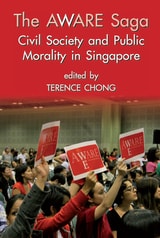
The Aware Saga
Civil Society and Public Morality in SingaporeEdited by Terence Chong
National University of Singapore Press, 2011
In this book, academics and public intellectuals examine the AWARE saga within the context of Singapore's civil society, considering the political and historical background and how the issues it raised relate to contemporary societal trends. In addition to documenting a milestone event for Singapore's civil society, the authors offer provocative interpretations that will interest a broad range of readers.
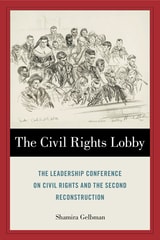
The Civil Rights Lobby
The Leadership Conference on Civil Rights and the Second ReconstructionShamira Gelbman
Temple University Press, 2021
As the lobbying arm of the civil rights movement, the Leadership Conference on Civil Rights (LCCR)—which has operated since the early 1950s—was instrumental in the historic legislative breakthroughs of the Second Reconstruction. The Civil Rights Lobby skillfully recounts the LCCR’s professional and grassroots lobbying that contributed to these signature civil rights policy achievements in the 1950s and ’60s.
Shamira Gelbman explains how the diversity of this interest group coalition both hindered and enabled lobbyists to generate broad-based support for reforms that often seemed risky to legislators. They coordinated their efforts by identifying common ground among member organizations, developing coalitional positions on substantive and strategic questions, and exhorting organizations to mobilize professional and grassroots lobbying resources accordingly. The result was to “speak with one booming voice” to ultimately help secure the passage of the Civil Rights Act of 1964.
The Civil Rights Lobby concludes by reprising key lessons from the LCCR’s organizational development and participation in civil rights policymaking. Gelbman suggests new directions for research on interest group coalitions and explores how the Leadership Conference’s experience sheds light on the politics of the Second Reconstruction.
The Constitutional Bind
How Americans Came to Idolize a Document That Fails ThemAziz Rana
University of Chicago Press, 2024
An eye-opening account of how Americans came to revere the Constitution and what this reverence has meant domestically and around the world.
Some Americans today worry that the Federal Constitution is ill-equipped to respond to mounting democratic threats and may even exacerbate the worst features of American politics. Yet for as long as anyone can remember, the Constitution has occupied a quasi-mythical status in American political culture, which ties ideals of liberty and equality to assumptions about the inherent goodness of the text’s design. The Constitutional Bind explores how a flawed document came to be so glorified and how this has impacted American life.
In a pathbreaking retelling of the American experience, Aziz Rana shows that today’s reverential constitutional culture is a distinctively twentieth-century phenomenon. Rana connects this widespread idolization to another relatively recent development: the rise of US global dominance. Ultimately, such veneration has had far-reaching consequences: despite offering a unifying language of reform, it has also unleashed an interventionist national security state abroad while undermining the possibility of deeper change at home.
Revealing how the current constitutional order was forged over the twentieth century, The Constitutional Bind also sheds light on an array of movement activists—in Black, Indigenous, feminist, labor, and immigrant politics—who struggled to imagine different constitutional horizons. As time passed, these voices of opposition were excised from memory. Today, they offer essential insights.
The Constitutional Bind
How Americans Came to Idolize a Document That Fails ThemAziz Rana
University of Chicago Press, 2024
This is an auto-narrated audiobook version of this book.
An eye-opening account of how Americans came to revere the Constitution and what this reverence has meant domestically and around the world.
Some Americans today worry that the Federal Constitution is ill-equipped to respond to mounting democratic threats and may even exacerbate the worst features of American politics. Yet for as long as anyone can remember, the Constitution has occupied a quasi-mythical status in American political culture, which ties ideals of liberty and equality to assumptions about the inherent goodness of the text’s design. The Constitutional Bind explores how a flawed document came to be so glorified and how this has impacted American life.
In a pathbreaking retelling of the American experience, Aziz Rana shows that today’s reverential constitutional culture is a distinctively twentieth-century phenomenon. Rana connects this widespread idolization to another relatively recent development: the rise of US global dominance. Ultimately, such veneration has had far-reaching consequences: despite offering a unifying language of reform, it has also unleashed an interventionist national security state abroad while undermining the possibility of deeper change at home.
Revealing how the current constitutional order was forged over the twentieth century, The Constitutional Bind also sheds light on an array of movement activists—in Black, Indigenous, feminist, labor, and immigrant politics—who struggled to imagine different constitutional horizons. As time passed, these voices of opposition were excised from memory. Today, they offer essential insights.
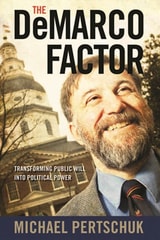
The DeMarco Factor
Transforming Public Will into Political PowerMichael Pertschuk
Vanderbilt University Press, 2010
DeMarco's unique strategic template, developed over two decades of serial campaigning, includes momentum-building stages over a multiyear campaign; unrelenting, skillful access to the media for engaging public support; coalitions of hundreds, even thousands, of faith, community, labor, public health, and business groups; and a hard press on candidates to support legislation before elections, rather than after they are comfortably in office. As an organizer/leader, Demarco also succeeds in his campaigns through force of personality: his unquenchable exuberance and idiosyncrasies delight and madden his opponents--sometimes his allies, too.
Michael Pertschuk, himself a veteran advocate, here chronicles three of DeMarco's campaigns, each facing a different obstacle course. His deep analysis draws out strategic and leadership lessons that engaged citizens and advocates for popular causes stonewalled by powerful lobbies can put to immediate and practical use.
The Demise of Yugoslavia
A Political MemoirStipe Mesic
Central European University Press, 2004
The Dream of a Common Movement
Selected Writings of Urvashi VaidUrvashi Vaid. Edited by Jyotsna Vaid and Amy Hoffman
Duke University Press, 2025
The Emotions of Protest
James M. Jasper
University of Chicago Press, 2018
There is an extensive body of research on protest, but the focus has mostly been on the calculating brain—a byproduct of structuralism and cognitive studies—and less on the feeling brain. James M. Jasper’s work changes that, as he pushes the boundaries of our present understanding of the social world. In The Emotions of Protest, Jasper lays out his argument, showing that it is impossible to separate cognition and emotion. At a minimum, he says, we cannot understand the Tea Party or Occupy Wall Street or pro- and anti-Trump rallies without first studying the fears and anger, moral outrage, and patterns of hate and love that their members feel.
This is a book centered on protest, but Jasper also points toward broader paths of inquiry that have the power to transform the way social scientists picture social life and action. Through emotions, he says, we are embedded in a variety of environmental, bodily, social, moral, and temporal contexts, as we feel our way both consciously and unconsciously toward some things and away from others. Politics and collective action have always been a kind of laboratory for working out models of human action more generally, and emotions are no exception. Both hearts and minds rely on the same feelings racing through our central nervous systems. Protestors have emotions, like everyone else, but theirs are thinking hearts, not bleeding hearts. Brains can feel, and hearts can think.
The Hinge
Civil Society, Group Cultures, and the Power of Local CommitmentsGary Alan Fine
University of Chicago Press, 2021
The Latino Question
Politics, Laboring Classes and the Next LeftRodolfo D. Torres
Pluto Press, 2018
In a radical alternative to the dominant orthodoxy in Latino political studies, Rodolfo D. Torres, Armando Ibarra, and Alfredo Carlos emphasize the importance of political economy for understanding Latino politics, culture, and social issues. Written in an accessible style, the authors draw from extensive original research and several critical traditions—including Karl Marx, Antonio Gramsci, and Michel Foucault—to make crucial links between socio-economic and culture-based approaches for understanding the politics of race and ethnicity in capitalist society. Notably, they present front-line evidence of how some Mexican communities across America are not only resisting, but also reinventing and transforming the predominant economic ideas. The Latino Question will be essential for anyone hoping to understand the changes in Latino communities in America today.
The New Winter Soldiers
GI and Veteran Dissent During the Vietnam EraMoser, Richard
Rutgers University Press, 1996
Richard Moser uses interviews and personal stories of Vietnam veterans to offer a fundamentally new interpretation of the Vietnam War and the antiwar movement. Although the Vietnam War was the most important conflict of recent American history, its decisive battle was not fought in the jungles of Vietnam, or even in the streets of the United States, but rather in the hearts and minds of American soldiers. To a degree unprecedented in American history, soldiers and veterans acted to oppose the very war they waged. Tens of thousands of soldiers and veterans engaged in desperate conflicts with their superiors and opposed the war through peaceful protest, creating a mass movement of dissident organizations and underground newspapers.
Moser shows how the antiwar soldiers lived out the long tradition of the citizen soldier first created in the American Revolution and Civil War. Unlike those great upheavals of the past, the Vietnam War offered no way to fulfill the citizen-soldier's struggle for freedom and justice. Rather than abandoning such ideals, however, tens of thousands abandoned the war effort and instead fulfilled their heroic expectations in the movements for peace and justice. According to Moser, this transformation of warriors into peacemakers is the most important recent development of our military culture.
The struggle for peace took these new winter soldiers into America rather than away from it. Collectively these men and women discovered the continuing potential of American culture to advance the values of freedom, equality, and justice on which the nation was founded.
The Next Form of Democracy
How Expert Rule Is Giving Way to Shared Governance—and Why Politics Will Never Be the SameMatt Leighninger
Vanderbilt University Press, 2006
The stories of civic experiments in this book can show us the realpolitik of deliberative democracy, and illustrate how the evolution of democracy is already reshaping politics.
The Papers of Clarence Mitchell Jr., Volume V
The Struggle to Pass the 1957 Civil Rights Act, 1955–1958Clarence Mitchell Jr.
Ohio University Press, 2021
Volume V of The Papers of Clarence Mitchell Jr. records the successful effort to pass the 1957 Civil Rights Act: the first federal civil rights legislation since 1875.
Prior to the US Supreme Court’s landmark 1954 decision in Brown v. Board of Education, the NAACP had faced an impenetrable wall of opposition from southerners in Congress. Basing their assertions on the court’s 1896 “separate but equal” decision in Plessy v. Ferguson, legislators from the South maintained that their Jim Crow system was nondiscriminatory and thus constitutional. In their view, further civil rights laws were unnecessary. In ruling that legally mandated segregation of public schools was unconstitutional, the Brown decision demolished the southerners’ argument. Mitchell then launched the decisive stage of the struggle to pass modern civil rights laws.
The passage of the Civil Rights Act of 1957 was the first comprehensive lobbying campaign by an organization dedicated to that purpose since Reconstruction. Coming on the heels of the Brown decision, the 1957 law was a turning point in the struggle to accord Black citizens full equality under the Constitution. The act’s passage, however, was nearly derailed in the Senate by southern opposition and Senator Strom Thurmond’s record-setting filibuster, which lasted more than twenty-four hours. Congress later weakened several provisions of the act but—crucially—it broke a psychological barrier to the legislative enactment of such measures.
The Papers of Clarence Mitchell Jr. is a detailed record of the NAACP leader’s success in bringing the legislative branch together with the judicial and executive branches to provide civil rights protections during the twentieth century.
The Papers of Clarence Mitchell Jr., Volume VI
The Struggle to Pass the 1960 Civil Rights Act, 1959–1960Clarence Mitchell Jr.
Ohio University Press, 2021
The Civil Rights Act of 1960 aimed to close loopholes in its 1957 predecessor that had allowed continued voter disenfranchisement for African Americans and for Mexicans in Texas.
In early 1959, the newly seated Eighty-Sixth Congress had four major civil rights bills under consideration. Eventually consolidated into the 1960 Civil Rights Act, their purpose was to correct the weaknesses in the 1957 law. Mitchell’s papers from 1959 to 1960 show the extent to which congressional resistance to the passage of meaningful civil rights laws contributed to the lunch counter sit-ins in Greensboro, North Carolina, and to subsequent demonstrations. The papers reveal how the repercussions of these events affected the NAACP’s work in Washington and how, despite their dislike of demonstrations, NAACP officials used them to intensify the civil rights struggle.
Among the act’s seven titles were provisions authorizing federal inspection of local voter registration rolls and penalties for anyone attempting to interfere with voters on the basis of race or color. The law extended the powers of the US Commission on Civil Rights and broadened the legal definition of the verb to vote to encompass all elements of the process: registering, casting a ballot, and properly counting that ballot. Ultimately, Mitchell considered the 1960 act unsuccessful because Congress had failed to include key amendments that would have further strengthened the 1957 act. In the House, representatives used parliamentary tactics to stall employment protections, school desegregation, poll-tax elimination, and other meaningful civil rights reforms. The fight would continue.
The Papers of Clarence Mitchell Jr. series is a detailed record of the NAACP leader’s success in bringing the legislative branch together with the judicial and executive branches to provide civil rights protections during the twentieth century.
The People Shall Rule
ACORN, Community Organizing, and the Struggle for Economic JusticeRobert Fisher
Vanderbilt University Press, 2009
The twelve chapters in this volume present the perspectives of insiders like founder Wade Rathke and leading outside practitioners and academics. The result is a thorough detailing of ACORN's founding and its changing strategies, including vivid accounts and analyses of its campaigns on the living wage, voter turnout, predatory lending, redlining, school reform, and community redevelopment, as well as a critical perspective on ACORN's place in the community organizing landscape.
The Perils of Populism
Sarah Tobias
Rutgers University Press, 2022
The Perils of Populism shows how a feminist lens can help diagnose the factors behind the global rise of right-wing populism and teach us how to resist the threat it presents to democracy. Featuring interdisciplinary essays about politics in the United States, the Middle East, Europe, and India from a variety of acclaimed theorists and activists, the volume contributes to a rapidly expanding literature on gender and the far right. Together, these chapters offer a truly intersectional analysis of the problem, addressing everything from how populism has thrived in a “post-truth” era to the ways it appeals to working-class voters looking for an alternative to neoliberalism. Yet the authors also find reasons to be hopeful, as they showcase forms of grassroots feminist activism that challenge right-wing populism by advocating for racial and economic justice.
The Politics of Value
Three Movements to Change How We Think about the EconomyJane L. Collins
University of Chicago Press, 2017
Each case shows how the concrete actions of a group of citizens can prompt us to reflect on what is needed for a just and sustainable economic system. In one case, activists raised questions about the responsibilities of business, in the second about the significance of local economies, and in the third about the contributions of the public sector. Through these movements, Jane L. Collins maps a set of cultural conversations about the types of investments and activities that contribute to the health of the economy. Compelling and persuasive, The Politics of Value offers a new framework for viewing economic value, one grounded in thoughtful assessment of the social division of labor and the relationship of the state and the market to civil society.
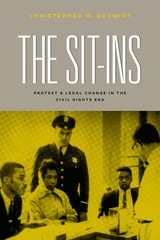
The Sit-Ins
Protest and Legal Change in the Civil Rights EraChristopher W. Schmidt
University of Chicago Press, 2018
The Sit-Ins tells the story of the student lunch counter protests and the national debate they sparked over the meaning of the constitutional right of all Americans to equal protection of the law. Christopher W. Schmidt describes how behind the now-iconic scenes of African American college students sitting in quiet defiance at “whites only” lunch counters lies a series of underappreciated legal dilemmas—about the meaning of the Constitution, the capacity of legal institutions to remedy different forms of injustice, and the relationship between legal reform and social change. The students’ actions initiated a national conversation over whether the Constitution’s equal protection clause extended to the activities of private businesses that served the general public. The courts, the traditional focal point for accounts of constitutional disputes, played an important but ultimately secondary role in this story. The great victory of the sit-in movement came not in the Supreme Court, but in Congress, with the passage of the Civil Rights Act of 1964, landmark legislation that recognized the right African American students had claimed for themselves four years earlier. The Sit-Ins invites a broader understanding of how Americans contest and construct the meaning of their Constitution.
The Transnational Politics of Asian Americans
edited by Christian Collet and Pei-te Lien, foreword by Don Nakanishi
Temple University Press, 2009
As America’s most ethnically diverse foreign-born population, Asian Americans can puzzle political observers. This volume’s multidisciplinary team of contributors employ a variety of methodologies— including quantitative, ethnographic, and historical—to illustrate how transnational ties between the U.S. and Asia have shaped, and are increasingly defining, Asian American politics in our multicultural society.
Original essays by U.S.- and Asian-based scholars discuss Cambodian, Chinese, Filipino, Indian, Japanese, Korean, and Vietnamese communities from Boston to Honolulu. The volume also shows how the grassroots activism of America's "newest minority" both reflects and is instrumental in broader processes of political change throughout the Pacific. Addressing the call for more global approaches to racial and ethnic politics, contributors describe how Asian immigrants strategically navigate the hurdles to domestic incorporation and equality by turning their political sights and energies toward Asia. These essays convincingly demonstrate that Asian American political participation in the U.S. does not consist simply of domestic actions with domestic ends.
Contributors include: Eiichiro Azuma, Augusto Espiritu, Hiroko Furuya, Peter Kiang, Ikumi Koakutsu, Michel Laguerre, Sangay Mishra, Hiromi Monobe, Shirley Tang, Tritia Toyota, Janelle Wong, and the editors.
The Way We Vote
The Local Dimension of American SuffrageAlec C. Ewald
Vanderbilt University Press, 2009
The book shows that local electoral variation has endured through dramatic changes in American political and constitutional structure, and that such variation is the product of a clear, repeated developmental pattern, not simple neglect or public ignorance. Legal materials, statutes and Congressional debates, state constitutional-convention proceedings, and the records of contested Congressional elections illuminate a long record of federal and state intervention in American electoral mechanics. Lawmakers have always understood that a certain level of disorder characterizes U.S. national elections, and have responded by exercising their authority over suffrage practices--but only in limited ways, effectively helping to construct our triply-governed electoral system.

The Will of the Many
How the Alterglobalisation Movement is Changing the Face of DemocracyMarianne Maeckelbergh
Pluto Press, 2009
Never before has the idea of democracy enjoyed the global dominance it holds today, but neoliberalism has left the practice of democracy in deep crisis.
Marianne Maeckelbergh argues that the most promising model for global democracy is not coming from traditional political parties or international institutions, but from the global networks of resistance to neoliberal economics, known collectively as the Alter-globalisation movement. Through extensive ethnography of decision-making practices within these movements, Maeckelbergh describes an alternative form of global democracy in the making.
Perfect for activists and students of political anthropology, this powerful and enlightening book offers radical changes.
To Keep the Republic
Thinking, Talking, and Acting Like a Democratic CitizenElizabeth C. Matto
Rutgers University Press, 2024
To Keep the Republic is a wake-up call about the responsibilities that come with being a citizen in a participatory democracy. It describes the many ways that individuals can make a difference on both local and national levels—and explains why they matter. Political scientist Elizabeth C. Matto highlights the multiple facets of democratic citizenship, identifies American democracy’s sometimes competing values and ideals, and explains how civic engagement can take various forms, including political conversation. Combining political philosophy with concrete suggestions for how to become a more engaged citizen, To Keep the Republic reminds us that democracy is not a spectator sport; it only works when we get off the sidelines and enter the political arena to make our voices heard.
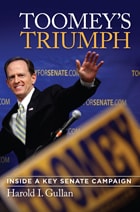
Toomey's Triumph
Inside a Key Senate CampaignHarold Gullan
Temple University Press, 2012
The 2010 Pennsylvania Senate election provided high drama from the earliest days of its primary campaigns right through Election Day. After long-time incumbent Arlen Specter was eliminated, the race boiled down to two fresh faces—Pat Toomey and Joe Sestak. Their battle constitutes a microcosm of the political divide that characterizes contemporary American politics.
Veteran writer Hal Gullan obtained special access to the Toomey campaign early on. Toomey's Triumph offers both that inside look and a Philadelphian's reflections of a riveting election. Gullan's astute month-by-month narrative distills the events of the year-long battles through the high drama and the day-to-day of grassroots organizing and campaigning. He describes how the candidates appear, what they say, and how the media pundits respond to their various gambits. He provides wry observations on the efficacy of each candidate's campaign ads and strategies, and he analyzes the up-and-down polls.
Toomey's Triumph provides an engaging chronicle of a critical campaign.
Trading in Lives?
Operations of the Jewish Relief and Rescue Committee in Budapest, 1944-1945Szabolcs Szita
Central European University Press, 2005
Turning Prayers into Protests
Religious-based Activism and its Challenge to State Power in Socialist Slovakia and East GermanyDavid Doellinger
Central European University Press, 2013