Results by title
213 books match the query 'Political parties' and 43 start with t

The ANC and the Liberation Struggle
A Critical Political BiographyDale T. McKinley
Pluto Press, 1997
eloquent testimony of the continuing vitality of the South African left' Modern African Studies
The African National Congress, the ANC, negotiated a transition of government and power in South Africa in the early 1990s and gained widespread respect and legitimacy when Nelson Mandela was voted in as President in 1994.
In this controversial and radical critique of the ANC and the struggle for liberation in South Africa, Dale T. McKinley challenges conventional public perceptions of the organisation and its celebrated rise to power. McKinley offers the first detailed analysis of the ANC's leadership, tactics and strategies from the 1920s, through the years of exile, to the 1990s, focusing on its close alliance with the South African Communist Party. he reveals that the organisation, despite historical claims to the contrary, failed to stay in touch with the south African masses. The ANC made fundamental compromises to gain political power, and in so doing has ensured that the economic power-base of the ruling elites in South Africa remains essentially unaltered.

The American Voter
Angus Campbell, Philip E. Converse, Warren E. Miller, and Donald E. Stokes
University of Chicago Press, 2008
The American Voter Revisited
Michael S. Lewis-Beck, William G. Jacoby, Helmut Norpoth, and Herbert F. Weisberg
University of Michigan Press, 2008
Today we are politically polarized as never before. The presidential elections of 2000 and 2004 will be remembered as two of the most contentious political events in American history. Yet despite the recent election upheaval, The American Voter Revisited discovers that voter behavior has been remarkably consistent over the last half century. And if the authors are correct in their predictions, 2008 will show just how reliably the American voter weighs in, election after election.
The American Voter Revisited re-creates the outstanding 1960 classic The American Voter---which was based on the presidential elections of 1952 and 1956---following the same format, theory, and mode of analysis as the original. In this new volume, the authors test the ideas and methods of the original against presidential election surveys from 2000 and 2004. Surprisingly, the contemporary American voter is found to behave politically much like voters of the 1950s.
"Simply essential. For generations, serious students of American politics have kept The American Voter right on their desk. Now, everyone will keep The American Voter Revisited right next to it."
---Larry J. Sabato, Director of the University of Virginia Center for Politics and author of A More Perfect Constitution
"The American Voter Revisited is destined to be the definitive volume on American electoral behavior for decades. It is a timely book for 2008, with in-depth analyses of the 2000 and 2004 elections updating and extending the findings of the original The American Voter. It is also quite accessible, making it ideal for graduate students as well as advanced undergrads."
---Andrew E. Smith, Director of the University of New Hampshire Survey Center
"A theoretically faithful, empirically innovative, comprehensive update of the original classic."
---Sam Popkin, Professor of Political Science, University of California, San Diego
Michael S. Lewis-Beck is F. Wendell Miller Distinguished Professor of Political Science at the University of Iowa. William G. Jacoby is Professor of Political Science at Michigan State University. Helmut Norpoth is Professor of Political Science at Stony Brook University. Herbert F. Weisberg is Professor of Political Science at Ohio State University.

The Ba'thification of Iraq
Saddam Hussein's TotalitarianismBy Aaron M. Faust
University of Texas Press, 2015
Saddam Hussein ruled Iraq as a dictator for nearly a quarter century before the fall of his regime in 2003. Using the Ba’th party as his organ of meta-control, he built a broad base of support throughout Iraqi state and society. Why did millions participate in his government, parrot his propaganda, and otherwise support his regime when doing so often required betraying their families, communities, and beliefs? Why did the “Husseini Ba’thist” system prove so durable through uprisings, two wars, and United Nations sanctions?
Drawing from a wealth of documents discovered at the Ba’th party’s central headquarters in Baghdad following the US-led invasion in 2003, The Ba’thification of Iraq analyzes how Hussein and the party inculcated loyalty in the population. Through a grand strategy of “Ba’thification,” Faust argues that Hussein mixed classic totalitarian means with distinctly Iraqi methods to transform state, social, and cultural institutions into Ba’thist entities, and the public and private choices Iraqis made into tests of their political loyalty. Focusing not only on ways in which Iraqis obeyed, but also how they resisted, and using comparative examples from Hitler’s Germany and Stalin’s Russia, The Ba’thification of Iraq explores fundamental questions about the roles that ideology and culture, institutions and administrative practices, and rewards and punishments play in any political system.
The Change Election
Money, Mobilization, and Persuasion in the 2008 Federal ElectionsEdited by David Magleby
Temple University Press, 2010
The 2008 election was an extraordinary event that represented change at many levels. The candidates’ innovative campaigns changed how funds were raised, how voters were mobilized, and how messages were communicated through advertising and the internet. Parties and interest groups played their own important role in this historic election. In The Change Election, David Magleby assembles a team of accomplished political scientists to provide an in-depth analysis of this groundbreaking presidential election. These scholars through a set of compelling case studies examine the competition for votes in a dozen competitive House and Senate contests and for the White House in five states: Ohio, North Carolina, New Hampshire, Colorado, and New Mexico.
Backed by a wealth of data, and extensive interviews, the contributors offer an up-close look at the interactions of candidates' individual skills and personalities with the larger political forces at work in the election year. The book offers insights into the rapidly evolving organizational and technical aspects of campaigning. The dramatic success Obama and other candidates had in raising money—especially from small donors—is addressed along with how money was raised and spent by the candidates, party committees, and interest groups competing for votes.
Building on a tested methodology, The Change Election explores the interplay of money and electioneering. Magleby builds on more than a decade of prior studies to show the ways participants in our electoral process have adapted to statutory and judicial decisions and how the 2008 election has the potential to transform American electoral politics.

The Channels of Student Activism
How the Left and Right Are Winning (and Losing) in Campus Politics TodayAmy J. Binder and Jeffrey L. Kidder
University of Chicago Press, 2022
The past six years have been marked by a contentious political atmosphere that has touched every arena of public life, including higher education. Though most college campuses are considered ideologically progressive, how can it be that the right has been so successful in mobilizing young people even in these environments?
As Amy J. Binder and Jeffrey L. Kidder show in this surprising analysis of the relationship between political activism on college campuses and the broader US political landscape, while liberal students often outnumber conservatives on college campuses, liberal campus organizing remains removed from national institutions that effectively engage students after graduation. And though they are usually in the minority, conservative student groups have strong ties to national right-leaning organizations, which provide funds and expertise, as well as job opportunities and avenues for involvement after graduation. Though the left is more prominent on campus, the right has built a much more effective system for mobilizing ongoing engagement. What’s more, the conservative college ecosystem has worked to increase the number of political provocations on campus and lower the public’s trust in higher education.
In analyzing collegiate activism from the left, right, and center, The Channels of Student Activism shows exactly how politically engaged college students are channeled into two distinct forms of mobilization and why that has profound consequences for the future of American politics.

The Channels of Student Activism
How the Left and Right Are Winning (and Losing) in Campus Politics TodayAmy J. Binder and Jeffrey L. Kidder
University of Chicago Press, 2022
This is an auto-narrated audiobook edition of this book.
An eye-opening analysis of collegiate activism and its effects on the divisions in contemporary American politics.
The past six years have been marked by a contentious political atmosphere that has touched every arena of public life, including higher education. Though most college campuses are considered ideologically progressive, how can it be that the right has been so successful in mobilizing young people even in these environments?
As Amy J. Binder and Jeffrey L. Kidder show in this surprising analysis of the relationship between political activism on college campuses and the broader US political landscape, while liberal students often outnumber conservatives on college campuses, liberal campus organizing remains removed from national institutions that effectively engage students after graduation. And though they are usually in the minority, conservative student groups have strong ties to national right-leaning organizations, which provide funds and expertise, as well as job opportunities and avenues for involvement after graduation. Though the left is more prominent on campus, the right has built a much more effective system for mobilizing ongoing engagement. What’s more, the conservative college ecosystem has worked to increase the number of political provocations on campus and lower the public’s trust in higher education.
In analyzing collegiate activism from the left, right, and center, The Channels of Student Activism shows exactly how politically engaged college students are channeled into two distinct forms of mobilization and why that has profound consequences for the future of American politics.

The Digital Party
Political Organisation and Online DemocracyPaolo Gerbaudo
Pluto Press, 2018
These new political formations tap into the potential of social media to gain consensus, and use online participatory platforms to include the rank-and-file. Paolo Gerbaudo looks at the restructuring of political parties and campaigns in the time of Facebook, Twitter, Instagram, and big data. Drawing on interviews with key political leaders and digital organizers, he argues that the digital party is very different from the class-based “mass party” of the industrial era, and offers promising new solutions to social polarization and the failures of liberal democracy today.
The Dilemma of Compliance
Political Parties and Post-Election DisputesSvitlana Chernykh
University of Michigan Press, 2024
To answer these questions, this book draws on an original dataset of post-election responses encompassing over 300 political parties, which participated in 270 elections held in twenty-two countries of Eastern Europe and the former Soviet Union over a period of more than two decades. In doing so, it offers a new theoretical framework for studying electoral compliance in comparative perspective and advances research on democratic transition, democracy promotion, post-election protests, and party politics.

The European Radical Left
Movements and Parties since the 1960sGiorgos Charalambous
Pluto Press, 2021
Is today’s left really new? How has the European radical left evolved?
Giorgos Charalambous answers these questions by looking at three moments of rapid political change - the late 1960s to late 1970s; the turn of the millennium; and post-2008. He challenges the conventional understanding of a ‘new left’, drawing out continuities with earlier movements and parties.
Charalambous examines the ‘Long ‘68’, symbolised by the May uprisings in France, which saw the rise of new left forces and the widespread criticism by younger radical activists of traditional communist and socialist parties. He puts this side by side with the turn of the millennium when the Global Justice Movement rose to prominence and changed the face of the international left, and also the period after the financial crash of 2008 and the rise of anti-austerity politics which initiated the most recent wave of new left parties such as Podemos in Spain and Syriza in Greece.
With a unique ‘two-level’ perspective, Charalambous approaches the left through both social movements and party politics, looking at identities, rhetoric and organization, and bringing a fresh new approach to radical history, as well as assessing challenges for both activists and scholars.
The European Union and the Rise of Regionalist Parties
Seth K. Jolly
University of Michigan Press, 2015
The Fallacy of Campaign Finance Reform
John Samples
University of Chicago Press, 2006
At first glance, campaign finance reform looks like a good idea. McCain-Feingold, for instance, regulates campaigns by prohibiting national political parties from accepting soft money contributions from corporations, labor unions, and wealthy individuals. But are such measures, or any of the numerous and similarly restrictive proposals that have circulated through Washington in recent years, really good for our democracy?
John Samples says no, and here he takes a penetrating look into the premises and consequences of the long crusade against big money in politics. How many Americans, he asks, know that there is little to no evidence that campaign contributions really influence members of Congress? Or that so-called negative political advertising actually improves the democratic process by increasing voter turnout and knowledge? Or that limits on campaign contributions make it harder to run for office, thereby protecting incumbent representatives from losing their seats of power?
Posing tough questions such as these, Samples uncovers numerous fallacies beneath proposals for campaign finance reform. He argues that our most common concerns about money in politics are misplaced because the ideals implicit in our notion of corruption are incoherent or indefensible. The chance to regulate money in politics allows representatives to serve their own interests at a cost to their constituents. And, ironically, this long crusade against the corruption caused by campaign contributions allows public officials to reduce their vulnerability by suppressing electoral competition.
Defying long-held ssumptions and conventional political wisdom, The Fallacy of Campaign Finance Reform is a provocative and decidedly nonpartisan work that will be essential for anyone concerned about the future of American government.

The House Will Come To Order
How the Texas Speaker Became a Power in State and National PoliticsBy Patrick L. Cox and Michael Phillips
University of Texas Press, 2010
In a state assumed to have a constitutionally weak governor, the Speaker of the Texas House wields enormous power, with the ability to almost single-handedly dictate the legislative agenda. The House Will Come to Order charts the evolution of the Speaker's role from a relatively obscure office to one of the most powerful in the state. This fascinating account, drawn from the Briscoe Center's oral history project on the former Speakers, is the story of transition, modernization, and power struggles.
Weaving a compelling story of scandal, service, and opportunity, Patrick Cox and Michael Phillips describe the divisions within the traditional Democratic Party, the ascendance of Republicans, and how Texas business, agriculture, and media shaped perceptions of officeholders. While the governor and lieutenant governor wielded their power, the authors show how the modern Texas House Speaker built an office of equal power as the state became more complex and diverse. The authors also explore how race, class, and gender affected this transition as they explain the importance of the office in Texas and the impact the state's Speakers have had on national politics.
At the apex of its power, the Texas House Speaker's role at last receives the critical consideration it deserves.
The Idea of the ANC
Anthony Butler
Ohio University Press, 2013
The African National Congress (ANC) is Africa’s most famous liberation movement. It has recently celebrated its centenary, a milestone that has prompted partisans to detail a century of unparalleled achievement in the struggle against colonialism and racial discrimination. Critics paint a less flattering portrait of the historical ANC as a communist puppet, a moribund dinosaur, or an elitist political parasite. For such skeptics, the ANC—now in government for two decades—has betrayed South Africans rather than liberating them.
South Africans endure deep inequality and unemployment, violent community protests, murders of foreign residents, major policy blunders, an AIDS crisis, and deepening corruption. Inside the ANC there are episodes of open rebellion against the leadership, conflicts over the character of a postliberation movement, and debilitating battles for succession to the movement’s presidency. The ANC is nevertheless likely to remain the party of government for the foreseeable future.
This remarkable book explores how ANC intellectuals and leaders interpret the historical project of their movement. It investigates three interlocking ideas: a conception of power, a responsibility for promoting unity, and a commitment to human liberation. Anthony Butler explores how these notions have shaped South African politics in the past and how they will inform ANC leaders’ responses to the challenges of the future.

The Indispensable Minority
Why Congressional Majorities Cannot Govern AloneAndrew Ballard and James M. Curry
University of Chicago Press, 0
A provocative reevaluation of the power that the minority party in Congress wields beyond obstruction.
In The Indispensable Minority, Andrew Ballard and James M. Curry dispel a common assumption about American politics: that congressional majorities govern and congressional minorities merely obstruct. Drawing on four decades of legislative data, an original database of the most consequential lawmaking efforts since 1987, and candid interviews with veteran Capitol Hill staffers, the authors reveal that minority parties shape major legislation far more often than typically thought—both collectively and through the efforts of individual lawmakers.
As Ballard and Curry show, the key to minority influence lies not in procedural tricks like the filibuster, but in the interplay of raw political forces: how constrained the majority party is as it tries to act on its legislative agenda, how well the minority party can hold together as a cohesive bloc, and whether the minority chooses to engage in legislating rather than electoral posturing. When these conditions align, congressional minority parties don't just block bills—they help write them.
Rich with historical cases and sharp new evidence, The Indispensable Minority reshapes how we understand party power, congressional gridlock, and the health of American democracy itself. Far from a symptom of dysfunction, the authors argue, minority party influence is a vital—and indispensable—feature of how the American system is supposed to work.
The Iowa Precinct Caucuses
The Making of a Media Event, Third EditionHugh Winebrenner
University of Iowa Press, 2010
Although some people
The Jeffords Switch
Changing Majority Status and Causal Processes in the U.S. SenateChris Den Hartog and Nathan W. Monroe
University of Michigan Press, 2019
Senator Jim Jeffords left the Republican Party in May 2001 and became an independent. Because he agreed to vote with the Democrats on organizational votes, this gave that party a 51–49 majority in the Senate.
Using the “Jeffords switch,” Chris Den Hartog and Nathan W. Monroe examine how power is shared and transferred in the Senate, as well as whether Democratic bills became more successful after the switch. They also use the data after the switch, when the Republican Party still held a majority on many Democratic Party-led committees, to examine the power of the committee chairs to influence decisions. While the authors find that the majority party does influence Senate decisions, Den Hartog and Monroe are more interested in exploring the method and limits of the majority party to achieve its goals.

The La Follettes of Wisconsin
Love and Politics in Progressive AmericaBernard A. Weisberger
University of Wisconsin Press, 2013

The Left Unraveled
Social Democracy & the New Left Challenge in Britain & West GermanyThomas A. Koelble
Duke University Press, 1991
By focusing on the established parties rather than on external developments, Koelble departs from conventional methodology regarding the fortunes of political parties. In examining the fundamental processes of decision making and coalition building within the SPD and the Labour Party, he argues that it is the organizational structures within parties that shape political results by setting limits, creating opportunities, and determining strategies.

The Left and Digital Politics
Political Parties from Platform Neoliberalism to Platform SocialismMarco Guglielmo
University of Westminster Press, 2025
The Limits of Party
Congress and Lawmaking in a Polarized EraJames M. Curry and Frances E. Lee
University of Chicago Press, 2020
In The Limits of Party, James M. Curry and Frances E. Lee challenge this conventional wisdom. By constructing legislative histories of congressional majority parties’ attempts to enact their policy agendas in every congress since the 1980s and by drawing on interviews with Washington insiders, the authors analyze the successes and failures of congressional parties to enact their legislative agendas.
Their conclusions will surprise many congressional observers: Even in our time of intense party polarization, bipartisanship remains the key to legislative success on Capitol Hill. Congressional majority parties today are neither more nor less successful at enacting their partisan agendas. They are not more likely to ram though partisan laws or become mired in stalemate. Rather, the parties continue to build bipartisan coalitions for their legislative priorities and typically compromise on their original visions for legislation in order to achieve legislative success.

The Madisonian Turn
Political Parties and Parliamentary Democracy in Nordic EuropeTorbjörn Bergman and Kaare Strøm, editors
University of Michigan Press, 2013
"The Madisonian Turn is an outstanding assessment of the functioning of democratic institutions in the Nordic countries. If democracy is in trouble in Scandinavia, then it is surely facing problems everywhere, so the book will be read carefully by those concerned about contemporary governance in all modern democracies."
---Michael Gallagher, Trinity College, Dublin
"This welcome and timely re-evaluation of Nordic politics constitutes a major contribution to comparative government, and is likely to stand as the definitive treatment of politics in the region for many years to come."
---Peter Mair, European University Institute
"This book is unique in its comparative scope and the wealth of information on the state of parliamentary democracy in the Nordic countries. It is particularly useful for the comparativists who do not come from these countries, because the original literature which it covers in detail is often not accessible for the English-speaking audience."
---Hanspeter Kriesi, University of Zurich
"The strength of The Madisonian Turn is to interface detailed empirical evidence on the dynamics of democratic politics in Scandinavia with an elaboration and test of rival theories of change in the politics of postindustrial democracies. This book is an inspiration for students of Northern Europe, but also for scholars of comparative legislatures and political parties more generally."
---Herbert Kitschelt, Duke University
Parliamentary democracy is the most common regime type in the contemporary political world, but the quality of governance depends on effective parliamentary oversight and strong political parties. Denmark, Finland, Iceland, Norway, and Sweden have traditionally been strongholds of parliamentary democracy. In recent years, however, critics have suggested that new challenges such as weakened popular attachment, the advent of cartel parties, the judicialization of politics, and European integration have threatened the institutions of parliamentary democracy in the Nordic region.
This volume examines these claims and their implications. The authors find that the Nordic states have moved away from their previous resemblance to a Westminster model toward a form of parliamentary democracy with more separation-of-powers features---a Madisonian model. These features are evident both in vertical power relations (e.g., relations with the European Union) and horizontal ones (e.g., increasingly independent courts and central banks). Yet these developments are far from uniform and demonstrate that there may be different responses to the political challenges faced by contemporary Western democracies.
Torbjörn Bergman is Professor of Political Science at Umeå University, Sweden.
Kaare Strøm is Professor of Political Science at the University of California, San Diego.
Jacket Credit: Heidi Hobde Dailey

The Many Faces of Strategic Voting
Tactical Behavior in Electoral Systems Around the WorldLaura B. Stephenson, John H. Aldrich, and André Blais, Editors
University of Michigan Press, 2018
Voters do not always choose their preferred candidate on election day. Often they cast their ballots to prevent a particular outcome, as when their own preferred candidate has no hope of winning and they want to prevent another, undesirable candidate’s victory; or, they vote to promote a single-party majority in parliamentary systems, when their own candidate is from a party that has no hope of winning. In their thought-provoking book The Many Faces of Strategic Voting, Laura B. Stephenson, John H. Aldrich, and André Blais first provide a conceptual framework for understanding why people vote strategically, and what the differences are between sincere and strategic voting behaviors. Expert contributors then explore the many facets of strategic voting through case studies in Great Britain, Spain, Canada, Japan, Belgium, Germany, Switzerland, and the European Union.

The Origins of Christian Democracy
Politics and Confession in Modern GermanyMaria D. Mitchell
University of Michigan Press, 2012
This book is a pioneering contribution to the history of the founding of the West German political system after the Second World War. The political cooperation between Catholics and Protestants that resulted in the formation of the Christian Democratic Union (CDU) in occupied and early West Germany represented a significant change from a long history of hostility in confessional relations. Given that the CDU went on to dominate politics in West Germany well into the 1960s, Maria D. Mitchell argues that an understanding of what made this interconfessional party possible is crucial to an exploration of German history in the postwar period. She examines the political history of party formation as well as the religious beliefs and motivations that shaped the party's philosophy and positions. She provides an authoritative guide to the complex processes of maneuvering and negotiation that produced the CDU during 1945-46. The full range of political possibilities is discussed, including the suppressed alternatives to the Adenauer/Erhard axis that eventually defined the party's trajectory during the 1950s and the abortive Christian Socialism associated with Jacob Kaiser.
The Partisan Sort
How Liberals Became Democrats and Conservatives Became RepublicansMatthew Levendusky
University of Chicago Press, 2009
As Washington elites drifted toward ideological poles over the past few decades, did ordinary Americans follow their lead? In The Partisan Sort, Matthew Levendusky reveals that we have responded to this trend—but not, for the most part, by becoming more extreme ourselves. While polarization has filtered down to a small minority of voters, it also has had the more significant effect of reconfiguring the way we sort ourselves into political parties.
In a marked realignment since the 1970s—when partisan affiliation did not depend on ideology and both major parties had strong liberal and conservative factions—liberals today overwhelmingly identify with Democrats, as conservatives do with Republicans. This “sorting,” Levendusky contends, results directly from the increasingly polarized terms in which political leaders define their parties. Exploring its far-reaching implications for the American political landscape, he demonstrates that sorting makes voters more loyally partisan, allowing campaigns to focus more attention on mobilizing committed supporters. Ultimately, Levendusky concludes, this new link between party and ideology represents a sea change in American politics.
The Party Decides
Presidential Nominations Before and After ReformMarty Cohen, David Karol, Hans Noel, and John Zaller
University of Chicago Press, 2008
Tracing the evolution of presidential nominations since the 1790s, this volume demonstrates how party insiders have sought since America’s founding to control nominations as a means of getting what they want from government. Contrary to the common view that the party reforms of the 1970s gave voters more power, the authors contend that the most consequential contests remain the candidates’ fights for prominent endorsements and the support of various interest groups and state party leaders. These invisible primaries produce frontrunners long before most voters start paying attention, profoundly influencing final election outcomes and investing parties with far more nominating power than is generally recognized.

The People’s Party in Texas
A Study in Third Party PoliticsBy Roscoe Martin
University of Texas Press, 1970
Roscoe Martin's study of the People's Party in Texas was a pioneering analysis of the state populist movements and long considered one of the best. The People's Party was an influential force in United States politics in the last decade of the nineteenth century, especially in the western and southern states. Martin's study of third-party politics in Texas, as well as being an important work in Texas history, provides much insight into the national radical movement of the 1890s.

The Polarizers
Postwar Architects of Our Partisan EraSam Rosenfeld
University of Chicago Press, 2017
In The Polarizers, Sam Rosenfeld details why bipartisanship was seen as a problem in the postwar period and how polarization was then cast as the solution. Republicans and Democrats feared that they were becoming too similar, and that a mushy consensus imperiled their agendas and even American democracy itself. Thus began a deliberate move to match ideology with party label—with the toxic results we now endure. Rosenfeld reveals the specific politicians, intellectuals, and operatives who worked together to heighten partisan discord, showing that our system today is not (solely) a product of gradual structural shifts but of deliberate actions motivated by specific agendas. Rosenfeld reveals that the story of Washington’s transformation is both significantly institutional and driven by grassroots influences on both the left and the right.
The Polarizers brilliantly challenges and overturns our conventional narrative about partisanship, but perhaps most importantly, it points us toward a new consensus: if we deliberately created today’s dysfunctional environment, we can deliberately change it.
The Politics of Massachusetts Exceptionalism
Reputation Meets RealityEdited by Jerold Duquette and Erin O'Brien
University of Massachusetts Press, 2022
Are claims of Massachusetts’s special and instructive place in American history and politics justified? Alternately described as a “city upon a hill” and “an organized system of hatreds,” Massachusetts politics has indisputably exerted an outsized pull on the national stage. The Commonwealth’s leaders often argue for the state’s distinct position within the union, citing its proud abolitionist history and its status as a policy leader on health care, gay marriage, and transgender rights, not to mention its fertile soil for budding national politicians. Detractors point to the state’s busing crisis, sky high levels of economic inequality, and mixed support for undocumented immigrants.
The Politics of Massachusetts Exceptionalism tackles these tensions, offering a collection of essays from public policy experts that address the state’s noteworthy contributions to the nation’s political history. This is a much-needed volume for Massachusetts policymakers, journalists, and community leaders, as well as those learning about political power at the state level, inside and outside of the classroom. Contributors include the editors as well as Maurice T. Cunningham, Lawrence Friedman, Shannon Jenkins, Luis F. Jiménez, and Peter Ubertaccio.
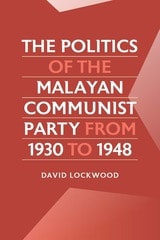
The Politics of the Malayan Communist Party from 1930 to 1948
David Lockwood
National University of Singapore Press, 2024
By 1946, the Malayan Communist Party (MCP) had become one of the most successful communist parties in Asia. From its foundation in 1930, it had built up a membership in the thousands, mainly among Chinese and Indian workers in Malaya. When the Japanese arrived, the MCP organized the Malayan People’s Anti-Japanese Army (MPAJA), the only effective resistance force. After the War, when the British returned, the Party launched a legal campaign for independence, but by 1948, the MCP had surrendered its achievements and taken many members underground to launch a disastrous, failed insurrection against the British.
To understand these momentous turns of history, a fresh view is required of the Malayan Communist Party as a political actor. The Politics of the Malayan Communist Party from 1930 to 1948 gives a political history of the Party and explains why the MCP self-destructed in 1948. In particular, David Lockwood questions assumptions that post-war politics led inevitably to armed struggle and questions the accepted narrative of Party Chairman Lai Tek's treachery. This is a revisionist history of a period, and political force, that has left a lasting mark on the politics of Malaya and Singapore.

The Primary Rules
Parties, Voters, and Presidential NominationsCaitlin E. Jewitt
University of Michigan Press, 2019
The Provisional IRA
From Insurrection to ParliamentTommy McKearney
Pluto Press, 2011
This book analyses the underlying reasons behind the formation of the Provisional Irish Republican Army (IRA), its development, where this current in Irish republicanism is at present and its prospects for the future.
Tommy McKearney, a former IRA member who was part of the 1980 hunger strike, challenges the misconception that the Provisional IRA was only, or even wholly, about ending partition and uniting Ireland. He argues that while these objectives were always the core and headline demands of the organisation, opposition to the old Northern Ireland state was a major dynamic for the IRA’s armed campaign. As he explores the makeup and strategy of the IRA he is not uncritical, examining alternative options available to the movement at different periods, arguing that its inability to develop a clear socialist programme has limited its effectiveness and reach.
This authoritative and engaging history provides a fascinating insight into the workings and dynamics of a modern resistance movement.
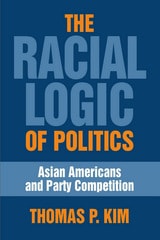
The Racial Logic of Politics
Asian Americans and Party CompetitionThomas P. Kim
Temple University Press, 2006
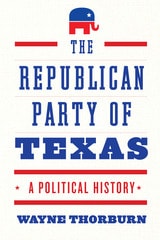
The Republican Party of Texas
A Political HistoryBy Wayne Thorburn
University of Texas Press, 2021
On July 4, 1867, a group of men assembled in Houston to establish the Republican Party of Texas. Combatting entrenched statewide support for the Democratic Party and their own internal divisions, Republicans struggled to gain a foothold in the Lone Star State, which had sided with the Confederacy and aligned with the Democratic platform. In The Republican Party of Texas, Wayne Thorburn, former executive director of the Texas GOP, chronicles over one hundred and fifty years of the defeats and victories of the party that became the dominant political force in Texas in the modern era.
Thorburn documents the organizational structure of the Texas GOP, drawing attention to prominent names, such as Harry Wurzbach and George W. Bush, alongside lesser-known community leaders who bolstered local support. The 1960s and 1970s proved a watershed era for Texas Republicans as they shored up ideological divides and elected the first Republican governor and more state senators and congressional representatives than ever before. From decisions about candidates and shifting allegiances and political stances, to race-based divisions and strategic cooperation with leaders in the Democratic Party, Thorburn unearths the development of the GOP in Texas to understand the unique Texan conservatism that prevails today.
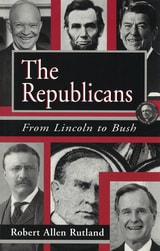
The Republicans
From Lincoln to BushRobert Allen Rutland
University of Missouri Press, 1996
The Republican party has always been fascinating to those who subscribe to its principles, as well as to those who take an alternative stand on the issues. In The Republicans: From Lincoln to Bush, Robert Allen Rutland has brought a clear and concise understanding of this political party to the general reader. The book is a lucid and fast-paced overview of the Republican party from its beginnings in the 1850s through the 1994 congressional elections, which saw the Democratic domination of the House and Senate come to an abrupt end.
In a crisp, highly readable style, Rutland begins by explaining how the "obnoxious" Kansas-Nebraska Act of 1854 overturned the Missouri Compromise, inflamed the North, and caused the collapse of the Whig and American parties. The result was the birth of the Republican party, whose purpose was to oppose the Democrats and stop the spread of slavery. Abraham Lincoln was elected the first Republican president in 1860.
The Republicans suggests that a major shift in voting strength took place twice during the twentieth century, first in the New Deal years, and again after 1968 when the GOP made an appeal to southern voters and finally took control of the area that had previously been dominated by the Democrats. With the 1980 election of Ronald Reagan as the fortieth president of the United States, the Republicans gained support from many first-time voters, middle-class whites, and labor unions-- groups not previously expected to vote Republican. In the companion volume, The Democrats: From Jefferson to Clinton, Rutland provides an honest and straightforward assessment of the strengths and weaknesses of Democratic presidents. Here he presents an evenhanded look at the good and not-so-good Republicans. By skillfully using stories and anecdotes from various administrations to enliven this narrative of political history, Rutland gives Republicans and Democrats alike a deeper appreciation for the two-party system.
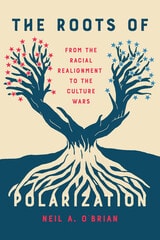
The Roots of Polarization
From the Racial Realignment to the Culture WarsNeil A. O'Brian
University of Chicago Press, 2024
A deeply researched account of how battles over civil rights in the 1960s shaped today’s partisan culture wars.
In the late twentieth century, gay rights, immigration, gun control, and abortion debates all burst onto the political scene, scrambling the parties and polarizing the electorate. Neil A. O’Brian traces the origins of today’s political divide on these issues to the 1960s when Democrats and Republicans split over civil rights. It was this partisan polarization over race, he argues, that subsequently shaped partisan fault lines on other culture war issues that persist to this day.
Using public opinion data dating to the 1930s, O’Brian shows that attitudes about civil rights were already linked with a range of other culture war beliefs decades before the parties split on these issues—and much earlier than previous scholarship realized. Challenging a common understanding of partisan polarization as an elite-led phenomenon, The Roots of Polarization argues politicians and interest groups, jockeying for power in the changing party system, seized on these preexisting connections in the mass public to build the parties’ contemporary coalitions.
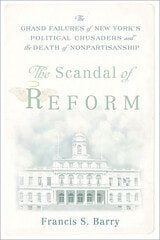
The Scandal of Reform
The Grand Failures of New York's Political Crusaders and the Death of NonpartisanshipBarry, Francis S
Rutgers University Press, 2009
The Scandal of Reform pulls the curtain back on New York's reformers past and present, revealing the bonds they have always shared with the bosses they disdain, the policy failures they still refuse to recognize, and the transition they have made from nonpartisan outsiders to ideological insiders.
Francis S. Barry examines the evolution of political reform from the frontlines of New York City's recent reform wars. He offers an insider's account and analysis of the controversial 2003 referendum debate on nonpartisan elections, and he challenges reformersùand members of both partiesùto reconsider their faith in reforms that are no longer serving the public interest.
The Strategy of Campaigning
Lessons from Ronald Reagan and Boris YeltsinKiron K. Skinner, Serhiy Kudelia, Bruce Bueno de Mesquita, and Condoleezza Rice
University of Michigan Press, 2010
The Strategy of Campaigning explores the political careers of Ronald Reagan and Boris Yeltsin, two of the most galvanizing and often controversial political figures of our time. Both men overcame defeat early in their political careers and rose to the highest elected offices in their respective countries.
The authors demonstrate how and why Reagan and Yeltsin succeeded in their political aspirations, despite—or perhaps because of—their apparent “policy extremism”: that is, their advocacy of policy positions far from the mainstream. The book analyzes the viability of policy extremism as a political strategy that enables candidates to forge new coalitions and outflank conventional political allegiances.
Bruce Bueno de Mesquita is Julius Silver Professor and Director of the Alexander Hamilton Center for Political Economy at New York University and a Senior Fellow at the Hoover Institution.
Condoleezza Rice is on a leave of absence from Stanford University, where she was a Professor of Political Science and a Senior Fellow at the Hoover Institution. She is currently serving as U.S. Secretary of State.
The Taiwan Voter
Christopher H. Achen and T. Y. Wang, Editors
University of Michigan Press, 2017
Taiwan’s electoral politics draws international scholarly interest because of the prominent role of ethnic and national identification. While in most countries the many tangled strands of competing identities are daunting for scholarly analysis, in Taiwan the cleavages are powerful and limited in number, so the logic of interrelationships among issues, partisanship, and identity are particularly clear. The Taiwan Voter unites experts to investigate the ways in which social identities, policy views, and partisan preferences intersect and influence each other. These novel findings have wide applicability to other countries, and will be of interest to a broad range of social scientists interested in identity politics.
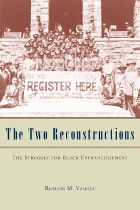
The Two Reconstructions
The Struggle for Black EnfranchisementRichard M. Valelly
University of Chicago Press, 2004
The Reconstruction era marked a huge political leap for African Americans, who rapidly went from the status of slaves to voters and officeholders. Yet this hard-won progress lasted only a few decades. Ultimately a "second reconstruction"—associated with the civil rights movement and the Voting Rights Act—became necessary.
How did the first reconstruction fail so utterly, setting the stage for the complete disenfranchisement of Southern black voters, and why did the second succeed? These are among the questions Richard M. Valelly answers in this fascinating history. The fate of black enfranchisement, he argues, has been closely intertwined with the strengths and constraints of our political institutions. Valelly shows how effective biracial coalitions have been the key to success and incisively traces how and why political parties and the national courts either rewarded or discouraged the formation of coalitions.
Revamping our understanding of American race relations, The Two Reconstructions brilliantly explains a puzzle that lies at the heart of America’s development as a political democracy.
The Whips
Building Party Coalitions in CongressC. Lawrence Evans
University of Michigan Press, 2018
The party whips are essential components of the U.S. legislative system, responsible for marshalling party votes and keeping House and Senate party members in line. In The Whips, C. Lawrence Evans offers a comprehensive exploration of coalition building and legislative strategy in the U.S. House and Senate, ranging from the relatively bipartisan, committee-dominated chambers of the 1950s to the highly polarized congresses of the 2000s. In addition to roll call votes and personal interviews with lawmakers and staff, Evans examines the personal papers of dozens of former leaders of the House and Senate, especially former whips. These records allowed Evans to create a database of nearly 1,500 internal leadership polls on hundreds of significant bills across five decades of recent congressional history.
The result is a rich and sweeping understanding of congressional party leaders at work. Since the whips provide valuable political intelligence, they are essential to understanding how coalitions are forged and deals are made on Capitol Hill.

Three's a Crowd
The Dynamic of Third Parties, Ross Perot, and Republican ResurgenceRonald B. Rapoport and Walter J. Stone
University of Michigan Press, 2011
---Paul Herrnson, Director, Center for American Politics and Citizenship Professor, Department of Government and Politics, University of Maryland
"Powerfully persuasive in its exhaustive research, Three's a Crowd may surprise many by revealing the long- ignored but pivotal impact of Perot voters on every national election since 1992."
---Clay Mulford, Jones Day and General Counsel to the 1992 Perot Presidential Campaign and to the Reform Party.
"Rapaport and Stone have written an engaging and important book. They bring fresh perspectives, interesting data, and much good sense to this project. Three's a Crowd is fundamentally about political change, which will, in turn, change how scholars and pundits think of Ross Perot in particular, and third parties in general."
---John G. Geer, Professor of Political Science at Vanderbilt University and Editor of The Journal of Politics
"The definitive analysis of the Perot movement, its role in the 1994 GOP victory, and the emergence of an enduring governing majority."
---L. Sandy Maisel, Director, Goldfarb Center for Public Affairs, Colby College
Three's a Crowd begins with the simple insight that third parties are creatures of the American two-party system, and derive their support from the failures of the Democratic and Republican parties.
While third parties flash briefly in the gaps left by those failures, they nevertheless follow a familiar pattern: a sensation in one election, a disappointment in the next. Rapoport and Stone conclude that this steep arc results from one or both major parties successfully absorbing the third party's constituency. In the first election, the third party raises new issues and defines new constituencies; in the second, the major parties move in on the new territory. But in appropriating the third party's constituents, the major parties open themselves up to change. This is what the authors call the "dynamic of third parties."
The Perot campaign exemplified this effect in 1992 and 1996. Political observers of contemporary electoral politics missed the significance of Perot's independent campaign for the presidency in 1992. Rapoport and Stone, who had unfettered-and unparalleled-access to the Perot political machine, show how his run perfectly embodies the third-party dynamic. Yet until now no one has considered the aftermath of the Perot movement through that lens.
For anyone who seeks to understand the workings of our stubbornly two-party structure, this eagerly awaited and definitive analysis will shed new light on the role of third parties in the American political system.

Two-Party Politics in the One-Party South
Alabama's Hill Country, 1874–1920Samuel L. Webb
University of Alabama Press, 1997
A challenge to the long-held view that the only important and influential politicians in post-Reconstruction Deep South states were Democrats.
In this insightful and exhaustively researched volume, Samuel L. Webb presents new evidence that, contrary to popular belief, voters in at least one Deep South state did not flee en masse from the Republican party after Reconstruction. As Webb demonstrates conclusively, the party gained strength among white voters in Upcountry areas of northern Alabama between 1896 and 1920. Not only did GOP presidential candidates win more than a dozen area counties but Republican congressional candidates made progress in Democratic strongholds, and local GOP officials gained control of several county courthouses.
Nor were these new Republicans simply the descendants of anti-Confederate families, as some historians have claimed. Rather, they were former independents, Greenbackers, and Populists, who, in keeping with the 1890s Populist movement, were reacting against what they perceived as the control of the Democratic party by "moneyed elites" and planter landlords. Webb also breaks with previous historical opinion by showing that ex-Populists in the Hill Country, who had been radical reformers during the 1890s, remained reform minded after 1900.
Webb's ground-breaking reassessment of Alabama state politics from Reconstruction to the 1920s describes a people whose political culture had strong roots in the democratic and egalitarian Jacksonian ideology that dominated north Alabama in the antebellum period. These people carried forward elements of Jacksonianism into the late 19th century, with its tenets continuing to influence them well into the early 20th century.