Results by title
60 books match the query 'Problem' and 20 start with t

The Authoritarian State (CW4)
An Essay on the Problem of the Austrian StateEric Voegelin, Edited & Intro by Gilbert Weiss, Translated by Ruth Hein, & Historical Commentary by Erika Weinzierl
University of Missouri Press, 1999
Published in Vienna in 1936, The Authoritarian State by Eric Voegelin has remained virtually unknown to the public until now. Sales of the German edition were halted following the Nazi invasion of Austria in 1938, and the entire printing was later destroyed by wartime bombing. In this volume, Voegelin offers a critical examination of the most prominent European theories of state and constitutional law of the period while providing a political and historical analysis of the Austrian situation. He discusses the dismissal of Parliament in 1933, the civil war, the murder of Federal Chancellor Dollfuss, the adoption of the "Authoritarian Constitution" of 1934, and the predicament of being sandwiched between Hitler and Mussolini.
A radical critique of Hans Kelsen's pure theory of law lies at the heart of this work, marking Voegelin's definitive departure from Neo-Kantian epistemology. For the first time, Voegelin elaborates on the important distinction between theoretical concepts and political symbols as a basis for explaining the nontheoretical and speculative character of ideologies, both left and right. He shows that total and authoritarian are symbols of ideological self-interpretation that have no theoretical value, a distinction basic to his later work in The New Science of Politics.
Available for the first time in English, The Authoritarian State is a valuable addition to the Voegelin canon and to the field of intellectual history in general.

The Federal Civil Service System and the Problem of Bureaucracy
The Economics and Politics of Institutional ChangeRonald N. Johnson and Gary D. Libecap
University of Chicago Press, 1994

The Happy Life; Answer to Skeptics; Divine Providence and the Problem of Evil; Soliloquies
Saint Augustine
Catholic University of America Press, 1948

The Poet Without a Name
Gray's Elegy and the Problem of HistoryHenry Weinfield
Southern Illinois University Press, 1991
Henry Weinfield offers a new reading not only of the Elegy itself but also of its place in English literary history. His central argument is that in Gray’s Elegy the thematic constellation of poverty, anonymity, alienation, and unfulfilled potential—or what Weinfield calls the "problem of history"—is fully articulated for the first time, and that, as a result, the Elegy represents an important turning-point in the history of English poetry.

The Problem of American Realism
Studies in the Cultural History of a Literary IdeaMichael Davitt Bell
University of Chicago Press, 1993
In chapters on William Dean Howells, Frank Norris, Mark Twain, Henry James, Stephen Crane, Theodore Dreiser, and Sarah Orne Jewett, Bell examines the effects that ideas about realism and naturalism had on writers. He demonstrates that, for many of them, claiming to be a realist or a naturalist was a way to provide assurance that one was a "real" man rather than an "effeminate" artist.

The Problem of Assessment in Art and Design
Edited by Trevor Rayment
Intellect Books, 2007

The Problem of Evil
Slavery, Freedom and the Ambiguities of American ReformSteven Mintz
University of Massachusetts Press, 2007
Divided into four parts, with introductions to each section by editors Steven Mintz and John Stauffer, the essays provide succinct guides to the evolution of American slavery, the origins of antislavery thought, the challenges of emancipation, and the post-emancipation legacy of slavery. They also offer fresh perspectives on key individuals, from Benjamin Franklin and Frederick Douglass to Harriet Jacobs and John Brown, and shed new light on the differences between female and male critiques of slavery, the defense of slavery by the South's intellectual elite, and Catholic attitudes toward slavery and abolition.
Above all, The Problem of Evil helps us understand the circumstances that allow social evils to happen, how intelligent and ostensibly moral people can participate in the most horrendous crimes, and how, at certain historical moments, some individuals are able to rise above their circumstances, address evil in fundamental ways, and expand our moral consciousness.

The Problem of Genesis in Husserl's Philosophy
Jacques Derrida
University of Chicago Press, 2003
For Derrida, the problem of genesis in Husserl's philosophy is that both temporality and meaning must be generated by prior acts of the transcendental subject, but transcendental subjectivity must itself be constituted by an act of genesis. Hence, the notion of genesis in the phenomenological sense underlies both temporality and atemporality, history and philosophy, resulting in a tension that Derrida sees as ultimately unresolvable yet central to the practice of phenomenology.
Ten years later, Derrida moved away from phenomenology entirely, arguing in his introduction to Husserl's posthumously published Origin of Geometry and his own Speech and Phenomena that the phenomenological project has neither resolved this tension nor expressly worked with it. The Problem of Genesis complements these other works, showing the development of Derrida's approach to phenomenology as well as documenting the state of phenomenological thought in France during a particularly fertile period, when Levinas, Sartre, Merleau-Ponty, Ricoeur, and Tran-Duc-Thao, as well as Derrida, were all working through it. But the book is most important in allowing us to follow Derrida's own development as a philosopher by tracing the roots of his later work in deconstruction to these early critical reflections on Husserl's phenomenology.
"A dissertation is not merely a prerequisite for an academic job. It may set the stage for a scholar's life project. So, the doctoral dissertations of Max Weber and Jacques Derrida, never before available in English, may be of more than passing interest. In June, the University of Chicago Press will publish Mr. Derrida's dissertation, The Problem of Genesis in Husserl's Philosophy, which the French philosopher wrote in 1953-54 as a doctoral student, and which did not appear in French until 1990. From the start, Mr Derrida displayed his inventive linguistic style and flouting of convention."—Danny Postel, Chronicle of Higher Education

The Problem of Jobs
Liberalism, Race, and Deindustrialization in PhiladelphiaGuian A. McKee
University of Chicago Press, 2008
With a focus on Philadelphia, this volume illuminates the central role of these local political and policy struggles in shaping the fortunes of city and citizen alike. In the process, it tells the remarkable story of how Philadelphia’s policymakers and community activists energetically worked to challenge deindustrialization through an innovative series of job retention initiatives, training programs, inner-city business development projects, and early affirmative action programs. Without ignoring the failure of Philadelphians to combat institutionalized racism, Guian McKee's account of their surprising success draws a portrait of American liberalism that evinces a potency not usually associated with the postwar era. Ultimately interpreting economic decline as an arena for intervention rather than a historical inevitability, The Problem of Jobs serves as a timely reminder of policy’s potential to combat injustice.
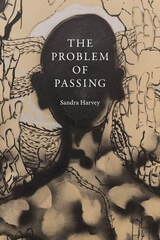
The Problem of Passing
Sandra Harvey
Duke University Press, 2026

The Problem of the Color[blind]
Racial Transgression and the Politics of Black PerformanceBrandi Wilkins Catanese
University of Michigan Press, 2011

The Problem of the Essential Indexical and Other Essays, Expanded Edition
John Perry
CSLI, 2000
John Perry discusses how these kinds of words work, and why they express important philosophical thoughts. He shows that indexicals pose a challenge to traditional assumptions about language and thought. Over the years a number of these papers, now included in this book, have sparked lively debates and have been influential in philosophy, linguistics and other areas of cognitive science.
With seven new papers, including the previously unpublished ``What Are Indexicals?,'' the present volume expands on an earlier version of this book published in the early nineties. Also included are the well-known papers ``Frege on Demonstratives,'' ``Cognitive Significance and New Theories of Reference,'' ``Evading the Slingshot,'' ``The Prince and the Phone booth'' (coauthored with Mark Crimmins), ``Fodor on Psychological Explanations'' (coauthored with David Israel), and related papers on situation semantics, direct reference, and the structure of belief. This book also includes afterwords written by the author that discuss responses to his work by Gareth Evans, Robert Stalnaker, Barbara Partee, Howard Wettstein and others.

The Problem of the Fetish
William Pietz
University of Chicago Press, 2022
In recent decades, William Pietz’s innovative history of the idea of the fetish has become a cult classic. Gathered here, for the first time, is his complete series of essays on fetishism, supplemented by three texts on Marx, blood sacrifice, and the money value of human life. Tracing the idea of the fetish from its origins in the Portuguese colonization of West Africa to its place in Enlightenment thought and beyond, Pietz reveals the violent emergence of a foundational concept for modern theories of value, belief, desire, and difference. This book cements Pietz’s legacy of engaging questions about material culture, object agency, merchant capitalism, and spiritual power, and introduces a powerful theorist to a new generation of thinkers.

The Problem of the Future World
W. E. B. Du Bois and the Race Concept at MidcenturyEric Porter
Duke University Press, 2010

The Problem of the Negro as a Problem for Gender
Marquis Bey
University of Minnesota Press, 2020
A complex articulation of the ways blackness and nonnormative gender intersect—and a deeper understanding of how subjectivities are formed
A deep meditation on and expansion of the figure of the Negro and insurrectionary effects of the “X” as theorized by Nahum Chandler, The Problem of the Negro as a Problem for Gender thinks through the problematizing effects of blackness as, too, a problematizing of gender. Through the paraontological, the between, and the figure of the “X” (with its explicit contemporary link to nonbinary and trans genders) Marquis Bey presents a meditation on black feminism and gender nonnormativity. Chandler’s text serves as both an argumentative tool for rendering the “radical alternative” in and as blackness as well as demonstrating the necessarily trans/gendered valences of that radical alternative.
Forerunners is a thought-in-process series of breakthrough digital works. Written between fresh ideas and finished books, Forerunners draws on scholarly work initiated in notable blogs, social media, conference plenaries, journal articles, and the synergy of academic exchange. This is gray literature publishing: where intense thinking, change, and speculation take place in scholarship.

The Problem with Feeding Cities
The Social Transformation of Infrastructure, Abundance, and Inequality in AmericaAndrew Deener
University of Chicago Press, 2020
The Problem with Feeding Cities is a sociological and historical examination of how this remarkable network of abundance and convenience came into being over the last century. It looks at how the US food system transformed from feeding communities to feeding the entire nation, and it reveals how a process that was once about fulfilling basic needs became focused on satisfying profit margins. It is also a story of how this system fails to feed people, especially in the creation of food deserts. Andrew Deener shows that problems with food access are the result of infrastructural failings stemming from how markets and cities were developed, how distribution systems were built, and how organizations coordinate the quality and movement of food. He profiles hundreds of people connected through the food chain, from farmers, wholesalers, and supermarket executives, to global shippers, logistics experts, and cold-storage operators, to food bank employees and public health advocates. It is a book that will change the way we see our grocery store trips and will encourage us all to rethink the way we eat in this country.

The Problem with Personalization
How Advertisers Learned to Make and Break Us from Ancient Times to the AI AgeJoseph Turow
University of Chicago Press, 2026
A respected voice on technology shows how seemingly simple ads help dismantle democracy and public discourse.
Whether you’re intentionally shopping or casually browsing social media, something is following you: ads. Their creators seem to know your income bracket, politics, age, location, medical conditions, and tastes in clothing, food, and romantic partners. As advertising firms use predictive AI to discover your hot buttons and generative AI to push them, your online world becomes an increasingly bespoke—and isolated—place. The fervid competition around personalization in digital marketing has given rise to an ecosystem of advertisers, media outlets, tech companies, and retailers who monetize your data while threatening the health of our media, discourse, and sense of community. In this urgent book, award-winning author Joseph Turow shows how we got here, and how to change direction.
The Problem with Personalization shatters common beliefs about advertising history by showing that individualized ads are not new. Today’s AI-enabled advertisers draw on past aspirations and assumptions about personalization while weaponizing data in unprecedented ways that drive social fragmentation and the disappearance of shared social reality. Informed by interviews with marketing insiders and covering the latest technology advances, Turow accessibly explains how artificial intelligence sifts through our data to tag and target us wherever we go with personalized videos, pictorial billboards, audio messages, and more. A logical next step for advertiser support is tailored entertainment and news, a shift that further destroys the common ground necessary for a functioning democracy.
A must-read for all who care about the future of public discourse, The Problem with Personalization reveals how targeted advertising has altered how we’re seen and what we see in return.

The Problem with Personalization
How Advertisers Learned to Make and Break Us from Ancient Times to the AI AgeJoseph Turow
University of Chicago Press, 2026
A respected voice on technology shows how seemingly simple ads help dismantle democracy and public discourse.
Whether you’re intentionally shopping or casually browsing social media, something is following you: ads. Their creators seem to know your income bracket, your tastes in clothing, food, location, politics, age, medical conditions, and romantic partners. As predictive AI tells firms what your hot buttons are and generative AI produces messages tailored to those buttons, your online world becomes an increasingly comfortable—and isolated—place. The fervid competition around personalization in digital marketing, now ubiquitous, has given rise to an ecosystem of advertisers, media outlets, tech companies, and retailers who monetize your data, while threatening the health of our media, our discourse, and our sense of community. In this urgent book, award-winning author Joseph Turow shows how we got here, and how to change direction.
The Problem with Personalization shatters common beliefs about advertising history by showing that individualizing ads is not new. Today’s high-velocity AI versions draw on past aspirations and assumptions about personalization while weaponizing it in unprecedented ways that drive social fragmentation and the disappearance of shared social reality. Informed by interviews with marketing insiders and covering the latest technology advances, Turow accessibly explains how artificial intelligence sifts our data to tag and target us wherever we go with personalized videos, pictorial billboards, audio messages, and more. A logical next step for advertiser support is tailored entertainment and news, a shift that further destroys the common ground necessary for a functioning democracy.
A must-read for all who care about the future of public discourse, The Problem with Personalization reveals how targeted advertising has altered how we’re seen and what we see in return.

The Problem with Work
Feminism, Marxism, Antiwork Politics, and Postwork ImaginariesKathi Weeks
Duke University Press, 2011

Things, Thoughts, Words, and Actions
The Problem of Language in Late Eighteenth-Century British Rhetorical TheoryH. Lewis Ulman
Southern Illinois University Press, 1994
H. Lewis Ulman here examines the roles of language theory in eighteenth-century British rhetorics, linking those roles to philosophical issues informing twentieth-century rhetorical theory. In doing so, Ulman develops a general model of the "problem of language" for rhetorical theory, a model that transcends the impasse between realism and skepticism that marks both eighteenth- and twentieth-century rhetorical theory.
The nature of language was never more central to rhetorical theory than in the second half of the eighteenth century. Yet, until now, the articulation of theories of language and the arts of rhetoric in eighteenth-century Britain has received little attention. Ulman examines the role of grammar and theories of language in the formation of eighteenth-century rhetorical theory, investigating the significance of language theory for such key concerns of eighteenth-century rhetoric as verbal criticism, style, and elocution. His study highlights what he understands as the central motive of late eighteenth-century British rhetoricians—to construct for their particular cultural context philosophically rigorous accounts of verbal communication based on carefully articulated theories of thought and language.
Toward this end, Ulman examines three eighteenth-century British rhetorical treatises: George Campbell’s Philosophy of Rhetoric, Hugh Blair’s Lectures on Rhetoric and Belles Lettres, and Thomas Sheridan’s Course of Lectures on Elocution. He then identifies the continuities and discontinuities between the problem of language for eighteenth- and twentieth-century rhetorical theory and proposes a pluralistic stance toward the problem of language in rhetoric as an alternative to the theoretical standoff that currently characterizes the debate between realist and antirealist rhetorics.