Results by title
117 books match the query 'Production and direction' and 16 start with t
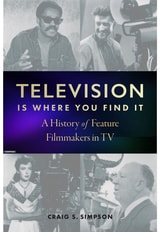
Television Is Where You Find It
A History of Feature Filmmakers in TVCraig S. Simpson
Rutgers University Press, 0
Television Is Where You Find It is a revelatory journey into the overlooked world of feature filmmakers who brought their cinematic vision to the small screen between 1955 and 1990—long before directing for television became trendy in the age of “Prestige TV.” With ten compelling case studies—from legends like Alfred Hitchcock, David Lynch, and Orson Welles to trailblazers like Ida Lupino, Melvin Van Peebles, and Martin Scorsese—author Craig S. Simpson uncovers how these directors reshaped the language of television with style and imagination.
Far from simply dabbling in a “lesser” medium, these filmmakers pushed the boundaries of what TV could do, crafting bold, innovative work that challenges the old notion that television belongs solely to writers and producers. In this fresh, critical study, Television Is Where You Find It makes a case for rediscovering and reevaluating a rich chapter of television history—one in which cinematic artistry quietly flourished, often hidden in plain sight.

The Cinema of Mika Kaurismäki
Transvergent Cinescapes, Emergent IdentitiesPietari Kääpä
Intellect Books, 2011
A PDF version of this book is available for free in open access via the OAPEN Library platform, www.oapen.org It has been made available under a Creative Commons Attribution 4.0 International Public License and is part of Knowledge Unlatched.
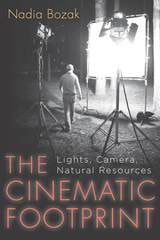
The Cinematic Footprint
Lights, Camera, Natural ResourcesBozak, Nadia
Rutgers University Press, 2011
Film is often used to represent the natural landscape and, increasingly, to communicate environmentalist messages. Yet behind even today’s “green” movies are ecologically unsustainable production, distribution, and consumption processes. Noting how seemingly immaterial moving images are supported by highly durable resource-dependent infrastructures, The Cinematic Footprint traces the history of how the “hydrocarbon imagination” has been central to the development of film as a medium.
Nadia Bozak’s innovative fusion of film studies and environmental studies makes provocative connections between the disappearance of material resources and the emergence of digital media—with examples ranging from early cinema to Dziga Vertov’s prescient eye, from Chris Marker’s analog experiments to the digital work of Agnès Varda, James Benning, and Zacharias Kunuk. Combining an analysis of cinema technology with a sensitive consideration of film aesthetics, The Cinematic Footprint offers a new perspective on moving images and the natural resources that sustain them.
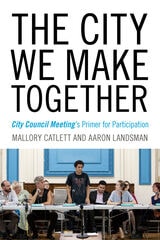
The City We Make Together
City Council Meeting's Primer for ParticipationMallory Catlett
University of Iowa Press, 2022
The City We Make Together looks at how we make art with communities, how we perform power and who gets to play which roles, and how we might use creativity and rigorous inquiry to look at our structures of democracy anew.
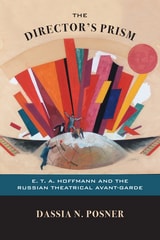
The Director's Prism
E. T. A. Hoffmann and the Russian Theatrical Avant-GardeDassia N. Posner
Northwestern University Press, 2016
Shortlist, 2019 Prague Quadrennial Best Scenography and Design Publication Award
The Director's Prism investigates how and why three of Russia's most innovative directors— Vsevolod Meyerhold, Alexander Tairov, and Sergei Eisenstein—used the fantastical tales of German Romantic writer E. T. A. Hoffmann to reinvent the rules of theatrical practice. Because the rise of the director and the Russian cult of Hoffmann closely coincided, Posner argues, many characteristics we associate with avant-garde theater—subjective perspective, breaking through the fourth wall, activating the spectator as a co-creator—become uniquely legible in the context of this engagement. Posner examines the artistic poetics of Meyerhold's grotesque, Tairov's mime-drama, and Eisenstein's theatrical attraction through production analyses, based on extensive archival research, that challenge the notion of theater as a mirror to life, instead viewing the director as a prism through whom life is refracted. A resource for scholars and practitioners alike, this groundbreaking study provides a fresh, provocative perspective on experimental theater, intercultural borrowings, and the nature of the creative process.
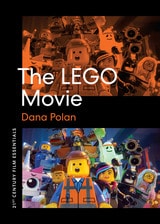
The LEGO Movie
By Dana Polan
University of Texas Press, 2020
What happens when we set out to understand LEGO not just as a physical object but as an idea, an icon of modernity, an image—maybe even a moving image? To what extent can the LEGO brick fit into the multimedia landscape of popular culture, especially film culture, today? Launching from these questions, Dana Polan traces LEGO from thing to film and asserts that The LEGO Movie is an exemplar of key directions in mainstream cinema, combining the visceral impact of effects and spectacle with ironic self-awareness and savvy critique of mass culture as it reaches for new heights of creativity.
Incorporating insights from conversations with producer Dan Lin and writer-directors Phil Lord and Chris Miller, Polan examines the production and reception of The LEGO Movie and closely analyzes the film within popular culture at large and in relation to LEGO as a toy and commodity. He identifies the film’s particular stylistic and narrative qualities, its grasp of and response to the culture industry, and what makes it a distinctive work of animation within the seeming omnipresence of animation in Hollywood, and reveals why the blockbuster film, in all its silliness and seriousness, stands apart as a divergent cultural work.
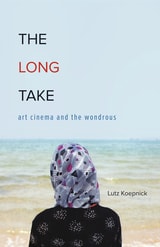
The Long Take
Art Cinema and the WondrousLutz Koepnick
University of Minnesota Press, 2017
In The Long Take, Lutz Koepnick posits extended shot durations as a powerful medium for exploring different modes of perception and attention in our fast-paced world of mediated stimulations. Grounding his inquiry in the long takes of international filmmakers such as Béla Tarr, Tsai Ming-liang, Abbas Kiarostami, Apichatpong Weerasethakul, and Michael Haneke, Koepnick reveals how their films evoke wondrous experiences of surprise, disruption, enchantment, and reorientation. He proceeds to show how the long take has come to thrive in diverse artistic practices across different media platforms: from the work of photographer Hiroshi Sugimoto to the screen-based installations of Sophie Calle and Tacita Dean, from experimental work by Francis Alÿs and Janet Cardiff to durational images in contemporary video games.
Deeply informed by film and media theory, yet written in a fluid and often poetic style, The Long Take goes far beyond recent writing about slow cinema. In Koepnick’s account, the long take serves as a critical hallmark of international art cinema in the twenty-first century. It invites viewers to probe the aesthetics of moving images and to recalibrate their sense of time. Long takes unlock windows toward the new and unexpected amid the ever-mounting pressures of 24/7 self-management.
The Making of Theatrical Reputations
Studies from the Modern London TheatreYael Zarhy-Levo
University of Iowa Press, 2008
Today's successful plays and playwrights achieve their prominence not simply because of their intrinsic merit but because of the work of mediators, who influence the whole trajectory of a playwright's or a theatre company's career. Critics and academic writers are primarily considered the makers of reputations, but funding organizations and various media agents as well as artistic directors, producers, and directors also pursue separate agendas in shaping the reputations of theatrical works. In The Making of Theatrical Reputations Yael Zarhy-Levo demonstrates the processes through which these mediatory practices by key authority figures situate theatrical companies and playwrights within cultural and historical memory.
To reveal how these authorizing powers-that-be promote theatrical events, companies, and playwrights, Zarhy-Levo presents four detailed case studies that reflect various angles of the modern London theatre. In the case of the English Stage Company's production of John Osborne's Look Back in Anger, she centers on a specific event. She then focuses on the trajectory of a single company, the Theatre Workshop, particularly through its first decade at the Theatre Royal, Stratford East, London. Next, she explores the career of the dramatist John Arden, especially its first ten years, in part drawing upon an interview with Arden and his wife, actress and playwright Margaretta D'Arcy, before turning to her fourth study: the playwright Harold Pinter's shifting reputation throughout the different phases of his career.
Zarhy-Levo's accounts of these theatrical events, companies, and playwrights through the prism of mediation bring fresh insights to these landmark productions and their creators.
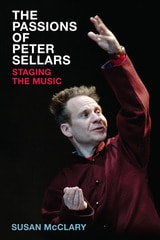
The Passions of Peter Sellars
Staging the MusicSusan McClary
University of Michigan Press, 2019
Many directors leave the musical aspects of opera entirely to the singers and conductor. Sellars, however, immerses himself in the score, and has created a distinctive visual vocabulary to embody musical gesture on stage, drawing on the energies of the music as he shapes characters, ensemble interaction, and large-scale dramatic trajectories. As a leading scholar of gender and music, and the history of opera, Susan McClary is ideally positioned to illuminate Sellars’s goal to address both the social tensions embodied in these operas as well as the spiritual dimensions of operatic performance. McClary considers Sellars’s productions of Mozart’s Le nozze di Figaro, Don Giovanni, and Così fan tutte; Handel’s Theodora; Messiaen’s Saint François d’Assise; John C. Adams’s Nixon in China, The Death of Klinghoffer, El Niño, and Doctor Atomic; Kaija Saariaho’s L’amour de loin, La Passion de Simone, and Only the Sound Remains; Purcell’s The Indian Queen; and Bach’s passions of Saint Matthew and Saint John. Approaching Sellars’s theatrical strategies from a musicological perspective, McClary blends insights from theater, film, and literary scholarship to explore the work of one of the most brilliant living interpreters of opera.
The Practical Shakespeare
The Plays in Practice and on the PageColin Butler
Ohio University Press, 2005
A comprehensive treatment of Shakespeare’s plays, The Practical Shakespeare: The Plays in Practice and on the Page illuminates for a general audience how and why the plays work so well.
Noting in detail the practical and physical limitations the Bard faced as he worked out the logistics of his plays, Colin Butler demonstrates how Shakespeare incorporated those limitations and turned them to his advantage: his management of entrances and exits; his characterization techniques; his handling of scenes off-stage; his control of audience responses; his organization of major scenes; and his use of prologues and choruses. A different aspect of the plays is covered in each chapter.
Butler draws most of his examples from mainstream plays, such as Macbeth, Othello, and Much Ado about Nothing. He brings special focus to A Midsummer Night’s Dream, which is treated as one of Shakespeare’s most important plays. Butler supports his major points with quotations, so readers can understand an issue even if they are unfamiliar with the particular play being discussed. The author also cross-references the use of dramatic devices in the plays, increasing the reader’s enjoyment and understanding of Shakespeare’s achievements.
Clear, jargon-free, easy-to-use, and comprehensive, The Practical Shakespeare looks at stagecraft and playwriting as conduits for students, teachers, and general audiences to engage with, understand, and appreciate the genius of Shakespeare.
The Value Gap
Female-Driven Films from Pitch to PremiereCourtney Brannon Donoghue
University of Texas Press, 2023
How female directors, producers, and writers navigate the challenges and barriers facing female-driven projects at each stage of filmmaking in contemporary Hollywood.
Conversations about gender equity in the workplace accelerated in the 2010s, with debates inside Hollywood specifically pointing to broader systemic problems of employment disparities and exploitative labor practices. Compounded by the devastating #MeToo revelations, these problems led to a wide-scale call for change. The Value Gap traces female-driven filmmaking across development, financing, production, film festivals, marketing, and distribution, examining the realities facing women working in the industry during this transformative moment. Drawing from five years of extensive interviews with female producers, writers, and directors at different stages of their careers, Courtney Brannon Donoghue examines how Hollywood business cultures “value” female-driven projects as risky or not bankable. Industry claims that “movies targeting female audiences don’t make money” or “women can’t direct big-budget blockbusters” have long circulated to rationalize systemic gender inequities and have served to normalize studios prioritizing the white male–driven status quo. Through a critical media industry studies lens, The Value Gap challenges this pervasive logic with firsthand accounts of women actively navigating the male-dominated and conglomerate-owned industrial landscape.
The Voice and Its Doubles
Media and Music in Northern AustraliaDaniel Fisher
Duke University Press, 2016
The Voice in the Headphones
David Grubbs
Duke University Press, 2020
The Voice in the Headphones is an experiment in music writing in the form of a long poem centered on the culture of the recording studio. It describes in intricate, prismatic detail one marathon day in a recording studio during which an unnamed musician struggles to complete a film soundtrack. The book extends the form of Grubbs's previous volume Now that the audience is assembled, sharing its goal of musicalizing the language of writing about music. Mulling the insight that “studio is the absence of pushback”—now that no audience is assembled—The Voice in the Headphones details one musician's strategies for applying the requisite pressure to the proceedings, for making it count. The Voice in the Headphones is both a literary work and a meditation on sound recording, delivered at a moment in which the commercial recording studio shades into oblivion. It draws upon Grubbs's own history of several decades as a recording artist, and its location could be described as every studio in which he has set foot.
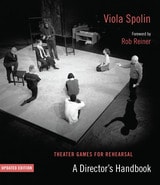
Theater Games for Rehearsal
A Director's Handbook, Updated EditionViola Spolin with a foreword by Rob Reiner
Northwestern University Press, 2010
An updated edition of a key reference text by “the high priestess of improvisational theater”
A major force in the development of American theater, Viola Spolin devised pedagogical techniques that have influenced and inspired legions of actors, improvisers, and directors. Theater Games for Rehearsal: A Director's Handbook, first published in 1985, is a practical application of Spolin's famous method that guides directors and their companies step-by-step through all phases of the rehearsal period.
In Theater Games for Rehearsal, Spolin shows in easy-to-follow detail how her techniques can be used for a variety of theater needs, from selecting performance material, casting, and building a harmonious company to warming up actors, creating stage space, and overcoming opening-night jitters. This new edition, edited by Carol Bleackley Sills, incorporates Spolin's wished-for updates: four important exercises have been added, and instructions presenting her improvisational approach have been clarified throughout. Sidecoaching instructions and game evaluations are boxed and highlighted for on-the-spot reading by the director during rehearsal.
With these additions and improvements, Theater Games for Rehearsal: A Director's Handbook brings Spolin's ideas to a new generation with greater accessibility and excitement. Featuring a new foreword by renowned film director Rob Reiner, the updated edition is mandatory for any theater bookshelf.
There’s No Place Like Home Video
James M. Moran
University of Minnesota Press, 2002
Defines, examines, and elevates home video to its rightful place
From its recording of family events to its influence on filmmaking, home video defies easy categorization and demands serious consideration. In There’s No Place Like Home Video, James Moran takes on this neglected aspect of popular culture. He offers a cultural history of amateur home video, exploring its technological and ideological predecessors, the development of event videography, and its symbiotic relationship with television and film. He also investigates the broader field of video, taking on the question of medium specificity: the attempt to define its unique identity, to capture what constitutes its pure practice.
In Moran’s discussion of video, he argues that previous scholars have not sufficiently dealt with its nature as hybrid, varied, and mutable. He argues that such a medium shouldn’t be conceived as pure in and of itself; it is neither autonomous from other media nor entirely dependent on any other, but instead has a chameleonlike interface with films, television, computers, telephones, and even architecture. Rather than look for a grand narrative to define its specificity, Moran places video and home video at the intersections of multiple forms of communication.
Treacherous Subjects
Gender, Culture, and Trans-Vietnamese FeminismLan P Duong
Temple University Press, 2012
Treacherous Subjects is a provocative and thoughtful examination of Vietnamese films and literature viewed through a feminist lens. Lan Duong investigates the postwar cultural productions of writers and filmmakers, including Tony Bui, Trinh T. Minh-ha, and Tran Anh Hung.
Taking her cue from the double meaning of "collaborator," Duong shows how history has shaped the loyalties and shifting alliances of the Vietnamese, many of whom are caught between opposing/constricting forces of nationalism, patriarchy, and communism. Working at home and in France and the United States, the artists profiled in Treacherous Subjects have grappled with the political and historic meanings of collaboration. These themes, which probe into controversial issues of family and betrayal, figure heavily in fictions such as the films The Scent of Green Papaya and Surname Viet Given Name Nam.
As writers and filmmakers collaborate, Duong suggests that they lay the groundwork for both transnational feminist politics and queer critiques of patriarchy.