Results by title
1761 books match the query 'Public Policy' and 335 start with t
THE MYSTERIES OF THE GREAT CITY
THE POLITICS OF URBAN DESIGN, 1877-1937JOHN FAIRFIELD
The Ohio State University Press, 1997
The Mysteries of the Great City examines the physical, cultural, and political transformations of the American city between the Gilded Age and the New Deal. Focusing on New York, Chicago, and Cincinnati, John Fairfield demonstrates that these transformations before and after the advent of city planning were the result of political decisions influenced by corporate and private wealth.
The expansion and reorganization of the great city stood out as the most visible symbol of the transformation. The new metropolitan form, with its skyscraping business center, industrial satellites, crowded working-class neighborhoods, and exclusive suburbs, embodied an emerging corporate order. But the metropolis also disguised the new order and gave it an apparent physical implacability and inevitability that obscured the role of choice in its creation and therefore placed it beyond criticism. Fairfield unravels the mysteries of the new form to reveal the centrality of power and politics in urban design.
While acknowledging that a great many factors shaped urban development, Fairfield underscores the decisive role of human design. He argues that American cities, both before and after the advent of professional planning, have always been in some measure “planned.” Discussing such figures as Frederick Law Olmsted, Henry George, Daniel Burnham, Frederic Howe, Edward Bassett, Robert E. Park, and Louis Wirth, Fairfield illuminates the political and intellectual conflicts among advocates of alternative paths of urban development.
The Mysteries of the Great City will enlighten all readers interested in the development of cities, particularly urban historians and planners. In pointing to the Gilded Age as a period of great possibilities of progressive reform, this study will also reward readers interested in the historical foundations of our modern society.

TV Violence and the Child
Evolution and Fate of the Surgeon General's ReportDouglass Cater
Russell Sage Foundation, 1975
Table Talk
Building Democracy One Meal at a TimeJanet A. Flammang
University of Illinois Press, 2016
The civic virtues of a seat at the table
Etiquette books insist that we never discuss politics during a meal. In Table Talk, Janet A. Flammang offers a polite rebuttal, presenting vivid firsthand accounts of people's lives at the table to show how mealtimes can teach us the conversational give-and-take foundational to democracy. Delving into the ground rules about listening, sharing, and respect that we obey when we break bread, Flammang shows how conversations and table activities represent occasions for developing our civil selves. If there are cultural differences over practices--who should speak, what behavior is acceptable, what topics are off limits, how to resolve conflict--our exposure to the making, enforcement, and breaking of these rules offers a daily dose of political awareness and growth. Political table talk provides a forum to practice the conversational skills upon which civil society depends. It also ignites the feelings of respect, trust, and empathy that undergird the idea of a common good that is fundamental to the democratic process.
Take Back the Economy
An Ethical Guide for Transforming Our CommunitiesJ. K. Gibson-Graham
University of Minnesota Press, 2013
In the wake of economic crisis on a global scale, more and more people are reconsidering their role in the economy and wondering what they can do to make it work better for humanity and the planet. In this innovative book, J. K. Gibson-Graham, Jenny Cameron, and Stephen Healy contribute complex understandings of economics in practical terms: what can we do right now, in our own communities, to make a difference?
Full of exercises, thinking tools, and inspiring examples from around the world, Take Back the Economy shows how people can implement small-scale changes in their own lives to create ethical economies. There is no manifesto here, no one prescribed model; rather, readers are encouraged and taught how to take back the economy in ways appropriate for their own communities and context, using what they already have at hand.
Take Back the Economy dismantles the idea that the economy is separate from us and best comprehended by experts. Instead, the authors demonstrate that the economy is the outcome of the decisions and efforts we make every day. The economy is thus reframed as a space of ethical action—something we can shape and alter according to what is best for the well-being of people and the planet. The book explores what people are already doing to build ethical economies, presenting these deeds as mutual concerns: What is necessary for survival, and what do we do with the surplus produced beyond what will fulfill basic needs? What do we consume, and how do we preserve and replenish the commons—those resources that can be shared to maintain all? And finally, how can we invest in a future worth living in?
Suitable for activists and students alike, Take Back the Economy will be of interest to anyone seeking a more just, sustainable, and equitable world.
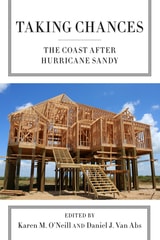
Taking Chances
The Coast after Hurricane SandyO'Neill, Karen M.
Rutgers University Press, 2016
Taking Juvenile Justice Seriously
Developmental Insights and System ChallengesChristopher J. Sullivan
Temple University Press, 2019
The juvenile justice system navigates a high degree of variation in youthful offenders. While professionals with insights about reform and adolescent development consider the risks, the needs, and the patterns of delinquency of youth, too little attention is paid to the responses and practicalities of a system that is both complex and limited in its resources.
In his essential book, Taking Juvenile Justice Seriously, Christopher Sullivan systematically analyzes key facets of justice-involved youth populations and parses cases to better understand core developmental influences that affect delinquency. He takes a comprehensive look at aspects of the life-course affected by juvenile justice as well as at the juvenile justice system’s operations and its multifaceted mission of delivering both treatment and sanctions to a varied population of youths.
Taking Juvenile Justice Seriously first provides an overview of the youth who encounter the system, then describes its present operations and obstacles, synthesizes relevant developmental insights, and reviews current practices. Drawing on research, theory, and evidence regarding innovative policies, Sullivan offers a series of well-grounded recommendations that suggest how to potentially—and realistically—implement a more effective juvenile justice system that would benefit all.
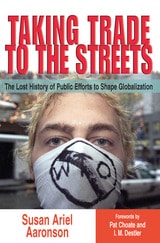
Taking Trade to the Streets
The Lost History of Public Efforts to Shape GlobalizationSusan Ariel Aaronson
University of Michigan Press, 2002
Talking Back to the West
How Turkey Uses Counter-Hegemony to Reshape the Global Communication OrderBilge Yesil
University of Illinois Press, 2024
Insightfully exploring the crossroads of communications and authoritarianism, Talking Back to the West illuminates how the Erdogan government and its media allies use history, religion, and identity to pursue complementary agendas and tighten the AKP’s grip on power.
Taste of the Nation
The New Deal Search for America's FoodCamille Bégin
University of Illinois Press, 2016
Camille Begin shapes a cultural and sensory history of New Deal-era eating from the FWP archives. From "ravioli, the diminutive derbies of pastries, the crowns stuffed with a well-seasoned paste" to barbeque seasoning that integrated "salt, black pepper, dried red chili powder, garlic, oregano, cumin seed, and cayenne pepper" while "tomatoes, green chili peppers, onions, and olive oil made up the sauce", Begin describes in mouth-watering detail how Americans tasted their food. They did so in ways that varied, and varied widely, depending on race, ethnicity, class, and region. Begin explores how likes and dislikes, cravings and disgust operated within local sensory economies that she culls from the FWP’s vivid descriptions, visual cues, culinary expectations, recipes and accounts of restaurant meals. She illustrates how nostalgia, prescriptive gender ideals, and racial stereotypes shaped how the FWP was able to frame regional food cultures as "American."
Tax Politics in Eastern Europe
Globalization, Regional Integration, and the Democratic CompromiseHilary Appel
University of Michigan Press, 2011
“This is the first book to systematically examine the variation in policies of Eastern European countries. There is a theoretical contribution to understandings of variation in tax policies, but just as impressive is the in-depth empirical analysis and in particular the data from interviews with key players in the process.”
—Yoshiko Herrera, University of Wisconsin-Madison
Post-Communist tax reform, like institutional reform in other areas of the post-Communist transition, holds tremendous material consequences for different groups in society. Consequently, one would expect the allocation of resources and the distribution of the financial burden of that allocation to be highly sensitive to domestic politics. Indeed the political stakes should be especially high since post-Communist tax reform requires not merely a simple adjustment at the margin, but the fundamental reallocation of the responsibility for government revenue. In Eastern Europe, however, important areas of tax policy do not reflect traditional domestic variables (e.g., interest groups and partisanship) so much as the international imperatives associated with regional and global economic integration.
In Tax Politics in Eastern Europe, Hilary Appel analyzes the domestic and international factors that drive tax policy. She begins with a review of the greatest challenges in the initial creation of the capitalist tax systems in former Communist states and then turns to the evolution of specific forms of taxation in order to gauge the relative impact of domestic politics on tax policy. Appel concludes that, although some tax areas, such as personal income taxes, remain politicized, most other taxes, such as corporate income taxes and all forms of consumption taxes, have been less subject to domestic political pressures because of powerful constraints resulting from regional and global economic integration.
Taxing Women
Edward J. McCaffery
University of Chicago Press, 1997
"Taxing Women is a must-have primer for any woman who wants to understand how our current tax system affects her family's economic condition. In plain English, McCaffery explains how the tax code stacks the deck against women and why it's in women's economic interest to lead the next great tax rebellion."—Patricia Schroeder
"McCaffery is an expert on the interplay between taxes and social policy. . . . Devastating in his analysis. . . . Intriguing."—Harris Collingwood, Working Women
"A wake-up call regarding the inequalities of an archaic system that actually penalizes women for working."—Publishers Weekly
Teaching about Religions
A Democratic Approach for Public SchoolsEmile Lester
University of Michigan Press, 2013
"This provocative and timely book challenges Americans to rethink what it means to take democracy and religious freedom seriously in public education. Emile Lester takes the reader beyond culture war conflicts rooted in religious divisions and offers bold, new solutions for addressing our differences with fairness and robust toleration. Instead of battlegrounds, he argues, public schools can and should be places that include all voices in ways that prepare citizens to engage one another with civility and respect. Teaching about Religions is essential reading for all who care about the future of public schools---and the health of American democracy."
--- Charles C. Haynes, Senior Scholar, Freedom Forum First Amendment Center
"More than simply a synthesis of existing scholarship, [this book is] an original contribution to the field. [The] major themes are timely, and this book might well contribute to public discussion of important issues in our culture wars."
---Warren Nord, University of North Carolina–Chapel Hill
"Arriving in the wake of a bitter battle over the place of Islam in America and in the midst of calls for greater understanding and civility, Emile Lester's new book is a timely contribution to the debate about the best ways to teach about religion in our nation's public schools. A pioneering researcher in this field, Lester offers thoughtful critiques of existing proposals as well as fresh ideas. His recommendations reflect painstaking efforts to understand the concerns of groups (most notably, conservative Christians) to which he does not belong, and a firm grasp of the difference between fostering understanding of other faiths and pressing for acceptance of them. Lester's prescriptions, always informed and fair-minded and sometimes provocative, should drive the debate forward in productive ways."
---Melissa Rogers, Director, Center for Religion and Public Affairs at Wake Forest University School of Divinity and Nonresident Senior Fellow, The Brookings Institution
Frequent news stories about the debates waged between secularists and religious conservatives have convinced most Americans that public schools must choose between promoting respect for religious minorities and respecting the interests of conservative Christians. As a result, public schools fail to teach students about the meaning and value of protecting religious liberty and consequently perpetuate mistrust across the cultural divide, further empower extremists, and obscure the fact that most Americans of all religious backgrounds share a commitment to basic democratic principles.
In response, the public schools in the religiously diverse and divided community of Modesto, California, have introduced a widely acclaimed required world religions course. Drawing on groundbreaking research on the creation of and response to the Modesto course as well as on political philosophy, Emile Lester advocates a civic approach to teaching about religion in public schools that at once emphasizes respect for all views about religion and provides a special recognition of conservative Christian beliefs.
Technical Territories
Data, Subjects, and Spaces in Infrastructural AsiaLuke Munn
University of Michigan Press, 2023
Territory is shifting. No longer defined by the dotted line of the border or the national footprint of soil, today’s territories are enacted through data infrastructures. From subsea cables to server halls, these infrastructures underpin new forms of governance, shaping subjects and their everyday lives. Technical Territories moves from masked protestors in Hong Kong to asylum-seekers in Christmas Island and sand miners in Singapore, exploring how these territories are both political and visceral, altering the experience of their inhabitants.
Infrastructures have now become geopolitical, strategic investments that advance national visions, extend influence, and trigger trade wars. Yet at the same time, these technologies also challenge sovereignty as a bounded container, enacting a more distributed and decoupled form of governance. Such “technical territories” construct new zones where subjects are assembled, rights are undermined, labor is coordinated, and capital is extracted. The stable line of the border is replaced by more fluid configurations of power. Luke Munn stages an interdisciplinary intervention over six chapters, drawing upon a wide range of literature from technical documents and activist accounts, and bringing insights from media studies, migration studies, political theory, and cultural and social studies to bear on these new sociotechnical conditions.
Technocapitalism
A Critical Perspective on Technological Innovation and CorporatismLuis Suarez-Villa
Temple University Press, 2012
In his provocative book Technocapitalism, Luis Suarez-Villa addresses this phenomenon from the perspective of radical political economy and social criticism. Grounded in the premise that relations of power influence how human creativity and technology are exploited by the new corporatism, the author argues that new forms of democratic participation and resistance are needed, if the social pathologies created by this new version of capitalism are to be checked.
Considering the new sectors affected by technocapitalism, such as biotechnology, nanotechnology, bioinformatics, and genomics, Suarez-Villa deciphers the common threads of power and organization that drive their corporatization. These new sectors, and the corporate apparatus set up to extract profit and power through them, are imposing standards, creating business models, molding social governance, and influencing social relations at all levels. The new reality they create is likely to affect most every aspect of human existence, including work, health, life, and nature itself.
Technological Shortcuts to Social Change
Amitai Etzioni
Russell Sage Foundation, 1973
Television Violence and Public Policy
James T. Hamilton, Editor
University of Michigan Press, 2000

Territories, Commodities and Knowledges
Latin American Environmental Histories in the Nineteenth and Twentieth CenturiesEdited by Christian Brannstrom
University of London Press, 2004
Contributors include Stephen Bell (UCLA, USA), Reinaldo Funes Monzote (Fundacion Antonio Nunez Jimenez de la Naturaleza y el Hombre, Cuba), Stefania Gallini (Universidad Nacional, Colombia), Nikolas Kozloff (CUNY Brooklyn College, USA), Karl Offen (University of Oklahoma, USA), John Soluri (Carnegie-Mellon University, USA), Alejandro Tortolero Villasenor (Universidad Autonoma Metropolitana-Iztapalapa, Mexico), and Robert W. Wilcox (Northern Kentucky University, USA).
That Could Be Us
News Media, Politics, and the Necessary Conditions for Disaster Risk ReductionThomas Jamieson and Douglas A. Van Belle
University of Michigan Press, 2022
In That Could Be Us, Jamieson and Van Belle find that the news media delivers information to observing communities in a form that enables learning from other disasters. Experimental evidence shows that people react to this information in a way that would punish leaders who do not back DRR efforts. Case studies, interviews, experiments, and illustrative examples suggest that leaders and political entrepreneurs heed this public demand, react to news media coverage, and act accordingly. Taken as a whole, this suggests that the policy and research implications derived from this book’s theoretical model are worthy of further exploration, particularly in terms of how they might resolve the puzzle presented by the variations in DRR policy uptake around the world that do not seem to be driven by developmental differences across communities.
The ABCs of Political Economy
A Modern ApproachRobin Hahnel
Pluto Press, 2014
Dispelling myths about financial liberalisation, fiscal austerity, globalisation and free markets, ABCs offers a critical perspective on our present system and outlines clear alternatives for the future.
This second edition applies the analytical tools developed to help readers understand the origins of the financial crisis of 2007, the ensuing 'Great Recession', and why government policies in Europe and North America over the past six years have failed to improve matters for the majority of their citizens. The second edition also helps explain what is causing climate change and what will be required if it is to be resolved effectively and fairly.
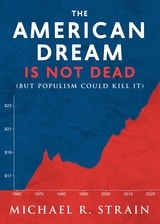
The American Dream Is Not Dead
(But Populism Could Kill It)Michael R. Strain
Templeton Press, 2020
Populists on both sides of the political aisle routinely announce that the American Dream is dead. According to them, the game has been rigged by elites, workers can’t get ahead, wages have been stagnant for decades, and the middle class is dying.
Michael R. Strain, director of economic policy studies at the American Enterprise Institute, disputes this rhetoric as wrong and dangerous. In this succinctly argued volume, he shows that, on measures of economic opportunity and quality of life, there has never been a better time to be alive in America. He backs his argument with overwhelming—and underreported—data to show how the facts favor realistic optimism.
He warns, however, that the false prophets of populism pose a serious danger to our current and future prosperity. Their policies would leave workers worse off. And their erroneous claim that the American Dream is dead could discourage people from taking advantage of real opportunities to better their lives. If enough people start to believe the Dream is dead, they could, in effect, kill it. To prevent this self-fulfilling prophecy, Strain’s book is urgent reading for anyone feeling the pull of the populists.
E. J. Dionne and Henry Olsen provide spirited responses to Strain’s argument.
The Argumentative Turn Revisited
Public Policy as Communicative PracticeFrank Fischer and Herbert Gottweis, eds.
Duke University Press, 2012
The approach speaks in particular to the limits of rationalistic, technoscientific policy making in the complex, unpredictable world of the early twenty-first century. These limits have been starkly illustrated by responses to events such as the environmental crisis, the near collapse of the world economy, and the disaster at the nuclear power plant in Fukushima, Japan. Addressing topics including deliberative democracy, collaborative planning, new media, rhetoric, policy frames, and transformative learning, the essays shed new light on the ways that policy is communicatively created, conveyed, understood, and implemented. Taken together, they show argumentative policy inquiry to be an urgently needed approach to policy analysis and planning.
Contributors. Giovanni Attili, Hubertus Buchstein, Stephen Coleman, John S. Dryzek, Frank Fischer, Herbert Gottweis, Steven Griggs, Mary Hawkesworth, Patsy Healey, Carolyn M. Hendriks, David Howarth, Dirk Jörke, Alan Mandell, Leonie Sandercock, Vivien A. Schmidt, Sanford F. Schram
The Argumentative Turn in Policy Analysis and Planning
Frank Fischer and John Forester, eds.
Duke University Press, 1993
The contributors, scholars of international renown who range across the theoretical spectrum, emphasize the political nature of the policy planner's work and stress the role of persuasive arguments in practical decision making. Recognizing the rhetorical, communicative character of policy and planning deliberations, they show that policy arguments are necessarily selective, both shaping and being shaped by relations of power. These essays reveal the practices of policy analysts and planners in powerful new ways--as matters of practical argumentation in complex, highly political environments. They also make an important contribution to contemporary debates over postempiricism in the social and policy sciences.
Contributors. John S. Dryzek, William N. Dunn, Frank Fischer, John Forester, Maarten Hajer, Patsy Healey, Robert Hoppe, Bruce Jennings, Thomas J. Kaplan, Duncan MacRae, Jr., Martin Rein, Donald Schon, J. A. Throgmorton

The Assassination of Paris
Louis Chevalier
University of Chicago Press, 1994
He describes an almost continual parade of garish and grandiose plans: some, like the destruction of the glorious marketplace of les Halles for him the heart of the city, were realized; others, like the superhighway along the left bank of the Seine, were bitterly and successfully resisted.
Almost twenty years later, we find it difficult to remember the city as it was. And while Paris looks to many much the way it always has, behind the carefully sandblasted stone and restored shop fronts is a city radically transformed—emptied of centuries of popular life; of entire neighborhoods and the communities they housed engineered out to desolate suburban slums. The battle over the soul and spirit of the city continues.
This book is not entirely about the loss of physical places. Or a romance about a world that never really was. It is a cautionary tale filled with lessons for all who struggle to protect the human scale, the diversity, and the welcoming public life that are the threatened gifts of all great cities.

The Battle for Alabama's Wilderness
Saving the Great Gymnasiums of NatureJohn N. Randolph
University of Alabama Press, 2005
Traces the development of Alabama's environmental movement from its beginnings with the establishment of The Alabama Conservancy in the late 1960s and early '70s to the preservation efforts of present-day activist groups
The grassroots effort to preserve Alabama's Wilderness Areas spanned thirty years, from 1967 to 1997. The first battle, to establish the Sipsey Wilderness in the Bankhead National Forest, was the catalyst for reform of national policy regarding public land preserves in the eastern United States. It, and the later campaigns—to establish the Cheaha Wilderness, to enlarge the Sipsey, and to create the Dugger Mountain Wilderness—are classic tales of citizen activists overcoming the quagmire of federal bureaucracy and the intransigence of hostile politicians. Early political opposition to proposed designation or expansion of wilderness areas in Alabama was based on the belief that limiting development of these lands would negatively impact the state's powerful timber industry. In response to such opposition, serious environmental activism was born in Alabama.
Using newspaper reports, Congressional testimony, interviews, and his own recollections, John Randolph traces the development of Alabama's environmental movement from its beginnings with the establishment of The Alabama Conservancy in the late 1960s and early '70s to the preservation efforts of present-day activist groups, such as the Alabama Environmental Council, the Cahaba River Society, and the Alabama Wilderness Alliance.
The Battle for Alabama's Wilderness permits all of the players—pro and con—to speak for themselves, but the heroes—people like Mary Burks, Blanche Dean, Joab Thomas, and Pete Conroy—embody the vision, hope, and persistence required of those who succeed in their preservation efforts. Randolph's account is a testament to the power of grassroots citizen groups who are committed to a common cause and inspired by a shared ideal.
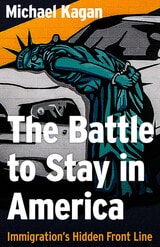
The Battle to Stay in America
Immigration's Hidden Front LineMichael Kagan
University of Nevada Press, 2025
The Battle to Stay in America is the story of a community coming to grips with the federal government’s crackdown on immigrants, and learning how to defend itself. Informative and personal, this is a story about mothers and fathers, lawyers and activists, local police and federal agencies, and a struggle for the identity of a nation. This is the quintessential story of the war on immigrants, as fought and felt on the front lines in the heart of America.
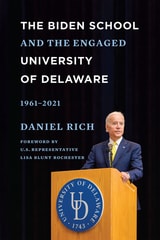
The Biden School and the Engaged University of Delaware, 1961-2021
Daniel Rich
University of Delaware Press, 2023

The Birth of Capitalism
A 21st Century PerspectiveHenry Heller
Pluto Press, 2011
In the light of the deepening crisis of capitalism and continued non-Western capitalist accumulation, Henry Heller re-examines the debates surrounding the transition from feudalism to capitalism in Europe and elsewhere.
Focusing on arguments about the origin, nature and sustainability of capitalism, Heller offers a new reading of the historical evidence and a critical interrogation of the transition debate. He advances the idea that capitalism must be understood as a political as well as an economic entity. This book breathes new life into the scholarship, taking issue with the excessively economistic approach of Robert Brenner, which has gained increasing support over the last ten years. It concludes that the future of capitalism is more threatened than ever before.
The new insights in this book make it essential reading for engaged students and scholars of political economy and history.

The Birth of Energy
Fossil Fuels, Thermodynamics, and the Politics of WorkCara New Daggett
Duke University Press, 2019
The Black Boom
Riley, Jason L.
Templeton Press, 2021
Economic inequality continues to be one of America’s most hotly debated topics. Still, there has been relatively little discussion of the fact that black-white gaps in joblessness, income, poverty and other measures were shrinking before the pandemic. Why was it happening, and why did this phenomenon go unacknowledged by so much media?
In The Black Boom, Jason L. Riley—acclaimed Wall Street Journal columnist and senior fellow at the Manhattan Institute—digs into the data and concludes that the economic lives of black people improved significantly under policies put into place during the Trump administration. To acknowledge as much is not to endorse the 45th president but to champion policies that achieve a clear moral objective shared by most Americans.
Riley argues that before the Covid-19 pandemic of 2020, the economic fortunes of blacks improved under Trump to an extent unseen under Obama and unseen going back several generations. Black unemployment and poverty reached historic lows, and black wages increased faster than white wages.
Less inequality is something that everyone wants, but disapproval of Trump’s personality and methods too often skewed the media’s appraisal of effective policies advocated by his administration. If we're going to make real progress in improving the lives of low-income minorities, says Riley, we must look beyond our partisan differences at what works and keep doing it. Unfortunately, many press outlets were unable or unwilling to do that.
Riley notes that political reporters were not unaware of this data. Instead, they chose to ignore or downplay it because it was inconvenient. In their view, Trump, because he was a Republican and because he was Trump, had it in for blacks, and thus his policy preferences would be harmful to minorities. To highlight that significant racial disparities were narrowing on his watch—that the administration’s tax and regulatory reforms were mainly boosting the working and middle classes rather than ‘the rich’—would have undermined a narrative that the media preferred to advance, regardless of its veracity.”
As with previous books in our New Threats to Freedom series, The Black Boom includes two essays from prominent experts who take issue with the author’s perspective. Juan Williams, a veteran journalist, and Wilfred Reilly, a political scientist, contribute thoughtful responses to Riley and show that it is possible to share a deep concern for disadvantaged groups while disagreeing on how best to help them.
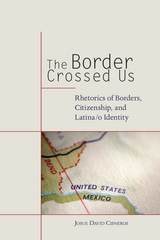
The Border Crossed Us
Rhetorics of Borders, Citizenship, and Latina/o IdentityJosue David Cisneros
University of Alabama Press, 2013
Explores efforts to restrict and expand notions of US citizenship as they relate specifically to the US-Mexico border and Latina/o identity.
Borders and citizenship go hand in hand. Borders define a nation as a territorial entity and create the parameters for national belonging. But the relationship between borders and citizenship breeds perpetual anxiety over the purported sanctity of the border, the security of a nation, and the integrity of civic identity.
In The Border Crossed Us, Josue David Cisneros addresses these themes as they relate to the US-Mexico border, arguing that issues ranging from the Mexican-American War of 1846–1848 to contemporary debates about Latina/o immigration and border security are negotiated rhetorically through public discourse. He explores these rhetorical battles through case studies of specific Latina/o struggles for civil rights and citizenship, including debates about Mexican American citizenship in the 1849 California Constitutional Convention, 1960s Chicana/o civil rights movements, and modern-day immigrant activism.
Cisneros posits that borders—both geographic and civic—have crossed and recrossed Latina/o communities throughout history (the book’s title derives from the popular activist chant, “We didn’t cross the border; the border crossed us!”) and that Latina/os in the United States have long contributed to, struggled with, and sought to cross or challenge the borders of belonging, including race, culture, language, and gender.
The Border Crossed Us illuminates the enduring significance and evolution of US borders and citizenship, and provides programmatic and theoretical suggestions for the continued study of these critical issues.
The Border Within
The Economics of Immigration in an Age of FearTara Watson and Kalee Thompson
University of Chicago Press, 2021
For decades, immigration has been one of the most divisive, contentious topics in American politics. And for decades, urgent calls for its policy reform have gone mostly unanswered. As the discord surrounding the modern immigration debate has intensified, border enforcement has tightened. Crossing harsher, less porous borders makes unauthorized entry to the United States a permanent, costly undertaking. And the challenges don’t end on the other side.
At once enlightening and devastating, The Border Within examines the costs and ends of America’s interior enforcement—the policies and agencies, including ICE, aimed at removing immigrants already living in the country. Economist Tara Watson and journalist Kalee Thompson pair rigorous analysis with deeply personal stories from immigrants and their families to assess immigration’s effects on every aspect of American life, from the labor force to social welfare programs to tax revenue. What emerges is a critical, utterly complete examination of what non-native Americans bring to the country, including immigration’s tendency to elevate the wages and skills of those who are native-born.
News coverage has prompted many to question the humanity of American immigration policies; The Border Within opens a conversation of whether it is effective. The United States spends billions each year on detention and deportation, all without economic gain and at a great human cost. With depth and discipline, the authors dissect the shock-and-awe policies that make up a broken, often cruel system, while illuminating the lives caught in the chaos. It is an essential work with far-reaching implications for immigrants and non-immigrants alike.

The Business State
Empire and Big Business in the Twentieth-Century British StateIan Kumekawa
University of Chicago Press, 2027
Narrates how big business guided policy and expanded the state in early twentieth-century Britain.
During World War I, British businessmen streamed into government service. When Britain faced unprecedented economic challenges after the war’s end, civil servants turned to the same businessmen with whom they had worked. The result was a durable public-private network of both bureaucrats and executives: the business state.
In this book, Ian Kumekawa throws light on the previously obscured and hidden world of the business state and the economic thinking of its administrators. He breaks new methodological ground by treating the state and business together as a single entity. Twentieth-century states, he argues, were porous networks in which lines between business and governance were not clearly defined. In liberal democracies, the term “business-friendly” has long been understood as synonymous with laissez-faire. The Business State explores the historical limits of that assumption by focusing on Britain, the self-identified small, liberal state par excellence. In doing so, the book shows how a liberal democracy was effectively co-opted by private interests and explores how actively assisting big business became not just acceptable—but a political necessity.
The Cancer Stage of Capitalism
From Crisis to CureJohn McMurtry
Pluto Press, 2013
The Cancer Stage of Capitalism is a modern classic of critical philosophy and political economy, renowned for its depth and comprehensive research. It provides a step by step diagnosis of the continuing economic collapse in the US and Europe and has had an enormous influence on new visions of economic alternatives.
John McMurtry argues that our world disorder of unending crises is the predictable result of a cancerous economic system multiplying out of all control and destroying ecological, social and organic life - a process he describes as 'global ecogenocide'. In this updated edition he explains the ‘social immune response’ required to fight the ‘macro cancer’, something which has already been shown in developments such as the Occupy movement and the democratic social transformation of Latin America.
In an official global culture increasingly destructive of life, this book shows the necessity and possibility of building a sustainable society based on a universal commitment to life and nature.
The Capitals of Capital
The Rise and Fall of Trading Floors, 1960–2001Aaron Shkuda
University of Chicago Press, 0
How the transition from physical trading floors to automated ones changed central business districts and urban policy.
Wall Street is defined by the New York Stock Exchange’s headquarters, while the Chicago Board of Trade’s iconic building anchors LaSalle Street in the city’s Loop. These buildings have not moved in a century, but their trading floors have experienced dramatic changes over the past sixty years. While thousands of commuters still work in and around Wall Street, most stocks are traded via computer. Not even the NYSE’s servers are onsite.
The Capitals of Capital charts the rise and dematerialization of stock-exchange trading floors in New York and Chicago, demonstrating how the finance industry has long been entwined with urban planning and development. Aaron Shkuda shows in detail how the industry came to dominate cities both economically and spatially, tracing the demands of firms like Chase Manhattan Bank and the Chicago Mercantile Exchange for larger central facilities, better tax breaks, and other accommodations—until technological developments shifted their priorities from spaces for people to capacity for machines. Shkuda’s history of trading floors reveals financial institutions as change agents in urbanism; through their evolving construction proposals, they forced elected officials, urban planners, architects, and voters to consider the value of trading floors, their significance to a city and its people, and what kind of resources they deserved. Today, as Wall Street towers are converted to apartments and server farms, The Capitals of Capital sheds light on the ever-shifting relationship between the finance industry and urban spaces.
The Capture Chain
US Military Detainment from Truman to TrumpRichard Nisa
University of Minnesota Press, 2027
A penetrating look into the hidden networks of wartime capture, circulation, and detainment by United States military personnel
The Capture Chain offers a detailed history of the United States’ detention practices and the evolving infrastructure designed for the apprehension, control, and transportation of people during times of war. Spanning eight decades and several major conflicts, this work examines the hidden spaces and logistical networks connecting the front lines and prisoner-of-war camps—sites that exist at the fraught intersection of life maintenance and death distribution.
Detailing the routes, protocols, research methods, and technical systems that constitute what Richard Nisa terms the global capture chain, this book underscores how such military architectures have become increasingly sophisticated and technologically advanced since the dawn of the Cold War. Drawing on declassified military documents, diplomatic records from the Geneva Conventions, and memoirs written by soldiers and prisoners, The Capture Chain offers unprecedented insight into this shifting geography of psychological and physical violence.
Using archival research to draw links between behavioral science studies during the Korean War, Vietnam-era computation, and post-9/11 rendition networks and digital biometrics, The Capture Chain introduces new ways of understanding urgent contemporary debates around autonomous warfare, mass surveillance, and detainment. By introducing the capture chain as both a historical object and a methodological lens, Nisa highlights the legal and moral grey area that constitutes the ongoing militarized maintenance of human life.
Retail e-book files for this title are screen-reader friendly with images accompanied by short alt text and/or extended descriptions.
The Carbon Calculation
Global Climate Policy, Forests, and Transnational Governance in Brazil and MozambiqueRaquel Rodrigues Machaqueiro
University of Arizona Press, 2023
Focusing on REDD+ (Reducing Emissions from Deforestation and Forest Degradation), the book demonstrates how industrialized countries are able to maintain their socioeconomic models largely unaltered while claiming to address global warming using forests in the Global South to offset their pollution. By examining the creation and implementation of REDD+ historically and ethnographically, the book traces the social life of this mechanism as it travels across a complex network spanning several interacting levels: international, national, and local. Through cases in the Brazilian state of Acre and the Zambézia province in Mozambique, the author demonstrates how global climate policy has created new opportunities and rationales for unprecedented levels of intervention in the Global South—all under the guise of saving the planet.
The Carbon Calculation critically highlights the ways in which politics has reinforced a scientific focus on one possible solution to the problem of climate change—namely those that largely absolve the industrialized world from undertaking politically painful transformations in its own economic model.
The Carrot or the Stick for School Desegregation Policy
Magnet Schools or Forced BusingChristine H. Rossell
Temple University Press, 1991
The Causes and Consequences of Increasing Inequality
Edited by Finis Welch
University of Chicago Press, 2001
This volume draws together a panel of distinguished scholars who address these issues in terms comprehensible to noneconomists. Their findings are surprising, suggesting that factors such as trade imbalances, immigration rates, and differences in educational resources do not account for recent increases in the inequality of wealth and earnings. Rather, the contributors maintain that these discrepancies can be attributed to workplace demand for high-skilled labor. They also insist that further research must examine the organization of industry in order to better understand the concurrent devaluation of manual labor.
Addressing a topic that is of considerable public interest, this collection helps move the issue of increasing economic inequality in America to the center of the public policy arena.
Contributors: Donald R. Deere, Claudia Goldin, Lawrence F. Katz, James P. Smith, Franco Peracchi, Gary Solon, Eric A. Hanushek, Julie A. Somers, Marvin H. Kosters, William Cline, Finis Welch, Angus Deaton, Charles Murray, Kevin Murphy

The Chicago Food Encyclopedia
Edited by Carol Mighton Haddix, Bruce Kraig, and Colleen Taylor Sen: Foreword by Russell Lewis
University of Illinois Press, 2017

The Child Savers
The Invention of DelinquencyPlatt, Anthony M
Rutgers University Press, 2009
Focusing on social reformers of the late nineteenth and early twentieth centuries, Platt's principal argument is that the "child savers" movement was not an effort to liberate and dignify youth but, instead, a punitive and intrusive attempt to control the lives of working-class urban adolescents. This expanded edition provides a renewed and distinguished contribution by placing it in historical context through insightful commentaries from cross-disciplinary academics, along with an essay by Miroslava Chávez-García examining how Platt's influential study has impacted many of the central arguments social scientists and historians face today.

The Children in Child Health
Negotiating Young Lives and Health in New ZealandJulie Spray
Rutgers University Press, 2020
In the unique context of indigenous Māori and migrant Pacific children in postcolonial New Zealand, Julie Spray explores the intertwining issues of epidemic disease, malnutrition, stress, violence, self-harm, and death to address the problem of how scholars and policy-makers alike can recognize and respond to children as social actors in their health. The Children in Child Health innovatively combines perspectives from childhood studies, medical anthropology, and public health and policy together with evocative ethnography to show how a deep understanding of children’s worlds can change our approach to their care.

The Christ Child Goes to Court
Wayne R. Swanson
Temple University Press, 1992
In December 1981, when the American Civil Liberties Union challenged the Nativity scene in the Christmas display put on by the city of Pawtucket, Rhode Island, an emotional controversy erupted. Two federal courts disallowed the crèche because its religious impact in the taxpayer-supported display overstepped the constitutional boundary between church and state. In March 1984, the United States Supreme Court by a 5-4 vote in Lynch V. Donnelly overruled the lower courts, deciding that in the predominantly secular context of Pawtucket’s display, the purpose and effect of the Nativity scene was not to promote religion, but only to acknowledge the spirit of the holiday season. The Christ Child Goes to Court traces the judicial history of a case that lasted more than two years and explores its implications for future issues concerning the relationship between religion and government.
Wayne R. Swanson describes how this compelling constitutional issue polarized public opinion in Rhode Island and generated "unimaginable vilification" of the Roman Catholic judge who first ordered the crèche removed. He reports the reactions of local citizens, which echoed the national debate on this issue. By carefully documenting the case’s trek through the judiciary, Swanson illustrates the workings of the judicial process in the United States, the political nature of the courts, and how their interpretation of the Constitution helps to shape the development of public policy.
An important conclusion of this critical examination of the courts’ approach to a controversial church-state question is that judicial decisions are usually interim in nature and often lead to imperfect solutions. Lynch V. Donnelly did not solve the problems posed by government-supported Nativity scenes or other religious symbols. The controversy lives on and the courts continue to struggle with one of the most difficult First Amendment problems.
The Community Economic Development Movement
Law, Business, and the New Social PolicyWilliam H. Simon
Duke University Press, 2001
In this book William H. Simon provides the first comprehensive examination of the evolution of Community Economic Development, complete with an analysis of its operating premises and strategies. He describes the profusion of new institutional forms that have arisen from the movement, amalgamations that cut across conventional distinctions—such as those between private and public—and that encompass the efforts of nonprofits, cooperatives, churches, business corporations, and public agencies. Combining local political mobilization with entrepreneurial initiative and electoral accountability with market competition, this phenomenon has catalyzed new forms of property rights designed to motivate investment and civic participation while curbing the dangers of speculation and middle-class flight.
With its examination of many localities and its appraisal of the strengths and weaknesses of the prevailing approach to Community Economic Development, this book will be a valuable resource for local housing, job, and business development officials; community activists; and students of law, business, and social policy.
The Conditions of Discretion
Joel Handler
Russell Sage Foundation, 1986
The Contest for Liberty
Military Leadership in the Continental Army, 1775–1783Seanegan P. Sculley
Westholme Publishing, 2019
How American Colonial Ideals Shaped Command, Discipline, and Honor in the U.S. Armed Forces
In the summer of 1775, a Virginia gentleman-planter was given command of a New England army laying siege to British-occupied Boston. With his appointment, the Continental Army was born. Yet the cultural differences between those serving in the army and their new commander-in-chief led to conflicts from the very beginning that threatened to end the Revolution before it could start. The key challenge for General George Washington was establishing the standards by which the soldiers would be led by their officers. What kind of man deserved to be an officer? Under what conditions would soldiers agree to serve? And how far could the army and its leaders go to discipline soldiers who violated those enlistment conditions? As historian Seanegan P. Sculley reveals in Contest for Liberty: Military Leadership in the Continental Army, 1775–1783, these questions could not be determined by Washington alone. His junior officers and soldiers believed that they too had a part to play in determining how and to what degree their superior officers exercised military authority and how the army would operate during the war. A cultural negotiation concerning the use of and limits to military authority was worked out between the officers and soldiers of the Continental Army; although an unknown concept at the time, it is what we call leadership today. How this army was led and how the interactions between officers and soldiers from the various states of the new nation changed their understandings of the proper exercise of military authority was finally codified in General Friedrich Wilhelm von Steuben’s The Regulations for the Order and Discipline of the Troops of the United States, first published in 1779. The result was a form of military leadership that recognized the autonomy of the individual soldiers, a changing concept of honor, and a new American tradition of military service.
The Contradictions of Neoliberal Agri-Food
Corporations, Resistance, and Disasters in JapanKae Sekine
West Virginia University Press, 2016
Sekine and Bonanno stress the incompatibility of the requirements of neoliberalism with the structural and cultural conditions of Japanese agri-food. Local farmers’ and fishermen’s emphasis on community collective management of natural resources, they argue, clashes with neoliberalism’s focus on individualism and competitiveness. The authors conclude by pointing out the resulting fundamental contradiction: The lack of recognition of this incompatibility allows the continuous implementation of market solutions to problems that originate in these very market mechanisms.
The Creative Destruction of Manhattan, 1900-1940
Max Page
University of Chicago Press, 1999
"It'll be a great place if they ever finish it," O. Henry wrote about New York City. This laconic remark captures the relentlessly transitory character of New York, and it points toward Max Page's synthetic perspective. Against the prevailing motif of a naturally expanding metropolis, Page argues that the early-twentieth-century city was dominated by the politics of destruction and rebuilding that became the hallmark of modern urbanism.
The oxymoron "creative destruction" suggests the tensions that are at the heart of urban life: between stability and change, between particular places and undifferentiated spaces, between market forces and planning controls, and between the "natural" and "unnatural" in city growth. Page investigates these cultural counterweights through case studies of Manhattan's development, with depictions ranging from private real estate development along Fifth Avenue to Jacob Riis's slum clearance efforts on the Lower East Side, from the elimination of street trees to the efforts to save City Hall from demolition.
In these examples some New Yorkers celebrate planning by destruction or marvel at the domestication of the natural environment, while others decry the devastation of their homes and lament the passing of the city's architectural heritage. A central question in each case is the role of the past in the shaping of collective memory—which buildings are preserved? which trees are cut down? which fragments are enshrined in museums? Contrary to the popular sense of New York as an ahistorical city, the past—as recalled by powerful citizens—was, in fact, at the heart of defining how the city would be built.
Beautifully illustrated and written in clear, engaging prose, The Creative Destruction of Manhattan offers a new way of viewing the development of the American city.
"An excellent, multifaceted analysis of the process of urban development-not the inevitability of development but the choices individuals, organizations, and developers made that transformed Manhattan. The politics of place was, Max Page convincingly argues, an ongoing battle to define and thereby control the evolving shape of the city."—David Schuyler, author of Apostle of Taste: Andrew Jackson Downing 1815-1852
"Max Page transcends the usual dichotomy between those who glorify destruction for the sake of change and those who would avoid both at all cost. The sizeable borderland between architecture and preservation reveals new dimensions about science and history, innovation and memory, the cities that have been, and those yet to come."—Gwendolyn Wright, author of The Politics of Design in French Colonial Urbanism
"A sober, humane explanation of how and why New York City became a place of continuous rebuilding. . . . For real or armchair New Yorkers, the whole package is a treat."—Kirkus Reviews
The Cult Of The Court
John Brigham
Temple University Press, 1991
In recent years widespread attention has been focused on decisions handed down by the Supreme Court that grapple with passionate issues: integration, school prayer, abortion, affirmative action. The appointment of new justices is a highly charged political event although the Court is supposed to be "above" politics. Amidst the bicentennial celebration of the Constitution and almost daily reports of major confrontations awaiting the highest court’s judicial review, John Brigham presents a fresh and innovative examination of the U.S. Supreme Court as the final arbiter of constitutional interpretation.
Drawing on philosophy and anthropology, The Cult of the Court offers a social scientific investigation of an institution whose authority has come to be taken for granted. The author emphasizes that the Court is an institution and that its authority is founded less in the claim of legal expertise than in hierarchical finality—the assertion of political will, not of legal judgment. He shows how the Court has supplanted the Constitution as the authority in our political world and that what makes legal "sense" is affected by these factors of institutionalization, bureaucratization, and court-dominated constitutionalism.
The Cultural Production of Intellectual Property Rights
Law, Labor, and the Persistence of Primitive AccumulationSean Johnson Andrews
Temple University Press, 2019
The protection and accumulation of intellectual property rights—like property rights in general—is one of the most important contemporary American values. In his cogent book, The Cultural Production of Intellectual Property Rights, Sean Johnson Andrews shows that the meaning, power, and value of intellectual properties are the consequence of an extended process of cultural production.
Johnson Andrews argues that it is deeper ideological and historical roots which demand that, in the contemporary global, digital economy, all property rights be held sacrosanct and all value must flow back to the legal owner.
Johnson Andrews explains that if we want to rebalance the protection of copyrights and trademarks, we should focus on undermining the reified culture of property that underpins capitalism as a whole. He outlines a framework for analyzing culture; situates intellectual property rights in the history of capitalist property relations; synthesizes key theories of media, politics, and law; and ultimately provides scholars and activists a path to imagining a different future where we prioritize our collective production of value in the commons.

The Death and Life of the Single-Family House
Lessons from Vancouver on Building a Livable CityNathanael Lauster
Temple University Press, 2016
Vancouver today is recognized as one of the most livable cities in the world as well as an international model for sustainability and urbanism. Single-family homes in this city are “a dying breed.” Most people live in the various low-rise and high-rise urban alternatives throughout the metropolitan area.
The Death and Life of the Single-Family House explains how residents in Vancouver attempt to make themselves at home without a house. Local sociologist Nathanael Lauster has painstakingly studied the city’s dramatic transformation to curb sprawl. He tracks the history of housing and interviews residents about the cultural importance of the house as well as the urban problems it once appeared to solve.
Although Vancouver’s built environment is unique, Lauster argues that it was never predestined by geography or demography. Instead, regulatory transformations enabled the city to renovate, build over, and build around the house. Moreover, he insists, there are lessons here for the rest of North America. We can start building our cities differently, and without sacrificing their livability.