Results by title
54 books match the query 'Publishers and publishing' and 12 start with t

Taking Books to the World
American Publishers and the Cultural Cold WarAmanda Laugesen
University of Massachusetts Press, 2017
In Taking Books to the World, Amanda Laugesen tells the story of this purposeful enterprise, demonstrating the mix of goodwill and political drive behind its efforts to create modern book industries in developing countries. Examining the project through a clarifying lens, she reveals the ways Franklin's work aligned with cultural currents, exposing the imperial beliefs, charitable hopes, and intellectual reasoning behind this global experiment.

The Art of Prestige
The Formative Years at Knopf, 1915-1929Amy Clements
University of Massachusetts Press, 2014
Capturing the little-known early history of Knopf, The Art of Prestige explores the origins of the company's rise to success during the Jazz Age, when Alfred and Blanche established themselves as literary impresarios on both sides of the Atlantic. Drawing on key archival documents from all phases of the publishing process, Amy Root Clements reconstructs the turning points and rhetorical exchanges that made Knopf's initial books noteworthy, from the acquisitions process to design, consumer marketing, and bookselling.
Lasting cornerstones of the young firm include alliances with pivotal figures in the world of graphic arts and book production and with European publishers who brought numerous Nobel Prize winners to the Borzoi list during the company's first fifteen years. Other featured luminaries include the American authors Willa Cather, Dashiell Hammett, and Langston Hughes. The Art of Prestige also examines Alfred Knopf's ancestry, up-bringing, and formal education at Columbia, as well as his apprenticeships with Frank Nelson Doubleday and Mitchell Kennerley—factors that would influence his business decisions for years to come.
The result is a portrait of innovative branding that seamlessly merged book production with book promotion in a literary landscape that was ripe for transformation.
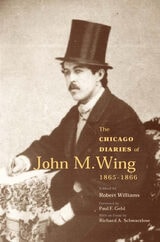
The Chicago Diaries of John M. Wing 1865-1866
Transcribed and Edited by Robert Williams. Foreword by Paul F. Gehl. With an Essay by Richard A. Schwarzlose
Southern Illinois University Press, 2002
The personal—and often intimate—diaries of fledgling journalist and entrepreneur John Mansir Wing create a unique portrait of a rough-and-tumble Chicago in the first few years following the Civil War. Wing writes of a city filled with new immigrants, ex-soldiers, and the thriving merchant class making its fortunes from both before the great fire of 1871 left much of the city in ashes.
Transcribed and edited by noted Chicago bibliophile and historian Robert Williams, and published in cooperation with the Caxton Club, this volume also details the early adventures of a rural Eastern who came to the “Metropolis of the West” in his early twenties and worked for some of the most influential journalists of his day. Wing shared cigars and conversation with notable politicians, businessmen, and war heroes including Sherman and Grant, all the while conducting an active romantic life with members of his own sex in boarding houses and barrooms.
Wing’s greatest passion was for book collecting. Following a successful later career in trade journal publishing and investing, he provided an endowment to create the John M. Wing Foundation at Chicago’s famed Newberry Library. The Wing Foundation became the first American public collection devoted to the history of printing; it remains today among the nation’s best resources for the study of the bibliographic arts.
Despite his lasting importance in publishing and philanthropy, and the fact that no serious history of Chicago can be written without reference to many of his publications, John M. Wing has been largely absent from most histories of the city’s movers and shakers. Complete with historical annotations and a bibliography of Wing’s writings for the press, this fascinating personal account reclaims his deserved place in Chicago life and lore.
The Chicago Manual of Style, 17th Edition
The University of Chicago Press Editorial Staff
University of Chicago Press, 2017
In the seven years since the previous edition debuted, we have seen an extraordinary evolution in the way we create and share knowledge. This seventeenth edition of The Chicago Manual of Style has been prepared with an eye toward how we find, create, and cite information that readers are as likely to access from their pockets as from a bookshelf. It offers updated guidelines on electronic workflows and publication formats, tools for PDF annotation and citation management, web accessibility standards, and effective use of metadata, abstracts, and keywords. It recognizes the needs of those who are self-publishing or following open access or Creative Commons publishing models. The citation chapters reflect the ever-expanding universe of electronic sources—including social media posts and comments, private messages, and app content—and also offer updated guidelines on such issues as DOIs, time stamps, and e-book locators.
Other improvements are independent of technological change. The chapter on grammar and usage includes an expanded glossary of problematic words and phrases and a new section on syntax as well as updated guidance on gender-neutral pronouns and bias-free language. Key sections on punctuation and basic citation style have been reorganized and clarified. To facilitate navigation, headings and paragraph titles have been revised and clarified throughout. And the bibliography has been updated and expanded to include the latest and best resources available.
This edition continues to reflect expert insights gathered from Chicago’s own staff and from an advisory board of publishing experts from across the profession. It also includes suggestions inspired by emails, calls, and even tweets from readers. No matter how much the means of communication change, The Chicago Manual of Style remains the ultimate resource for those who care about getting the details right.
The Chicago Manual of Style, 18th Edition
The University of Chicago Press Editorial Staff
University of Chicago Press, 2024
Much has happened in the years since the publication of the seventeenth edition of The Chicago Manual of Style. The world has transformed, and the Manual has risen to meet the moment. The eighteenth edition of this classic guide for writers, editors, and publishers is the most extensive revision in two decades.
Every chapter has been reexamined with diversity and accessibility in mind, and major changes include updated and expanded coverage of pronoun use and inclusive language, revised guidelines on capitalization, a broader range of examples, new coverage of Indigenous languages, and expanded advice on making publications accessible to people with disabilities. The Manual’s traditional focus on nonfiction has been expanded to include fiction and other creative genres in coverage of topics such as punctuation and dialogue, and the needs of self-published authors receive wider attention.
The citation chapters have been thoroughly reorganized for the benefit of new and experienced users alike, and the key concepts for editing mathematics have been integrated into the chapters where they will be most useful to generalists. Evolving technologies—from open-access publishing models to AI—are covered throughout. And naturally, there are some well-considered updates to familiar rules, including changes intended to align the Manual’s recommendations more closely with real-world usage.
As with every new edition, devotees of the Manual will find much to discover and ponder.
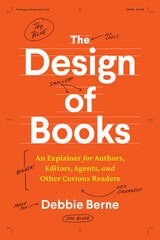
The Design of Books
An Explainer for Authors, Editors, Agents, and Other Curious ReadersDebbie Berne
University of Chicago Press, 2024
Design is central to the appeal, messaging, and usefulness of books, but to most readers, it’s mysterious or even invisible. Through interiors as well as covers, designers provide structure and information that shape the meaning and experience of books. In The Design of Books, Debbie Berne shines a light on the conventions and processes of her profession, revealing both the aesthetic and market-driven decisions designers consider to make books readable and beautiful. In clear, unstuffy language, Berne reveals how books are put together, with discussions of production considerations, typography and fonts, page layouts, use of images and color, special issues for ebooks, and the very face of each book: the cover.
The Design of Books speaks to readers and directly to books’ creators—authors, editors, and other publishing professionals—helping them to become more informed partners in the design of their projects. Berne lays out the practical steps at each stage of the design process, providing insight into who does what when and offering advice for authors on how to be effective advocates for their ideas while also letting go and trusting their manuscripts with teams of professionals. She includes guidance as well for self-publishing authors, including where to find a designer, what to expect from that relationship, and how to art direct your own book.
Throughout, Berne teaches how understanding the whats, hows, and whys of book design heightens our appreciation of these cherished objects and helps everyone involved in the process to create more functional, desirable, and wonderful books.

The Enlightenment and the Book
Scottish Authors and Their Publishers in Eighteenth-Century Britain, Ireland, and AmericaRichard B. Sher
University of Chicago Press, 2007
The late eighteenth century witnessed an explosion of intellectual activity in Scotland by such luminaries as David Hume, Adam Smith, Hugh Blair, William Robertson, Adam Ferguson, James Boswell, and Robert Burns. And the books written by these seminal thinkers made a significant mark during their time in almost every field of polite literature and higher learning throughout Britain, Europe, and the Americas.
In this magisterial history, Richard B. Sher breaks new ground for our understanding of the Enlightenment and the forgotten role of publishing during that period. The Enlightenment and the Book seeks to remedy the common misperception that such classics as The Wealth of Nations and The Life of Samuel Johnson were written by authors who eyed their publishers as minor functionaries in their profession. To the contrary, Sher shows how the process of bookmaking during the late eighteenth-century involved a deeply complex partnership between authors and their publishers, one in which writers saw the book industry not only as pivotal in the dissemination of their ideas, but also as crucial to their dreams of fame and monetary gain. Similarly, Sher demonstrates that publishers were involved in the project of bookmaking in order to advance human knowledge as well as to accumulate profits.
The Enlightenment and the Book explores this tension between creativity and commerce that still exists in scholarly publishing today. Lavishly illustrated and elegantly conceived, it will be must reading for anyone interested in the history of the book or the production and diffusion of Enlightenment thought.
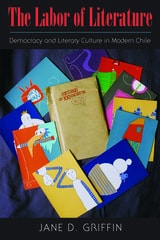
The Labor of Literature
Democracy and Literary Culture in Modern ChileJane D. Griffin
University of Massachusetts Press, 2016
By examining alternative literary publications, Griffin recasts the seventeen-year Pinochet dictatorship as a time of editorial experimentation despite widespread cultural oppression and shows how grassroots cultural activism has challenged government-approved corporate publishing models throughout the postdictatorship period. Griffin's work also points to the growing importance of autogestión, or do-it-yourself cultural production, where individuals combine artisanal forms with new technologies to make and share creative work on a global scale.

The Polish Hearst
Ameryka-Echo and the Public Role of the Immigrant PressAnna D. Jaroszynska-Kirchmann
University of Illinois Press, 2015
Anna D. Jaroszyńska-Kirchmann mines seven decades' worth of thoughts expressed by Ameryka-Echo readers to chronicle the ethnic press's role in the immigrant experience. Open and unedited debate harkened back to homegrown journalistic traditions, and Jaroszyńska-Kirchmann opens up the nuances of an editorial philosophy that cultivated readers as content creators. As she shows, ethnic publications in the process forged immigrant social networks and pushed notions of education and self-improvement throughout Polonia. Paryski, meanwhile, built a publishing empire that earned him the nickname ""The Polish Hearst.""
Detailed and incisive, The Polish Hearst opens the door on the long-overlooked world of ethnic publishing and the amazing life of one of its towering figures.

The Politics of Common Reading
Vernacular Knowledge and Everyday Technics in China, 1894–1954Joan Judge
University of Chicago Press, 2025
Examines the transformation of vernacular knowledge during a pivotal period of modern Chinese history, 1894 to 1954.
What did common readers read in the midst of the revolutions that punctuated China’s long Republic (1894–1954)? How did they manage the often-unprecedented challenges of the era? What did they know and how did they know it?
In The Politics of Common Reading, Joan Judge traces the unfolding of a consequential politics of accommodation that engaged commoners as knowers rather than as an unenlightened mass. A response to the institutional failures of the era, this politics was enacted through an informal knowledge infrastructure comprised of low-budget publishers, rustic bookstalls, and a piecemeal national network. As yet unstudied, this infrastructure produced and circulated up to ten times the number of books as official, mainstream channels.
A corpus of some five hundred of these cheap collections of recipes and techniques serves as the basis for this book. Judge focuses on four challenges common readers faced: how to cure an opium addiction, avoid an electric shock, prevent a cholera infection, and graft a plant. She further draws on government, archival, periodical, and fiction materials in devising composites of individual common readers so that we can better know them: details of the crises they faced, the remedies they tried, and the knowledge they relied on as they decocted cures and applied technologies. She argues that the acts of conciliation and assemblage these readers engaged in shaped the broader epistemic terrain from which historical change was actualized in China’s century of revolution.
The Return of the Moguls
How Jeff Bezos and John Henry Are Remaking Newspapers for the Twenty-First CenturyDan Kennedy
University Press of New England, 2018
This Book Is an Action
Feminist Print Culture and Activist AestheticsEdited by Jaime Harker and Cecilia Konchar Farr
University of Illinois Press, 2016