Results by title
71 books match the query 'Revised Edition' and 17 start with t
Testing Your Grammar, Revised Edition
Susan M. Reinhart
University of Michigan Press, 2002
With all units enlarged or significantly modified, the new and improved edition of Testing Your Grammar features reworked grammatical explanations and more example sentences so grammar points are easier to understand. Other features of the new edition:
- Explanations have been added to the answer key.
- A review test is found at the end of every two units.
- At the end of the book are four examinations that can be used for either pre-testing or post-testing.
Texas, A Modern History
Revised EditionBy David G. McComb
University of Texas Press, 2010
Since its publication in 1989, Texas, A Modern History has established itself as one of the most readable and reliable general histories of Texas. David McComb paints the panorama of Lone Star history from the earliest Indians to the present day with a vigorous brush that uses fact, anecdote, and humor to present a concise narrative. The book is designed to offer an adult reader the savor of Texan culture, an exploration of the ethos of its people, and a sense of the rhythm of its development. Spanish settlement, the Battle of the Alamo, the Civil War, cattle trails, oil discovery, the growth of cities, changes in politics, the Great Depression, World War II, recreation, economic expansion, and recession are each a part of the picture. Photographs and fascinating sidebars punctuate the text.
In this revised edition, McComb not only incorporates recent scholarship but also tracks the post–World War II rise of the Republican Party in Texas and the evolution of the state from rural to urban, with 88 percent of the people now living in cities. At the same time, he demonstrates that, despite many changes that have made Texas similar to the rest of the United States, much of its unique past remains.

The Adventures of a Cello
Revised Edition, with a New EpilogueBy Carlos Prieto
University of Texas Press, 2011
In 1720, Antonio Stradivari crafted an exquisite work of art—a cello known as the Piatti. Over the next three centuries of its life, the Piatti cello left its birthplace of Cremona, Italy, and resided in Spain, Ireland, England, Italy, Germany, and the United States. In 1978, the Piatti became the musical soul mate of world-renowned cellist Carlos Prieto, with whom it has given concerts around the world.
In this delightful book, Mr. Prieto recounts the adventurous life of his beloved "Cello Prieto," tracing its history through each of its previous owners from Stradivari in 1720 to himself. He then describes his noteworthy experiences of playing the Piatti cello, with which he has premiered some eighty compositions. In this part of their mutual story, Prieto gives a concise summary of his own remarkable career and his relationships with many illustrious personalities, including Igor Stravinsky, Dmitry Shostakovich, Pablo Casals, Mstislav Rostropovich, Yo-Yo Ma, and Gabriel García Márquez. A new epilogue, in which he describes recent concert tours in Moscow, Siberia, and China and briefer visits to South Korea, Taiwan, and Venezuela, as well as recent recitals with Yo-Yo Ma, brings the story up to 2009.
To make the story of his cello complete, Mr. Prieto also provides a brief history of violin making and a succinct review of cello music from Stradivari to the present. He highlights the work of composers from Latin America, Spain, and Portugal, for whose music he has long been an advocate and principal performer.

The Chicago Conspiracy Trial
Revised EditionJohn Schultz
University of Chicago Press, 2009
In 1969, the Chicago Seven were charged with intent to "incite, organize, promote, and encourage" antiwar riots during the chaotic 1968 Democratic National Convention in Chicago. The defendants included major figures of the antiwar and racial justice movements: Abbie Hoffman and Jerry Rubin, the madcap founders of the Yippies; Tom Hayden and Rennie Davis, longtime antiwar organizers; David Dellinger, a pacifist and chair of the National Mobilization Committee to End the War in Vietnam; and Bobby Seale, co-founder of the Black Panther Party, who would be bound and gagged in the courtroom before his case was severed from the rest.
The Chicago Conspiracy Trial is an electrifying account of the months-long trial that commanded the attention of a divided nation. John Schultz, on assignment for The Evergreen Review, witnessed the whole trial of the Chicago Seven, from the jury selection to the aftermath of the verdict. In his vivid account, Schultz exposes the raw emotions, surreal testimony, and judicial prejudice that came to define one of the most significant legal events in American history.
In October 2020, Aaron Sorkin's film, The Trial of the Chicago Seven, will bring this iconic trial to the screen.
The Chinese Americans, Revised Edition
Benson Tong
University Press of Colorado, 2003
The Frank Lloyd Wright Companion, Revised Edition
William Allin Storrer
University of Chicago Press, 2006
Published to critical acclaim more than a decade ago, The Frank Lloyd Wright Companion brought together in one volume all the essential descriptions, photographs, and plans of everything built by America's most famous architect. Now, for this handsomely produced revised edition, William Allin Storrer brings the history of every Wright structure up to the present.
Storrer treats the full range of Wright's architecture—from vacation cottages in Montana and Michigan, to such monuments of modernism as the Johnson Wax Building and the Guggenheim Museum, to buildings completed after Wright’s death in 1959. Since the first edition, some of Wright’s buildings have been relocated, some have been refurbished, and, sadly, some have even been destroyed by Hurricane Katrina. Storrer documents these changes and includes new information about the extent of Wright’s work on the buildings, the contributions of his associates, and the details of his business arrangements. Wright aficionados will be especially pleased to find comprehensive coverage of the newly discovered Mitchell residence in Racine, Wisconsin.
Organized chronologically, The Frank Lloyd Wright Companion features a description of each building that details the history of its design, construction, and ownership. Floor plans allow readers intimate access to each of Wright’s built works. With nearly 1,000 photographs (many new to this edition), elevations, historical images, and floor plans that show changes in Wright’s preliminary plans, this reference is unmatched in its authority. The indispensable centerpiece of any Wright collection, the newly revised Companion is a must for any serious library of art and architecture.
The Future is Mestizo
Life Where Culture Meet, Revised EditionVirgilio Elizondo
University Press of Colorado, 2000
The Grasses of Missouri, Revised Edition
Clair L. Kucera
University of Missouri Press, 1998
Missouri's diverse landscapes, geology, and climate have endowed the state with a rich and varied grass flora. From tallgrass prairies to forested Ozarks to Mississippi lowlands, the state offers an array of grasses that can be classified into six subfamilies of the Poaceae, eighteen tribes, and eighty-seven genera.
Significant changes have been made in grass classification since the first edition of The Grasses of Missouri was published in 1961, resulting in an increased emphasis on phyletic criteria. Recognizing the recent advances in classification and changes in nomenclature, as well as new additions to the flora, this newly revised edition serves as a compilation of the native and naturalized species and subspecific taxa found in Missouri.
Formerly divided into two subfamilies, the Festucoideae and Panicoideae, the state's grass flora is now represented by six subfamilies. While the Panicoideae have remained intact, the traditional Festucoideae are now separated into smaller, more cohesive groupings. Further revisions have resulted in eighteen tribes compared to the twelve identified in the first edition.
Covering more than 275 species and subspecific entities, The Grasses of Missouri is an essential research tool for identifying grasses, complete with working keys, descriptions, line drawings, distributions, a glossary, and a bibliography. The professional and lay person alike will benefit from this indispensable manual.
The History of Mary Prince, A West Indian Slave, Related by Herself
Revised EditionMoira Ferguson, Editor
University of Michigan Press, 1997
First published in London and Edinburgh in 1831, and well into its third edition that year, The History of Mary Prince inflamed public opinion and created political havoc. Never before had the sufferings and indignities of enslavement been seen through the eyes of a woman--a woman struggling for freedom in the face of great odds.
Moira Ferguson's edition of the book added an introduction, annotations, and appendices. The book has found popularity both in the classroom and with the general public. Recently, an adaptation of the memoirs of Mary Prince appeared as one segment of "A Skirt Through History," a six-part feature film series produced by the BBC. Mary Prince's story has also been the centerpiece of BBC radio broadcasts.
In this revised and expanded edition of The History of Mary Prince, Ferguson has added new material, based on her extensive research in Bermuda and London. The book includes new details of Mary Prince's experiences as a freewoman in England, the transcripts of several libel cases brought against her, and the reactions of British society, as seen in prominent periodicals of the day, against the original publication of The History of Mary Prince. This new material brings greater depth and detail and serves to more fully illustrate and contextualize the life of this remarkable woman.
Moira Ferguson is James E. Ryan Professor of English and Women's Literature, University of Nebraska.

The Literary Guide and Companion to Southern England
Revised EditionRobert M. Cooper
Ohio University Press, 1998
In a series of intriguing routes through the English countryside, Professor Robert Cooper notes those attractions that the casual tourist might unknowingly pass by, such as the house where Dickens wrote A Tale of Two Cities, or the windswept quay where John Fowles’s French Lieutenant’s woman walked. Maps and information about restaurants and accommodations give the traveler the opportunity of having pints of “half and half” where Jane Austen dined or visiting the pub where Blake’s scuffle led to his trial for treason.
This newly revised and updated edition of Robert Cooper’s acclaimed handbook combines the utility of current travel information with the appeal of literary history, biography, and anecdote in a leisurely and flavorful guide to the broad sweep of southern England outside of London. A rich and reliable guide to the landscape that fostered one of our most cherished cultures, The Literary Guide and Companion to Southern England is an indispensable resource for those who wish to experience literature firsthand.
The New Madrid Earthquakes, Revised Edition
James Lal Penick, Jr.
University of Missouri Press, 1981
Since its publication in a cloth edition in 1976, Penick’s book has met with enormous regional appeal as well as critical acclaim. For the new paper edition, the author has written a new introduction. New material in the final chapter reports on the scientific inquiries into the New Madrid quakes since 1976.
Critical comments on the cloth edition: “James Penick has put together a well-written account of the quakes and their effects upon people, animals, waterways, and land. Based on the scattered accounts of the times it offers a good insight into the reactions of persons suddenly confronted with the perils of the unknown. The vivid description of the devastation wrought upon the face of the land gives a picture of dramatic change brought about by the upheaval of natural forces. In short, reading Penick’s work one is readily caught up in the total violence of the event.”—American Historical Review
“Penick provides information relevant to present studies of earthquakes in this area.”—Earthquake Information Bulletin
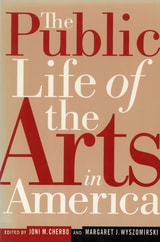
The Public Life of the Arts in America
The Public Life of the Arts in America, Revised EditionCherbo, Joni Maya
Rutgers University Press, 2000
Art and entertainment constitute America’s second-largest export. Most Americans—96%, to be exact—are somehow involved in the arts, whether as audience participants, hobbyists, or via broadcast, recording, video, or the Internet. The contribution of the arts to the U.S. economy is stunning: the nonprofit arts industry alone contributes over 857 billion dollars per year, and America’s fine and performing arts enjoy world-class status.
Despite its size, quality, and economic impact, the arts community is not articulate about how they serve public interests, and few citizens have an appreciation of the myriad of public policies that influence American arts and culture. The contributors to this volume argue that U.S. policy can—and should—support the arts and that the arts, in turn serve a broad rather than an elite public. Indeed, increased support for the arts and culture equals good economic and trade policy; it also contributes to the quality of life and community, and helps sustain the creativity of American artists and organizations.
By encouraging policy-makers to systematically start investigating the crucial role and importance of all of the arts in the United States, The Arts and Public Purpose moves the field forward with fresh ideas, new concepts, and important new data.
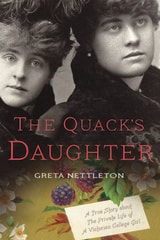
The Quack's Daughter
A True Story about the Private Life of a Victorian College Girl, Revised EditionGreta Nettleton
University of Iowa Press, 2014
This lively, stereotype-shattering story might have been lost, had Cora’s great-granddaughter, Greta Nettleton, not decided to go through some old family trunks instead of discarding most of the contents unexamined. Inside she discovered a rich cache of Cora’s college memorabilia—essential complements to her 1885 diary, which Nettleton had already begun to read. The Quack’s Daughter details Cora’s youthful travails and adventures during a time of great social and economic transformation. From her working-class childhood to her gilded youth and her later married life, Cora experienced triumphs and disappointments as a gifted concert pianist that the reader will recognize as tied to the limited opportunities open to women at the turn of the twentieth century, as well as to the dangerous consequences for those who challenged social norms.
Set in an era of surging wealth torn by political controversy over inequality and women’s rights and widespread panic about domestic terrorists, The Quack’s Daughter is illustrated with over a hundred original images and photographs that illuminate the life of a spirited and charming heroine who ultimately faced a stark life-and-death crisis that would force her to re-examine her doubts about her mother’s medical integrity.
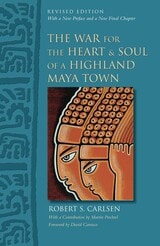
The War for the Heart and Soul of a Highland Maya Town
Revised EditionBy Robert S. Carlsen, with a contribution by Martín Prechtel
University of Texas Press, 2011
This compelling ethnography explores the issue of cultural continuity and change as it has unfolded in the representative Guatemala Mayan town Santiago Atitlán. Drawing on multiple sources, Robert S. Carlsen argues that local Mayan culture survived the Spanish Conquest remarkably intact and continued to play a defining role for much of the following five centuries. He also shows how the twentieth-century consolidation of the Guatemalan state steadily eroded the capacity of the local Mayas to adapt to change and ultimately caused some factions to reject—even demonize—their own history and culture. At the same time, he explains how, after a decade of military occupation known as la violencia, Santiago Atitlán stood up in unity to the Guatemalan Army in 1990 and forced it to leave town.
This new edition looks at how Santiago Atitlán has fared since the expulsion of the army. Carlsen explains that, initially, there was hope that the renewed unity that had served the town so well would continue. He argues that such hopes have been undermined by multiple sources, often with bizarre outcomes. Among the factors he examines are the impact of transnational crime, particularly gangs with ties to Los Angeles; the rise of vigilantism and its relation to renewed religious factionalism; the related brutal murders of followers of the traditional Mayan religion; and the apocalyptic fervor underlying these events.

Theory and Craft of the Scenographic Model, Revised Edition
Darwin Reid Payne
Southern Illinois University Press, 1985
Through diagrams, sketches, and models, along with explications of the essential tools and materials required, Payne defines and delineates the precise step-by-step procedures of scenographic modelmaking: the basic preparations of construction, the process of making the model, and the experimental aspects of modelmaking. This new edition with 50 additional illustrations and other new information offers teachers, students, and beginning professionals alike a complete and comprehensive approach to creating and constructing the scenographic model.
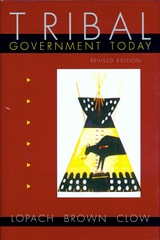
Tribal Government Today, Revised Edition
James J. Lopach
University Press of Colorado, 1998
An account of Fourth World peoples within a First World nation, Tribal Government Today, Revised Edition is a critical analysis of the contemporary progress of Indian tribes toward self-government and economic sufficiency. Focusing on seven reservations in Montana representing the diverse opportunities and problems facing Indian tribes in the West, this book approaches tribal government from the twin perspectives of reservation politics and the legal context within which reservation conflicts must be solved.
Unlike previous studies of Indian politics, Tribal Government Today is neither a critique of American Indian policy over the years nor an analysis of federal, state, and tribal jurisdictional ambiguities. The authors—a political scientist, a lawyer, and a historian—focus instead on the distinctive political culture that has evolved on each reservation in terms of the reservation settings, governmental structures and procedures, and a particular brand of politics. The critical inquiry is how far the reservations are from genuine self-determination and whether that goal is impossibility for some. The authors conclude with suggestions for reforming tribal government within three main areas: the separation of powers, the role of the Bureau of Indian Affairs, and tribal acceptance of the concept of fundamental law.
The contents include: The Contours of Reservations Politics, Indian Law and Tribal Government; The Blackfeet: Their Own Government to Help Them; The Crow: A Politics of Rick; The Northern Cheyenne: A Politics of Values; The Fort Peck Reservation: The Factor of Leadership; The Fort Belknap Reservation: The Reality of Poverty; The Rocky Boy's Reservation: A Struggle for Government; The Flathead Reservation: A Struggle for Government; The Flathead Reservation: From Enclave to Self-Government; and Reflection on Tribal Government.
There has been surprisingly little writing about the condition of contemporary tribal government. Library shelves are filled with works on other American and foreign governments, but an inquirer must learn about tribal government incidentally and in piecemeal fashion. This state of scholarship is regrettable because of the importance of the modern Indian self-determination movement. Reservation politics certainly affect the quality of life in Indian communities, and the outlook for Indian self-determination cannot be assessed without an understanding of tribal government.
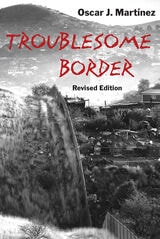
Troublesome Border, Revised Edition
Oscar J. Martínez
University of Arizona Press, 2006
Oscar Martínez’s words may come as a surprise to those who associate the U.S. southern border with banditry, racial strife, illegal migration, drug smuggling, and official corruption—all attributed to Mexico. In Troublesome Border, now revised to reflect the dramatic changes over the last two decades, a distinguished scholar and long-time resident of the border area addresses these and other problems that have caused increasing concern to federal governments on both sides of the border.
This second edition of Troublesome Border has been updated and revised to cover dramatic developments since the book’s first publication in 1988 that have once again transformed the region in fundamental ways. Martinez includes new information on migration and drugs, including the extraordinary rise of violence traced largely to the rampant illegal drug trade; the devastating effects of U.S. Border Patrol “blockades” that have resulted in thousands of deaths; and the impact of the North American Free Trade Agreement (NAFTA).