Results by title
60 books match the query 'Right' and 22 start with t
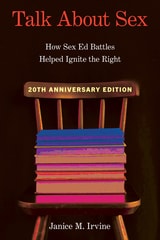
Talk about Sex
How Sex Ed Battles Helped Ignite the RightJanice M. Irvine
Temple University Press, 2023
“Must reading for scholars, sexuality researchers, activists, and public policy and public health planners engaged in efforts to promote education on sex, sexually transmitted diseases, and HIV infection prevention for adolescents in schools.”—JAMA
Talk about Sex is a rich social history about the political transformations, cultural dynamics, and emotional rhetorical strategies that helped the right wing manufacture controversies on the local and national levels in the United States. Although the emergence of a politicized Christian Right is commonly dated at the mid-seventies, with the founding of groups like the Moral Majority, Talk about Sex tells the story of a powerful right-wing Christian presence in politics a full decade earlier. These activists used inflammatory sexual rhetoric—oftentimes deceptive and provocative—to capture the terms of public debate, galvanize voters, and reshape the culture according to their own vision.
This 20th Anniversary Edition includes a new preface and epilogue by the author that examines current controversies over public education on sexuality, gender, and race.
Demonstrating how the right wing draws on the cultural power of sexual shame and fear to build a political movement, Talk about Sex explores the complex entanglements of sexual knowledge, politics, and discourses.

Testing Fate
Tay-Sachs Disease and the Right to Be ResponsibleShelley Z. Reuter
University of Minnesota Press, 2016
In today’s world, responsible biocitizenship has become a new way of belonging in society. Individuals are expected to make “responsible” medical choices, including the decision to be screened for genetic disease. Paradoxically, we have even come to see ourselves as having the right to be responsible vis-à-vis the proactive mitigation of genetic risk. At the same time, the concept of genetic disease has become a new and powerful way of defining the boundaries between human groups. Tay-Sachs, an autosomal recessive disorder, is a case in point—with origins in the period of Eastern European Jewish immigration to the United States and United Kingdom that spanned the late nineteenth and early twentieth centuries, it has a long and fraught history as a marker of Jewish racial difference.
In Testing Fate, Shelley Z. Reuter asks: Can the biocitizen, especially one historically defined as a racialized and pathologized Other, be said to be exercising authentic, free choice in deciding whether to undertake genetic screening? Drawing on a range of historical and contemporary examples—doctors’ medical reports of Tay-Sachs since the first case was documented in 1881, the medical field’s construction of Tay-Sachs as a disease of Jewish immigrants, YouTube videos of children with Tay-Sachs that frame the disease as tragic disability avoidable through a simple genetic test, and medical malpractice suits since the test for the disease became available—Reuter shows that true agency in genetic decision-making can be exercised only from a place of cultural inclusion. Choice in this context is in fact a kind of unfreedom—a moral duty to act that is not really agency at all.

The Book of Right and Wrong
Matt Debenham
The Ohio State University Press, 2010
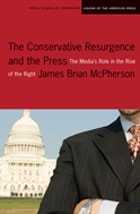
The Conservative Resurgence and the Press
The Media's Role in the Rise of the RightJames Brian McPherson
Northwestern University Press, 2008
Consumers of American media find themselves in a news world that has shifted toward more conservative reporting. This book takes a measured, historical view of the shift, addressing factors that include the greater skill with which conservatives have used the media, the media’s gradual trend toward conservatism, the role of religion, and the effects of media conglomeration. The book makes the case that the media have managed to not only enable today’s conservative resurgence but also ignore, largely, the consequences of that change for the American people.
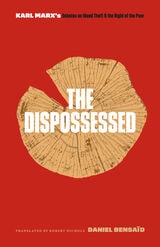
The Dispossessed
Karl Marx’s Debates on Wood Theft and the Right of the PoorDaniel Bensaïd
University of Minnesota Press, 2021
Excavating Marx’s early writings to rethink the rights of the poor and the idea of the commons in an era of unprecedented privatization
The politics of dispossession are everywhere. Troubling developments in intellectual property, genomics, and biotechnology are undermining established concepts of property, while land appropriation and ecological crises reconfigure basic institutions of ownership. In The Dispossessed, Daniel Bensaïd examines Karl Marx’s early writings to establish a new framework for addressing the rights of the poor, the idea of the commons, and private property as a social institution.
In his series of articles from 1842–43 about Rhineland parliamentary debates over the privatization of public lands and criminalization of poverty under the rubric of the “theft of wood,” Marx identified broader anxieties about customary law, property rights, and capitalist efforts to privatize the commons. Bensaïd studies these writings to interrogate how dispossession continues to function today as a key modality of power. Brilliantly tacking between past and present, The Dispossessed discloses continuity and rupture in our relationships to property and, through that, to one another.
In addition to Bensaïd’s prescient work of political philosophy, The Dispossessed includes new translations of Marx’s original “theft of wood” articles and an introductory essay by Robert Nichols that lucidly contextualizes the essays.
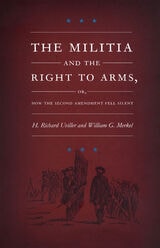
The Militia and the Right to Arms, or, How the Second Amendment Fell Silent
H. Richard Uviller and William G. Merkel
Duke University Press, 2002
—Amendment II, United States Constitution
The Second Amendment is regularly invoked by opponents of gun control, but H. Richard Uviller and William G. Merkel argue the amendment has nothing to contribute to debates over private access to firearms. In The Militia and the Right to Arms, or, How the Second Amendment Fell Silent, Uviller and Merkel show how postratification history has sapped the Second Amendment of its meaning. Starting with a detailed examination of the political principles of the founders, the authors build the case that the amendment's second clause (declaring the right to bear arms) depends entirely on the premise set out in the amendment's first clause (stating that a well-regulated militia is necessary to the security of a free state). The authors demonstrate that the militia envisioned by the framers of the Bill of Rights in 1789 has long since disappeared from the American scene, leaving no lineal descendants. The constitutional right to bear arms, Uviller and Merkel conclude, has evaporated along with the universal militia of the eighteenth century.
Using records from the founding era, Uviller and Merkel explain that the Second Amendment was motivated by a deep fear of standing armies. To guard against the debilitating effects of militarism, and against the ultimate danger of a would-be Caesar at the head of a great professional army, the founders sought to guarantee the existence of well-trained, self-armed, locally commanded citizen militia, in which service was compulsory. By its very existence, this militia would obviate the need for a large and dangerous regular army. But as Uviller and Merkel describe the gradual rise of the United States Army and the National Guard over the last two hundred years, they highlight the nation's abandonment of the militia ideal so dear to the framers. The authors discuss issues of constitutional interpretation in light of radically changed social circumstances and contrast their position with the arguments of a diverse group of constitutional scholars including Sanford Levinson, Carl Bogus, William Van Alstyne, and Akhil Reed Amar.
Espousing a centrist position in the polarized arena of Second Amendment interpretation, this book will appeal to those wanting to know more about the amendment's relevance to the issue of gun control, as well as to those interested in the constitutional and political context of America's military history.

The Nazi Perpetrator
Postwar German Art and the Politics of the RightPaul B. Jaskot
University of Minnesota Press, 2012
Who was responsible for the crimes of the Nazis? Party leaders and members? Rank-and-file soldiers and bureaucrats? Ordinary Germans? This question looms over German disputes about the past like few others. It also looms over the art and architecture of postwar Germany in ways that have been surprisingly neglected. In The Nazi Perpetrator, Paul B. Jaskot fundamentally reevaluates pivotal developments in postwar German art and architecture against the backdrop of contentious contemporary debates over the Nazi past and the difficulty of determining who was or was not a Nazi perpetrator.
Like their fellow Germans, postwar artists and architects grappled with the Nazi past and the problem of defining the Nazi perpetrator—a problem that was thoroughly entangled with contemporary conservative politics and the explosive issue of former Nazis living in postwar Germany. Beginning with the formative connection between Nazi politics and art during the 1930s, The Nazi Perpetrator traces the dilemma of identifying the perpetrator across the entire postwar period. Jaskot examines key works and episodes from West Germany and, after 1989, reunified Germany, showing how the changing perception of the perpetrator deeply impacted art and architecture, even in cases where artworks and buildings seem to have no obvious relation to the Nazi past. The book also reinterprets important periods in the careers of such major figures as Gerhard Richter, Anselm Kiefer, and Daniel Libeskind.
Combining political history with a close analysis of specific works, The Nazi Perpetrator powerfully demonstrates that the ongoing influence of Nazi Germany after 1945 is much more central to understanding a wide range of modern German art and architecture than cultural historians have previously recognized.
The New Authoritarians
Convergence on the RightPluto Press, 2019

The New Authoritarians
Convergence on the RightPluto Press, 2019
The Right To Privacy
Gays, Lesbians, and the ConstitutionVincent J. Samar
Temple University Press, 1992
Where did the right to privacy come from and what does it mean? Grappling with the critical issues involving women and gays that relate to the recent Supreme Court appointment, Vincent J. Samar develops a definition of legal privacy, discusses the reasons why and the degree to which privacy should be protected, and shows the relationship between privacy and personal autonomy. He answers former Supreme Court nominee Robert Bork’s questions about scope, content, and legal justification for a general right to privacy and emphasizes issues involving gays and lesbians, Samar maintains that these privacy issues share a common constitutional-ethical underpinning with issues such as abortion, surrogate motherhood, drug testing, and the right to die.

The Right of Instruction and Representation in American Legislatures, 1778 to 1900
Peverill Squire
University of Michigan Press, 2021
The Right to Be Out
Sexual Orientation and Gender Identity in America's Public Schools, Second EditionStuart Biegel
University of Minnesota Press, 2018
An updated edition of this measured, practical, and timely guide to LGBT rights and issues for educators and school officials
With ongoing battles over transgender rights, bullying cases in the news almost daily, and marriage equality only recently the law of the land, the information in The Right to Be Out could not be more timely or welcome. In an updated second edition that explores the altered legal terrain of LGBT rights for students and educators, Stuart Biegel offers expert guidance on the most challenging concerns in this fraught context.
Taking up the pertinent questions likely to arise regarding curriculum and pedagogy in the classroom, school sports, and transgender issues, Biegel reviews the dramatic legal developments of the past decades, identifies the principles at work, and analyzes the policy considerations that result from these changes. Central to his work is an understanding of the social, political, and personal tensions regarding the nature and extent of the right to be out, which includes both the First Amendment right to express an identity and the Fourteenth Amendment right to be treated equally. Acknowledging that LGBT issues affect people of every sexual orientation and gender identity, Biegel provides a road map of viable strategies for school officials and educators.
The Right to Be Out, informed by the latest research-based findings, advances the proposition that a safe and supportive educational environment, built upon shared values and geared toward a greater appreciation of our pluralistic society, can lead to a better world for everyone.

The Right to Die with Dignity
An Argument in Ethics, Medicine, and LawCohen-Almagor, Raphael
Rutgers University Press, 2001
There are few issues more divisive than what has become known as “the right to die.” One camp upholds “death with dignity,” regarding the terminally ill as autonomous beings capable of forming their own judgment on the timing and process of dying. The other camp advocates “sanctity of life,” regarding life as intrinsically valuable, and that should be sustained as long as possible. Is there a right answer?
Raphael Cohen-Almagor takes a balanced approach in analyzing this emotionally charged debate, viewing the dispute from public policy and international perspectives. He offers an interdisciplinary, compelling study in medicine, law, religion, and ethics. It is a comprehensive look at the troubling question of whether physician-assisted suicide should be allowed. Cohen-Almagor delineates a distinction between active and passive euthanasia and discusses legal measures that have been invoked in the United States and abroad. He outlines reasons non-blood relatives should be given a role in deciding a patient’s last wishes. As he examines euthanasia policies in the Netherlands and the 1994 Oregon Death with Dignity Act, the author suggests amendments and finally makes a circumscribed plea for voluntary physician-assisted suicide.

The Right to Difference
French Universalism and the JewsMaurice Samuels
University of Chicago Press, 2016
Samuels demonstrates that Jewish difference has always been essential to the elaboration of French universalism, whether as its foil or as proof of its reach. He traces the development of this discourse through key moments in French history, from debates over granting Jews civil rights during the Revolution, through the Dreyfus Affair and Vichy, and up to the rise of a “new antisemitism” in recent years. By recovering the forgotten history of a more open, pluralistic form of French universalism, Samuels points toward new ways of moving beyond current ethnic and religious dilemmas and argues for a more inclusive view of what constitutes political discourse in France.

The Right to Difference
Interculturality and Human Rights in Contemporary German LiteratureNicole Coleman
University of Michigan Press, 2021
The Right to Difference examines novels that depict human rights violations in order to explore causes of intergroup violence within diverse societies, using Germany as a test case. In these texts, the book shows that an exaggeration of difference between minority and majority groups leads to violence. Germany has become increasingly diverse over the past decades due to skilled labor migration and refugee movements. In light of this diversity, this book’s approach transcends a divide between migrant and post-migrant German literature on the one hand and a national literature on the other hand. Addressing competing definitions of national identity as well as the contest between cultural homogeneity and diversity, the author redefines the term “intercultural literature.” It becomes not a synonym for authors who do not belong to a national literature, such as migrant writers, but a way of reading literature with an intercultural lens.
This book builds a theory of intercultural literature that focuses on the multifaceted nature of identity, in which ethnicity represents only one of many characteristics defining individuals. To develop intercultural competence, one needs to adopt a complex image of individuals that allows for commonalities and differences by complicating the notion of sharp contrasts between groups. Revealing the affective allegiances formed around other characteristics (gender, profession, personal motivations, relationships, and more) allows for similarities that grouping into large, homogeneous, and seemingly exclusive entities conceals. Eight novels analyzed in this book remember and reveal human rights violations, such as genocide, internment and torture, violent expulsion, the reasons for fleeing a country, dangerous flight routes and the difficulty of settling in a new country. Some of these novels allow for affective identification with diverse characters and cast the protagonists as individuals with plural perspectives and identities rather than monolithic members of one large national or ethnic group, whereas others emphasize the commonalities of all people.
Ultimately, the author makes the case for German Studies to contribute to an antiracist approach to diversity by redefining what it means to be German and establishing difference as a fundamental human right.
The Right to Look
A Counterhistory of VisualityNicholas Mirzoeff
Duke University Press, 2011
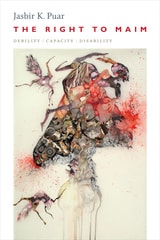
The Right to Maim
Debility, Capacity, DisabilityJasbir K. Puar
Duke University Press, 2017

The Right to Play Oneself
Looking Back on Documentary FilmThomas Waugh
University of Minnesota Press, 2010
Waugh analyzes an eclectic international selection of films and issues from the 1920s to the present day. The essays provide a transcultural focus, moving from documentaries of the industrialized societies of North America and Europe to those of 1980s India and addressing such canonical directors as Dziga Vertov, Emile de Antonio, Barbara Hammer, Rosa von Praunheim, and Anand Patwardhan. Woven through the volume is the relationship of the documentary with the history of the Left, including discussions of LGBT documentary pioneers and the firebrand collectives that changed the history of documentary, such as Challenge for Change and ACT UP’s Women’s Collective.
Together with the introduction by the author, Waugh’s essays advance a defiantly and persuasively personal point of view on the history and significance of documentary film.

The Right to Remain Violets
poemasAntonio De Jesús López
University of Arizona Press, 2027
The Right to Remain Violets is an electrifying poetry collection that reimagines the language of policing, public education, and state surveillance to illuminate the lived realities of Black and Brown youth in East Palo Alto—a city shaped by redlining, freeway expansion, and decades of over-policing. Blending documentary poetics with hip-hop cadence and Catholic liturgy, Antonio De Jesús López transforms transcripts, municipal documents, and legal language into a powerful form of witness. These poems trace how children are drafted into systems of surveillance and criminalization, even as they search for joy and solidarity amid Silicon Valley’s contrasts of wealth and dispossession.
Inventive and emotionally resonant, the collection spans sonnets, sestinas, hip-hop, and prayer, insisting that language can both indict and heal. López brings his experiences as an award-winning poet, scholar, and former mayor of East Palo Alto to each poem. At once elegy and refusal, The Right to Remain Violets speaks to readers of documentary poetics, social justice literature, and those who believe in the radical importance of protecting childhood in an America reckoning with itself.
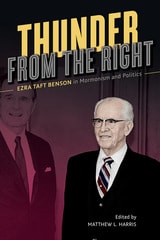
Thunder from the Right
Ezra Taft Benson in Mormonism and PoliticsEdited by Matthew L. Harris
University of Illinois Press, 2019
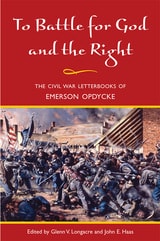
To Battle for God and the Right
The Civil War Letterbooks of Emerson OpdyckeEmerson Opdycke, Ed. by Glenn V. Longacre and John E. Haas.
University of Illinois Press, 2002

Trespassing Natures
Species Migration and the Right to SpaceDonnie Johnson Sackey
The Ohio State University Press, 2024
As old worlds become hostile and new spaces become hospitable, many species are shifting their ranges to live in locations where they have never previously existed. Biological and sociocultural realms collide and boundaries blur, making it increasingly difficult to mark definitively who belongs and who is a trespasser. In Trespassing Natures, Donnie Johnson Sackey troubles the idea of biological “invasion,” turning our attention away from scientific considerations and toward the discursive and rhetorical dimensions of this term—offering a new paradigm that recasts this issue as a question of what it means to live in multi-species communities. Presenting case studies on bed bugs, bighead carp, feral cats, and mackerel, Sackey argues that the identification of a species as an invader is not merely a scientific act, but a cultural and political one. By questioning issues around space, identity, and the institutions that make human participation apparent, Sackey redirects focus away from the belief that a single species threatens space. Ultimately, Trespassing Natures asks us to expand our idea of community and question who has the right to space.