Results by title
63 books match the query 'Scientists' and 17 start with t
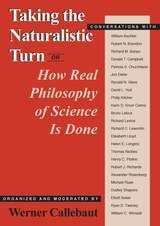
Taking the Naturalistic Turn, Or How Real Philosophy of Science Is Done
Edited Organized and Moderated by Werner Callebaut
University of Chicago Press, 1993
This innovative book presents candid, informal debates among scholars who examine the benefits and problems of studying science in the same way that scientists study the natural world. Callebaut achieves the effect of face-to-face engagement through separate interviews with participants.
Contributors include William Bechtel, Robert Brandon, Richard M. Burian, Donald T. Campbell, Patricia Churchland, Jon Elster, Ronald N. Giere, David L. Hull, Philip Kitcher, Karin Knorr Cetina, Bruno Latour, Richard Levins, Richard C. Lewontin, Elisabeth Lloyd, Helen Longino, Thomas Nickles, Henry C. Plotkin, Robert J. Richards, Alexander Rosenberg, Michael Ruse, Dudley Shapere, Elliott Sober, Ryan Tweney, and William Wimsatt.
"Why can't we have both theoretical ecology and natural histories, lovingly done?"—Philip Kitcher
"Don't underestimate the arrogance of philosophers!"—Elisabeth Lloyd
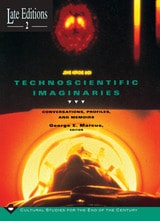
Technoscientific Imaginaries
Conversations, Profiles, and MemoirsEdited by George E. Marcus
University of Chicago Press, 1995
In these penetrating essays, twenty-four distinguished contributors from a broad range of fields present the voices of the scientists themselves—through interviews, conversations, and memoirs. We hear from Lithuanian physicists who discuss science after Communism and their own fantasies about what Western science is; a Japanese-American woman struggling with her ambivalence over designing nuclear weapons; political activists in India who examine relations among science, environmental politics, and government ideology in the aftermath of the Bhopal disaster; and many others, including biologists, physicians, corporate researchers, and scientists working with virtual reality and other cutting-edge technologies.
The contributors to this volume are Mario Biagioli, Maria E. Carson, Gary Lee Downey, Joseph Dumit, Michael M. J. Fischer, Mary-Jo DelVecchio Good, Hugh Gusterson, Diana L. L. Hill, James Holston, Herbert C. Hoover, Jr., Gudrun Klein, Leszek Koczanowicz, Irene Kuter, Kim Laughlin, Rita Linggood, George E. Marcus, Kathryn Milun, Livia Polanyi, Christopher Pound, Simon Powell, Paul Rabinow, Kathleen Stewart, Allucquere Rosanne Stone, and Sharon Traweek.
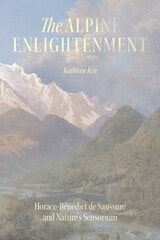
The Alpine Enlightenment
Horace-Bénédict de Saussure and Nature’s SensoriumKathleen Kete
University of Chicago Press, 2024
In The Alpine Enlightenment, historian Kathleen Kete takes us into the world of the Genevan geologist, physicist, inventor, and mountaineer Horace-Bénédict de Saussure. During his prodigious climbs into the upper ranges of the Alps, Saussure focused intensely on the natural phenomena he encountered—glaciers, crevasses, changes in the weather, and shifts in the color of the sky—and he described with great precision what he saw, heard, and touched. Kete uses Saussure’s evocative writings, which emphasized above all physical engagement with the earth, to uncover not just how people during the Enlightenment thought about nature, but how they experienced it. As Kete shows, Saussure thought with and through his body: he harnessed his senses to understand the forces that shaped the world around him. In so doing, he offered a vision of nature as worthy of respect independent of human needs, anticipating present-day concerns about the environment and our shared place within it.
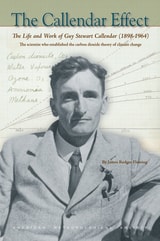
The Callendar Effect
The Life and Work of Guy Stewart Callendar (1898-1964)James Rodger Fleming
American Meteorological Society, 2007
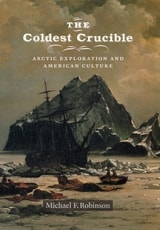
The Coldest Crucible
Arctic Exploration and American CultureMichael F. Robinson
University of Chicago Press, 2006
With chronological chapters featuring emblematic Arctic explorers—including Elisha Kent Kane, Charles Hall, and Robert Peary—The Coldest Crucible reveals why the North Pole, a region so geographically removed from Americans, became an iconic destination for discovery.

The Dictionary of Nineteenth-Century British Scientists
Edited by Bernard Lightman
University of Chicago Press, 2004
While the Dictionary of Nineteenth-Century British Scientists covers those working in traditional scientific areas such as physics, astronomy, chemistry, mathematics, and biology, it also acknowledges those working in the human sciences such as anthropology, sociology, psychology, and medicine. In addition, areas often overlooked by historians of science—such as phrenology, mesmerism, spiritualism, scientific illustration, scientific journalism and publishing, instrument making, and government policy—are included here, as are the important roles of neglected "amateurs," such as women and members of the working class. By including those who worked in nontraditional areas and by considering the social and cultural context in which they lived, the dictionary reflects a richer picture of nineteenth-century science than has ever been seen before.
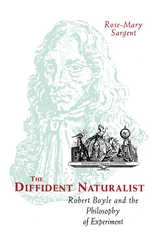
The Diffident Naturalist
Robert Boyle and the Philosophy of ExperimentRose-Mary Sargent
University of Chicago Press, 1995
Sargent examines the philosophical, legal, experimental, and religious traditions—among them English common law, alchemy, medicine, and Christianity—that played a part in shaping Boyle's experimental thought and practice. The roots of his philosophy in his early life and education, in his religious ideals, and in the work of his predecessors—particularly Bacon, Descartes, and Galileo—are fully explored, as are the possible influences of his social and intellectual circle. Drawing on the full range of Boyle's published works, as well as on his unpublished notebooks and manuscripts, Sargent shows how these diverse influences were transformed and incorporated into Boyle's views on and practice of experiment.
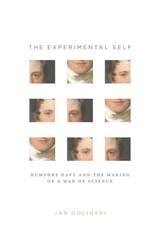
The Experimental Self
Humphry Davy and the Making of a Man of ScienceJan Golinski
University of Chicago Press, 2016
In The Experimental Self, Golinski argues that Davy’s life is best understood as a prolonged process of self-experimentation. He follows Davy from his youthful enthusiasm for physiological experiment through his self-fashioning as a man of science in a period when the path to a scientific career was not as well-trodden as it is today. What emerges is a portrait of Davy as a creative fashioner of his own identity through a lifelong series of experiments in selfhood.
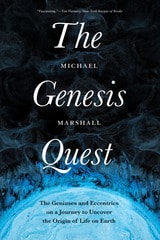
The Genesis Quest
The Geniuses and Eccentrics on a Journey to Uncover the Origin of Life on EarthMichael Marshall
University of Chicago Press, 2020
How did life begin? Why are we here? These are some of the most profound questions we can ask.
For almost a century, a small band of eccentric scientists has struggled to answer these questions and explain one of the greatest mysteries of all: how and why life began on Earth. There are many different proposals, and each idea has attracted passionate believers who promote it with an almost religious fervor, as well as detractors who reject it with equal passion.
But the quest to unravel life’s genesis is not just a story of big ideas. It is also a compelling human story, rich in personalities, conflicts, and surprising twists and turns. Along the way, the journey takes in some of the greatest discoveries in modern biology, from evolution and cells to DNA and life’s family tree. It is also a search whose end may finally be in sight.
In The Genesis Quest, Michael Marshall shows how the quest to understand life’s beginning is also a journey to discover the true nature of life, and by extension our place in the universe.
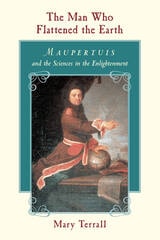
The Man Who Flattened the Earth
Maupertuis and the Sciences in the EnlightenmentMary Terrall
University of Chicago Press, 2002
Beginning his scientific career as a mathematician in Paris, Maupertuis entered the public eye with a much-discussed expedition to Lapland, which confirmed Newton's calculation that the earth was flattened at the poles. He also made significant, and often intentionally controversial, contributions to physics, life science, navigation, astronomy, and metaphysics. Called to Berlin by Frederick the Great, Maupertuis moved to Prussia to preside over the Academy of Sciences there. Equally at home in salons, cafés, scientific academies, and royal courts, Maupertuis used his social connections and his printed works to enhance a carefully constructed reputation as both a man of letters and a man of science. His social and institutional affiliations, in turn, affected how Maupertuis formulated his ideas, how he presented them to his contemporaries, and the reactions they provoked.
Terrall not only illuminates the life and work of a colorful and important Enlightenment figure, but also uses his story to delve into many wider issues, including the development of scientific institutions, the impact of print culture on science, and the interactions of science and government. Smart and highly readable, Maupertuis will appeal to anyone interested in eighteenth-century science and culture.
The Memory of Elephants
A NovelBoman Desai
University of Chicago Press, 2001

The Original Frankenstein
Mary Shelley (with Percy Shelley)
Bodleian Library Publishing, 2008
The Scientific Life
A Moral History of a Late Modern VocationSteven Shapin
University of Chicago Press, 2008
Conventional wisdom has long held that scientists are neither better nor worse than anyone else, that personal virtue does not necessarily accompany technical expertise, and that scientific practice is profoundly impersonal. Shapin, however, here shows how the uncertainties attending scientific research make the virtues of individual researchers intrinsic to scientific work. From the early twentieth-century origins of corporate research laboratories to the high-flying scientific entrepreneurship of the present, Shapin argues that the radical uncertainties of much contemporary science have made personal virtues more central to its practice than ever before, and he also reveals how radically novel aspects of late modern science have unexpectedly deep historical roots. His elegantly conceived history of the scientific career and character ultimately encourages us to reconsider the very nature of the technical and moral worlds in which we now live.
Building on the insights of Shapin’s last three influential books, featuring an utterly fascinating cast of characters, and brimming with bold and original claims, The Scientific Life is essential reading for anyone wanting to reflect on late modern American culture and how it has been shaped.
The Stars Are Not Enough
Scientists--Their Passions and ProfessionsJoseph C. Hermanowicz
University of Chicago Press, 1998
These deeply personal narratives reveal dreams of fame and glory, in which scientists confess their ambitions of becoming the next Newton or Einstein. However, these scientists also discuss the meaning of success and failure. We hear their stories of aspiration and anxiety, disappointment and tragedy, hope and achievement; we are privy to their doubts and to what they consider to be their limitations and weaknesses. As the scientists age in their professions, the specter of failure often visits them, and they have to accept something less than scientific immortality or even the Nobel Prize.
Ultimately these stories give us more than an inside look at the details of careers in science, they also examine ambition by uncovering the forces that drive people in their professions and by describing how these forces persist or fade over time. Ambition for greatness often ignites a career and often sustains it. Yet, as Hermanowicz's study reveals, greatness eludes nearly all people in their heroic quests for extraordinary achievement. The Stars Are Not Enough offers a fascinating account that will appeal to anyone interested in how people's dreams blossom and evolve.
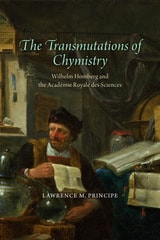
The Transmutations of Chymistry
Wilhelm Homberg and the Académie Royale des SciencesLawrence M. Principe
University of Chicago Press, 2020
Principe, the leading authority on the subject, recounts how Homberg’s radical vision promoted chymistry as the most powerful and reliable means of understanding the natural world. Homberg’s work at the Académie and in collaboration with the future regent, Philippe II d’Orléans, as revealed by a wealth of newly uncovered documents, provides surprising new insights into the broader changes chymistry underwent during, and immediately after, Homberg. A human, disciplinary, and institutional biography, The Transmutations of Chymistry significantly revises what was previously known about the contours of chymistry and scientific institutions in the early eighteenth century.
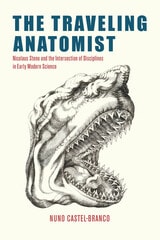
The Traveling Anatomist
Nicolaus Steno and the Intersection of Disciplines in Early Modern ScienceNuno Castel-Branco
University of Chicago Press, 2025
Nicolaus Steno (1638–1686) was a renowned anatomist in his lifetime. He reformed the anatomical understanding of glands, argued that the heart was a muscle, renamed the so-called female testicles as ovaries, and developed a mathematical model for understanding muscle contraction—discoveries that were fundamental to the fields of anatomy and physiology. However, other aspects of Steno’s life have come to define him: his claim that mountains’ strata reveal the history of the Earth and his conversion to Catholicism as a practicing scientist. This excessive attention to his geological discoveries and to asking whether science and religion are compatible, Nuno Castel-Branco argues, has obscured his significant accomplishments as an anatomist. The Traveling Anatomist thus restores Steno to his rightful place as a crucial figure in early modern science.
Using Steno’s extensive travels as a framework, this book depicts him as an active participant in the Republic of Letters. Castel-Branco traverses Leiden, Paris, Copenhagen, Florence, and Rome as he follows Steno in his sojourns through different scientific academies, courts, and artisanal workshops. There he developed new friends, some of whom were women, with whom he researched and exchanged ideas. Drawing on Steno’s books, correspondence, and novel archival material, Castel-Branco invites us to approach Steno and his accomplishments in anatomy, mathematics, and geology through the eyes of his contemporaries. Doing so, Castel-Branco reconstructs the rich and overlapping worlds of scientific disciplines that shaped Steno’s work, revealing the richness of interdisciplinary research in early modern intellectual life. And through Steno, he illustrates larger developments and new networks of significance in mid-seventeenth-century science. By focusing on ideas, scientific genres, institutions, and friendships, Castel-Branco offers a way others might also productively study science from the early modern period until today.
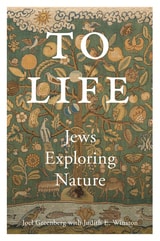
To Life
Jews Exploring NatureJoel Greenberg
Rutgers University Press, 2026
To Life explores the Jewish relationship with nature by illuminating significant Jewish thinkers who increased in important ways our understanding of various aspects of natural history. In eight compelling chapter-long biographies, naturalist Joel Greenberg demonstrates the diversity of both Jewish identity and the natural sciences.
Greenberg’s rich biographical sketches spotlight great Jewish scientists who not only made major contributions to the study of the natural world but also led rich and colorful lives: botanist and spy Aaron Aaronsohn, zoologist Libbie Henrietta Hyman, infamous ornithologist Nathan Leopold, mammalogist Philip Hershkovitz, arachnologist Herbert Levi, herpetologist Hymen Marx, public health entomologist Andrew Spielman, and ecologist Joan Ehrenfeld. These individuals manifested different aspects of Jewish identity—some observant, some secular—but all were affected in one way or another by their being Jewish.
By exploring the relationship between Jews and nature through the lives of these figures, Greenberg shares new and underrecognized aspects of Jewish and environmental history and opens new portals into the fields they studied.