Results by title
113 books match the query 'Selected Poems' and 29 start with t

The Army of Truth
Selected PoemsHenrik Wergeland
University of Wisconsin Press, 2003
One of Norway’s most celebrated literary figures of the nineteenth century, Henrik Wergeland worked tirelessly for the civil rights of Jews in Norway. He used the words and structure of his poetry to enliven the ideals of truth, freedom, and equality. This translated volume, containing several of Wergeland’s most prominent poems, beautifully encapsulates the compelling force of his message, allowing its enduring influence to benefit a wider contemporary audience.
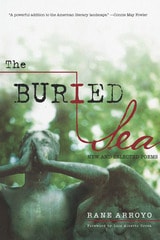
The Buried Sea
New and Selected PoemsRane Arroyo; Foreword by Luis Alberto Urrea
University of Arizona Press, 2008
Reading Rane Arroyo’s poems is a little like watching a movie playing at fastforward speed on the TV in your darkened bedroom. The colors pop and snap, the images leap and recede, the colors seem brighter than life—and you can’t stop watching even long enough to blink. It’s an intimate experience. Even at hyperspeed you can make out the images of friends, family, and lovers (especially lovers) burning rubber across the unblinking screen. And even without a sound track, you can hear the music—a symphony of jazz and samba, salsa and street sounds.
In The Buried Sea, Arroyo has selected poems from his first eleven books—five full-length collections of poems and six chapbooks—and has added nineteen new poems. When asked to describe himself, Arroyo writes that “the answer is easy: I’m a Puerto Rican, gay, Midwestern, educated, former working class, liberal, atheistic, humanist, American, male, ex-Mormon, ex-Catholic, pseudo-Buddhist, teacher, reader, global, and popular culture—informed poet.” Readers will find traces of all of these selves in this collection. And Arroyo does make it “easy” to follow the clues. His poems—vivacious, sexy, shiny, sly, pointed, ambitious—are easy to approach and easy to love. But they come with strings attached—like all affairs of the heart—and therein lies so much of their pleasure.
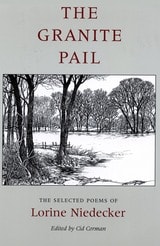
The Granite Pail
The Selected Poems of Lorine NiedeckerLorine Niedecker
Ohio University Press, 1996
This edition was published in 1996 by Gnomon Press.
The Granite Pail is a masterful collection that showcases the poetic brilliance of one of America’s most underappreciated modernist poets. Known for its minimalist style and deep connection to the natural world, Niedecker’s work combines precision with emotional depth in poems that resonate long after they are read.
This volume brings together some of Niedecker’s finest poetry, illustrating her gift for capturing profound truths in the simplest of forms. With themes ranging from the intimate and domestic to the universal and ecological, her poems reflect a life deeply rooted in the landscapes of rural Wisconsin. From meditations on the passage of time to lyrical explorations of nature, The Granite Pail reveals the interplay between solitude, creativity, and the human condition.
Edited and introduced by Cid Corman, a champion of Niedecker’s work, the collection highlights her unique voice within the Objectivist tradition and her ability to create moments of beauty and insight with remarkable economy. This edition also provides context for her life and influences, shedding light on her artistic evolution and the lasting significance of her poetry.
For both longtime admirers and those new to Niedecker’s work, The Granite Pail offers an essential glimpse into the mind of a poet whose quiet brilliance continues to inspire readers and writers alike.
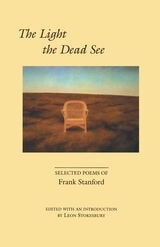
The Light the Dead See
Selected Poems of Frank StanfordFrank Stanford
University of Arkansas Press, 1991
Between 1972, when he published his first book, The Signing Knives, and 1978, when he died at the age of twenty-nine, Frank Stanford published seven volumes of poetry. Within a year of his death, two posthumous collections were published. At the time of this death, as Leon Stokesbury asserts in his introduction, “Stanford was the best poet in America under the age of thirty-five.”
The Light the Dead See collects the best work from those nine volumes and six previously unpublished poems. In the earlier poems, Stanford creates a world where he could keep childhood alive, deny time and mutability, and place a version of himself at the center of great myth and drama.
Later, the denial of time and mutability gives way to an obsessive and familiar confrontation with death. Although Stanford paid an enormous price for his growing familiarity with Death as a presence, the direct address to that presence is a source of much of the striking originality and stunning power in the poetry.
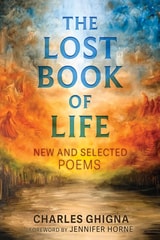
The Lost Book of Life
New and Selected PoemsCharles Ghigna, Foreword by Jennifer Horne
University of Alabama Press, 2026
A poetic journey through five decades of wonder, memory, and love, where the ordinary becomes sacred and every line leads home
Spanning five decades of poetic mastery, The Lost Book of Life: New and Selected Poems is the definitive collection from Charles Ghigna, a beloved and influential voice in contemporary Southern poetry. Drawing from fourteen previous volumes and featuring thirty-seven new poems, this landmark collection captures the full arc of Ghigna’s creative evolution, from his early meditations on nature and family to his later reflections on memory, mortality, and the enduring power of love.
With graceful shifts between free verse and traditional forms, Ghigna’s voice is both intimate and expansive—clear as spring water, alive with wit, and steeped in feeling. His poems open doorways into childhood’s bright dreaming, the quiet complexities of fatherhood, and the sacred hush of daily life. Ghigna invites readers to see the world anew, to find beauty in the familiar, and to embrace the sacred in the ordinary. For longtime admirers and new readers alike, The Lost Book of Life is a luminous testament to a life devoted to poetry. It is both compass and keepsake: a celebration of poetry’s enduring light, and a lasting gift to the literature of the American South.
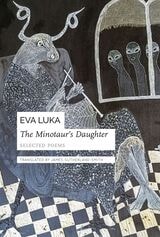
The Minotaur’s Daughter
Selected PoemsEva Luka
Seagull Books, 2025
An evocative collection by Slovak poet Eva Luka, The Minotaur’s Daughter seamlessly melds the human and natural worlds, weaving motifs of mythology, nature, and personal freedom into a tapestry of vivid imagery and profound emotion. The poems traverse settings from Japan to mythic landscapes, exploring the complexities of sexuality, desire, and transition.
Central to Luka’s work is the theme of resistance—against societal pressures and psychic harm. Her poetic voice defies artistic conformity, merging human and animal identities to challenge gender norms and explore mutable identities. Through this innovative fusion, her poems capture both the terror and beauty of existence, drawing parallels to Rilke's metaphysical explorations while grounding her work in the pantheistic and protoplasmic. Journeying through darkness and light, The Minotaur’s Daughter reveals an unwavering commitment to artistic and personal truth, establishing Luka as a formidable voice of resistance in contemporary European poetry.
The Missing Mountain
New and Selected PoemsMichael Collier
University of Chicago Press, 2021
Whether Michael Collier is writing about an airline disaster, a friendship with a disgraced Catholic bishop, his father’s encounter with Charles Lindbergh, Lebanese beekeepers, a mother’s sewing machine, or a piano in the woods, he does so with the syntactic verve, scrupulously observed detail, and a flawless ear that has made him one of America’s most distinguished poets. These poems cross expanses, connecting the fear of missing love and the bliss of holding it, the ways we speak to ourselves and language we use with others, and deep personal grief and shadows of world history.
The Missing Mountain brings together a lifetime of work, chronicling Collier’s long and distinguished career as a poet and teacher. These selections, both of previously published and new poems, chart the development of Collier’s art and the cultivations of his passions and concerns.
The Pattern More Complicated
New and Selected PoemsAlan Williamson
University of Chicago Press, 2004
The Pattern More Complicated assembles Williamson's most important, representative poems, marking the trajectory of poetic development and the recurrence of themes across the span of four previous collections to present a survey of a major American poet in a single volume.
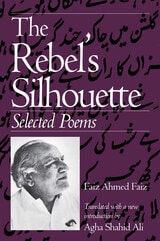
The Rebel's Silhouette
Selected PoemsFaiz Ahmed Faiz, translated and edited by Agha Shalid Ali
University of Massachusetts Press, 1995
The SILENT SINGER
NEW AND SELECTED POEMSLen Roberts
University of Illinois Press, 2001
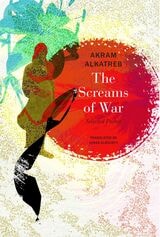
The Screams of War
Selected PoemsAkram Alkatreb
Seagull Books, 2024
“Those who believe in the currency of patience / Were burned out in the alleyway.”
The Screams of War is a visceral collection of poems that confront the realities of contemporary Syria. Akram Alkatreb’s verses capture the sense of the quotidian during war. His words, mere “murmurs engraved on stones,” long for and despair over an irrevocable past. At the heart of Alkatreb’s work lies a preoccupation with trauma and the profound burden of alienation that accompanies exile. Nascent memories are shrouded by the “scars of sleep,” and words find themselves nostalgic for destruction. The ubiquity of violence that Alkatreb channels into his poetry does not tolerate enclaves of innocence. The Screams of War is an unforgettable testament to the resilience of the human spirit and a stark reminder of the harsh realities faced by those trapped in conflict.

The Selected Poems Of Howard Nemerov
Howard Nemerov
Ohio University Press, 2003
Howard Nemerov—poet laureate of the United States, winner of the Pulitzer Prize and National Book Award, and chancellor of the Academy of American Poets—was one of the most prolific and significant American poets of the twentieth century. By the time of his death in 1991, he had published fourteen collections of poetry.
Judiciously selected and introduced by poet Daniel Anderson, The Selected Poems of Howard Nemerov represents the broad spectrum of Nemerov’s virtues as a poet—his intelligence, his wit, his compassion, and his irreverence. It stands as the retrospective collection of the best of what Nemerov left behind, which is some of the finest poetry that the twentieth century produced.
“To keep his errors down to a minimum,” W. H. Auden wrote, “the internal Censor to whom a poet submits his work in progress should be a Censorate. It should include, for instance, a sensitive only child, a practical housewife, a logician, a monk, an irreverent buffoon a nd even, perhaps, hated by all others and returning their dislike, a brutal, foul-mouthed drill sergeant who considers all poetry rubbish.”
Such are the readers to whom the poetry of Howard Nemerov might appeal. He distinguished himself on the landscape of American letters as a writer of great versatility. More than a decade after his death, that claim still holds true.
In this, the only edition of Nemerov’s work that surveys his entire poetic output, first-time readers of these poems will find an introduction to a truly remarkable creative mind. Longtime admirers of Nemerov will be reminded once again of his significance as a craftsman and philosopher, and as a poetic steward of the many ways in which we experience the world.
The Selected Poems Of Yvor Winters
Yvor Winters
Ohio University Press, 1999
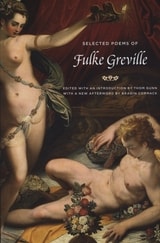
The Selected Poems of Fulke Greville
Fulke Greville
University of Chicago Press, 2009
Along with his childhood friend Sir Philip Sidney, Fulke Greville (1554–1628) was an important member of the court of Queen Elizabeth I. Although his poems, long out of print, are today less well known than those of Sidney, Spenser, or Shakespeare, Greville left an indelible mark on the world of Renaissance poetry, both in his love poems, which ably work within the English Petrarchan tradition, and in his religious meditations, which, along with the work of Donne and Herbert, stand as a highpoint of early Protestant poetics.
Back in print for a new generation of scholars and readers, Thom Gunn’s selection of Greville’s short poems includes the whole of Greville’s lyric sequence, Caelica, along with choruses from some of Greville’s verse dramas. Gunn’s introduction places Greville’s thought in historical context and in relation to the existential anxieties that came to preoccupy writers in the twentieth century. It is as revealing about Gunn himself, and the reading of earlier English verse in the 1960s, as it is about Greville’s own poetic achievement. This reissue of Selected Poems of Fulke Greville is an event of the first order both for students of early British literature and for readers of Thom Gunn and English poetry generally.

The Selected Poems of Harriet Monroe
Harriet Monroe, edited by Kevin McMullen
Southern Illinois University Press, 2026
Unearthing the overlooked poet behind Poetry magazine
Harriet Monroe, whose work as the visionary founding editor of Poetry magazine profoundly shaped the development of American poetry in the 20th century, was a vital and prolific poet in her own right. This volume showcases the sweeping breadth of Monroe’s poetic talents.
Monroe lived through a period of immense change and global conflict, from the American Civil War, through World War I and the Great Depression, up to the first stirrings of the second Great War. Through her poetry, Monroe confronted major issues, critiquing war, the impact of industrialization on the arts, and inequality, while championing women’s rights and environmental conservation—issues that remain pressingly relevant today. Monroe’s three collections of poetry, as well as her own “selected poems” volume, have all long been out of print. This book, then, represents the first appearance of many of these poems in more than 100 years. This selection includes meditations on modern technology and globalization in the early 20th century, love lyrics, hymns to the deserts of the American West, feminist reflections on gender and motherhood, and more. The volume also includes a number of poems that have never before been published, drawing on manuscripts found in Monroe’s papers at the University of Chicago Library.
Students at the University of Nebraska–Lincoln, under the guidance of Kevin McMullen, project manager of the Walt Whitman Archive, selected these poems to capture the range and breadth of Monroe’s styles and poetic interest. The poems, along with an extensive critical introduction and explanatory notes, establish Monroe’s place as an important and overlooked Modernist poet from the Midwest.
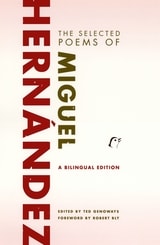
The Selected Poems of Miguel Hernandez
A Bilingual EditionMiguel Hernández
University of Chicago Press, 2001
Now, for the first time, Ted Genoways makes Hernández's extraordinary oeuvre available in an authoritative bilingual edition. Featuring some of the most tender and vigorous poetry on war, death, and social injustice written in the past century, nearly half of the poems in this volume appear in English for the first time, making it the most comprehensive bilingual collection of Hernández's work available. Arranged chronologically, The Selected Poems of Miguel Hernández presents Hernández's remarkable emotional range as well as his stylistic evolution from the Romantic shepherd poet to poet of the prison cell. Thorough annotations and introductory essays illuminate the biographical basis for many of Hernández's poems, while a foreword by Robert Bly and an afterword by Octavio Paz provide a striking frame for the work of this essential poet.
"What a victory it is to watch springing forth from our murky thicket of half-commercialized poetry the silver boar of Hernández's words-to see the world of paper part so as to allow the language tusks and shoulders to emerge, shining, pressed forward by his genius. This generous selection of Miguel Hernández's work, arranged, shepherded, and largely translated by Ted Genoways, is an immense gift for which all of us should be grateful."-from the Foreword by Robert Bly
"To gather Hernández's poetry in such a large volume is to bring one of the 20th century's most important poets to life again. Without Hernandez, the world community of poetry would not be what it is today. The Selected Poems must be read if vital poetry is to continue another 100 years, with Hernández's voice as a cherished example of why great poetry is timeless."—Ray González, Bloomsbury Review
"As Philip Levine write in The Kenyon Review, Hernández is 'one of the great talents of the century,' and this collection is a good place to discover (or rediscover) his moving verses."—Virginia Quarterly Review
"Vivid, often volatile imagery describes wrenching emotions and events in The Selected Poems of Miguel Hernández: A Bilingual Edition. . . . Raw, passionate, despairing and celebratory, these poems are a true discovery."—Publishers Weekly
"Arranged in three chronological sections, the poems presented are not the complete works, but they are a large and representative sampling of the best. This is certainly the most comprehensive bilingual edition of Hernández's poetry available. In addition to the poems, the editor includes eight illustrations, important prefatory materials, and a short list of references, and an epilogue by Octavio Paz."—Choice
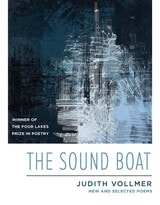
The Sound Boat
New and Selected PoemsJudith Vollmer
University of Wisconsin Press, 2022
Featuring twenty-one new and fifty-seven selected poems from her earlier volumes—The Apollonia Poems, The Water Books, Reactor, The Door Open to the Fire, and Level Green—The Sound Boat reveals Vollmer’s devotion to examining place and space to uncover poetry that touches emotions related to wandering physical and emotional realms: some familial and deeply personal, some unknowable.
down in the street, between the turtle fountain and the iron head
the party shouts and sings, sweats and snakes, swells into a throb
or momentum of sound.
—Excerpt from “The Sound Boat”
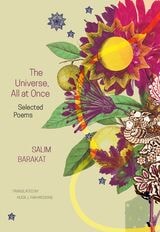
The Universe, All at Once
Selected PoemsSalim Barakat
Seagull Books, 2024
Salim Barakat, the captivating Kurdish-Syrian poet and novelist known for his mastery of Arabic style, is hailed as an enigmatic and intricate figure in contemporary Arabic literature. In The Universe, All at Once, he curates, in collaboration with translator Huda J. Fakhreddine, a selection from his later works, considering them the pinnacle of his poetic career. Drawn from pieces composed between 2021 and 2023, the poems in this collection vary from excerpts of an expansive book-length poem to concise, intense fragments. Fakhreddine expertly renders his writing in English, a courageous and praiseworthy attempt to challenge the barriers of the untranslatable.
This volume not only showcases the prolific author’s poetic evolution but also features a comprehensive interview with Barakat. Conducted by Fakhreddine, the interview delves into Barakat’s early influences, hobbies, talents, reader expectations, and reflections on displacement, childhood, and interpersonal connections. Together, The Universe, All at Once presents the best of Barakat’s latest poetry to his readers and allows invaluable insight into the writing processes and motivations of a visionary modern poet.

The Unknown Rilke
Selected PoemsRainer Maria Rilke
Oberlin College Press, 1990
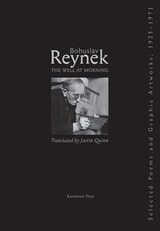
The Well at Morning
Selected Poems, 1925–1971Bohuslav Reynek
Karolinum Press, 2017
A chaffinch in a tree
of cherry sings merrily
spring’s introit.
Its blazing bobble dwells
in leaves, alive, and swells
in scarlet.
The flowers are flares of white.
The chaffinch has gone quiet
and turned sky-gazer.
My eyes close on the day:
an orb revolves in grey
and red and azure.
Poet and artist Bohuslav Reynek spent most of his life in the relative obscurity of the Czech-Moravian Highlands; although he suffered at the hands of the Communist regime, he cannot be numbered among the dissident poets of Eastern Europe who won acclaim for their political poetry in the second half of the twentieth century. Rather, Reynek belongs to an older pastoral-devotional tradition—a kindred spirit to the likes of English-language poets Gerard Manley Hopkins, William Wordsworth, Robert Frost, and Edward Thomas. The Well at Morning presents a selection of poems from across his life and is illustrated with twenty-five of his own color etchings. Also featuring three essays by leading scholars that place Reynek’s life and work alongside those of his better-known peers, this book presents a noted Czech artist to the wider world, reshaping and amplifying our understanding of modern European poetry.
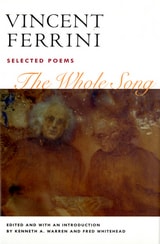
The Whole Song
SELECTED POEMSVincent Ferrini
University of Illinois Press, 2004
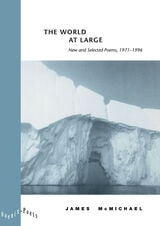
The World at Large
New and Selected Poems, 1971-1996James McMichael
University of Chicago Press, 1996
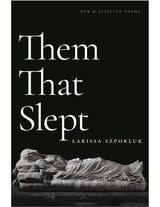
Them That Slept
New & Selected PoemsLarissa Szporluk
Tupelo Press, 2026
A selection of poems that form a narrative about psychological and spiritual somnambulance in our current age and the ever-urgent need to wake up.
In Them That Slept, Larissa Szporluk gathers three decades of work into a single incandescent arc—poems that braid feminist theology, eros, and myth into a lyric of fierce awakening. Borrowing its title from First Corinthians—“the firstfruits of them that slept”—this collection asks what it means to rise, not into certainty, but into desire, voice, and embodiment. Here, virgins become saints and saints become women of appetite. Daughters speak back to fathers. The sea mothers and devours. Joan of Arc lingers in her cell. Venus tweets. The body is never merely symbolic—it is radiant, wounded, knowing. Szporluk’s women are not passive figures in inherited narratives; they are theologians of touch, architects of longing, midwives of their own transformations.
Across selections from six previous books and a powerful suite of new poems, Szporluk reimagines sacred language as intimate speech. Biblical cadences shimmer against domestic interiors, fields, bedrooms, and storm skies. Eros is not an ornament but a form of knowledge; faith is not obedience but risk. These are poems that refuse to sleep through history. They burn toward revelation— sensual, subversive, and alive.
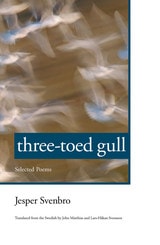
Three-Toed Gull
Selected PoemsJesper Svenbro
Northwestern University Press, 2003

To the Bone
NEW AND SELECTED POEMSSydney Lea
University of Illinois Press, 1996
The writings of Didymus were censored and destroyed due to his posthumous condemnation for heresy. This study recovers the uncensored voice of Didymus through the commentaries among the Tura papyri, a massive set of documents discovered in an Egyptian quarry in 1941.
This neglected corpus offers an unprecedented glimpse into the internal workings of a Christian philosophical academy in the most vibrant and tumultuous cultural center of late antiquity. By exploring the social context of Christian instruction in the competitive environment of fourth-century Alexandria, Richard A. Layton elucidates the political implications of biblical interpretation.
Through detailed analysis of the commentaries on Psalms, Job, and Genesis, the author charts a profound tectonic shift in moral imagination as classical ethical vocabulary becomes indissolubly bound to biblical narrative. Attending to the complex interactions of political competition and intellectual inquiry, this study makes a unique contribution to the cultural history of late antiquity.
Trees Became Torches
SELECTED POEMSEdwin Rolfe. Edited by Cary Nelson and Jefferson Hendricks
University of Illinois Press, 1995
. . . He stands in the forefront of an entire 'lost generation' of left-wing
writers who fused artistic craft with irrepressible political commitment."
-- Alan Wald, author of The Responsibility of Intellectuals: Selected
Essays on Marxist Traditions in Cultural Commitment
"[Rolfe's] Spanish Civil War poems may be the best written by an
American writer, and his McCarthy era poems brilliantly counteract the
often apolitical, rather socially aseptic poetry of their time."
-- Reginald Gibbons, editor of TriQuarterly
The radical journalist and poet Edwin Rolfe wrote eloquently of the hardships
of the Great Depression, the experience of war, and McCarthy era witch-hunts.
More than fifty of his best poems--some beautifully lyrical and some devastatingly
satiric--are included in Trees Became Torches. Rolfe was widely
known as the poet laureate of the Abraham Lincoln Battalion, the Americans
who volunteered to help defend the elected Spanish government during the
1936-39 civil war.
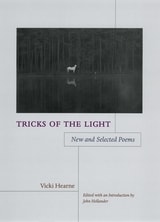
Tricks of the Light
New and Selected PoemsVicki Hearne
University of Chicago Press, 2007
The horse that, trotting with open heart
Against the wind, achieves bend and flow
Will live forever. So far, so good,
But they never do, until too late,
Bend properly and time spreads from
The momentary hesitations
Of their spines, circles their tossing necks,
Falls from their teeth like rejected oats,
Litters the ground like penitence.
This is where we come in, where the drop
Of time congeals the air and someone
Speaks to the discouraged grass . . .
Tricks of the Light explores the often fraught relationships between domestic animals and humans through mythological figurations, vibrant thought, and late-modern lyrics that seem to test their own boundaries. Vicki Hearne (1946–2001), best known and celebrated today as a writer of strikingly original poetry and prose, was a capable dog and horse trainer, and sometimes controversial animal advocate.
This definitive collection of Hearne’s poetry spans the entirety of her illustrious career, from her first book, Nervous Horses (1980), to never-before-published poems composed on her deathbed. But no matter the source, each of her meditative, metaphysical lyrics possesses that rare combination of philosophical speculation, practical knowledge of animals, and an unusually elegant style unlike that of any other poet writing today. Before her untimely death, Hearne entrusted the manuscript to distinguished poet, scholar, and long-time friend John Hollander, whose introduction provides both critical and personal insight into the poet’s magnum opus. Tricks of the Light—acute, vibrant, and deeply informed—is a sensuous reckoning of the connection between humans and the natural world.
Praise for The Parts of Light
“Hearne . . . strives to capture exactly what she knows she can't—the intense immediacy of animal consciousness, a consciousness free of the moral vagaries and intellectual preoccupations that pockmark human experience. Her style, smooth in some places, choppy in others, reflects both the wholeness of animal presence and the jarring, fragmentary nature of human reason and reflection. Hearne's poems demand participation, refuse passive enjoyment; she dares the reader to stay in the saddle.”—Publishers Weekly
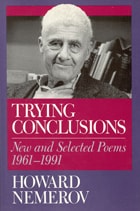
Trying Conclusions
New and Selected Poems, 1961-1991Howard Nemerov
University of Chicago Press, 1991
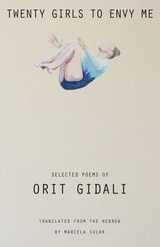
Twenty Girls to Envy Me
Selected Poems of Orit GidaliBy Orit Gidali. Edited and translated by Marcela Sulak
University of Texas Press, 2016
This English-Hebrew book features three dozen poems by the extraordinary Israeli writer Orit Gidali (b. 1974), a unique voice among her contemporaries. Gidali’s work appears to focus on the domestic, but for her, the domestic sphere is the stage on which the drama of the geopolitical is reworked on an individual scale. The domestic is always inhabited by the Other, who in these deeply personal poems appears in various guises: a Palestinian mother, biblical figures, the poet’s own deceased mother, and her husband’s first wife. Gidali creates a space in her world to imaginatively reconfigure the current political impasses of the region through a focus on relationship and openness.
Gidali’s poems, beautifully captured in English by Marcela Sulak, present a world beset by danger and uncertainty, yet they nonetheless cry out for community, connection, cooperation, and coexistence.