Results by title
105 books match the query 'Self' and 34 start with t
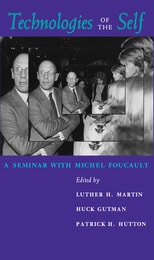
Technologies of the Self
A Seminar with Michel FoucaultLuther H. Martin
University of Massachusetts Press, 1988
Shortly before his death in 1984, Michel Foucault spoke of an idea for a new book on “technologies of the self.” He described it as “composed of different papers about the self. . . . about the role of reading and writing in constituting the self. . . . and so on.” The book Foucault envisioned was based on a faculty seminar on “Technologies of the Self,” originally presented at the University of Vermont in the fall of 1982. This volume is a partial record of that seminar.
In many ways, Foucault's project on the self was the logical conclusion to his historical inquiry over twenty-five years into insanity, deviancy, criminality, and sexuality. Because Foucault died before he completed the revisions of his seminar presentations, this volume includes a careful transcription instead...as a prolegomenon to that unfinished task.
Foucault was a French philosopher, historian of ideas, social theorist, philologist and literary critic.
This volume was edited by Luther H. Martin, Huck Gutman, and Patrick H. Hutton.
The Age of Immunology
Conceiving a Future in an Alienating WorldA. David Napier
University of Chicago Press, 2003
To illustrate these destructive consequences, Napier likens the current craze for embracing diversity and the use of politically correct speech to a cultural potluck to which we each bring different dishes, but at which no one can eat unless they abide by the same rules. Similarly, loaning money to developing nations serves as a tool both to make the peoples in those nations more like us and to maintain them in the nonthreatening status of distant dependents. To break free of the resulting downward spiral of homogenization and self-focus, Napier suggests that we instead adopt a new defining concept based on embryology, in which development and self-growth take place through a process of incorporation and transformation. In this effort he suggests that we have much to learn from non-Western peoples, such as the Balinese, whose ritual practices require them to take on the considerable risk of injecting into their selves the potential dangers of otherness—and in so doing ultimately strengthen themselves as well as their society.
The Age of Immunology, with its combination of philosophy, history, and cultural inquiry, will be seen as a manifesto for a new age and a new way of thinking about the world and our place in it.
The Analysis of the Self
A Systematic Approach to the Psychoanalytic Treatment of Narcissistic Personality DisordersHeinz Kohut
University of Chicago Press, 2009
“Kohut has done for narcissism what the novelist Charles Dickens did for poverty in the nineteenth century. Everyone always knew that both existed and were a problem. . . . The undoubted originality is to have put it together in a form which carries appeal to action.”—International Journal of Psychoanalysis
The Anthropology of Self and Behavior
Erchak, Gerald M
Rutgers University Press, 1992
Each chapter reviews the literature, not as a scholar would, but rather to provide an overview of central issues in the field. Each chapter also provides case material, some of which is drawn from Erchak's own work on West African socialization, Micronesian social change, family violence, initiation rites, and alcoholism. His examples are drawn from the U.S. as well as non-Western cultures. This book will be of particular interest to teachers looking for new texts for undergraduate courses in anthropology, psychology, and sociology.
The Archetypal Process
Self and Divine and Whitehead, Jung, and HillmanDavid Ray Griffin
Northwestern University Press, 1989
Archetypal Process examines the importance of cosmological thinking and the need to ground archetypal psychology in a metaphysical, philosophical framework. It treats the necessity for symbol and myth, the nature of the spirit, and language as a metaphorical vehicle of thought, and finally, it adds a much-needed feminist perspective to the debate.
The Author as Hero
Self and Tradition in Bulgakov, Pasternak, and NabokovJustin Weir
Northwestern University Press, 2011

The Context of Self
A Phenomenological Inquiry Using Medicine as a ClueRichard M. Zaner
Ohio University Press, 1981
This study takes up the challenge presented to philosophy in a dramatic and urgent way by contemporary medicine: the phenomenon of human life. Initiated by a critical appreciation of the work of Hans Jonas, who poses that issue as well, the inquiry is brought to focus on the phenomenon of embodiment, using relevant medical writing to help elicit its concrete dimensions.
The explication of embodiment, aided by critical studies and inquiries into medical phenomena (autism, brain injury, terminal illness) make possible the development of the author’s original phenomenological theory of self, and its concrete relationships with the other self. This study attempts not only to show connections among the works of a number of thinkers in terms of central problems, but to demonstrate the mutual relevance of medicine and philosophy through concrete illustrations and analysis.
The Existential Self in Society
Edited by Joseph A. Kotarba and Andrea Fontana
University of Chicago Press, 1984

The Fate of the Self
German Writers and French TheoryStanley Corngold
Duke University Press, 1994

The Little Death of Self
Nine Essays toward PoetryMarianne Boruch
University of Michigan Press, 2017
The line between poetry (the delicate, surprising not-quite) and the essay (the emphatic so-there!) is thin, easily crossed. Both welcome a deep mulling-over, endlessly mixing image and idea and running with scissors; certainly each distrusts the notion of premise or formulaic progression. Marianne Boruch’s essays in The Little Death of Self emerged by way of odd details or bothersome questions that would not quit—Why does the self grow smaller as the poem grows enormous? Why does closure in a poem so often mean keep going? Must we stalk the poem or does the poem stalk us until the world clicks open?
Boruch’s intrepid curiosity led her to explore fields of expertise about which she knew little: aviation, music, anatomy, history, medicine, photography, fiction, neuroscience, physics, anthropology, painting, and drawing. There’s an addiction to metaphor here, an affection for image, sudden turns of thinking, and the great subjects of poetry: love, death, time, knowledge. There’s amazement at the dumb luck of staying long enough in an inkling to make it a poem at all. Poets such as Keats, Stevens, Frost, Plath, Auden, and Bishop, along with painters, inventors, doctors, scientists, composers, musicians, neighbors, friends, and family—all traffic blatantly or under the surface—and one gets a glimpse of such fellow travelers now and then.
The Little Field of Self
Doreen Gildroy
University of Chicago Press, 2002
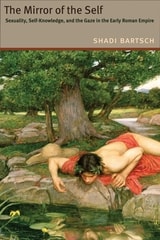
The Mirror of the Self
Sexuality, Self-Knowledge, and the Gaze in the Early Roman EmpireShadi Bartsch
University of Chicago Press, 2006
Weaving together literary theory, philosophy, and social history, Bartsch traces this complex notion of self from Plato’s Greece to Seneca’s Rome. She starts by showing how ancient authors envisioned the mirror as both a tool for ethical self-improvement and, paradoxically, a sign of erotic self-indulgence. Her reading of the Phaedrus, for example, demonstrates that the mirroring gaze in Plato, because of its sexual possibilities, could not be adopted by Roman philosophers and their students. Bartsch goes on to examine the Roman treatment of the ethical and sexual gaze, and she traces how self-knowledge, the philosopher’s body, and the performance of virtue all played a role in shaping the Roman understanding of the nature of selfhood. Culminating in a profoundly original reading of Medea, The Mirror of the Self illustrates how Seneca, in his Stoic quest for self-knowledge, embodies the Roman view, marking a new point in human thought about self-perception.
Bartsch leads readers on a journey that unveils divided selves, moral hypocrisy, and lustful Stoics—and offers fresh insights about seminal works. At once sexy and philosophical, The Mirror of the Self will be required reading for classicists, philosophers, and anthropologists alike.
The New South Faces the World
Foreign Affairs and the Southern Sense of Self,1877-1950Tennant S. McWilliams
University of Alabama Press, 2007
The Origins of Self
An Anthropological PerspectiveMartin P. J. Edwardes
University College London, 2019
The Otherness of Self
A Genealogy of Self in Contemporary ChinaXin Liu
University of Michigan Press, 2002
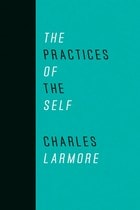
The Practices of the Self
Charles Larmore
University of Chicago Press, 2010
What is the nature of the fundamental relation we have to ourselves that makes each of us a self? To answer this question, Charles Larmore develops a systematic theory of the self, challenging the widespread view that the self’s defining relation to itself is to have an immediate knowledge of its own thoughts. On the contrary, Larmore maintains, our essential relation to ourselves is practical, as is clear when we consider the nature of belief and desire. For to believe or desire something consists in committing ourselves to thinking and acting in accord with the presumed truth of our belief or the presumed value of what we desire.
Larmore develops this conception with frequent reference to such classic authors as Montaigne, Stendhal, and Proust and by comparing it to other views of the self in contemporary philosophy. He also discusses the important ethical consequences of his theory of the self, arguing that it allows us to better grasp what it means to be ourselves and why self-understanding often involves self-creation.
Winner of the Académie Française’s Grand Prix de Philosophie, The Practices of the Self is that rare kind of lucid yet rigorous work that transcends disciplinary boundaries.
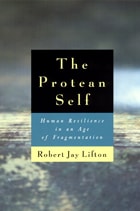
The Protean Self
Human Resilience in an Age of FragmentationRobert Jay Lifton
University of Chicago Press, 1999
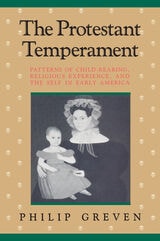
The Protestant Temperament
Patterns of Child-Rearing, Religious Experience, and the Self in Early AmericaPhilip Greven
University of Chicago Press, 1988
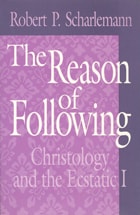
The Reason of Following
Christology and the Ecstatic IRobert P. Scharlemann
University of Chicago Press, 1991
Scharlemann presents a christological phenomenology of the self, tracing the connections between the "I am" of the God who spoke to Moses, the "I am" of Christ, and the "I am" of autonomous self-identification. How, he asks, can the self that spontaneously responds to Jesus' "Follow me!" be compared with the everyday, autonomous self? What is the nature of "following" on the part of those who answer the summons of one whose name is "I am"? Pursuing these questions, Scharlemann develops a christological phenomenology of the self—an account in which following means not the expression of the self in action or reflection but rather self-discovery in another person.
With a deep sense of both culture and philosophy, Scharlemann distinguishes the forms of reason involved in "following" from those in ethics, aesthetics, and other modes of religious philosophic thought. His penetrating readings of nineteenth- and twentieth-century German theological and philosophical traditions provide an introduction to lesser-known thinkers such as Hermann and Picht as well as a profound critique of major figures such as Descartes, Heidegger, Fichte, and Kant.
Finally Scharlemann outlines a program for a more systematic and rounded presentation of what Christian doctrine might mean in the contemporary world. His work will be of interest to students of theology and philosophy alike.
The Religion of Reality
Inquiry into the Self, Art, and TranscendenceDidier Maleuvre
Catholic University of America Press, 2006
The Restoration of the Self
Heinz Kohut
University of Chicago Press, 2009
In his foundational work The Restoration of the Self, noted psychoanalyst Heinz Kohut boldly challenges what he called “the limits of classical analytic theory” and the Freudian orthodoxy. Here Kohut proposes a “psychology of the self” as a theory in its own right—one that can stand beside the teachings of Freud and Jung.
Using clinical data, Kohut explores issues such as the role of narcissism in personality, when a patient can be considered cured, and the oversimplifications and social biases that unduly influenced Freudian thought. This volume puts forth some of Kohut’s most influential ideas on achieving emotional health through a balanced, creative, and joyful sense of self.
"Kohut speaks clearly from his identity as a psychoanalyst-healer, showing that he is more of a psychoanalyst than most, and yet calling for major theoretical revisions including a redefinition of the essence of psychoanalysis.”—American Journal of Psychotherapy
The Roman Stoics
Self, Responsibility, and AffectionGretchen Reydams-Schils
University of Chicago Press, 2005
The Roman Stoics reexamines the philosophical basis that instructed social practice in friendship, marriage, parenting, and community. From this analysis emerge Stoics who were neither cold nor detached, as the stereotype has it, but all too aware of their human weaknesses. In a valuable contribution to current discussions in the humanities on identity, autonomy, and altruism, Reydams-Schils ultimately conveys the wisdom of Stoics to the citizens of modern society.
The Rural Modern
Reconstructing the Self and State in Republican ChinaKate Merkel-Hess
University of Chicago Press, 2016
In The Rural Modern, Merkel-Hess shows that Chinese reformers and intellectuals created an idea of modernity that was not simply about what was foreign and new, as in Shanghai and other cities, but instead captured the Chinese people’s desire for social and political change rooted in rural traditions and institutions. She traces efforts to remake village education, economics, and politics, analyzing how these efforts contributed to a new, inclusive vision of rural Chinese life. Merkel-Hess argues that as China sought to redefine itself, such rural reform efforts played a major role, and tensions that emerged between rural and urban ways deeply informed social relations, government policies, and subsequent efforts to create a modern nation during the communist period.

The Self As Subject
Autoethnographic Research IntoAnneMarie Deitering
Assoc of College & Research Libraries, 2017
The Self in Transition
Infancy to ChildhoodEdited by Dante Cicchetti and Marjorie Beeghly
University of Chicago Press, 1990
Contributors are Elizabeth Bates, Marjorie Beeghly, Barbara Belmont, Leslie Bottomly, Helen K. Buchsbaum, George Butterworth, Vicki Carlson, Dante Cicchetti, James P. Connell, Robert N. Emde, Jerome Kagan, Robert A. LeVine, Andrew N. Meltzoff, Editha Nottelmann, Sandra Pipp, Marian Radke-Yarrow, Catherine E. Snow, L. Alan Sroufe, Gerald Stechler, Sheree L. Toth, Malcolm Watson, and Dennie Palmer Wolf.
The Story of All Things
Writing the Self in English Renaissance Narrative PoetryMarshall Grossman
Duke University Press, 1998
Relating subjectivity to the nature of language, Grossman uses the theories of Lacan to analyze the concept of the self as it encounters a transforming environment. He shows how ideological tensions arose from the reorganization and "modernization" of social life in revolutionary England and how the major poets of the time represented the division of the self in writings that are suspended between lyric and narrative genres. Beginning with the portrayals of the self inherited from Augustine, Dante, and Petrarch, he describes the influence of historic developments such as innovations in agricultural technology, civil war and regicide, and the emergence of republican state institutions on the changing representation of characters in the works of Spenser, Donne, Marvell, and Milton. Furthering this psychoanalytic critique of literary history, Grossman probes the linguistic effects of social and personal factors such as Augustine’s strained relationship with his mother and the marital disharmony of Milton and Mary Powell. With its focus on these and other "literary historical events," The Story of All Things not only proposes a new structural theory of narrative but constitutes a significant challenge to New Historicist conceptions of the self.
The Triumph of Uncertainty
Science and Self in the Postmodern AgeAlfred I. Tauber
Central European University Press, 2022
Tauber, a leading figure in history and philosophy of science, offers a unique autobiographical overview of how science as a discipline of thought has been characterized by philosophers and historians over the past century. He frames his account through science’s – and his own personal – quest for explanatory certainty.
During the 20th century, that goal was displaced by the probabilistic epistemologies required to characterize complex systems, whether in physics, biology, economics, or the social sciences. This “triumph of uncertainty” is the inevitable outcome of irreducible chance and indeterminate causality. And beyond these epistemological limits, the interpretative faculties of the individual scientist (what Michael Polanyi called the “personal” and the “tacit”) invariably affects how data are understood. Whereas positivism had claimed radical objectivity, post-positivists have identified how a web of non-epistemic values and social forces profoundly influence the production of knowledge.
Tauber presents a case study of these claims by showing how immunology has incorporated extra-curricular social elements in its theoretical development and how these in turn have influenced interpretive problems swirling around biological identity, individuality, and cognition. The correspondence between contemporary immunology and cultural notions of selfhood are strong and striking. Just as uncertainty haunts science, so too does it hover over current constructions of personal identity, self knowledge, and moral agency. Across the chasm of uncertainty, science and selfhood speak.
Theorizing Self in Samoa
Emotions, Genders, and SexualitiesJeannette Marie Mageo
University of Michigan Press, 1998
Thoughts and Things
Leo Bersani
University of Chicago Press, 2014
Thoughts and Things posits what would appear to be an irreducible gap between our thoughts (the human subject) and things (the world). Bersani departs from his psychoanalytic convictions to speculate on the oneness of being—of our intrinsic connectedness to the other that is at once external and internal to us. He addresses the problem of formulating ways to consider the undivided mind, drawing on various sources, from Descartes to cosmology, Freud, and Genet and succeeds brilliantly in diagramming new forms as well as radical failures of connectedness. Ambitious, original, and eloquent, Thoughts and Things will be of interest to scholars in philosophy, film, literature, and beyond.
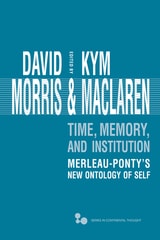
Time, Memory, Institution
Merleau-Ponty's New Ontology of SelfDavid Morris
Ohio University Press, 2015
This collection is the first extended investigation of the relation between time and memory in Maurice Merleau-Ponty’s thought as a whole and the first to explore in depth the significance of his concept of institution. It brings the French phenomenologist’s views on the self and ontology into contemporary focus. Time, Memory, Institution argues that the self is not a self-contained or self-determining identity, as such; it is gathered out of a radical openness to what is not self, and that it gathers itself in a time that is not merely a given dimension, but folds back upon, gathers, and institutes itself.
Access to previously unavailable texts, in particular Merleau-Ponty’s lectures on institution and expression, has presented scholars with new resources for thinking about time, memory, and history. These essays represent the best of this new direction in scholarship; they deepen our understanding of self and world in relation to time and memory; and they give occasion to reexamine Merleau-Ponty’s contribution and relevance to contemporary Continental philosophy.
This volume is essential reading for scholars of phenomenology and French philosophy, as well as for the many readers across the arts, humanities, and social sciences who continue to draw insight and inspiration from Merleau-Ponty.
Contributors: Elizabeth Behnke, Edward Casey, Véronique Fóti, Donald Landes, Kirsten Jacobson, Galen Johnson, Michael Kelly, Scott Marratto, Glen Mazis, Caterina Rea, John Russon, Robert Vallier, and Bernhard Waldenfels
Transforming Information Literacy Programs
Intersecting Frontiers of Self, Library Culture, and Campus CommunityCarroll Wetzel Wilkinson
Assoc of College & Research Libraries, 2012
Transforming Information Literacy Programs
Intersecting Frontiers of Self, Library Culture, and Campus CommunityCarroll Wetzel Wilkinson
Assoc of College & Research Libraries, 2012
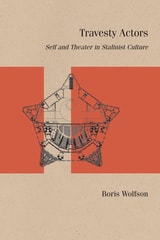
Travesty Actors
Self and Theater in Stalinist CultureBoris Wolfson, edited by Simon Morrison
Northwestern University Press, 2026
Talk of Joseph Stalin’s “show trials,” the public prosecutions in Moscow’s Hall of Columns in the late 1930s, is so familiar as to obscure the relationship between actual shows—in the Soviet Union’s major theaters—and politics. Travesty Actors: Self and Theater in Stalinist Culture examines theatrical performance within the context of the Soviet cultural establishment’s fashioning of a “genuine Soviet person.” Boris Wolfson focuses on prominent and controversial plays by artists including Aleksandr Afinogenov, Mikhail Bulgakov, Yuri Olesha, and Natalia Sats and the efforts of theater companies, like the Moscow Arts Theater, the Meyerhold Theater, and the Central Children’s Theater, to adhere to this cultural mandate while grappling with repression, censorship, and conflicting interpretations of its aims. Drawing on archival materials, diaries and memoirs and eyewitness accounts, Wolfson greatly illuminates the achievements of Soviet theater during this harsh period and the cultural significance of artistic theories and practices for articulating and enacting ideological programs.

Twins Talk
What Twins Tell Us about Person, Self, and SocietyDona Lee Davis
Ohio University Press, 2015
Twins Talk is an ethnographic study of identical twins in the United States, a study unique in that it considers what twins have to say about themselves, instead of what researchers have written about them. It presents, in the first person, the grounded and practical experiences of twins as they engage, both individually and together, the “who am I” and “who are we” questions of life. Here, the twins themselves are the stars.
Dona Lee Davis conducted conversational interviews with twenty-two sets of identical twins attending the Twins Days Festival in Twinsburg, Ohio, the largest such gathering in the world. Lively and often opinionated, each twin comes through as a whole person who at the same time maintains a special bond that the vast majority of people will never experience.
The study provides a distinctive and enlightening insider’s challenge to the nature/nurture debates that dominate contemporary research on twins. The author, herself an identical twin, draws on aspects of her own life to inform her analysis of the data throughout the text. Each chapter addresses a different theme from multiple viewpoints, including those of popular science writers, scientific researchers, and singletons, as well as those of the twins themselves.