Results by title
171 books match the query 'Soldiers' and 30 start with t
Tennesseans at War, 1812–1815
Andrew Jackson, the Creek War, and the Battle of New OrleansTom Kanon
University of Alabama Press, 2014
Although frequently discussed as separate military conflicts, the War of 1812 against Great Britain and the Creek War against Native Americans in the territory that would become Alabama were part of the same forceful projection of growing American power. Success in both wars won for America security against attack from abroad and vast tracks of new land in “the Old Southwest.” In Tennesseans at War, 1812–1815, Tom Kanon explains the role Tennesseans played in these changes and how they remade the south.
Because it was a landlocked frontier state, Tennessee’s economy and security depended heavily upon the river systems that traversed the region; some, like the Tennessee River, flowed south out of the state and into Native American lands. Tennesseans of the period perceived that gaining mastery of these waterways formed an urgent part of their economic survival and stability.
The culmination of fifteen years’ research, Kanon’s work draws on state archives, primary sources, and eyewitness accounts, bringing the information in these materials together for first time. Not only does he narrate the military campaigns at the heart of the young nation’s expansion, but he also deftly recalls the economic and social pressures and opportunities that encouraged large numbers of Tennesseans to leave home and fight. He expertly weaves these themes into a cohesive narrative that culminates in the vivid military victories of the War of 1812, the Creek War, and the legendary Battle of New Orleans—the victory that catapulted Tennessee’s citizen-soldier Andrew Jackson to the presidency.
Expounding on the social roles and conditions of women, slaves, minorities, and Native Americans in Tennessee, Kanon also brings into focus the key idea of the “home front” in the minds of Tennesseans doing battle in Alabama and beyond. Kanon shows how the goal of creating, strengthening, and maintaining an ordered society permeated the choices and actions of the American elites on the frontiers of the young nation.
Much more than a history of Tennesseans or the battles they fought in Alabama, Tennesseans at War, 1812–1815, is the gripping story of a pivotal turning point in the history of the young American republic.
Texas Ranger N. O. Reynolds, the Intrepid
Chuck Parsons
University of North Texas Press, 2014

The Anti-Warrior
A MemoirMilt Felsen
University of Iowa Press, 1989
In 1937 thirty-six nervous young men dressed in ill-fitting blue suits, wearing berets, and carrying identical black valises, were given tickets for an American Export Lines ship. They were told to conduct themselves as ordinary tourists, to be "inconspicuous." They were volunteers for the Abraham Lincoln Brigade, traveling the French underground to join in the fight against Franco. Among them was Milt Felsen, a young New Yorker and radical antiwar activist on the University of Iowa campus who had decided that fascism had to be opposed. Some of these young men never made it to their destination. But Milt Felsen did, beginning a march across the Pyrenees which was only the first of his many battles and adventures.
Told with uncommon wit and verve, this memoir of war and resistance is a stirring account of Felsen's involvement in two decades of battle. Surprisingly, this is a spirited and even funny book, infused with Felsen's unbeatable personality. After the Spanish Civil War, Felsen helped form the O.S.S. in World War II. Taken prisoner of war, he escaped in his inimitable style during a 1,200-mile prisoner-of-war march and drove out of Nazi Germany in a Mercedes-Benz. He returned to the United States more convinced than ever of war's insanity and its extreme human cost.
Most of us are only spectators of the world's larger events. Milt Felsen knew the excitement and despair of being a participant. While most war books abound in details of what happened, this one also delves into why. Felsen's straightforward account is refreshingly frank and doesn't pretend to be more than it is—his own lived version of war and common truths.
The Banyamulenge Soldier
Genocide between Congo and RwandaChristopher P. Davey
University of Michigan Press, 2025
Challenging the preconceived perpetrator and victim categories with a forward-thinking approach using the concept of genocide narrative identity—meaning a narrative identity shaped by experiences of social destruction or uses of genocide as a concept—Christopher P. Davey reveals how the stories we tell about ourselves shapes who we are. He shows that Banyamulenge experiences of genocide between Congo and Rwanda are layered around agencies of victimhood and perpetration of genocide. Using soldier and other community narratives, Davey examines the subjective nature of genocide in perception of an event, strategic deployment of the label, and in the (re)shaping of social worlds inhabited by this community and therefore impacting others in Congo and Rwanda. The Banyamulenge Soldier offers an insider view of the historical dynamics of current conflicts in South Kivu while adding to our understanding of relational genocide theory.
The Big Buddha Bicycle Race
A NovelTerence A. Harkin
Ohio University Press, 2017
Silver Medalist in Literary Fiction, 2020 Military Writers Society of America Awards
Brendan Leary, assigned to an Air Force photo squadron an hour from L.A., thinks he has it made. But when the U.S. invades Cambodia and he joins his buddies who march in protest, he is shipped off to an obscure air base in upcountry Thailand. There, he finds himself flying at night over the Ho Chi Minh Trail in a secret war that turns the mountains of Laos into a napalm-scorched moonscape. As the emotional vise tightens, his moral fiber crumbles and he sinks ever deeper into a netherworld of drugs, sex, and booze.
When a visit by Nixon looms, Brendan dreams up an all-squadron bicycle race to build morale, win hearts and minds in rural Thailand, and make him and his underpaid buddies a pile of money. The Big Buddha Bicycle Race is a last gasp of hope that turns into a unifying adventure—until the stakes turn out to be far higher than anyone imagined.
The Big Buddha Bicycle Race is a new take on the Vietnam War. A caper on the surface, it is also a tribute to the complex culture and history of Southeast Asia and a sober remembrance of those groups who have been erased from American history—the brash active-duty soldiers who risked prison by taking part in the GI antiwar movement, the gutsy air commandos who risked death night after night flying over the Ho Chi Minh Trail, and the people of Laos, whose lives and land were devastated in ways that have yet to be fully acknowledged in Western accounts of the war.
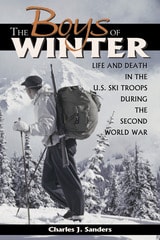
The Boys of Winter
Life and Death in the U.S. Ski Troops During the Second World WarCharles J. Sanders
University Press of Colorado, 2005
The Boys of Winter tells the true story of three young American ski champions and their brutal, heroic, and fateful transformation from athletes to infantrymen with the 10th Mountain Division. Charles J. Sanders's fast-paced narrative draws on dozens of interviews and extensive research to trace these boys' lives from childhood to championships and from training at Mount Rainier and in the Colorado Rockies to battling against the Nazis.
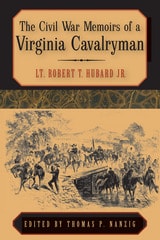
The Civil War Memoirs of a Virginia Cavalryman
Lt. Robert T. Hubard Jr., Edited by Thomas P. Nanzig
University of Alabama Press, 2007
Robert Hubard was an enlisted man and officer of the 3rd Virginia Cavalry in the Army of Northern Virginia (CSA) from 1861 through 1865. He wrote his memoir during an extended convalescence spent at his father’s Virginia plantation after being wounded at the battle of Five Forks on April 1, 1865. Hubard served under such Confederate luminaries as Jeb Stuart, Fitz Lee, Wade Hampton, and Thomas L. Rosser. He and his unit fought at the battles of Antietam, on the Chambersburg Raid, in the Shenandoah Valley, at Fredericksburg, Kelly’s Ford, Chancellorsville, Gettysburg, Bristoe Station, and down into Virginia from the Wilderness to nearly the end of the war at Five Forks.
Hubard was like many of his class and station a son of privilege and may have felt that his service was an act of noblesse oblige. Unlike many of his contemporaries, however, he was a keen observer and a writer of unusual grace, clarity, humor, and intelligence. The editor has fleshed out his memoir by judicious use of Hubard’s own wartime letters, which not only fill in gaps but permit the reader to see developments in the writer’s thinking after the passage of time. Because he was a participant in events of high drama and endured the quotidian life of a soldier, Hubard’s memoir should be of value to both scholars and avocational readers.

The Complete Civil War Journal and Selected Letters of Thomas Wentworth Higginson
Thomas Wentworth Higginson
University of Chicago Press, 1999
So wrote Thomas Wentworth Higginson about his role in one of the most compelling and fascinating episodes in the history of the United States. As the colonel of the first regiment of black men in the Union army during the Civil War, Higginson was an early, articulate, and powerful crusader for civil rights, and his journal and letters, collected for the first time in this volume, present some of the most extraordinary documents of the Civil War.
Higginson was a politically engaged intellectual at the forefront of radical antislavery, labor, and feminist causes. Born in 1823 to a formerly wealthy but still prominent Brahmin family, he became one of America's leading social activists and a prominent writer, minister, and reformer. With the publication in 1869 of his classic Army Life in a Black Regiment, which drew on this journal, Higginson became one of the most important chroniclers of the Civil War. The Complete Civil War Journal and Selected Letters of Thomas Wentworth Higginson is the first comprehensive edition of his journal. Sensitively and thoroughly annotated by Christopher Looby and supplemented by a large selection of Higginson's wartime letters, this volume offers the most vivid and intimate picture of the radical interracial solidarity brought about by the transformative experience of the army camp and of Civil War life.
"The immediacy of Higginson's reflections, as well as their sharp insights, make this journal both distinctive and enduringly compelling . . . . Higginson's vivid texts can once again educate, gratify and delight readers."—Publishers Weekly
"This volume will enrich our understanding of the transformations that emancipation and war wrought."—Library Journal
The Constructed Mennonite
History, Memory, and the Second World WarHans Werner
University of Manitoba Press, 2013
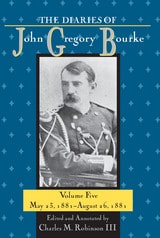
The Diaries of John Gregory Bourke, Volume 5
May 23, 1881--August 26, 1881Charles M. Robinson III
University of North Texas Press, 2003

The Drums of the 47th
Robert J. Burdette
University of Illinois Press, 2000
From Peoria to Corinth, from Corinth to Vicksburg, up the Red River country, down to Mobile and Fort Blakely, and back to Tupelo and Selma, the 47th marched three thousand miles during Burdette's tour, from March 1862 to December 1864.
In a literate voice rare in war memoirs, Burdette speaks of comradeship built and tested, the noise and confusion of the battlefield, the conflicting feelings of witnessing a military execution. Both nostalgic and piercingly immediate, his remembrances evoke the sights, sounds, smells, and above all the inner feelings stirred up by war, from exuberance to terror and from patriotic fervor to compassion for a fallen enemy.
Originally published--on the eve of another great conflict--in 1914, The Drums of the 47th is a moving depiction of the inner life of the common soldier. Like Stephen Crane's The Red Badge of Courage, Burdette's book puts a human face on the war and his words speak to all who have served or imagined serving under fire. The introduction by John E. Hallwas provides a biographical sketch of Burdette and a commentary on his engaging Civil War memoir.
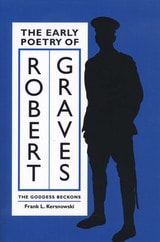
The Early Poetry of Robert Graves
The Goddess BeckonsBy Frank L. Kersnowski
University of Texas Press, 2002
Like many men of his generation, poet Robert Graves was indelibly marked by his experience of trench warfare in World War I. The horrific battles in which he fought and his guilt over surviving when so many perished left Graves shell-shocked and disoriented, desperately seeking a way to bridge the rupture between his conventional upbringing and the uncertainties of postwar British society.
In this study of Graves's early poetry, Frank Kersnowski explores how his war neurosis opened a door into the unconscious for Graves and led him to reject the essential components of the Western idea of reality—reason and predictability. In particular, Kersnowski traces the emergence in Graves's early poems of a figure he later called "The White Goddess," a being at once terrifying and glorious, who sustains life and inspires poetry. Drawing on interviews with Graves's family, as well as unpublished correspondence and drafts of poems, Kersnowski argues that Graves actually experienced the White Goddess as a real being and that his life as a poet was driven by the purpose of celebrating and explaining this deity and her matriarchy.
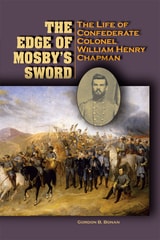
The Edge of Mosby’s Sword
The Life of Confederate Colonel William Henry ChapmanGordon B. Bonan
Southern Illinois University Press, 2009
The Edge of Mosby’s Sword is the first scholarly volume to delve into the story of one of John Singleton Mosby’s most trusted and respected officers, Colonel William Henry Chapman. Presenting both military and personal perspectives of Chapman’s life, Gordon B. Bonan offers an in-depth understanding of a man transformed by the shattering of his nation. This painstakingly researched account exposes a soldier and patriot whose convictions compelled him to battle fiercely for Southern independence; whose quest for greatness soured when faced with the brutal realities of warfare; and who sought to heal his wounded nation when the guns of war were silenced.
Born into a wealthy slave-owning family, Chapman was a student of the fiery secessionist rhetoric of antebellum Virginia who eagerly sought glory and adventure on the battlefields of the Civil War. Bonan traces Chapman’s evolution from an impassioned student at the University of Virginia to an experienced warrior and leader, providing new insight into the officer’s numerous military accomplishments. Explored here are Chapman’s previously overlooked endeavors as a student warrior, leader of the Dixie Artillery, and as second-in-command to Mosby, including his participation in the capture of Harpers Ferry, the battering of Union forces at Second Manassas, and his ferocious raids during the 1864 Shenandoah Valley campaign. Bonan reveals fresh perspectives on the intrepid maneuvers of Mosby’s Rangers, the hardships of war, and Chapman’s crucial role as the right hand of the “Gray Ghost.” But while Mosby recognized him for his bravery and daring, the fame Chapman sought always eluded him. Instead, with his honors and successes came disillusionment and sorrow, as he watched comrades and civilians alike succumb to the terrible toll of the war.
The end of the struggle between North and South saw Chapman accept defeat with dignity, leading the Rangers to their official surrender and parole at Winchester. With the horrors of the war behind him, he quickly moved to embrace the rebuilding of his country, joining the Republican party and beginning a forty-two-year career at the IRS enforcing Federal law throughout the South. In the end, Chapman’s life is a study in contradictions: nationalism and reconciliation; slavery and liberty; vengeance and chivalry.
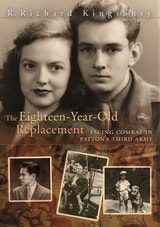
The Eighteen-Year-Old Replacement
Facing Combat in Patton's Third ArmyR. Richard Kingsbury
University of Missouri Press, 2008
When the United States entered the Second World War, eighteen-year-old enlistees were routinely assigned temporary duties and not sent into battle until they turned nineteen. But as the fighting dragged on, America was eventually forced to draft younger men into combat to replace wounded troops—and following the Battle of the Bulge, more than 300,000 eighteen-year-olds were sent as replacements to the army’s decimated divisions.
In The Eighteen-Year-Old Replacement, Richard Kingsbury brings an often-overlooked perspective to the annals of World War II. Torn from an ordinary teenager’s life in the Midwest, young Dick was drafted six weeks after D-Day and rushed with other eighteen-year-olds to the Siegfried Line to bolster Patton’s 94th Infantry Division. His reminiscence provides a moving, diarylike account of what he endured both physically and emotionally—and tells how he went from boyhood to manhood almost overnight.
In prose that is both succinct and evocative, Kingsbury recounts his experiences as a rifleman during the final bloody battles in Germany, giving readers a real feel for what combat was like for a raw recruit. He recalls his first night in a foxhole on the front line and the “unbelievable luxury” of sleeping in a barn’s hayloft. He relives freezing cold at the Bulge, which permanently damaged his legs, and the pounding of enemy artillery during Patton’s breakthrough of the German West Wall, which affected his hearing for life.
More poignantly, Kingsbury shares his anxieties over killing—as well as the distinct possibility of being killed as Wehrmacht tanks mercilessly blasted individual foxholes at Bannholz Woods. He vividly recalls Patton’s attack on Ludwigshafen, on the west bank of the Rhine, where he took a German bullet in his chest—and where three of the six newly arrived eighteen-year-olds were killed.
Interspersed with the accounts of battle are letters between Dick and Mary Jo, his sweetheart back home, capturing the blossoming of romance that transcended both distance and bloodshed. His book casts a new light on war—and courtship—in an era when boys were rushed from the home front to the front lines. By showing how crucial the contribution of these young men was to the war effort, this book gives the eighteen-year-old replacements the recognition they have long deserved.
The Good Men Who Won the War
Army of the Cumberland Veterans and Emancipation MemoryRobert E. Hunt
University of Alabama Press, 2010
Robert Hunt examines how Union veterans of the Army of the Cumberland employed the extinction of slavery in the trans-Appalachian South in their memory of the Civil War. Hunt argues that rather than ignoring or belittling emancipation, it became central to veterans’ retrospective understanding of what the war, and their service in it, was all about. The Army of the Cumberland is particularly useful as a subject for this examination because it invaded the South deeply, encountering numerous ex-slaves as fugitives, refugees, laborers on military projects, and new recruits. At the same time, the Cumberlanders were mostly Illinoisans, Ohioans, Indianans, and, significantly, Kentucky Unionists, all from areas suspicious of abolition before the war.
Hunt argues that the collapse of slavery in the trans-Appalachian theater of the Civil War can be usefully understood by exploring the post-war memories of this group of Union veterans. He contends that rather than remembering the war as a crusade against the evils of slavery, the veterans of the Army of the Cumberland saw the end of slavery as a by-product of the necessary defeat of the planter aristocracy that had sundered the Union; a good and necessary outcome, but not necessarily an assertion of equality between the races.
Some of the most provocative discussions about the Civil War in current scholarship are concerned with how memory of the war was used by both the North and the South in Reconstruction, redeemer politics, the imposition of segregation, and the Spanish-American War. This work demonstrates that both the collapse of slavery and the economic and social post-War experience convinced these veterans that they had participated in the construction of the United States as a world power, built on the victory won against corrupt Southern plutocrats who had impeded the rightful development of the country.
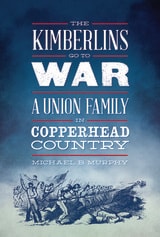
The Kimberlins Go to War
A Union Family in Copperhead CountryMichael B. Murphy
Indiana Historical Society Press, 2016
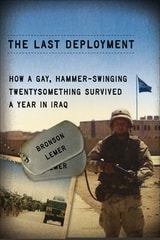
The Last Deployment
How a Gay, Hammer-Swinging Twentysomething Survived a Year in IraqBronson Lemer
University of Wisconsin Press, 2011
In 2003, after serving five and a half years as a carpenter in a North Dakota National Guard engineer unit, Bronson Lemer was ready to leave the military behind. But six months short of completing his commitment to the army, Lemer was deployed on a yearlong tour of duty to Iraq. Leaving college life behind in the Midwest, he yearns for a lost love and quietly dreams of a future as an openly gay man outside the military. He discovers that his father’s lifelong example of silent strength has taught him much about being a man, and these lessons help him survive in a war zone and to conceal his sexuality, as he is required to do by the U.S. military.
Finalist, Minnesota Book Awards
Finalist, Over the Rainbow Selection, American Library Association
Amazon Top Ten 10 Gay & Lesbian Books of 2011
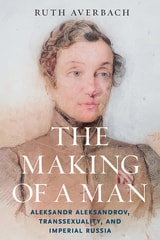
The Making of a Man
Aleksandr Aleksandrov, Transsexuality, and Imperial RussiaRuth Averbach
University of Wisconsin Press, 2026
Aleksandr Aleksandrov was an author and soldier in service of the Russian tsar, active in the Prussian theater of the War of the Fourth Coalition (1806–7) and in the Napoleonic Wars. In scholarship, he is better known by his birth name, Nadezhda Andreevna Durova, and often referred to with the female pronouns bestowed upon him at birth. In this first book-length study of Aleksandrov, Ruth Averbach argues that we should understand this celebrated figure of Imperial Russia, whose sex was legally changed by Tsar Aleksandr I, simply as a man, one whose masculinity was intimately connected to the imperialist cause and Russian nationalism.
For the majority of his life, Aleksandrov lived, wrote, and fought as a man and was recognized as such by most of his contemporaries. This contradicts the dominant position in especially Western feminist scholarship, which understands “Durova” either as a woman so patriotic that she dressed as a man to fight Russia’s wars or as a woman so frustrated by gender restrictions that she dramatically sought to cast them aside. Averbach instead asserts that we should take Aleksandrov at his word and accept his transition as genuine. Doing so allows for fresh interpretations of both his autobiographical writings and his works of fiction, interpretations that Averbach deftly shows have salience not just for a single man’s life but also for how we understand masculinity, imperialism, and nationalism in nineteenth-century Russia more broadly.
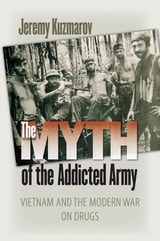
The Myth of the Addicted Army
Vietnam and the Modern War on DrugsJeremy Kuzmarov
University of Massachusetts Press, 2009
The image of the drug-addicted American soldier—disheveled, glassy-eyed, his uniform adorned with slogans of antiwar dissent—has long been associated with the Vietnam War. More specifically, it has persisted as an explanation for the U.S. defeat, the symbol of a demoralized army incapable of carrying out its military mission.
Yet as Jeremy Kuzmarov documents in this deeply researched book, popular assumptions about drug use in Vietnam are based more on myth than fact. Not only was alcohol the intoxicant of choice for most GIs, but the prevalence of other drugs varied enormously. Although marijuana use among troops increased over the course of the war, for the most part it remained confined to rear areas, and the use of highly addictive drugs like heroin was never as widespread as many imagined.
Like other cultural myths that emerged from the war, the concept of an addicted army was first advanced by war hawks seeking a scapegoat for the failure of U.S. policies in Vietnam, in this case one that could be linked to “permissive” liberal social policies and the excesses of the counterculture. But conservatives were not alone. Ironically, Kuzmarov shows, elements of the antiwar movement also promoted the myth, largely because of a presumed alliance between Asian drug traffickers and the Central Intelligence Agency. While this claim was not without foundation, as new archival evidence confirms, the left exaggerated the scope of addiction for its own political purposes.
Exploiting bipartisan concern over the perceived “drug crisis,” the Nixon administration in the early 1970s launched a bold new program of federal antidrug measures, especially in the international realm. Initially, the “War on Drugs” helped divert attention away from the failed quest for “peace with honor” in Southeast Asia. But once institutionalized, it continued to influence political discourse as well as U.S. drug policy in the decades that followed.
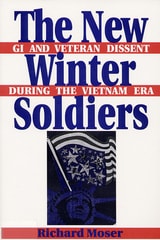
The New Winter Soldiers
GI and Veteran Dissent During the Vietnam EraMoser, Richard
Rutgers University Press, 1996
Richard Moser uses interviews and personal stories of Vietnam veterans to offer a fundamentally new interpretation of the Vietnam War and the antiwar movement. Although the Vietnam War was the most important conflict of recent American history, its decisive battle was not fought in the jungles of Vietnam, or even in the streets of the United States, but rather in the hearts and minds of American soldiers. To a degree unprecedented in American history, soldiers and veterans acted to oppose the very war they waged. Tens of thousands of soldiers and veterans engaged in desperate conflicts with their superiors and opposed the war through peaceful protest, creating a mass movement of dissident organizations and underground newspapers.
Moser shows how the antiwar soldiers lived out the long tradition of the citizen soldier first created in the American Revolution and Civil War. Unlike those great upheavals of the past, the Vietnam War offered no way to fulfill the citizen-soldier's struggle for freedom and justice. Rather than abandoning such ideals, however, tens of thousands abandoned the war effort and instead fulfilled their heroic expectations in the movements for peace and justice. According to Moser, this transformation of warriors into peacemakers is the most important recent development of our military culture.
The struggle for peace took these new winter soldiers into America rather than away from it. Collectively these men and women discovered the continuing potential of American culture to advance the values of freedom, equality, and justice on which the nation was founded.
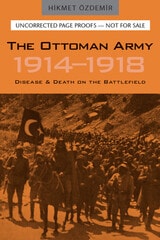
The Ottoman Army 1914 - 1918
Disease and Death on the BattlefieldHikmet Ozdemir
University of Utah Press, 2008
What kind of relationship exists between wars and epidemics? It is widely held that epidemics affected the outcomes of many wars and, until World War II, more victims of war died of disease than of battle wounds. Many disease vectors are present in times of conflict, including mass movements of people across borders and increased contact between persons of different geographic regions, yet disease is rarely treated in depth in histories of war.
Hikmet Özdemir’s The Ottoman Army, 1914–1918 provides extensive documentation of disease and death across the Ottoman Empire during World War I, when epidemic diseases annihilated armies and caused civilians to perish en masse. Drawing on hospital records and information on regional disease prevalence, Özdemir examines the effects that disease and epidemic had on the outcome of the war.
The information on disease mortality explains much that has never been properly understood about wartime events and government actions, events that only begin to make sense when the disease factor is considered. Rich in detail, this is an extremely valuable book that illuminates a facet of the war that has not been adequately considered until now.
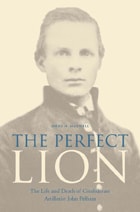
The Perfect Lion
The Life and Death of Confederate Artillerist John PelhamJerry H. Maxwell
University of Alabama Press, 2011
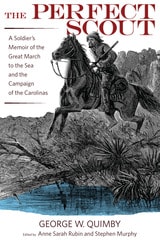
The Perfect Scout
A Soldier’s Memoir of the Great March to the Sea and the Campaign of the CarolinasGeorge W. Quimby, edited by Anne Sarah Rubin and Stephen Murphy
University of Alabama Press, 2018
After his father-in-law passed away, Stephen Murphy found, among the voluminous papers left behind, an ancestral memoir. Murphy quickly became fascinated with the recollections of George W. Quimby (1842–1926), a Union soldier and scout for General William Tecumseh Sherman.
Before Quimby became a part of Sherman’s March, he was held captive by Nathan Bedford Forrest’s troops in western Tennessee. He joined Sherman’s Army in Vicksburg, destroying railroads and bridges across Mississippi and Alabama on the way to Georgia. As the notorious march began, Quimby became a scout and no longer experienced war as his fellow soldiers did. Scouts moved ahead of the troops to anticipate opportunities and dangers. The rank and file were instructed to be seen and feared, while scouts were required to be invisible and stealthy. This memoir offers the rare perspective of a Union soldier who ventured into Confederate territory and sent intelligence to Sherman.
Written around 1901 in the wake of the Spanish American War, Quimby’s memoir shows no desire to settle old scores. He’s a natural storyteller, keeping his audience’s attention with tales of drunken frolics and narrow escapes, providing a memoir that reads more like an adventure novel. He gives a new twist to the familiar stories of Sherman’s March, reminding readers that while the Union soldiers faced few full-scale battles, the campaign was still quite dangerous.
More than a chronicle of day-to-day battles and marches, The Perfect Scout is more episodic and includes such additional elements as the story of how he met his wife and close encounters with the enemy. Offering a full picture of the war, Quimby writes not only about his adventures as one of Sherman’s scouts, but also about the suffering of the civilians caught in the war. He provides personal insight into some of the war’s historic events and paints a vivid picture of the devastation wreaked upon the South that includes destroyed crops and homes and a shattered economy. He also tells of the many acts of kindness he received from Southerners, including women and African Americans, who helped him and his fellow scouts by providing food, shelter, or information.
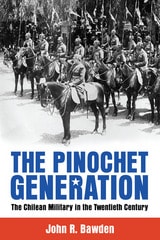
The Pinochet Generation
The Chilean Military in the Twentieth CenturyJohn R. Bawden
University of Alabama Press, 2016
Understanding the military generation that transformed modern Chile.
Chilean soldiers in the twentieth century appear in most historical accounts, if they appear at all, as decontextualized figures or simply as a single man: Augusto Pinochet. In his incisive study The Pinochet Generation: The Chilean Military in the Twentieth Century, John R. Bawden provides compelling new insights into the era and posits that Pinochet and his men were responsible for two major transformations in Chile’s constitution as well as the political and economic effects that followed.
Determined to refocus what he sees as a “decontextualized paucity” of historical information on Chile’s armed forces, Bawden offers a new perspective to explain why the military overthrew the government in 1973 as well as why and how Chile slowly transitioned back to a democracy at the end of the 1980s. Standing apart from other views, Bawden insists that the Chilean military’s indigenous traditions and customs did more than foreign influences to mold their beliefs and behavior leading up to the 1973 coup of Salvador Allende.
Drawing from defense publications, testimonial literature, and archival materials in both the United States and Chile, The Pinochet Generation characterizes the lens through which Chilean officers saw the world, their own actions, and their place in national history. This thorough analysis of the Chilean services’ history, education, values, and worldview shows how this military culture shaped Chilean thinking and behavior, shedding light on the distinctive qualities of Chile’s armed forces, the military’s decision to depose Allende, and the Pinochet dictatorship’s resilience, repressiveness, and durability.
Bawden’s account of Chile’s vast and complex military history of the twentieth century will appeal to political scientists, historians, faculty and graduate students interested in Latin America and its armed forces, students of US–Latin American diplomacy, and those interested in issues of human rights.
The Promise Keepers
Servants, Soldiers, and Godly MenBartkowski, John P
Rutgers University Press, 2004
“Remember the Promise Keepers?” queries a recent media story on the evangelical men’s movement that captured America’s imagination and generated intense controversy during much of the 1990s. This group of Christian men, who promoted adherence to a strict code of conduct that masculinized conservative religious and social values, now evokes little more than a hazy memory of football stadiums teeming with men whose tear-stained faces and clasped arms signaled spiritual transformation. What happened? What factors contributed to their demise? What broader insights can be gleaned from the rapid rise and fall of the movement?
John P. Bartkowski has written the first account scrutinizing the turbulent forces that contributed to the group’s wild popularity, declining fortunes, and current efforts to reinvent itself. He provides a broad and balanced portrait of the movement while evaluating its impact on the landscape of American religion. Bartkowski argues that there are many insights to be gained about the changing contours of American religion, culture, and social life through a study of the Promise Keepers. By carefully examining their character and contagious appeal, Bartkowski provides new insights about evangelicalism, gender, family, therapeutic culture, sport, and multiculturalism.
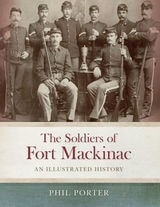
The Soldiers of Fort Mackinac
An Illustrated HistoryPhil Porter
Michigan State University Press, 2018
The Spirits of Bad Men Made Perfect
The Life and Diary of Confederate Artillerist William Ellis JonesConstance Hall Jones
Southern Illinois University Press, 2020
In 1865 Jones returned to his prewar printing trade in Richmond, and his lasting reputation stems from his namesake publishing company’s role in the creation and dissemination of much of the Lost Cause ideology. Unlike the pro-Confederate books and pamphlets Jones published—primary among them the Southern Historical Society Papers—his diary shows the mindset of an unenthusiastic soldier. In a model of contextualization, Constance Hall Jones shows how her ancestor came to embrace an uncritical veneration of the army’s leadership and to promulgate a mythology created by veterans and their descendants who refused to face the amorality of their cause.
Jones brackets the soldier’s diary with rich, biographical detail, profiling his friends and relatives and providing insight into his childhood and post-war years. In doing so, she offers one of the first serious investigations into the experience of a Welsh immigrant family loyal to the Confederacy and makes a significant contribution to our understanding of Civil War–era Richmond and the nineteenth-century publishing industry. Invitingly written, The Spirits of Bad Men Made Perfect is an engaging life-and-times story that will appeal to historians and general readers alike.
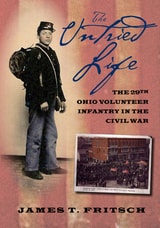
The Untried Life
The Twenty-Ninth Ohio Volunteer Infantry in the Civil WarJames T. Fritsch
Ohio University Press, 2012
Told in unflinching detail, this is the story of the Twenty-Ninth Ohio Volunteer Infantry, also known as the Giddings Regiment or the Abolition Regiment, after its founder, radical abolitionist Congressman J. R. Giddings. The men who enlisted in the Twenty-Ninth OVI were, according to its lore, handpicked to ensure each was as pure in his antislavery beliefs as its founder. Whether these soldiers would fight harder than other soldiers, and whether the people of their hometowns would remain devoted to the ideals of the regiment, were questions that could only be tested by the experiment of war.
The Untried Life is the story of these men from their very first regimental formation in a county fairground to the devastation of Gettysburg and the march to Atlanta and back again, enduring disease and Confederate prisons. It brings to vivid life the comradeship and loneliness that pervaded their days on the march. Dozens of unforgettable characters emerge, animated by their own letters and diaries: Corporal Nathan Parmenter, whose modest upbringing belies the eloquence of his writings; Colonel Lewis Buckley, one of the Twenty-Ninth’s most charismatic officers; and Chaplain Lyman Ames, whose care of the sick and wounded challenged his spiritual beliefs.
The Untried Life shows how the common soldier lived—his entertainments, methods of cooking, medical treatment, and struggle to maintain family connections—and separates the facts from the mythology created in the decades after the war.
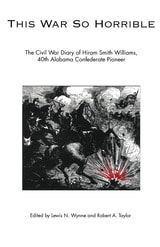
This War So Horrible
The Civil War Diary of Hiram Smith Williams, 40th Alabama Confederate PioneerHiram Smith Williams
University of Alabama Press, 1993
The Civil War diary of Hiram Smith Williams is extremely unusual. A carriage maker and native of New Jersey, Williams only arrived in the Deep South in 1959 and yet enlisted in the Confederate Army. As a middle-class craftsman, he represented neither wealthy Southern planters nor yeoman farmers. Part of the 40th Alabama Volunteer Regiment, he was first in Mobile, where he attempted to transfer to the CSA Navy. Failing that, he went with his regiment to Atlanta to engage in the great battle there.
A careful writer, Williams paid the same attention to his composition as he did to his carriages. Unlike many Civil War veterans, he never revised his diary to embellish his record or heroism. Prized by historians both for providing an unique point of view as well as an exceptionally articulate narrative, Williams' diary is an important addition to any Civil War library.
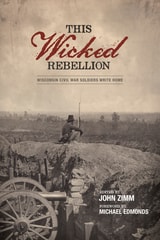
This Wicked Rebellion
Wisconsin Civil War Soldiers Write HomeJohn Zimm
Wisconsin Historical Society Press, 2012
Over one hundred and fifty years after it began, the Civil War still fascinates us—the vast armies marching to war, iconic leaders like Abraham Lincoln and Robert E. Lee, the drama of a nation divided. But the Civil War was also about individuals, the hundreds of thousands of ordinary men and boys who fought and died on either side and the families and friends left at home.
This Wicked Rebellion: Wisconsin Civil War Soldiers Write Home tells this other side of the story. Drawing from over 11,000 letters in the Wisconsin Historical Society’s Civil War collection, it gives a unique and intimate glimpse of the men and women who took part in the War for the Union. Follow Wisconsin soldiers as they sign up or get drafted, endure drill and picket duty, and get their first experiences of battle. Join them as they fight desperation and fear, encounter the brutality of slavery, and struggle with the reasons for war.
From impressions of army life and the South to the hardships of disease and battle, these letters tell the story of the war through the eyes and pens of those who fought in it. This Wicked Rebellion brings to life the heroism and heartache, mayhem and misery of the Civil War, and the powerful role Wisconsin played in it.