112 books match the query 'Spirituality' and 19 start with t
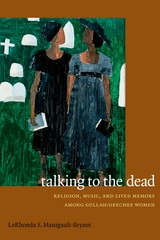
cover of Talking to the Dead: Religion, Music, and Lived Memory among Gullah/Geechee Women

Talking to the Dead

Religion, Music, and Lived Memory among Gullah/Geechee Women

LeRhonda S. Manigault-Bryant

Duke University Press, 2014

Talking to the Dead is an ethnography of seven Gullah/Geechee women from the South Carolina lowcountry. These women communicate with their ancestors through dreams, prayer, and visions and traditional crafts and customs, such as storytelling, basket making, and ecstatic singing in their churches. Like other Gullah/Geechee women of the South Carolina and Georgia coasts, these women, through their active communication with the deceased, make choices and receive guidance about how to live out their faith and engage with the living. LeRhonda S. Manigault-Bryant emphasizes that this communication affirms the women's spiritual faith—which seamlessly integrates Christian and folk traditions—and reinforces their position as powerful culture keepers within Gullah/Geechee society. By looking in depth at this long-standing spiritual practice, Manigault-Bryant highlights the subversive ingenuity that lowcountry inhabitants use to thrive spiritually and to maintain a sense of continuity with the past.
[more]
cover of The Art of Medieval Technology: Images of Noah the Shipbuilder

The Art of Medieval Technology

Images of Noah the Shipbuilder

Unger, Richard W.

Rutgers University Press, 1991

.
[more]
cover of The Bonds of Love: St. Peter Damian's Theology of the Spiritual Life

The Bonds of Love

St. Peter Damian's Theology of the Spiritual Life

Gordon Mursell

Catholic University of America Press, 2022
St Peter Damian (1007-1072) is an exceptional example of a paradox that is found in many saints and thinkers through the ages (St Jerome, St Bernard, St Bridget of Sweden, St Teresa of Avila and Thomas Merton come to mind) – of a lifelong tension between two competing vocations: the call to solitude and holiness and the call to prophetic social and ecclesial engagement. The author has explored this tension throughout his adult life, both in his published work and in his own life as an Episcopalian/Anglican priest and later bishop. Damian’s “The Book of ‘The Lord be with you’” is a profound exploration of the spirituality of solitude, whereas his “Book of Gomorrah” is an intense attack on clerical sexual abuse which has helped to give Damian a new recent prominence in the light of the huge challenges facing the Church today. The Bonds of Love shows that the paradox at the heart of Damian's life and everything he cared about was rooted in the remarkable theology of love which finds expression across the whole of his work and gives it both coherence and dynamism. His life and spirituality are of far more than academic interest, and will make a major contribution, not only to those committed to ecclesial reform and renewal, but to all who struggle to live with the kind of competing tensions that made St. Peter Damian who he was.
[more]
cover of The Formation of Affectivity: A Christian Approach

The Formation of Affectivity

A Christian Approach

Francisco Insa

St. Augustine's Press, 2023

The need and desire for the integral development of the person in his or her somatic, psychological and spiritual dimensions is growing faster than it can be answered. Ancient and classical wisdom gives us much to ponder and apply, but there is still much more to be given human life in the joy and integrity offered by Christianity. When one speaks of the meaningfulness and fruitfulness of life, there is an apostolic quality that makes of the beauty of a single individual a cause of fruitfulness in others as well. Yet many who are entrusted with the formation and care of souls have little at their disposal to foster or explain this.

The present book aims to respond to this need by addressing the consonance and individuality in human nature, and the ways in which ordering in personality and psychology are
not inhibiting, but potentially liberating and influential. Francisco Insa draws from his medical and theological background, which includes both clinical and pastoral experience, to address all those responsible for the formation of others––including parents, teachers, priests, spiritual directors––and enables them to confront their roles as formators with greater insight and confidence. Insa's guidance through the human personality and its various expressions, the education of the character, growth in maturity, the particularity of each stage of the life cycle, sexuality and celibacy, chastity in the context of post-modern life, and mental illnesses is a landmark presentation of scientific rigor matched with practical application. As often as one says, "My situation is unique,"; the author here responds: "Yes, but special even more than you can express"; Insa is forthright about what can never be lost in human beings, but only recovered when the head and heart are aligned and formed properly.

For as much as this book may help the reader understand himself, it will also render him better understood by others. The Christian approach to the formation of affectivity, as Insa shows, is indispensable to deep and enduring human development, and it is often the only way to identify and mediate interior dissonance and confusion.
[more]
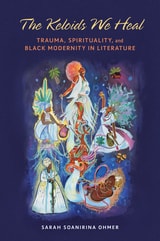
cover of The Keloids We Heal: Trauma, Spirituality, and Black Modernity in Literature

The Keloids We Heal

Trauma, Spirituality, and Black Modernity in Literature

Sarah Soanirina Ohmer

University of Illinois Press, 2025

Women of colors and a literature written in corporeal and spiritual scars

The corporeal and spiritual healing in literature by women of colors can be seen to redefine modern thought and printed text. Sarah Soanirina Ohmer traces the impact of colonization and enslavement on Black women and Black women’s contributions to colonial, nineteenth, and twentieth century literature in the US, Brazil, and the Caribbean.

Drawing on intersectional analysis, Ohmer focuses on portrayals of trauma and spirituality in works by Toni Morrison, Conceição Evaristo, Maryse Condé, Gloria Anzaldúa, the Quilombhoje poets, and María de los Reyes Castillo. Ohmer compares literature from different countries along four thematic pathways: ghosts, mirrors, naming, and motherhood. Her analysis unlocks the literature’s power to heal through gut-wrenching descriptions of wounds and thrilling passages of hope and liberation. Throughout, Ohmer weaves in her life story as a Black woman as she reflects on how colonialism, racism, sexism, and capitalism have impacted her work, traumas, and faith journey.
[more]
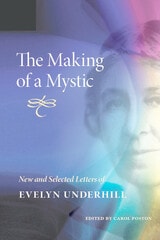
cover of The Making of a Mystic: New and Selected Letters of Evelyn Underhill

The Making of a Mystic

New and Selected Letters of Evelyn Underhill

Evelyn Underhill. Edited by Carol Poston.

University of Illinois Press, 2010

Evelyn Underhill (1875-1941) achieved international fame with the publication of her book Mysticism in 1911. Continuously in print since its original publication, Mysticism remains Underhill's most famous work, but in the course of her long career she published nearly forty books, including three novels and three volumes of poetry, as well as numerous poems in periodicals. She was the religion editor for Spectator, a friend of T. S. Eliot (her influence is visible in his last masterpiece, Four Quartets), and the first woman invited to lecture on theology at Oxford University. Her interest in religion extended beyond her Anglican upbringing to embrace the world's religions and their common spirituality.

In time for the centennial celebration of her classic Mysticism, this volume of Underhill's letters will enable readers and researchers to follow her as she reconciled her beliefs with her daily life. The letters reveal her personal and theological development and clarify the relationships that influenced her life and work. Hardly aloof, she enjoyed the interests, mirth, and compassion of close friendships.

Drawing from collections previously unknown to scholars, The Making of a Mystic shows the range of Evelyn Underhill's mind and interests as well as the immense network of her correspondents, including Sir James Frazier and Nobel Prize laureate Rabindranath Tagore. This substantial selection of Underhill's correspondence demonstrates an exceptional scope, beginning with her earliest letters from boarding school to her mother and extending to a letter written to T. S. Eliot from what was to be her deathbed in London in 1941 as the London Blitz raged around her.

[more]
cover of The Man Who Killed The Deer: A Novel of Pueblo Indian Life

The Man Who Killed The Deer

A Novel of Pueblo Indian Life

Frank Waters

Ohio University Press, 1949

The story of Martiniano, The Man Who Killed the Deer, is a timeless story of Pueblo Indian sin and redemption, and of the conflict between Indian and white laws; written with a poetically charged beauty of style, a purity of conception, and a thorough understanding of Native American values.

[more]
cover of The Monastic In Each of Us: Heart, Mind, Body, Soul and Spirit

The Monastic In Each of Us

Heart, Mind, Body, Soul and Spirit

Tim Vivian

Catholic University of America Press, 2026
The Monastic in Each of Us offers eight chapters on early-monastic themes relevant for spiritual seekers today. In August 2024, at the invitation of Abbot James Wiseman, the author gave seven retreat talks for the brothers at St. Anselm’s Abbey in Washington, D.C., on early-monastic spirituality and its relevance for us today. The revised talks here, with an additional chapter, offer more accessible discussions both for a general non-monastic audience and monastic readers. Chapter 1, “The Desert Fathers and Mothers and the Ascetic Tradition,” offers an introduction to the early monastics and their teachings on asceticism and spirituality. Chapters 2 and 3 cover “Ego and Humility & The Path to Transformation” and “Some Monastic and Universal Virtues.” Chapter 4, “A Fire That Burns Without Consuming,” offers an imagined conversation with Mary Margaret Funk, O.S.B, author of Thoughts Matter: Discovering the Spiritual Tradition, on the importance of early-monastic spirituality for today. Chapters 5 and 6 discuss some major themes: asceticism, sin, the passions, thoughts, and the importance of community. Chapter 7 focuses on Poemen, an early monastic, and the theme of judging to discernment to compassion. The concerns these chapters look at, and the practices given and hope offered are human and still speak to us today. The final chapter offers brief discussions of what the early monastics call the eight “principal thoughts”: gluttony/greed, sexual immorality, love of money, gloominess, anger, acedia, self-importance, and excessive pride. Thoughts, and their discernment, are key in early monasticism, and can be for us. As John Chryssavgis stresses, “our thoughts” can “inhibit us in our relationships with others and with God. Disclosing our thoughts to a ‘physician’ is a step in the direction of trust and community. It is less a way of dealing with the past, than of directing our future.”
[more]
cover of The New Metaphysicals: Spirituality and the American Religious Imagination

The New Metaphysicals

Spirituality and the American Religious Imagination

Courtney Bender

University of Chicago Press, 2010

American spirituality—with its focus on individual meaning, experience, and exploration—is usually thought to be a product of the postmodern era. But, as The New Metaphysicals makes clear, contemporary American spirituality has historic roots in the nineteenth century and a great deal in common with traditional religious movements. To explore this world, Courtney Bender combines research into the history of the movement with fieldwork in Cambridge, Massachusetts—a key site of alternative religious inquiry from Emerson and William James to today. Through her ethnographic analysis, Bender discovers that a focus on the new, on progress, and on the way spiritual beliefs intersect with science obscures the historical roots of spirituality from its practitioners and those who study it alike—and shape an enduring set of modern religious possibilities in the process.
[more]
cover of The Old Testament and Christian Spirituality: Theoretical and Practical Essays from a South African P

The Old Testament and Christian Spirituality

Theoretical and Practical Essays from a South African P

Christo Lombaard

SBL Press, 2012

An engaging anthology that deals with both theory and practice

The emerging discipline of biblical spirituality considers how faith finds expression within the biblical texts and how modern expressions of faith interact with those texts. This volume represents Christo Lombaard’s reflective, analytical, and exegetical contributions to the field in order to explore how biblical texts mediate faith, both ancient and contemporary. It reflects on aspects of the interaction of faith and Scripture, critically approaching both dimensions.

Features:

  • Seven previously published papers drawn predominately from South African journals
  • Explorations of how biblical texts mediate faith
  • Close examination of the discipline of biblical spirituality as part of spirituality studies

[more]
cover of The Poems of St. John of the Cross

The Poems of St. John of the Cross

St. John of the Cross

University of Chicago Press, 1979

San Juan de la Cruz, the great sixteenth-century Spanish mystic, is regarded by many as Spain's finest poet. Passionate, ecstatic, and spiritual, his poems are a blend of exquisite lyricism and profound mystical thought. In The Poems of St. John of the Cross John Frederick Nims presents his superlative translation of the complete poems, re-creating the religious fervor of St. John's art.

This dual-language edition makes available the original Spanish from the Codex of Sanlúcon de Barrameda with facing English translations. The work concludes with two essays—a critique of the poetry and a short piece on the Spanish text that appears alongside the translation—as well as brief notes on the individual poems.
[more]
cover of The Soul of the Helper: Seven Stages to Seeing the Sacred within Yourself So You Can See It in Others

The Soul of the Helper

Seven Stages to Seeing the Sacred within Yourself So You Can See It in Others

Holly K. Oxhandler

Templeton Press, 2025

There are many kinds of helpers in our world, the caregivers among us. They are the social workers who serve the vulnerable, the nurses and doctors who treat the ill, the teachers who instruct the young, the first responders who rescue the imperiled, the faith leaders who comfort the congregation, the volunteers who support the community. And whether or not it is our professional calling, each of us is likely to serve as a caregiver at some point in our lives, as a parent raising a child, for instance, or as a loved one caring for an aging relative. These and many other efforts to serve are among the most noble pursuits we can imagine, but they come with a danger worth recognizing. 

In their devotion to the well-being of others, caregivers routinely put their own well-being  last and can unintentionally burn themselves out physically, emotionally, and spiritually. Their self-neglect, paired alongside a deep desire to help others, has the potential to stir up feelings of anger and resentment, leading to a sense of guilt and shame. They often believe that if they were to grant themselves any rest or grace, they would be at risk of failing in their duty. 

In The Soul of the Helper, Dr. Holly K. Oxhandler shows caregivers and fellow helpers a more self-compassionate way to cope with their overwhelming responsibilities and to attend to their own needs, particularly when it comes to their mental health and spiritual journey. She invites them to pause and realize that if they let their personal resources run dry, they cannot possibly care for others as fully as they wish. In fact, their efforts are likely to cause more harm than good. 

With a background in spiritually-integrated mental health, Dr. Oxhandler teaches helpers a seven-step process to slow down and reconnect with the stillness within themselves. It is in this space of stillness that Oxhandler guides helpers to reconnect with the “sacred spark” within their soul. By allowing themselves to enter that stillness, caregivers will recognize that they, too, are worthy of care. And with that realization, they will see anew the sacred spark that dwells inside everyone else, especially within those they’re helping.

As a social worker, researcher, and person of faith, Dr. Oxhandler writes in a warm and welcoming style, shares many relatable stories, and widens her scope to include believers of all faiths and spiritual traditions. Her book is for caregivers everywhere who sense the sacred spark within them saying, in effect: “Come to me, all you who are weary and burdened, and I will give you rest.”

[more]
cover of The Stranger, the Tears, the Photograph, the Touch: Divine Presence in Spain and Europe since 1500

The Stranger, the Tears, the Photograph, the Touch

Divine Presence in Spain and Europe since 1500

William A. Christian Jr.

Central European University Press, 2017
This book is an expanded, larger-format, and more highly illustrated version of a smaller book released by CEU Press in 2011. It presents and comments on an extensive set of religious and personal photographs and illustrations that depict people along with divine beings or absent loved ones. First, Christian examines the periodic appearances of Christ-like strangers in the Spanish countryside through the vision of a woman in La Mancha in 1931. Then he considers the long history of images with liquids on them not only for early modern Spain, but also in the United States, Italy and France in the 1940s and 1950s. The third and most extensive chapter addresses the iconography of illustrated depictions of divine and spirit beings in conjunction with humans and how its conventions were incorporated into commercial postcards and personal photographs, culminating in photo montages of families and their absent soldiers in World War I. The fourth theme is new to this edition. It compares the electric moments in Spanish communities when people ritually come into physical contact with saints and with animals, or transform themselves into saints or animals for ritual purposes. Over 50 of the color photographs by Spain's preeminent documentary photographer, Cristina García Rodero, are included.
[more]
cover of The Wilderness Within: American Women Writers and Spiritual Quest

The Wilderness Within

American Women Writers and Spiritual Quest

Kristina K. Groover

University of Arkansas Press, 1999

America’s literature is notably marked by a preoccupation with the spiritual quest. Questing heroes from Huck Finn to Nick Adams have undertaken solitary journeys that pull them away from family and society and into a transformative wilderness that brings them to a new understanding of the spiritual world. Women, however, have not often been portrayed as questing heroes. Bound to home and community, they have been more frequently cast as representatives of that stifling world from which the hero is compelled to flee. Are women in American literary texts thus excluded from spiritual experience?
 
Kristina K. Groover, in examining this question, finds that books by American women writers offer alternative patterns for seeking revelation—patterns which emphasize not solitary journeys, but the sacredness of everyday life. Drawing on the work of feminist theorists and theologians, including Carol Gilligan, Naomi Goldenberg, and Rosemary Ruether, Groover explores the spiritual nature and force of domesticity, community, storytelling, and the garden in the works of such writers as Toni Morrison, Katherine Anne Porter, Kaye Gibbons, and Alice Walker. Ordinary, personal experience in these works becomes a source for spiritual revelation. Wisdom is gained, lessons are learned, and lives are healed not in spite of home and communal ties, but because of them.
 
Thus, American women writers, Groover argues, make alternative literary and spiritual paradigms possible. Similarly, Kristina K. Groover, in this lucid and groundbreaking work, opens up new fields of exploration for any reader interested in women’s spirituality or in the rich, diverse field of American literature.
[more]
cover of Thou Shall Not Die

Thou Shall Not Die

Gabriel Marcel

St. Augustine's Press, 2009
[more]
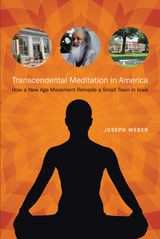
cover of Transcendental Meditation in America: How a New Age Movement Remade a Small Town in Iowa

Transcendental Meditation in America

How a New Age Movement Remade a Small Town in Iowa

Joseph Weber

University of Iowa Press, 2014

The Indian spiritual entrepreneur Maharishi Mahesh Yogi took the West by storm in the 1960s and ’70s, charming Baby Boomers fed up with war and social upheaval with his message of meditation and peace. Heeding his call, two thousand followers moved to tiny Fairfield, Iowa, to set up their own university on the campus of a failed denominational college. Soon, they started a school for prekindergarten through high school, allowing followers to immerse themselves in Transcendental Meditation from toddlerhood through PhDs.

Although Fairfield’s longtime residents were relieved to see that their new neighbors were clean-cut and respectably dressed—not the wild-haired, drug-using hippies they had feared—the newcomers nevertheless quickly began to remake the town. Stores selling exotic goods popped up, TM followers built odd-looking homes that modeled the guru’s rules for peace-inspiring architecture, and the new university knocked down a historic chapel, even as it erected massive golden-domed buildings for meditators. Some newcomers got elected—and others were defeated—when they ran for local and statewide offices. At times, thousands from across the globe visited the small town.

Yet Transcendental Meditation did not always achieve its aims of personal and social tranquility. Suicides and a murder unsettled the meditating community over the years, and some followers were fleeced by con men from their own ranks. Some battled a local farmer over land use and one another over doctrine. Notably, the world has not gotten more peaceful.

Today the guru is dead. His followers are graying, and few of their children are moving into leadership roles. The movement seems rudderless, its financial muscle withering, despite the efforts of high-profile supporters such as filmmaker David Lynch and media magnate Oprah Winfrey. Can TM reinvent itself? And what will be the future of Fairfield itself? By looking closely at the transformation of this small Iowa town, author Joseph Weber assesses the movement’s surprisingly potent effect on Western culture, sketches out its peculiar past, and explores its possible future.
[more]
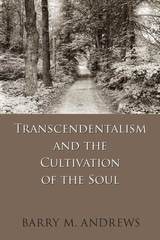
cover of Transcendentalism and the Cultivation of the Soul

Transcendentalism and the Cultivation of the Soul

Barry M. Andrews

University of Massachusetts Press, 2017

American Transcendentalism is often seen as a literary movement—a flowering of works written by New England intellectuals who retreated from society and lived in nature. In Transcendentalism and the Cultivation of the Soul, Barry M. Andrews focuses on a neglected aspect of this well-known group, showing how American Transcendentalists developed rich spiritual practices to nurture their souls and discover the divine. The practices are common and simple—among them, keeping journals, contemplation, walking, reading, simple living, and conversation. In approachable and accessible prose, Andrews demonstrates how Transcendentalism's main thinkers, Emerson, Thoreau, Fuller, and others, pursued rich and rewarding spiritual lives that inspired them to fight for abolition, women's rights, and education reform. In detailing these everyday acts, Andrews uncovers a wealth of spiritual practices that could be particularly valuable today, to spiritual seekers and religious liberals.
[more]
cover of Twelve Films about Love and Heaven

Twelve Films about Love and Heaven

Pete Fraser

St. Augustine's Press, 2023

Peter Fraser revisits stories told onscreen that in different ways all convey clear and ringing truths and touch the deepest human chords. Spanning different time periods and cultures, Twelve Films about Love and Heaven speaks to the hearts of those who cry at old movies and the old abiding Faith, and who believe a well-written book is always worth the time. It is a reminder to both artists and spectators that the pursuit of virtue, and above all in our family roles, is the greatest of adventures and the most glorious of victories. 
[more]
cover of Two-Spirit People: Native American Gender Identity, Sexuality, and Spirituality

Two-Spirit People

Native American Gender Identity, Sexuality, and Spirituality

Edited by Sue-Ellen Jacobs; Wesley Thomas; and Sabine Lang

University of Illinois Press, 1997

This landmark book combines the voices of Native Americans and non-Indians, anthropologists and others, in an exploration of gender and sexuality issues as they relate to lesbian, gay, transgendered, and other "marked" Native Americans. Focusing on the concept of two-spirit people--individuals not necessarily gay or lesbian, transvestite or bisexual, but whose behaviors or beliefs may sometimes be interpreted by others as uncharacteristic of their sex--this book is the first to provide an intimate look at how many two-spirit people feel about themselves, how other Native Americans treat them, and how anthropologists and other scholars interpret them and their cultures.

1997 Winner of the Ruth Benedict Prize for an edited book given by the Society of Lesbian and Gay Anthropologists.
 
[more]