Results by title
270 books match the query 'Technology' and 74 start with t
Technical Knowledge in American Culture
Science, Technology, and Medicine Since the Early 1800sEdited by Hamilton Cravens, Alan I Marcus, and David M. Katzman
University of Alabama Press, 1996
Addresses the relationships between what modern-day experts say to each other and to their constituencies
Technical Knowledge in American Culture is an interdisciplinary volume that brings together leading historians to investigate how science, technology, and medicine have shaped—and been shaped by—American intellectual and cultural traditions since the early nineteenth century. Rather than treating science and technology simply as products of social forces, the contributors examine them as forms of knowledge with their own internal logics, debates, and authority structures. The book asks a central question: how do experts—scientists, engineers, physicians—communicate with one another and with broader audiences, and how does that communication influence American society?
The volume is organized into three major sections, each anchored in a distinct historical moment: Part I: The Rise of Democratic Culture, 1800–1870; Part II: The Age of Hierarchy, 1870–1920; and Part III: Toward an Infinity of Dimensions (20th Century). Across its essays, the book argues that technical knowledge is not just a tool of progress—it is a cultural force shaped by communication, interpretation, and authority. By focusing on case studies rather than sweeping narratives, the volume reveals how expertise operates in practice and how it influences broader debates about science, society, and public trust.
Technocapitalism
A Critical Perspective on Technological Innovation and CorporatismLuis Suarez-Villa
Temple University Press, 2012
In his provocative book Technocapitalism, Luis Suarez-Villa addresses this phenomenon from the perspective of radical political economy and social criticism. Grounded in the premise that relations of power influence how human creativity and technology are exploited by the new corporatism, the author argues that new forms of democratic participation and resistance are needed, if the social pathologies created by this new version of capitalism are to be checked.
Considering the new sectors affected by technocapitalism, such as biotechnology, nanotechnology, bioinformatics, and genomics, Suarez-Villa deciphers the common threads of power and organization that drive their corporatization. These new sectors, and the corporate apparatus set up to extract profit and power through them, are imposing standards, creating business models, molding social governance, and influencing social relations at all levels. The new reality they create is likely to affect most every aspect of human existence, including work, health, life, and nature itself.
Technocrats of the Imagination
Art, Technology, and the Military-Industrial Avant-GardeJohn Beck and Ryan Bishop
Duke University Press, 2020
Technocreep and the Politics of Things Not Seen
Neda Atanasoski and Nassim Parvin, editors
Duke University Press, 2025
Contributors. Neda Atanasoski, Katherine Bennett, Iván Chaar López, Sushmita Chatterjee, Hayri Dortdivanlioglu, Sanaz Haghani, Jacob Hagelberg, Jennifer Hamilton, Antonia Hernández, Marjan Khatibi, Tamara Kneese, Erin McElroy, Vernelle A. A. Noel, Jessica Olivares, Nassim Parvin, Beth Semel, Renee Shelby, Tanja Wiehn
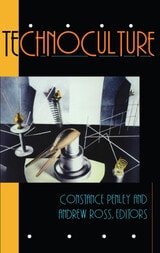
Technoculture
Constance Penley
University of Minnesota Press, 1991
Technological Visions
Hopes And Fears That Shape New TechnologiesMarita Sturken
Temple University Press, 2004
Technology Assessment
A Feminist PerspectiveJanine Marie Morgall
Temple University Press, 1993
How well does technology assessment (TA) relate to women's lives? If women are underrepresented in the long-term research and development process that leads to scientific advancements, how can TA understand technology aimed at women? It can't, claims the author of Technology Assessment: A Feminist Perspective.
A relative new field, TA examines the social aspect of technology and provides information critical to decision making, policy development, safety standards, and avoiding litigation. Until gender analysis is introduced into all assessments of new technologies, Janine Marie Morgall argues, TA can't evaluate technology's impact upon women.
Morgall investigates two areas of technology that affect women's lives: productive (clerical work) and reproductive (health care). Case studies of clerical workers and health care recipients illustrate gender-specify effects of technology ranging from word processors to treatments for infertility. These studies convincingly demonstrate that TA encourages innovations without questioning their effects on women. Issues of dominance, control, and conflicting values emerge from Morgall's feminist perspective and support her call for gender analysis of new technologies.
In the series Labor and Social Change, edited by Paula Rayman and Carmen Sirianni.
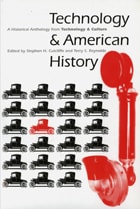
Technology and American History
A Historical Anthology from Technology and CultureEdited by Stephen H. Cutcliffe and Terry S. Reynolds
University of Chicago Press, 1997
Emphasizing a societal context for technology, this carefully organized collection demonstrates both the manner in which cultural, political, and economic forces shape innovation, and the ways that technology has influenced society and shaped its values. Individual essays explore the importance of textile manufacturing in American industrialization, the role of the federal government in regulating new modes of transport, the development of interchangeable parts in production, the process of innovation, the notion of technological systems, and the relationship between technological change and work in the factory, on the farm, and in the home.
The essays were selected to be accessible to both the general reader and the undergraduate student.
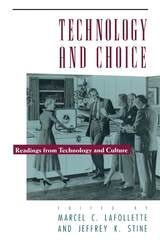
Technology and Choice
Readings from Technology and CultureEdited by Marcel C. LaFollette and Jeffrey K. Stine
University of Chicago Press, 1991
Through historical accounts that span centuries and national boundaries, exploring the complexity of a nuclear power plant and the apparent simplicity of an electrical plug, the contributors to this volume dramatically illustrate the push and pull between technology and society. General topics addressed include:
- Regulation of private industry
- Social acceptance of commercial innovation
- Negative perceptions of the "Technological Age"
- Cultural and artistic features of technology
These essays were originally published in the journal Technology and Culture

Technology and Desire
The Transgressive Art of Moving ImagesEdited by Rania Gaafar and Martin Schulz
Intellect Books, 2014
The spectral realm at the boundaries of images incessantly reveals a desire to see beyond the visible and its medium: screens, frames, public displays, and projection sites in an art context. The impact of new media on art and film has influenced the material histories and performances (be they in theory or practice) of images across the disciplines. Digital technologies have not only shaped post-cinematic media cultures and visual epistemologies, but they are behind a growing shift towards a new realism in theory, art, film, and in the art of the moving image in particular. Technology and Desire examines the performative ontologies of moving images across the genealogies of media and their aesthetic agency in contemporary media and video art, CGI, painting, video games, and installations. Drawing on cultural studies, media and film theory as well as art history to provide exemplary evidence of this shift, this book has as its central theme the question of whether images are predicated upon transgressing the boundaries of their framing—and whether in the course of their existence they develop a life of their own.
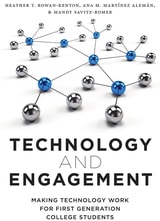
Technology and Engagement
Making Technology Work for First Generation College StudentsRowan-Kenyon, Heather T.
Rutgers University Press, 2018
Technology and Engagement is based on a four-year study of how first generation college students use social media, aimed at improving their transition to and engagement with their university. Through web technology, including social media sites, students were better able to maintain close ties with family and friends from home, as well as engage more with social and academic programs at their university. This ‘ecology of transition’ was important in keeping the students focused on why they were in college, and helped them become more integrated into the university setting. By showing the gains in campus capital these first-generation college students obtained through social media, the authors offer concrete suggestions for how other universities and college-retention programs can utilize the findings to increase their own retention of first-generation college students.
Technology and Literacy in the 21st Century
The Importance of Paying AttentionCynthia L. Selfe. Foreword by Hugh Burns
Southern Illinois University Press, 1999
Part critique of existing policy and practice, part call-to-action, Technology and Literacy in the Twenty-First Century explores the complex linkage between technology and literacy that has come to characterize American culture and its public educational system at the end of the twentieth century.
To provide a specific case study of this complex cultural formation, award-winning educator Cynthia L. Selfe discusses the Technology Literacy Challenge, an official, federally sponsored literacy project begun in 1996 that has changed—at fundamentally important levels—the definition of literacy and the practices recognized as constituting literate behavior in America. Selfe tries to identify the effects of this new literacy agenda, focusing specifically on what she calls "serious and shameful" inequities it fosters in our culture and in the public education system: among them, the continuing presence of racism, poverty, and illiteracy.
She describes how the national project to expand technological literacy came about, what effects it has yielded, why the American public has supported this project, and how teachers of English, language arts, and composition have contributed to this project, despite their best intentions.
A primary goal of this study is to make teachers of English and composition increasingly aware of the new literacy agenda and to suggest how they might positively influence its shape and future direction, both in the classroom and in the community. This awareness is an integral part of educators' larger professional responsibility to understand the way in which our culture thinks about and values literacy. Perhaps even more important, argues Selfe, this awareness is part of teachers' ethical responsibility to understand how literacy and literacy instruction directly and continually affect the lived experiences of the individuals and families with whom teachers interact.

Technology and Literacy
21st Century Library Programming for Children and TeensJennifer Nelson
American Library Association, 2012
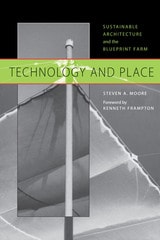
Technology and Place
Sustainable Architecture and the Blueprint FarmBy Steven A. Moore
University of Texas Press, 2001
Developing "sustainable" architectural and agricultural technologies was the intent behind Blueprint Farm, an experimental agricultural project designed to benefit farm workers displaced by the industrialization of agriculture in the Rio Grande Valley of Texas. Yet, despite its promise, the very institutions that created Blueprint Farm terminated the project after just four years (1987-1991).
In this book, Steven Moore demonstrates how the various stakeholders' competing definitions of "sustainability," "technology," and "place" ultimately doomed Blueprint Farm. He reconstructs the conflicting interests and goals of the founders, including Jim Hightower and the Texas Department of Agriculture, Laredo Junior College, and the Center for Maximum Potential Building Systems, and shows how, ironically, they unwittingly suppressed the self-determination of the very farm workers the project sought to benefit. From the instructive failure of Blueprint Farm, Moore extracts eight principles for a regenerative architecture, which he calls his "nonmodern manifesto."
Technology and Religion
Remaining Human Co-created WorldNoreen Herzfeld
Templeton Press, 2009
Technology is changing all the time, but does it also have the ability to change us and the way we approach religion and spirituality? In Technology and Religion: Remaining Human in a Co-created World, Noreen Herzfeld examines this and other provocative questions as she provides an accessible and fascinating overview of the relationship between religion and the ever-broadening world of technology.
The result is a multifaceted look at the ongoing dialogue between these two subjects that are not commonly associated with one another. This volume is the third title published in the new Templeton Science and Religion Series.

Technology and the Character of Contemporary Life
A Philosophical InquiryAlbert Borgmann
University of Chicago Press, 1987

Technology and the Future of Schooling in America
Edited by Stephen T. Kerr
University of Chicago Press, 1996
Guiding this volume is the conviction that advances in technology do not necessarily translate into improvements in education even as the basic structure of teaching programs must be changed to fully exploit the educational uses of technology. The contributors argue that technology should be distributed throughout the educational system, not just in wealthy districts; they examine the impact of communications technologies on relationships between teachers and students, parents and children, and men and women; they consider the ways in which new technologies change the dynamics of learning and teaching; and they show how teachers and administrators can tailor technology-based programs to the particular needs of their school or district.
Technology and the Good Life?
Edited by Eric Higgs, Andrew Light, and David Strong
University of Chicago Press, 2000
Technology and the Good Life? uses a careful collective analysis of Albert Borgmann's controversial and influential ideas as a jumping-off point from which to address questions such as these about the role and significance of technology in our lives. Contributors both sympathetic and critical examine Borgmann's work, especially his "device paradigm"; apply his theories to new areas such as film, agriculture, design, and ecological restoration; and consider the place of his thought within philosophy and technology studies more generally.
Because this collection carefully investigates the issues at the heart of how we can take charge of life with technology, it will be a landmark work not just for philosophers of technology but for students and scholars in the many disciplines concerned with science and technology studies.
Technology and the Historian
Transformations in the Digital AgeAdam Crymble
University of Illinois Press, 2021
Historians have seen their field transformed by the digital age. Research agendas, teaching and learning, scholarly communication, the nature of the archive—all have undergone a sea change that in and of itself constitutes a fascinating digital history. Yet technology's role in the field's development remains a glaring blind spot among digital scholars.
Adam Crymble mines private and web archives, social media, and oral histories to show how technology and historians have come together. Using case studies, Crymble merges histories and philosophies of the field, separating issues relevant to historians from activities in the broader digital humanities movement. Key themes include the origin myths of digital historical research; a history of mass digitization of sources; how technology influenced changes in the curriculum; a portrait of the self-learning system that trains historians and the problems with that system; how blogs became a part of outreach and academic writing; and a roadmap for the continuing study of history in the digital era.
Technology and the Resilience of Metropolitan Regions
Edited by Michael E. Pagano
University of Illinois Press, 2015
In this new collection, Michael A. Pagano curates engagement with such questions by public intellectuals, stakeholders, academics, policy analysts, and citizens. Each essay explores issues related to the impact and opportunities technology provides in government and citizenship, health care, workforce development, service delivery to citizens, and metropolitan growth. As the authors show, rapidly emerging technologies and access to such technologies shape the ways people and institutions interact in the public sphere and private marketplace. The direction of metropolitan growth and development, in turn, depends on access to appropriate technology scaled and informed by the individual, household, and community needs of the region.
Contributors include Randy Blankenhorn, Bénédicte Callan, Jane Fountain, Sandee Kastrul, Karen Mossberger, Dan O'Neil, Michelle Russell, Alfred Tatum, Stephanie Truchan, Darrel West, and Howard Wial.
Technology and the West
A Historical Anthology from Technology and CultureEdited by Terry S. Reynolds and Stephen H. Cutcliffe
University of Chicago Press, 1997
General readers and students will find this collection accessible and engaging.
Technology in American Health Care
Policy Directions for Effective Evaluation and ManagementAlan B. Cohen and Ruth S. Hanft, with William E. Encinosa, Stephanie M. Spernak, Shirley A. Stewart, and Catherine C. White
University of Michigan Press, 2004
---The World Future Society, Best Books and Reports
"This excellent book provides a broad overview of the development, impact, and evaluation of health technology in the United States. . . .The authors take a well-organized and thorough approach to address these topics, combining reviews of each with case examples of particular technologies. . . .Given the broad scope of the book, it could serve as a text for students, an introduction to the field for healthcare professionals, or a tool for academics and policymakers wishing to fill knowledge gaps outside their disciplines. . . .The book makes a compelling case for the logic and potential benefits of medical technology evaluation as a tool for improving health care."
---Journal of the American Medical Association
"By being comprehensive in their review, the authors chart a clear path to understanding the future of health care technology in America. They clarify the technical methods for evaluation and provide insight into the sociopolitical aspects of development and diffusion. Case studies are informative. Excellent reading for students and health professionals either as a textbook or as an off-the-shelf guide to methods for deciding among alternative technologies."
---Norman W. Weissman, University of Alabama
"Technology today dominates every aspect of health care. This useful book offers a diverse range of perspectives for students, professors, and medical practitioners who wish to understand how to evaluate medical technology."
---Joel Howell, University of Michigan Medical School
Technology in American Health Care is a comprehensive, multidisciplinary guide to understanding how medical advances-new drugs, biological devices, and surgical procedures-are developed, brought to market, evaluated, and adopted into health care.
Cost-effective delivery of evidence-based health care is the sine qua non of American medicine in the twenty-first century. Health care decision makers, providers, payers, policymakers, and consumers all need vital information about the risks, benefits, and costs of new technologies in order to make informed decisions about which ones to adopt and how to use them. Alan B. Cohen and Ruth S. Hanft explore the evolving field of medical technology evaluation (MTE), as well as the current controversies surrounding the evaluation and diffusion of medical technologies, including the methods employed in their assessment and the policies that govern their adoption and use.
The book opens with an introduction that provides basic definitions and the history of technological change in American medicine, and a second chapter that explores critical questions regarding medical technology in health care. Part I discusses biomedical innovation, the development and diffusion of medical technology, and the adoption and use of technology by hospitals, physicians, and other health care organizations and professions under changing health care market conditions. Part II examines the methods of MTE-including randomized controlled trials, meta-analyses, economic evaluation methods (such as cost-benefit, cost-effectiveness, and cost-utility analyses), and clinical decision analysis. Part III focuses on key public policy issues and concerns that affect the organization, financing, and delivery of health care and that relate importantly to medical technology, including safety, efficacy, quality, cost, access, equity, social, ethical, legal, and evaluation concerns. All three parts of the book provide a historical perspective on the relevant issues, methods, and policy concerns and contain examples of technologies whose development, adoption, evaluation, and use have contributed to our understanding of the field.
This book will be invaluable in making MTE more accessible to individuals who are directly involved in the evaluation process and those who are touched by it in their professional lives-policymakers, clinicians, managers, and researchers.
Technology in Russian Strategic Culture
From the Nineteenth Century to the Present DayAnzhelika Solovyeva
Karolinum Press, 2024
This book traces the dynamics of military-technological innovation in Russia over the last hundred and fifty years, particularly focusing on three distinct periods: the introduction of rifled breech-loading weapons in Imperial Russia in the nineteenth century, the invention of nuclear weapons in the Soviet Union in the twentieth century, and the development of precision-guided weapons in post-Soviet Russia in the twenty-first century. The analysis relies extensively on primary data obtained from Russian archives, complemented by a series of expert interviews, and deciphers Russia’s distinct strategic cultural approach to military-technological innovation.
Technology in the Language Classroom
What Every New ESL Teacher Needs to KnowMatt Kessler
University of Michigan Press, 2026
Technology in the Language Classroom provides early-career and pre-service second language (L2) instructors with an overview of important issues involved in effectively integrating technology into the L2 classroom. Each chapter provides practical strategies, resources, and application activities to help new teachers gain familiarity with utilizing a variety of digital tools for teaching different skills, including listening, speaking, reading, grammar, vocabulary, and writing. Readers will be encouraged to think critically about the key factors to consider when choosing tools that work for them, their lessons, and their students.
Technology, Innovation, and Southern Industrialization
From the Antebellum Era to the Computer AgeEdited by Susanna Delfino & Michele Gillespie
University of Missouri Press, 2008
Because of its strong agrarian roots, the South has typically been viewed as a region not favorably disposed to innovation and technology. Yet innovation was never absent from industrialization in this part of the United States. From the early nineteenth century onward, southerners were as eager as other Americans to embrace technology as a path to modernity.
This volume features seven essays that range widely across the region and its history, from the antebellum era to the present, to assess the role of innovations presumed lacking by most historians. Offering a challenging interpretation of industrialization in the South, these writings show that the benefits of innovations had to be carefully weighed against the costs to both industry and society.
The essays consider a wide range of innovative technologies. Some examine specific industries in subregions: steamboats in the lower Mississippi valley, textile manufacturing in Georgia and Arkansas, coal mining in Virginia, and sugar planting and processing in Louisiana. Others consider the role of technology in South Carolina textile mills around the turn of the twentieth century, the electrification of the Tennessee valley, and telemedicine in contemporary Arizona—marking the expansion of the region into the southwestern Sunbelt.
Together, these articles show that southerners set significant limitations on what technological innovations they were willing to adopt, particularly in a milieu where slaveholding agriculture had shaped the allocation of resources. They also reveal how scarcity of capital and continued reliance on agriculture influenced that allocation into the twentieth century, relieved eventually by federal spending during the Depression and its aftermath that sparked the Sunbelt South’s economic boom.
Technology, Innovation, and Southern Industrialization clearly demonstrates that the South’s embrace of technological innovation in the modern era doesn’t mark a radical change from the past but rather signals that such pursuits were always part of the region’s economy. It deflates the myth of southern agrarianism while expanding the scope of antebellum American industrialization beyond the Northeast and offers new insights into the relationship of southern economic history to the region’s society and politics.
Technology, Pessimism, and Postmodernism
Yaron Ezrahi
University of Massachusetts Press, 1995
This collection of essays from international scholars across various disciplines addresses the compelling theme of technological pessimism—the conviction that technology has simultaneously given humanity the means to achieve unlimited progress while simultaneously providing the tools for self-destruction and the degradation of our most cherished values.
Edited by Yaron Ezrahi, Everett Mendelsohn, and Howard P. Segal, this intellectually rigorous anthology examines the paradoxes and contradictions inherent in contemporary technological society through a postmodern lens. The contributors explore how technology shapes human experience, culture, and social structures in the late twentieth century, questioning the foundational narratives of technological progress and enlightenment that have dominated Western thought.
Technology, Productivity, and Economic Growth
Edited by Susanto Basu, Lucy Eldridge, John Haltiwanger, and Erich Strassner
University of Chicago Press, 2025
A wide-reaching exploration of how technological advancements influence and shape productivity and economic growth.
Current technological developments in several industries, such as the rise of artificial intelligence and innovations associated with the green energy transition, are likely to have significant and wide-ranging effects. This volume explores the implications of rapid changes in advanced technology and considers how to conceptualize and model these advances and improve measures of productivity and economic growth. The study of these issues is facilitated both by new methods for using and integrating disparate data sources and by the availability of new data sources. The chapters in this volume leverage these developments to offer fresh insights into long-standing issues in productivity analysis and technological change.
Technology
Critical History of a ConceptEric Schatzberg
University of Chicago Press, 2018
The tension between scholars and technicians continued from Aristotle through Francis Bacon and into the nineteenth century. It was only in the twentieth century that modern meanings of technology arose: technology as the industrial arts, technology as applied science, and technology as technique. Schatzberg traces these three meanings to the present day, when discourse about technology has become pervasive, but confusion among the three principal meanings of technology remains common. He shows that only through a humanistic concept of technology can we understand the complex human choices embedded in our modern world.
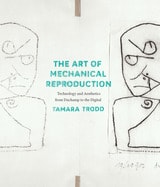
The Art of Mechanical Reproduction
Technology and Aesthetics from Duchamp to the DigitalTamara Trodd
University of Chicago Press, 2015
The Art of Mechanical Reproduction weaves a rich history of the experimental networks in which artists as diverse as Paul Klee, Hans Bellmer, Ellsworth Kelly, Robert Smithson, Gerhard Richter, Chris Marker, and Tacita Dean have worked, and it shows for the first time how extensively technological innovations of the moment have affected their work. Original and broad-ranging, The Art of Mechanical Reproduction challenges some of the most respected and entrenched criticism of the past several decades—and allows us to think about these artists anew.

The Assault on Progress
Technology and Time in American LiteratureJ. Adam Johns
University of Alabama Press, 2008
A belief in progress is a fundamental ethos in American history and culture. The Assault on Progress probes American literary works that challenge the prevailing notion of technology as a manifestation of progress. J. Adam Johns argues that the idea of technology-as-destiny has long been explored—and undercut—in American literary works and that literature remains a crucial site for ongoing debates in this area.
Johns studies the phenomenon by which each generation comes to regard itself as the hinge upon which history turns. He explores several works by historians of technology, focusing in detail on the works of literary critic Lewis Mumford, whose examinations of Herman Melville’s novels provide an early example of critical interest in the abandonment of progress as a value.
He goes on to study the works of William Faulkner and Ralph Ellison, focusing on the convergence of technology and race—machines and slavery, and highlights the ways that these writers have portrayed humans as reduced to machines, evidence that technological “progress” is not always progressive, or liberating to humanity.
The conclusion argues for a shift in our understanding of the relationship between technology and time. According to Johns, writers like Melville, Faulkner, and Ellison help us to think of technology separate from notions of progress, and therefore help us to escape from a perilous ideological bind that forever situates humankind at the end of history.
The Benevolent Gaslight
A Technology of Race-MakingLouis M. Maraj
Utah State University Press, 2026
At the intersection of rhetorical studies and critical race/ethnic studies, The Benevolent Gaslight analyzes cultural and political discourses that recharacterize acts of racial violence as teaching moments and learning opportunities. Naming this phenomenon “benevolent gaslighting,” Louis M. Maraj and Pritha Prasad explore its application across academic disciplines/epistemologies, educational history, and university race management, while also diving into how popular culture and political figures use benevolent gaslighting to reinscribe normative operations of race, gender, and sexuality.
Although this rhetoric usually presents as progressive, when used for the purposes of advancing “antiracism,” the benevolent gaslight re-centers the very whiteness it supposedly critiques. It prompts peoples of color to question their histories, memories, and realities by suggesting their pain has been necessary for positive social change and by situating racial trauma as opportunities for public learning. Specific examples include antiracist teaching initiatives and the sudden proliferation of apologies for past acts of racism by public figures. Both trends saw an uptick from 2020 onward as a result of publicity crises and public “reckonings” necessitated by Black Lives Matter protests in response to widely reported, hypervisible anti-Black violences like the murders of George Floyd, Breonna Taylor, and Ahmaud Arbery.
These discourses deflect blame for past or present racial violence by narrating it as an opportunity for “antiracist” growth and intervention. Utilizing conventional academic and creative/narrative methods to examine examples of the benevolent gaslight across US histories of education during the First Reconstruction, the post–Civil Rights management of student activists in the university, and the progressivist discourses of humanities disciplines and popular culture, this book reveals the insidious ways in which peoples of color are routinely (re)traumatized through mechanisms of “pedagogy.”
The Best of Technology Writing 2008
Clive Thompson, Editor
University of Michigan Press, 2008
"No one covers technology with more insight or panache than Clive Thompson. I can't imagine anyone better qualified to curate this fascinating series."
---Chris Anderson, editor in chief of Wired magazine and author of The Long Tail
"Editor Clive Thompson suggests we are in a ‘golden age of technology journalism.' Reading this collection, one suspects he is right---it sparkles with beautifully written narratives not only about what technology can do for us but what it does to us as people, to our ways of thinking about ourselves, our relationships, and how we envisage our world."
---Sherry Turkle, Director, MIT Initiative on Technology and Self, Massachusetts Institute of Technology
The Best of Technology Writing 2008 proves that technology writing is a bona fide literary genre with some of the most stylish, compelling, and just plain readable work in journalism today.
The third volume in this annual series, The Best of Technology Writing 2008 covers a fascinating mix of topics---from a molecular gastronomist's recipe for the perfect gin and tonic; to "the Mechanism," an ancient Greek artifact that might be the world's first laptop computer; to social media, privacy, and what is possibly the biggest generation gap since rock 'n' roll.
Featuring contributions from
- Ted Allen
- Michael Behar
- Caleb Crain
- Julian Dibbell
- Cory Doctorow
- David Glenn
- Thomas Goetz
- Charles Graeber
- Alex Hutchinson
- Walter Kirn
- Robin Mejia
- Emily Nussbaum
- Ben Paynter
- Jeffrey Rosen
- John Seabrook
- Cass R. Sunstein
digitalculturebooks is an imprint of the University of Michigan Press and the Scholarly Publishing Office of the University of Michigan Library dedicated to publishing innovative and accessible work exploring new media and their impact on society, culture, and scholarly communication. Visit the website at www.digitalculture.org.
The Big Data Agenda
Data Ethics and Critical Data StudiesAnnika Richterich
University of Westminster Press, 2018
This book highlights that the capacity for gathering, analysing, and utilising vast amounts of digital (user) data raises significant ethical issues. Annika Richterich provides a systematic contemporary overview of the field of critical data studies that reflects on practices of digital data collection and analysis. The book assesses in detail one big data research area: biomedical studies, focused on epidemiological surveillance. Specific case studies explore how big data have been used in academic work.
The Big Data Agenda concludes that the use of big data in research urgently needs to be considered from the vantage point of ethics and social justice. Drawing upon discourse ethics and critical data studies, Richterich argues that entanglements between big data research and technology/ internet corporations have emerged. In consequence, more opportunities for discussing and negotiating emerging research practices and their implications for societal values are needed.
An electronic version of this book is freely available, thanks to the support of libraries working with Knowledge Unlatched. KU is a collaborative initiative designed to make high quality books Open Access for the public good. More information about the initiative and details about KU's Open Access programme can be found at www.knowledgeunlatched.org.
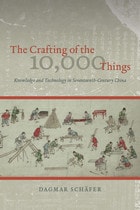
The Crafting of the 10,000 Things
Knowledge and Technology in Seventeenth-Century ChinaDagmar Schäfer
University of Chicago Press, 2011
The last decades of the Ming dynasty, though plagued by chaos and destruction, saw a significant increase of publications that examined advances in knowledge and technology. Among the numerous guides and reference books that appeared during this period was a series of texts by Song Yingxing (1587–1666?), a minor local official living in southern China. His Tiangong kaiwu, the longest and most prominent of these works, documents the extraction and processing of raw materials and the manufacture of goods essential to everyday life, from yeast and wine to paper and ink to boats, carts, and firearms.
In The Crafting of the 10,000 Things, Dagmar Schäfer probes this fascinating text and the legacy of its author to shed new light on the development of scientific thinking in China, the purpose of technical writing, and its role in and effects on Chinese history. Meticulously unfolding the layers of Song’s personal and cultural life, Schäfer chronicles the factors that motivated Song to transform practical knowledge into written culture. She then examines how Song gained, assessed, and ultimately presented knowledge, and in doing so articulates this era’s approaches to rationality, truth, and belief in the study of nature and culture alike. Finally, Schäfer places Song’s efforts in conjunction with the work of other Chinese philosophers and writers, before, during, and after his time, and argues that these writings demonstrate collectively a uniquely Chinese way of authorizing technology as a legitimate field of scholarly concern and philosophical knowledge.
Offering an overview of a thousand years of scholarship, The Crafting of the 10,000 Things explains the role of technology and crafts in a culture that had an outstandingly successful tradition in this field and was a crucial influence on the technical development of Europe on the eve of the Industrial Revolution.
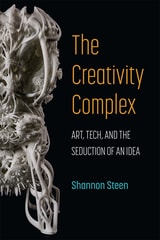
The Creativity Complex
Art, Tech, and the Seduction of an IdeaShannon Steen
University of Michigan Press, 2023
“Creativity” is a word that excites and dazzles us. It promises brilliance and achievement, a shield against conformity, a channel for innovation across the arts, sciences, technology, and education, and a mechanism for economic revival and personal success. But it has not always evoked these ideas. The Creativity Complex traces the history of how creativity has come to mean the things it now does, and explores the ethical implications of how we use this term today for both the arts and for the social world more broadly. Richly researched, the book explores how creativity has been invoked in arenas as varied as Enlightenment debates over the nature of cognition, Victorian-era intelligence research, the Cold War technology race, contemporary K-12 education, and even modern electoral politics. Ultimately, The Creativity Complex asks how our ideas about creativity are bound up with those of self-fulfillment, responsibility, and the individual, and how these might seduce us into joining a worldview and even a set of social imperatives that we might otherwise find troubling.
The Critique of Scientific Reason
Kurt Hübner
University of Chicago Press, 1983
The Cybernetic Border
Drones, Technology, and IntrusionIván Chaar López
Duke University Press, 2024
The Disposition of the Subject
Reading Adorno's Dialectic of TechnologyEric L. Krakauer
Northwestern University Press, 1998
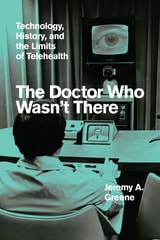
The Doctor Who Wasn't There
Technology, History, and the Limits of TelehealthJeremy A. Greene
University of Chicago Press, 2022
The Doctor Who Wasn’t There traces the long arc of enthusiasm for—and skepticism of—electronic media in health and medicine. Over the past century, a series of new technologies promised to democratize access to healthcare. From the humble telephone to the connected smartphone, from FM radio to wireless wearables, from cable television to the “electronic brains” of networked mainframe computers: each new platform has promised a radical reformation of the healthcare landscape. With equal attention to the history of technology, the history of medicine, and the politics and economies of American healthcare, physician and historian Jeremy A. Greene explores the role that electronic media play, for better and for worse, in the past, present, and future of our health.
Today’s telehealth devices are far more sophisticated than the hook-and-ringer telephones of the 1920s, the radios that broadcasted health data in the 1940s, the closed-circuit televisions that enabled telemedicine in the 1950s, or the online systems that created electronic medical records in the 1960s. But the ethical, economic, and logistical concerns they raise are prefigured in the past, as are the gaps between what was promised and what was delivered. Each of these platforms also produced subtle transformations in health and healthcare that we have learned to forget, displaced by promises of ever newer forms of communication that took their place.
Illuminating the social and technical contexts in which electronic medicine has been conceived and put into practice, Greene’s history shows the urgent stakes, then and now, for those who would seek in new media the means to build a more equitable future for American healthcare.
The Electronic Word
Democracy, Technology, and the ArtsRichard A. Lanham
University of Chicago Press, 1993
This highly acclaimed collection of Richard Lanham's witty, provocative, and engaging essays surveys the effects of electronic text on the arts and letters. Lanham explores how electronic text fulfills the expressive agenda of twentieth-century visual art and music, revolutionizes the curriculum, democratizes the instruments of art, and poses anew the cultural accountability of humanism itself.
Persuading us with uncommon grace and power that the move from book to screen gives cause for optimism, not despair, Lanham proclaims that "electronic expression has come not to destroy the Western arts but to fulfill them."
The Electronic Word is also available as a Chicago Expanded Book for your Macintosh®. This hypertext edition allows readers to move freely through the text, marking "pages," annotating passages, searching words and phrases, and immediately accessing annotations, which have been enhanced for this edition. In a special prefatory essay, Lanham introduces the features of this electronic edition and gives a vividly applied critique of this dynamic new edition.
The Enchantments of Technology
Lee Worth Bailey
University of Illinois Press, 2005
Bailey argues that technological society does not simply disenchant the world with its reductive methods and mechanical metaphors, then shape machines with political motives, but is also borne by a deeper, subversive undertow of enchantment. Addressing examples to explore the complexities of these enchantments, his thought is full of illuminating examinations of seductively engaging technologies ranging from the old camera obscura to new automobiles, robots, airplanes, and spaceships.
This volume builds on the work of numerous scholars, including Jacques Ellul and Jean Brun on the phenomenological and spiritual aspects of technology, Carl Jung on the archetypal collective unconscious approach to myth, and Martin Heidegger on Being itself. Bailey creates a dynamic, interdisciplinary, postmodern examination of how our machines and their environments embody not only reason, but also desires.

The Ends of Research
Indigenous and Settler Science after the War in the WoodsTom Özden-Schilling
Duke University Press, 2023
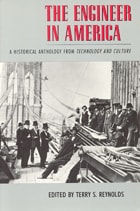
The Engineer in America
A Historical Anthology from Technology and CultureEdited by Terry S. Reynolds
University of Chicago Press, 1991
Spanning two centuries and the various subdisciplines of the field, these essays demonstrate the paradoxical role engineers have played in building (although usually not controlling) the infrastructure on which America's prosperity is based. This collection of seventeen essays traces the rise of the engineering profession and its evolving contribution to the development of America's material and economic success. Topics addressed include:
*American engineering's birth from European traditions
*Impact of science on engineering practice
*Changing relationship between engineers and bureaucratic organizations
*Growth of engineering professional institutions
Thoughtfully organized and unique in its scope, this volume will be a welcome overview for both students and scholars of the history of technology.
These essays were originally published in the journal Technology and Culture.
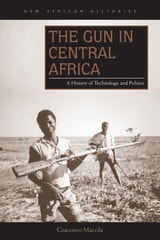
The Gun in Central Africa
A History of Technology and PoliticsGiacomo Macola
Ohio University Press, 2016
Why did some central African peoples embrace gun technology in the nineteenth century, and others turn their backs on it? In answering this question, The Gun in Central Africa offers a thorough reassessment of the history of firearms in central Africa. Marrying the insights of Africanist historiography with those of consumption and science and technology studies, Giacomo Macola approaches the subject from a culturally sensitive perspective that encompasses both the practical and the symbolic attributes of firearms.
Informed by the view that the power of objects extends beyond their immediate service functions, The Gun in Central Africa presents Africans as agents of technological re-innovation who understood guns in terms of their changing social structures and political interests. By placing firearms at the heart of the analysis, this volume casts new light on processes of state formation and military revolution in the era of the long-distance trade, the workings of central African gender identities and honor cultures, and the politics of the colonial encounter.

The Human Condition
Second EditionHannah Arendt
University of Chicago Press, 1998
Hannah Arendt (1906-1975) was one of the leading social theorists in the United States. Her Lectures on Kant's Political Philosophy and Love and Saint Augustine are also published by the University of Chicago Press.

The Human Condition
Second EditionHannah Arendt
University of Chicago Press, 2018
The twenty-first century has seen a resurgence of interest in the political thinker Hannah Arendt, “the theorist of beginnings,” whose work probes the logics underlying unexpected transformations—from totalitarianism to revolution.
A work of striking originality, The Human Condition is in many respects more relevant now than when it first appeared in 1958. In her study of the state of modern humanity, Hannah Arendt considers humankind from the perspective of the actions of which it is capable. The problems Arendt identified then—diminishing human agency and political freedom, the paradox that as human powers increase through technological and humanistic inquiry, we are less equipped to control the consequences of our actions—continue to confront us today. This new edition, published to coincide with the sixtieth anniversary of its original publication, contains Margaret Canovan’s 1998 introduction and a new foreword by Danielle Allen.
A classic in political and social theory, The Human Condition is a work that has proved both timeless and perpetually timely.
The Humanities in the Age of Technology
Ciriaco Morón Arroyo
Catholic University of America Press, 2002
The Imperative of Responsibility
In Search of an Ethics for the Technological AgeHans Jonas
University of Chicago Press, 1984
Hans Jonas here rethinks the foundations of ethics in light of the awesome transformations wrought by modern technology: the threat of nuclear war, ecological ravage, genetic engineering, and the like. Though informed by a deep reverence for human life, Jonas's ethics is grounded not in religion but in metaphysics, in a secular doctrine that makes explicit man's duties toward himself, his posterity, and the environment. Jonas offers an assessment of practical goals under present circumstances, ending with a critique of modern utopianism.

The Indiscrete Image
Infinitude and Creation of the HumanThomas A. Carlson
University of Chicago Press, 2008
Framed in response to Martin Heidegger’s influential account of the relation between technological modernity and theological tradition, The Indiscrete Image builds an understanding of creativity as conditioned by insurmountable unknowing and incalculable possibility through alternative readings of Christian theological tradition and technological culture—and the surprising resonance between these two. Carlson concludes that the always ongoing work of world creation, tied essentially to human self-creation, implies neither an idol’s closure nor an icon’s transcendence, but the “indiscrete image” whose love makes possible—by keeping open—both the human and its world.
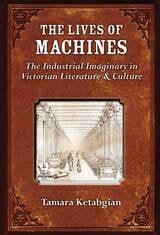
The Lives of Machines
The Industrial Imaginary in Victorian Literature and CultureTamara Ketabgian
University of Michigan Press, 2011
"The Lives of Machines is intelligent, closely argued, and persuasive, and puts forth a contention that will unsettle the current consensus about Victorian attitudes toward the machine."
---Jay Clayton, Vanderbilt University
Today we commonly describe ourselves as machines that "let off steam" or feel "under pressure." The Lives of Machines investigates how Victorian technoculture came to shape this language of human emotion so pervasively and irrevocably and argues that nothing is more intensely human and affecting than the nonhuman. Tamara Ketabgian explores the emergence of a modern and more mechanical view of human nature in Victorian literature and culture.
Treating British literature from the 1830s to the 1870s, this study examines forms of feeling and community that combine the vital and the mechanical, the human and the nonhuman, in surprisingly hybrid and productive alliances. Challenging accounts of industrial alienation that still persist, the author defines mechanical character and feeling not as erasures or negations of self, but as robust and nuanced entities in their own right. The Lives of Machines thus offers an alternate cultural history that traces sympathies between humans, animals, and machines in novels and nonfiction about factory work as well as in other unexpected literary sites and genres, whether domestic, scientific, musical, or philosophical. Ketabgian historicizes a model of affect and community that continues to inform recent theories of technology, psychology, and the posthuman.
The Lives of Machines will be of interest to students of British literature and history, history of science and of technology, novel studies, psychoanalysis, and postmodern cultural studies.
Cover image: "Power Loom Factory of Thomas Robinson," from Andrew Ure, The Philosophy of Manufactures (London: Charles Knight, 1835), frontispiece.
DIGITALCULTUREBOOKS: a collaborative imprint of the University of Michigan Press and the University of Michigan Library