Results by title
1927 books match the query 'Technology & Engineering' and 270 start with t

Tactical Missiles - From Concepts to Components
Control and guidance, Volume 2P.K. Sinha
The Institution of Engineering and Technology, 2026
Tactical Missiles - From Concepts to Components
Propulsion and aerodynamics, Volume 1P.K. Sinha
The Institution of Engineering and Technology, 2026
Tactical Missiles - From Concepts to Components
Warheads, Volume 3P.K. Sinha
The Institution of Engineering and Technology, 2026

Tactical Persistent Surveillance Radar with Applications
David Lynch Jr.
The Institution of Engineering and Technology, 2018
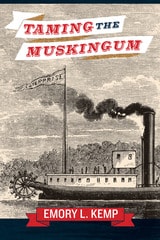
Taming the Muskingum
EMORY L. KEMP
West Virginia University Press, 2014

Target Detection by Marine Radar
John N. Briggs
The Institution of Engineering and Technology, 2004
Technical History of the Beginnings of Radar
S.S. Swords
The Institution of Engineering and Technology, 1986
Technical Knowledge in American Culture
Science, Technology, and Medicine Since the Early 1800sEdited by Hamilton Cravens, Alan I Marcus, and David M. Katzman
University of Alabama Press, 1996
Addresses the relationships between what modern-day experts say to each other and to their constituencies
Technical Knowledge in American Culture is an interdisciplinary volume that brings together leading historians to investigate how science, technology, and medicine have shaped—and been shaped by—American intellectual and cultural traditions since the early nineteenth century. Rather than treating science and technology simply as products of social forces, the contributors examine them as forms of knowledge with their own internal logics, debates, and authority structures. The book asks a central question: how do experts—scientists, engineers, physicians—communicate with one another and with broader audiences, and how does that communication influence American society?
The volume is organized into three major sections, each anchored in a distinct historical moment: Part I: The Rise of Democratic Culture, 1800–1870; Part II: The Age of Hierarchy, 1870–1920; and Part III: Toward an Infinity of Dimensions (20th Century). Across its essays, the book argues that technical knowledge is not just a tool of progress—it is a cultural force shaped by communication, interpretation, and authority. By focusing on case studies rather than sweeping narratives, the volume reveals how expertise operates in practice and how it influences broader debates about science, society, and public trust.
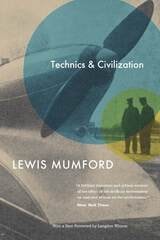
Technics and Civilization
Lewis Mumford
University of Chicago Press, 2010
Technics and Civilization first presented its compelling history of the machine and critical study of its effects on civilization in 1934—before television, the personal computer, and the Internet even appeared on our periphery.
Drawing upon art, science, philosophy, and the history of culture, Lewis Mumford explained the origin of the machine age and traced its social results, asserting that the development of modern technology had its roots in the Middle Ages rather than the Industrial Revolution. Mumford sagely argued that it was the moral, economic, and political choices we made, not the machines that we used, that determined our then industrially driven economy. Equal parts powerful history and polemic criticism, Technics and Civilization was the first comprehensive attempt in English to portray the development of the machine age over the last thousand years—and to predict the pull the technological still holds over us today.
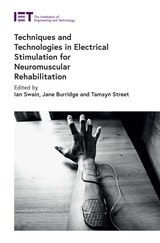
Techniques and Technologies in Electrical Stimulation for Neuromuscular Rehabilitation
Ian Swain
The Institution of Engineering and Technology, 2025

Techno-Negative
A Long History of Refusing the MachineThomas Dekeyser
University of Minnesota Press, 2026
A radical history of technology told through acts of resistance, not progress
The history of technology is often told as a history of progress, moving optimistically and inevitably from one emancipatory invention to the next. Techno-Negative turns this story on its head, taking us on a journey to the critical junctures where people have pointedly rejected and tried to undo, rather than adopt, new technologies. Beginning with Archimedes’s decision to destroy his own war machines, this book explores the will to negate technology as a deep—but persistently condemned—current in history.
As he presents a new theory of technological power, Thomas Dekeyser argues that technologies, never neutral, operate as “ontological policing,” drawing the boundaries of humanness as they are unequally leveraged by select groups. Looking beyond the Luddites to medieval monks banning tools, seventeenth-century loom burners, revolutionary lantern smashers, and computer arsonists, Dekeyser shows how people have long recognized and resisted the machine as a violent, sometimes deadly force implicated in defining who counts as human and whose lives (and ways of life) are worth saving.
Against the ubiquitous demands to reform or accelerate technological “advancement” that have failed to disrupt our present, Dekeyser proposes a spirited alternative: abolition. He challenges us to rethink the terms of our technological present and future. In a time when Big Tech grows increasingly enmeshed with authoritarian control, Techno-Negative is a conceptual declaration, and source of inspiration, for those searching for a new paradigm of technological politics.
Retail e-book files for this title are screen-reader friendly.
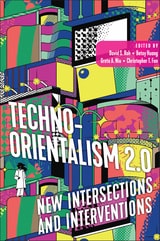
Techno-Orientalism 2.0
New Intersections and InterventionsDavid S. Roh
Rutgers University Press, 2025
Technocreep and the Politics of Things Not Seen
Neda Atanasoski and Nassim Parvin, editors
Duke University Press, 2025
Contributors. Neda Atanasoski, Katherine Bennett, Iván Chaar López, Sushmita Chatterjee, Hayri Dortdivanlioglu, Sanaz Haghani, Jacob Hagelberg, Jennifer Hamilton, Antonia Hernández, Marjan Khatibi, Tamara Kneese, Erin McElroy, Vernelle A. A. Noel, Jessica Olivares, Nassim Parvin, Beth Semel, Renee Shelby, Tanja Wiehn
Technologies and Techniques in Gait Analysis
Past, present and futureNachiappan Chockalingam
The Institution of Engineering and Technology, 2022
Technologies for Healthcare 4.0
From AI and IoT to blockchainKarthik Ramamurthy
The Institution of Engineering and Technology, 2023
Technologies for the Electrification of Land and Sea Transportation
Muhyaddin J.H. Rawa
The Institution of Engineering and Technology, 2025
Technology Computer Aided Design for Si, SiGe and GaAs Integrated Circuits
G.A. Armstrong
The Institution of Engineering and Technology, 2007
Technology and American History
A Historical Anthology from Technology and CultureEdited by Stephen H. Cutcliffe and Terry S. Reynolds
University of Chicago Press, 1997
Emphasizing a societal context for technology, this carefully organized collection demonstrates both the manner in which cultural, political, and economic forces shape innovation, and the ways that technology has influenced society and shaped its values. Individual essays explore the importance of textile manufacturing in American industrialization, the role of the federal government in regulating new modes of transport, the development of interchangeable parts in production, the process of innovation, the notion of technological systems, and the relationship between technological change and work in the factory, on the farm, and in the home.
The essays were selected to be accessible to both the general reader and the undergraduate student.
Technology and Engagement
Making Technology Work for First Generation College StudentsRowan-Kenyon, Heather T.
Rutgers University Press, 2018
Technology and Engagement is based on a four-year study of how first generation college students use social media, aimed at improving their transition to and engagement with their university. Through web technology, including social media sites, students were better able to maintain close ties with family and friends from home, as well as engage more with social and academic programs at their university. This ‘ecology of transition’ was important in keeping the students focused on why they were in college, and helped them become more integrated into the university setting. By showing the gains in campus capital these first-generation college students obtained through social media, the authors offer concrete suggestions for how other universities and college-retention programs can utilize the findings to increase their own retention of first-generation college students.
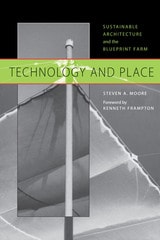
Technology and Place
Sustainable Architecture and the Blueprint FarmBy Steven A. Moore
University of Texas Press, 2001
Developing "sustainable" architectural and agricultural technologies was the intent behind Blueprint Farm, an experimental agricultural project designed to benefit farm workers displaced by the industrialization of agriculture in the Rio Grande Valley of Texas. Yet, despite its promise, the very institutions that created Blueprint Farm terminated the project after just four years (1987-1991).
In this book, Steven Moore demonstrates how the various stakeholders' competing definitions of "sustainability," "technology," and "place" ultimately doomed Blueprint Farm. He reconstructs the conflicting interests and goals of the founders, including Jim Hightower and the Texas Department of Agriculture, Laredo Junior College, and the Center for Maximum Potential Building Systems, and shows how, ironically, they unwittingly suppressed the self-determination of the very farm workers the project sought to benefit. From the instructive failure of Blueprint Farm, Moore extracts eight principles for a regenerative architecture, which he calls his "nonmodern manifesto."
Technology and Religion
Remaining Human Co-created WorldNoreen Herzfeld
Templeton Press, 2009
Technology is changing all the time, but does it also have the ability to change us and the way we approach religion and spirituality? In Technology and Religion: Remaining Human in a Co-created World, Noreen Herzfeld examines this and other provocative questions as she provides an accessible and fascinating overview of the relationship between religion and the ever-broadening world of technology.
The result is a multifaceted look at the ongoing dialogue between these two subjects that are not commonly associated with one another. This volume is the third title published in the new Templeton Science and Religion Series.
Technology and the Good Life?
Edited by Eric Higgs, Andrew Light, and David Strong
University of Chicago Press, 2000
Technology and the Good Life? uses a careful collective analysis of Albert Borgmann's controversial and influential ideas as a jumping-off point from which to address questions such as these about the role and significance of technology in our lives. Contributors both sympathetic and critical examine Borgmann's work, especially his "device paradigm"; apply his theories to new areas such as film, agriculture, design, and ecological restoration; and consider the place of his thought within philosophy and technology studies more generally.
Because this collection carefully investigates the issues at the heart of how we can take charge of life with technology, it will be a landmark work not just for philosophers of technology but for students and scholars in the many disciplines concerned with science and technology studies.
Technology and the West
A Historical Anthology from Technology and CultureEdited by Terry S. Reynolds and Stephen H. Cutcliffe
University of Chicago Press, 1997
General readers and students will find this collection accessible and engaging.
Technology, Innovation, and Southern Industrialization
From the Antebellum Era to the Computer AgeEdited by Susanna Delfino & Michele Gillespie
University of Missouri Press, 2008
Because of its strong agrarian roots, the South has typically been viewed as a region not favorably disposed to innovation and technology. Yet innovation was never absent from industrialization in this part of the United States. From the early nineteenth century onward, southerners were as eager as other Americans to embrace technology as a path to modernity.
This volume features seven essays that range widely across the region and its history, from the antebellum era to the present, to assess the role of innovations presumed lacking by most historians. Offering a challenging interpretation of industrialization in the South, these writings show that the benefits of innovations had to be carefully weighed against the costs to both industry and society.
The essays consider a wide range of innovative technologies. Some examine specific industries in subregions: steamboats in the lower Mississippi valley, textile manufacturing in Georgia and Arkansas, coal mining in Virginia, and sugar planting and processing in Louisiana. Others consider the role of technology in South Carolina textile mills around the turn of the twentieth century, the electrification of the Tennessee valley, and telemedicine in contemporary Arizona—marking the expansion of the region into the southwestern Sunbelt.
Together, these articles show that southerners set significant limitations on what technological innovations they were willing to adopt, particularly in a milieu where slaveholding agriculture had shaped the allocation of resources. They also reveal how scarcity of capital and continued reliance on agriculture influenced that allocation into the twentieth century, relieved eventually by federal spending during the Depression and its aftermath that sparked the Sunbelt South’s economic boom.
Technology, Innovation, and Southern Industrialization clearly demonstrates that the South’s embrace of technological innovation in the modern era doesn’t mark a radical change from the past but rather signals that such pursuits were always part of the region’s economy. It deflates the myth of southern agrarianism while expanding the scope of antebellum American industrialization beyond the Northeast and offers new insights into the relationship of southern economic history to the region’s society and politics.
Technology-Enabled Motion Sensing and Activity Tracking for Rehabilitation
Wenbing Zhao
The Institution of Engineering and Technology, 2022
Technology
Critical History of a ConceptEric Schatzberg
University of Chicago Press, 2018
The tension between scholars and technicians continued from Aristotle through Francis Bacon and into the nineteenth century. It was only in the twentieth century that modern meanings of technology arose: technology as the industrial arts, technology as applied science, and technology as technique. Schatzberg traces these three meanings to the present day, when discourse about technology has become pervasive, but confusion among the three principal meanings of technology remains common. He shows that only through a humanistic concept of technology can we understand the complex human choices embedded in our modern world.
Technoscientific Imaginaries
Conversations, Profiles, and MemoirsEdited by George E. Marcus
University of Chicago Press, 1995
In these penetrating essays, twenty-four distinguished contributors from a broad range of fields present the voices of the scientists themselves—through interviews, conversations, and memoirs. We hear from Lithuanian physicists who discuss science after Communism and their own fantasies about what Western science is; a Japanese-American woman struggling with her ambivalence over designing nuclear weapons; political activists in India who examine relations among science, environmental politics, and government ideology in the aftermath of the Bhopal disaster; and many others, including biologists, physicians, corporate researchers, and scientists working with virtual reality and other cutting-edge technologies.
The contributors to this volume are Mario Biagioli, Maria E. Carson, Gary Lee Downey, Joseph Dumit, Michael M. J. Fischer, Mary-Jo DelVecchio Good, Hugh Gusterson, Diana L. L. Hill, James Holston, Herbert C. Hoover, Jr., Gudrun Klein, Leszek Koczanowicz, Irene Kuter, Kim Laughlin, Rita Linggood, George E. Marcus, Kathryn Milun, Livia Polanyi, Christopher Pound, Simon Powell, Paul Rabinow, Kathleen Stewart, Allucquere Rosanne Stone, and Sharon Traweek.
Telecommunication Networks
J.E. Flood
The Institution of Engineering and Technology, 1997
Telecommunications Network Modelling, Planning and Design
Sharon Evans
The Institution of Engineering and Technology, 2003
Telecommunications Performance Engineering
Roger Ackerley
The Institution of Engineering and Technology, 2003
Telecommunications Quality of Service Management
From legacy to emerging servicesAntony Oodan
The Institution of Engineering and Technology, 2003
Telecommunications Regulation
John Buckley
The Institution of Engineering and Technology, 2003
Telecommunications Signalling
Richard Manterfield
The Institution of Engineering and Technology, 1999
Telecommunications Traffic, Tariffs and Costs
An Introduction for ManagersR.E. Farr
The Institution of Engineering and Technology, 1988
Telecommunications and Empire
Jill Hills
University of Illinois Press, 2007
Jill Hills picks up from her pathbreaking study The Struggle for Control of Global Communication: The Formative Century to continue her examination of the political, technological, and economic forces at work in the global telecommunications market from World War II to the World Trade Organization agreement of 1997. In the late twentieth century, focus shifted from the creation and development of global communication markets to their intense regulation. The historical framework behind this control--where the market was regulated, by what institution, controlled by what power, and to whose benefit--masterfully complements Hills's analysis of power relations within the global communications arena.
Hills documents attempts by governments to direct, replace, and bypass international telecommunications institutions. As she shows, the results have offered indirect control over foreign domestic markets, government management of private corporations, and government protection of its own domestic communication market. Hills reveals that the motivation behind these powerful, regulatory efforts on person-to-person communication lies in the unmatched importance of communication in the world economy.
As ownership of communications infrastructure becomes more valuable, governments have scrambled to shape international guidelines. Hills provides insight into struggles between U.S. policymakers and the rest of the world, illustrating the conflict between a growing telecommunications empire and sovereign states that are free to implement policy changes. Freshly detailing the interplay between U.S. federal regulation and economic power, Hills fosters a deep understanding of contemporary systems of power in global communications.
Telemedicine Systems for Unreached Communities
Context, challenges and opportunitiesMehdi Hasan
The Institution of Engineering and Technology, 2026
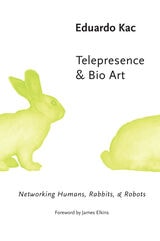
Telepresence and Bio Art
Networking Humans, Rabbits and RobotsEduardo Kac
University of Michigan Press, 2005
-Edward Lucie-Smith, author of Visual Arts in the 20th Century
"His works introduce a vital new meaning into what had been known as the creative process while at the same time investing the notion of the artist-inventor with an original social and ethical responsibility."
-Frank Popper, author of Origins and Development of Kinetic Art
"Kac's radical approach to the creation and presentation of the body as a wet host for artificial memory and 'site-specific' work raises a variety of important questions that range from the status of memory in digital culture to the ethical dilemmas we are facing in the age of bioengineering and tracking technology."
-Christiane Paul, Whitney Museum of Art
For nearly two decades Eduardo Kac has been at the cutting edge of media art, first inventing early online artworks for the web and continuously developing new art forms that involve telecommunications and robotics as a new platform for art. Interest in telepresence, also known as telerobotics, exploded in the 1990s, and remains an important development in media art. Since that time, Kac has increasingly moved into the fields of biology and biotechnology.
Telepresence and Bio Art is the first book to document the evolution of bio art and the aesthetic development of Kac, the creator of the "artist's gene" as well as the controversial glow-in-the-dark, genetically engineered rabbit Alba. Kac covers a broad range of topics within media art, including telecommunications media, interactive systems and the Internet, telematics and robotics, and the contact between electronic art and biotechnology. Addressing emerging and complex topics, this book will be essential reading for anyone interested in contemporary art.
Television
An international history of the formative yearsR.W. Burns
The Institution of Engineering and Technology, 1998
Temperature Measurement and Control
J.R. Leigh
The Institution of Engineering and Technology, 1988
Temporary Power Systems
A guide to the application of BS 7671 and BS 7909 for temporary eventsJames Eade
The Institution of Engineering and Technology, 2014
Tensorial Analysis of Networks (TAN) Modelling for PCB Signal Integrity and EMC Analysis
Blaise Ravelo
The Institution of Engineering and Technology, 2020
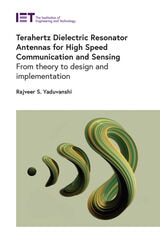
Terahertz Dielectric Resonator Antennas for High Speed Communication and Sensing
From theory to design and implementationRajveer S. Yaduvanshi
The Institution of Engineering and Technology, 2022

Terra Incognita
Mapping the Antipodes before 1600Alfred Hiatt
University of Chicago Press, 2008
In Terra Incognita, Alfred Hiatt draws on sources both literary and visual to understand the appeal of the antipodes. Examining maps and diagrams, as well as evidence contained in geographical and historical works, poetry, travel narratives, and legal documents, he challenges long-standing characterizations of medieval spatiality as exclusively symbolic and religious. Instead, Hiatt finds, the idea of people on the other side of the Earth provided a potent and malleable symbol for political theorists, satirists, scholars, and poets—as well as for map makers. Terra Incognita is, in the end, the history of a non-place, of lands conjured by the scientific imagination, which nevertheless drove exploration, and which continued to shape the world map, even as they slowly vanished from it.
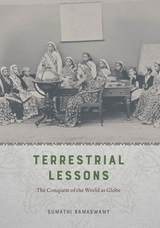
Terrestrial Lessons
The Conquest of the World as GlobeSumathi Ramaswamy
University of Chicago Press, 2017
In Terrestrial Lessons, Ramaswamy provides the first in-depth analysis of the globe’s history in and impact on the Indian subcontinent during the colonial era and its aftermath. Drawing on a wide array of archival sources, she delineates its transformation from a thing of distinction possessed by elite men into that mass-produced commodity used in classrooms worldwide—the humble school globe. Traversing the length and breadth of British India, Terrestrial Lessons is an unconventional history of this master object of pedagogical modernity that will fascinate historians of cartography, science, and Asian studies.
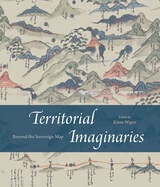
Territorial Imaginaries
Beyond the Sovereign MapEdited by Kären Wigen
University of Chicago Press, 2025
This strikingly colorful volume contends that modern mapping has never been sufficient to illustrate the complex reality of territory and political sovereignty, whether past or present. For Territorial Imaginaries, editor Kären Wigen has assembled an impressive slate of experts, spanning disciplines from political science to art history, to contribute perspectives and case studies covering three main themes: mapping before the nation-state, rethinking and critiquing mapping practices, and robust traditions of counter-cartography.
Each contributor proposes alternative ways to think about mapping, and the essays are supported with rich archival documentation. Among the far-reaching case studies are Barbara Mundy’s cartographic history of Indigenous dispossession in the Americas, Peter Bol’s examination of two Chinese maps created five hundred years apart, and Ali Yaycıoğlu’s exploration of tensions between top-down and bottom-up mapping of Habsburg and Ottoman border claims.

Test and Diagnosis of Analogue, Mixed-signal and RF Integrated Circuits
The system on chip approachYichuang Sun
The Institution of Engineering and Technology, 2008

Test and Evaluation of Aircraft Avionics and Weapon Systems
Robert E. McShea
The Institution of Engineering and Technology, 2010

Test and Evaluation of Aircraft Avionics and Weapon Systems
Robert E. McShea
The Institution of Engineering and Technology, 2014

Texas Takes Shape
A History in Maps from the General Land OfficeBy Mark Lambert, James Harkins, Brian A. Stauffer, and Patrick Walsh
University of Texas Press, 2025
2025 Second Place, Presidio La Bahía Award, Sons of the Republic of Texas
2026 Ron Tyler Award for Best Illustrated Book on Texas History and Culture, Texas State Historical Association (TSHA)
A comprehensive volume on historical mapping in Texas.
The Texas General Land Office’s map collection contains over 45,000 maps, some dating from the sixteenth century, making it one of the most important cartographic archives in Texas. As products and agents of history drawn by cartographers with motives and means as diverse as the places they document, maps provide a unique perspective on geopolitical, cultural, and economic processes. The maps of the GLO offer key insights into Texas’s sprawling history. They speak to issues of changing borders, social and political upheaval, and questions of sovereignty and power.
Texas Takes Shape offers an illuminating selection from the GLO archive: over one hundred maps that tell—and sometimes obscure—the stories of European colonization, Spanish and Mexican rule, the Republic of Texas, and the modern US state. There are maps here of every scale, from the hemispheric visions of European explorers to individual survey plats. Accompanying essays offer fascinating lessons on topics ranging from Indigenous cartography to military and railroad mapmaking and frontier surveys. Artful and informative, Texas Takes Shape examines a unique place through the eyes and imaginations of those who sought to govern it, profit from it, understand it, and call it home.
The Accidental Network
How a Small Company Sparked a Global Broadband TransformationRouzbeh Yassini-Fard
West Virginia University Press, 2025
The Accidental Network shares the untold story of the invention of the cable modem by the small, struggling tech company LANcity in the early 1990s, illustrating how Yassini-Fard overcame a cascade of technical challenges, investment community naysayers, and unnerving business obstacles to create the cable modem technology that has changed the way billions of individuals across the globe now manage their daily lives and commerce. The cable modem delivered broadband, with speeds ranging from 10 megabits per second (Mbps) to 10 gigabits per second (Gbps)—a big leap from the dial-up speeds of 56 kilobits per second (Kbps). This platform, along with the adoption of the DOCSIS (Data Over Cable Service Interface Specification) standard, engendered the modern revolution in broadband Internet access. Shunned by venture capitalists and surviving on a shoestring budget, Yassini-Fard and his colleagues were willing to bet it all (including the deed for Yassini-Fard’s home) on the creation of the cable modem and the pursuit of global adoption.
The Accidental Network is both a valuable history of technology innovation and an engrossing account of business conducted at high speed. The book details Yassini-Fard’s journey from electrical engineer to entrepreneur in the race to secure technology partners, create a wholly new marketplace, and convince cable industry executives that a bold business awaited in transmitting data to households at a time when skepticism about the reach of personal computing was the norm.
Written from the lens of a devoted idealist and WVU alum known as “the father of the cable modem,” this book reveals how a perfect storm of forces—the rise of cable television, the onset of the personal computing era, a growing awareness of the Internet for information and commerce, and the development of the cable modem—converged to usher in the age of broadband access.