Results by title
59 books match the query 'Tragedy' and 20 start with t
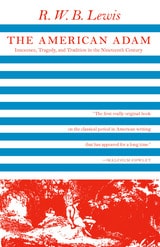
The American Adam
Innocence, Tragedy, and Tradition in the Nineteenth CenturyR. W. B. Lewis
University of Chicago Press, 1959

The American Adam
Innocence, Tragedy, and Tradition in the Nineteenth CenturyR. W. B. Lewis
University of Chicago Press, 1959
Intellectual history is viewed in this book as a series of "great conversations"—dramatic dialogues in which a culture's spokesmen wrestle with the leading questions of their times. In nineteenth-century America the great argument centered about De Crèvecoeur's "new man," the American, an innocent Adam in a bright new world dissociating himself from the historic past. Mr. Lewis reveals this vital preoccupation as a pervasive, transforming ingredient of the American mind, illuminating history and theology as well as art, shaping the consciousness of lesser thinkers as fully as it shaped the giants of the age. He traces the Adamic theme in the writings of Emerson, Thoreau, Hawthorne, Melville, Henry James, and others, and in an Epilogue he exposes their continuing spirit in the works of F. Scott Fitzgerald, William Faulkner, Ralph Ellison, J. D. Salinger, and Saul Bellow.
The Complete Tragedies, Volume 1
Medea, The Phoenician Women, Phaedra, The Trojan Women, OctaviaLucius Annaeus Seneca
University of Chicago Press, 2017
Edited by world-renowned classicists Elizabeth Asmis, Shadi Bartsch, and Martha C. Nussbaum, the Complete Works of Lucius Annaeus Seneca series offers authoritative, modern English translations of the writings of the Stoic philosopher and playwright (4 BCE–65 CE). The two volumes of The Complete Tragedies present all of his dramas, expertly rendered by preeminent scholars and translators.
This first volume contains Medea, The Phoenician Women, Phaedra, The Trojan Women, and Octavia, the last of which was written in emulation of Senecan tragedies and serves as a unique example of political tragedy. High standards of accuracy, clarity, and style are maintained throughout the translations, which render Seneca into verse with as close a correspondence, line for line, to the original as possible, and with special attention paid to meter and overall flow. In addition, each tragedy is prefaced by an original translator’s introduction offering reflections on the work’s context and meaning. Notes are provided for the reader unfamiliar with the culture and history of classical antiquity. Accordingly, The Complete Tragedies will be of use to a general audience and professionals alike, from the Latinless student to scholars and instructors of comparative literature, classics, philosophy, drama, and more.
The Complete Tragedies, Volume 2
Oedipus, Hercules Mad, Hercules on Oeta, Thyestes, AgamemnonLucius Annaeus Seneca
University of Chicago Press, 2017
Edited by world-renowned classicists Elizabeth Asmis, Shadi Bartsch, and Martha C. Nussbaum, the Complete Works of Lucius Annaeus Seneca offers authoritative, modern English translations of the writings of the Stoic philosopher and playwright (4 BCE–65 CE). The two volumes of The Complete Tragedies presents all of his dramas, expertly rendered by preeminent scholars and translators.
The first volume contains Medea, The Phoenician Women, Phaedra, The Trojan Women, and Octavia, the last of which was written in emulation of Senecan tragedies and serves as a unique example of political tragedy. This second volume includes Oedipus, Hercules Mad, Hercules on Oeta, Thyestes, and Agamemnon. High standards of accuracy, clarity, and style are maintained throughout the translations, which render Seneca into verse with as close a correspondence, line for line, to the original as possible, and with special attention paid to meter and overall flow. In addition, each tragedy is prefaced by an original translator’s introduction offering reflections on the work’s context and meaning. Notes are provided for the reader unfamiliar with the culture and history of classical antiquity. Accordingly, The Complete Tragedies will be of use to a general audience and professionals alike, from the Latinless student to scholars and instructors of comparative literature, classics, philosophy, drama, and more.

The Culture of Violence
Essays on Tragedy and HistoryFrancis Barker
University of Chicago Press, 1993
Central to his argument is the contention that, contrary to post-Enlightenment humanist, liberal and conservative thought, 'culture' does not necessarily stand in opposition to political inequality and social injustice, but may be complicit with the oppressive exercise of power.
The book focuses on Shakespearean tragedy and on the historicism and culturalism of much present-day cultural theory. Barker's analysis moves dialectically backwards and forwards between these two moments in order to illuminate aspects of early modern culture, and to critique the ways in which the complicity between culture and violence has been occluded. Rejecting the tendency of both modernism and post-modernism to homogenise historical time, Barker argues for a genuinely new, 'diacritical' understanding of the violence of history.
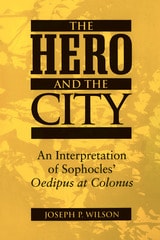
The Hero and the City
An Interpretation of Sophocles' Oedipus at ColonusJoseph P. Wilson
University of Michigan Press, 2003
Joseph P. Wilson is Professor of Foreign Languages at the University of Scranton.

The Hidden War
Crime and the Tragedy of Public Housing in ChicagoPopkin, Susan J
Rutgers University Press, 2000
Since the late 1970s, the high-rise developments of the Chicago Housing Authority (CHA) have been dominated by gang violence and drugs, creating a sense of hopelessness among residents. Despite a lengthy war on crime, costing hundreds of millions of dollars, the CHA has been unable to reduce the violence that makes life intolerable. Focusing on three developments—Rockwell Gardens, Henry Horner Homes, and Harold Ickes Homes—Sue Popkin and her co-authors interview residents, community leaders, and CHA staff. The Hidden War chronicles the many failed efforts of the CHA to combat crime and improve its developments, offering a vivid portrait of what life is like when lived among bullets, graffiti, and broken plumbing.
Most families living in these developments are headed by African American single mothers. The authors reveal the dilemmas facing women and children who are often victims or witnesses of violent crime, and yet are dependent on the perpetrators and their drug-dominant economy. The CHA—plagued by financial scandals, managerial incompetence, and inconsistent funding—is no match for thegang-dominated social order. Even well-intentioned initiatives such as the recent effort to demolish and “revitalize” the worst developments seem to be ineffective at combating crime, while the drastic changes leave many vulnerable families facing an uncertain future. The Hidden War sends a humbling message to policy makers and prognosticators who claim to know the right way to “solve poverty.”
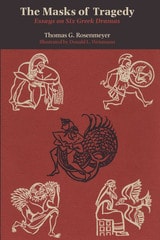
The Masks of Tragedy
Essays on Six Greek DramasBy Thomas G. Rosenmeyer
University of Texas Press, 1963
"What matters about a play is not the extent to which it is like any other play, but the way in which it is different," writes Thomas G. Rosenmeyer. "This is, I suggest, how the ancient audiences received the performances.... My purpose, then, in writing these essays is twofold: ... to devote enough space to the discussion of each play to allow its special tone and texture to emerge without hindrance and at leisure ... and to include in one collection analyses of plays so different from one another that the accent will come to rest on the variety of the tragic experience rather than on any one narrowly defined norm."
Greek tragedy is a vehicle for many different ideas and many different intentions. From the wealth of material that has come down to us the author has chosen six plays for analysis. He reminds us that the plays were written to be seen and heard, and only secondarily to be studied. The listeners expected each play to have a specific objective, and to exhibit its own mood. These the author attempts to recover for us, by listening to what each play, in its own right, has to say. His principal concern is with the tragic diction and the tragic ideas, designed to release certain massive responses in the large theater-going group of ancient Athens. In exploring the characters and the situations of the plays he has chosen, the author transports his reader to the world of fifth-century B.C. Greece, and establishes the relevance of that world to our own experience.
The essays are not introductory in nature. No space is given, for instance, to basic information about the playwrights, the history of Greek drama, or the special features of the Attic stage. Yet the book addresses itself to classicists and nonclassicists alike. The outgrowth of a series of lectures to nonspecialists, its particular appeal is to students of literature and the history of Western thought. Parallels are drawn between the writings of the philosophers and the tragedies, and attention is paid to certain popular Greek beliefs that colored the tragic formulations. Ultimately, however, the approach is not historical but critical; it is the author's intention to demonstrate the beauty and the craftsmanship of the plays under discussion.
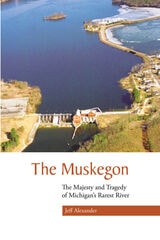
The Muskegon
The Majesty and Tragedy of Michigan's Rarest RiverJeff Alexander
Michigan State University Press, 2006
Muskegon is a derivation of a Native American word meaning "river with marshes." Jeff Alexander examines the creation, uses of, devastation, and restoration of Michigan's historic and beautiful Muskegon River.
Four of the five Great Lakes touch Michigan's shores; the state's shoreline spans more than 4,500 miles, not to mention more than 11,000 inland lakes and a multitude of rivers. The Muskegon River, the state's second longest river, runs 227 miles and has the most diverse features of any of Michigan’s many rivers. The Muskegon rises from the center of the state, widens, and moves westward, passing through the Pere Marquette and AuSable State Forests. The river ultimately flows toward Lake Michigan, where it opens into Muskegon Lake, a 12 square-mile, broad harbor located between the Muskegon River and Lake Michigan.
Formed several thousand years ago, when the glaciers that created the Great Lakes receded, and later inhabited by Ottawa and Potawatomi Indians, the Muskegon River was used by French fur trappers in the 1600s. Rich in white pine, the area was developed during the turn-of-the-century lumber boom, and at one time Muskegon Lake boasted more than 47 sawmills. The Muskegon was ravaged following settlement by Europeans, when rivers and streams were used to transport logs to the newly developing cities. Dams on rivers and larger streams provided power for sawmills and grain milling, and later provided energy for generating electricity as technology advanced.
There is now an ambitious effort to restore and protect this mighty river's natural features in the face of encroaching urbanization and land development that threatens to turn this majestic waterway into a mirror image of the Grand River, Michigan's longest river and one of its most polluted.
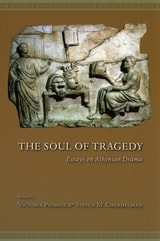
The Soul of Tragedy
Essays on Athenian DramaEdited by Victoria Pedrick and Steven M. Oberhelman
University of Chicago Press, 2005
Exemplary of the nature and scope of this book, the essays range from Simon Goldhill's comparative study of music, gender, and culture to Martha Nussbaum's inspection of "the comic soul." Through the critical lenses of psychoanalysis, gender, social history, and philology, this compilation looks at Greek tragedy's peculiar power to illuminate the workings of the human soul. Structures of tragic meaning, the relationship between character desire and spectator experience, and investigations of tragedy's extraordinary preoccupation with gender reveal the form's emotional core and explain its rapid ascent through the hierarchy of cultural practices in classical Greece. The Soul of Tragedy is a celebration and a model of collaboration that will be essential reading for scholars in classics, literature, and drama.
The Tragedy and Comedy of Life
Plato's PhilebusPlato
University of Chicago Press, 1993
In The Tragedy and Comedy of Life, Seth Benardete focuses on the idea of the good in what is widely regarded as one of Plato's most challenging and complex dialogues, the Philebus. Traditionally the Philebus is interpreted as affirming the doctrine that the good resides in thought and mind rather than in pleasure or the body. Benardete challenges this view, arguing that Socrates vindicates the life of the mind over the life of pleasure not by separating the two and advocating a strict asceticism, but by mixing pleasure and pain with mind in such a way that the philosophic life emerges as the only possible human life.
Benardete combines a probing and challenging commentary that subtly mirrors and illuminates the complexities of this dialogue with the finest English translation of the Philebus yet available. The result is a work that will be of great value to classicists, philosophers, and political theorists alike.

The Tragedy of Bukharin
Donny Gluckstein
Pluto Press, 1994
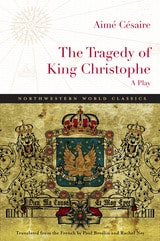
The Tragedy of King Christophe
Aimé Césaire
Northwestern University Press, 2015
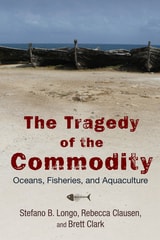
The Tragedy of the Commodity
Oceans, Fisheries, and AquacultureLongo, Stefano B
Rutgers University Press, 2015
Although humans have long depended on oceans and aquatic ecosystems for sustenance and trade, only recently has human influence on these resources dramatically increased, transforming and undermining oceanic environments throughout the world. Marine ecosystems are in a crisis that is global in scope, rapid in pace, and colossal in scale. In The Tragedy of the Commodity, sociologists Stefano B. Longo, Rebecca Clausen, and Brett Clark explore the role human influence plays in this crisis, highlighting the social and economic forces that are at the heart of this looming ecological problem.
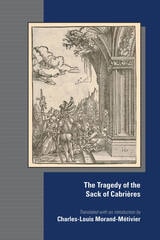
The Tragedy of the Sack of Cabrières
Translated by Charles-Louis Morand-Métivier
Arizona Center for Medieval and Renaissance Studies, 2022
April 1542 saw a massacre of epic proportions in the Luberon, in southeastern France, of its Waldensian population, who had been peacefully living there after they settled in a few centuries before. This massacre foreshadowed the wars of religion, which tore apart the kingdom for almost forty years. The Tragédie du Sac de Cabrières is the only play devoted to these events. This is a critical edition and English translation of the French play. Three critical editions of the play have been published in 1927, 1928, and 1998, and this new edition complements the previous works. This is the first English translation of the play and makes it available to an international audience of scholars and students of the early modern period.
This edition “translates” the moment of the play's creation, the representation of the event, and its importance in the narrative of religious persecutions in sixteenth-century France. It explains how history is dramatized through the creation of the scenic story and scenic play of Cabrières. and how the specific retelling of the events of Cabrières makes this a tool of historical narration, thus allowing the audience to participate in the unfolding of history before their eyes. Therefore, they become part of history, because it is played before their eyes so that they can not only witness it but also propagate the glory of the martyrs for future generations. This is not only a translation and a work of literary scholarship, it is an analysis of the literary, political, and religious production of this period, and a multidisciplinary analysis of Waldensianism in southeastern France.
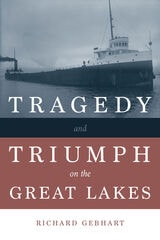
Tragedy and Triumph on the Great Lakes
Richard Gebhart
Michigan State University Press, 2024
Tragedy and the Return of the Dead
John D. Lyons
Northwestern University Press, 2018
Early modernity rediscovered tragedy in the dramas and the theoretical writings of the ancient Greeks and Romans. Attempting to make new tragic fictions, writers like Shakespeare, Webster, Hardy, Corneille, and Racine created a dramatic form that would probably have been unrecognizable to the ancient Athenians. Tragedy and the Return of the Dead recovers a model of the tragic that fits ancient tragedies, early modern tragedies, as well as contemporary narratives and films no longer called “tragic” but which perpetuate the same elements.
Authoritative, wide-ranging, and thought provoking, Tragedy and the Return of the Dead uncovers a set of interlocking plots of family violence that stretch from Greek antiquity up to the popular culture of today. Casting aside the elite, idealist view that tragedy manifests the conflict between two equal goods or the human struggle against the divine, John D. Lyons looks closely at tragedy’s staging of gory and painful deaths, ignominious burials, and the haunting return of ghosts. Through this adjusted lens Le Cid, Hamlet, Frankenstein, The Spanish Tragedy, Romeo and Juliet, Phèdre, Macbeth, and other early modern works appear in a striking new light. These works are at the center of a panorama that stretches from Aeschylus’s Agamemnon to Hitchcock’s Psycho and are placed against the background of the Gothic novel, Freud’s “uncanny,” and Burke’s “sublime.”
Lyons demonstrates how tragedy under other names, such as “Gothic fiction” and “thrillers,” is far from dead and continues as a vital part of popular culture.
Tragedy
Contradiction and RepressionRichard Kuhns
University of Chicago Press, 1991
From Aeschylus' classic drama The Persians to the hidden tragic themes in The Merchant of Venice, from the aesthetic writings of Kant to Kleist's narrative Michael Kohlhaas, Kuhns traces the writing and rewriting of the themes of ancient tragedy through modern texts. A culture's concept of fate, Kuhns argues, evolves along with its concepts and forms of tragedy. Examining the deep philosophical concerns of tragedy, he shows how the genre has changed from loss and mourning to contradiction and repression. He sees the fact that tragedy went underground during the optimism of the Enlightenment as a repression that continues into the American consciousness. Turning to Melville's The Confidence Man as an example of Old World despair giving way to New World nihilism, Kuhns indicates how psychoanalytic understanding of tragedy provides a method of interpretation that illuminates the continuous tradition from the ancient to the modern world. The study concludes with reflections on the poetry of Walt Whitman and Emily Dickinson. Each poet's celebration of the body, and the contribution of the senses to reason, perception, and poetic intuition, is seen as an embodiment of the modern tragic sensibility.
Tragic Effects
Ethics and Tragedy in the Age of TranslationTherese Augst
The Ohio State University Press, 2012
Tragic Effects: Ethics and Tragedy in the Age of Translation confronts the peculiar fascination with Greek tragedy as it shapes the German intellectual tradition, with particular focus on the often controversial practice of translating the Greeks. Whereas the tradition of emulating classical ideals in German intellectual life has generally emerged from the impulse to identify with models, the challenge of translating the Greeks underscores the linguistic and historical discontinuities inherent in the recourse to ancient material and inscribes that experience of disruption as fundamental to modernity.
Friedrich Hölderlin’s translations are a case in point. Regarded in his own time as the work of a madman, his renditions of Sophoclean tragedy intensify dramatic effect with the unsettling experience of familiar language slipping its moorings. His attention to marking the distances between ancient source text and modern translation has granted his Oedipus and Antigone a distinct longevity as objects of discussion, adaptation, and even retranslation. Cited by Walter Benjamin, Martin Heidegger, Bertolt Brecht, and others, Hölderlin’s Sophocles project follows a path both marked by various contexts and tinged by persistent quandaries of untranslatability.
Tragedy has long functioned as a cornerstone for questions about ethical life. By placing emphasis on processes of translation and adaptation, however, Tragic Effects approaches the question of ethics from a perspective informed by recent discourse in translation studies. Reconstructing an ancient text in this context requires negotiating the difficult tension between comprehending the distant past and preserving its radical singularity.
Transgressions of Reading
Narrative Engagement as Exile and ReturnRobert D. Newman
Duke University Press, 1992
Newman describes this psychodrama of narrative engagement as that of exile and return, an experience in which narrative becomes a type of homeland, beckoning and elusive, endlessly defining and disrupting the borders of a reader's identity. Within this paradigm, he considers a fascinating variety of narrative texts: from the Jim Jones episode in Guyana to Freud's repression of personal history in his story of Moses; from a surrealistic collage novel by Max Ernst to the horror films of Alfred Hitchcock; from the works of James Joyce, Ariel Dorfman, Milan Kundera, and D. M. Thomas to the tales of abjection in pornography.
Transgressions of Reading is itself an engaging work, as interesting for its provocative readings of particular works as for its theoretical insights. It will appeal to readers from all fields in which narrative plays a crucial role, in the study of film and art, modern and contemporary literature, popular culture, and feminist, psychoanalytic, and reader response theory.