94 books match the query 'Transnationalism' and 23 start with t

cover of The Borderlands of Culture: Americo Paredes and the Transnational Imaginary

The Borderlands of Culture

Americo Paredes and the Transnational Imaginary

Ramón Saldívar

Duke University Press, 2006

Poet, novelist, journalist, and ethnographer, Américo Paredes (1915–1999) was a pioneering figure in Mexican American border studies and a founder of Chicano studies. Paredes taught literature and anthropology at the University of Texas, Austin for decades, and his ethnographic and literary critical work laid the groundwork for subsequent scholarship on the folktales, legends, and riddles of Mexican Americans. In this beautifully written literary history, the distinguished scholar Ramón Saldívar establishes Paredes’s preeminent place in writing the contested cultural history of the south Texas borderlands. At the same time, Saldívar reveals Paredes as a precursor to the “new” American cultural studies by showing how he perceptively negotiated the contradictions between the national and transnational forces at work in the Americas in the nascent era of globalization.

Saldívar demonstrates how Paredes’s poetry, prose, and journalism prefigured his later work as a folklorist and ethnographer. In song, story, and poetry, Paredes first developed the themes and issues that would be central to his celebrated later work on the “border studies” or “anthropology of the borderlands.” Saldívar describes how Paredes’s experiences as an American soldier, journalist, and humanitarian aid worker in Asia shaped his understanding of the relations between Anglos and Mexicans in the borderlands of south Texas and of national and ethnic identities more broadly. Saldívar was a friend of Paredes, and part of The Borderlands of Culture is told in Paredes’s own words. By explaining how Paredes’s work engaged with issues central to contemporary scholarship, Saldívar extends Paredes’s intellectual project and shows how it contributes to the remapping of the field of American studies from a transnational perspective.

[more]
cover of The Changing Face of Home: The Transnational Lives of the Second Generation

The Changing Face of Home

The Transnational Lives of the Second Generation

Peggy Levitt

Russell Sage Foundation, 2002

The children of immigrants account for the fastest growing segment of the U.S. population under eighteen years old—one out of every five children in the United States. Will this generation of immigrant children follow the path of earlier waves of immigrants and gradually assimilate into mainstream American life, or does the global nature of the contemporary world mean that the trajectory of today's immigrants will be fundamentally different? Rather than severing their ties to their home countries, many immigrants today sustain economic, political, and religious ties to their homelands, even as they work, vote, and pray in the countries that receive them. The Changing Face of Home is the first book to examine the extent to which the children of immigrants engage in such transnational practices. Because most second generation immigrants are still young, there is much debate among immigration scholars about the extent to which these children will engage in transnational practices in the future. While the contributors to this volume find some evidence of transnationalism among the children of immigrants, they disagree over whether these activities will have any long-term effects. Part I of the volume explores how the practice and consequences of transnationalism vary among different groups. Contributors Philip Kasinitz, Mary Waters, and John Mollenkopf use findings from their large study of immigrant communities in New York City to show how both distance and politics play important roles in determining levels of transnational activity. For example, many Latin American and Caribbean immigrants are "circular migrants" spending much time in both their home countries and the United States, while Russian Jews and Chinese immigrants have far less contact of any kind with their homelands. In Part II, the contributors comment on these findings, offering suggestions for reconceptualizing the issue and bridging analytical differences. In her chapter, Nancy Foner makes valuable comparisons with past waves of immigrants as a way of understanding the conditions that may foster or mitigate transnationalism among today's immigrants. The final set of chapters examines how home and host country value systems shape how second generation immigrants construct their identities, and the economic, social, and political communities to which they ultimately express allegiance. The Changing Face of Home presents an important first round of research and dialogue on the activities and identities of the second generation vis-a-vis their ancestral homelands, and raises important questions for future research.
[more]
cover of The Duplex Nature of Indigeneity: Navigating Identity in the Ahuehuepan Diaspora

The Duplex Nature of Indigeneity

Navigating Identity in the Ahuehuepan Diaspora

Frans J. Schryer

University Press of Colorado, 2025

The Duplex Nature of Indigeneity is a detailed ethnography centered on Ahuehuepan, a Mexican town in the Alto Balsas region of the state of Guerrero, where an exodus of more than half the population to the United States and other parts of Mexico has altered both livelihoods and social identities. Frans Schryer traces the people, including families and descendants, who locate their identity in the Alto Balsas—a place some of them may never have seen.
 
Using a variety of sources, perspectives, and methods, Schryer takes a duplexity approach, which allows understanding the complexity of social reality and its complementary nature—it identifies fields, clusters, and layers as interconnected components of social life. The innovative methods consist of the combination of ethnographic description and an ethnohistorical census that provides information on every person going back to approximately 1850. That census is further examined with the use of inferential and non-inferential statistical techniques, archival research in locations not normally accessible to scholars, Facebook, phone interviews conducted over several years, and help from Nahuatl-speaking people whose perspectives on the findings generate additional information and insights.
 
Unique in this presentation, which dips into the lives of generations of people to draw insight on those who lay claim to transnational Indigeneity, Schryer’s work contributes to research and theoretical discussion in the field of migration and globalization studies through a close examination of one Indigenous community over the course of many years, utilizing a mix of qualitative and quantitative research methods in anthropology.

 
[more]
cover of The Imaginary and Its Worlds: American Studies after the Transnational Turn

The Imaginary and Its Worlds

American Studies after the Transnational Turn

Edited by Laura Bieger, Ramón Saldívar, and Johannes Voelz

Dartmouth College Press, 2013
The Imaginary and Its Worlds collects essays that boldly rethink the imaginary as a key concept for cultural criticism. Addressing both the emergence and the reproduction of the social, the imaginary is ideally suited to chart the consequences of the transnational turn in American studies. Leading scholars in the field from the United States and Europe address the literary, social, and political dimensions of the imaginary, providing a methodological and theoretical groundwork for American studies scholarship in the transnational era and opening new arenas for conceptualizing formations of imaginary belonging and subjectivity. This important state-of-the-field collection will appeal to a broad constituency of humanists working to overcome methodological nationalism. The Imaginary and Its Worlds: An Introduction • LITERARY IMAGINARIES • Imagining Cultures: The Transnational Imaginary in Postrace America - Ramón Saldívar • The Necessary Fragmentation of the (U.S.) Literary-Cultural Imaginary - Lawrence Buell • Imaginaries of American Modernism - Heinz Ickstadt • SOCIAL IMAGINARIES • William James versus Charles Taylor: Philosophy of Religion and the Confines of the Social and Cultural Imaginaries - Herwig Friedl • The Shaping of We-Group Identities in the African American Community: A Perspective of Figurational Sociology on the Cultural Imaginary - Christa Buschendorf • Russia’s Californio Romance: The Other Shores of Whitman’s Pacific - Lene Johannessen • Form Games: Staging Life in the Systems Epoch - Mark Seltzer • POLITICAL IMAGINARIES • Real Toads - Walter Benn Michaels • Obama Unwound: The Romanticism of Victory and the Defeat of Compromise - Christopher Newfield • Barack Obama’s Orphic Mysteries - Donald E. Pease • Coda. The Imaginary and the Second Narrative: Reading as Transfer - Winfried Fluck • Contributors • Index
[more]
cover of The Labor of Care: Filipina Migrants and Transnational Families in the Digital Age

The Labor of Care

Filipina Migrants and Transnational Families in the Digital Age

Valerie Francisco-Menchavez

University of Illinois Press, 2018

For generations, migration moved in one direction at a time: migrants to host countries, and money to families left behind. The Labor of Care argues that globalization has changed all that. Valerie Francisco-Menchavez spent five years alongside a group of working migrant mothers. Drawing on interviews and up-close collaboration with these women, Francisco-Menchavez looks at the sacrifices, emotional and material consequences, and recasting of roles that emerge from family separation. She pays particular attention to how technologies like Facebook, Skype, and recorded video open up transformative ways of bridging distances while still supporting traditional family dynamics. As she shows, migrants also build communities of care in their host countries. These chosen families provide an essential form of mutual support. What emerges is a fascinating portrait of today's transnational family—sundered, yet inexorably linked over the distances by timeless emotions and new forms of intimacy.
[more]
cover of The Limits of Transnationalism

The Limits of Transnationalism

Nancy L. Green

University of Chicago Press, 2019

Transnationalism means many things to many people, from crossing physical borders to crossing intellectual ones. The Limits of Transnationalism reassesses the overly optimistic narratives often associated with this malleable term, revealing both the metaphorical and very real obstacles for transnational mobility. Nancy L. Green begins her wide-ranging examination with the story of Frank Gueydan, an early twentieth-century American convicted of manufacturing fake wine in France who complained bitterly that he was neither able to get a fair trial there nor to enlist the help of US officials. Gueydan’s predicament opens the door for a series of inquiries into the past twenty-five years of transnational scholarship, raising questions about the weaknesses of global networks and the slippery nature of citizenship ties for those who try to live transnational lives. The Limits of Transnationalism serves as a cogent reminder of this topic’s complexity, calling for greater attention to be paid to the many bumps in the road.
 
[more]
cover of The Other Side of the Fence: American Migrants in Mexico

The Other Side of the Fence

American Migrants in Mexico

By Sheila Croucher

University of Texas Press, 2009

A growing number of Americans, many of them retirees, are migrating to Mexico's beach resorts, border towns, and picturesque heartland. While considerable attention has been paid to Mexicans who immigrate to the U.S., the reverse scenario receives little scrutiny. Shifting the traditional lens of North American migration, The Other Side of the Fence takes a fascinating look at a demographic trend that presents significant implications for the United States and Mexico.

The first in-depth account of this trend, Sheila Croucher's study describes the cultural, economic, and political lives of these migrants of privilege. Focusing primarily on two towns, San Miguel de Allende in the mountains and Ajijic along the shores of Lake Chapala, Croucher depicts the surprising similarities between immigrant populations on both sides of the border. Few Americans living in Mexico are fluent in the language of their new land, and most continue to practice the culture and celebrate the national holidays of their homeland, maintaining close political, economic, and social ties to the United States while making political demands on Mexico, where they reside.

Accessible, timely, and brimming with eye-opening, often ironic, findings, The Other Side of the Fence brings an important perspective to borderlands debates.

[more]
cover of The Rise of Comparative History

The Rise of Comparative History

Balázs Trencsényi

Central European University Press, 2021

This book—the first of a three-volume overview of comparative and transnational historiography in Europe—focuses on the complex engagement of various comparative methodological approaches with different transnational and supranational frameworks. It considers scales from universal history to meso-regional (i.e. Balkans, Central Europe, etc.) perspectives. In the form of a reader, it displays 18 historical studies written between 1900 and 1943. The collection starts with the French and German methodological discussions around the turn of the twentieth century, stemming from the effort to integrate history with other emerging social sciences on a comparative methodological basis. The volume then turns to the question of structural and institutional comparisons, revisiting various historiographical ventures that tried to sketch out a broader (regional or European-level) interpretative framework to assess the legal systems, patterns of agrarian production, and the common ethnographic and sociocultural features. 
  
In the third part, a number of texts are presented, which put forward a supra-national research framework as an antidote to national exclusivism. While in Western Europe the most obvious such framework was pan-European, in East Central Europe the agenda of comparison was linked usually to a meso-regional framework.

The studies are accompanied by short contextual introductions including biographical information on the respective authors.
[more]
cover of The Scattered Family: Parenting, African Migrants, and Global Inequality

The Scattered Family

Parenting, African Migrants, and Global Inequality

Cati Coe

University of Chicago Press, 2013
Today’s unprecedented migration of people around the globe in search of work has had a widespread and troubling result: the separation of families. In The Scattered Family, Cati Coe offers a sophisticated examination of this phenomenon among Ghanaians living in Ghana and abroad. Challenging oversimplified concepts of globalization as a wholly unchecked force, she details the diverse and creative ways Ghanaian families have adapted long-standing familial practices to a contemporary, global setting.

Drawing on ethnographic and archival research, Coe uncovers a rich and dynamic set of familial concepts, habits, relationships, and expectations—what she calls repertoires—that have developed over time, through previous encounters with global capitalism. Separated immigrant families, she demonstrates, use these repertoires to help themselves navigate immigration law, the lack of child care, and a host of other problems, as well as to help raise children and maintain relationships the best way they know how. Examining this complex interplay between the local and global, Coe ultimately argues for a rethinking of what family itself means. 
[more]
cover of The Transnational Politics of Asian Americans

The Transnational Politics of Asian Americans

edited by Christian Collet and Pei-te Lien, foreword by Don Nakanishi

Temple University Press, 2009

As America’s most ethnically diverse foreign-born population, Asian Americans can puzzle political observers. This volume’s multidisciplinary team of contributors employ a variety of methodologies— including quantitative, ethnographic, and historical—to illustrate how transnational ties between the U.S. and Asia have shaped, and are increasingly defining, Asian American politics in our multicultural society.

Original essays by U.S.- and Asian-based scholars discuss Cambodian, Chinese, Filipino, Indian, Japanese, Korean, and Vietnamese communities from Boston to Honolulu. The volume also shows how the grassroots activism of America's "newest minority" both reflects and is instrumental in broader processes of political change throughout the Pacific. Addressing the call for more global approaches to racial and ethnic politics, contributors describe how Asian immigrants strategically navigate the hurdles to domestic incorporation and equality by turning their political sights and energies toward Asia. These essays convincingly demonstrate that Asian American political participation in the U.S. does not consist simply of domestic actions with domestic ends.

Contributors include: Eiichiro Azuma, Augusto Espiritu, Hiroko Furuya, Peter Kiang, Ikumi Koakutsu, Michel Laguerre, Sangay Mishra, Hiromi Monobe, Shirley Tang, Tritia Toyota, Janelle Wong, and the editors.
[more]
cover of Transatlantic Central Europe: Contesting Geography and Redifining Culture beyond the Nation

Transatlantic Central Europe

Contesting Geography and Redifining Culture beyond the Nation

Jessie Labov

Central European University Press, 2019

While there are still occasional uses of it today, the term "Central Europe" carries little of the charge that it did in the 1980s and early 1990s, and as a political and intellectual project it has receded from the horizon. Proponents of a distinct cultural profile of these countries—all involved now in the process of Transatlantic integration—used "Central European", as a contestation with the geo-political label of Eastern Europe. This book discusses the transnational set of practices connecting journals with other media in the mid-1980s, disseminating the idea of Central Europe simultaneously in East and West. A range of new methodologies, including GIS-mapping visualization, is used, repositing the political-cultural journal as one central node of a much larger cultural system. What has happened to the liberal humanist philosophy that "Central Europe" once evoked? In the early years of the transition era, the liberal humanist perspective shared by Havel, Konrád, Kundera, and Michnik was quickly replaced by an economic liberalism that evolved into neoliberal policies and practices. The author follows the trajectories of the concept into the present day, reading its material and intellectual traces in the postcommunist landscape. She explores how the current use of transnational, web-based media follows the logic and practice of an earlier, 'dissident' generation of writers.
[more]
cover of Transatlantic Scots

Transatlantic Scots

Edited by Celeste Ray, foreword by James Hunter

University of Alabama Press, 2005

Examines the impact of the Scottish legacy on North American cultures and heritage
 
During the past four decades, growing interest in North Americans' cultural and ancestral ties to Scotland has produced hundreds of new Scottish clan and heritage societies.  Well over 300 Scottish Highland games and gatherings annually take place across the U.S. and Canada. 

Transatlantic Scots is a multidisciplinary collection that studies the regional organization and varied expressions of the Scottish Heritage movement in the Canadian Maritimes, the Great Lakes, New England, and the American South. From diverse perspectives, authorities in their fields consider the modeling of a Scottish identity that distances heritage celebrants from prevalent visions of whiteness. Considering both hyphenated Scots who celebrate centuries-old transmission of Scottish traditions and those for whom claiming or re-claiming a Scottish identity is recent and voluntary, this book also examines how diaspora themes and Highland imagery repeatedly surface in regional public celebrations and how traditions are continually reinvented through the accumulation of myths. The underlying theoretical message is that ethnicity and heritage survive because of the flexibility of history and tradition. 

This work is a lasting contribution to the study of ethnicity and identity, the renegotiation of history and cultural memory into heritage, and the public performance and creation of tradition.

 
[more]
cover of Transatlantic Subjects: Acts of Migration and Cultures of Transnationalism between Greece and America

Transatlantic Subjects

Acts of Migration and Cultures of Transnationalism between Greece and America

Ioanna Laliotou

University of Chicago Press, 2004

The early twentieth century was marked by massive migration of southern Europeans to the United States. Transatlantic Subjects views this diaspora through the lens of Greek migrant life to reveal the emergence of transnational forms of subjectivity.

According to Ioanna Laliotou, cultural institutions and practices played an important role in the formation of migrant subjectivities. Reconstructing the cultural history of migration, her book points out the relationship between subjectivity formation and cultural practices and performances, such as publishing, reading, acting, storytelling, consuming, imitating, parading, and traveling. Transatlantic Subjects then locates the development of these practices within key sites and institutions of cultural formation, such as migrant and fraternal associations, educational institutions, state agencies and nongovernmental organizations, mental institutions, coffee shops, the church, steamship companies, banks, migration services, and chambers of commerce.

Ultimately, Laliotou explores the complex and situational entanglements of migrancy, cultural nationalism, and the politics of self. Reading against the grain of hegemonic narratives of cultural and migration histories, she reveals how migrancy produced distinctive forms of sociality during the first half of the twentieth century.

[more]
cover of Transcendental Resistance: The New Americanists and Emerson's Challenge

Transcendental Resistance

The New Americanists and Emerson's Challenge

Johannes Voelz

Dartmouth College Press, 2010
Johannes Voelz offers a critique of the New Americanists through a stimulating and original reexamination of the iconic figure of Ralph Waldo Emerson. Voelz argues against the prevailing tendency among Americanists to see Emerson as the product of an “all-pervasive scope of cultural power.” Instead he shows Emerson’s philosophy to be a deft response to the requirements of lecturing professionally at the newly built lyceums around the country. Voelz brings to light a fascinating organic relationship between Emerson’s dynamic style of thinking and the uplifting experience demanded by his public. This need for an audience-directed philosophy, the author argues, reveals the function of Emerson’s infamous inconsistencies on such issues as representation, identity, and nation. It also poses a major counter-argument to the New Americanists’ dim view of Emerson’s individualism and his vision of the private man in public. Challenging the fundamental premises of the New Americanists, this study is an important, even pathbreaking guide to the future of American studies.
[more]
cover of Translingual and Transnational Graduate Education in Rhetoric and Composition

Translingual and Transnational Graduate Education in Rhetoric and Composition

Nancy Bou Ayash

Utah State University Press, 2023

Translingual and Transnational Graduate Education in Rhetoric and Composition investigates the implications of composition studies’ changing terminological and ideological landscape around language and nation for the professionalization of future university writing teacher-scholars. As the collection editors argue, incorporating translingual and transnational theories into graduate pedagogy and curricular structures is necessary if they are to shape professional practices in rhetoric and composition  long term.
 
Contributors to the collection articulate the need for translingual and transnational sensibilities in rhetoric and composition graduate programs in light of the material conditions of graduate students’ lives and labor. They further present pathways for rethinking the design of graduate-level coursework, foreign language learning policies and labor, mentoring practices, writing teacher and writing center tutor training, and other professionalization initiatives. Offering a range of conceptually and empirically driven pieces, the collection brings together the voices and lived experiences of graduate students, faculty advisors, and administrators involved in the constant, necessary reworking of rhetoric and composition graduate education in a variety of institutional locales.
 
Translingual and Transnational Graduate Education in Rhetoric and Composition provides inspiration for graduate programs working to enact well-grounded curricular and pedagogical changes to counter the long-standing effects of the dominant racist and monolingualist ideologies in higher education generally, and rhetoric and composition studies specifically.
 
Contributors: Lucía Durá, Patricia Flores, Joe Franklin, Moisés Garcia-Renteria, Bruce Horner, Aimee Jones, Corina Lerma, Kate Mangelsdorf, Brice Nordquist, Madelyn Pawlowski, Christine Tardy, Amy Wan, Alex Way, Anselma Widha Prihandita, Joe Wilson, Xiaoye You, Emily Yuko Cousins, Michelle Zaleski
 
[more]
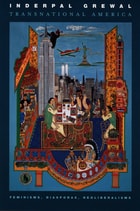
cover of Transnational America: Feminisms, Diasporas, Neoliberalisms

Transnational America

Feminisms, Diasporas, Neoliberalisms

Inderpal Grewal

Duke University Press, 2005

In Transnational America, Inderpal Grewal examines how the circulation of people, goods, social movements, and rights discourses during the 1990s created transnational subjects shaped by a global American culture. Rather than simply frame the United States as an imperialist nation-state that imposes unilateral political power in the world, Grewal analyzes how the concept of “America” functions as a nationalist discourse beyond the boundaries of the United States by disseminating an ideal of democratic citizenship through consumer practices. She develops her argument by focusing on South Asians in India and the United States.

Grewal combines a postcolonial perspective with social and cultural theory to argue that contemporary notions of gender, race, class, and nationality are linked to earlier histories of colonization. Through an analysis of Mattel’s sales of Barbie dolls in India, she discusses the consumption of American products by middle-class Indian women newly empowered with financial means created by India’s market liberalization. Considering the fate of asylum-seekers, Grewal looks at how a global feminism in which female refugees are figured as human rights victims emerged from a distinctly Western perspective. She reveals in the work of three novelists who emigrated from India to the United States—Bharati Mukherjee, Chitra Banerjee Divakaruni, and Amitav Ghosh—a concept of Americanness linked to cosmopolitanism. In Transnational America Grewal makes a powerful, nuanced case that the United States must be understood—and studied—as a dynamic entity produced and transformed both within and far beyond its territorial boundaries.
[more]
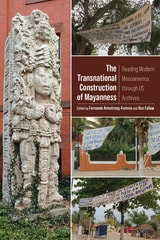
cover of Transnational Construction of Mayanness: Reading Modern Mesoamerica through US Archives

Transnational Construction of Mayanness

Reading Modern Mesoamerica through US Archives

Fernando Armstrong-Fumero

University Press of Colorado, 2023

The Transnational Construction of Mayanness explores how US academics, travelers, officials, and capitalists contributed to the construction of the Maya as an area of academic knowledge and affected the lives of the Maya peoples who were the subject of generations of anthropological research from the mid-nineteenth century to the present. Expanding discussions of the neocolonial relationship between the US and its southern neighbors and emphasizing little-studied texts virtually inaccessible to those in Mexico and Central America, this is the first and only set of comparative studies to bring in US-based documentary collections as an enriching source of evidence.
 
Contributors tap documentary, ethnographic, and ethnoarchaeological sources from North America to expand established categories of fieldwork and archival research conducted within the national spaces of Mexico and Central America. A particularly rich and diverse set of case studies interrogate the historical processes that remove sources from their place of production in the “field” to the US, challenge the conventional wisdom regarding the geography of data sources that are available for research, and reveal a range of historical relationships that enabled US actors to shape the historical experience of Maya-speaking peoples.
 
The Transnational Construction of Mayanness offers rich insight into transnational relations and suggests new avenues of research that incorporate an expanded corpus of materials that embody the deep-seated relationship between Maya-speaking peoples and various gringo interlocutors. The work is an important bridge between Mayanist anthropology and historiography and broader literatures in American, Atlantic, and Indigenous studies.
 
Contributors: David Carey, M. Bianet Castellanos, Matilde Córdoba Azcárate, Lydia Crafts, John Gust, Julio Cesar Hoil Gutierréz, Jennifer Mathews, Matthew Watson
 
[more]
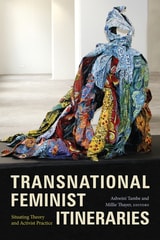
cover of Transnational Feminist Itineraries: Situating Theory and Activist Practice

Transnational Feminist Itineraries

Situating Theory and Activist Practice

Ashwini Tambe and Millie Thayer, editors

Duke University Press, 2021

Transnational Feminist Itineraries brings together scholars and activists from multiple continents to demonstrate the ongoing importance of transnational feminist theory in challenging neoliberal globalization and the rise of authoritarian nationalisms around the world. The contributors illuminate transnational feminism's unique constellation of elements: its specific mode of thinking across scales, its historical understanding of identity categories, and its expansive imagining of solidarity based on difference rather than similarity. Contesting the idea that transnational feminism works in opposition to other approaches—especially intersectional and decolonial feminisms—this volume instead argues for their complementarity. Throughout, the contributors call for reaching across social, ideological, and geographical boundaries to better confront the growing reach of nationalism, authoritarianism, and religious and economic fundamentalism.

Contributors. Mary Bernstein, Isabel Maria Cortesão Casimiro, Rafael de la Dehesa, Carmen L. Diaz Alba, Inderpal Grewal, Cricket Keating, Amy Lind, Laura L. Lovett, Kathryn Moeller, Nancy A. Naples, Jennifer C. Nash, Amrita Pande, Srila Roy, Cara K. Snyder, Ashwini Tambe, Millie Thayer, Catarina Casimiro Trindade
[more]
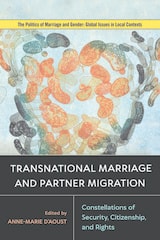
cover of Transnational Marriage and Partner Migration: Constellations of Security, Citizenship, and Rights

Transnational Marriage and Partner Migration

Constellations of Security, Citizenship, and Rights

Anne-Marie D'Aoust

Rutgers University Press, 2022

This multidisciplinary collection investigates the ways in which marriage and partner migration processes have become the object of state scrutiny, and the site of sustained political interventions in several states around the world. Covering cases as varied as the United States, Canada, Japan, Iran, France, Belgium or the Netherlands, among others, contributors reveal how marriage and partner migration have become battlegrounds for political participation, control, and exclusion. Which forms of attachments (towards the family, the nation, or specific individuals) have become framed as risks to be managed? How do such preoccupations translate into policies? With what consequences for those affected by them, in terms of rights and access to citizenship? The book answers these questions by analyzing the interplay between issues of security, citizenship and rights from the perspectives of migrants and policymakers, but also from actors who negotiate encounters with the state, such as lawyers, non-governmental organizations, and translators. 
[more]
cover of Transnational Nationalism and Collective Identity among the American Irish

Transnational Nationalism and Collective Identity among the American Irish

Howard Lune

Temple University Press, 2020

In Transnational Nationalism and Collective Identity among the American Irish, Howard Lune considers the development and mobilization of different nationalisms over 125 years of Irish diasporic history (1791–1920) and how these campaigns defined the Irish nation and Irish citizenship. 

Lune takes a collective approach to exploring identity, concentrating on social identities in which organizations are the primary creative agent to understand who we are and how we come to define ourselves. As exiled Irishmen moved to the United States, they sought to create a new Irish republic following the American model. Lune traces the construction of Irish American identity through the establishment and development of Irish nationalist organizations in the United States. He looks at how networks—such as societies, clubs, and private organizations—can influence and foster diaspora, nationalism, and nationalist movements. 

By separating nationalism from the physical nation, Transnational Nationalism and Collective Identity among the American Irish uniquely captures the processes and mechanisms by which collective identities are constructed, negotiated, and disseminated. Inevitably, this work tackles the question of what it means to be Irish—to have a nationality, a community, or a shared history.
[more]
cover of Transnational Political Spaces: Agents - Structures - Encounters

Transnational Political Spaces

Agents - Structures - Encounters

Edited by Mathias Albert, Gesa Bluhm, Jan Helmig, Andreas Leutzsch, and Jochen W

Campus Verlag, 2009

From a decidedly multidisciplinary perspective, the articles in Transnational Political Spaces address the notion that political space is no longer fully congruent with national borders. Instead there are areas called transnational political spaces—caused by factors such as migration and social transformation—where policy occurs oblivious to national pressure. Organized into three sections—transnational actors, transnational spaces, and critical encounters—this volume explains how these spaces are formed and defined and how they can be traced and conceptualized.

[more]
cover of Transnational Radicals: Italian Anarchists in Canada and the U.S., 1915-1940

Transnational Radicals

Italian Anarchists in Canada and the U.S., 1915-1940

Travis Tomchuk

University of Manitoba Press, 2015
[more]
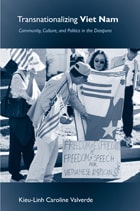
cover of Transnationalizing Viet Nam: Community, Culture, and Politics in the Diaspora

Transnationalizing Viet Nam

Community, Culture, and Politics in the Diaspora

Kieu-Linh Caroline Valverde

Temple University Press, 2013

Vietnamese diasporic relations affect—and are directly affected by—events in Viet Nam. In Transnationalizing Viet Nam, Kieu-Linh Caroline Valverde explores these connections, providing a nuanced understanding of this globalized community. Valverde draws on 250 interviews and almost two decades of research to show the complex relationship between Vietnamese in the diaspora and those back at the homeland.

Arguing that Vietnamese immigrant lives are inherently transnational, she shows how their acts form virtual communities via the Internet, organize social movements, exchange music and create art, find political representation, and even dissent. Valverde also exposes how generational, gender, class, and political tensions threaten to divide the ethnic community. 

Transnationalizing Viet Nam paints a vivid picture of the complex political and personal allegiances that exist within Vietnamese America and shape the relations between this heterogeneous community and its country of origin. 

In the series Asian American History and Culture, edited by Sucheng Chan, David Palumbo-Liu, Michael Omi, K. Scott Wong, and Linda Trinh Võ

[more]