Results by title
73 books match the query 'Urban policy' and 14 start with t
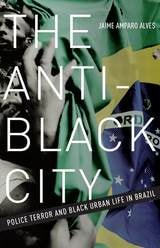
The Anti-Black City
Police Terror and Black Urban Life in BrazilJaime Amparo Alves
University of Minnesota Press, 2018
An important new ethnographic study of São Paulo’s favelas revealing the widespread use of race-based police repression in Brazil
While Black Lives Matter still resonates in the United States, the movement has also become a potent rallying call worldwide, with harsh police tactics and repressive state policies often breaking racial lines. In The Anti-Black City, Jaime Amparo Alves delves into the dynamics of racial violence in Brazil, where poverty, unemployment, residential segregation, and a biased criminal justice system create urban conditions of racial precarity.
The Anti-Black City provocatively offers race as a vital new lens through which to view violence and marginalization in the supposedly “raceless” São Paulo. Ironically, in a context in which racial ambiguity makes it difficult to identify who is black and who is white, racialized access to opportunities and violent police tactics establish hard racial boundaries through subjugation and death. Drawing on two years of ethnographic research in prisons and neighborhoods on the periphery of this mega-city, Alves documents the brutality of police tactics and the complexity of responses deployed by black residents, including self-help initiatives, public campaigns against police violence, ruthless gangs, and self-policing of communities.
The Anti-Black City reveals the violent and racist ideologies that underlie state fantasies of order and urban peace in modern Brazil. Illustrating how “governing through death” has become the dominant means for managing and controlling ethnic populations in the neoliberal state, Alves shows that these tactics only lead to more marginalization, criminality, and violence. Ultimately, Alves’s work points to a need for a new approach to an intractable problem: how to govern populations and territories historically seen as “ungovernable.”
The City after Property
Abandonment and Repair in Postindustrial DetroitSara Safransky
Duke University Press, 2023
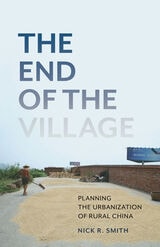
The End of the Village
Planning the Urbanization of Rural ChinaNick R. Smith
University of Minnesota Press, 2021
How China’s expansive new era of urbanization threatens to undermine the foundations of rural life
Since the beginning of the twenty-first century, China has vastly expanded its urbanization processes in an effort to reduce the inequalities between urban and rural areas. Centered on the mountainous region of Chongqing, which serves as an experimental site for the country’s new urban development policies, The End of the Village analyzes the radical expansion of urbanization and its consequences for China’s villagers. It reveals a fundamental rewriting of the nation’s social contract, as villages that once organized rural life and guaranteed rural livelihoods are replaced by an increasingly urbanized landscape dominated by state institutions.
Throughout this comprehensive study of China’s “urban–rural coordination” policy, Nick R. Smith traces the diminishing autonomy of the country’s rural populations and their subordination to larger urban networks and shared administrative structures. Outside Chongqing’s urban centers, competing forces are at work in reshaping the social, political, and spatial organization of its villages. While municipal planners and policy makers seek to extend state power structures beyond the boundaries of the city, village leaders and inhabitants try to maintain control over their communities’ uncertain futures through strategies such as collectivization, shareholding, real estate development, and migration.
As China seeks to rectify the development crises of previous decades through rapid urban growth, such drastic transformations threaten to displace existing ways of life for more than 600 million residents. Offering an unprecedented look at the country’s contentious shift in urban planning and policy, The End of the Village exposes the precarious future of rural life in China and suggests a critical reappraisal of how we think about urbanization.
The Future of National Urban Policy
Marshall Kaplan, ed.
Duke University Press, 1989
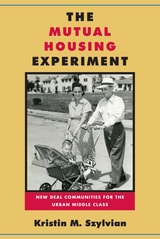
The Mutual Housing Experiment
New Deal Communities for the Urban Middle ClassKristin M Szylvian
Temple University Press, 2016
In The Mutual Housing Experiment, Kristin Szylvian examines 32 mutual housing associations that are still in existence today, and offers strong evidence to show that federal public housing policy was not the failure that critics allege. She explains that mutual home ownership has not only proven its economic value, but has also given rise to communities characterized by a strong sense of identity and civic engagement.
The book shows that this important period in urban and housing policy provides critical lessons for contemporary housing analysts who continue to emphasize traditional home ownership for all wage-earners despite the home mortgage crisis of 2008.
The New Chicago Way
Lessons from Other Big CitiesEd Bachrach and Austin Berg
Southern Illinois University Press, 2019
Rather than simply lament the situation, criticize specific leaders, or justify an ideology, Bachrach and Berg compare the decisions about Chicago’s governance and finances with choices made in fourteen other large U.S. cities. The problems that seem unique to Chicago have been encountered elsewhere, and Chicagoans, the authors posit, can learn from the successful solutions other cities have embraced.
Chicago government and its citizens must let go of the past to prepare for the future, argue Bachrach and Berg. A future filled with demographic, technological, and economic change requires a government capable of responding and adapting. Reforms can transform the city. The prescriptions for change provided in this book point toward a hopeful future: the New Chicago Way.

The New Metropolis
Power, Place, and Inequality in Twenty-First-Century AmericaMargaret Weir
University of Chicago Press, 2027
A path-breaking investigation of changing patterns of inequality and contestation in America’s metropolises.
Since 1990, a new political geography of winners and losers has emerged in metros across America. This new metropolis looks nothing like the old. In many exurbs, suburban mansions abut declining towns and distressed communities. In historic central cities, African American communities reel from institutional stripping, even as gentrification and immigration revitalize once forgotten neighborhoods. The New Metropolis considers why, despite all the changes over the past four decades, we have recreated a metropolis that makes it harder for low-income Americans—especially low-income Americans of color—to thrive and why some efforts to promote equitable opportunity succeed against the odds.
With a focus on Chicago, Atlanta, and Houston, The New Metropolis shows how multi-level political actors and translocal networks build power across political boundaries to determine the pool of local public resources and the scope of local powers. Weir demonstrates how the timing of urbanization set up distinct conflicts over the public sector in Frostbelt versus Sunbelt metropolises, explaining how partisan divisions now supercharge these conflicts.
The New Metropolis shows why the battle over the metropolis sits at the center of American politics. It determines the shape of the public arenas where we make decisions and, ultimately, the kinds of connections Americans have with one another.
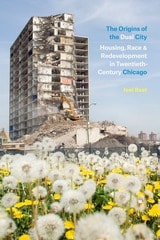
The Origins of the Dual City
Housing, Race, and Redevelopment in Twentieth-Century ChicagoJoel Rast
University of Chicago Press, 2019
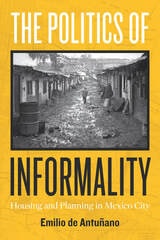
The Politics of Informality
Housing and Planning in Mexico CityEmilio de Antuñano
University of Texas Press, 2026
An examination of the central role and political power of informal neighborhoods in Mexico City.
At the beginning of the twentieth century, Mexico City was tightly bounded, with a population of about half a million people. By the end of that century, it was an unfathomable megalopolis of some 20 million. It had also become exhibit A in an “urban crisis” decried by demographers, NGOs, and the Mexican government. Mexico City’s greatest sin was its shantytowns—informal neighborhoods built in defiance of regulations and viewed as incurably disordered.
The Politics of Informality is an illuminating political and intellectual history, examining how these neighborhoods have figured in Mexican life and in the ideologies underlying urban planning. Prior to the Mexican Revolution of 1910, urban experts saw Mexico City as a tidy modern capital in-waiting. But during the interwar period, informal neighborhoods boomed, as working-class families asserted claims to housing under the revolution’s framework of citizenship and social justice. Then, amid Cold War realignments, a new cohort of urban experts pathologized Mexico City, turning it into a transnational laboratory for the study of poverty, migration, and overpopulation. Tracing a fascinating evolution, ThePolitics of Informality underscores the stubborn opposition between technocratic modernism and revolutionary, extralegal politics.
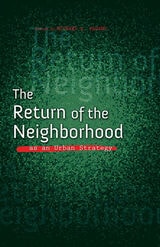
The Return of the Neighborhood as an Urban Strategy
Edited by Michael A. Pagano
University of Illinois Press, 2015
The topics focus on sustainable capital and societal investments in people and firms at the neighborhood level. Proposed solutions cover a range of possibilities for enhancing the quality of life for individuals, households, and neighborhoods. These include everything from microenterprises to factories; from social spaces for collective and social action to private facilities; from affordable housing and safety to gated communities; and from neighborhood public education to cooperative, charter, and private schools.
Contributors: Andy Clarno, Teresa Córdova, Nilda Flores-González, Pedro A. Noguera, Alice O'Connor, Mary Pattillo, Janet Smith, Nik Theodore, Elizabeth S. Todd-Breland, Stephanie Truchan, and Rachel Weber.
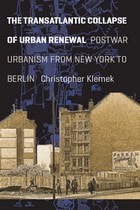
The Transatlantic Collapse of Urban Renewal
Postwar Urbanism from New York to BerlinChristopher Klemek
University of Chicago Press, 2011
The Transatlantic Collapse of Urban Renewal examines how postwar thinkers from both sides of the Atlantic considered urban landscapes radically changed by the political and physical realities of sprawl, urban decay, and urban renewal. With a sweep that encompasses New York, London, Berlin, Philadelphia, and Toronto, among others, Christopher Klemek traces changing responses to the challenging issues that most affected the lives of the world’s cities.
In the postwar decades, the principles of modernist planning came to be challenged—in the grassroots revolts against the building of freeways through urban neighborhoods, for instance, or by academic critiques of slum clearance policy agendas—and then began to collapse entirely. Over the 1960s, several alternative views of city life emerged among neighborhood activists, New Left social scientists, and neoconservative critics. Ultimately, while a pessimistic view of urban crisis may have won out in the United States and Great Britain, Klemek demonstrates that other countries more successfully harmonized urban renewal and its alternatives. Thismuch anticipated book provides one of the first truly international perspectives on issues central to historians and planners alike, making it essential reading for anyone engaged with either field.
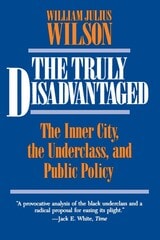
The Truly Disadvantaged
The Inner City, the Underclass, and Public PolicyWilliam Julius Wilson
University of Chicago Press, 1987
"'Must reading' for civil-rights leaders, leaders of advocacy organizations for the poor, and for elected officials in our major urban centers."—Bernard C. Watson, Journal of Negro Education
"Required reading for anyone, presidential candidate or private citizen, who really wants to address the growing plight of the black urban underclass."—David J. Garrow, Washington Post Book World
Selected by the editors of the New York Times Book Review as one of the sixteen best books of 1987.
Winner of the 1988 C. Wright Mills Award of the Society for the Study of Social Problems.
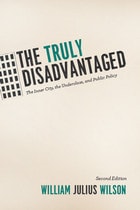
The Truly Disadvantaged
The Inner City, the Underclass, and Public Policy, Second EditionWilliam Julius Wilson
University of Chicago Press, 2012
Renowned American sociologist William Julius Wilson takes a look at the social transformation of inner city ghettos, offering a sharp evaluation of the convergence of race and poverty. Rejecting both conservative and liberal interpretations of life in the inner city, Wilson offers essential information and a number of solutions to policymakers. The Truly Disadvantaged is a wide-ranging examination, looking at the relationship between race, employment, and education from the 1950s onwards, with surprising and provocative findings. This second edition also includes a new afterword from Wilson himself that brings the book up to date and offers fresh insight into its findings.
“The Truly Disadvantaged should spur critical thinking in many quarters about the causes and possible remedies for inner city poverty. As policymakers grapple with the problems of an enlarged underclass they—as well as community leaders and all concerned Americans of all races—would be advised to examine Mr. Wilson's incisive analysis.”—Robert Greenstein, New York Times Book Review
The Urban Crisis
Linking Research to ActionBurton Weisbrod and James C. Worthy
Northwestern University Press, 1997