Results by title
64 books match the query 'Vocational guidance' and 13 start with t
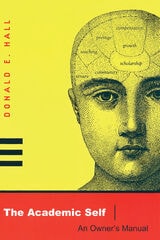
The Academic Self
An Owner’s ManualDonald E. Hall
The Ohio State University Press, 2002
Donald E. Hall offers a self-help book designed for academics, from graduate students to tenured faculty. He helps readers engage in an active process of career management, goal setting, prioritization, and reflection on the norms that constitute what he calls “academic selfhood.” Drawing broadly on the insights of Anthony Giddens’ notions of reflexivity and self-identity, Hall encourages new and seasoned scholars to “own up to” the behaviors, attitudes, and complicities that compromise their professional identities. This book couples all its exhortations with clear, concrete, and practical strategies for responding productively to the many uncertainties of academic life.
Separate chapters of the book examine the textuality of the academic self, profession, academic processes and collegiality. Among the topics candidly discussed are careerism, burnout, procrastination, and insecurity. Throughout the book readers will find anecdotes, real-life examples, and concrete tips for constructing and maintaining a successful career defined on their own terms.
The Academic Self: An Owner’s Manual opens up a new and frank discussion on academic life and academics’ basic responsibility for their own actions and attitudes.
The Chicago Guide for Freelance Editors
How to Take Care of Your Business, Your Clients, and Yourself from Start-Up to SustainabilityErin Brenner
University of Chicago Press, 2024
You’ve been thinking about shifting into the world of freelance editing, but you don’t know where to start. In a time when editors are seeking greater flexibility in their work arrangements and schedules, freelancing is an increasingly common career option. But deciding to go it alone means balancing the risks with the rewards. From the publisher of The Chicago Manual of Style comes The Chicago Guide for Freelance Editors, the definitive guide to running your business and finding greater control and freedom in your work life.
In this book, Erin Brenner—an industry leader and expert on the business of editorial freelancing—gathers everything you need to know into a single resource. Brenner has run her own successful editing business for over two decades and has helped hundreds of editors launch or improve their businesses through her teaching, blog writing, and coaching.
The Chicago Guide for Freelance Editors will walk you through the entire process of conceiving, launching, and working in a freelance editing business, from deciding on services and rates to choosing the best business structure to thinking through branding and marketing strategies and beyond. This book is ideal for beginning freelancers looking to get set up and land their first clients, but it’s equally valuable to those who have already been freelancing, with detailed coverage of such issues as handling difficult clients and continuing professional development. You’ll find a collection of advice from other successful freelance editors in this guide, as well as an extensive list of resources and tools. In the final and perhaps most important chapter, Brenner teaches you how to care for the key component of the business: yourself.
The Chicago Guide to Your Academic Career
A Portable Mentor for Scholars from Graduate School through TenureJohn A. Goldsmith, John Komlos, and Penny Schine Gold
University of Chicago Press, 2001
With a perpetually tight job market in the traditional academic fields, the road to an academic career for many aspiring scholars will often be a rocky and frustrating one. Where can they turn for good, frank answers to their questions? Here, three distinguished scholars—with more than 75 years of combined experience—talk openly about what's good and what's not so good about academia, as a place to work and a way of life.
Written as an informal conversation among colleagues, the book is packed with inside information—about finding a mentor, avoiding pitfalls when writing a dissertation, negotiating the job listings, and much more. The three authors' distinctive opinions and strategies offer the reader multiple perspectives on typical problems. With rare candor and insight, they talk about such tough issues as departmental politics, dual-career marriages, and sexual harassment. Rounding out the discussion are short essays that offer the "inside track" on financing graduate education, publishing the first book, and leaving academia for the corporate world.
This helpful guide is for anyone who has ever wondered what the fascinating and challenging world of academia might hold in store.
Part I - Becoming a Scholar
* Deciding on an Academic Career
* Entering Graduate School
* The Mentor
* Writing a Dissertation
* Landing an Academic Job
Part II - The Academic Profession
* The Life of the Assistant Professor
* Teaching and Research
* Tenure
* Competition in the University System and Outside Offers
* The Personal Side of Academic Life
The Chicago Guide to Your Career in Science
A Toolkit for Students and PostdocsVictor A. Bloomfield and Esam E. El-Fakahany
University of Chicago Press, 2008
Victor A. Bloomfield and Esam E. El-Fakahany, both well-known scientists with extensive experience as teachers, mentors, and administrators, have combined their knowledge to create a guidebook that addresses all of the challenges that today’s scientists-in-training face. They begin by considering the early stages of a career in science: deciding whether or not to pursue a PhD, choosing advisors and mentors, and learning how to teach effectively. Bloomfield and El-Fakahany then explore the skills essential to conducting and presenting research. The Chicago Guide to Your Career in Science offers detailed advice on how to pursue research ethically, manage time, and communicate effectively, especially at academic conferences and with students and peers. Bloomfield and El-Fakahany write in accessible, straightforward language and include a synopsis of key points at the end of each chapter, so that readers can dip into relevant sections with ease.
From students prepping for the GRE to postdocs developing professional contacts to faculty advisors and managers of corporate labs, scientists at every level will find The Chicago Guide to Your Career in Science an unparalleled resource.
The Dean's List
Leading a Modern Business SchoolMatthew A. Waller
University of Arkansas Press, 2021
The role of a dean has changed dramatically in the last few decades. In addition to managing up, down, and sideways while dealing with students, staff, and faculty, there’s a growing demand for deans to work with parents, alumni, and donors as well as business and community leaders. The Dean’s List highlights examples from Waller’s career to illustrate practical advice for dealing with the specific challenges deans regularly face. The result is a handbook for shortening the learning curve for anyone who is, or aspires to be, the dean of a business college.

The Future Academic Librarians Toolkit
FindingMegan Hodge
Assoc of College & Research Libraries, 2019
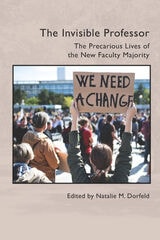
The Invisible Professor
The Precarious Lives of the New Faculty MajorityNatalie M. Dorfeld
University Press of Colorado, 2023
This edited collection, the first in the Practices & Possibilities series to be published in its Voices from the Field section, offers a rich set of narratives by writing instructors who are serving or have worked in contingent positions. Intended for anyone considering a career in the humanities, The Invisible Professor seeks to reach individuals in three phases of their careers: those thinking of entering the profession, those knee-deep in it and looking for ways to improve conditions, and those who have vacated academic positions for more humane alternative tracks.
As academia comes to a crossroads, with a disheartening shift towards a more disposable business model, multiple solutions are desperately needed. Faculty members in contingent positions are the new faculty majority on college campuses, and they are most likely the first professors students will meet. They deserve respect and a livable wage.
The Making of Lawyers' Careers
Inequality and Opportunity in the American Legal ProfessionRobert L. Nelson, Ronit Dinovitzer, Bryant G. Garth, Joyce S. Sterling, David B. Wilkins, Meghan Dawe, and Ethan Michelson
University of Chicago Press, 2023
An unprecedented account of social stratification within the US legal profession.
How do race, class, gender, and law school status condition the career trajectories of lawyers? And how do professionals then navigate these parameters?
The Making of Lawyers’ Careers provides an unprecedented account of the last two decades of the legal profession in the US, offering a data-backed look at the structure of the profession and the inequalities that early-career lawyers face across race, gender, and class distinctions. Starting in 2000, the authors collected over 10,000 survey responses from more than 5,000 lawyers, following these lawyers through the first twenty years of their careers. They also interviewed more than two hundred lawyers and drew insights from their individual stories, contextualizing data with theory and close attention to the features of a market-driven legal profession.
Their findings show that lawyers’ careers both reflect and reproduce inequalities within society writ large. They also reveal how individuals exercise agency despite these constraints.

The New Information Professional
Your Guide to Careers in the Digital AgeKelly Kowatch
American Library Association, 2010
The Stars Are Not Enough
Scientists--Their Passions and ProfessionsJoseph C. Hermanowicz
University of Chicago Press, 1998
These deeply personal narratives reveal dreams of fame and glory, in which scientists confess their ambitions of becoming the next Newton or Einstein. However, these scientists also discuss the meaning of success and failure. We hear their stories of aspiration and anxiety, disappointment and tragedy, hope and achievement; we are privy to their doubts and to what they consider to be their limitations and weaknesses. As the scientists age in their professions, the specter of failure often visits them, and they have to accept something less than scientific immortality or even the Nobel Prize.
Ultimately these stories give us more than an inside look at the details of careers in science, they also examine ambition by uncovering the forces that drive people in their professions and by describing how these forces persist or fade over time. Ambition for greatness often ignites a career and often sustains it. Yet, as Hermanowicz's study reveals, greatness eludes nearly all people in their heroic quests for extraordinary achievement. The Stars Are Not Enough offers a fascinating account that will appeal to anyone interested in how people's dreams blossom and evolve.
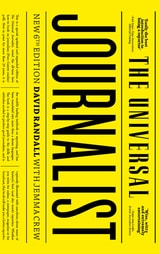
The Universal Journalist
David Randall
Pluto Press, 2021
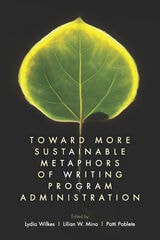
Toward More Sustainable Metaphors of Writing Program Administration
edited by Lydia Wilkes, Lilian W. Mina, and Patti Poblete afterword by Douglas Hesse
Utah State University Press, 2022
This volume presents twelve chapters that reclaim and revise established metaphors; offer new metaphors based on sustainable, relational, or emotional labor practices and phenomena; and reveal the improvisational, artisanal nature of WPA work. Chapters resonate across three sections. The first section focuses on organic relationships captured in phrases like “putting out fires” and "seeing forests for the trees” alongside unexpected comparisons to ground and light. The second describes institutional landscapes featuring generative juxtapositions such as the WPA as a labor activist or a mapper of emotional geography. And the third discusses performance crafts like improv comedy and artisanal making.
Toward More Sustainable Metaphors of Writing Program Administration offers new and revised ways of thinking and acting for WPAs, who are constantly negotiating the paradoxical demands of their work and continually striving to act ethically in conflicted, and even fraught, situations. It will inspire practicing, aspiring, and former WPAs working in a time of transformation by highlighting more sustainable ways of enacting WPA identity.
Contributors: Jacob Babb, John Belk, Katherine Daily O'Meara, Ryan J. Dippre, Douglas Hesse, Andrew Hollinger, Rona Kaufman, Cynthia D. Mwenja, Manny Piña, Scott Rogers, Robyn Tasaka, Alexis Teagarden, Christy I. Wenger, Lydia Wilkes
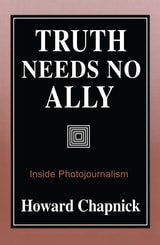
Truth Needs No Ally
Inside PhotojournalismHoward Chapnick
University of Missouri Press, 1994
The man called "Mr. Photojournalism" by the Washington Post here offers the most comprehensive book available on documentary photography, covering the history and ethics of the craft as well as practical issues for anyone with a serious interest in photography.